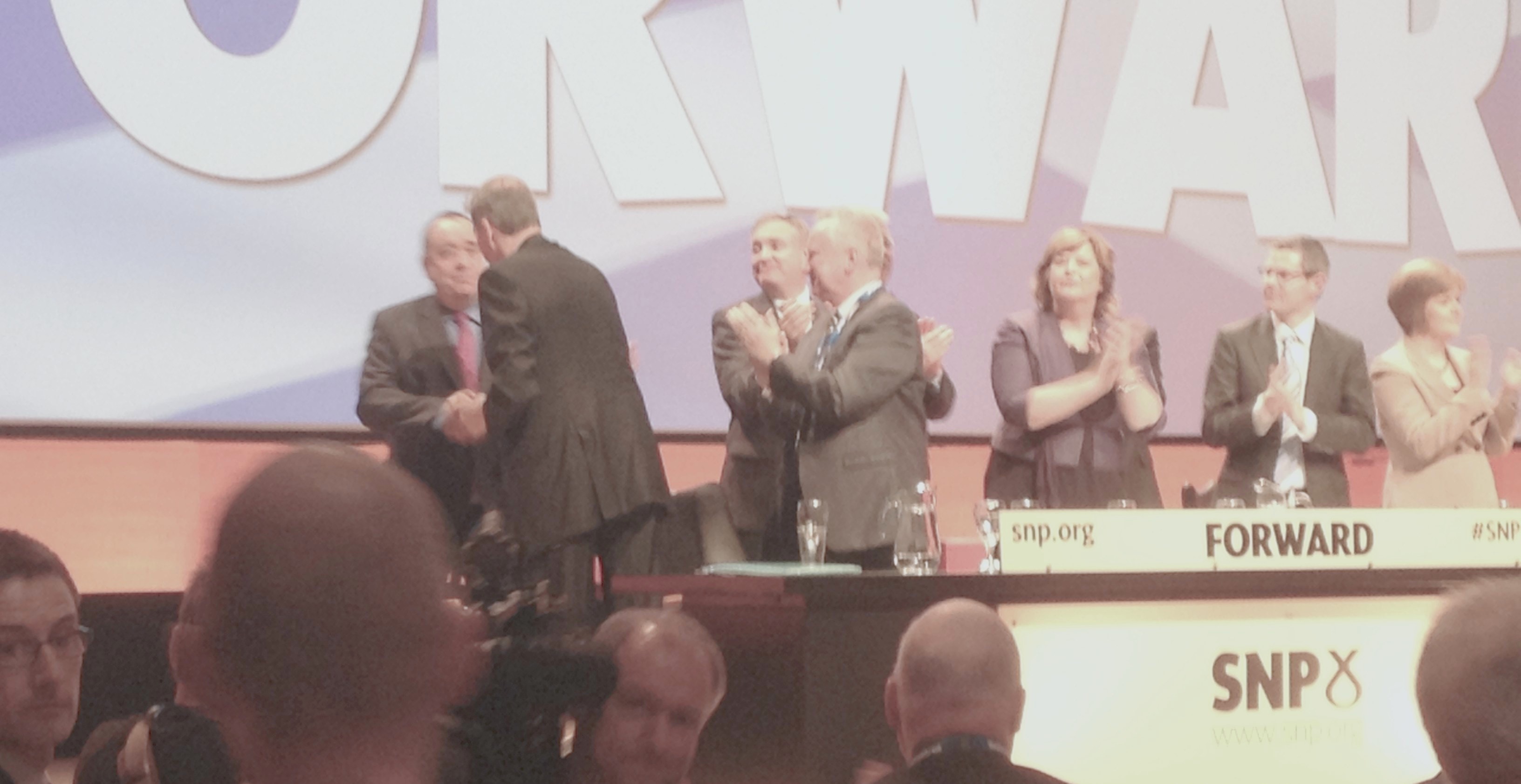
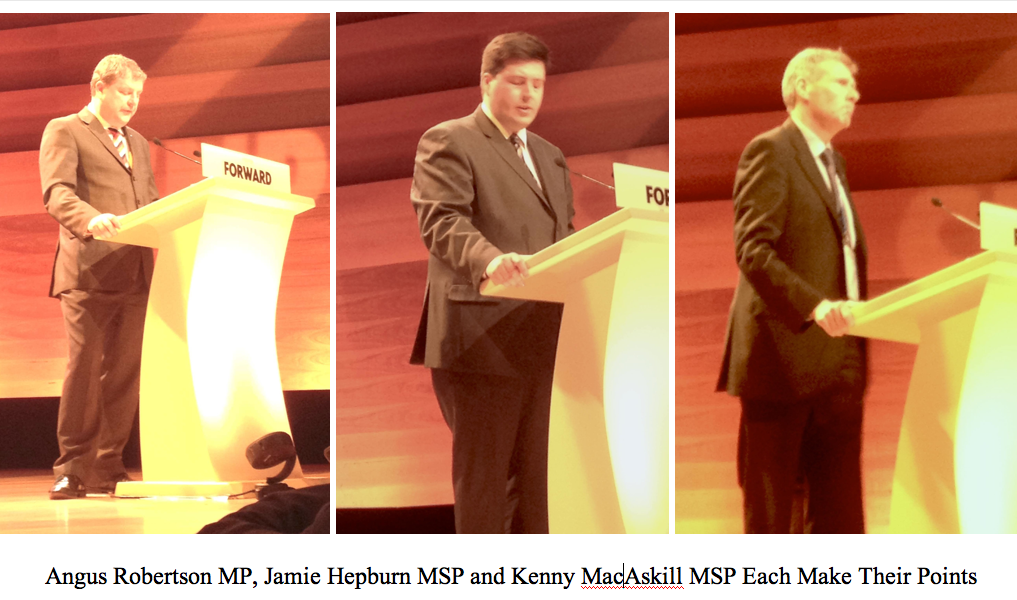
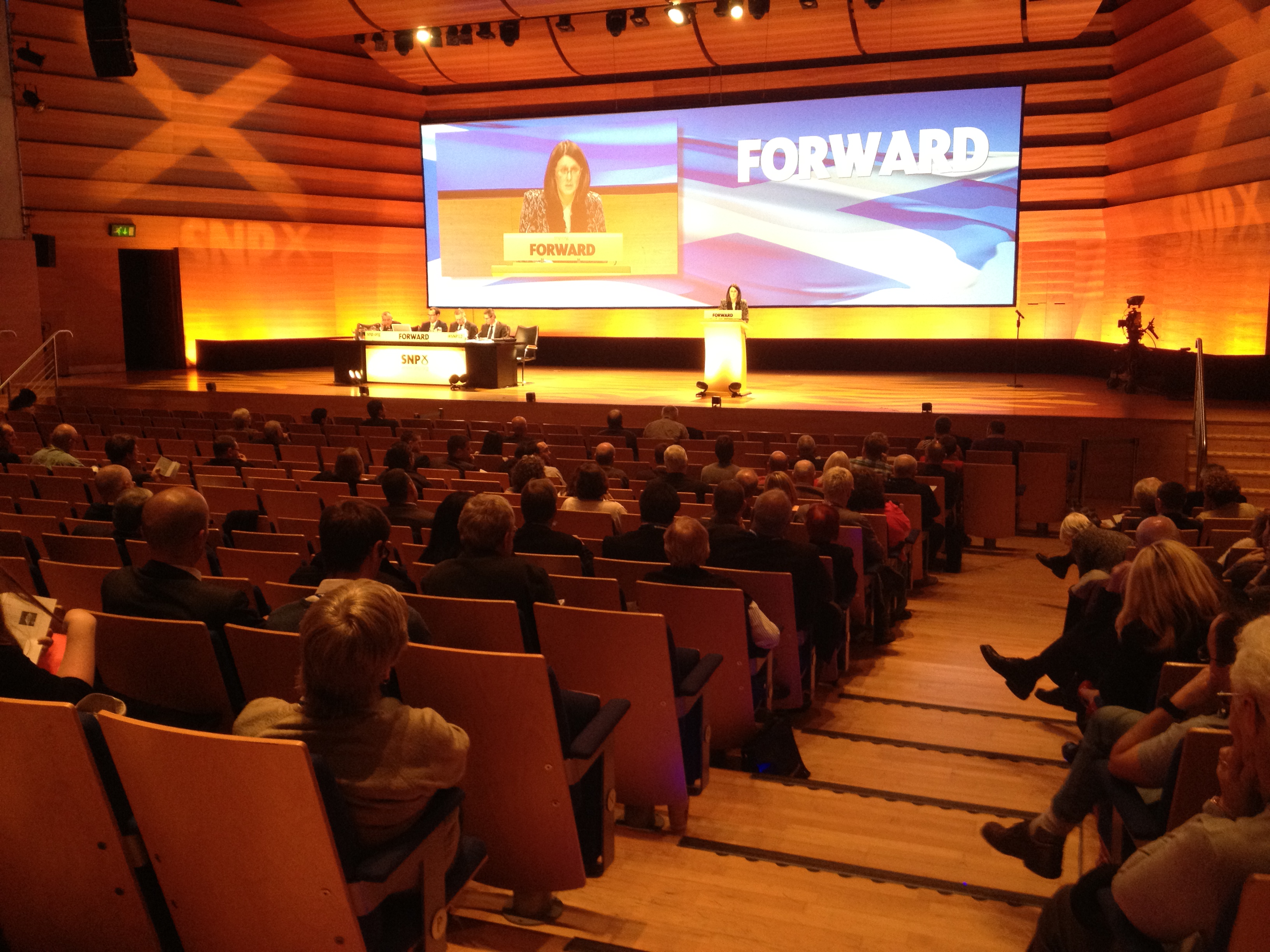
Terminal Condition

Many are the praises that have been sung about traveling in America. Whether it’s the complex network of airlines that fly you hither and yon across that vast country or the Tera-acres of tarmac laid out in three-and four-lane ribboned homage to that great god Detroit that tie the country together from sea to shining sea, it’s hard to find a people as mobile—or as joyous in that mobility.

Leaving aside that their public transport is execrable—even in the densest metropolis—that bikes and lanes for them rare (although Philly does rate an honourable mention in this department) and that suburban sprawl is their unifying lifestyle, travel in the States is still an exciting experience even if not suffering James Dean delusions in a top down Mustang on a stretch of blacktop that could be a still for Thelma & Louise.

And then there’s Philadelphia International Airport.

Having driven across the States from Point Reyes CA to Bar Harbor ME, from Port Townsend WA to the Rosarita Beach Inn in Baja and paid dues along most of US93 the Backbone of America that puts Route 66 to shame, I’ve clocked a quarter million miles on their roads.

Over the last few days, I’ve even made sense of navigating the hopelessly entangled largely signpost-free mess that passes for a road network in South Jersey where a blizzard of intersecting state ‘highways’ blast sometimes two sometimes eight lanes straight through otherwise sleepy wooded neighbourhoods. You will find a bewildering variety of junctions—some with turns, some with lights, some with neither—linked by roads that grow and lose lanes at a frenetic pace and the occasional right-angle junction where you must brake/accelerate between 0 and 55 in about 10 yards. Or die.

But when you come to PHL, you find a driver’s Bermuda Triangle, a Gordian Knot of swirling lanes that sweep you past just about everywhere but where you want to go. Try LAX and broad Century Boulevard leads you from I405 past three terminals, then back past three terminals onto the boulevard. Couldn’t be simpler. SFO and you have a similar loop but this time circular on two levels from 101. But PHL? YOU try to describe it:
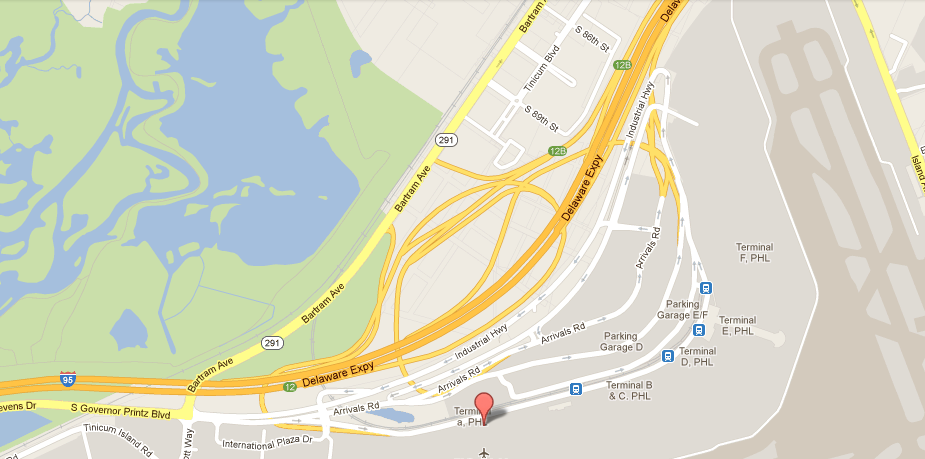
The PHL Gospel According to Google: Note ‘Rat’s Nest’ of Access Roads above & below I95

Starting at the red marker shown and going right, there is the usual sequence of terminals A through E but there the logic ends. Approaching on the Delaware Expressway (Interstate 95) from North or South, there are signs for Arrivals and Departures but heaven help you if you choose the wrong one or if you are looking for, say, a specific car rental or a specific hotel. Mulitstorey car parks obscure all information about terminals and so, often as not, you find yourself at the end of options faced with I95 N or S and precious little else.

Choose N and you get entangled in Philadelphia Naval Yard when trying to find a return route; choose S and it’s much simpler—other than a 6-mile round trip to the next exit. It makes you think of the Sopranos—someone with the concrete contract for this airport would not be satisfied with less than 10 unnecessary miles of lanes and flyovers included in the over-engineered design. But if Fat Tony padded the concrete contract, whichever Don subcontracted for signage showed no respect and was sleeping with the fishes before he could deliver: if there’s a minimalist style of signs for airports, PHL is the model.

Approach from the S and you actually cross four bridges, two of which take you over I95 and back for no obvious purpose. Approach from the N and the separate ‘exit’ ramp is actually a three-lane motorway that parallels I95 for over a mile for no obvious reason before sweeping into a single lane on a bridge over—you guessed it—I95.

Car rental return is grouped, logically enough, with Departures. But it doesn’t say that at first. Then, in the middle of impatient two-lane traffic doing 50 you have to keep an eye out for the right entry gate as they flash by on the left, with no indication which is coming up next. Oh, and where it says “Enterprise” on a sharp and unexpected left turn, it should also say ‘Alamo’ and ‘National’. But doesn’t.

But, at least there are signs for returns. Pity the poor sod just rented their car and found the exit gate where some polyglot-but-none-of-them-English mumbles something from the depth of his kiosk and raises the barrier. You turn left because there is no option and then spend the first peg of you gas tank exploring the sweeping Soprano bridges of the area, crossing and recrossing I95 with no clue as to how to join it. Occasionally you will see a filter lane that seems to go the way you want but it is protected by stern signs that say it is “For Commercial Vehicles ONLY”. And so you orbit on.

You may only be going to an airport hotel. The Marriott is cheek by jowl with the high-rise parking. But the rest hunker along S Governor Prinz Blvd or Bartram Ave. Indeed, you can see some of the higher ones as you cross I95 for the seventeenth time. But signs there are none and I have a crisp $10 bill that says you will be on I95 N or S at least once before you get within spitting distance of your hotel.

For my money, unless you were born here, by far the most relaxing way to fly to Philadelphia is to skip it and go to New York instead.
Posted in Community, Transport | Tagged | Leave a comment

Stormbound

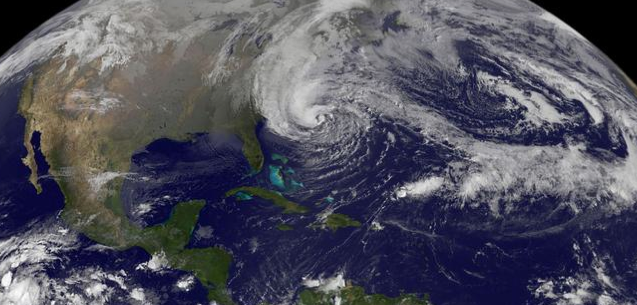
I should have taken the hint from the sprinkling of rain that accompanied yesterday’s trip back to Philly from the golden fall colours of the upper Delaware. The rain has intensified on the back of a fierce Southeasterly that is systematically ripping those leaves off all the trees and sweeping them drainwards along the street as Hurricane Sandy swerves left off Cape Hatteras and comes to pay us a visit.

Hurricanes are not to be taken lightly at the best of times but the stretch of US coast between Virginia and Massachusetts has spring tides and are now expecting a storm surge between 5 and 8 feet on top of that. Any coastline would be threatened by that but this entire stretch consists of low-lying islands (geologically terminal moraine from glaciers) with lagoons inland and much of Delaware, South Jersey and Long Island are Lincolnshire-flat and not much above sea level.

NASA View of Hurricane Sandy from Space

So far, disruption has been serious but not severe. Because much of the Eastern seaboard of the US is covered with trees—including most suburban streets—and the standard means of local power distribution is along cables hung on telephone-poles-on-steroids down each street, it only takes one serious branch blown down for an entire series of city blocks to be without power. We still have power here in Audubon but the blackout is expected momentarily.

The storm was well predicted but local media have been in overdrive about its seriousness, labelling it ‘frankenstorm’, calling it “massive and life-threatening” and  “worst case scenario for the New Jersey shore”. As a result, local stores are being reduced to empty shelves as emergency supplies are being snapped up at the last minute. Ours here is completely out of bottled water, D batteries and flashlights (i.e. torches) and running low on things like crackers (i.e. biscuits), peanut butter and candles.

Worse than that, a whole series of airports between Washington DC and Boston’s Logan are closed to traffic, all flights in and out cancelled and virtually all flights to the eastern seaboard from Europe cancelled too. Many businesses are closed, not least because workers declined to undertake the long daily drive that most do. The most serious among these is that the NY Stock Exchange did not open for business today and even the 24-hr circus of entertainment at Atlantic City closed as of noon.

Unusual Scene of Desertion at Caesar’s in Atlantic City

Of most concern are those living along the low-lying Jersey shore. All of the various settlements and holiday cottages have been under evacuation orders since yesterday but coastal flooding is expected to be severe and to affect communities not normally at risk, such as in the lagoons themselves, up the Delaware River beyond Philly, all along the tortuous shoreline of all five boros of New York City and even the normally sheltered Long Island Sound.

No Time to Be beside the Seaside—Today at Ocean Grove, New Jersey

At the time of writing, the eye of the storm was expected to hit the coast at Atlantic City by this evening. Winds of 50 mph will be common, with gusts to 75 mph as far inland as Audubon and of 90 mph at the coast itself. For the Philadelphia/South Jersey area 4 inches of rain are expected to fall in the next 24 hours. Whether the zillions of leaves washed into street drains will allow all of this to quietly flow away remains to be seen.

Because weather in much of the States tends to be calm and wind-free, they are more sensitive than most Brits to the effects of a stiff breeze. And, having seen some filthy North Sea weather myself, I am not too nervous about life and limb. But the next 24 hours may change that insouciance as, with around 45m Americans who live in this most populous part of their country face what may be the storm of the century.

NOT a Still from Ghostbusters: Clouds Gather over Manhattan Earlier Today

Posted in Environment | Tagged | Leave a comment

Ivy League Visit

After the bustle of Philly and the freeway traffic piling onto two-lane country ‘pikes’ in South Jersey, I have escaped for the weekend to the fall-colour-blessed bliss of Princeton, barely an hour north on I-295. Still in New Jersey, this is one of the Ivy League universities that could give any European campus a run for its money in its stately demeanour, its fulsomely ripening architecture and its fearsome reputation in law and the liberal arts.

Even more than the dreaming spires of Oxbridge or St Andrews the place is shot through with greenery and a rather sensibly laid out combination of ancient quads with the necessities of a town. Unlike much of America, this place has history, with its main building—Nassau Hall—having housed a detachment of redcoats during the wars of independence who were dislodged by a well aimed cannonball that came in through the window hurt no-one but took out the portrait of George III on the wall

Nassau Hall: with Princeton’s Massive Endowments, its Broken Window is Long Since Repaired

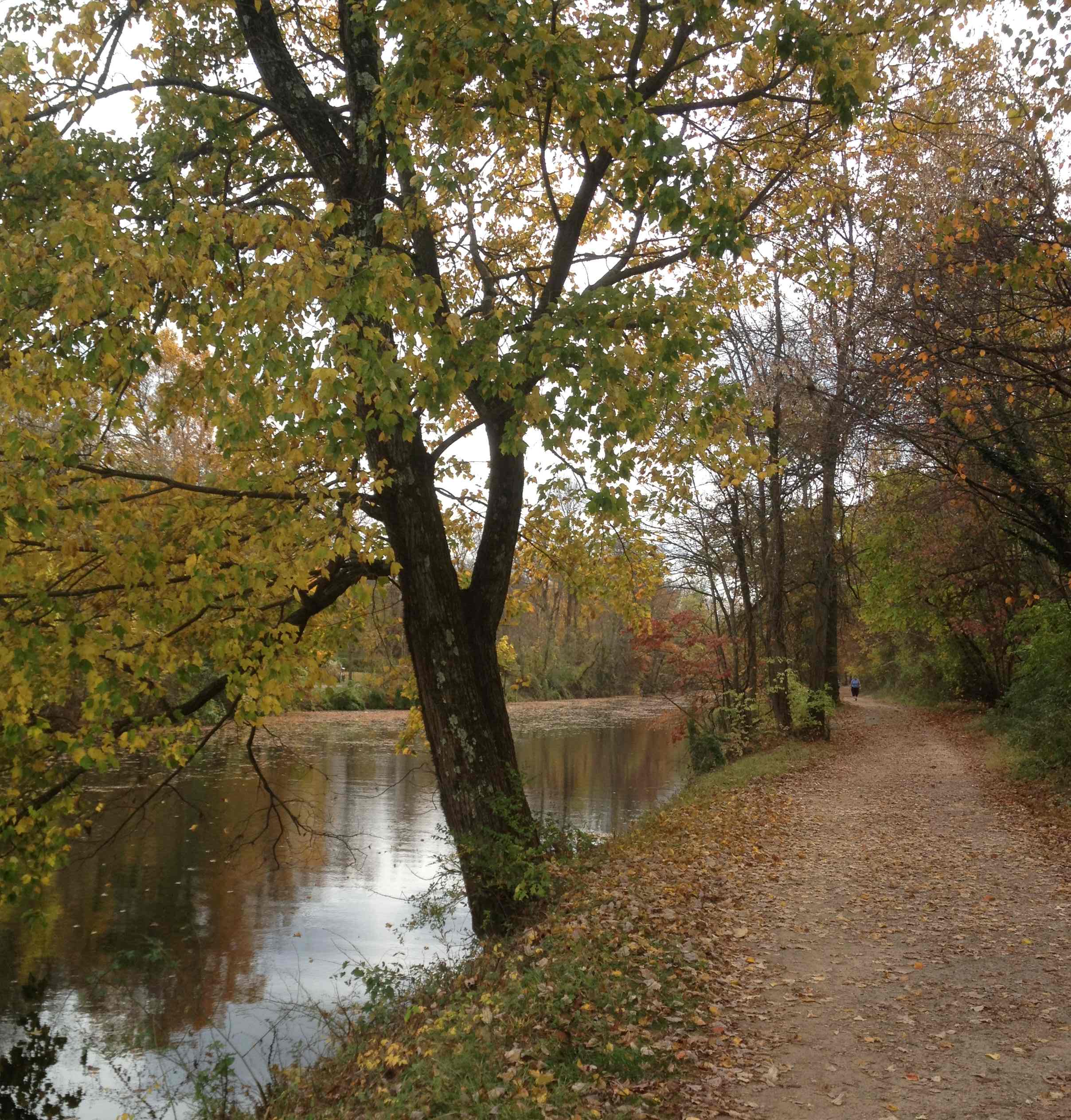
A long walk along the Delaware & Raritan Canal was a pleasant way to work off a very decent lunch on the patio of Sharon & Bill’s new home nearby to make space for one of the best seafood meals I’ve had in a long time at the Blue Point Grill which seems to specialise in fresh-caught catch from Barnegat, which is a fishing port on the Jersey shore as close as you can get to Princeton without dragging the boats overland. I hadn’t had swordfish in two decades and this was a reminder what I had been missing—a huge steak, grilled fresh, flavourful and textured almost like chicken. They put ketchup and tabasco on the table but that would be sacrilege.

Hiking/Biking Trail Along the Delaware and Ruritan Canal

After an obligatory stop at the local Bent Spoon Ice Cream Parlour with the obligatory myriad choice and superbly creamy product, it was time for a little culture. At the McCarter Theatre, the Elevator Repair Service was completing its trilogy of transferring classic American works to the stage with The Select (The Sun Also Rises) staging of Ernest Hemingway’s masterpiece novel. Their reviews gushed about “cutting wit, doomed romance, and a live bullfight that has to be seen to be believed“, claiming this to be “an exquisite, wine-soaked homage to one of the finest novels ever written“. It seemed like a worthwhile experience for the $38 price tag.

But, while it had its moments, with a creative staging, lively music and dance interludes and some real creative theatre, it completely lost track of itself and especially the era of Americans in Europe entre les guerres with its trademark flat, staccato pace of Hemingway dialogue. The costume department needs to be sat through the Powers/Flynn 1957 take.

Probably the most damning of all was to examine the other theatre-goers at the interval in the three-hour (and 1 1/2 hour too long) peeformance. They seemed, almost to a couple, to be the very same penguin-suit-&-tiara mafia against whom I railed in the previous blog, only this time in dress-down mode. Maybe all these Ivy League universities maintain a theatre as they maintain a football team—to be seen to participate. But the impression left is that they pour far more money and prestige into the players of the latter.

Passageway to Holder Hall, Princeton

Posted in Education | Tagged | 1 Comment

Philadelphia Freedom

After just two days in Philly, I have rediscovered that joy of exploring a new city with the open-mouthed naivety of a stranger. Fifth in size among US cities, it is a place I had managed never to visit in my 15 years living among our US cousins. It has much in common with its sister cities—from the multi-terminal sprawling airport to the lacework of freeways framing the rectangular grid of streets, it boasts the usual soaring bridges (this time across the broad Delaware River) named for their heroes: politician and scientist Ben Franklin, flag-sewer Betsy Ross and poet of tributes to a great land in the throes of seeking its destiny, Walt Whitman.

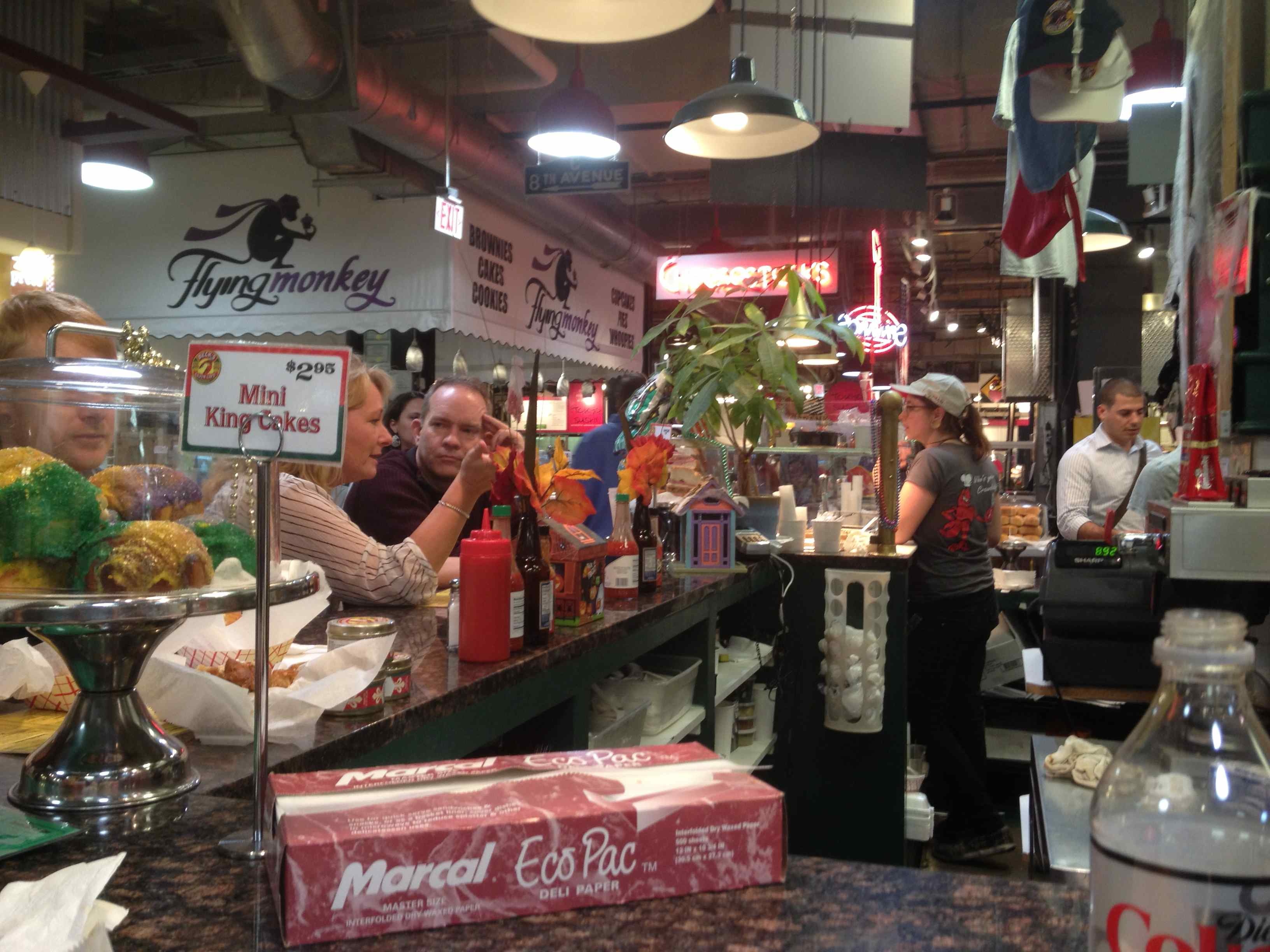
My first great discovery was the Reading Terminal. Originally a train station, the basement has become one the best market and exotic food emporia I have seen. It compares to Faneuil Hall in Boston but it’s less tasteful, more lively and easily more exotic. We plumped for Beck’s Cajun Cafe and tried to deal with a Train Wreck sandwich that had andouille sausage, carmelised onions, peppers and could have choked a horse. Billed as “what a Philly Steak sandwich wants to be when it grows up”, it defeated me after a half hour of plucky effort.

Beck’s Cajun Cafe in the Chaotic Bustle of Reading Terminal

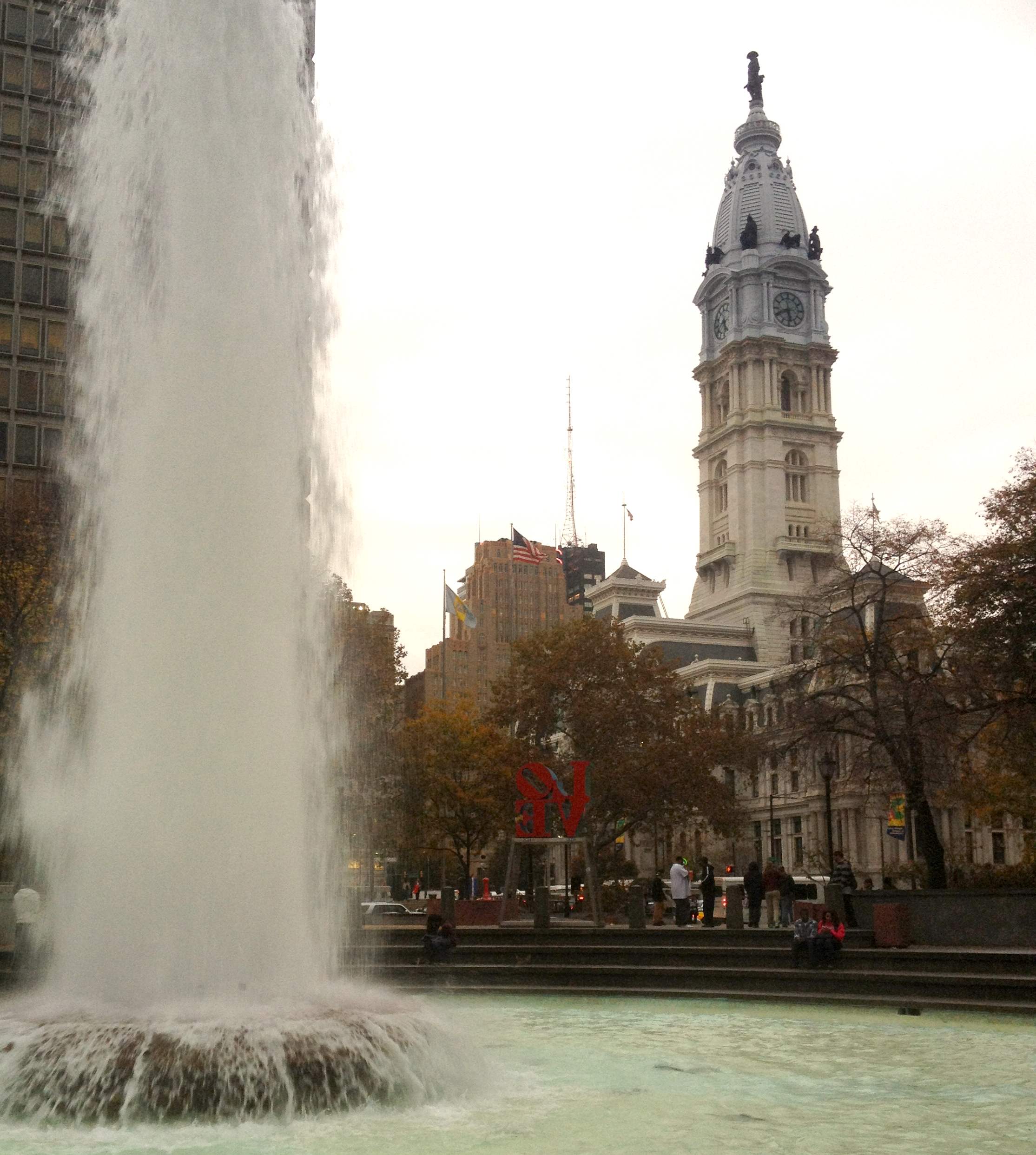
All of the multiracial bustle you expect in the States surges through the narrow streets around City Hall, whose pinnacle statue of William Penn has long been dwarfed by huge skyscrapers nearby and making mockery of a city ordinance against any such thing ever happening. As magnificent a building as it is, City Hall seems to be under unending construction and yet the corridors are dingy, poorly lit and completely free of any helpful signs to tell you what’s where.

Philadephia City Hall from Love Square

Nearby, the Love sculpture has a group of  blacks offering to take pictures of couples beside it but, from their touchy response to a ‘no’ and the fisticuffs between a Buick driver and the taxi he cut off on Arch Street below shows the ‘City of Brotherly Love’ to be a little short on supplies just now. Downtown streets show signs of the recession—several major department stores closed and too many loan stores and other down-market signs. But cars are new, traffic heavy and, if horn-honks were dollars, a lucrative source of income.

From the city centre, the spacious Ben Franklin Boulevard stretches Northwest through top-notch hotels and a cathedral into a cultural district that would grace any European capital. The Philadelphia Museum, Academy of Natural Sciences and several major libraries all clustered around Logan Square (which is actually a circle). Top for me was the Rodin Museum which has displays a fine representation of his sculpture in a tasteful garden and gallery set back from the noisy traffic of the boulevard.

You are greeted by one of his versions of the Gates of Hell and the Burghers of Calais were missing from their plinth in the garden but The Kiss has pride of place, although I found either of their versions of The Embrace in marble and bronze to be at least as good and even more racy.

Biggest disappointment came from the museum that should have knocked my socks off. Never particularly highbrow and always preferring the representational in my art, I have been a fan of the colours and subtleties of the Impressionists since an early girlfriend dragged me out of my comfort zone to see an exhibit. The Barnes collection is generally accepted as the most comprehensive in the world and has recently moved from the mansion where the philanthropist displayed them to this heartland site.

Unfortunately, the great and the good have got their pretentious hands on them. By becoming an annual member at $250 you may enter when you like. Otherwise, the plebs must book ahead to be drip-fed in at $18 per ticket, bookable only days in advance. I don’t know the stipulations of Barnes’ original bequest but I believe it was for the public to have free access to good art. My impression is that his philanthropy fell on hard times and a similar penguin-suit-and-tiara mafia to that which fund-raised  themselves into the nomenklatura of the San Jose Symphony have done the same thing here—but with even less grace towards those outside their socially-circled wagons.

But past there and over the Shuykill River, things get funky again as you come into the university district. Not just one but the University of Pennsylvania, Drexel University and several colleges, strung along Walnut and Chestnut streets. The usual mix of jumbled tower architecture mixed in with wooded squares and eclectic food outlets make for a kind of universal atmosphere of college culture. What was noticeable, though was that, whereas in downtown you could see the racial mix of this city on display (38% white; 38% black; 24% mixed, mostly latino and chinese), over here you see mostly white and many asian students. But the blacks seem almost all to be both in menial jobs (e.g. porters) and badly overweight, especially the women. That and they don’t seem to frequent the stores or food outlets.

You can’t get a proper feel for a city the size of Philly after only a couple of days—and I apologise to anyone who knows it well if the sketch above doesn’t seem to do it justice. But I also saw, however briefly, an Aegis cruiser under maintenance in the huge sprawling US Navy Yard in South Philly, the disconnected half-attempt at public transport between SEPTA, PATCO and Metrobus that didn’t seem to make sense, the bizarre costume party underway at Finnegan’s Wake on Spring Garden Street and the European scale of too-much-traffic for the width of street.

But it’s a city I’m glad I got to know, however minimally and however belatedly. There is a similar endearingly OTT boisterousness in Philly that you might associate with New York. It’s a city with chutzpah, a sense of itself and, sitting outside at Mace Landing over a cool one (it may be late October but it’s still short-sleeve weather), you can watch a world go by that behaves like it knows where its going.


Posted in Education | Tagged | Leave a comment

In the Thick of It

Appreciative as I am of regular readers calling in on this blog and gracing it with their comments, I give notice that the pretty steady regularity of more than a blog every other day for the last two years might become erratic over the next few weeks.

As most will have been aware, the quadrennial circus that the Americans call an election is well underway and now accelerating into its final fortnight. For my sins, I have volunteered to spend these next two weeks taking stock of that election from both a political and an mechanical perspective. Starting on Thursday, I will be visiting party campaign and county election directors in the “Home of the Liberty Bell” city Philadelphia and in New Jersey counties across the Delaware River.

Philadelphia is the only place in the US that uses entirely digital balloting so I’m keen to find how they prevent, detect and combat fraud in such a system with no ‘paper trail’. Pennsylvania and New Jersey are two normally ‘blue’ (Democrat-voting) states that Romney needs to target if he is to win.

Then, in the final week, it’s three time zones further on to San Francisco to research the political moods and campaign methods there and the other half-dozen counties that comprise the Bay Area. They tend to vote pretty solidly Democrat but large areas of Contra Costa and Santa Clara counties have huge tracts of recent developments that are largely Republican in sympathy. Just when I’ll be Wifi’d up with enough time to blog isn’t clear. So, if there are a few day’s blog-free silence, put it down to a tight schedule or the difficulty in finding a cafe/hotel with decent Wifi.

Given that the general opinion of the three presidential debates is that they went one to each with last night’s tied and the polls have both main candidates running neck-and-neck, this looks like being an interesting couple of weeks to be in the thick of it. However, this time it should be easier for me to enjoy as I will be there as an observer and not involved up to my eyeballs, as I would normally be here in Scotland.

All together now: “My country, ’tis of Thee, Sweet Land of Liberty, Of thee I sing…”

Posted in Politics | Tagged | Leave a comment

Who Are They Kidding?

The publication last week of the RUSI Study of defence in an independent Scotland  should have been seen—even by unionists—as a reference point for a decent debate. Instead, former UK Defence Secretary has joined with Jim Murphy, Philip Hammond and the usual MoD suspects in ridiculing the prospect of Scotland having a credible defence posture outside of the UK ‘umbrella’.

Have they looked how porous that umbrella has become of late? Time was 100 years ago that the UK defence policy revolved around the Royal Navy and a ‘two-power standard. That meant that the RN had to be equipped not just to be the biggest but to able to take on the two next-biggest in a naval war and win. Changed days.

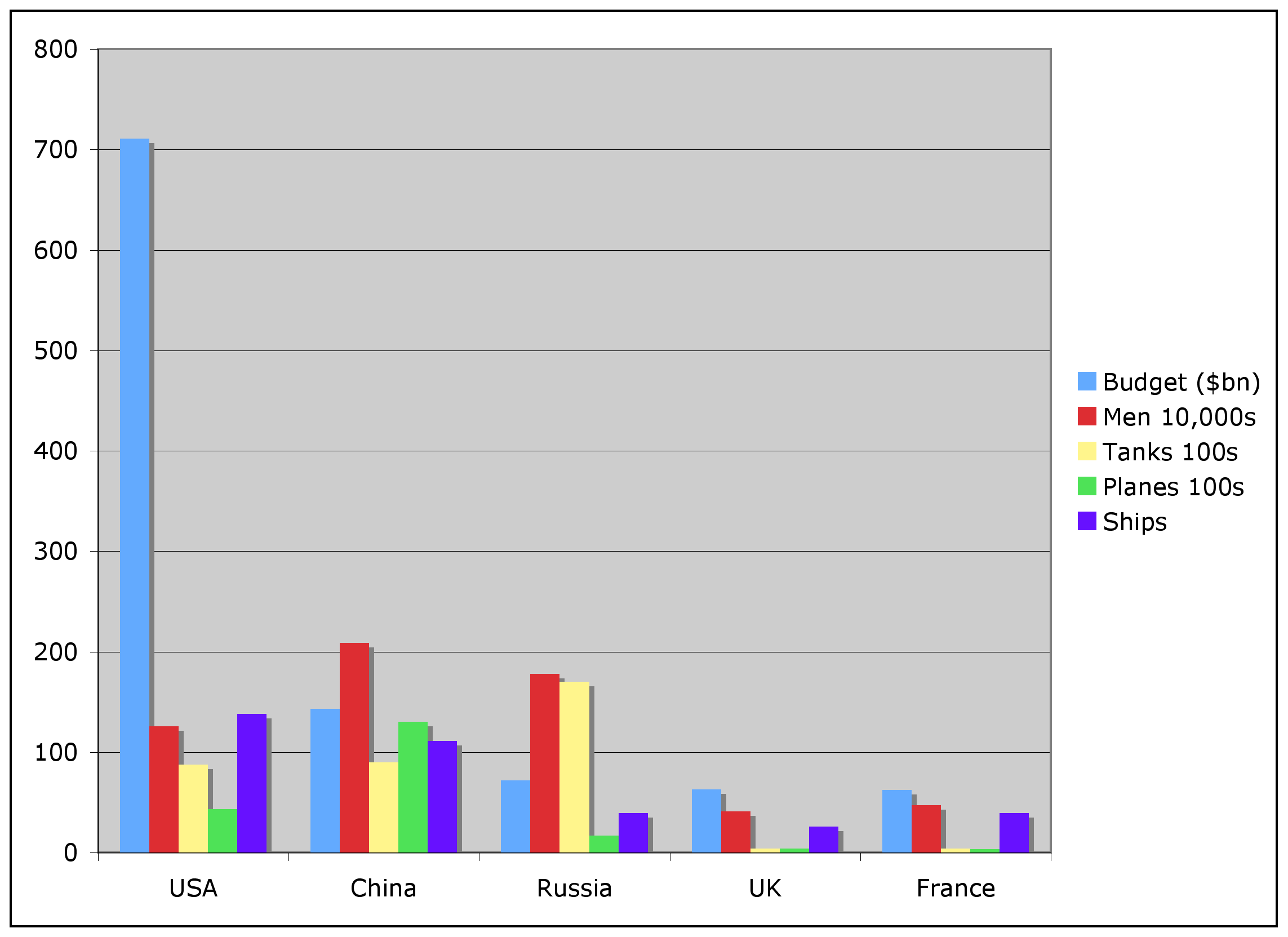
With the scrapping of aircraft carriers, long-range maritime reconnaissance aircraft, Harrier jump jets and shrinking of army battalions and RAF squadron numbers, the UK is in danger of becoming a third-rate power with a fig leaf of the minimal level of nuclear capability to argue itself the “place at the top table” that Fox, Murphy et al always tout as so important. But, consider this chart:

Comparison of Defence Posture and Budgets

By any measure of conventional military strength, the UK cannot be seen as a first-rate power and would be totally incapable of making more than a gesture against the de facto Big Three, the UK even trails France, which is the current European defence leader. This is dangerous territory to occupy: big enough and replete with colonial history to be known across the world stage & be selected as a target without being powerful enough alone to take on anyone so minded and motivated to create trouble.

The Glasgow airport attack; the 7/7 bus/tube bombs would not have happened had the UK not gone into Iraq. Far from defending any part of Britain from such attacks, the UK’s current posture verges on an invitation to attack an oil rig or some other such undefended corner. Present force overstretch is such a habitual occurrence that it’s a puzzle why Al Quaeda or other such organisations kept hostile by our puny variant of gunboat diplomacy in their back yard have, so far, not taken a crack.

The Scottish Defence Force of the RUSI study is not only considerably cheaper at £2.8bn than the £3.8bn share currently paid by Scotland for the defence of the UK but would also permit far more effective deployment of appropriate forces like frigates, fast patrol boats, long-range maritime recon and special forces in defence of our vital oil fields.

Posted in Politics | Tagged | Leave a comment

Perth Conference—Day 3

The problem with the best conference schedule is that it never allows for all the late-running fringe, subsequent social chats, rolling up ad hoc groups who then go to dinner and then winding up righting the wrongs of the world in the Salutation. All this means that, even with a tardy 10:30 am start to business, not all present themselves fresh-faced and ready for debate by that time.

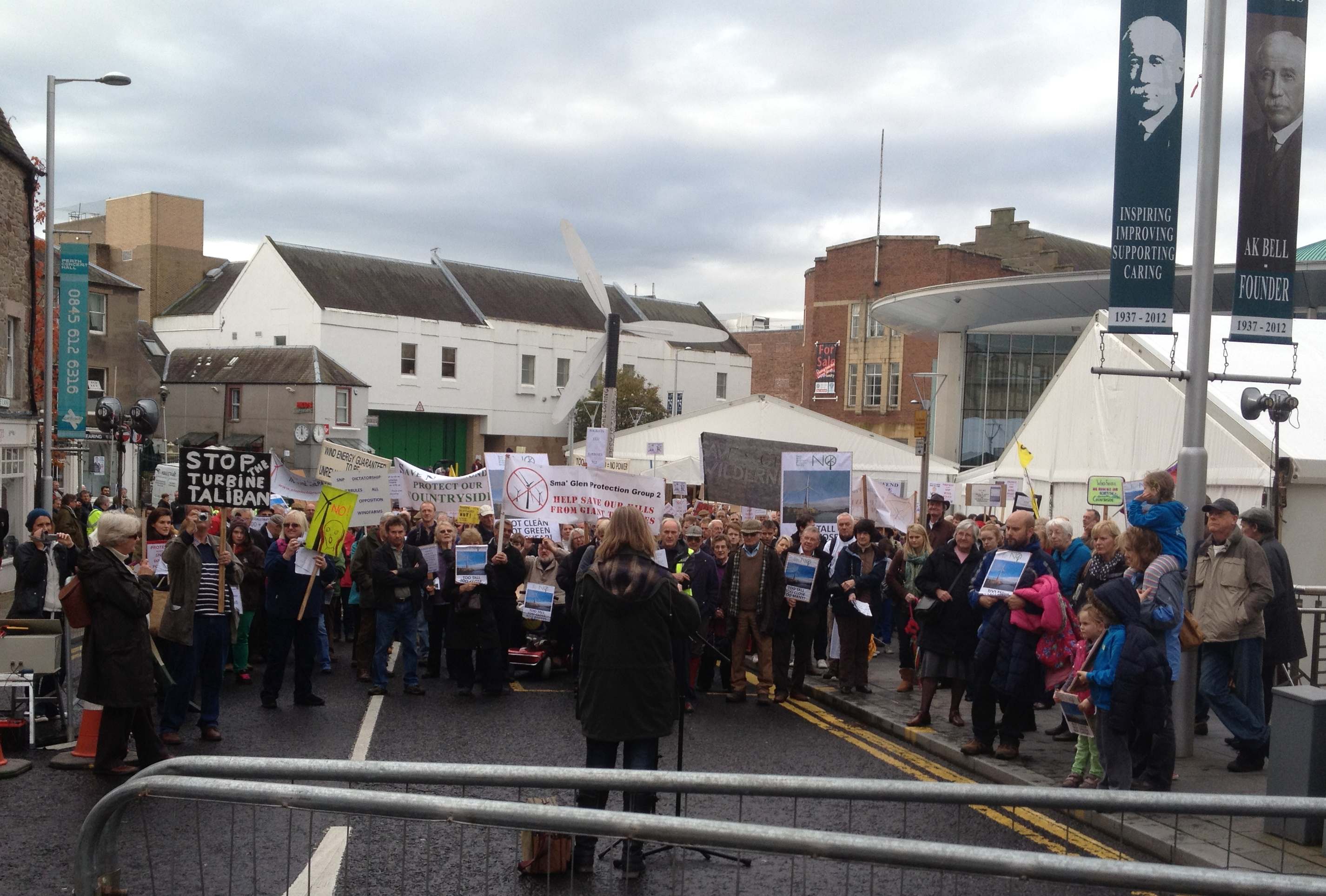
Fiona Hyslop’s Culture Secretary speech having ben bounced from its proper spot by the hectic of yesterday’s NATO debate, I missed much of proceedings having been ambushed by an even stronger demo outside—this time against wind farms, as opposed to against NATO and nukes.

Although officially against all forms of wind power, talking to the demonstrators indicated a broader range of opinions than the protest speakers were implying. Talking to an Aberdeenshire farmer, he was against all structures in or near to settlements but quite happy to upset The Donald with the offshore farm visible from his Balmenie estate.

Another rural resident—originally from Germany—was relaxed even about wind farms on remote and uninhabited moorland but fiercely against the latest government tendency to permit smaller turbines almost anywhere and to provide subsidies to do so. When I cited East Lothian’s attempt to resist this and to win most appeals against our refusal, the demonstrators were surprised that any were being refused anywhere.

After a enlightening fringe meting on FAME (Future of the Atlantic Marine Environment) from Dr Ellie Owen who is discovering prodigious amounts of key environment informaion tracking seabirds and their feeding habits using modern GPS and miniaturised electronics.

Dr Ellie Owen Explaining the FAME Project She Leads with Stewart Stevenson MSP and Lloyd Austin of RSPB

Then it was in to the hall for largely motherhood-and-apple-pie Topical Resolutions that were all passed by acclaim in time for the Main Event of His Eckness’ speech, which started bang on time at 3pm. I could restate much of what has already been said about—and good, pragmatic speech, more full of content than gesture, but a really good piece as already been written by Burdzeyeview, which I throughly recommend.

Instead, I give you some visuals to complement the Burd’s excellent reporting.

Ready for the Man—The Financial Appeal Warm-up Act that always Precedes the Leader’s Speech

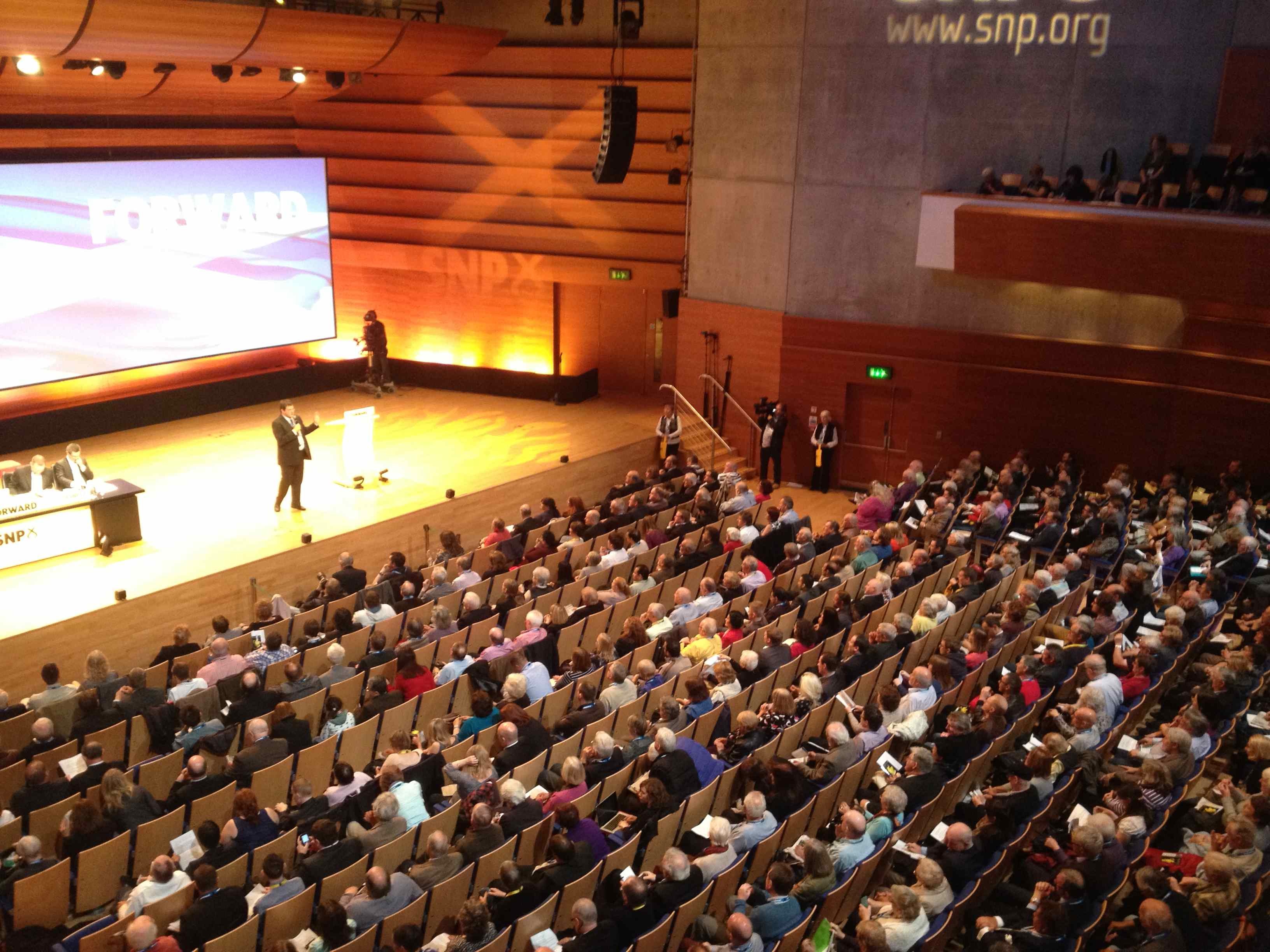
Eck on Form with 800+ Attentive Supporters in the Audience

The Congratulatory “Lap of Honour” Starts at the Top Table…

…but Soon Degenerates into a Media Scrum as Everyone Tries for a Definitive Shot

As usual, Salmond was able to both sense and match the mood of the time and added both a call to campaign for 2014 in a way that harmonised well with the passionate but pragmatic debate that has characterised this conference.


Posted in Politics | Tagged | Leave a comment

Perth Conference—Day 2

After the unexpected fireworks of the first day, I was still fully expectant that the debate would heat up on Day 2 but it started earlier than anticipated with the Trade Union Group’s Chris Stevens giving one of the most articulate and impassioned speeches of the day in support of  Marco Biagi’s motion on private renting.

Before even getting into the hall there had been some lively demonstrating outside by the SSP and some friends, including the ever-amiable Colin Fox, which all added to the rather electric atmosphere of the day.

Chris’s contribution was part of the hour-long warm up of debates leading up to the ‘top billing’ motion 17 that was launched bang on time at 3pm to a hall so packed they had combed out visitors, media and any other non-delegates, so keen was everyone to do this right. Moved by Defence Spokesman Angus Robertson MP the Foreign, Security and Defence Policy Update included point 13, which—for the first time since 2002—called for an end to the SNP’s 30-year-long stance against NATO.

Although there were three amendments to the motion, ‘A’ (to remove specific budget for defence) while causing good debate, was handily defeated and ‘B’ simply reinforced the anti-nuclear stance and was accepted as part of the motion without serious debate. But it was amendment ‘C’ which essentially reversed the “pro-NATO membership on condition all nuclear weapons leave Scotland” stance embodied in point 13 that was the nub of the debate.

A Grim-Looking Top Table Still Attentive 1 Hour in to Motion 17

And debate it was. Angus MacNeil MP seconded the motion, Rob Gibson MSP made a strong case that a decision was not urgent and so this should be remitted back for further debate. Jamie Hepburn MSP who has ripened well from a somewhat erratic firebrand to a more subtle and persuasive politicians laid out the case for Amendment ‘C’: where was the need for NATO in our present day when Ireland saw no need for membership? Where was the supposed threat coming from?

What was clear from every speaker was the unity over removing Trident and fighting  ant successor. What the debate revolved around was whether having or declining membership of NATO was the best way to do that. Over two dozen speakers made their contribution on both sides (with dozens more having cards in to speak but not being called).

But Business Convener Derek Mackay handled himself impeccably, following procedure to the letter, clearing the agenda to make room for more debate and never losing control of what were easily the most intense 2 1/2 hours of debate since I first started attending SNP conferences at Dunoon in 1993. There were repetitions, there were weak speeches, there was the occasional dubious assertion that was left unchallenged. But it was as good an example of democracy in action as I have seen.

Which meant that I was at least as worried as the top table appeared. Having been one of those who badgered senior members to have this debate, judging from the applause for speakers who supported Amendment ‘C’ or who trashed NATO in their speech, this was not going to pass unamended. Justice minister Kenny MacAskill MSP pulled a barnstorming speech against ‘C’ out of this air but Jean Urquhart, Lachie McNeil and even first time speaker Natalie McGarry each countered with impassioned deliveries in its support to thunderous acclaim.

When Alyn Smith MEP stood to make a cogent case against the remit back that we were being naive and not understanding what it would take to make friends among the international community, a section of the attendees jeered and , as Angus Roberstson stood summing up for the motion along similar lines was the only other time the debate was marred by any jeers from the other side.

The passion and conviction was palpable and when Norman McLeod stood to sum up for the direct negative, it was to acknowledge a debate without rancour that had so affected him that he was barely able to complete his address without emotion overcoming him. After more than two hours—a record debate in my experience—everyone from both sides felt they’d had a good shake at making their case and were ready for results.

Counting the results were non-trivial as the hall was packed to capacity all the way up to the rear of the balcony. Amendment ‘A’ was clearly defeated, so there was no count and ‘B’ was accepted into the motion. It took five minutes for the stewards to clock all the votes on Amendment ‘C’ and it was a cliffhanger: 365 for, 394 against, so it fell. Then came Rob Gibson’s remit back, which also fell but by a slighter larger margin: 360 for but 425 against. Finally, the motion itself—amended only by ‘B’—passed by a clear but hardly overwhelming 426 for and 332 against.

Votes For the Remit Back Being Counted

As a drama, it could scarcely have been better orchestrated. Although grumblings about leaving any party that could embrace NATO were heard afterwards from some, nobody lost sight that independence is an absolute prerequisite and the general mood was upbeat for as emotive an argument as this was. What illustrated that for me was, as Derek Mackay asked for a further extension of time to permit all the votes to be counted, a voice piped up in the hall “OK—but get 795 pizzas in first, will ye?”

The dozen fringe meetings after seemed like oases of calm by contrast but, since the CSPP Transport meeting with minister Keith Brown MSP was a km away at the Salutation and still well attended, it obviously takes more than a good knock-down drag out debate to take the wind out of the SNP’s sails and/or appetite for politics.

Nigel Wunsch Head of Strategy, Network Rail; Keith Brown MSP; Steve Montgomery, MD ScotRail; Stewart Stevenson MSP

Posted in Politics | Tagged | Leave a comment

Perth Conference—Day 1

Rescheduled from mid-September to coincide with the school/parliament autumn recess later in the year, I regretted the SNP conference no longer being blessed by indian summer weather as I thrashed north in the rain. Surprised to find we’re now famous enough to get the street outside closed off for security reasons, after negotiating the usual chicane of exhibitor stalls I’m into the magnificent Perth Concert Hall to hear His Eckness launch the event. He did not disappoint.

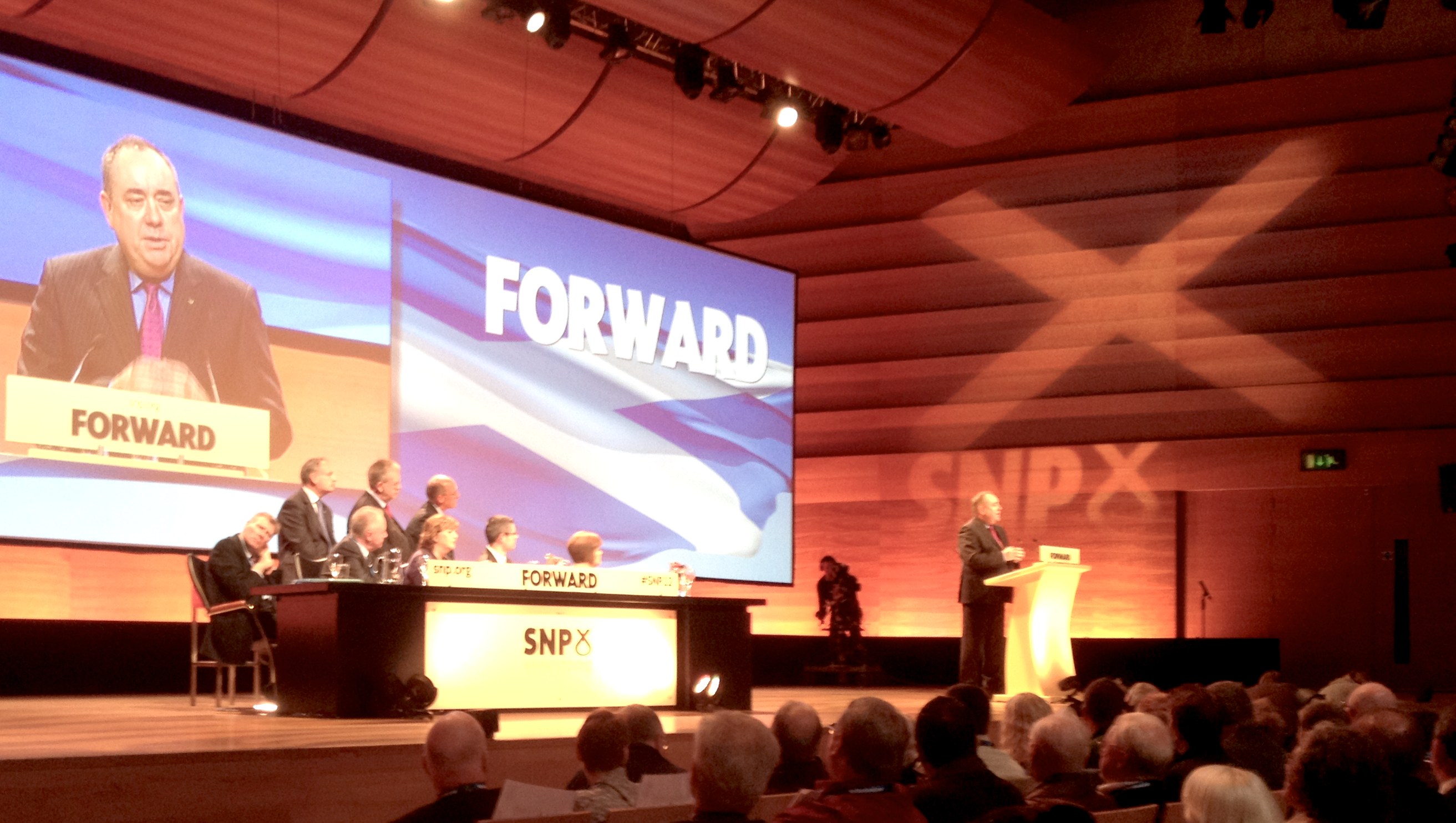
Alex Salmond Opens the 78th SNP Conference at Perth Concert Hall

“”I trust this conference to operate in the best interests of achieving independence for Scotland. I trust this conference to debate the big issues in a comradely manner. I think it is fantastic, I think it is great that we are the only political party in these islands with the confidence to take substantive issues to our annual conference.” He declared, before going on to quote a poem from George Robertson, brother of Hearts legend John Robertson: ““Eat well my trusty, honest friends, in 2014, the nonsense ends.”

While everyone is geared up for the right old rammy of a debate on NATO today, it came as a surprise to me that the private session on constitutional changes launched as fierce and well argued a debate as it did. At stake were three motions:

  • Appointing a National Women’s Officer
  • Electing one male and one female MSP to NEC under separate ballots
  • Electing three male and three female ordinary members to NEC under separate ballots

The first sailed through nem con, but the latter two were wrapped as a single debate and caused the session to be stretched a half hour beyond its allotted time.

Julie Hepburn, National Vice Convener for Political Education Launches the Debate

As a member of the party’s National Executive Committee, Julie had been tasked with pleading a sub-group to present a report on how a gender balance could best be struck at all levels of the party. This was the result of ten years of ‘wait-and-see’ following the 1999 conference in Aberdeen when earlier attempts at changing the party’s rules to encourage female participation were struck down by members. The motions were a distillation of her report and had NEC support.

Julie’s argument, supported by the now-sole female member of NEC Tasmina Ahmed-Sheik as second, revolved around the statistical evidence that, not only was the SNP not making progress including women at all levels of the party but in some prominent instances, such as the MSP group and NEC, the proportion was actually slipping back.

Elaine Wylie Notes the Lack of Women on the Platform but Makes a Feisty Case Moving the Direct Negative

It was surprising to me both the number and deep passion of those speaking against the change. Elaine asserted that the male dominance of the platform underlined the need for action, but that this was not it. She wanted to be elected on merit, not on the fact that she was a woman and warned against the equal risk of “electing three male numpties” if the candidates on the male side were not the best either.

She was backed by well known Renfrew activist Audrey Doig, who railed against the lack of consideration for women having conference in a school holiday week and for not providing a creche, whereas a much smaller party used to. Up-and-coming tweeter and BBC Question Time veteran Natalie McGarry underscored both Audrey’s and Elaine’s points.

When it came time for Derek Mackay, Business Convener chairing the session but obviously seeing a tight vote ahead, to make articulate please to consider that this may not be the full solution but it was a considerable advance towards where we needed to be after a number of years effective stagnation, the scattered, as opposed to full-throated, applause made you wonder as to the result.

At first, it appeared that things might be still on-track. Voting on the direct negative (by the newly formulated rules of voting) did not find a majority so many—including former National Secretary Alastair Morgan and NEC member Jerry Fisher—thought that decided it and even called for points of order to query this procedure. However, when the convener asserted order, he moved to the vote on each of the two substantive amendments, both of which required a 2/3 majority to pass.

Despite senior member and full NEC backing, neither even achieved a standard majority, let alone the required 2/3rds. With the party in fine debating fettle and the bit apparently between its collective teeth after Angus Robertson MP’s stowed-out Scotland on Sunday lecture last night on “Updating SNP Defence and Security Policy” there should be even bigger bouts of passion in the hall around 3pm today. Then the party is to debate “SNP Foreign, Defence and Security Policy Update” a.k.a. To NATO or not to NATO.

Expect fireworks and probably the best debate any party has had in public in years.

Posted in Politics | Tagged | Leave a comment

A’ the Blue Bonnets

The leading letter in Tuesday’s Hootsmon was signed by ten experienced nationalists and titled SNP Should Stick to Disarmament Policy. The fact that all are women is not particularly relevant because all have extensive background in the party and their view reflects a significant portion of members’ views.

What is clear is that they are people with whom I would think twice about contradicting individually. As a phalanx of ten, I risk being ambushed en masse at the SNP Conference later this week if I dare query their very clear argument. But I believe they’re wrong and they deserve some detailed explication why I would go public to say so. Their thesis is that future membership of NATO for Scotland is untenable if you are anti-nuclear but membership of the related Partnership for Peace provides an acceptable non-nuclear middle ground.

The basis for my argument is partly the most comprehensive proposal for the defence of an independent Scotland, published this week by the Royal United Services Institute. “A’the Blue Bonnets: Defending an Independent Scotland”, by Stuart Crawford and Richard Marsh, claims a Scottish Defence Force would be necessary, feasible and affordable.

Scotland can argue that it has paid its share towards the British armed services’ inventory and therefore should be able to negotiate most of what it needs to an independent Scotland. As for whether an independent Scotland can afford its own armed forces,  the answer seems to be an unequivocal yes. Indeed the cost of proposals in the study is half the cost of what Scotland currently contributes to the MoD.

My basis is a number of articles articles already on this blogspot on both NATO and a Scottish Defence Force but most especially the RUSI paper which answers repeated complaints from unionists as to how an independent Scotland could possibly afford to defend itself.

This interesting analysis demonstrates, not only that an independent Scotland is perfectly able to maintain well-resourced capabilities across the armed forces, but that we can actually reverse the mammoth decline that there has been of the defence footprint in Scotland over the last decade as a result of cuts by successive Westminster Tory and Labour governments. Taxpayers in Scotland contribute more than £3.3bn a year to the MoD. But less than £2bn is spent on defence in Scotland – and we are still bearing the brunt of UK Government cuts.

The Scottish defence and peacekeeping forces will initially be equipped with Scotland’s share of current assets, including ocean going vessels, fast jets for domestic air patrol duties, transport aircraft and helicopters, as well as army vehicles, artillery and air defence systems. A review of requirements will fill in some of the major gaps that the present UK defence posture leaves in its northern extremities—fast patrol boats and long-range maritime reconnaissance aircraft to name but two.

The response from the usual suspects like the Record/Sunday Mail has not been warm but the paper’s main findings are that Scotland could deploy perfectly serviceable armed forces somewhere between Eire and Denmark in size and capability and save over £1.3bn in doing so. The savings come from dispensing with weaponry that is relevant to overseas ventures but not to local defence as part of an alliance.

That means no Challenger or other battle tanks, no submarines, no aircraft carriers, no overseas bases and, what is probably the most clear-cut for Scots but contentious in any negotiations, no nuclear weapons. It would be expected that the Scots Guards would remain in the British Army and the Royal Scots Dragoon Guards would give up heavy tanks and become a mechanised reconnaissance unit.

On the plus side, the defence posture would restore key maritime abilities to defend Britain’s northern flank and the critical oil platforms and two brigades would allow not just re-establishment of present regimental identities wrapped into the single Royal Regiment of Scotland but the resuscitation of some of those lost.

For all of this to make sense, relations with our neighbours must be good to ensure mutual collective defence. For this, there are only two options: NATO or Partnership for Peace. The former is US-dominated, includes the militarily most capable parts of Europe outside of Russia and has nuclear capability. What that last bit means is that the US controls deployment of its own (huge) and the UK’s (small) nuclear arsenal but not the (small) French nuclear capability. PfP is an association of states that decline to be part of NATO because of its nuclear ability and “allows partners to build an individual relationship with Nato, choosing their own priorities for co-operation”.

PfP members include Sweden, Finland, Austria and Ireland, who all provide plausible examples why Scotland should join them. But there are two facts that torpedo the cosy logic behind that: 1) the UK is currently in NATO and; 2) All its nukes are on Scottish soil. What is worse, there is no other plausible place for those nukes to go. The best geographic alternative is Milford Haven but that is both Welsh and a major oil terminal. The south coast of England has neither comparable facilities, nor easy access to deep water—quite apart from outrage to be expected from nearby Home Counties.

One of the more ludicrous postures that my local East Lothian Council made under Labour control was to subscribe to being a nuclear-free authority. The fact that it is home to EDF’s Torness power station did not strike them as contradictory. In the same way, if Scotland becomes independent, joining PfP and keeping the nukes at Faslane would be untenable, a ludicrously contradictory position to put yourself in.

Not being a part of England-plus any more, we would have no direct say in the MoD’s deployment (although we had precious little when it was first put there) and not being a part of NATO, we would have no influence on where its members deployed anything.

If, as I believe is possible, nuclear weapons are to be removed from Scottish waters we first of all have to become an independent nation with every right to require that. But we must be subtle about it. By joining NATO, we get a place at the table and the right to put in our requirements. These should be the removal of Trident and any successors from Scottish waters.

England-plus will be faced with the dilemma of what to do with it. Given the £20bn price tag to continue it into ‘Son-of-Trident’, the lack of alternative bases and the huge distortion running a nuclear sub fleet of four creates in the (reduced by 8.7%) England-plus defence budget and the smaller (reduced by 8.7%) status of England-plus at the top table’ without Scotland, sanity will break out at Westminster and the nukes will be scrapped.

This means not only will we achieve Scotland’s goal of providing an adequate defence at half the current price but we will be part of an alliance that will provide many of the non-nuclear elements (US carrier task forces, for example) that even England-plus is insane to attempt by itself. AND we will not only have satisfied our own but our English cousins long-held CND convictions.

I believe Scotland can improve the world just by being independent in the first place. But by making its membership of NATO conditional on nukes leaving its territory, it can strike a blow for peace that all the well intentioned and principled members of PfP can only dream of.

Posted in Politics | Tagged | Leave a comment