Two Other Views

Yesterday’s blog was one response to “An Historic Day” but I have come across two others from regular cyberauthors whose opinions I generally value. I therefore have no hesitation in recommending the both of them for further reading on the matter:

  1. Lallans Peat Worrier, whose cogitations from a cranachan cairn are always worth a scan and his take on the glacial pace of media attitude change in England is well articulated at: http://lallandspeatworrier.blogspot.co.uk/
  2. A Burdz Eye View, whose pithy take on social issues are value for time spent and whose sharp analysis of why people lost out in the terms of the referendum can be found at http://burdzeyeview.wordpress.com/2012/10/15/parties-1-people-0/

That said, the Burd’s name appeared, along with a veritable who’s who of female nationalists, in today’s letters pages of the Hootsmon beneath a well reasoned argument against NATO membership. Nonetheless, I expect to be taking exception to it in tomorrow’s blog right here. Watch this space.

Posted in Politics | Tagged | Leave a comment

The Start of Ane New Sang

The Edinburgh Agreement, signed today by Alex Salmond and Nicola Sturgeon on the one hand and David Cameron and Michael Moore on the other signals the end of jostling for position of the hows and wheres of process for a referendum on Scottish independence. It’s about time. For, though there are two years to go before any vote is expected, this is such a major decision that considerable debate on the pros and cons is not just welcome but necessary.

For most of us who believe that Scotland would contribute more—not just to Britain but to the world—by running their own affairs, ongoing language about ripping things up and tearing things out and generally wringing hands at the supposed dire consequences of such a major move are unhelpful.

This move is not against anyone; it is about a country that everyone recognises has all the qualifications to be a country in every sense making a choice whether it wishes that future or to remain in political union with England and therefore administered by Westminster for many key issues, including taxation, foreign relations and defence.

What this is most certainly not about is to create social or economic barriers with anyone, especially England. Virtually all Scots acknowledge the stirring history, the wide spectrum of culture and other contributions to civilisation that our two countries have shared down the centuries. But this debate is about our future, about how England and Scotland can provide the best for their respective citizens going forward.

Those who believe the Scots would be better as a normal country in control of its own affairs must render that so evident to a majority voters that they vote accordingly. But those who prefer the status quo must make an equally forward-looking, positive argument that wins by enthusiasm and example. The worst of all worlds is surely one where a vote to stay in the union is won by fomenting fear on baseless uncertainties, leaving the Scots with wounded psyches, such as did so much economic and civic damage from the 1970’s into the 1990’s.

Since then, the transformation of Scotland into a more vibrant, confident, affluent country than England has left many of our English cousins either puzzled or wholly unaware of the transformation here. Whereas the English appear to have moved more reluctantly to accept the end of empire, of world domination, of glorious isolation and of world-beating technology, the Scots, always the junior partner seem to have happily adjusted to a secondary role in the world, particularly when the best quality of life seems to be attainable by more modest-sized countries from Switzerland to Singapore.

If the English wish to rediscover their world-leading role in any field from politics to production, it’s not our job to dissuade them. But where this independence debate will pivot is on the divergence of ambition by the Scots, as an active, developed country with no extra-territorial ambitions beyond trade and tourism.

A major divergence has surfaced just this week with the announcement by Michael Gove that “the Conservative-led government will walk out of the EU unless Westminster is handed back its sovereignty from Europe“. Such an oafish intransigence is anathema to good relations with neighbours and speaks volumes for how little Gove and a significant section of the English public understand its main trading partners.

For centuries, Britain behaved as if it were not part of Europe. Its ‘glorious isolation’ of the 18th and 19th centuries served it well, building world-leading affluence on a huge trading empire made invulnerable by the global policing of the Royal Navy. Yet 100 years on from Sarajevo and the brutal wake-up to reality Britain suffered in WWI, major English parties are acting as if we can dismiss the market 300,000,000 people of which we are a members and try throwing our political toys out the pram to get our way.

And how can unionists keep a straight face and insist on keeping Scotland tightly bound while they reject any external control on themselves?

This is not Scotland’s future. Not having been threatened by neighbours (other than the English) since Haakon got his jotters at Largs in 1260, Scots are actually more curious than hostile towards foreigners—just look how Glasgow’s huge Pakistani community has kept their identity, yet become integral to the landscape. No wonder the Scots look to Ireland or Denmark, Norway or Iceland and see them thriving, even as they make their own mistakes. Consider this:

  • Ireland had a property bubble and is suffering for it. Cranes all over Dublin are still idle. And yet, compared to the dirt-poor backward 3/4 of a country that left Britain in 1922, it is a model of modernisation and relations with Britain are unrecognisably better than they were 100 years ago. Dublin is a vibrant city (with working trams) that attracts boatloads of British tourists. And, meet one of the many Irish immigrants here and they’re more likely to be a doctor than a labourer.  “Irish national debt is down to the same as Germany’s at around €25,000 per head (better than UK’s)” Ask any Irish if they want to return to the UK.
  • Iceland had a long history as a Danish colony before its independence came as one of the few good things to come from German occupation. Visit and you are struck by unending blackened heaths of volcanic debris, constant eruptions, hot springs and a climate worse than Scotland. Add in that their banks overextended themselves prior to the 2008 come-uppance and you should have Zimbabwe on ice. In fact a population 2/3rds the size of Edinburgh has rewritten the constitution to deal with fiscal problems and they are building a fishing industry that Scotland can only envy. “By mid-2012 Iceland is regarded as one of Europe’s recovery success stories. It has had two years of economic growth. Unemployment is down to 6.3% and Iceland is attracting immigrants to fill jobs.” They also have no interest in being taken back under Denmark’s affluent wing.

When people like Jim Murphy deride such countries as ‘The Arc of Insolvency’ they are not only completely underestimating the ability and resolve such countries display in adversity, they are showing dangerous oblivion to the fiscal idiocy with which the UK economy has been steered since Brown borrowed like a drunken sailor to prop up a social programme Britain couldn’t afford that even hard-nosed Tories like Osborne have found impossible to reign in.

Add to the above this ludicrous belief that Britain can still “be at the top table” or the conviction that nuclear weapons have any place in the 21st century UK or that the UK has any business in dubious foreign wars like Afghanistan and you can catalogue the divergence of opinion between the Scottish people and the governments that England keeps choosing for them. This divergence of interests has accelerated since 1999.

Left to themselves, Scots would be part of Europe and NATO; they would develop green energy sources as well as the rest of its hydrocarbon reserves; they would inherit their share of the UK debt but be in a better position to pay that off; they would develop much closer links with other neighbours and join the Nordic Council.

But they would also be part of Britain, with Queen as Head of State and the pound as currency—exactly as Australia did for its first half-century of independence. It would keep building ships for England, allow NATO exercises, keep an open border and make the trains that cross it run on time—that is, unless Westminster makes any more huge messes with the East AND West Coast main line rail franchises: we are not our English brothers’ keepers.

At this time next year a White Paper similar to the process by which devolution was arrived at will be published at Holyrood. This will answer many questions to help those needing detailed data to make a hard-headed, pragmatic decision. We get one shot at this: pro or con, it behooves us all to get it right.

Posted in Politics | Tagged | Leave a comment

Oily Evasion

One of the regrettable developments of the 21st century is that you can’t read any authoritative brief on fiscal matters without stumbling over acronyms for bodies you’ve never even heard of. Two such are the OBR (Office of Budget Responsibility) and the CPPR (Centre for Public Policy for the Regions). Both have recent provenance and are at pains to claim strict political neutrality. They need to: decisions on your future will be argued, based on their figures. To date, their track record’s not good.

OBR was created in 2010 to provide independent and authoritative analysis of the UK’s public finances. It’s £2m budget (mostly wages) is run by Robert Chote who pulls down a cool £142k for that job. They produce forecasts for the economy and public finances, judge progress towards the Government’s fiscal targets, assess the long-term sustainability of the public finances and scrutinise the Treasury’s costing of Budget measures.

It publishes a variety of papers, the one of most interest to us today is their Economic and Fiscal Outlook, last published on 29th November 2011 but updated in March 2012. Underlying that paper were two earlier papers on 24th January 2011 providing Forecast of Oil & Gas Expenditure to 2016/17 and Long-Term Oil & Gas Projection to 2040/41. There is another paper on Scottish Tax Forecast that came out in March and you’d think would be relevant but, as it excludes oil, it’s hardly representative of the real Scottish economy.

CPPR is an academic research centre located in Glasgow University’s College of Social Sciences. The CPPR Director is Professor Richard Harris, a full-time member of staff in the Business School who holds the Cairncross Chair of Economics. Since its inception in 2005, it has published 29 Working Papers and 23 Discussion Papers and undoubtedly contributed to the debate. It published its most recent Pre-Budget Briefing on 12th September.

So far so neutral—but an alert independence cat found a flock of unionist pigeons hiding amongst OBR’s revised estimates for oil and gas published in the March 2012 revision above, processed through the CPPR and finally reported in the Herald on 13th July this year. In this revision, the OBR observe:

“The futures market suggests that oil prices will remain higher throughout the forecast period than we assumed in November, but that they will fall back more quickly than expected previously to $95 per barrel in 2016”.

Now, no-one should dismiss the forecasts implied by the futures market whose traders are ruthless in evaluating likely future pricing; their mortgages depend on them getting it right. But when we look at how well such forecasts have held up in the past and we start to evaluate some motives involved, it is appropriate to put supposed objective analysis under tight scrutiny.

Two years ago the OBR advised the Treasury that its expectations for oil prices in 2012 were around $84 a barrel. That was when WTI (West Texas Intermediate, the US yardstick) and Brent crude (the UK yardstick) were pushing $77 a barrel. This weekend, WTI is at $91.64 and Brent at $114.67. The difference can be explained by oil quality (sweet, as opposed to difficult-to-process high sulphur), more efficient sized wells and closeness to markets, minimising transportation costs. But, in short, OBR miscalculated by a whopping 25%.

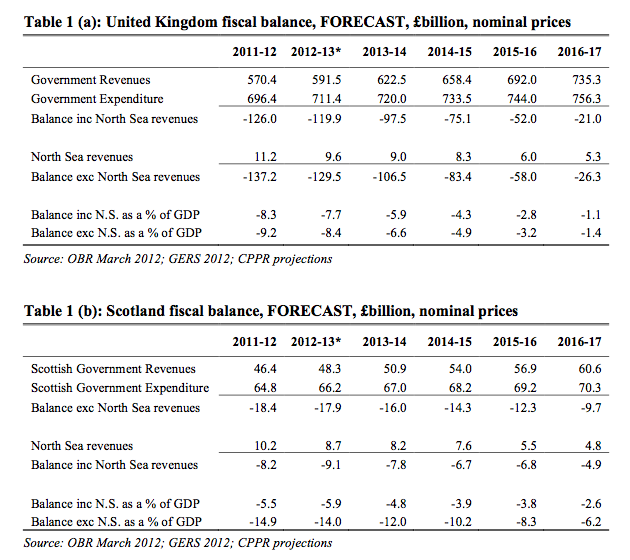
By now, everyone knows that North Sea oil tax revenues—and therefore much of the theoretic initial economic vitality of an independent Scotland—depend on oil prices. Based on OBR numbers, the CPPR originally came up with a table showing short-term results for both the whole UK and for Scotland alone thus:
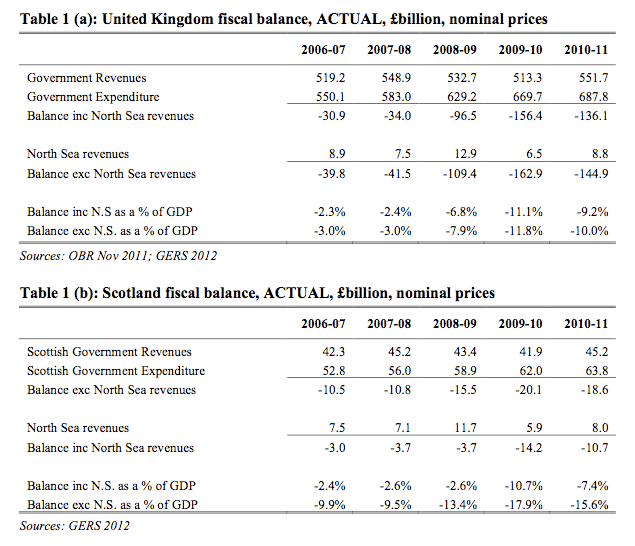
GERS Table (Including Oil) as Originall Published

This shows the UK descending into a negative GERS balance of -£144bn last year, with oil excluded (as 90% of it would be Scottish). This massive -10% balance compares to figures for Scotland that are -£10bn or -7.4%. In other words, a separate Scotland may show a negative balance but it’s only 3/4 of what it would be as part of the UK.

Such a powerful argument was not lost on HM Gubmint. During increasingly heated debates on independence over the last year, the OBR revised its figures. Downward. The CPPR followed suit, making no qualification of the basis upon which such alterations had been made.
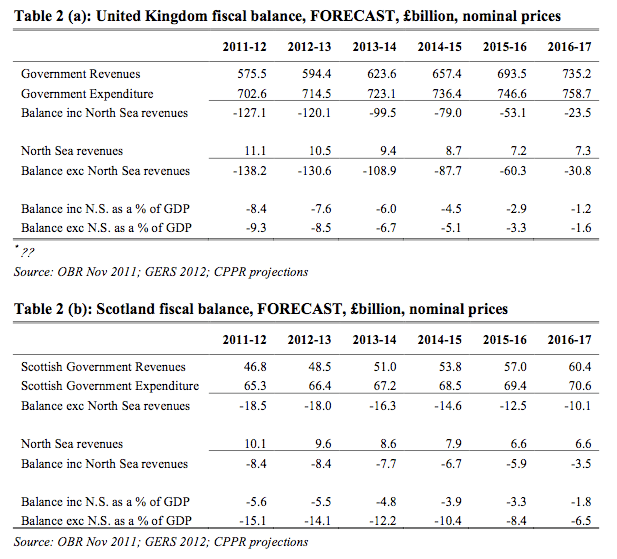
Not only do such tables show what appear to be optimistic forecasts for the UK’s revenues within 5 years (by 73.5% while Scottish revenues rise only 60.4%) but they predict an independent Scotland and a UK both running 1-2% imbalances by 2016/17. In other words, Osbo’s right; hang tough; we’ll come out of this better together.

Aye, right.

There are many arguments as to what most affects future oil prices. Besides production levels and OPEC unity, the demand is usually considered to depend on the world economy. However, given that the stagnation in world GDP since 2008 has seen post-2007-peak oil prices rise steadily from a bare $60 to almost double that, such crude factors clearly don’t tell the whole story.

Not content with the favourable figures show above for the UK for the next five years, the OBR revised oil revenues down and published the following:

Consider these as Tables 3a and 3b—Revised Short-Term CPPR Table, based on FIO

The balance for the UK has improved marginally to -1.4% but for Scotland—even including oil, it has worsened to -2.6%. One reason why such figures as suspect is that, within hours of them being revised in July, UK government and opposition politicians were all over them like a rash.

LibDem Chief Secretary to the Treasury Danny Alexander: “The revised predictions proved Scotland was better off as part of the United Kingdom. There are many reasons for optimism about Scotland’s economic future, and oil and gas remain a big part of that. But a case for separation that relies on a declining source of income is sorely mistaken. Scotland benefits hugely from the income stability being part of the UK provides”.

Labour’s Shadow Scottish Secretary Margaret Curran: “the latest figures show Scotland would be better off rejecting independence in the upcoming referendum, expected in 2014. The oil and gas sector is very important, but production goes up and down, prices go up and down, and so it is foolish to base our whole economy on this alone.”

This reasoning was backed by Robert Rowthorn, Emeritus Professor of Economics at Cambridge University, who warned of problems caused by the volatility of oil revenues: “In the past 25 years oil prices have shown a great deal of volatility. Up to the early 2000s a barrel of oil was $25, then it jumped to $150, dropped to $50, rose back up to $150 and was now around $100.”

What caused these seismic changes in price predictions? OBR reported on July 12th of this year: “Our projections for oil and gas prices are also lower than last year…oil prices rise from $95 a barrel in 2016 to $173 a barrel in 2040. This compares with a projection in last year’s report of a rise from $107 a barrel in 2015, rising to $206 a barrel in 2040.” This is approximately an 11% drop.

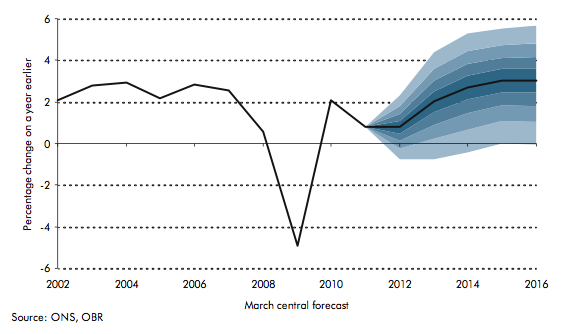
But, as evidenced above, they projected 25% too low for the last five years. As with most economic projections, the professional way to report this is as a fan of possible outcomes spreading from today. Their chart for GDP takes this sensible approach and shows a range from 0% to 6% with the most likely outcome in the middle at 3%.

GDP “fan” Projection for GDP by OBR

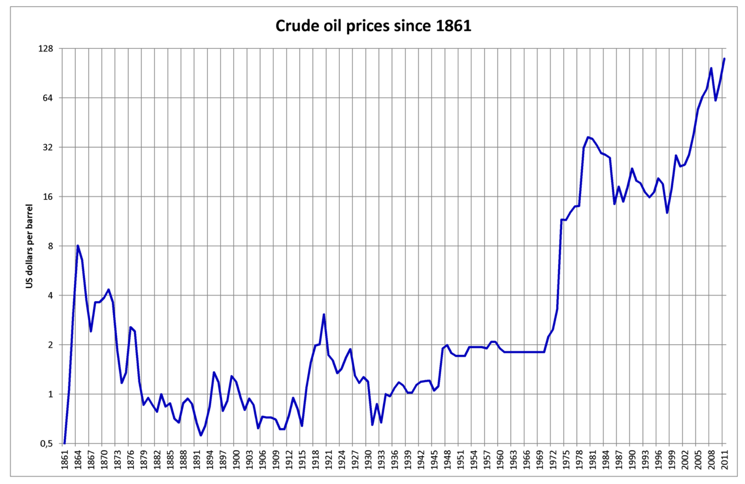
Given that (if you remove the oil shock ‘bumps’) oil prices have climbed pretty steadily for decades, as shown in the logarhythmic chart below. Note the laughable price for most of the 20th century and the effectively steady climb since the 1973 oil shock.
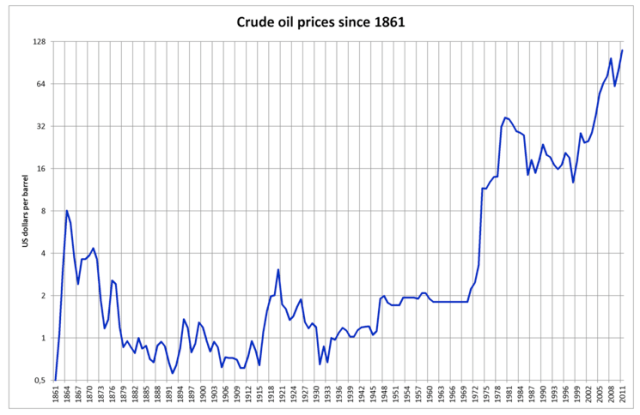
Logarhythmic Chart of Historical Oil Price

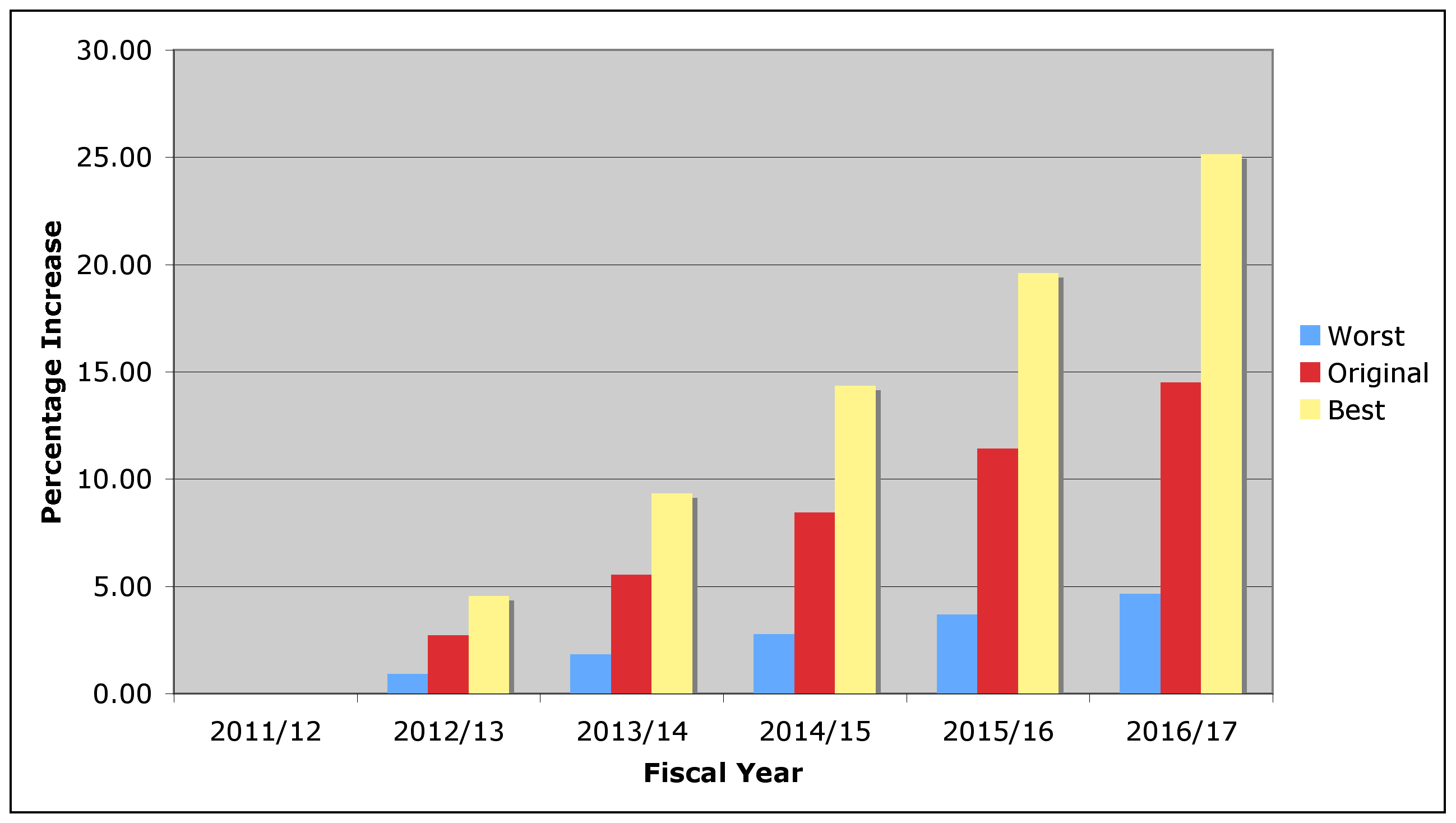
The idea that oil is likely to fall or stay flat in price over the next five years when the entire Western business and social model is 90% dependent on cars seems, if not fanciful, then certainly a worst case scenario. Between 1972 and 2012, the oil price has risen by an average 10% each year from $2.30 to $91. And if we conservatively take just half of this historic average rise as the best case scenario, the new data as the worst and the original as the median, we arrive at a chart like this:
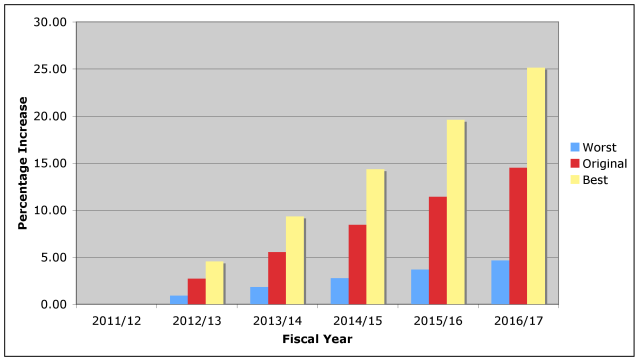
Projection of Oil Price % Increase for Worst (Revised OBR) Original (OBR) and Best (Half of Historic Increase)

The charts above already show the original and worst-case scenarios. Calculating the best would give a replacement table 4b as follows.
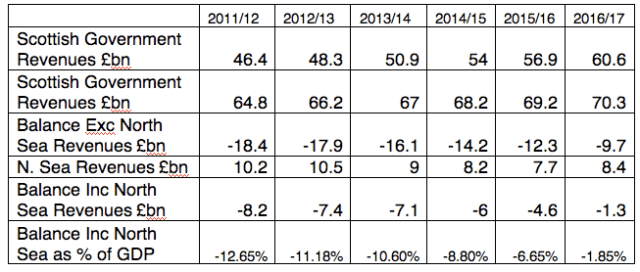
Table 4b—Same as the OBR/CPPR Tables above but using Half Average Oil Price Rise as a Basis

This appears just as plausible as the recent OBR/CPPR downgrading of future oil prices and therefore equally capable of demolishing the quotes above as the latter was in supporting them. This basis shows Scotland doing better than the UK in all of the five years projected. And, rather than downplaying oil’s positive contribution and harping on its volatility, the UK—and especially the OBR and CPPR—ought to be considering the up side potential of oil prices as well as the down.

Not to mention forever looking for bad news stories that might prop up the Union.

Posted in Commerce, Politics | Tagged | Leave a comment

Nightmares Don’t Deserve Commemoration

David Cameron has announced that the UK government is to spend £70m in commemorating (not, you note, ‘celebrating’) the centenary of the outbreak of World War One in less than two year’s time. Meaning no disrespect to any of the millions who died during those four years, still less to the multiples of millions who suffered its legacy of destruction, lost loved ones and its execrable solution that bred both resentment and World War Two, despite extensive competition amongst his utterances, it is easily the stupidest thing I have ever heard Cameron say.

For whatever glory or even good may be said to come of war, it is hard to pick a more vivid global example of the vanity, stupidity and sheer cussedness of mankind at its worst than WWI. All wars have their horrors, victims and, often, post-conflict justifications that stink. Some are arguably necessary. Moreover, the sacrifices made by brave and selfless people in their respective causes can often illustrate mankind at its selfless best.

I attend Armistice Day commemorations partly for that reason and partly because my grandfather managed to bring most of himself back from Ypres (leaving most of his right leg there). My father brought all of himself back from a four-year stint driving between Cairo and Lübeck in a variety of tanks. As a result I exist and am eternally grateful that my existence enjoys freedom from such emotional and physical scars, due to their—and all their comrades—selfless efforts.

But, let’s be honest, WWI is a global canvas of arrogance, brutality and stupidity that puts other wars in the shade by taking all those to depths never exceeded—before or since.

It starts with the cosy self-righteousness of the European ‘powers’ in the century before. By growing ever richer from their burgeoning industry and scant resistance to their global colonial carve-up, it was self-evident (to them) that their culture was superior to all others, justified in its Kipling-esque ‘white man’s burden’ way to sweep aside any culture, tradition or religion encountered. As Major Heyward queried General Webb in Last of the Mohicans: “I thought our purpose was to make the world England, sir!”

Despite fixation with massed colourful, concentrated brutality of the Napoleonic era, the military did learn lessons. But they were all about improving ability to kill. From rifle to machine-gun to breech-loading artillery, lethality grew in leaps and bounds that railways and navies allowed to be deployed over unheard-of distances at unheard-of speeds. But all that new scientific warfare offered little to the defence, whose main leap forward was drab uniforms that no longer made easy targets of brilliantly visible military peacocks.

The 19th & early 20th centuries should have taught military professionals across Europe many salient, fundamental lessons in war during the run-up to August 1914, such as:

  • Massed charges against modern equipment in the hands of those resolute enough to use them caused carnage, such as obliterated Pickett’s charge at Gettysburg or decimated the Irish Brigade as it milled fruitlessly about in the Tugela river bend under Spion Kop or even the Old Contemptibles mowing down von Kluck’s doubl;e-time marching men before Ypres.
  • Courage, resolution, élan, training and even camouflage uniforms count for nothing and are useless as defence if you simply charge a strong enemy. The French in the Vosges, the Japanese at Port Arthur, even the Zulus at Rorke’s Drift bought this lesson with the lives of their men.
  • Relatively easy victories against large, courageous but ill-equipped forces in the colonies were no precedent to learn from (much less an training exercise in appropriate tactics), despite what Omdurman or the Boxer rebellion or Napoleon III’s Mexican adventure might appear to say.
  • Using the First Law of Engineering “When in Doubt, Use a Bigger Hammer” while appealing, is not necessarily effective on the battlefield. Thus trenches largely negate the awful killing power of machine guns and artillery—and if they’re deep enough, even heavy artillery. Also, as Harald Hardrada found at Stamford Bridge and the English found at Bannockburn, having the biggest force is no ace trump if it can’t be deployed effectively.

The domino politics that led all the ‘great powers’ into war deserves entire chapters on its own but it bears a strong resemblance to a ‘my big brother can beat up your big brother’ ego-driven intransigence that characterises puerile playground face-offs.

Also, given that all major powers had put much ego into an arms race that involved dreadnoughts, mass-production-equipped armies and a fiendishly intricate mechanism for calling it up, those few with an objective appreciation of the powder keg that everyone was sitting on while passing round the fags were horrified when the whole Heath-Robinson-esque juggernaut was triggered by Archduke Ferdinand’s demise in Sarajevo, a person/place unknown to 99% of those about to be killed because of it.

That mass armies, in many cases galvanised by an almost insane level of imperial jingoism and deprecation of the enemy (e.g. “Huns Bayonet Babies in Belgian Churches”)  met other mass armies in Flanders, Galicia, East Prussia was perhaps inevitable. But that, once stalled against each other, that the general-ship then applied was of such poor and basic reasoning makes you wonder how they ever got the job:

  • ” They’re building trenches”? We’ll just outflank them.
  • “We’ve run out of space to outflank them”? We’ll throw more men at ‘em
  • “They’re mowing down our men faster than they can climb out of the trenches”? bombard their lines so they can’t fire at us so easily.
  • “They’re still mowing us down”? Then use bigger/heavier/more artillery longer

And, behind the respective fronts, entire corps of cavalry milled about, waiting for their cue: a clean breakthrough that military manuals in every combative’s language dictated would be the way the war would be won. It never happened.

What little lateral thinking was displayed was scuppered by an execution that would be hilarious, had it not cost as many lives as it did. Raring to be at ‘em, Churchill pushed for the RN to invade the Baltic and land troops in Pomerania, failing which a similar move against the Turks by taking Dardanelles and then pushing on the Constantinople and linking up with hard-pressed imperial Russia.

Expecting a pushover against the much-maligned Turks, the ANZACs and British 29th Division stormed ashore at Gallipoli, milled about in confusion caused by an ossified command structure strangulated by superannuated commanders like Stopford, then found themselves mown down by German-trained troops under Kemel Attaturk who sold every inch of their homeland dearly.

Gallipoli turned into a sun-scorched version of the Flanders trench warfare but with desiccation instead of trench foot and omnipresent flies replacing rats. And yet, the attacks of 1915 and 1916 went on as if the Somme or Verdun could be different and had no lessons to learn from Ypres or the Marne, let alone the previous half-century of escalating carnage.

Perhaps Haig and French were prisoners of their own time, just as Foch and Joffre or Ludendorf and Hindenburg. That the German ‘Stosstruppen’ or the British tanks were able to break some of the stalemate is not the point; several million corpses already lay strewn pointlessly across Europe and it can be argued that it was German economic and social collapse that brought the war to an end. “Our soldiers were stabbed in the back” was what Hitler’s NSDAP, the Stahlhelm and other right-wing organisations would claim post-war—and thereby lay the foundations for what some regard as ‘the second half’, a.k.a. WW2.

It was a tragedy for all concerned that would bring Europe down from unprecedented Edwardian achievements and affluence to the shattered collection of bankrupt ruins that stretched from Stoke-on-Trent to Stalingrad in the rationed hand-to-mouth of the late 1940’s. If Western civilisation has a clear and unequivocal low point, it was then, when closed, smug minds in government took their gullible peoples to war in 1914. It should never have happened. It must be held up as a lesson in communal losing of the plot: brutal; costly; unedifying; unforgettable, but not something to commemorate, except as a kind of self-flagellating reminder of our capacity for universal idiocy.

Posted in Community | Tagged | Leave a comment

Living Next Door to the Blenheim

Regular visitors to this blog may have noticed a certain hiatus in its usual crisp sequence of posts every other day. Normal service may resume but I’m not sure I can promise it. The reason is a particularly hectic weekend when I caught up with friends on contiguous nights, guided out to Bass Rock on the last Saturday of the SSC trips out there and was confronted with a piece of history in which I had not choice but to participate.

Now that I no longer chair East Lothian’s Licensing Board (nor am I even a member) I can come clean about a dirty little secret that friends have been good enough not to shop me for. The story starts ‘way back in the innocent days of the early sixties. Are you sitting comfortably? Then I’ll begin.

Like most small-town adolescent males, I spent 1963 desperately trying to impress girls but failing miserably. At the time, I blamed the fact that 5th year rugby gorillas drove cars and therefore could sweep the babes in my year off their feet. I now see that hormone-induced acne and raging mood swings and the thinness of wallet and/or cool sustainable by a paper round might have played their respective parts.

The answer, with rock belting out the radio and girls swooning before the stage at the local dance hall, was obvious: get in a band. The first iteration didn’t work too well. All of our mothers turned us out scrubbed and we were about as earthily proficient in the Gene Simmons school of profanity and tongue leers as the Vienna Boys’ Choir. Plenty rock, plenty gigs, even some money; but no babes.

Before leaving school, I’d worked out that the formula was wrong. The acne was gone but the mood swings were still there and rock cool now had to be Stones-like or Who-esque, although my freckles were never going to let me aspire to be Hendrix-some. So, when the rival local band who had a raunchy lead singer, wildly plugging bass, more feedback-screaming lead guitar than the wimpy amps of my old band could dream of asked if I’d join them for a tour, I said ‘yes’ before I thought about it.

Because the ‘tour’ was all in Milton’s head. He’d bamboozled three of the band (Spike, Mick & Bert) to join him in traveling to Majorca to make a bundle playing for sun-and-sangria-loving tourists. But Walter the drummer had a good gig as a housepainter and wanted none of it. So, early July 1967, a red Thames van with all our gear and the five of us headed down the A1 towards fame & fortune.

Before we’d even got to London, Milton broke it to us that we didn’t have any gigs in Majorca yet. But he’d been at Farnham College of Art that year and knew a pad near there we could crash at while we went up to London, saw some agents and sorted all that out. After being laughed out of several agencies, it wasn’t even Shaftesbury Avenue but Turnham Green where we finally capitulated to one who suggested we just play some gigs around London.

So we did. And though we played the Angel, it was in Edmunton, not Islington and that summer we never even got a sniff of the Marquee, Bag of Nails—let alone the Crawdaddy Club where the Beatles met the Stones. Still, it was a summer I’ll never forget—working out how to live like a hippy, sleeping till noon, playing a crude squash variant in the garden, seducing the dollybird daughters of Farnham stockbrokers—all (unknown to us) in parallel with the Haight-Ashbury summer of love going on at the same time.

Milton and Mick composed songs on an old pedal organ one of the art-student roomies had; we got better as musicians; made demo records to peddle round other agencies; gigs got further afield—from family caravan sites in Pembroke to gloomy working men’s clubs in Sheffield to camp psychedelic clubs ahead of their time in Colchester. But that was about as close to the Continent as we ever got.

By the end of the summer, both repertoire and playing were much tighter but I had a dilemma. Second year at uni started in mid-October. Despite the bird-pulling power of a tight band in tight flares, I hitchhiked back north to reality.

They did fine without me—got a better drummer who was really into the lifestyle and not just dabbling like me. They were good enough to turn professional, get better equipment and the sine qua non of professionals: a Ford Transit van with aircraft seats. A couple of summers I visited, sat in, was mildly jealous, especially when they had tours to Denmark and Germany. What I didn’t know is they starved and froze much as the Beatles had done in Hamburg seven years earlier.

Eventually it dawned that they were good and could get good gigs—but always as warmup; none of the songs they wrote interested recording studios; although they had offers as individual session musicians that wasn’t why they were there. So after three years—right around the time the Beatles split in 1970—they called it a day and went their separate ways.

Milton went back to Scotland, taking over his dad’s hotel business; Mick went to California, still with some dreams; Bert wound up in Tromso(?!); Spike settled down and used his patter to get into advertising in Fleet Street in the days that was the centre of the print universe. And that, as the storyteller has it, was that.

Except it wasn’t. After a few years, Mick, now trained as a nurse, came back home. Within a year, another band is touring Fife and the Lothians, featuring him and Milton. But now they’re both married with jobs and so obligations soon ratchet it back to just playing in Milton’s pub each weekend with a succession of young local guitarists and drum machines filling in for the absent members.

By the nineties, Milton had moved back into hotels, buying the Blenheim House Hotel in North Berwick’s Westgate, which is where I found him on my own return from the States. Soon there were a series of New Years Day parties, 40th/50th birthdays, receptions, wakes, anything was an excuse for a gig, fill the lounge with a heady mix of friends and rock’n’roll. This went on for years, with Bert arriving back a decade ago and Spike often making the trip up to sit in. But it couldn’t last.

With all of us pushing retirement age, Milton decided to hang up both his bar peeny and his guitars after one last summer season. And so it was that, 45 years on from our first (and some claim only) rehearsal, his Westgate neighbours were deafened for the last time by a six-hour stint of various guest performances, as well as of the old band. High point for me was when Milton (as is his wont) ad libbed new words to a song—in this case “Living Next Door to Alice” in which he sang apologies to his long-suffering neighbours who for twenty-four years have been living next door to the Blenheim.

Though I’m sad it has all now ended, I’m also relieved: I always had visions of us being in the middle of tearing the place down with “I Saw Her Standing There” or “All Right Now” when the polis arrive to complain—and there’s me, Convener of the Licensing Board giein’ it laldy at the epicentre of it all.

Blenheim Final Gig, October 7th 2012: Spike (lead); usurper (my drums); Bert (bass); Mick (vocals); Milton (rhythm)

Posted in Community | Tagged | 2 Comments

Corned Beef Auditors

Since taking over control of East Lothian Council five months ago, the new Labour/Tory administration has not exactly hit the ground running. But what they have been busy doing is sowing alarm and despondency about the “parlous state” of council finances and using every opportunity to declaim “last year’s record 26% increase in capital spend to a total of £71m“.

To a large extent, this is predictable politics. They made a number of election promises like restoring free heavy kerb-side uplifts and building house extensions. These need to be funded at a time when incomes are dropping, so something will need to be cut to allow for them; finding fault with the previous budget is good cover to blame someone else.

Except that both Labour and Tory budgets last February committed even more capital spend and Labour, in particular, had been vocal in criticising the scale of reserves, claiming that the council could therefore afford to give everyone a pay rise. However, at the Audit Committee meeting of September 18th, an audit report from KPMG sided with the new administration, criticising both over-commitment of reserves and a debt-to- revenue ratio at 1.62 that they presented as the worst in Scotland.

Auditors—especially ones of the stature and charging the fees of KPMG—are expected to get things like this right by listening to the details. This lot may have looked for the beef in the figures but they wound up corned beef. Here’s why.

Firstly, not only was the present recession was anticipated and built into ELC budgets as early as 2010/11 but ELC was praised for its handing of it. The Report on the 2010/11 Audit by Audit Scotland of October 2011: “The General Fund recorded a net surplus of £5.9 million, attributable mainly to savings across service budgets” and “an additional £7.4 million statutory surplus was added to reserves” and most importantly “most of the council’s recent borrowing is to finance the building of social housing and debt charges can be met from housing revenues.” All this was achieved while securing local jobs by sticking to plan giving people affordable homes and key facilities like schools.

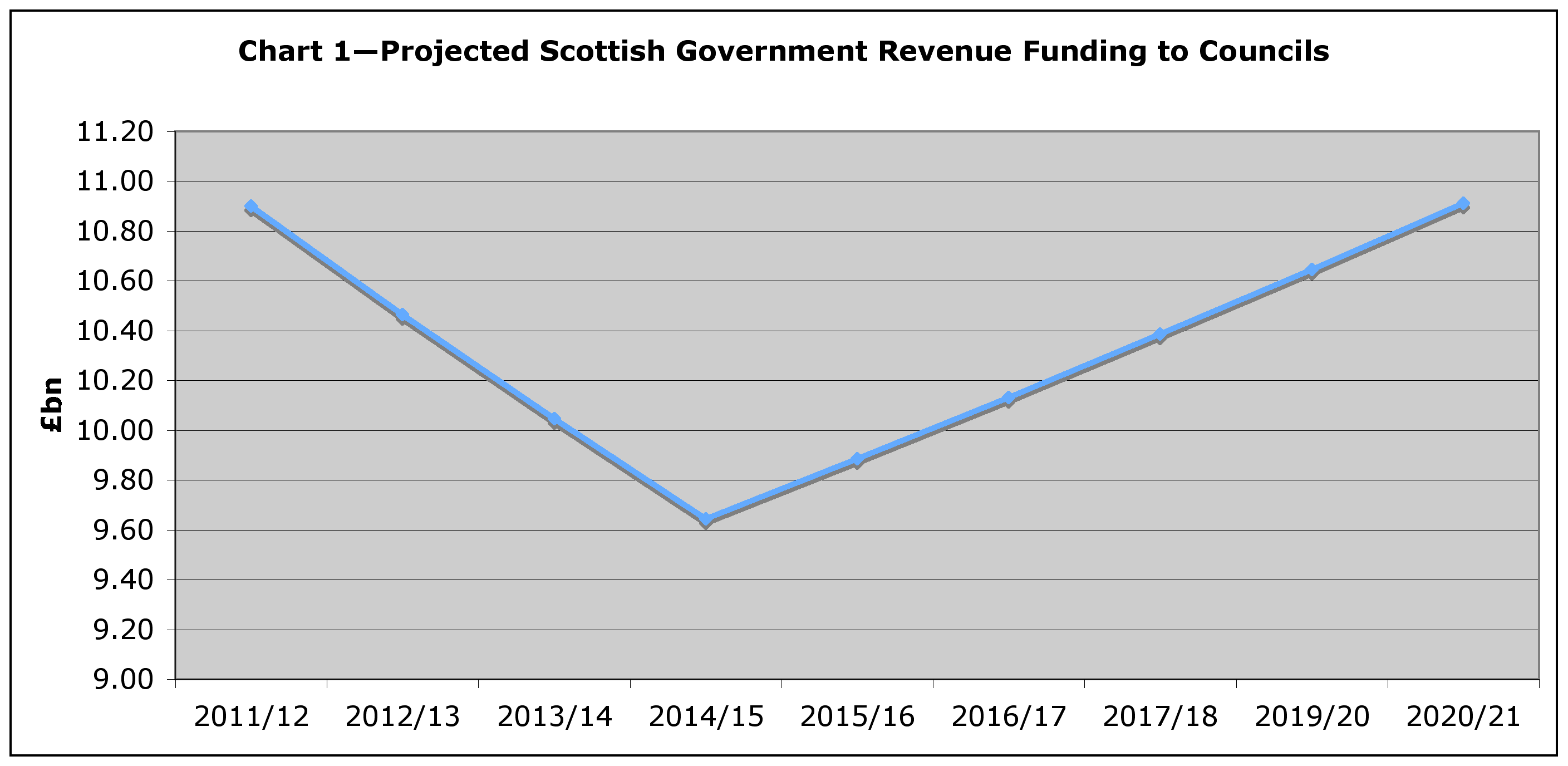
Secondly, until this spring, the UK Governments was driving Scotland towards a reduction in finance of 4% over each of three years to 2013/14, followed by a slow recovery to original levels by 2020. Faced with an option between shedding 12% of staff or building a “bridge” across the dip, ELC chose temporary use reserves to keep services stable and staff secure. The dip in revenue and ‘bridge’ across its low point is illustrated in Chart 1.

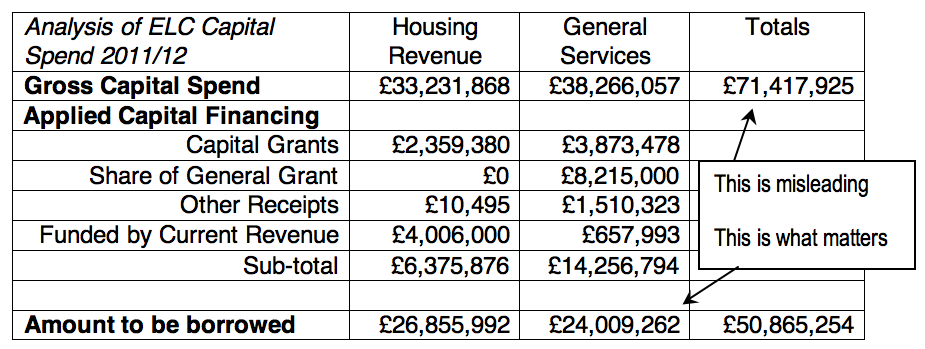
Thirdly, the new KPMG report to ELC’s Audit Committee last month appeared to be written wearing a set of blinkers. By claiming “all reserves committed” and a “record rise in capital spend by £71m” and “largest debt by revenue of all 32 councils” they interpreted numbers narrowly. The use of reserves had been planned that way (see 2 above). The key figure for debt was £24m, rather than £71m (see table below) and; c) non-housing debt by revenue—the one that matters because it’s repaid from revenue was 0.95, not KPMG’s 1.62.

Table 1—Breakdown of ELC Capital Investment for 2011/12

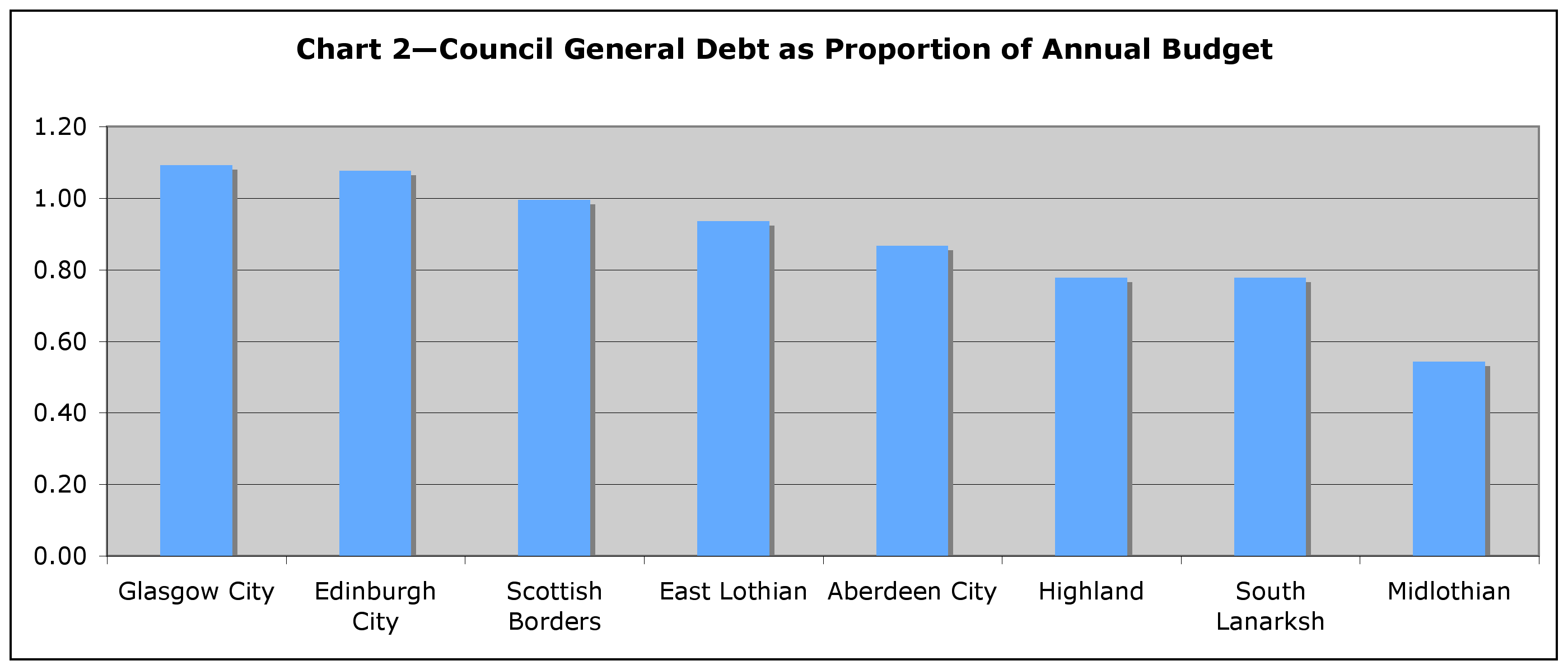
The reason net non-housing debt should be used is twofold: several councils (e.g. Glasgow & Borders) have no housing debt at all and; housing debt is no real burden as rents not only cover borrowing costs but can even supply financial support elsewhere. Therefore only the non-housing part need be funded from general revenue budget. Redrawing KPMG’s chart gives Chart 2.

This shows three councils deeper in debt than East Lothian, none of whose housing, education or general infrastructure (i.e. buildings) are in as excellent a shape as East Lothian. Indeed, one reason for East Lothian’s debt has been making its estate sound in anticipation of money being tight in the near future. This secured many jobs in the county while allowing the council to shed 400 jobs naturally, thus far avoiding any mass compulsory redundancies.

Fourthly, putting that another way, some £106m (over £1,000 per resident) has been pumped into local jobs in providing 1,000 affordable homes over the last five years. Crucially, all resulting debt can be carried within the self-sustaining Housing Revenue account (HRA). Over the same time, the General Services account borrowed an additional £43m that will cost just over £1m in additional interest. An equivalent sum was taken every year from the HRA by the earlier Labour administration—clearly such numbers can be sustained.

All that said, no-one questions difficult times ahead. A double-recession has delayed when the corner in Chart 1 will be turned. Any 3-year budget set last February does now need revision to allow for new circumstances. But whether ELC’s new administration can absorb the rigorous budgeting necessary—or KPMG twigs how local government capital finance works—is entirely another matter.

Posted in Community, Politics | Tagged | 1 Comment

Buck-Buck, Bu-aaaaack!

Ten days ago, in a blog entitled Ten of the Best, I threw the gauntlet down to the assorted rammy of unionists who claim that Scotland would be better off in the UK in any and all situations. OK, I said: convince me.

They have been much better at claiming the superiority of the union than giving me anything I could recognise as sober and cold-reasoned arguments. I was looking to them to lock their case down tight and deafen us all with the sound of nat foreheads being slapped as they forsake their misguided ways and return to the paths of the righteous.

To make it easy for them, I couched the debate in terms of ten ‘daft laddie’ questions that most ten-year-olds could take a stab at answering without having to flip to the calculator app on their iPhone. That was ten days ago; so far, nothing; zip; nada; nada goddam thing.

Come now, Jackson Carlaw or Ruth Davidson; Willie Rennie or Tavish Scott; Jackie Baillie or Michael McMahon. You’ve all trashed nats with glee in the past. But what I’m looking for is your positive half of the argument; what the Scottish people will enjoy into their future that they would/could not have more of or better or easier by having their own country back. If the case is so self-evident, why are you spending your lives nitpicking the political equivalent of dandruff?

I am especially disappointed in the Tom Harris/Murdo Fraser/Jo Swinson factions who have shown themselves to be articulate, objective when required with commitment to the causes they espouse that go far beyond arsecrawling conformity in their chosen party. It’s hard for me to believe they have nothing to say. But that is the conclusion that, inevitably, must be drawn—that, daft laddie or no—independence is as hard to refute as a solid case for the union is to make.

The credible critics of independence, such as Alan Cochrane, can be relied on to make a decent fist of their argument, as can the literate venom of Brian Wilson, even as bluster epitomised by Lord Foulkes undermines their cause. But they’re on less sure ground as union-boosters. I’ll grant this summer was a good patch for those who regard the UK as sacrosanct—the enjoyment of millions in a well run extravaganza crowned by a serious medal haul was plain to see. Yet the Ryder Cup, where the UK has no identity and which is coming to Scotland in 2014, drew amazing TV crowds into the wee hours.

It’s possible no-one reads these blogs and that the 20,000+ hits so far were all mistakes. Judge for yourself. More likely is that a variety of people come for some info, some opinion and some titilation, We don’t want them to stop so the best story yet why we should stay in the union should make for a good  read.

Or, in truth, do such arguments—like answers to my daft laddie questions—not exist and such unionists as make up the Better Together campaign already dwindling to the payroll vote?

Posted in Politics | Tagged | 1 Comment

Embra-rassing: A Public Transport Pygmy


The recent criticism of restructuring the EGIP railway electrification project to bring Scotland’s key intercity track out of the 19th century rather misses the point. As with the rest of Britain, we think that throwing money at individual lines in the worst pork-barrel tradition will someone leave Scotland with a modern transport system. Almost every new rail investment has underestimated the demand. But that’s not necessarily a sign that we’re getting it right. It could be that demand is so huge, almost any new line will succeed.

Today sees the publication of a paper by Transport Scotland on a Smart and Integrated Ticketing Strategy. Sounds good—great in fact: it’s not just God who loves a sinner come to his understanding. Given the scale of the issue, its 18 pages are light on substance and reading them poses more questions than they answer until you realise that we’re only discussing smart—not integrated—ticketing, which is a shame. What we seem to be aiming for is McOyster and little else.

It’s a bit like laying 150mph track but then running 60mph trains down it: yes, it’s a railway, Jim—but not as we would like to know it. However many anoraks we have staffing Transport Scotland, SPT, Network Rail, SESTrans, ScotRail et al, nobody seems capable of thinking like passengers, addressing their problems holistically and finally getting ridership to compare with what European countries achieved decades ago. Let me state this in simple terms:

  1. People want to get from home to/from work or shops or friends as direct as possible.
  2. They will do that by the easiest means (and in the least time if it is repeated often).
  3. Price is a factor but convenience/speed much more so.

Universal direct public transport links are, by definition, impossible. But any transport system worth its salt will minimise interchanges required and the distance/time needed at each. Currently there are no systems in Scotland worth the name—trains and buses operate on different planets, let alone ticket systems or timetables. The result is a mess—and an expensive mess at that—which results in people piling into their cars in droves.

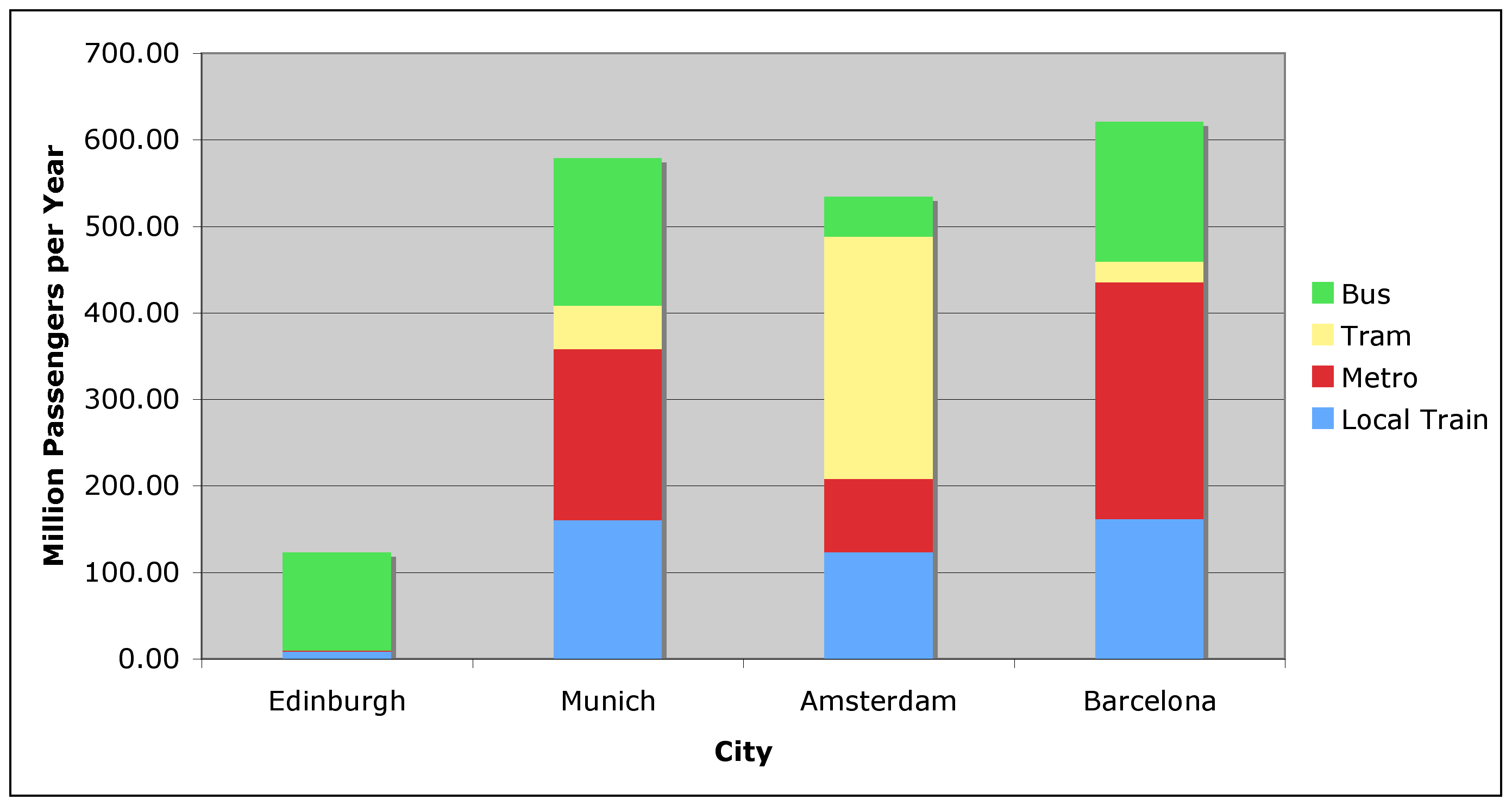
Look at any decent-sized city in Europe and its public transport will put Edinburgh to shame. From Amsterdam to Zurich one ticket gets you around a logical, integrated web of trains, metro, tram and bus, cascading from one to the other in a linked plan.

Munich’s Public Transport—a Real Network

By contrast, in Edinburgh, almost 90% of its 123,000,000 annual passengers rely on the slowest, least efficient form of public transport—bus. Good though Lothian buses may be, they have no real competition, with neither metro, nor suburban trains worth the name within the city. The other 10% use ScotRail & First services from the Lothians and Fife. But comparing Edinburgh with European cities is an exercise inviting serious ridicule.

Embra-rassing: Public Transport Statistics for Comparable European Cities

Reliant almost entirely on buses which are then choked by the cars people use in frustration, Edinburgh is a pygmy in transport and decades behind comparable cities. Even allowing for its population (500,000) being the smallest of the four, its still grossly outclassed per head.

But what is worse, the reason the Europeans are so far ahead is that all three other cities ditched the competitive private profit shibboleth vampiring on investment and hobbling growth here by picking transport organisations up by the lapels and making them work seamlessly together. as a result, the MVV in Munich has run a slick single-ticket system for the last 40 years. Together with linked services, it’s what lures people from their cars.

Yet we (and the Transport Scotland paper published today) act as if such a thing had yet to be invented. No wonder Bavarian or Catalan visitors milling around Waverley looking for a bus—or even any information about buses—look on us as transport neanderthals. This Gordian knot needs to be cut by

  • rethinking the ScotRail franchise to encourage single-ticketed integrated services
  • threatening bus companies with loss of all subsidy unless they jointly agree a single ticket system in short order
  • insisting toothless SESTrans/SPTs earn their pay or get their jotters.

And, in case you think this is being unduly harsh, insisting on transport value for public money, the future ridership stats for Edinburgh’s £1bn tram system are included in the graph above. It’s just they’re so small you can’t see them. Embra-rassing stuff!

Posted in Transport | Tagged | 3 Comments

Private Finance Insanity

So the debate on how Scotland’s public sector should face another four or more years of growing fiscal drought that will take 12% out of the £33bn devolved budget has been blown open by Labour’s unexpected conversion to revisiting universal care. Leaving aside the relative merits of that and the proposal made in this blog yesterday of adjusting (but not raising) Council Tax so that the rich pay proportionately more and the poor and middle pay the same, what other major factors are in play?

Together with the roughly £11bn of GAE (Grant-Aided Expenditure) from the Scottish Government, councils rely on around £3bn in council tax to balance their books after all fees and charges they levy are taken into account. A 12% rises in that tax take would certainly cover a multitude of fiscal problems—£360m is a wheen o’ siller. But that is not likely in the next year or two, so what else need we focus on?

Wages are a huge element of council expense and, despite a wage freeze, there is still an upward creep in this of around 1% because of promotions and grade advancements. That means that, if the 12% drop hits councils, we are really looking at a 16% squeeze by 2016. Any prognosis that all services are not in for some form of paring is unrealistic and it will take a level of clever management and shared service delivery that, to date, both CoSLA and council senior management have both shown themselves incapable of addressing, to avoid customers complaining about cuts and staff going out the door.

One of the culprits that gets away with no adverse publicity is the Irn Broon wheeze-of-the-noughties of PPP-redux, aka Private Finance Initiative (PFI). Labour-run councils in particular fell over themselves to use this because it was so tempting: get millions invested now and let children as yet unborn worry about how to pay for it once you were long retired. Great wheeze!

Had the halcyon pre-2008 days continued, PFI might not have been such a burden. When council tax and GAE were both rising at an average 5% each year, there was always more in the pot to spread around and cover such growing expenses.

Now, we’re in a totally different situation the income growth isn’t there but PFI demand is. As an example, East Lothian’s PFI for six high schools was valued at £56m and started in 2002 with payments of £5.5m. Ten years later, that annual payment has risen inexorably and now stands at £7.7m. Put another way, ELC is now paying a 13.75% rate on a £56m loan (when PWLB borrowing is around 2.8%) and it’s only going to go up.

Although it affects almost all areas of public finance, little has been written about PFI in Scotland and especially its growing vampire drain of public finance at a time when that finance is shrinking. There are 85 PFI projects running across Scotland that have produced a total capital investment of some £5.67bn. In return for that, by 2040, these projects will have cost the taxpayer £30.77bn in payments. Borrowing from the PWLB would have cost around £4.67bn over the 30 years. You judge which is the better deal.

But, now that the pips are squeaking and we are supposedly “all in this together” are any of the PFI contracts being renegotiated? Are any of the PFI consortia meeting with councils and the Scottish Government see see what they can do to ease distress? Not a bit of it; in fact Westminster insists that all PFI payments come ‘off the top’ before and other liabilities are considered for payment.

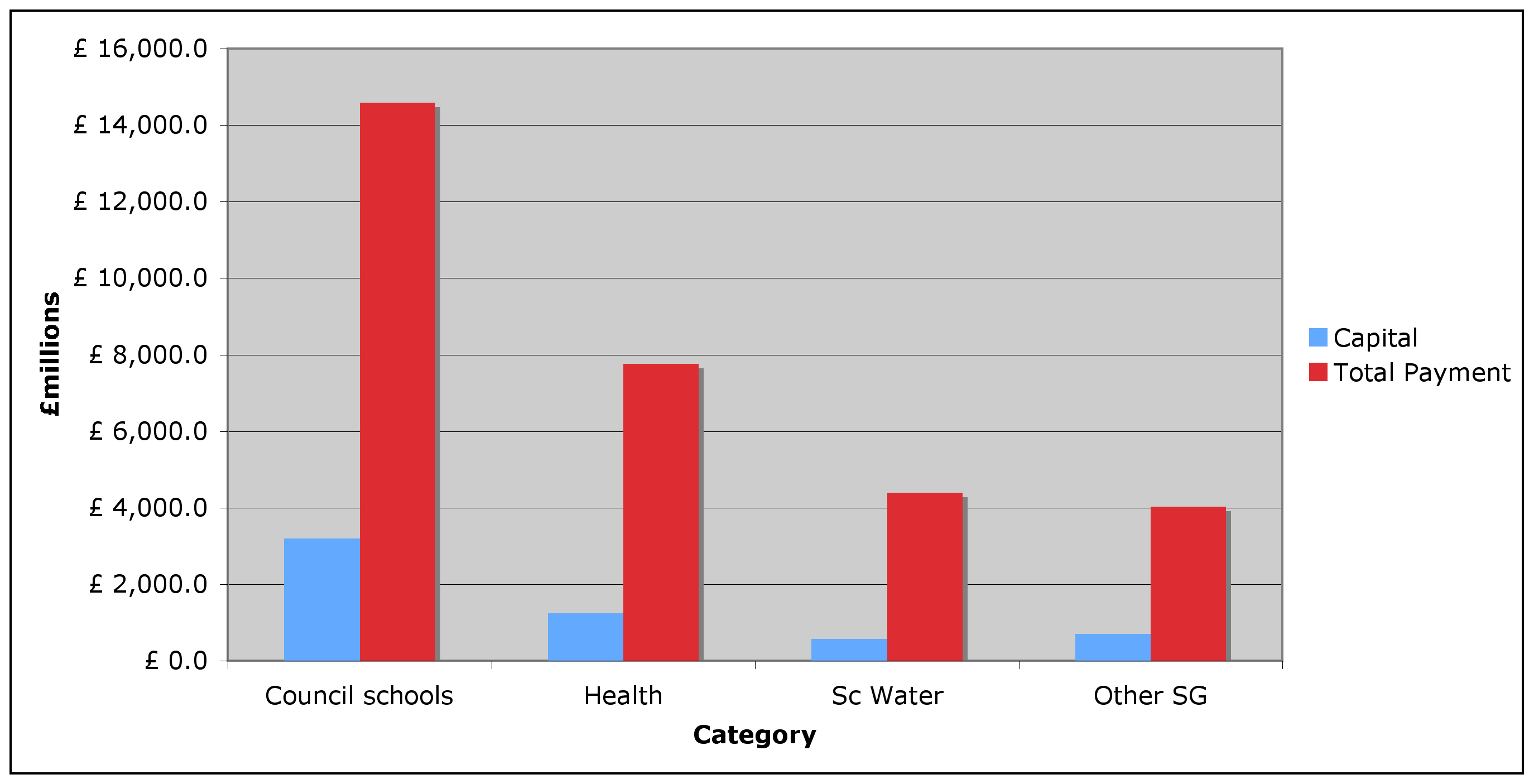
Because the Scottish Government gets all its funding directly from Westminster, it is not in a position to adjust its income at all. Councils are slightly better off in that they get ~20% of income from council tax. But, since that has been frozen, both are in the same cash-strapped boat—the question is more which category of government is more affected by the financial imposition of PFI. Chart 1 shows the main divisions:

Chart 1—PFI Capital Investments and Total Repayments by Category

While the other categories clearly made major use of PFI to fund projects—60% of total projects and just under 50% of repayments are council schools projects. One of the largest is Glasgow’s £225m of investment. It is also one of the worst deals going—currently costing £46m this year and rising inexorably to £68m each year before it finally ends in 2030.

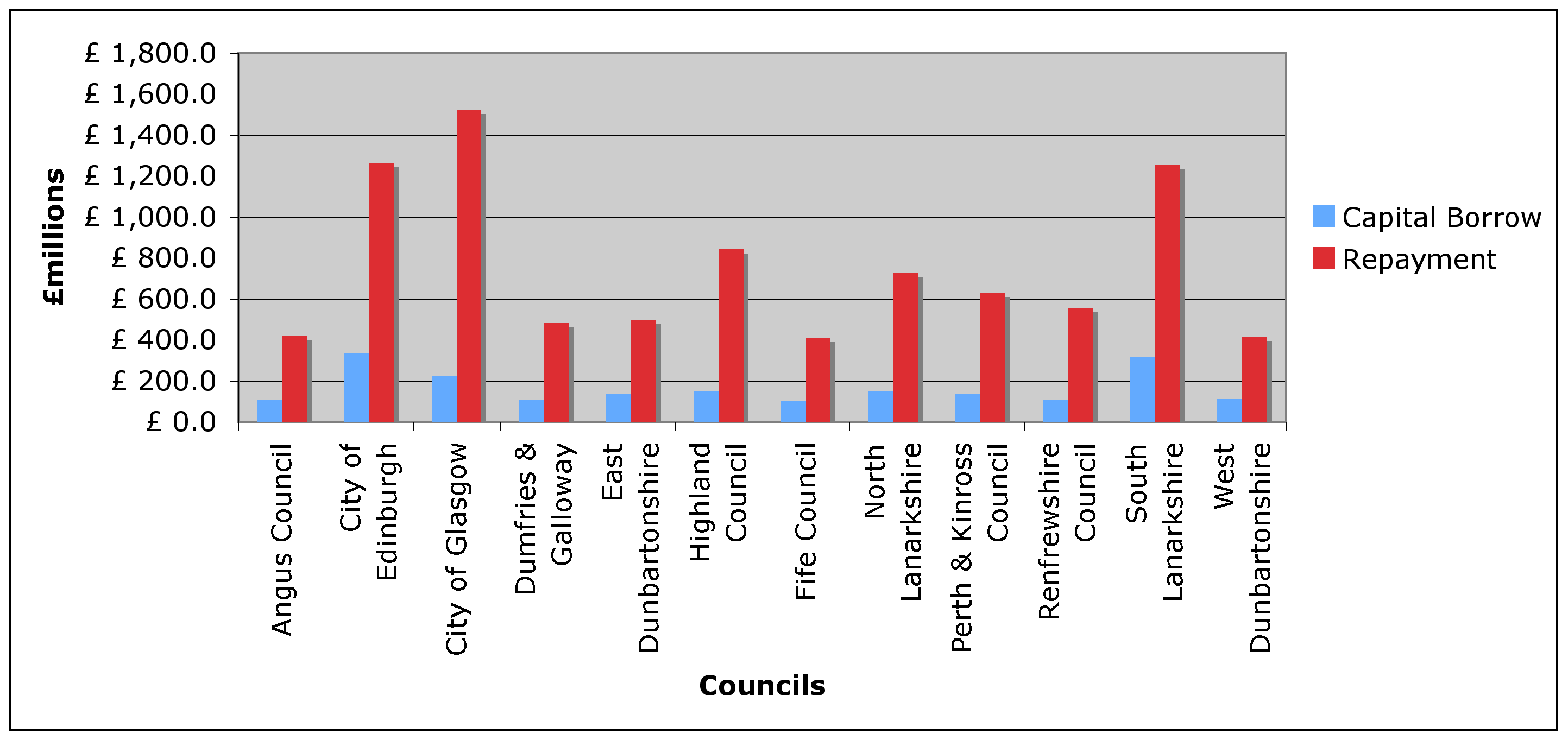
If it were just Glasgow, the case against PFI would be bad enough. But because Finance-Minister-at-the-time Andy Kerr pushed PFI as “the only game in town” and many loyal Labour councils followed his instructions, councils put over 40 PFI schemes in place, almost all to do with building schools. Those involving over £100m in capital investment are shown on Chart 2, along with the total repayments involved:

Chart 2—Twelve of the Best? Council Schools PFI Projects over £100m

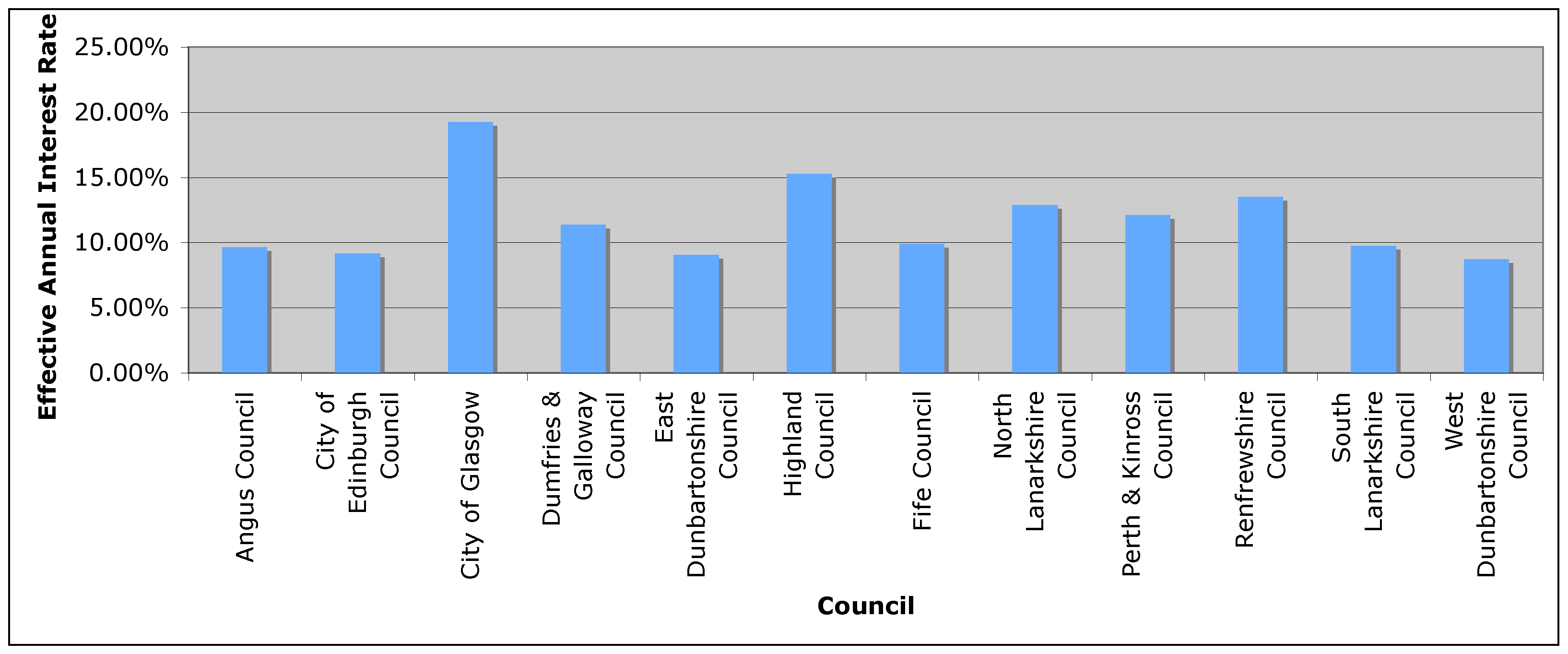
Obvious from this is that not all PFIs were created equal. The ‘Total Payment” is how much will be spent by the end of the full PFI period (usually 30 years). Part of that payment is repayment of the capital involved and, because management and maintenance are part of it too, not all can be described as interest/profit. However, subtracting the capital to be repaid and restating the total payment numbers as if they were interest over those 30 years yields Chart 3 below:

Chart 3—Effective Interest Rates for the 12 Biggest Schools PFI Projects

Even allowing for half of the annual costs to be management, an average interest rate around 6% is being charged when this scale of borrowing is available at 2.8% from the PWLB. But what Chart 3 underlines is the differing range of deals struck under PFI. While some are grossing under 10% for the PFI contractors, those dealing with Glasgow, Highland and Renfrewshire appear to have driven particularly sweet deals for themselves.

Let’s leave aside that UK and Holyrood governments, plus CoSLA left councils to strike the best deals themselves—and this was lambs-to-slaughter stuff considering council finance and law officials were totally outgunned by slick operators & QCs in the private sector. Leave aside the massive (for councils) start-up costs—East Lothian’s being especially heavy as their PFI contractor went bust during the process. Leave aside the much tougher cost structure for local groups to use PFI schools or the inability of school management to control snagging and maintenance over the PFI period.

The bottom line is that, each year, almost £500m of 32 councils’ £5bn total education budget—almost 10%—is skimmed right off the top and this proportion will only get larger as we approach 2030. That means that any reduction in Education budgets will be amplified by a further factor of 0.1 because each PFI can legally insist on its pound of flesh, no matter what trouble councils, schools or the whole of Scottish education gets into as a result.

When East Lothian Council proposed to buy out its £56m-capital PFI for £80m cash on the barrel (which would be financed by an equivalent loan but at 2.8%, instead of the effective 9% rate). With 20 years to run, that would have saved the public almost £120m.

Annoyingly, all those who foisted this on us didn’t even wait ten years to scarper before these ugly chickens came home to roost: Gordon Brown, Andy Kerr, Pat Lally, Norman Murray, et al have all fled the scene; they no longer need to stand up and defend this fiscal straightjacket they have consigned us to.

Given that local finances are entering ever choppier waters and PFI conglomerates are not going to volunteer to relinquish their cosy cash cows, it will take a bold move from Westminster to provide councils with teeth to renegotiate those contracts (see above) that are clearly not in the long-term public interest.

Posted in Commerce, Politics | Tagged | Leave a comment

Ma Faither’s Howff (Revisited)

This morning on BBC Scotland’s GMS, there was an unedifying interview with James Kelly MSP, Labour’s whip at Holyrood. In five minutes, James managed to display every bad trait for which his party has become notorious: evasiveness, posturing concern for the vulnerable, lack of ideas and a dogged debate style like he was reading off a script consisting of six words at most.

But, to be fair to him, one point he stuck to but which became lost in his partisan posture was that Holyrood will suffer cuts at least until 2016 and we need a debate how we are going to face them. His party’s contribution, trailed by Johan Lamont earlier in the week, is we need to revisit a range of free services currently provided, mostly to the elderly because “why should people with six-figure incomes receive them?”

A curious point as it was Labour who set them all up in the first place—Jackie Baillie, for example, welcomed free prescriptions as it would save money not having to administer the programme. Why Labour are focussing on just this area is a puzzle: if you want to sort Scotland’s finances in these tight fiscal times and genuinely want to trigger debate, why not put options on the table and not just pick one section?

Six months ago, as part of the debate in the run-up to May’s council elections, one of my contributions to that was to highlight the regressive nature of Council Tax in a blog titled “My Faither’s Howff has Many Mansions” and to propose major adjustments to its structure. The ideas how this might work have been updated below.

All councils will be strapped to cushion the dire financial effect of the next few years on staff and residents alike. But, following John 14:2, there is an option to supplement local funding, though it does require legislation. If freezing Council tax because it hits the poor hardest (and Local Income Tax is beyond Holyrood’s competence), why not adjust it so it leaves the poor alone and lays a proportional burden on the rich?

The LabourHame web site has some good ideas worth stealing. John Ruddy has cooked up a more progressive system with the dual virtues of raising tax receipts without touching council tax rates that have been frozen over five years. Taking my own East Lothian Council as an example, some 55% of its 35,500 taxable properties are rated as Council Tax Bands A-C. Another 24% are in the ‘yardstick’ Band D, while 19% are in bands E-H. These last properties can reasonably be considered the more affluent, while bands A-C are typically occupied by those with modest incomes. Yardstick Band D properties pay 9/9ths of the tax rate set, with lower bands paying proportionately less and those above more. The current situation in East Lothian is shown in Table 1.

Table 1—Council Tax Bands in East Lothian with Approximate Revenues

This raises around £39m in Council Tax. John’s ploy to increase this is to split each upper band (E-H) in two so as to give bands E-L but to continue the proportionate ratcheting up of the ratio (3rd column) so that band L would be paying 36/9ths or 4 times as much as Band D. This does accrue appreciably more tax, with all of the increase coming from above Band D. But this hits the middle class (houses in the £58,000 to £212,000 valuation range) hard, compared to now. But it still doesn’t nail the many houses valued well over £212k.

A better compromise would be to adapt John’s scheme so that we have the additional bands and increments he suggests, but that we assign houses into upper bands with less steep gradations than his proposals and then add a proper ‘Mansion Tax’ on houses valued over £1/2m. This would give a scheme more like that in Table 2.

In the case of Table 2, no-one in Bands A-F pay any more. Those in old Band G would find themselves paying between £0 and £800 more each year, depending on which new band they fell into. Those in the old ‘over £212k’ Band H would pay at least £745 more. The middle upper reaches of house prices would therefore be more fairly segmented; those approaching £1/2m in value would see their tax exactly double from £2,235 to £4,470. There would be no theoretical upper limit for properties valued over £500,000.

As a final element of this, second homes would be treated differently. Until recently, they actually received a tax break by paying at only a 50% rate. But most second homes are actually holiday homes, run as businesses and property speculation schemes. That, in itself, is not reprehensible but the cumulative effect on our remote and picturesque communities is a glut of empty houses and an abandoned feel off-season, and locals—especially young locals—being driven away by being priced out of the market.

Anyone with a second home cannot be poor. If they were rated at 150%, this would effectively be a tax on holiday homes that leave the locals payment unaffected. The definition of local would be registered voters resident, which would have the added bonus of catching the rich who maintain a home in Scotland yet claim reduced council tax as non-residents. Estimating the number of local second homes (mostly above band D) at 1,000 in East Lothian, such a scheme should add another £1.5m; urban councils would see less benefit.

Bottom line of this scheme is that it would boost Council Tax income in the East Lothian example from £39m to £46m without any increment for people living in modest houses valued up to £100,000. The Mansion Tax sting would be concentrated on less than 10% of all houses but those are best placed to stomach such increments. Given increases in East Lothian house prices for decades now (average 5% per annum) that alone pays for any council tax five times over in the long term.

Would there be people unfairly hit (e.g. widows with little income still in a large family home)? Yes, it might and some thought needs given to such cases. And, lest you think that this would fall unfairly on certain parts of East Lothian, even the Fa’side ward has 16% of its houses in current Bands F-H.

While this would be unpopular with those affected, affluent areas like East Lothian must keep essential services running for those vulnerable for whom (additional) free services under discussion were originally designed. Whether any of those services needs to be means tested—as Labour implies—should be part of the debate. But first there is other, low-hanging fruit in the council tax system alone to adjust its unfair burden from the less well to the better off and boost council income by the same as an (unacceptable) 12-13% rise in council tax.

Posted in Community, Politics | Tagged | 5 Comments