‘Big’ and ‘Stupid’ Mean the Same

Recent revelations of the latest fiscal shell-game being played by major multinationals is causing excruciating embarrassment to HM Revenue because it appears they have been taken for a ride by not just one but a whole gamut of major American companies—especially those in the service and retail sectors, who have broken into the UK over the last few decades.

The Scots are being forever told how much easier and better the world is when we have the size, resources and capacity of the UK to help us. This seems like a good example of where that not only does not apply but seems to apply in reverse. A list of major US companies conducting significant business in the UK, their UK turnover and corporate tax paid is shown in the table below.

Comparison of Some Multinational Business UK Revenue & Tax Figures

Action Aid, the development charity which campaigns for multinationals to pay fair taxes in the developing countries they operate in, said government action was key to stop companies “hiding” wealth by moving it to tax havens. Companies could voluntarily improve their practices, but to compel them, the rules need to change. Companies must publish a basic set of accounts for every country they operate in to make it easier for tax authorities to work out how much tax is owed. The UK government has the chance to take the lead in tackling tax dodging next year when it chairs the G8.

House of Commons Public Accounts Committee (PAC) has been investigating this, starting with Andrew Cecil, public policy director at Amazon. He was unable to explain the corporate structure of the internet shopping firm, saying he ‘did not know’ who owned the Luxembourg holding company that Amazon uses to reduce its UK tax rate.

Starbucks chief Troy Alstead appeared before a UK PAC on Monday and was accused of lying to shareholders after he told the committee that the coffee giant made a loss in its British business dealing. He was rightly pressured by Margaret Hodge MP: “You have run the business for 15 years and are losing money and you are carrying on investing here. It just doesn’t ring true!

Matt Brittin, vice president of Google’s northern and central European Sales and Operations, got off slightly lighter at the hearing because he appeared to have the information at his fingertips. He defended Google’s decision to operate in Ireland—and therefore pay its taxes there—as it employs 3,000 in the country compared to 1,300 in Britain. ‘Like any company you play by the rules,’ he said.

‘Playing by the rules’ means the European laws that allow competition across the EU; you only have to comply with the tax laws in one country to do business in all 29. Given the relatively generous tax laws in places like Eire, that means a large number of multinational companies conduct their business from there and this whole argument from Better Together that bigger countries have an advantage holds no water.

If that were true, why would Apple—the world’s biggest computer company—conduct its EU production, shipping, repair and support from Eire; why would Google—whose ad revenue at £27bn recently exceeded ALL print media ad revenues—conduct its EU development, administration and support from Eire? All these major new business monoliths play the same game. It is not always Ireland that benefits. But what is certain is it’s NOT the UK, which is treated as a dumb cash cow as slick corporate tax creations shelter profits.

HMRC is not up to this: the number of serious tax evasion cases—with more than £50,000 of suspected tax evasion—has fallen by a quarter in the past year as the government prepares to hand HMRC a general anti-abuse rule from April 2013. In 2011-12 there were 3,346 suspected tax avoidance cases, down from the 4,506 in 2010-11, according to data compiled by a law firm.

HMRC now seems prepared to use its strongest anti-evasion measures in cases that would previously have been regarded as quite modest in size. But, the fall in the number of cases doesn’t really gel with the idea that there is a substantial and growing threat to public spending because of tax evasion. In other words, while they crack down on the individual shoveling dosh through the Caymans, big company legerdemain passes as legit and no-one at corporate level gets their collar felt if, as Matt Brevin says, you ‘play by the rules’.

And. lest you despair that such nasty tricks were dreamt up by feckless foreigners, who do you think led the companies to cook their books this way? The UK Tax Tigers of Canary Wharf and Caymans by way of Jersey and Isle of Man. All three Train Operating Companies used their considerable wiles to play this highly profitable game while syphoning £2bn in public money out of the public transport system, largely through increased fares.

But the most egregiously gallus of the lot has to be Starbucks, who have prompted a scathing Special Report from Reuters for the effortless way they have screwed HMRC—and by extension every taxpayer in the UK—out of every red cent. A precis does not do it justice but try to bear with us just for the fun of the ride.

Seattle-based Starbucks is a $40bn operation has operated in the UK in 1998 but, despite growing to 738 outlets, has yet to show a profit here. Yet in those 12 years, Starbucks officials regularly talked about their UK business as “profitable” and even cited it as an example to follow for operations back home in the United States, where, Starbucks paid an average tax rate of 13 percent on overseas income—one of the lowest in the consumer goods sector. Both HMRC and the U.S. Internal Revenue Service (IRS) say confidentiality rules prevent them from commenting.

Over the last four years, Starbucks UK made a loss of £26m, £52m, £34m and £33m respectively. No wonder they paid no tax, despite being liable to our standard 24% rate. But there are two very good reasons why the business is not the basket case it looks. Firstly, Starbucks (like other consumer goods businesses) has taken a leaf out of the book of tech companies such as Google and Microsoft by housing intellectual property units in tax havens, and then charging their subsidiaries fat royalties for using it.

By paying a 6% of revenues fee to Starbucks Coffee EMEA BV any tax to pay is sheltered there. That firm had revenues of 73 million euros in 2011 but declared a profit of only 507,000 euros. Secondly, there is a sweet deal where all coffee is supplied via a subsidiary. Starbucks buys coffee beans for the UK through a Lausanne, Switzerland-based firm, Starbucks Coffee Trading Co. This charges handsomely because profits tied to international trade in commodities like coffee are taxed at rates as low as 5 percent in Switzerland. Swiss companies do not publish their books.

Nothing Up My Sleeve—NOT Starbuck’s Chief Financial Officer Troy Alstead (as erroneously captioned earlier) but Andrew Cecil, Public Policy Director at Amazon. (Thanks to Angus McLellan for the correction)

A third wheeze is to fund all UK operations from the Starbucks group and charge them handsomely for the privilege. Whereas Macdonalds will operate in a similar manner, its double the number of branches cost less than £1m last year and paid Libor + 1. As a contrast, Starbucks charges its UK unit interest at Libor plus 4 percentage points, costing the UK operation well over £2m (that would otherwise have been profit).

Clever, huh?

But the bottom line is not that Starbucks—or any of the rest of ’em—are so smart. It’s that the supposedly big and competent UK government, with its PC Plod taxmen are so sluggishly stupid—especially dealing with the boys in the bright-coloured braces. Scotland should consider Eire’s nimbler opportunism and a rationale that independence would make sense if just to capitalise on the billions being lost on this intra-EU shell game alone.

Posted in Commerce | Tagged , | 3 Comments

The Pitch for the Soul of America

The weekend’s ‘dead tree media’ the length of the States is replete with analysis on the unexpectedly complete victory for Obama and his party. The totality offers cold comfort to either Mitt Romney or the Republicans he led for an interlocking variety of reasons. But, rather than list them, more interesting is to gawp at the scale of denial that has settled over most right-wing centres from RedState website to unwavering media like Fox News  and all shades of support in between.

For, in the run-up and on the night, Republican sources were loud, adamant and consistent that the election was theirs. The announcements, ads and tones of their commentators had evangelical fire and undoubted sense that this was America’s last chance at salvation. Now, claiming you’re in the running is no bad tactic to tip any election on a knife edge. But this one drifted into a kind of dual reality that did neither democracy, nor its local exponents, much good.

Most people accept that both Obama and his campaign lacked the fire they showed 2008, the sense of mission to bring about change in the way American is run. They lost the first debate and were not getting across why a second term would not be stymied in action by the same malicious forces marshalled against him the first time. But it soldiered on targeting swing states, amassing funds through millions of small donations and rightly getting brickbats for not raising the game in either policy or presentation.

The Republicans appeared to be making much of the running. Not only did they outspend their opponents but they had several high-profile advocates like the ‘shock-jock’ Rush Limbaugh and the ever-accommodating Fox Network who would provide a platform for whichever spokesperson the Romney camp wanted in front of the public. Notable this time was the fact that MSNBC established itself as a credible channel, despite heavy  ‘liberal’ taunts from Republicans, CNN managed a balanced coverage (even if staccato and glitzy by UK standards) and that, in the end, the professionalism of even Fox’s news team outweighed the loyalties of station owners (Fox anchor Megyn Kelly boosted their credibility by directly asking REP heavyweight Carl Rove: “Is this just math that you do as a Republican to make yourself feel better, or is this real?”)

And, while both parties are prone to ‘going off the reservation’—i.e. having candidates say idiosyncratic things because the idea of a manifesto here is flexible at best—both Romney and his Republican troops were as unified as any US campaign has seen. The hit list of acceptable policies: pro-church, pro-life, pro-guns, pro-rights, anti-abortion, anti-gay, anti-welfare, anti-immigration, etc was long agreed. Their common song sheet was one they knew well and had sung from in harmony before:

  • America is the greatest nation of the planet and its citizens the most blessed
  • The Constitution is sacrosanct and basically unimprovable
  • Its Christian ethics of hard work, independence and self-reliance show how to live
  • Traditional white patriarchal societies are prosperity’s backbone and future
  • Government interference in medical and social programmes undercut motivation
  • Taxing for redistribution is socialism and objectionable—people must keep earnings
  • Abroad has nothing to teach—Europe invented communism and is sick with socialism

For European ears, it is all rather simplistic and verging on the naive. But the power with which messages were sent and the enthusiasm across sections of the public with which they were received was more pronounced than any previous election. The result was an unprecedented polarisation of the vote. The manifested itself in three emphatic ways:

  1. Policy: Several questions comparing 4 years ago posed (by the NY Times) to those who voted DEM or REP came back with huge differences. “Do you think things in the country are better today?” DEM” 94% Yes/REP 84% No; “Who’s to blame for the current situation?” DEM 85% Bush/REP 94% Obama; “Should we expand or repeal the 2010 Health Care Law (a.k.a. ‘Obamacare’)? DEM 92% Expand/REP 93% Repeal.
  2. Race: While everyone was careful to avoid playing the race card, the REP appeal to traditional white middle-class was monotonic and, many feel counterproductive. Despite winning a 20% lead in the white vote, they lost. This was because the non-white vote went solidly DEM—93% of black, 69% of latino and 74% of Asians went for Obama. And, given that the latino segment had grown from 8 to 10% and the Asian from 2 to 3% of all voters, this is an electoral flood the Republicans ignored at their peril.
  3. Women. While Republicans make passionate claims to be the champions of family values, they lost traction among women voters—or, as some feisty activists were calling themselves, “The Maginity”. There were more women than men voters and Obama won easily among them with 53% of the vote. Many Republicans admitted that remarks made about rape by their candidates damaged their chances, Tina Fey commenting “If I have to listen to one more grey-faced man with a $2 haircut explain to me what rape is I’m going to lose my mind!

There is currently little sign that the Republicans have yet gathered rather basic lessons from all this—that they need to be less extreme and paternalistic, more inclusive, socially less conservative and more flexible on policy. Unfortunately, responses from the more extreme wing, such as the Tea Party have proclaimed no new taxes, no more Obamacare and tough immigration as the basis for even starting talks. Jenny Beth Martin, National Co-ordinator of the Tea Party Patriots has already declared:

“What we got was a weak, moderate candidate hand-picked by the beltway elite/country-club establishment. The presidential loss is unequivocally theirs; the Tea Party is the last best hope America has to restore her founding principles.”

It is difficult to see a joint way forward to deal with the fiscal cliff that looms over the US budget at the end of the year when one party is so intransigent. But the stand-off is as real and urgent as the need to knuckle down and negotiate a solution.

On top of all this, it was amusing to read UK analyses from various Tory bloggers and mouthpieces, dismissing any possible lesson to be learned from either the US campaign or from its fairly decisive result. While it may be true that some right-wing extremism displayed is quintessentially American and much else has been diverted into either UKIP or the BNP, a fundamental mistrust of foreign experience, a cavalier clinging to past glories well beyond their “bury-by” date and a Pavlovian circling of mental wagons when local natives are actually making friendly overtures rather than seeking scalps, all seem to fall into the what-could-be-learned box.

Europe is blessed looking forward to four years with an outward-looking, pragmatic and determined regime across the pond. In that time, a resurgent US economy could pull us all out of a fiscal hole, a realistic attitude to terror could wind up Afghanistan and put the West on a better footing to be the engine to spread prosperity not just to the BRICs but to the long-suffering Middle East and Africa.

But somewhere between Salt Lake City and the Mississippi heartlands of the Bible Belt, they need to really re-examine the basis on which their country was built, to recognise: that separation of church & state is a good idea; that all people benefit when everyone in the country feels they have a stake in its success; that a country enabling anyone to make good is the one likely to do well for everyone. It’s what their Founding Fathers believed. Get all 300m to believe it and there will be no stopping them.

Posted in Politics | Tagged | 1 Comment

Alastair’s My Darling

There are few more prestigious lectures in Scotland than the John P. Mackintosh Memorial Lecture, usually hosted annually alternating between the University of Edinburgh’ magnificent Playfair Library and Haddington’s equally splendid St Mary’s Church, It is prestigious not because John being a professor and member of parliament for East Lothian, nor because he set such store by himself but because others recognised his achievements in academia and politics.

Scottish politics can be tribal, vicious and unforgivingly partisan. Though solid Labour, John rose above that, articulating his belief in devolution for the Scottish people so well that not only were colleagues persuaded but many with differing party loyalties and none. His stock has, rightly, always been high in his own party; what is less well known is that it rides equally high among others and certainly among the local SNP.

The lectures given to date are not just a who’s who of senior Labour figures; names like John Kenneth Galbraith and Neal Ascherson lend it a national if not international stature. In this year of arrangements to hold the independence referendum in 2014, the choice of Alastair Darling, Chair of the Better Together movement, experienced ex-cabinet minister and long-serving MP for Scotland’s capital could not have been bettered—especially as the subtle distinctions of Mackintosh’s politics (he was no advocate for independence) for further devolution are not slated to appear as an alternative on the 2014 ballot.

This was the perfect opportunity for an articulate launch of the multifarious case from Scotland to continue in its union with England. While reference to history and social ties would be appropriate, what was needed was a vision of ambitions to be seized across the 21st century, but only if Scotland and England did it as the partners they had been to date. To date, the ‘nats’ had been making the emotional running with visions of booming renewables, rising exports, new friends in the Nordic Union, a new profile in the world.

It was, to say the least, a disappointment—on the scale of a steeplechaser balking at the first fence. So disappointing was it that the consistently unionist Hootsmon wheeled out an editorial leader soapbox to pound the life out of it. The lecture itself was no bad text, nor was it delivered poorly. Indeed, given Mr Darling’s (for him) impassioned delivery of it, it appeared to correspond closely with what he himself believes,

As with many other people, he is sincere in seeing threats to the easy and close social ties that cross the border; he believes in the UK as a world power and sees it diminished by the loss of Scotland; he may even sincerely believe that an improved devolution settlement will be on the table if the Scottish people choose to vote ‘no’. All these were part of the lecture and delivered with conviction. But what was also part of the lecture was a promise of substantive arguments:

“And our side too shouldn’t be afraid to deal with difficult questions.  We need to explain why we are better and stronger together.”

The trouble is, in what must have been the thick end of 6,000 words, he didn’t. Not to get too personal about Alastair, there is a major element of the unionist camp that seems to have lost touch with what 21st century Scotland is about. Proud though we are of all that we achieved as the UK in the second millennium, we are that happily diverse, chippy, slightly socialist, passionate, overgenerous, under-travelled people no-one who’s been here confuses with the English these days. Begbie rode the same bus as JK Rowling; smack between Murrayfield and Tynecastle we build key components for iPhones. We are, and shall remain, a complex lot

And here the fundamental flaw in Alastair’s (sincere, well intentioned) pitch: he’s still talking about the sullen, unemployment-futured Scotland of the eighties in which he and his colleagues cut their political teeth. Because it still gets applause down at the miners’ welfare, some dog-eared spectre of Thatcherism still gets dragged out and kicked about.

But the rest of us have moved on. Not only do we not like having nuclear weapons still simmering on the Clyde, we don’t want new ones. And, now that the last identities of Scottish Regiments have been squeezed into a cap badge, there’s no taste for cod-empire-building and see-we-can-play-big-league ploys of recent UK governments in the teeth of fiscal reality. Not only do Scots not see the justification for Afghanistan but they would have given Iraq a more serious scrutiny before getting involved there too.

Alastair—and the entire Unionist/Better Together movement really need to nail down what 21st century Scotland is about in their own minds. It’s not keen for a role in some macabre faded-glory ex-empire strut that stuffs nukes down its shorts just to prove it’s still got cojones. Because that’s what present MoD posture of nukes+carriers+overseas strike is signalling. And, unless England comes up with its share of the future kitty that the Scots are in the process of paying their bit (with renewables, £4bn whisky receipts, £12bn in oil revenues), the case still needs to be made why we should let our English friends keep their hands in our wallet.

We Scots know the English are big on tradition and get emotional over Dunkirk spirit and Vera Lynne. They believed their Kiplingesque destiny to bring culture to some be-jungled spot and sip G&Ts on the verandah while the natives sweated to get the rubber/cotton/gold/etc back to Blighty to make it all worthwhile. We were a part of that—most likely building/running/repairing the ships/railways that held it together. But that is history.

Alasdair: Britain is a second-rate power still pretending not to be. Get over it.

And, until you and your colleagues start lecturing us on what a second-rate power that is just one among several peers (and regarded as the stroppiest, least helpful peer at that) in Europe is going to able to lead any union out of that poor situation to better things, you are going to be hard-pressed to make any case in Scotland on the flimsy scaremongering that was the substance of your lecture.

Scotland and England once had a union with Ireland that ended in 1922 after many tragic deaths and much hard feeling. Despite that, are the Irish foreigners? Do we see them as such? Are there barriers to visiting or security concerns? There are? Oh, you must mean that source of trouble for 90 years Ulster—the same part the UK government, in its imperial wisdom, declined to let go, much to the outrage of the new Republic of Eire. Eire, with whom since then, relations have never been better.

Posted in Politics | Tagged | Leave a comment

Senate Moves Toward Balance

For all the ups an downs of the US elections, the money spent, the people alienated and the egos brusied, the overall feeling in the US seems to be one of progress. That may be because national media is based in the ‘blue’ (i.e. DEM) coasts and the Cheyenne Picayune‘s apoplectic editor still hasn’t worked out what headline can get past the lawyers. But the result is more healing that it first appeared.

One area that pleases me is the outcome for the Senate. The Senate is the equivalent of the House of Lords but far more powerful. And curiously, as the Lords was once stuffed with cantankerous backwoodsmen with unenlightened views, but has diversified in members and mellowed in attitude, virtually the reverse is true of the Senate.

Originally a broad representation of the people by each state electing two of its senior representatives, it had become a boys club fit for any building in St James. Until recently not only were all of them multi-millionaire lawyers but they all seemed to stem from the same Holywood factory that churned out the older actors for Dallas or Dynasty. All have well coiffed silver hair, flawless teeth they deploy effortlessly to smile, impeccable suits with understated ties and deliver their lines like the seasoned professionals they are.

Watch any episode of The West Wing and note that the truly palm-sweating operation, requiring extensive prep, teamwork and impeccable timing wasn’t facing up to the Russians or negotiating with the Iranians but “going up to the hill” to meet Senate leadership. And that was when they were both nominally controlled by the same party.

Before anyone criticises this apparently adversarial relation, remember the executive (President), legislature (Congress) and judiciary (Supreme Court) were deliberately set up to counterbalance each other. The US Founding Fathers had seen enough unbalanced Brit power wielded entirely by the PM in parliament. Their system of checks and balances, whether flawed or no, have served them well: decades of Thatcher or Blair or any other messianic leader are simply not possible.

That said, there has been a tendency for the Senate to become a set of immensely presentable (and therefore re-electable) but faceless (and therefore re-electable) sea-lawyer gnomes who kiss ass, do lunch, cut deals and generally make top M&A business negotiators look like amateurs. While the House of Representatives does much of the work and gets its oars into negotiations whenever it can, the deal-makers and -breakers are in the Senate.

Hence the ‘old boys club’ accolade. And since a Senate campaign can cost you $100m, it’s not a game for the poor or even the arriviste. Now women had been storming this last citadel for some time. Until 1922 there had been no women Senators. In the next 90 years there would be 39 but 13 of those served by replacing their deceased husband. It got more serious 20 years ago: former mayor of San Francisco, Dianne Feinstein was one of five women Senators in the “Year if the Women” (kinda says it all, doesn’t it?).

Although 2010 was a better milestone when 17 women posed for the cameras, 2012 has proved to be especially enlightening not just because of the number of women but their sheer abilities and the manner in which they won. Bear in mind that the Democrats were defending three times the number of seats Republicans were and half-conceded that losing several seats and their 51-47 control was a possibility. Some results in detail:

Elizabeth Warren, Massachusetts. This seat, held by Ted Kennedy for half a century, is as close as it gets to hallowed ground if you’re Democrat. When Ted died in 2010, a good campaign from Scott Brown won it for the Republicans. But Harvard Professor Warren had done sterling work in consumer financial protection (anathema to Republicans) and ran a scrappy campaign pushing women’s rights, equal pay and demolishing the generally reactionary Republican message for women.

Elizabeth Warren Takes the Tape in Massachusetts US Senate Contest

Claire McCaskill, Missouri. A first-term Senator and the first female one from Misouri had benefitted by her first contest being in 2006, during ‘Dubya’s’ dying days. She faced a strong challenge here in a ‘red’ state and was regarded as the most likely to lose a seat on the night. Even though the National Journal ranked McCaskill in the middle between liberal and conservative Senators, many Missourians saw her on the far left.  She cited “stubborn determination, tenacity and a refusal to give up” as helping her prevail in the election. And if that recalls Harry Truman, that might be because Truman used to hold exactly the same seat.

Not content with the odds being in their favour, the Republicans selected the most right-wing of their candidates to stand against her—Todd Akin, already a member of the US House of Representatives for Missouri and already well known. The whole contest went out of his control during an interview he gave on August 19, and aired on St. Louis television station KTVI-TV, in which he was asked was asked his views on whether women who became pregnant due to rape should have the option of abortion

“First of all, from what I understand from doctors, that’s really rare. If it’s a legitimate rape, the female body has ways to try to shut that whole thing down. But let’s assume that maybe that didn’t work or something. I think there should be some punishment, but the punishment ought to be on the rapist and not attacking the child.”

It’s the sort of clumsy statement some people might make even if they were not so-called “pro-life” but this thing went viral and he lost by an 8% margin.

Tammy Baldwin,Wisconsin. Given this was Paul Ryan’s home state, it was regarded s being ‘in play’ and so when a seat was vacated by retiring Herb Kohl, she put her hat in the ring. By winning the election Baldwin became not only the first woman elected to the Senate from Wisconsin, she also became the nation’s first openly gay politician to win a Senate seat. And, in case you think her 100% down-home WI credentials were what tipped it for her, the man she beat—Tommy Thompson—was the state’s governor.

Making history is not exactly new to her. When she won Wisconsin’s 78th Assembly District back in 1992, she was the first openly gay member of the Wisconsin Assembly and one of only six openly gay political candidates to win a general election nationwide. She held the seat for three terms from 1993 to 1999.

None of these three examples of a new generation female Senators fit the mould. Even with the retiral of Maine’s formidable Olympia Snowe and Hilary Clinton’s calling to serve elsewhere, they join 17 others, some formidably experienced as Feinstein or Boxer, some bringing the fresh air and perspective that they themselves bring. But at one in five, they are no longer a faction to be accommodated but a force to be reckoned with and less likely to be fobbed off with the same trinkets.

Let’s see how the boys do—and if other countries like the UK don’t now pick up that gender tokenism at the top has had its day. What must be puzzling the right wing nursing some ugly bruises from Tuesday was how a bunch of girls coulda done it to ’em.

Posted in Politics | Tagged | Leave a comment

Stemming the Mormon Conquest

Yesterday was historic for a number of reasons: Obama secured a solid win that gives him a second term that many had written off; his ‘coat tails’ and Republican intransigence combined to sweep a number of senate seats into the Democrat camp, thwarting Republican hopes of control and; other than minor advances, the Republicans failed at just about anything they tried.

While theoretical equivalences exist between Labour/Democrat and Tory/Republican, they don’t carry too far. The Democrats do get support from organised labour and the bulk of America’s many minorities. But over the last couple of decades, the Republicans have moved into what strikes outsiders as a kind of fervent religious jihad for the soul of America. Looked at from their hallowed perspective of individual liberties, small government, inalienble rights and irrepressible business initiative, their posture does make some kind of sense…

…until you look at the people who are promoting this. There are poor and there are non-white Republicans; but you see few. When their Founding Fathers set up their hallowed Constitution, the country was a blank slate scattered with farms and plantations. It took a people of guts and determination to build this 21st century superpower of 300m people; they needed the moral and legal encouragement to do that. But once you’ve paved over a good chunk of it with tract homes and shopping malls and strung them all together with eight-lane highways that never sleep, maybe its time to rethink your basic philosophy.

Many Americans are prepared to do that. And while not all of them are Democrats. there are precious few Republicans who seem to inhabit the changed world of 21st century America and staunchly justify an apparent extremism purely through copious quotes from the Constitution and the Bible in equal measures. While church and state are legally separate in the US, religion plays a big role in many people’s lives—and especially in Republicans. No church plays a bigger role than the Church of Jesus Christ of Latter Day Saints, also known as the Mormons.

A short blog cannot do justice to their complex extension of the Protestant faith. They have grown in strength in the almost-two-centuries since they were led to found a new promised land that is now the state of Utah. And, while it would be a gross error to claim all Republicans to be Mormon, the reverse is broadly true and a strong thread of Christian belief runs through many other party members. It was strongly religious Republicans who forced teaching creationism alongside Darwinian evolution in schools across the South—also commonly known in much of the US as “the Bible Belt”.

For the last few decades, religion has grown in popularity among the wealthy and middle class from Orange County to New Hampshire. Separation or no, it has become common for the wealthy to tithe their church, send their children to private school & university and for a self-sustaining upper class to become more embedded in US society than the nobility can claim in Britain any more.

This, in turn, is leaving indelible marks on US society. Whereas fifty years ago in the simpler times of Eisenhower’s ‘Mad Men’ era America—an era Republicans look back on as a paradise lost—businessmen made bundles, farmers fed the world and Joe Sixpack still pulled a good wage down at the car plant, poverty was banished to an aberration—only small minorities, new immigrants and hillbillies suffered it. A sense of ever-growing wealth and comfort prevailed. The Republicans—especially their Mormon shock troops—hanker for those days. “We want our country back” is their common cry.

This is no place to argue the pros and cons of social programmes but it boils down to the Republicans wanting virtually none and the Democrats proposing ones that even Tories would find shame at their inadequacy. Add in deep Republican hostility to abortion, gay marriage and other matters considered elsewhere to issues of personal choice and you have what should a lively debate. Except this entire election was swamped with viciously personal TV ‘attack ads’ on a scale dwarfing any previous contest, leaving a bitter taste and a level of disinterest in the public directly blamed on the ads’ ferocity.

As money goes these days, $6bn may not seem like much but it’s $20 per head and 650 times the UK’s legal limit on election expenses. It’s also more than the GDP of a third of the world’s 200 countries. And what people got for it was an unedifying series of reasons why their opponent was pond scum.

When the dust settled yesterday, the surprise was that the Republican money machine had not made more inroads than it had. As expected, the South and MidWest went for Romney; the coasts and industrial North went for Obama. But, what was surprising is that, of the nine ‘swing states’—the marginal ones everybody agreed were ‘in play’ and would decide the election—the Republicans failed in all of them:

  • Colorado (9 votes) 1,199,142 for Obama; 1,100,186 for Romney
  • Florida (29 votes) 4,129,502 for Obama; 4,083,441 for Romney
  • Iowa (6 votes) 816,174 for Obama; 462,422 for Romney
  • Nevada (6 votes) 528,801 for Obama; 462,422 for Romney
  • New Hampshire (4 votes) 335,004 for Obama; 300,241 for Romney
  • Ohio (18 votes) 2,672,302 for Obama; 2,571,539 for Romney
  • Pennsylvania (20 votes) 2,894,079 for Obama; 2,610,385 for Romney
  • Virginia (9 votes) 1,852,123 for Obama; 1,745,397 for Romney
  • Wisconsin (10 votes) 1,597,201 for Obama; 1,395,499 for Romney

None of the nine was a walkover for Obama and the most cliffhanger of all was the one with most votes at stake: Florida. But Romney HAD to win most of these to win the presidency. He threw everything he had at them—and failed. The Americans have their own cruel way of saying this: “close only counts in horseshoes and hand grenades”.

Looking beyond the presidential contest, half the Senate were up for election and a couple of hundred House members. Given the leap forward they made in the mid-terms in 2010 when Republicans took control of the House, much was expected here too, with a Senate majority clearly in their sights. But it was not to be. Of the half-dozen pivotal campaigns two self-destructed on egregious (some say stupid) comments about abortion by the Republican candidate (Akin & Murdoch), Tommy Thompson’s well financed mud-slinging failed to prevent first openly lesbian Senator Tammy Baldwin in Wisconsin and Elizabeth Warren, blindingly best-qualified to become Massachusetts’ first woman Senator, stormed home.

Although not a massive defeat, it was such a comprehensively poor showing for the wide open intensity of right-wing politics backed by effectively limitless money that the more moderate voter can sleep a little more soundly. In the wake of the Citizens United ruling at the Supreme Court (who got into anthropology by claiming “corporations are people”), many moderates worried that the election would be “bought” by billionaire donors. But the savvy micro-targeting (and sheer gusto) of Obama’s money-raising machine proved them wrong.

Though not a massive defeat, it was decisive. In 2008, the Republicans stormed off to try a new tack, which meant a shift to the right, a home for no-compromise types in the Tea Party extreme and a thrawn determination to frustrate everything the Democrats and especially Obama tried to do. They succeeded in all three.

But, given the clarity of defeat at all levels, the more thoughtful Republicans (of whom many still exist) who have been holed up in fallout shelters across the country waiting for Sarah Palin and her fans to go away, just might now have a chance to reclaim their party and  provide the thoughtful opposition America has lacked for the last four years. They do have such people—New Jersey Governor Chris Christie, who led a brilliant bipartisan recovery effort in the wake of Hurricane Sandy is one.

The alternative—and this is where understanding American politics requires more than its usual leap of faith/understanding, the Democrats elected will know the Republicans are still loaded for bear and will use that lever to attach their own narrow requests to legislation or threaten to vote with the opposition. Such is the logic in this, the self-styled greatest democracy in the world.

I wish.

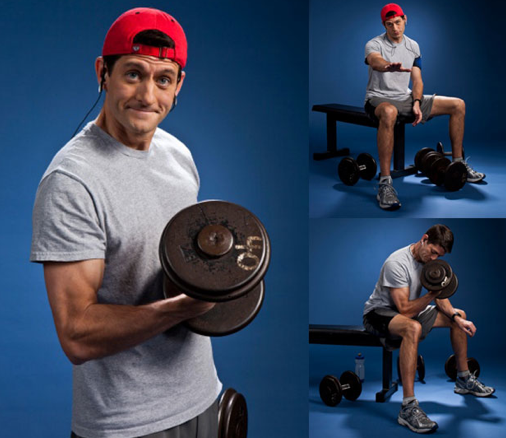
Would You Vote for This Man? Vice-Presidential Candidate & Romney Running Mate Paul Ryan Flexes His (Right-Wing) Muscles for the Voters

Posted in Politics | Tagged | Leave a comment

Reinventing Downtown

One of the main malaise affecting towns across Scotland is the decline of the High Street and erosion of social cohesion that goes with it as the more affluent use their Chelsea Tractors to shop out of town while the less fortunate count their pennies and stay at home. First to go were furniture, white goods and clothing stores, followed by fruiterers, ironmongers and now music/DVD, offies and even post offices.

What’s left is either upmarket specialists, such as delicatessens, cafes and upmarket butchers or a wasteland of charity shops, bookies and the occasional poundstretcher. Where demographics and investment have worked in their favour, some still do well. But for every Stirling or Inverness, there’s a Motherwell or Dunfermline; for every Peebles or North Berwick, there are a dozen Saltcoats or Arbroaths or Dalkeiths. Well intentioned town planning of the sixties that gave us Cumbernauld is long bankrupt when it comes to any retail revival.

To our American cousins, none of this is new. Their society embraces almost a slash-and-burn, then move on metality. In the twenties & thirties downtown Los Angeles or San Jose boomed with new money. Then, in WW2 and after millions settled, building new suburbs and shopping malls. Downtowns slid into the place you went for civic business like the DMV but you din’t hang about, certainly not at night. Now those same sleazy downtowns of dark bars and bail bonds are reviving with cultural centres, city tram systems and upscale restuarants.

Some cities like New York and San Francisco were such magnets that they never really suffered urban decline. Others like Baltimore and Boston reinvented themselves from metal bashing & shipyards into chic waterfront cities with great quality of life. Still others—like Pittsburgh or Cleveland, struggle on in ‘Rust Belt’ post-industrial strictures. But when it comes to the more modest scale of town below what we would regard as cities, despite both a will and a means to invest, they just don’t seem to ‘get it’.

Silicon Valley has classic examples. Of the ‘anchors’ at either end of it, San Francisco has never seen serious decline and San Jose has revitalised its once-seedy downtown. But in a strip of 100.000 population towns between, something has gone wrong, despite ongoing affluence through Google & Facebook overhauling Cisco & Sun, who overhauled Intel and AMD, who overhauled HP and Xerox PARC as main drivers of local affluence. But consider three ‘cities’ in turn who are mimicking what the big cities have done and you wonder if they’re on the right track.

The whole area was once fruit orchards—The Valley of the Heart’s Delight. Those first disappeared around Palo Alto because of the founding of top university Stanford there over a century ago. This spawned modest tract homes, a research park and a modest  downtown area that, by the 1960’s was in need of investment and new thinking. Being a university town, it became rich in cinemas and bookshops and a fair smattering of cheap,  funky restaurants— a mini-Berkeley.

Because it was such a magnet for professionals, the school district was top-notch, attracting even more high earners in the post-war boom.  Clearing many side streets of buildings to provide car parking spaces brought more people to downtown to spend their money. But the new businesses drove up prices, the funky bookstores closed up, the students moved on and the entire square km is now so dense with yuppies that, while you can buy a wedge salad for $30, you can’t buy a light bulb.

Pleasant though it is, it has become homogeneous the way that Islington or the Upper West Side has. The main giveaway is that the ethnic mix depends entirely on the staff; otherwise it verges on the 100% white bread.

Having Palo Alto set the trend in catching custom caught the attention of the next two ‘cities’ down Highways 82 and 101 (the entire peninsula’s flat land is built up, so the idea of any space between is illusory). Mountain View had a downtown originally geared to fruit growers, with work boot stores and lumber yards supplying tall ladders. Coming later to the boom than Palo Alto, they first herded lots of minority restaurants into the downtown area and did reasonably well from a lunch trade, less well from dinners.

Without the magnet of Stanford, Mountain View went with an even bigger scale of investment that revamped Castro (its main street) with trees, planters and bowers and poured millions into multi-storey car parks one block behind the main street. This, in turn, created a de facto food mall where it was easy to park so that now the length of Castro is a parade of restaurants of bewildering ethnicity and has a reputation for that.

But it’s not a downtown. It may be a place people come to eat but a fraction of those people live in Mountain View and use any other facility of the town. At first glance, it also appears well served by public transport, having a CalTrain station with an adjacent SCCT tram terminus. But neither serve any other part of Mountain View: CalTrain goes North to Palo Alto & SF or South to Sunnyvale & San Jose, while the tram heads East into a wilderness of business parks and Great America. The bulk of buses travel along El Camino (Hwy 82) almost a mile away and connections are an infrequent nightmare.

Finally, there is Sunnyvale. Once its station was called Murphy handled more cherries than any other, grown on the huge adjacent Murphy Ranch. The main streets of the town are still named for Murphy’s daughters—Evelyn, Mary, Maude and Mathilde. As tract homes and business parks swept over the area in the latter 20th century, the downtown—smaller than Mountain View or Palo Alto—pretty much shrivelled up and blew away, lost as it was among the abandoned fruit loading sheds by the railroad.

At first, this seemed OK by the city fathers. El Camino was a strip development of just about every business you could name from Macdonalds, through Jiffylube, Mancini’s waterbeds and Ham Radio World. Part of it was an auto row where men ritually kicked tyres and there was one throwback of 100 yards of frontage with an old shack where you could buy some of the biggest and best cherries you ever tasted.

Problem was the online shopping and aspiring tastes meant people—especially women—weren’t prepared to go bumping along an ugly six-lane highway, parking in dusty lots and presented with little but hamburgers for lunch. So Sunnyvale’s civic leaders revamped an old neglected street called Murphy right in the heart by the CalTrain station. What they made was a mini-version of Mountain View’s Castro. But to shore it up they lured two major ‘anchor’ stores (Target and Macy’s) to apply the same critical mass philosophy as makes malls work from the Gyle to the Ginja.

But it doesn’t work. With the rest of downtown boasting new multi-storey glass-and-concrete office complexes, it feels like walking around New York or Philly, but without the people and the buzz. But what is really interesting is the racial mix. Whereas my first contact with the area in 1978 showed a considerable black and latino presence everywhere and you could not find a curry for love nor money, at least half the people enjoying Murphy Street’s bars and restaurants are Asian. Whites are still there but few blacks or latinos. The huge exception is the spanish-speaking mass who comprise the restaurant staff—whether Thai, Korean, Japanese, Italian—even in Lily Mac’s Irish bar.

Whatever the answer is for reviving Scottish town centres, what California cities have done with millions of investment here is not it. They have improved on strip-development El Camino to make somewhere pleasant, but soulless as a motorway rest stop. There must be a better way to give a town back its heart.

Posted in Commerce, Community | Tagged | 1 Comment

Tip for Today

Posted in Uncategorized | Leave a comment

Mitt Must Learn from His Daddy

Almost half a century ago, in 1964, Republican presidential nominee Barry Goldwater spoke candidly about the possibility of nuclear warfare in Vietnam and of mining the harbors in Hanoi. The uproar was instantaneous, and the conservative Arizona senator struggled to overcome an image of bellicosity that frightened away voters by the droves. He never recovered and lost in a landslide to Lyndon Johnson.

Because this marked one of the earliest examples of bellicose Republican extremism, you would think that Mitt Romney’s team would have this lesson taped up around their campaign headquarters. In fact, Mitt has a personal reason to be aware of all this, not least because it launched the Free Speech movement, whose activities cause heart attacks among his colleagues and the reason it was launched was because of his dad.

George Romney has not registered much in this election (neither has another George—Dubya—but that another story). Although a Mormon like his son, George passed for a moderate and engineered an impressive career that encompassed being CEO of American Motors (AMC) when the ‘big four’ of Detroit still wrote the book on car development. He parlayed this into the Governorship of the state (Michigan) and left behind a record of which most businessmen or politicians should be justly proud.

What is less well know is that George went on to contest the Republican candidacy in 1964 and the world might have wound up a different place had he succeeded. Being a moderate, he gained wide support, especially among students and UC Berkeley Republican Club availed themselves of a 75-year-old tradition on campus that allowed students to set out stalls advocating various political causes. In the Fall semester of 1964, this is exactly what they did, distributing material in support of Mitt’s dad.

In the 1960’s, first on the Berkeley campus and spreading until it was international, students tested the limits of permissible dissent, challenged the conventional wisdom in unprecedented ways and insisted on participating as active agents in the shaping of history. With the intensity of the 1964 campaign, a tension arose between students who wished to express their various views and UC Berkeley officials who, to be fair, were being prodded by outside forces.

In this era of crew-cuts, fraternity jackets and fresh-faced students who would graduate and work for IBM and the other huge American corporations, President Kerr and his Board of Regents were none too happy that a ragged, ill-disciplined minority had assortments of hand-drawn placards and card tables vocally manned by young advocates of sundry clauses. But, while they were shifted around the campus to be less visible, toleration prevailed on both sides.

Matters came to a head however when staunch Goldwater supporter William Knowland, publisher of the (at the time) right-wing Tribune paper in nearby Oakland, prodded UC Berkeley officials to suppress the student Republicans who, to his taste, were doing entirely too good a job of promoting George Romney. The action of removing them was carried out by the campus police without much difficulty, such was the respect for authority prevalent at the time, even among students.

Before the next day, a disquieted group of remaining activists gathered and decided that, though they were no Republicans, this curtailment of speech affected them all. As a result, not only did the Republicans set up their tables the next day outside Sproul Hall but others did too and a crowd gathered in support. Back came the police to remove the Republicans and bundle them into their squad car. But, before they could leave, the car was surrounded by angry students and one of them Mario Savio who would go on to found the Free Speech Movement climbed onto the police car to speak to the crowd.

But before he did so, he took off his shoes so as not to damage its paintwork. That was still the fifties (a plaque nearby marking “Mario Savio’s Steps” and the occasion was erected nearby in 1997).

On the third day, pretty much the same scenario was acted out—but this time the police car was so covered with students that the police retreated on foot…and none of the students bothered removing their shoes before they climbed all over it. That, people who were there agree, marked the launch of the sixties: the rest is history.

Romney the elder (and more moderate) lost to Goldwater (who wasn’t) by a landslide, opening the way for the first ever attack ad, run by LBJ against Goldwater. His ‘Daisy’ commercial showed only once on TV: a small girl counting petals as she picked them off a flower, with ’10’ obliterated by a nuclear blast and a voice intones: “These are the stakes—to make a world in which all of God’s children can live, or to go into the dark…Vote for President Johnson on November 3. The stakes are too high for you to stay home.”

For Goldwater, given to apocalyptic banter about “lobbing missiles into the men’s room of the Kremlin“, this was fatal to his campaign. Before he panders further to the hawks that dominate the Republican party, Mitt Romney might reflect on how a similar attitude lost the 1964 election—and started the whole commie/pinko/stroppy/free-thinking apocalypse that was the sixties and that he and colleagues still have trouble coming to terms with half a century later.

William K. Knowland, REP: State Representative in the 1930s, Candidate for Governor of California in 1946, Unwitting Inventor of the Sixties in 1964


Posted in Politics | Tagged | Leave a comment

Letter to the Editor

At last enjoying the sweet city living of San Francisco’s Noe Valley, I sauntered over to Martha’s Coffee Shop this afternoon to enjoy a leisurely latte in the sunshine outdoors but spluttered half of it all over the Washington Post when I read its editorial. Not only was it about a topic close to my heart—independence for Scotland—but it dropped several elementary factual clangers, as well as thinking this a bad idea.

Jetlag and vacation or no, my dander was up, my metaphorical pen dipped into the vitriol and I let ’em have it with both barrels:

  • Letters to the Editor,
  • The Washington Post,
  • 1150 15th Street NW,
  • Washington DC 20071

November 1st 2012

Sir:

it was with something between astonishment and anger that I read your editorial expressing concern about the future impact of Scotland restoring itself to being an independent country. Specifically, you assert:

“the more fragmented Europe becomes, the less it will be able to use its collective strength on the global stage, both in military and diplomatic terms.”

Taken by itself, the basis for such an assertion is unclear and smacks of the kind of empire retention Americans have always found distasteful. The independence of Norway in 1906, of Eire in 1922 or of the Baltic republics in the 1990s can only be considered positive steps towards world peace and international co-operation. Indeed, it is the frustration of a people’s aspirations to conduct their own affairs—consider Northern Ireland or the Basque country—that lead to ongoing intolerable outcomes.

It is vital that your paper—the flagship publication in the ‘Capital of the Free World’—gets things right. However, your piece has more than one flaw: it is in error on the SNP policy towards NATO, in error on Scotland’s ability to retain the pound and in error in the proportion of North Sea oil remaining to England (barely 10%).

Few citizens of as large and isolated a country as the US may be fluent in the complex politics of Europe. It may not be obvious to them that, rid of England and its feeble global aspirations, Scotland would become as effective a component of Europe’s defence matrix as Norway or Denmark, or that, by rebalancing its conventional forces, it could supply long-range maritime reconnaissance, tactical oilfield defence and rapid response forces such as the present overstretched UK is unable to do.

But, to enlighten those citizens, as prestigious a publication as your own has a duty to accurately inform them of the real effects of an independent Scotland. Anything less is irresponsible. May I recommend the RUSI study “A’ the Blue Bonnets” to help set minds at rest how much more effective Scotland could be if allowed to forge relations with England, Europe and the US on its own terms—as all normal countries do and as your own Declaration of Independence takes to be self-evident?

yours sincerely

Posted in Politics | Tagged | 1 Comment

The Gloves Are Off

It’s not yet six but I’m wide awake from the early J-Church street cars rumbling by outside. Yesterday went better than it might. Though it involved three flights, four time zones and eighteen hours of travel, on the plus side, every flight arrived early, my bag managed to make the hops with me.

More importantly, it was a chance to mix—with three redneck truckers at a Quality Inn…with unfortunate people forced to sit next to me for an hour or three…with others munching their $8.50 sandwiches while cooling their heels at Chicago’s O’Hare and Phoenix’s Sky Harbour hubs. No-one abroad on America’s broad airways was safe from incisive interviewing—usually launched by a ‘daft laddie’ question like “So, what do you think of this election?

The answer—no surprise to anyone trying the same exercise in Scotland six days out from an election—was: “Not much”. But parallels with Scotland are thin. Whereas the political fault lines between Milngavie and the Raploch still run deep, what seems to be happening here is the opening of social fault lines that would make your hair stand on end. This is a society on the verge of war with itself.

Seen from outside, the two party monoliths that embody all entire political power here have long been seen as two variants on the right wing. That’s now too simplistic. Whereas the Democrat/donkey/blue faction was always a party of the factory worker and their unions, both elements have faded in the US as they have in the UK, to be replaced/supported by an armlock on minority votes, esepcially black and latino. And the Republican/elephant/red faction, always seen as the advocates of ‘small government’ and the choice of the well off as that implies less tax have become unrepresentatively white. But don’t be fooled by too many parallels with Labour and Tory.

The three redneck truckers I met were Republican. They all own guns, carry NRA membership, hate the government for the taxes they levy and think Obama is a communist because he initiated programmes to support the poor and provide them with basic medical cover (‘Obamacare’). The agency exec flying to marshal a fashion show in upmarket Palo Alto was busy prepping on the plane but did admit to being staunchly Republican as she felt business shouldered too much of the burden of carrying the country and the world needed a militarily strong America to keep world markets open and terrorism at bay.

There were equally vocal Democrats: the aircraft mechanic who saw unions as the shield to stop workers being screwed by M&A hyenas and their senior management friends. Partisan though he might have been, the American airline industry is unrecognisable from 25 years ago and, whoever benefitted from such dynamic churn, it wasn’t airline employees. A 30-something minority immigrant was a reluctant Democrat because, although she shared their values, Obama’s reluctance to sign into law an amnesty giving legal residence to those born or serving in the Armed Forces sat badly with what she felt he was obliged to do.

But, most striking (as compared to 2004 or 2008) is the intensity with which each side is holding partisan beliefs. This rather came to the surface during the second presidential debate in which both Romney and Obama verged on aggression and rudenes the way they got in each other’s face. It is evident in the senatorial and house campaigns that are going on in parallel to the presidential one—TV ads from both candidates essentially rubbishing the other’s record and casting aspertions on their opponent’s abilities, morals and private life. It ain’t pretty.

What seems to have happened is the major defeat the Republicans suffered in 2008 drove them to re-think their strategy. They have come back with legal levers that work in their favour. By disparaging Obama, capitalising on the post 2008 depression and making significant Senate and House gains in 2010 mid-terms, they have pushed through legislation that permits ‘super-PACs’ which essentially means that all limits to campaign spending are revoked. As they are the party of the rich, that means the campaign budgets are in the billions and fund the ubiquitous ‘attack ads’.

By raising the (largely illusory) spectre of voter fraud, they have also introduced legislation requiring complex voter registration hurdles. These are combined with a series of billboards and ads that claim those registering will be found and deported for having broken the law by not registering (untrue). The bottom line? This is as major a blow to the solidly Democrat latino vote as could be conceived.

While such tactics are deployed by national and state Republicans, local tactics are impressive too. Employees at Menard’s (the B&Q of the Midwest) are being given ‘training’ in which Obama is being portrayed as a danger to the welfare of the company and, as a consequence, their jobs. In Washington State, voters are receiving phone calls from a ‘Washington State Democratic Voter Identification Committee” which doesn’t exist discouraging them to vote until they get a new ballot.

So vicious has the scale of animosity between Republicans and Democrats become that dating agencies are reporting political affiliations as the biggest factor being cited in reasons why matches don’t work.

While it would be unfair to blame the Republicans entirely, their Tea Party splinter group has set new standards for bias in debate and pejorative implications about their opponents, such as “we want our country back”. It is too early to form a coherent rationale why things should be so nasty this time—what is at stake is what has always been at stake: the most powerful job in the world.

But the superficial take is that the 2007 recession has America rattled because it is like no other. Whereas earlier ones hit the auto or steel industry worse than most and a recovery was soon underway, this is structural across the entire economy, with the halcyon days when blue-collar shift workers pulled down $28.50 an hour long gone. As with everywhere, the rich are still rich. But there’s an undercurrent of fear, amplified by the number of good jobs like engineering and programming that have been outsourced to India, China, Brasil, Indonesia. The business catch phrase for any project or idea these days is “what’s the China price?’

So, while it would be excessive to compare this to Weimar or other once-great powers on the skids, there is an element of that which seems to feed a desperation among Republicans especially that a return to the lost good ol’ days is urgent and overdue. While it is chilling to think what President Romney—a man after Dubya’s own heart—might do with foreign policy, it might at least teach his more extreme supporters that blaming everyone else and getting angry about it does not create propserity; it creates enemies.

Posted in Politics | Tagged | 1 Comment