Urban Sproil

The meeting of East Lothian Council ten days ago was so taken up with arguing over Fenton Barns plan-breaking housing and roasting the divisional Chief Super over the sheer incompetence of Police Scotland when it came to behaving like a partner that a real zinger of an item slipped through almost on the nod. Back at the end of September, SESPlan, a body responsible for strategic planning in the Edinburgh City region met to have its collected arm twisted by the Scottish Government to build more houses.

Given the shortage of affordable housing across East Lothian especially and the Edinburgh area in general, it would be no bad idea if that were met head-on. Unfortunately, while the Scottish Government is keen to gather sweeping decisions to itself, it often leaves the detail (and with it the multiple headaches of executions) to councils and call it devolution. In so doing it has a terrible record of one-size-fits-all thinking that assumes Maryhill and Macmerry’s problems are the same or close enough.

The result is as subtle as an air raid and, in planning terms, the equivalent of the “First Law of Engineering” which says: When in doubt, use a bigger hammer. Places like East Lothian recognised acute demand in their area (derived from decades of Labour administrations that built no council housing in a hissy fit over right to buy) and put themselves in debt working with the SG to build hundreds of new council housing.

But many others like Glasgow followed pre-2007 pressure and had hived off social housing into uncontrollable ALEO monsters like Glasgow Housing Association—and just sat on their hands about providing any more. Worse—although GLA started off debt-free (the whole point of the exercise), they have been slow in acquiring any more and so the rate of repair of substandard and the building of new houses in our biggest city remains disappointing to all.

All this comes at a time of normally land-hungry developers getting shorter shrift from big banks than the hapless mortgage applicants. Never was the accusation that banks would only lend to those who didn’t need it more true. Ever since the drunken-sailor, lend-to-anything-with-a-pulse, pre-2007 idiocy came crashing down around the greedy ears of their ‘investment’ colleagues, the retail side saw their lending dosh thrown into a big deep vault for security and their billion-bonus bosses effectively throw away the key.

The net effect is that even if private developers can cobble some investment cash together, it is mainly for infill or brownfield sites where major costs like utilities are already in place or (as in the Fenton Barns case cited above) it drives a coach and horses through a carefully laid out plan by building normally-forbidden houses to pay for such utilities.

Now acute as Glasgow or the Lanarkshires’ need is for quality affordable housing, the pips squeak much louder in the East. Not only does the Edinburgh region have much less in the way of brownfield sites but the doggedly resilient economy keeps sucking in new residents so the demand for all kinds of housing has hardly abated because so little has been built. Problem is that developers have little conscience and no sense of social balance. And, as commercial organisations, why would they?

It’s not as if the existing commitments around Edinburgh were trivial. SESplan’s original 2011 document provided for the six authorities to provide 34,200 new homes in 20 years:
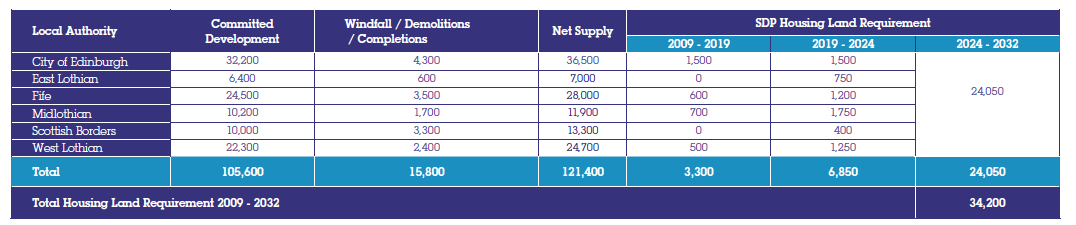
Housing Demand to 2025 by Edinburgh City Region Councils

SESplan Housing Demand to 2032 Apportioned among Edinburgh City Region Councils

The only reason Borders got off relatively lightly was a paucity of jobs and infrastructure and the consequent difficulty of heavy commuting into Edinburgh, completion of Borders railway not withstanding. Now, despite all six authorities spending much time planning where such commitments can best be placed these numbers have been blown out the water by an arbitrary requirement from the Scottish Government through SESplan in a 268-page chunk of bamboozling waffle that only a bureaucrat could love called Strategic Environmental Assessment.

Whatever the reason, East Lothian, which had got off relatively lightly during the first round by arguing that it was a largely rural area and served as the main recreational destination in the region, has now received a disproportionate ‘correction’ that added another 50% to its obligation. Since council Planning Conveners were privy to if not active in these conclusions and they led local discussions on each of their Local Plans, it’s puzzling why they did not go down fighting or at least alert their residents to the effects of  this huge step. Adding in these new requirements gives the following table.
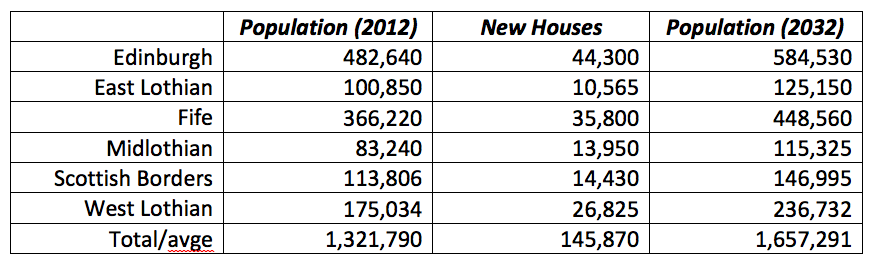
Total New House Requirements by Council with Population Projection

Total New House Requirements by Council with Population Projection

These are serious. It takes the large growth proposals for the current local plans (2008-15) and extrapolates them for another 17 years to give population growths of 25% and more, as listed above. Had SESplan existed—let alone been far-sighted—the list of strategic infrastructure projects to facilitate another 1/4m people and their financing would have been in place. But only three have: the Queen Margaret bridge; Borders rail and Edinburgh’s trams.

The first will simply pour more cars onto the roads West of Edinburgh; the second will  help with the <10% provided in the Borders, plus Midlothian near Dalkeith; the third (unlike the original tram plan) will do nothing to access the major waterfront brown field sites Edinburgh will have to use to have any chance of delivering its 44,300 share. Writing in the Evening News on November 2nd, John McLellan was scathing of the prospects of success in the City itself.

“The increased number of 30 to 64-year-olds expected in Edinburgh dwarfs the projections for the rest of Scotland, and as they are the most economically active that’s good news for businesses.

“But where are all these people going to live? Three years ago a housing report for south-east Scotland talked about the need for more than 6000 new homes and in particular warned of the growing need to meet the demand for affordable homes here.

“A consultant’s report spoke of a need for 13,500 new homes in and around the city by 2024, and with the population projections it might not be wide of the mark. With people living longer and couples separating, demand for greater numbers of smaller units will only increase.”

What will make all that impossible to accommodate in the city proper is decades of total reliance on buses and brutal hostility to private vehicles. That means most developments will be near the bypass and dig heavily into greenbelt land and the likely incorporation of Midlothian into the city it will then be part of.

And, while West Lothian may have the space, links and commerce to grow on the scale proposed, that’s because it has two motorways and two rail lines. On the other hand, East Lothian is ill-prepared, having squeezed in almost 10,000 new homes over the past coiuple of decades by pushing the infrastructure of all six of its main towns to the limit. But, other than the A1 extension to Dunbar (which, ludicrously, cut off East Linton) not one infrastructure project of any significance has been planned, let alone invested in.

As a result, Tranent & Musselburgh have traffic thrombosis, undermining hopes for retail revival; you can’t drive from one side of Haddington or Musselburgh to the other without passing a single choke point; the sole access road between 1,000 new houses & the High Street in Dunbar floods with every rainstorm and the ‘main’ road to North Berwick involves passing through three extensive 30mph zones.

Ask a local in any of the six towns: parking is poor; NHS surgeries are overflowing, jobs are few and local office space non-existent; links to Edinburgh (other than ScotRail) are inadequate. Yet property prices are outrageous, inflated by high-paying city jobs that squeeze locals out of the market. All of this threatens the bucolic rolling country that makes East Lothian act as the lungs of the city, providing varied recreation that boosts everyone’s quality of life.

None of that appears to count with either Derek Mackay, the Scottish Government minister who seems keen to apply stiff housing medicine to an area that does not have the same sickness as high native Paisley. or with EL Planning Convener Norman Hampshire who not only agreed to the SESplan increments but came back to EL Council warmly recommending them as the best way forward.

At face value, providing people with good homes should be high priority. But in desirable areas like Lothian, this blunderbuss approach will not ensure they are affordable and nor will it safeguard its attractive green and pleasant outlook that makes it such a magnet in the first place. It is ‘ready-shoot-aim’ at its worst and, like the urgent clearance of Gorbals slums that led to even worse tower blocks, shows a myopia damaging to our future.

Posted in Commerce, Community | Tagged | Leave a comment

Man, You’re Welcome; Now Go Home

One of Scotland’s many blessings is its international reputation, built on many varied and dazzling things but not least on the warmth and welcome of its people. As Billy Wolfe, one-time SNP Leader and inveterate champion of Scotland and its people was once heard to observe: “why shouldn’t we welcome incomers—we’re not nearly full up”. And when you consider that under 10% of the population of Britain is stretched across a third of the island, that’s a hard statement to argue with.

Billy also saw us as a mongrel nation. One of the earliest septs of Clan Donald—and who may even have been part of the Dark Ages outpost of Ulster Scots who founded Dalriada—were the MacIsaacs. With a name probably derived from St Kissock, they were mainly bailiffs of Clanranald, coming to regard the beautiful, rugged corner of Moidart as ancestral ground. They were hard-hit by 19th © Clearances and, driven from their lands, congregated in the Nova Scotia counties of Inverness and Antigonish, from where they spread along the rugged Atlantic Provinces and New England coast.

So when in the 1960s, a David MacIsaac first made a living in the choppy seas off Massachusetts, it was amidst uncles and brothers who, between hauling fleets of lobster, told him tales of the Highlands and of the Hebrides, making them seem so real and so seminal. They would point ENE: “follow that direction straight and you will find Scotland”. He swore to himself, one day, he would do just that.

It took him 40 years and, by then a teacher, his first visit not only revealed his ancestral homeland but also that it was crying out for teachers in rural communities. It took him another two years to secure such a job, along with a permit to do it, tie up affairs in the States and move here to be sole teacher to 17 pupils at the primary school in Ae, a small village of unpretentious houses in the rolling hills North of Dumfries.

He soon met Susan, a local artist and when they married in 2006, it was a whole village affair with all of his pupils and their parents attending, as well as old friends from Massachusetts. Not long after that, Susan’s parents became infirm and moved in with the couple, with David becoming their official carer. Just last year, things became tougher when Susan was diagnosed with cancer, leading to a now completed but difficult course of radiotherapy and the prospect of surgery early in 2014. She is full of praise for David: “He has been my rock and I simply don’t know how I would cope if he were deported”.

Sorry—deported? This story was going so well—where did that come from?

Being a US citizen, when David’s first visa expired in 2009, he had to apply for (and got) a three-year skilled worker permit, which ran out last year. Upon his enquiry to achieve his long-term goal of permanent residence, the Home Office advised him to apply for just that and everything seemed to be moving, albeit sluggishly, towards that goal of ensuring happiness for all concerned. That happiness lasted until last month when a letter arrived from the UKBA part of the Home Office, refusing that permission.

It appears that some desk-driving pencil-neck suspects the marriage to be one of convenience: “It is not accepted that the evidence you have provided is sufficient to confirm that there is a genuine and subsisting relationship between you and your sponsor”. That last is his wife. The ba’heid then adds insult to injury by observing “English is the first language of both you and your wife; therefore language is not considered to be an insurmountable obstacle to your partner accompanying you to the United States”. Just how a hospital bed is fitted into a plane was not among the helpful hints.

As an example why bureaucrats should be the first up against the wall when the revolution comes, this can scarcely be bettered. But, rather than choose any such immoderate behaviour, David and Susan have been cheerily patient and slightly embarrassed by the entire community swinging behind them. A petition is being signed by everyone; support has been sought and received from D&G Education Authority and local politicians of every political stripe. No-one who knows the MacIsaacs can believe any of this need happen.

His councillor Andrew Woods, a stocky, jovial farmer from nearby Auldgirth, says “parents and children are devastated that he could be lost to us. He is an outstanding teacher, leader and a real asset. He has opened up our school to the community in so many ways.”

The local MP Russell Brown says “We have a shortage of head teachers in local primary schools. It would be a real blow if David were prevented from continuing. We need the Minister to use a bit of common sense.”

It would be a stretch to equate the bureaucratic insensitivity confronting David and Susan with the utter brutality that drove his MacIsaac ancestors to seek a better life elsewhere. But his many friends are outraged that a highly qualified and gifted leader who has more than paid his way since his arrival should so resoundingly represent the kind of immigrant the present government claims we need and yet be treated with—at the very least— misinformed callousness.

But it is no stretch to posit that the (currently non-existent) Scottish Home Office Minister who believes in what this mongrel nation could become would take one look at this case before having a couple of heavies named ‘Shuggie’ and ‘Gash’ wheechle the numpty who wrote the letter up a close to have a word wi’ himsel’.

(To publicise this outrage, the basic story was extracted from Kevin McKenna’s article on page 11 of The Observer of 27th October 2013)

Posted in Community, Education | Tagged | Leave a comment

If Britain is So ‘Great’…

…how come it rates only 30th in Education in the 2013 Legatum Profile of 140 countries? Top of the class is New Zealand that has 14.5 (vs UK’s 17.5) pupils per teacher, 3.1 (1.5) secondary and 1.5 (0.7) tertiary education index per worker. Scandinavia does particularly well with Norway 4th, Finland 6th, Sweden 14th, Denmark 18th and even Ireland a very respectable 11th.

…how come it rates 22nd in Safety & Security in the 2013 Legatum Profile of 140 countries? Hong Kong and Iceland vie for the top spot, with only 1.9% of their people having suffered assault in the last two years (vs 2.7% in UK). Indices for group grievance is 1.0 (4.7); for refugees & IDPs 1.5 (3.0); and for demographic instability 1.9 (2.8). 84.6% (vs UK’s 76.4%) feel safe walking home alone at night. Scandinavia’s placings? 3,4,6 & 8 with Ireland at 5.

…how come it rates 19th in Health in the 2013 Legatum Profile of 140 countries? For a country that invented and values the NHS, it must be embarrassing for the UK that tiny Luxembourg comes top. They have 5.4 hospital beds per person (UK is 3.0), 99% (88%) are immunised against infectious diseases and only 25% (31.1%) felt worried by something. Scandinavia came in at 5,12,14 & 16 with Ireland on 15 and much-derided Iceland at 13.

…how come such a bastion of freedom and home to the mother of Parliaments only rates 13th in Personal Freedoms? All Scandinavian countries (bar Finland at 17th) rate higher, as do Iceland (6th) and Ireland (8th). Hell, even Costa Rica beats the UK in 11th place.

…why would such a land of bucolic villages, ruddy-cheeked yeomen and the fly cuppa, of the BBC, deference to Her Maj and friendly bobbies only place 12th in Social Capital? Don’t tell me those horned-headed reformed pillagers are beating us at that too? ‘Fraid so: they place 1,3,7 & 10; Ireland and Iceland bracket us in 11th & 13th places.

…it must rank near the top by some global measure, surely? Well the closest it comes are in Governance and Entrepreneurship, where it rates 9th place in both cases.In the former it lags Denmark (3rd—maybe Borgen wasn’t just fiction) and Finland (5th) but does beat Norway (12), Ireland (14) and Iceland (18). But in the latter, Scandinavians take 1,2,3 & 6 with Iceland at 7 and only Ireland behind at 14.

…then this, the world’s 6th-biggest economy, must be to the fore when it come to leading Western civilization out of the worst recession since the Crash of ’29? Errr, nope. This is where it gets really embarrassing for Osbo—the UK languishes in 28th place, beaten not only by the six countries compared above but by a smorgasbord of comers many Brits might have trouble placing on a map (see education above). These include Malaysia, Kuwait, Thailand and Mexico.In this year of much-touted 0.8% growth in the UK economy, it actually dropped three places.

…then the overall picture must be the strength of a country with as venerated and versatile a history as the UK, surely? What Legatum calls their Prosperity rating seeks to combine all of the above so that ratings are not purely on economic measures. This does indeed knock off the rougher edges but still only places the UK at 16, a drop of three from last year. And our six small-but-perfectly-formed yardsticks? Read ’em and weep:

  • Norway—1
  • Sweden—4
  • Denmark—6
  • Finland—8
  • Ireland—12
  • Iceland—13
  • UK—16

Those in Scotland who genuinely believe that we would be better off linked to England need to knuckle down and explain their case in the face of such statistics. Five of those countries started off as colonies of another on the list and are doing very nicely, thenk you very much. Better Together has no credibility until it explains why Scotland should be so uniquely different that the story of their respective roads to superior prosperity—which includes superior quality of life—cannot apply to us.

Legatum's 'Shuffleboard" Showing Top Ten Countries for Prosperity

Legatum’s ‘Shuffleboard” Showing Top Ten Countries for Prosperity

Posted in Commerce, Politics | Tagged | Leave a comment

Black Market Cab

Those of us keen to see Scotland become a normal country are often fast off the mark when it comes to resenting advantages the South-East of England takes to itself (and hangs grimly on to). So it is with pleasant surprise that you come across a story where it is the Scots modernisers vs supposedly sophisticated Londoners who are being Luddites.

For decades, black cabs have been a British institution and their distinctive engine sound in the wee hours has brought hope to many a late reveler standing on a windswept street corner. Unlike most other countries (and most UK private hire firms) which use standard cars as taxis, cities the length of Britain have standardised on the classic design from the London Taxi Company (which is confusingly based in Coventry). Some 130,000 have been built since 1948, with production now running around 2,000 per year.

Despite having had several design revamps, the black cab is basically still a vintage vehicle but, as such, much loved by Boris Johnson, whose nostalgic streak has brought back the classic red Routemaster London bus and is such a fierce fan of the black cab that he forbids Transport for London to license any taxis that are not LTC design and provenance. Up until recently, many English cities quietly followed suit.

Boris in Black

Boris in Black

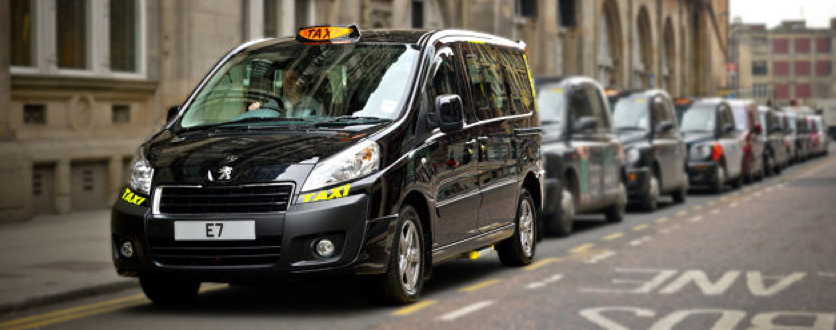
But not far from Possilpark on Glasgow’s Balmore Road is a Scots success story where two brothers have built a garage into Allied Vehicles, turning over £80m a year in building as many as 4,000 of their version of the black cab, the E7. This is based on the chassis of the Peugeot Partner, which is totally rebuilt to strict reliability, disability and environmental requirements. It is so popular that Allied have captured around 90% of the market outside of London but is being prevented from penetrating that market by Boris & TfL holding the line for the old design.

This may not last. Allied are no shrinking violets, taking the City of Liverpool to court for anti-competitive obstruction and winning. The excuse Boris/TfL are using to resist their better product is that the E7 cannot achieve the legendary 25ft turning circle of the LTC black cab. Allied’s response is that this requirement dates from when U-turns on busy streets were legal and less dangerous and far less important in the maze of one-way streets that now predominate in Central London. With Allied developing private hire and electric versions, can the black cab walls of London long remain unstormed?

The New Pretender—Allied's G7

The New Pretender—Allied’s E7

Perhaps the funniest part of the whole story is not just that LTC is no longer based in London but its former Coventry-based owners, Manganese Bronze (originally themselves Victorian makers of ships’ propellers) last year went into administration as a result of a gearbox fault in their latest TX4 model black cab that caused a costly recall.

As a result, the administrators sold the firm to an automaker called Geely, securing around 100 jobs and causing the ever-ebullient Boris to declare:

“I am delighted that Geely has successfully secured the future of the London Taxi Company, ensuring the continuing manufacture of (an) instantly recognisable vehicle synonymous with London”.

Well, yes—synonymous with London because LTC has lost all other cities to the Scots. And would Boris’s Londoners share his enthusiasm if they knew ‘their’ taxis are now being built in Coventry by the Chinese? One city analyst went so far as to say he is perplexed by the deal and fears production could be moved abroad:

“I am not sure why Geely would get itself into such a deal … the black cab is too British to win mass appeal anywhere, not even in China,” said John Zeng, Asia Pacific director for consultancy LMC Automotive. “The best hope for Geely is to move the production line to China, cut costs and sell it back to London.”

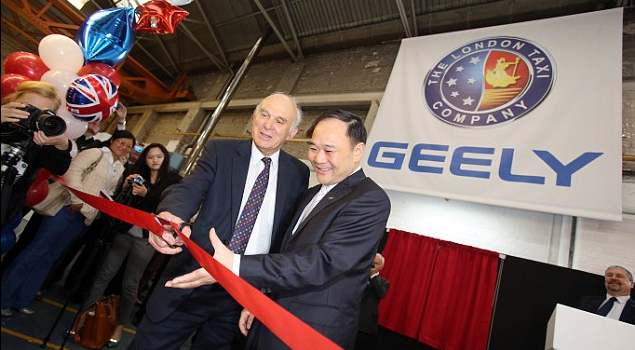
Business secretary, Vince Cable (left) cuts a ribbon with Geely Chairman Li Shufu as they officially restart production of TX4 model Read more: http://www.dailymail.co.uk/news/article-2417890/Black-cab-manufacturer-London-Taxi-Company-restarts-production

Vince Cable cuts a ribbon with Geely Chairman Li Shufu at restart of production 


Posted in Commerce, Transport | Tagged | Leave a comment

Nuclear Zub in Zummerzet?

Two years after the event, no-one has yet penetrated the ruins of what was once the Fukushima nuclear power station and all fifty Japanese nuclear plants remain out of commission until someone comes up with a safety plan. Nonetheless, news out of there has been a little thin of late: the world has continued quietly on its way without really taking stock and learning lessons.

But we all received a timely reminder when this last week was bracketed by two events that nobody appears to have thought to link together:

  1. With great relief, verging on joy, the UK government announced that it had, by means of a fixed offer of 92.5p per MWH, persuaded EDF to expand its UK power station empire by building a Hinkley ‘C’ nuclear plant on the seaside in Somerset, the first in the UK since Sizewell ‘C’ two decades ago.
  2. A 7.3 magnitude earthquake (considered to be an aftershock of the 2011 quake that wrecked Fukushima and much of the adjacent coast) struck the same part of Japan but this time only causing a small 1m tsunami and no new damage to the power station.

Given these are on opposite sides of the world, what possible connection could they have? With the decommissioned Hinkley ‘A’ and operational Hinkley ‘B’ already on-site, would it not be logical to add another to the isolated site where a plentiful supply of Bristol Channel is available as cooling water? And since UK nuclear reactors have given decades of reliable and carbon-free (OK -light) energy, how else are the lights to be kept on?

Well, for one thing, Scotland is developing its renewables at such a pace and the present plant exports some 20% of its power as surplus there is a valid argument that no more conventional power stations are needed in Scotland. For another, while the UK’s nuclear safety record is indeed good, here are some disturbing facts, to spite that:

  1. Safety engineers at Torness could not prevent an RAF Tornado coming down within 1km of the station and well inside a supposed strict no-fly zone in 1999.
  2. Safety engineers at Three Mile Island (1979) could not prevent a hurried and incorrect response to mechanical failure releasing 150,000 litres of radioactive water and coming close to frying Philadelphia.
  3. Safety engineers at Chernobyl (1986) could not prevent human stupidity from overriding automatic controls during an experiment in low-power operations and frying a chunk of the admittedly-large Ukraine.
  4. Safety engineers at Fukushima (2011) had—sensibly—built an anti-tsunami wall—they just didn’t allow for the worst nature could provide and build it tall enough.

This latter brings us back to zunny Zummerzet. There are no high sea—let alone tsunami—walls around ‘A’ or ‘B’ at Hinkley, nor is there to be one at ‘C’. Engineers and geologists do not regard the Bristol Channel as seismically active  and so consider such walls superfluous. But there is a reason not to be quite so glib. All parts of the globe are subject to some seismic activity, especially in areas of now-dormant plate boundaries and the flat Somerset levels are no stranger to flooding, having been sea in Roman times.

This is not just about the huge tides in the Bristol Channel that can swing water levels by 14m and create the Severn Bore, nor that, historically, the Levels were once just marshes much like the Fens. But in the winter of 1607, both coasts of the Bristol Channel were hit by a flood that sounds far more like a tsunami than any storm-surge-on-a-Spring-tide that typifies most UK coastal floods.

Whatever caused it, it was sudden and resulted in the drowning of an estimated 2,000 or more people, with houses and villages swept away, an estimated 200 square miles (518 km2) of farmland inundated and livestock destroyed, reaching inland as far as Glastonbury and wrecking the local economy. Although patchy and scientific, several accounts survive implying no ordinary flood:

  • Some historical accounts indicate that the weather was fine e.g. “for about nine of the morning, the same being most fayrely and brightly spred, many of the inhabitants of these countreys prepared themselves to their affayres”.
  • The sea appears to have been “driven back” i.e. retreated out to sea, before the wave struck, a classic tsunami herald.
  • The wave appeared as “mighty hilles of water tombling over one another in such sort as if the greatest mountains in the world had overwhelmed the lowe villages or marshy grounds. Sometimes it dazzled many of the spectators that they imagined it had bin some fogge or mist coming with great swiftness towards them and with such a smoke as if mountains were all on fire, and to the view of some it seemed as if myriads of thousands of arrows had been shot forth all at one time.”

This last is very similar to descriptions of more recent tsunami, such as the eruption of Krakatau in 1883, where accounts refer to the sea as being ‘hilly’. The reference to dazzling, fiery mountains and myriads of arrows is reminiscent of accounts of tsunami on the Burin Peninsula (Newfoundland) in 1929, where the wave crest “was shining like car headlights”, or in Papua New Guinea in 1998 where “the wave was frothing and sparkling”.

But, if it was a Fukushima-style tsunami, what might have caused it? Some fifty miles Southwest of Donegal, the shallow Continental Shelf on which Britain sits falls away into the Atlantic abyss, plunging thousands of feet in a few miles. Taking the Boxing Day (2004) tsunami originating off Ache/Sumatra as a model, a subsea earthquake there dropped a section of the seabed by many metres over a distance of many miles, displacing huge amounts of water that created a tsunami felt all around the Indian Ocean. The Fukushima tsunami appears to have come from similar vertical movement.

It is just speculation—but highly plausible—that a similar event was caused by a section of the Continental Shelf breaking off and sliding into the deep ocean abyss would displace huge volumes of water that could create such a Tsunami. And, if it has happened once, why might it not happen again, especially as the Bristol Channel amplifies the magnitude of such events as the water is squeezed into its ever-narrowing funnel. Perhaps this happened more than once but the sparsely populated west coasts of Ireland and Scotland may not have noticed or the jagged coast may have absorbed rather than amplified it.

But in 1607, Burnham-on-Sea did have its sea wall entirely overwhelmed by water. As Hinkley ‘C’ is  3 miles away but has no plans for even a vestige of sea defences, perhaps EDF can review this piece of 400-year-old history and—somewhere in the £16bn costs involved—find the lolly to provide something sufficiently robust at least better than the late-lamented but nonetheless highly relevant Fukushima.

SomersetFloods

Posted in Environment | Leave a comment

From Millstone to Milestone

It seems that about 139% of the population of Scotland is delighted that an agreement has been reached over a future for both the INEOS refinery and petrochemical plant. And well everyone should be—as one of the largest and most important industrial sites in Scotland, it was home to not just 1,400 jobs, but 1,400 well paying, skilled, production jobs. Where once we Scots had more such jobs than we could count, global development has left us rather more short these days.

While a job that supports a family is never to be sniffed at, it seems the recent recession has made politicians in particular rather too ready to bundle up sheer numbers and worry less about the quality and longevity of jobs created or retained. While it is welcome to have more rather than fewer jobs for people to choose from, they are not all equivalent. ONe of the reasons Osbo has been struggling to make upward movement out of the £1tn-and-growing debt chasm is that most jobs powering this sickly recovery (0.8% in Q3) are service jobs. They tend not to pay well nor to survive any belt-tightening.

What Scotland (and indeed the UK) needs are skilled jobs, such as the INEOS plant has by the hundreds. These include chemists, civil & process engineers, skilled operators of a variety of complex equipment and more universal jobs like plumbers, welders, electricians etc to be found elsewhere. If Scotland is to make its way in the world, not only should we not be losing jobs like Grangemouth but we should be knuckling down and creating them. This is an aspiration in which Scottish Enterprise has been falling down on its £1/2bn job. For a quick example of what a chocolate teapot they are, try this week’s Herald.

Actual 21st century business development has been driven by increasing globalisation and the fluid investment strategies of multinational tycoons like Jim Ratcliffe who built INEOS up from nothing into a $43bn (£30bn) turnover force in global petrochemicals. Scotland is perfectly capable of achieving such success—look at Brian Soutar with Stagecoach or Tom Farmer with Qwikfit—but we seem to have lost some of the touch we had when the Glasgow Tobacco barons of 200 years ago paved Scotland’s way into leading Victorian industry.

What went wrong at Grangemouth and nearly cost us a pivotal facility seems to have been an inability of Unite and its officials to recognise that they now operate in the 21st century and not the 19th. Consider how ludicrous it would have been for Scotland to be Europe’s prime oil & gas producer and have no indigenous ability to either refine or produce the rich spectrum of key chemicals that come from it.

To rummage on the trigger for the dispute would be treading on the political corns that should more rightly be dealt with in the not-yet-announced Falkirk by-election to replace Slugger Joyce. Far more relevant is the little-known appreciation of how demand for refinery products has changed. Grangemouth’s processes were built 40 years ago when leaded petrol, large cars and low demand for heavier volatiles was the norm. In the intervening decades, unleaded has come to power smaller cars, easing relative demand for petrol but greatly increasing it for diesel and heating oil.

The resulting mix of demand was not one that Grangemouth was built to supply and so its operation had, despite overall demand rising and business being fundamentally good started to lose money. Prior to INEOS buying the plant, BP had been able to offer generous wages and benefits (including a generous final-pay pension plan) to its generally happy and productive workers while the ‘old’ mix had kept it profitable. INEOS, being skilled in running such plants elsewhere, tried what they could to keep the ageing plant profitable.

But when it realised this was not going to work, they pondered before going to the workforce and clearly came up with a brinkmanship strategy in which they saw that they could not lose: confront the workers to accept losses to some wage/pension generosity in exchange for a guarantee that the £300m investment necessary for the future would be forthcoming. Otherwise, close the plant; stop the losses; concentrate on the rest of the INEOS empire.

Had that been all, the workers—knowing how bleak the financial climate beyond the gates is and looks like remaining—may have seen their weak position. But Pat Rafferty, a well experienced union official of the old school who cut his teeth in the industrial mayhem around the time the plant was built, thought Unite could fight this.

Back in the day when BP ran the site, when companies had little offshore interest, when governments were expected to facilitate industrial peace (especially in nationalised industries) rather than wring their hands at the periphery, picking such a fight usually worked. But Maggie showed how it could be done, however brutally and unfairly, to wrong-foot workers and their legitimate grievances: you ensure supplies from elsewhere, limit the impact of any action using forces of the state and effectively starve them out.

In the single market that the world economy has virtually become, multinationals operating across frontiers have a huge advantage over any national trade union, especially when global markets are depressed and shipping companies with cape-size tankers lying idle would sell their first-born into slavery just to keep from going under. INEOS owner Jim Ratcliffe and all his management on down would be briefed to hold the line and brazen it out once the announcement of revamp or closure was made. They made a strong case that the plant was losing £10m and practices had to change.

Rafferty, thinking in old money and unable to break postures of a lifetime, walked right into the INEOS trap and disparaged the offer they put on the table, despite the fact that management were already running down operations for H&S reasons in anticipation of some form of union action. The workforce split half-and-half, which gave INEOS the leeway to announce permanent closure and ridicule Unite which had painted its members into a losing corner.

If Rafferty and Unite were taken aback by the speed and decisiveness from INEOS, that was nothing compared to the shock wave that went through the hundreds of well paid workers who had watched their mates lose good jobs and take lesser ones and had not dreamed it would happen to them. It is a tribute to them that they quickly persuaded Unite to change tack and to Rafferty who did not do a Scargill and go down with the ship to no great purpose.

Overall, a lesson in 21st century industrial relations needs to be taken: such a plant can be a money-spinner for company and workers. And once a skilled welder needed only to cross the road to another shipyard if the owners got stroppy. But if it is seen as a skirmish in antiquated class war, there is every chance that the owner/employer will have global markets to fall back on and the absence of local alternatives will give workers Hobson’s Choice. This Grangemouth event must be seen as pivotal in industrial relations, much like the Miners’ Strike.

In a suitably embittered frenzy, Daily Record, tracked Jim Ratcliffe down to his yacht—Hampshire II, moored on the Côte d’Azure and valued at £130m—quoted him as saying:

“Workers’ wages and pensions had to be frozen or cut because they were too high. It was necessary for Grangemouth to enter the modern world because it had been living in the past.”

That may stick in the craw of many of us, especially union members. But, truth be told, he’s quite right.

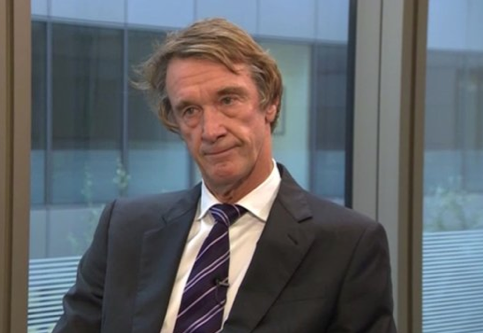
Jim Ratcliffe, Founder and Chairman of INEOS

What DOES it take to make Jim Ratcliffe, Founder and Chairman of INEOS happy?

Posted in Commerce | Tagged | Leave a comment

Free Lunch Indigestion

October 9th’s Hootsmon carried a minor tirade from David O’Neill, President of CoSLA and Leader of the Labour administration of North Ayrshire Council in which he asserts that the present freeze on Council Tax in Scotland—in place for the last six years—is unsustainable. That he has made this assertion is neither new nor surprising. But what is surprising is that the Hootsmon editorial takes him to task for it—and yet the man has a point.

Let’s look beyond the Pavlovian nay-saying of most Labour spokespeople when it comes to any chance to do down  SNP policy—and make the (admittedly brave) assumption that local politics is neither so partisan, nor so short-sighted. Let’s also ignore that Cara Hilton seems to be making up Labour policy on the hoof as she struggles to win in Irn Broon’s back yard (she claimed Labour is ‘solidly behind’ the Council Tax freeze) and presume a more senior and experienced figure than Cara has it right.

This debate needs a resolution, given either outcome of the indy referendum. We need to consider what Scotland can or cannot afford—and our balanced decision needs to come well before 2016/17. Some fiscal drivel from Project Fear—including Ruth Davidson in a good but ill-informed conference speech—is going the rounds that Scotland would face a £32bn bill. Peter Jones’ Op Ed piece in the Hootsmon on October 1st accurately nails that particular canard.

Any sensible strategy must accommodate reality. The Scottish Government’s budget, once around £30bn (2009/10), is now £4bn short of that and will continue to deteriorate because of a declining block grant from Westminster. Given that the thick end of the wedge is a decline to £24.5bn by 2016/17 before any rise can be anticipated, some rethinking what a budget cut of 25% can realistically sustain is overdue.

And since the expected turning point back to growth has been revised further into the future (twice), we find ourselves in the highly unusual position of agreeing with Johann Lamont (we think, because she has swithered about on it): that the new fiscal reality demands a root-and-branch budget review is needed. We Scots have shibboleths that are overdue for re-examination, including:

  1. Council Tax Freeze. From raising ~20% of their income from Council Tax, its freezing since 2006/07 has dropped the proportion to 14%, with much of council loss compensated for by increase in Grant Aided Expenditure (GAE) given to councils. It is speculation how much councils might have raised tax with no freeze but taking a low average of 3% each year across all 32 councils means a total of £1,633m is not being raised.
  2. Free Personal Care. Costing £194m in 2002/03 and doubling to £384m by 2008/09, this policy is now running at £458m and the number of those entitled is expected to rise by 26% before 2025. It last came under the spotlight in 2008, as a result of rising costs and concerns over some councils operating waiting lists for free personal care, a postcode lottery in eligibility and charges being wrongly made for services such as food preparation. Then, an independent review for the Scottish government, chaired by Lord Sutherland, expected free personal care to be sustainable until 2013, when those increasing numbers of older people would start to bite.
  3. Concessionary Travel. Although intended to free the elderly from their homes and give them cheaper access to shops and social opportunities, this has become something of a monster. Not only does it start at 60 and has no means testing but examples are legion of people not just traveling the country in express buses but taking whole vacations on the back of it. The result is a £248m bill.
  4. Free Prescriptions. Though they started out being free in 1948, by the time the Scottish Government got their hands on the NHS, there was still a nominal fee per item which was abolished by the SNP. Since then, usage has grown to 95m items annually costing just over £1bn.
  5. Free Eye Tests. Since introduction in 2006, the number of eye tests performed increased by almost 50% and a general improvement in vision health has been rather offset by a clear disparity between rich and poor, with the former taking most advantage of the programme and costs running around £95m per annum.
  6. Winter Fuel Allowance
  7. Free TV Licences

Admittedly the last two are UK-sourced and no Scottish Government will have control over them as long as we remain in the Union, although they would likely be picked up as currently implemented in the event of Independence. The threat to all these benefits was first flagged up by Scotland’s Auditor General, Robert Black, in the second half of 2009. It raised its head again in the more recent Independent Budget Review Panel Report – the “Beveridge Report” – which stated very plainly:

“The principle of universality in the delivery of many of our public services, such as concessionary travel, prescription charges, eye examinations, free personal and nursing care and tuition fees is commendable, but simply may no longer be affordable. A debate needs to be had on whether those who can afford to pay might be invited to do so, thus allowing better targeting of those in most need.”

In this era of ever-constricting budgets that has yet to come to a clear and demonstrable end, rather than pushing the popular (and populist) line that Scotland’s budget is balanced and all of the above is affordable, we should be considering what is NOT being invested in by way of services in order to preserve the shibboleths listed above. We hold John Swinney to be the most astute finance minister either Edinburgh or London have seen for a while but it seems his colleagues are twisting his arm on this one

But what could he do? Without laying waste to the principles that make them so attractive, what could be done that would ease the squeaking of local government pips?

  • Council Tax. Allow councils a rise of 2% on condition that all those paying prior to the start date were given the same as discount. This means: pay for next year by April 1st and your council tax is effectively frozen. By receiving the money early, councils can make more than 2% by putting it to work immediately. Net income boost: ~£100m. It also reclaims some of the power lost to the centre as councils are dictated to over tax.
  • Free Personal Care. If this were means tested—as financial payments for care homes already is—at least a third of current costs would be met individuals still able to afford it. This would be preferable to stretching the present budget with economy measures, such as the unpopular 15-minute visit, and releases £150m for other things.
  • Concessionary Travel. Undoubtedly one of the most popular measures, it could still be effective without being so profligate. There seems no logical reason why travel should be country-wide and not just local, why it needs to be available at peak times and why eligibility should not start at 65. Around 1/3rd of the burgeoning numbers of trips currently being made would thereby switch to normal fares at a saving of £80m.
  • Free Prescriptions & Eye Tests. The logic why these should be free when basic health elements like dentistry is not is not obvious and seems arbitrary. By using means testing mentioned above, those perfectly capable of (and often willing) to pay for services would do so, with NHS administrators given the job of managing this (and other commercial questions such as charging for health tourism). Allowing for the extra work monitoring entitlement, there should be income of around £150m from prescriptions and £25m from eye tests.

The argument that charging causes unnecessary administration overheads does not hold water: means testing exists for many things from free school meals to benefits so the issue of a single personal service card (not unlike the present concession card) used across all services would be a minimal cost per person.

The result would be (taking the amounts proposed in the bullets above) of giving the Scottish Government over £1/2bn more to spend on more urgent issues—or absorbing half of the annual reduction from Westminster they are faced with each year. In times of plenty, why not be generous to people who pay their way?

But when demand is rising and many people are perfectly capable of handling the charges involved, cutting back on essential investment in the future because monies are being locked up in populist policies like the above seems a short-sighted, if not self-serving approach by an otherwise competent government.

Posted in Uncategorized | Leave a comment

Stop the World: England Wants to Get Off

Around fifty years ago, the Scottish Nationalist (as it was then) Party was a joke to Labour. Ensconced as their MPs and councillors were in political fortress built out of Clyde shipyards, Motherwell steel mills, Fife coal mines and newly sprawling council estates, they laughed at the fledgling party—if they thought of them at all.

Then came Hamilton in 1967 and Winnie Ewing’s ground-breaking 1,779 majority in a place that traditionally weighed the Labour votes to save time. Since then, there has always been an SNP parliamentary presence but their advances did not appear to threaten Labour before 1974, when Labour’s Scottish Secretary Willie Ross confessed to Winnie that “It’s not the eleven wins that frighten me, Winnie, it’s your thirty-five second places“. From that point on, Labour has developed a deep hatred of the SNP for winning more and more of what they had seen as ‘their turf’ in seats, councils, geography and influence.

With a few creditable exceptions (Douglas Alexander springs to mind), this deep-seated resentment now so dominates party thinking that strategy and almost all campaigns are driven by it—see Gerry Hassan’s recent contribution in the Hootsman for a concise take. This is a pity, not just for Labour, but for Scotland as a whole. Though they have achieved landslides throughout the 1980’s, that merely underscored their impotence. Despite more recent decline, Labour is still a force in Scotland comparable to the SNP: the two together represent three votes in four and dwarf all remaining parties.

What if they found common ground?

Because, looking at what each party espouses, there are few stumbling blocks to that. Both want a fairer, more just, more egalitarian society. Neither has much time for Tory toff elitism, ineffectual Lib-Dem flannel, BNP racism or UKIP xenophobia. Both could find common ground with Greens and (at a pinch) socialists; both understand the need for a robust economy to fund their ambitions for civic enrichment; both regard the NHS and social programmes as pillars of enlightenment giving a better society; both have no patience with fascism in any disguise, especially blaming our own ills on foreigners.

Perhaps the venom that is voiced—and not all from Labour’s side—derives from having too MUCH in common and a consequent difficulty in distinguishing messages. The one difference on which they both agree is the matter of Scottish independence. Labour’s socialist past has a long and noble history of internationalism. Perhaps that’s why they see the SNP in erroneously truncated terms—they are nationalist; therefore they see all others as enemies and want to separate from everything. But this is simplistic as well as unfair.

There are two key matters here that Labour in Scotland seems too thrawn to grasp:

  1. The SNP is international: pro-Europe; pro-Nordic Council; pro-free trade; pro-UN; pro immigration; pro-cultural exchanges and (perhaps most importantly) pro-England. All they want is to establish Scotland as a normal country between Saudi Arabia and Seychelles in the world-wide panoply of countries. What happens then is up to the Scottish people and the government they choose but most of us have faith in the good sense and general outgoing inclusive curiosity about the world that Scots have exhibited since the days of the Hanseatic Ports trade and the Auld Alliance
  2. England isn’t particularly international. Used to centuries of dominance and getting its own way, it has yet to find a place in this 21st century world with which it is comfortable. Never having been in close contact with most nearby countries except on a war footing, the culture is more naturally conservative and therefore prey to the more isolationist elements of the Tory party. Together with the rise of BNP and UKIP (restricted entirely to England within the British Isles), this forms a natural majority that prejudices both the more enlightened internal policies and the more consensual international policies that the SNP and Labour share.

In short: the longer Scotland is held on to by England (and, with it, the Scottish Labour Party) the harder it will be for them to achieve the open and egalitarian society claimed to be its goal. Most Labour members know in their hearts that the 1997-2010 Labour governments were far more Islington- than Ingliston-driven. They were elected by the ambitions of the new yuppie middle classes, not by social principles familiar to the average Labour member.

Such differences with England (& things in common between the two parties) came to a head this week with Afirye’s attempt to shunt the whole European Referendum two years earlier and thereby hijack the Tory bill being teed up. This would not allow Cameron time to renegotiate parts of the treaty disliked by the more restless backwoods backbenchers. Whichever way that whole thing goes, we are faced with years of despair among Britain’s friends throughout the EU as we squabble over small-minded detail with no more affability or style than Maggie’s ill-informed hand-bagging displayed in the 1980’s.

Why would any Labour member want more of that? Combined with the loss of their tranche of Scottish MPs, that would condemn England to almost permanent Tory government. What happened to their real internationalism? What happened to their hostility to the expensive disgrace of a nuclear arsenal pointed at no-one? What happened to their bitter frustration throughout the 1980’s at having Tory policy rammed down their throat at every turn—right to buy; miners’ strike; poll tax; city’s ‘Big Bang’; bus deregulation rail privatisation; utlility privatisation; BT privatisation; privatisation of parts of the NHS.

Roll forward 25 years and we’re in another phase of the same obloquy. The PO is next. Pensions, social services, annual increments are all slashed; Britain—already the most unequal place in Western Europe—becomes more unequal year by year. Does Labour really think that if Scotland stays in the Union it’s going to be able to arrest all that any more than their ‘feeble fifty’ Labour MP’s did in the 1980’s?

But, imagine the alternative: Labour competing with the SNP to make Scotland a world example of an egalitarian society, built in a small country from its creative people and its rich resources. Learning from Scandinavia, putting its oil and energy wealth to positive use and not just funding nukes and peddling aggression wherever America’s paranoia points to. Imagine the two parties competing with innovative ideas for the votes of an enlightened Scottish population who capitalise on their world-class universities and splendid natural resources to be a beacon for the Rwandas and Malawis, the Nicaraguas and Costa Ricas, even the Estonias and Lithuanias (although if we don’t get cracking those last two at least will soon be teaching us how to achieve for our people).

It would be a country of which the great English people—once they finally wake from the myopic malaise into which Tory/UKIP small-mindedness is leading them—might be proud, even envious, to have us as their northern neighbour, much as the somewhat wayward Belgians envy the more effective, more prosperous, more globally respected Dutch.

Or you can support a union degrading further into a hard-up, third-rate power that still thinks acting as a diligent US poodle on the world stage earns its people more merit than opprobrium.

Posted in Community, Politics | Tagged | Leave a comment

…As Ithers See Us

The independence debate encompasses cool heads, indifferent ostriches, emotional types and sheer bampots on both sides. But what should bother most Scots is that the bampots seem to be in the ascendency. A cosmopolitan friend in the States with international experience (including Scotland) recommended the following Op Ed piece from the New York Times. It is re-blogged here in full, so accurately does it whack this potentially destructive nail of bampot dominance on the head. Both sides of the debate ought to be concerned enough to address this. Soon.

NYTimes

Does Scotland Want Independence?

October 2, 2013   By DENISE MINA

GLASGOW — IN just under a year, Scotland will hold a referendum on whether to become an independent country. The issue is already so divisive that the comedian Susan Calman had to call for an end to the “name-calling, swearing and death threats” she received after making jokes about it on a radio show. It’s so controversial that it would be bad manners to bring it up with anyone who doesn’t agree with you already.

Without unpacking any of the issues of nationhood, belonging or identity, we’re stuck in a rut and things are getting nasty. Each side blames the other. Fervor has enormous social currency. The capacity to listen to people we disagree with is framed as indecision.

I recently appeared on a radio program to discuss the referendum. I was billed as “undecided,” and there were three men on the panel, one pro, one con, and one an academic political analyst. Two of them had a brutal falling out before the discussion even began — in fact, it was over the group e-mail chain giving us directions to the studio. It made me nostalgic for the ’80s; it had been so long since I had seen anyone called a Communist Stalinist.

Anyway, during the course of the show I outed myself as not “undecided,” but sick to death of the debate’s simplistic binary framing. None of you are listening, I said; voters are tuning out. Referendums have to be framed as yes or no because nuance makes terrible law, but the discussion needs to be expansive because independence is such a complex proposition.

It went down quite well. The rivals finally made eye contact. I felt, quite deeply, that in shifting the agenda from an adversarial one, I had won. Outside on the pavement we stood together and the rivals apologized for their manners. I felt like Gandhi, except with his foot on the chest of a toppled British Empire, his little walnutty face laughing triumphantly at its sobbing widows. Take that, binary discourse.

Then the Yes man took me aside and asked, how would I like him to seem to be listening? If he seemed to be listening, would that sway my vote? He confided that he’d made contact with people through the Yes campaign that he simply couldn’t have met otherwise. His contact book was bulging. First-name terms. Good for business. That was creepy.

I had a tip for him. During the program he had suggested that independence would be more popular if every person in Scotland knew they would be £500 — about $800 — better off every year if we became independent. As a writer, I’d made a mental note to counsel him that £500 was a bad number, too round, £478.43 was more believable. But in the end I didn’t say anything.

The truth is, we don’t really know what Scottish people want, let alone what independence will mean for us. We know that Scotland votes in a different pattern from the rest of Britain: the current coalition government is dominated by the Conservatives, who have a single Scottish M.P. (and Margaret Thatcher never won a national election here). But we don’t know whether this is a result of genuine political difference or of protest votes, cast in the assumption that they won’t do anything dangerous.

If Scotland leaves Britain, will we be allowed to remain within the European Union? Accepting an independent Scotland might set a precedent for Catalan separatists in Spain and the Walloons in Belgium. It could lead to the atrophy of an already tremulous European project. Rumors abound that the castles of the Highlands are being bought by Spanish, Greek and Russian millionaires in anticipation of the enormous tax cuts independence could bring.

The Scottish first minister, Alex Salmond—head of the Scottish National Party, whose raison d’être centers on independence—has been cozying up to Rupert Murdoch and Donald J. Trump. There’s been much talk of an Ireland-style business-friendly environment. Before that Mr. Salmond’s model was Iceland. Imagine all the small nations of the world saying a collective prayer that Alex Salmond doesn’t mention them in a speech and jinx their economy. Some people, very laudably, hope that as a smaller country we will be able to take a lead in eco-tech, developing sustainable energy sources and electric cars.

But sadly, we’re not really discussing any of these things. We’re discussing yes or no.

The rest of Britain is baffled, but senses the anger. Nigel Farage, a British member of the European Parliament who roughly equates with America’s own dear Rand Paul, except really smug and annoying, was chased out of Edinburgh earlier this year by an angry mob.

He put it down to “anti-English” feeling, despite the protesters’ making their objections very clear in their chants of “racist” and “homophobe.” He tried to escape in two different taxis, both of whose drivers asked him to get out.

So, let’s hurry up and blame the media: adversarial debate is full of drama and arrives at a conclusion in time for the adverts. Tweets are short and good for the rhythmic call and response of angry debate. Make no mistake, the only clear side of this debate is that intelligent public discourse matters, and that we’re not getting any of it.

At an event on cultural identity at the Edinburgh College of Art, I recently witnessed a room of art-hipsters cower as an elderly man in a kilt walked in. Everyone mistakenly thought he was an angry nationalist who had come to disrupt the event. Actually, he was an eccentric Englishman. He made a great contribution by talking us through his outfit and sitting with his legs open.

That’s more than you can say for most of our elected officials and cultural commentators.

Denise Mina is the author, most recently, of the novel “God and Beasts.”

NYTimes

(end of re-blog)

Posted in Politics | Tagged , , | Leave a comment

Scotland’s Peaceable Future

This week the UK Parliament’s Defence Committee weighed into the independence debate with their orchestrated contribution to this rising Unionist babble about how crazy any country would be to want out of the UK. The committee said Scots “deserve to be presented with as full a picture as possible from both sides in the debate prior to the referendum.” Thereupon five questions were posed for the Yes campaign to answer.

Let’s leave aside much unsubstantiated “we’ll be better together” (just ‘cos) coming from the unionist camp and recognise that the MP’s may actually have a point. Answers will help towards an informed decision next September 18th if we consider their five questions. Scotland faces few enemies, especially if, as we hope, an amicable arrangement with England can be reached. Other than a Russian Arctic Fleet deploying off Shetland, it’s hard to imagine a plausible war scenario that would involve us. But we should plan for  unknown futures. Though speaking neither for the Yes campaign nor the SNP, most private citizens paying attention could make a competent response. Here’s mine:

    1. How would a sovereign Scottish government ensure the defence and security of an independent Scotland? The defence of Scotland would be very different from that of the UK. Its international involvement would be as a part of UN peace deployments and NATO co-operation. As such, it would not be involved in the next unilateral Iraq or Afghan war and would cease to be a terrorist target the way the current UK provocation of others (Lybia; Argentina; Spain; etc) makes it. It would provide an effective defence for North Sea structures and a long-range maritime patrol ability over huge swathes of the Atlantic; Britain is currently capable of neither. Also, by having balanced light ground forces (no nukes or heavy tanks) and reviving famous Scottish regiments, Scotland’s more flexible force would better suit modern ‘fire-brigade’ actions with greater numbers of front-line troops than now.
    2. For what purposes would Scottish armed forces be used? As above: as a part of UN peace deployments and NATO co-operation. A variety of light infantry, special forces, frigates and helicopters would be available for deployment with allies in joint conventional defence; regular infantry, fast attack boats and jet fighters in-country. One or more battalions would serve as UN peacekeepers. We would decline to provide a cod-piece for wherever the next US John-Wayne-esque ‘world policeman’ involvement occurred.
    3. How would Scottish armed forces be structured and trained, and where would they be based? Land forces would retain the present six battalions and revive a further three to form: a) specialist rapid deployment brigade; b) conventional infantry brigade; c) two reserve infantry brigades, all with arty/signal/logistic components, based at Ft George, Glencorse/Redford and Arbroath. Navy would deploy: a) 3 frigates; b) two fast patrol boat flotillas; c) two minesweeper/ASW/FPV flotillas, based at Coulport & Rosyth. Air force would comprise a) two fighter sqdns; b) two attack/recon helicopter sqdns; c) one ASR helicopter sqdn; d) one L-R maritime patrol sqdn, based at Leuchars, Lossie & Prestwick (plus ASR/light presence in W. Isles, Orkney/Shetland and Buchan). Training facilities would be internal (e.g. Arbroath) and external with Allies (England and/or NATO)
    4. How much would it cost to equip, support and train an independent Scotland’s armed forces and how much of this could be procured and delivered domestically? Upon independence, Scotland should be entitled to 9% of all MoDs holdings and equipment. Given Scotland will not require nuclear (or any other) subs; heavy tanks; heavy artillery; heavy transport/lift; aircraft carriers; destroyers; global deployment support; overseas bases; indigenous weapons procurement (except naval) or separate armed forces departments, a considerable proportion of holdings and equipment Scotland does need should more than cover initial requirements. The posited £2.5bn defence budget should be adequate to balance the forces as above over time. Whether preference for procurement goes to English suppliers will depend on the level of co-operation offered by the new rump English government.
    5. And how many jobs in the defence sector would be placed at risk? As the current arrangement means that Scotland contributes ~£3.5bn to defence and has less than £2.8bn spent on defence in the country, the situation could hardly get much worse. There would be no sense in not continuing to provide the aircraft carriers and the GCS development. The 20,000 workers at Clyde/Rosyth and related industries would continue to provide top-quality warships; the question is more if England would cut its nose off to spite its face and not buy them. Conversion to renewables or oil engineering would be a less desirable alternative. Non-naval armaments jobs in Scotland are minimal.

    The hon. members also wanted to know more about the proposed Scottish defence force, including the numbers of combat troops and the numbers and types of aircraft and vessels which would be needed. Refer to an earlier blog on suggested details down to unit level. For a realistic evaluation on an appropriate scale, consider countries of comparable size and ambition like Norway and Denmark, who neither like nor harbour nukes, yet are both considered making valuable contributions towards Europe’s defence.

And, speaking of Denmark, John Dyrby Paulsen is foreign and defence spokesman for the ruling Social Democrats there. He’s also chairman of the Nato Parliamentary Assembly’s transatlantic relations committee. In his (obviously qualified) opinion when asked if Scotland would have difficulty in becoming a NATO member, his comment was:

“In my view, no, you wouldn’t have to apply for it,” he said. “From my point of view you would be invited to be a part of it and you would have to say ‘no’ if you didn’t want it, rather than say ‘yes’ to get it.

“Because you have been a part of Nato since the Second World War and you have delivered your capabilities, you have sort of gained from the alliance common defence policies since 65 years now. It would be natural for you to be part of it after independence, if you were to get that.”

Asked if forcing the rest of the UK into a hugely expensive relocation of Trident from Faslane and Coulport would count against Scotland, Mr Paulsen said: “It would have absolutely no impact, whether you have nuclear weapons or not. I don’t see it as a problem, no.”

The committee might wish to discuss this with Mr Paulsen as part of their inquiry. And, while they’re at it, they might like to consider where on the English coast they would like us to dump their seven nuclear subs mouldering for decades at Rosyth. Berwick is not an option: not only is there no secure space but there’s folding money says the people there will vote themselves and the Tweed back into Scotland once they see how well we do.

Posted in Politics | Tagged | 2 Comments