Another Load of Old Balls

Given that oratory was never his strength, Shadow Chancellor Ed Balls’s speech to the Labour Conference faithful in Liverpool was a competent affair that achieved what most senior opposition spokespeople aspire to but seldom achieve—landing a couple of blows on the government.

Coming from a protégé of the now untraceable Irn Broon and seen from a Liverpool or even a Lambeth perspective, it balanced fairly frank nostra culpas about some policy gaffes with claims that ‘it wisnae us’ that ran the UK fiscal bandwagon off the rails in 2008. But, as Sheila Lawlor points out “Labour’s bequest to the country and the coalition was a bare cupboard, stuffed with IOUs piling up.”

In fact, some of Ed’s claims look pretty hollow when held up to detailed scrutiny—much in the style of his old boss. As one example, he claims that the public sector has suffered devastating job losses but fails to mention that the private sector has, in fact, created two jobs for every one lost in the public sector.
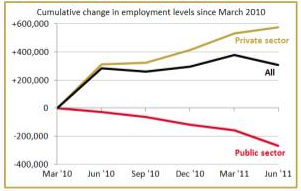
Labour Market Statistics (Source: ONS, September 2011)

In defence of Labour’s fiscal prudence, he claims they did well, given that they inherited the worst public debt ever in 1997 and proceeded to improve it—if not a blatant lie then a gross misrepresentation of the truth.

UK Net Debt (£bn) During Irn Broon's Reign as Chancellor

Now, given his stint at the Treasury as Irn Broon’s right-hand man, it’s hard for Ed to dodge responsibility for, let alone claim ignorance of, such gross misrepresentations. But, given that he himself admits involvement in the infamous ‘light touch’ regulation of the financial markets in general and the FSA in particular, Ed shows especially rare cheek in stating that it was not too many nurses/police/firemen that caused Lehman to collapse, and thence the global crisis.

Well no, Ed, it wasn’t…it was buddying up to the likes of Fred the Shred and their unregulated cowboys of the City and New York, packaging up worthless mortgages as ‘financial instruments’ that brought US and UK banks to their knees. Had anyone paid proper attention to how the Germans or Swedes or Norwegians kept greed on a short leash, our banks might not have cratered (as theirs did not) and our budget might not now be £200bn+ in the hole as a result of your (not Osborne’s) gross negligence.

And, while we’re discussing gross negligence, perhaps you could shed light on the Chancellor’s insistence—in the teeth of Treasury advice—that some 400 tons of gold bullion was sold between 1999 and 2002. This turned out to be the bottom of the market. Like your raid on the pension funds, it was inept and showed no judgement as regards timing. The £4.5bn you netted was squandered in political giveaways. But just think what effect a £24bn injection—what that amount of gold is now worth today—could have had in greasing our creaking economy.

The question for us in Scotland is: what does Ed’s 5-stage plan offer? More capital spend (source unclear) & less tax income, combining to simultaneously worsen both deficit and borrowing. That makes even less fiscal sense than Osborne’s brutal Plan ‘A’. But Lanarkshire has something Liverpool lacks: Scotland’s own option: Swinney’s more subtle Plan MacB that finds extra capital and works with business and local government to stimulate the economy.

Looking at Ed’s track record at the Treasury and picking through his 3,834-word conference speech, as above, the real answer is not hard to find: this is the usual ambitious unionist with eyes fixed on Westminster, peddling us Scots another load of old balls.
Posted in Politics | Tagged | Leave a comment

The Right Madness on Skye

When I lived in Palo Alto, California, I fell in with a creative writing group called Waverley Writers who were pushing the envelope with ‘performance’ poetry long before ‘slam’ poetry became popular. To them, poems belonged both on the street and in your face and not kept as genteel trinkets, twittering on shelves like a caged bird.

They introduced me to their new world of writers, from Walt Whitman to Bob Haas but one that stayed with me was a one-time US Air Force fly-boy-become-offbeat professor at the University of Montana at Missoula called Richard Hugo. He wrote many fine gritty poems on everyday American life but he spoke most deeply to me with a slim volume born of his sabbatical in Scotland: The Right Madness on Skye.

Today, I am on Skye for the first time since being introduced to Hugo. And in the streaming rain, across the rolling heather-purplish moors, beneath Cullins combing tumbling clouds with their towering heads, I am looking for some trace of him where I might pay homage. For what he taught me, travelled as I was when I first read him, was that, in any inhabited place is always a deep rootedness, a consciousness of where you are and—almost more importantly—what and who went before you.

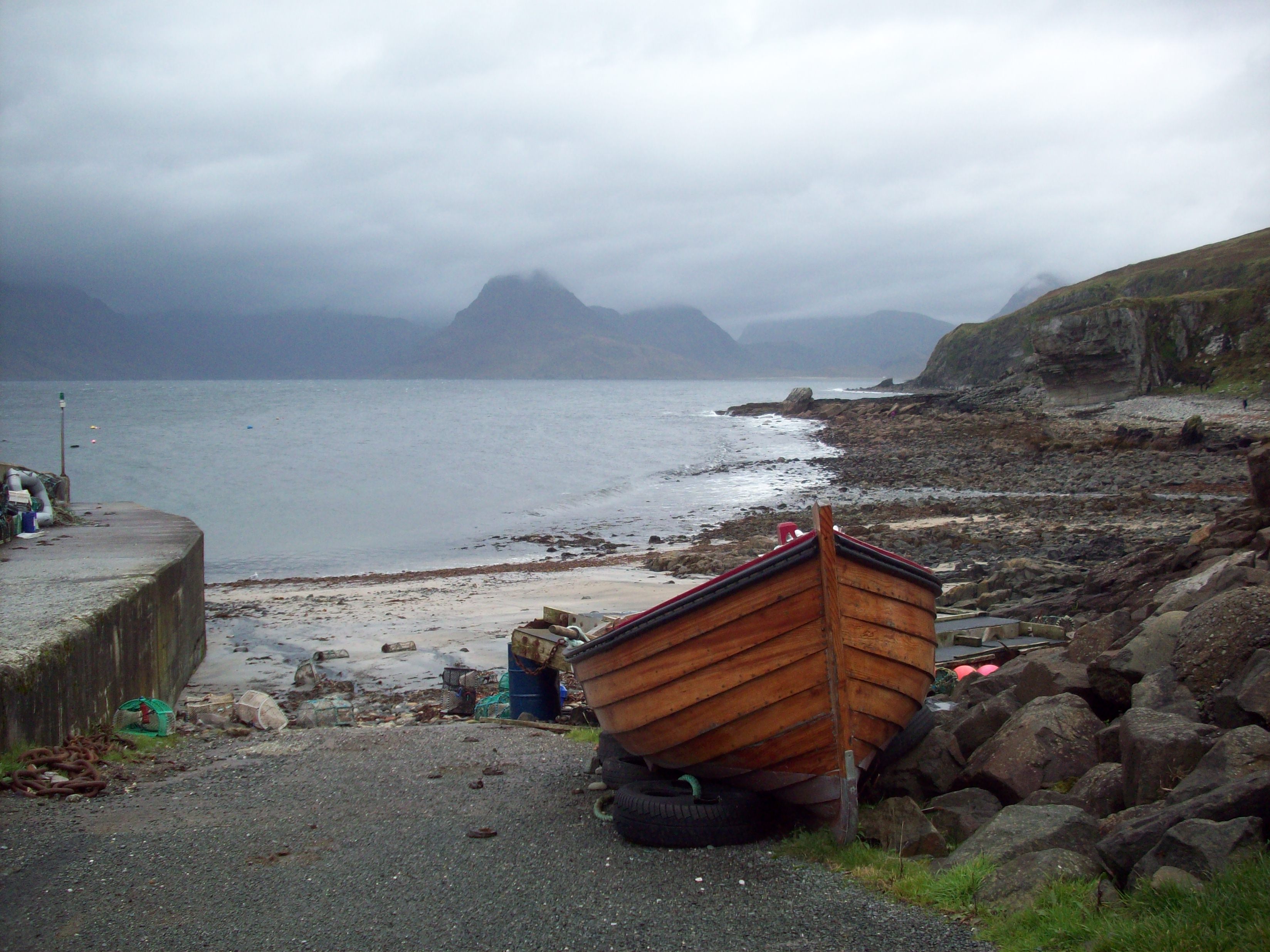
The Cuillins and Loch Coriusk from Elgol Pier

Richard’s poems muse about inhabitants long disappeared; a knight in a churchyard at Kilmuir that he imagines acted above himself and with whom he falls out; two skulls marked by a huge boulder where he can’t work out why anything meriting a boulder would not merit a more formal burial. He ties his human observations into the landscape, moving in and out of the past with a fluency any historian would envy.

Whether it’s because I am driving too fast or not spending enough time at each stop, I grow in frustration, realising that I am very much the tourist, skimming the surface of this profound and convoluted island. From the lack of boats at Elgol to the dismal selection of hotels in Dunvegan well past their sell-by date, there is very little by which I can connect with the people, let alone the place. Although he spent less than one year here, Richard did, gleaning a fulfilment from the hopes of ordinary people, seeing their tough existence with the same phlegmatic resolution they did.

If we could turn our lives that way, the way

the mill stones turned, slow and even,

the milled grain falling dreamy all day, we’d find

some recent peace, a composure we never quite trust

in family portraits.

            —Mill at Romesdal

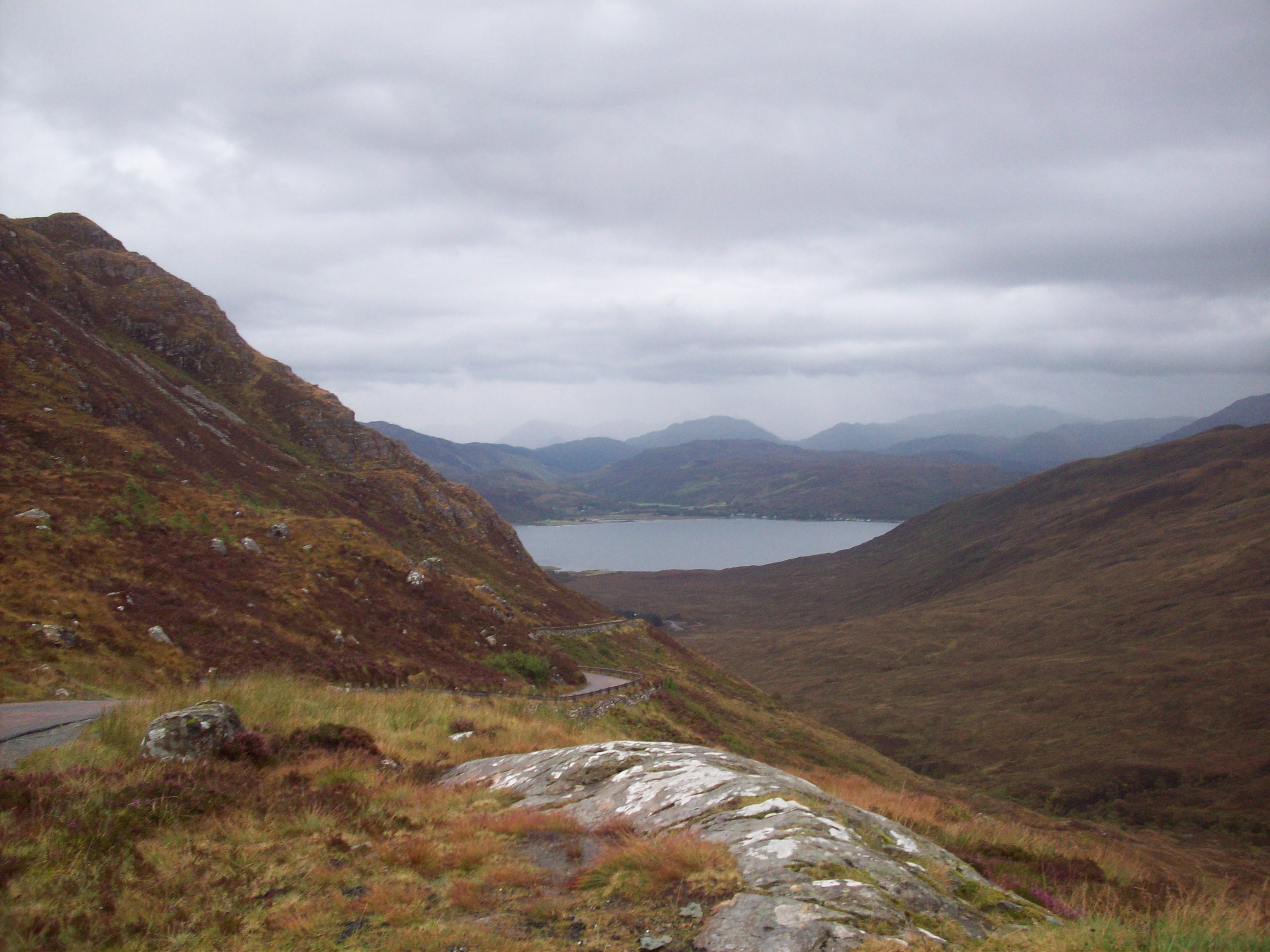
Single-track Road Leading down to Kylerhea and the Glenelg Ferry

I can’t even find a proper black house, let alone a deserted clachan, eyeless from the Clearances, much less living traces of the Gaelic that streams across the landscape in place names like repeated waterfalls ribboning the steep mountainsides. Even though he died a quarter century ago, Richard goes on teaching me about how to see what is around me here. There are fine poets who have written well about Skye, some who have the Gaelic, some, like Richard who have not. But perhaps it takes an insightful incomer like Richard to teach a cultural Sassenach like me about my own country.

Posted in Community, Education | Tagged | 2 Comments

Oh, for a Muse of Fire!

The opening words of the Chorus in Henry V sprang to mind as, in the second row in St Mary’s tonight I was transfixed by the BBC Scottish Symphony’s performance of Menotti’s Violin Concerto in A minor as part of the Lammermuir Festival. The accoustic setting of St Mary’s gave the music richness and depth and being in the second row felt like performing in the orchestra itself.

Not being an opera buff, I was unfamiliar with Menotti but this scintillatingly virtuoso concerto just caught fire under the energetic but absolutely focussed performance of Jennifer Koh, who has studied it and recorded it with the composer. Of its 1952 premiere, the New York Telegram wrote “It is a fresh and vigorous piece of music, overflowing with energy and melody and whatever else it takes to complete a three-movement concerto without becoming apologetic.”

But it was Koh’s playing that made it incandescent; her body language was vibrant with passion, sometimes rocking to sweetly tease out Menotti’s poetic writing, sometimes, with her short, dark hair alive and electric, infusing the piece’s dramatic statements with a fearsome vigour.  Whether whispering or pounding her bow, she maintained a sublime tone from her 1727 Stradivarius that she handled as if a part of her.

Jennifer Koh

Partly composed near Gifford in East Lothian, the concerto is a piece steeped in Romantic tradition and thoroughly removed from the avant-garde learnings of the past century. I am delighted that the Lammermuir Festival appears again to have been a roaring success but, framed as Menotti was tonight by definitive performances of Ravels’ William Tell and Dvorak’s 9th in the acoustic heaven of St Mary’s, this world-class event must surely have been its high point.

Ms Koh has been championing Menotti for years; this one performance demonstrated why.

Posted in Education | Tagged | Leave a comment

Jist Wee Yappy Dugs

It took a lot to throw my grandma off course. Married to a fisherman who lost his leg at Ypres as one of the ‘Old Contemptible’ she had to make do with a man constantly on the edge of rage at his disability. She had a way of dismissing people who made a fuss of nothing. “Jist wee yappy dugs” she would say and get on with making girdle scones or a kaolin poultice by which she swore as a cure for all ailments.

Today, I was reminded of Kate. I watched John Swinney make his half-hour budget statement and thought him competent. But when Baker, Goldie, Rennie and—later on—Gray came to make their responses, I kept seeing Kate turn her back on them as she saw to her scones or poultice. It was pitiful stuff, especially as John had not strayed into radicalism and bamboozled them with the unexpected like privatising Scottish Water to raise capital or nationalising the Crown Estates.

What IS it about unionist politicians in Scotland just now that they can articulate not one idea but are so Pavlovian in their responses that I’m thinking of applying to write scripts for them, they’re so predictable. Baker: “The Scottish Government is passing the buck onto councils.” So, it would be fair if they were protected like the NHS and the money to do that pulled off trees? Goldie: “This can hardly help business recovery, especially as there is a dearth of capital to invest in jobs.” And the UK Coalition cutting capital by 40% is OK then, is it, Annabelle? Talk about cognitive dissonance.

Best of the bunch at demonstrating why Scotland has good government at last was Iain Gray on BBC’s Newsdrive: “We should not be cutting funds to further education at a time when young people  need help”. Fair enough, but where else would you cut to give more money to further education, Iain? Three times he was asked; three times he weasled back onto further education and blaming Swinney and avoided any answer that might be considered an alternative.

Surprisingly, the most credible response came from the least probable Holyrood source—the leader of the rump Lib-Dem, Willie Rennie: “They could have used the £250 million savings from the Forth Bridge for job-creating transport infrastructure but they have diverted it elsewhere. They could have looked again at the council tax freeze which gives most benefit to the richest people in the biggest houses but they didn’t.” He still didn’t say where he would cut instead but at least he put forward alternatives and stood behind proposals that could have triggered a debate.

But, as for the Labourvative leaders of this unionist ‘savaging by a dead sheep’, Kate would’ve seen them all off as: “jist wee yappy dugs.”

Posted in Commerce | Tagged | Leave a comment

Among the Belters

Having grown up in East Lothian and refreshed my knowledge of its newer corners while campaigning over the last year, you’d think I’d be pretty comfortable anywhere in the county. But today I’d been asked to speak to the Tranent Probus Club, who meet regularly at the Brig. They are an affable and dignified crowd and did make me very welcome. But they had asked me to speak on a topic that made me feel like an upstart Daniel in the lions’ den—Mining in East Lothian.

There’s nothing wrong with the topic—our westernmost parishes have been steeped in mining for eight centuries—and Lothian miners were as proud and as doughty about their heritage as any from Ayrshire or Fife. But, as a fisherman’s grandson, whose entire contact with mines has been a visit to the Lady Vic museum, it felt nothing short of cheeky for me to be telling Belters about their heritage. I expected some form of roasting for it.

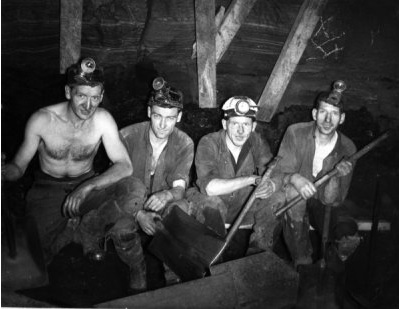
But, not a bit of it. Half an hour of Death by Powerpoint had me tracing the story from the monks of Newbattle eking out surface coal in 1200, through the despicable slavery that entire mining families were held in, to the Cockenzie Wagonway and the steam pumps that allowed deep pits to keep working. It’s a story of tough, flinty people wrestling with the nasty business of digging coal in dirt, heat and dark. The few pictures I had of them are all posed and give little away about the story of each.

Miners Underground at Fleets Pit, prior to NCB Nationalisation

In the presentation, I tried to portray what a hard scrabble of a life it was—long shifts and long before the NCB installed either pit-head baths or canteens, full of danger from collapse and splintering pit props or fire damp and explosions. Many were killed, although there was no great loss of life in a single incident like the 207 who died in the 1877 explosion at Blantyre in Lanarkshire. Despite all, each man was expected to bring a ton or more of coal to the surface each day.

Although the last East Lothian deep pit closed in 1965, some of my audience did have mine experience still—an engineer who oversaw winding machinery, a pump engineer who transferred to Bilston Glen when that super-mine opened in 1963. Many, as lads, had carried their dad’s lunch pail to him or met him coming home still blackened with dust. It was touching to see how my minor research triggered so many memories, in men who had now half-forgotten a great heritage.

Because, however grimy, hard or tricky the work might be, it was just those things that bound miners together, gave them their feisty outlook—the same feeling of difficulties overcome that binds soldiers who have survived together. And, however much all the new houses in Tranent may be improvements, because most Belters who went down the deep mines of Limeylands, Fleets or Tynemount have long died of emphysema or other lung ailments, that close sense of community they held on to is almost lost.

But for half a hour in the Brig this morning, they let me rummage through their heritage, share with them what little I know of those tough men and their resilient wives who, in one year, once brought 25m tonnes of coal out of the bowels of Scotland in one year and whose predecessors had been doing it with the same gritty skill for over 750 years.

Being allowed to share that (and not get run out of town for my impertinence) was a real privilege for me.

Engineers at Tynemount, around 1937

Posted in Community | Tagged | Leave a comment

No Ferries from Westminster Pier

Good for the Hootsmon. Though too often it reveals Wizards of Oz furiously pulling unionist strings behind its editorial curtains, it gave a three-part, 6,000-word platform to ex-Lib-Dem Leader Tavish Scott to harangue us soothmoothers in stereo with the Lib-Dem jamboree in Birmingham. Shame he blew it.

Leaving aside his to-be-expected defence of the coalition, his warm words for Willie Rennie, and his saying-the-bleeding-obvious—that the SNP will define the next five years in Scotland by the decisions announced this Wednesday”, he used this golden opportunity to pour fire, scorn and assorted brimstone on the SNP and all its works.

Such ire might be politically expected and even personally understandable. And I take nothing away from his right to such a view and, indeed, the platform from which to declare it. Given that his chosen text was clearly to rubbish the nasty nats, for a basically decent fellah such as Tavish can’t help himself being, he made a fair fist of snarling derision at the devious heresies that Beelzebub Salmond and his Ministerial malcontents are plotting to visit on the defenceless damsel that is our nation.

Also, given what “Desperate” Dan Alexander was, in parallel, fulminating about from the podium in Birmingham, it’s obvious all this is part of the ‘orchestrated’ collusion among unionist parties that Joan MacAlpine warned us about a couple of weeks ago. But if this does represent a ‘big push’ by the forces of Unionism that is to decisively derail the SNP bandwagon and divert any thought of a successful independence referendum into oblivion, the approach shows serious misjudgment.

Because, it’s not like that, see. Tavish’s misreading of the SNP threat prior to May cost him his job, And any party leader who had recently had his head handed to him so comprehensively might think twice before rejoining the fray using weaponry that had proved so woefully inadequate less than six months prior. This shows not just poor judgment but a reluctance to learn from mistakes.

Perhaps Tavish spent too long cosying up to Labour over the Parliament’s first eight years. Because he makes the same fundamental mistake they made then—and are still apparently making—that stuffing more straw into the bogeyman of separation and waving it about as if it could come and devour everyone’s first-born child is a bankrupt strategy that barely had currency even before the SNP called the shots.

But his 6,000-word arguments reveal nothing new. All of them are variants on the old scaremongering that Labour was still peddling when they got hit by a train right around the time that Tavish got his jotters. What’s the point of claiming that Salmond has a master plan when everyone not only knows that but voted for it in droves?

Tavish misses the point entirely. What he, Desperate Danny, Willie Rennie and, indeed, every other unionist politician in Scotland don’t seem to get is that they have a handful of years left to get their act together—building a strategy on positive reasons why Scotland should stay in the union and finding a common, credible, charismatic leader that can, in the punters’ eyes, hold their own with the bold Eck.

For reasons given above, it ain’t Tavish—or any other Lib-Dem.

But, if they don’t twig soon, the hale clamjamfrie will need to follow Sir Malcolm Rifkind, MP for Kensington  Chelsea’s pragmatic lead: find a nice cosy corner that is forever Englandshire so their egregious contempt for Scotland’s capabilities will not lead them into the political wilderness. Again.

Posted in Politics | Tagged | Leave a comment

The Beginning of the End

Having been a longtime SNP member and activist, the rocky road I have come was made smoother by the stout hearts and selflessness of others. It is deference to those as much as to the cause of independence itself that kept me out and active in every local and national election for two decades.

Keeping the heid after disappointments like 1992 and 2003 was one thing; working steadily as if we were already living in the early days of a better country was harder. But being engaged in campaigning at the national level for the last decade and playing a role in candidate vetting has given me more insight into the national picture than any amount of work across my local patch alone could have done.

There was a time when potential candidates were heavily draw from either the stolid (and aging) loyalists who had never wavered though those dark days of the eighties and felt dedication alone had ‘earned’ them candidacy, or from ‘Young Turks’ overbrimming with enthusiasm but so short on pragmatism they wanted eternal confrontation. With so few councils under SNP control, vetting council candidates for 1999 and 2003 was a constant struggle to find competent candidates who would be a credit to us in running their council.

Thankfully, though many a staunch activist was disappointed, the vetting teams stuck to their guns. Their vindication came in 2007 when a dozen councils fell to the SNP and our councillor numbers doubled. Despite most being brand new and some being under severe financial or media pressure from the off, none wavered; none disgraced the party. 2007-11 was not just when the SNP came of age at Holyrood, it was when, from Aberdeen to Ayrshire, from Dumbarton to Dunbar, they showed others how to run councils—and in tough times too.

I am just back from a full weekend vetting council candidates where a team of two dozen senior party members—not those in the media spotlight but the stalwarts who make the unseen engine rooms function, the ones who actually make the party work. First of all, I was reminded why I got involved in the first place: because their good-natured, collegiate dedication is what makes the SNP the real force in Scottish politics today. This has all but disappeared from other parties.

Secondly, for all my experience on vetting teams, I was astonished by the quality of candidates—new people to most of us veteran vetters—that indicates a depth of talent and width of experience to make any jibe about ‘narrow nationalists’ seem hilariously misguided. These men and women would be a credit to any organisation. I had feared that, because so many of our stalwarts were swept into office in May we would now toil to find their replacements: anything but.

But, thirdly, and what I found most encouraging, there were among them a group who had, at one time, all been active in other parties. These people were not failures; they had been candidates and councillors but had left to find what one of them described as “something to believe in”. Their biggest beef? A lack of leadership or vision, of any sense of purpose beyond retaining what they had. If this is the quality of people now abandoning other parties in Scotland, the SNP’s dark days are behind it and the future full of promise.

Such evidence points to next May’s local elections being not, in Churchill’s description of Alamein, ‘The End of the Beginning’; if that wasn’t devolution in 1999, then it was this May’s SNP landslide at Holyrood. What next May will be even pathologically thrawn ‘Desperate Dan’ Alexander, fulminating from the Lib-Dem podium in Birmingham today, may come accept: it looks increasingly like ‘The Beginning of the End’.

Posted in Politics | Tagged | Leave a comment

So They Hit Us

Ian, my best friend at Uni, introduced me to Schultz’s Charlie Brown cartoons and their disarmingly insightful comments on life. Perhaps my favourite showed Charlie sharing his nervousness about approaching the little red-haired girl with Linus. When at last he stood in front of her. “I didn’t know what to do” Charlie confesses. “So, I hit her.”

I am reminded of such confusion as sundry unions clear the decks for action on St Andrew’s Day. Clearly the UK government has no intention of backing down and welcomes such foolish brinkmanship. The unions are quite right to doubt there’s any point in negotiating. But to lash out because they can’t find any other tool in the box is thrawn and counterproductive.

At least most public service unions have a clear bogey-man to rally opposition. Not only are many likely to lose their jobs but the generous final-salary pensions for the public sector are under threat. Why work longer for less? But in the front cohort of this rebellion are Scottish teachers. EIS General Secretary Ronnie Smith: “At the recent EIS Annual General Meeting, Scottish teachers sent a clear message that their patience with attacks on their standard of living is exhausted.”

That would be the standard of living that involves a 22-hour class time week, together with 12 weeks’ holiday for a salary double what most public sector workers get, would it, Ronnie? Because if there is one group of people whose withholding of their labour is likely to get right up the public’s nose just now, it is teachers, especially when egged on to strike by an EIS general secretary who pulls down a cool £120,000 a year.

Most people—even if they don’t have any kids at school—appreciate that a teacher’s job is not easy, that many still go the extra mile above the call of contract and that Scottish kids are much the better for it. But, once, teachers did even better, taking extra-curricular classes, coaching out of hours, driving minibuses to the theatre or rugby matches with not a penny of overtime. If standards have slipped it is the teachers’.

By the late 1990’s they’d had enough and a long overdue review of the professionalism of teachers and their compensation was launched which developed into the McCrone agreement. Unfortunately, having had the whole hot proposal dropped in his lap by hastily-departing First Minister McLeish, Jack McConnell, despite having been Education Minister, rather fluffed negotiations: he just signed the whole caboodle off without asking anything substantive from the teachers in return.

In the decade since 2002, in which the teachers suddenly received a more professional salary and worked clearly defined, reduced hours, progress in raising our education standards disappeared. The inflation in Highers results should fool no-one: children leaving school in 2011 are no better educated than those in 2001. By any objective measure, other countries, including England, have improved; Scotland has stagnated.

Doubtless there are social reasons contributing to this. But fundamental has been that, far from generous McCrone settlements consolidating the professionalism of teachers (as well as doubling council education spending), it has turned too many teachers into clock-watchers and made a mockery of McCrone-agreed non-contact hours that, in theory, are spent marking and preparing for lessons. This is not to say that heroic examples of teacher dedication do not exist. But they have become rare, atypical.

And, worst of all, the ‘profession’ is now steered by a particularly bolshie coterie who run the EIS as much for their own political reasons as for teachers’ (let alone children’s) betterment. After a decade of having very little to campaign on, union leadership has seized on the Cameron/Clegg coalition’s swingeing actions as a call to arms at just that time when youngsters need to complete their education to make their way through this chilly world… and their parents can ill afford the time off to cope with the disruption it will cause.

The EIS is threatened with no more than a decent re-evaluation of the teaching profession. But that seems to unnerve them because it appears they can’t think of anything clever to say.

So they hit us.

Posted in Education | Tagged | Leave a comment

Welcome to Gogledd Island

The rolling countryside to the East of Edinburgh gives East Lothian its rural idyll and fine quality of life. To those living in its small towns and villages, it seems eternal, as if its peaceful pattern of colourful fields, dotted with copses and pantiled cottages, had always been.

But its raised beaches are testament to a time when sea levels were once quite different and the chain of bronze age hill forts along the edge of Lammermuir imply a time when lower-lying land was uncultivated forest or swamp. Also, Scotland’s coastline is quirky: while our West coast boasts thousands of islands, the East has few and none capable of sustaining significant populations.

But this was not always the case. Raised beaches were formed after the weight of the last ice age vanished and land recovered its shape. Trace the 10m contour that probably corresponded to sea levels in bronze age times and the northern ‘neuk’ of East Lothian becomes an island separated by a shallow sea channel, now the valleys of the East and West Peffer Burns. Being at the intersection of the coastal and Central Belt trade routes, a more strategic bronze age location would be hard to find.

Unlike most Scottish islands (Islay, Tiree and the Orkneys being exceptions), Gogledd Island would boast over 30 sq. km. of rolling, fertile land stretching from Jovey’s Neuk to Gin Head and from Partan Craig to Brownrigg. Cut off by a natural moat but large enough to keep hundreds of people well fed, this would have given a potent defensive advantage to those living there over the contemporary Brythonic tribes who inhabited bronze-age Southern Scotland.

Gogledd Island = a Modern Map of East Lothian's 'North Neuk', Flooded to the 10m Contour

Dominated by a formidable hill fort on Berwick Law that provided a ‘last redoubt’, cists and implements found near Ferrygate and Eildbotle (OE = ‘old settlement’) Wood imply a density of settlement around the peninsula at its NorthWest end, perhaps associated with another, smaller fort on the hill on Yellowcraig hill or one offshore on those parts of Fidra above water. And that a village called ‘Kingston’ sits on the best vantage point in the middle of Gogledd must surely be more than just coincidence.

All of this is speculation. But that a fertile, defensible island much larger than the (then-flooded) Lindisfarne existed at this strategic cross-roads for thousands of years is a fact. This would have given the local tribe a huge advantage in both trading with neighbours and in surviving their predations.

It may even have triggered development into the powerful local people with whom the Romans made peace and called the Votadini. They called themselves Goddodin and survived as such well over 400 years, creating the earliest surviving document in the Welsh language and leaving us tantalising glimpses of a vanished, exotic Celtic culture that once boasted the largest city in Britain, crowning Traprain Law.

Local place names may now more Anglian, Norse and even Pictish than Brythonic. But a thousand years ago, this area was a no-man’s-land among all three for hundreds of years, so an overlay of newer names is understandable. But was Gogledd once a jewel of civilisation set in the sea of brawling mini-tribes that was once bronze age Scotland?

Posted in Community | Tagged | 1 Comment

Uprising Upstanding—Outstanding!

North Berwick can rightly claim many great things for itself, but a cool, cutting-edge place for the youth of today was never among them. Then came the demise of Proquip Sports, successor to Ben Sayers, and the end of over a hundred years of crafting golf equipment in the town. The 1970-era factory on Tantallon Road lay empty while developers scratched their collective heads over what to do with a building so near its sell-by date.

Local developer Zest Capital Management acquired the property and, deciding that the midst of financial uncertainty was not the time for its commercial development, was open to an approach from local third sector entrepreneur Adrian Girling who, having opened a pilot facility for young people at Phantassie in East Linton, was keen to find larger premises for a more ambitious project. A deal was struck and Uprising, the most ambitious youth project East Lothian—let alone North Berwick—has ever seen, was launched.

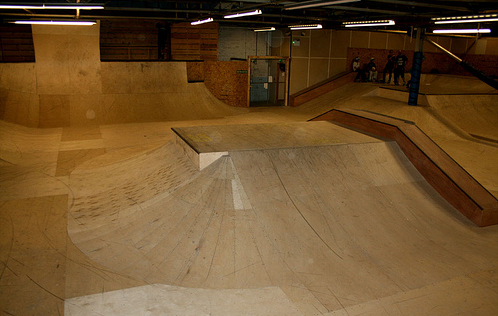
Despite a wheen of dedication and persistence, Adrian did not find it easy. From sourcing a ton of timber and an acre of plywood to cajoling the local Planning Dept and nervous neighbours into supporting the whole thing, all the problems of breaking fresh ground with fresh ideas could have derailed growing enthusiasm of local young people, musicians and skaters to make the thing work. Just building the skatepark itself took teams of volunteers months to design, build the frames and smooth all the interlocking curves and surfaces. Getting rehearsal studios equipped was a separate headache.

The Finished Skatepark—Complex and Challenging (Zeephoto)

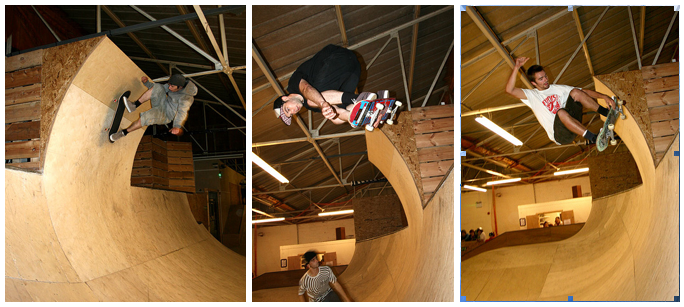
After a year, the place opened on July 23rd, received the seal of approval from the skateboard fraternity within a month and held its first big event this last weekend. Now I would not know how to grind a rail, grab air or even wear a baseball cap backwards but I had a great time for the couple of hours I was up there. Not only were there a pile of young (and not so young) people enjoying themselves but the skill, balance and sheer audacity on display was a show in itself.

Most impressive for me was how they behaved with one another. There were ten-year-olds gaining respect and twenty-year-olds demonstrating it. Because everyone just piles in, collisions and interference may be rare but do happen. Yet everyone was taking it with good humour, snagging errant boards, applauding cool moves by tapping the front truck on the floor as they waited their turn. All that said, the air was electric because everyone seemed to be pushing their own personal envelope of what was possible.

Some Rad Dudes Doin' It Clean (Zeephoto)

Talking to Alex who runs Route One skate store on Cockburn Street and whose wildly tattooed arms contrast with his quiet voice and friendly manner, Uprising is a real asset to the whole county and not just to North Berwick. Even if it’s not the most accessible place, a facility like this is more than enough to bring skaters from all over, including Edinburgh. I hope he’s right because Uprising seems a godsend for our youth and not one that council or school or church, however well intentioned, could create—a cool place to hang, to get an adrenalin rush and not get grief from some vigilante grandad.

Posted in Community | Tagged | Leave a comment