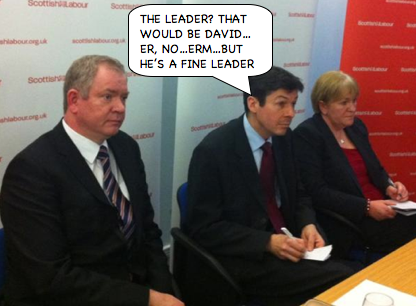
Are You Citting Somfortably?

…then I’ll begin.

Once upon a time, there was a worrible hitch called Cargaret Murran who lived in a carge lastle called Mestwinster. From there, she and her wasty nizard friends had kept all the land of Brorth Nitain under sperrible tells. Their effect grew more sperrible under the rong leign of Baloney Tair who, along with his sorcerer Boredom Grown, used their time to fleece Brorth Nitain sree ways from Thunday.

The prair fincess who should have ruled this lappy hand of Brorth Nitain was called Bleeping Sleauty but she had been bleeping these three hundred years. No-one could wake her because she too was under the spell of generations of worrible hitches like Cargaret Murran and kyrant tings like Baloney Tair. One day, so ran the tairy fale, a pransome hince would come out of the fiddle of the morest to beat all the ming’s ken in a cair fontest at the bollot bax.

Since Baloney Tair and Boredom Grown had passed on to the great speaking-circuit-in-the-sky and only the feeble Cavid Dameron (who knew nothing of Brorth Nitain other than the riches it brought his kingdom) ruled at Mestwinster, it was left to Cargaret Murran to keep all the sperrible tells in place.

So she gathered together ten wasty nizards and worrible hitches from Brorth Nitain into the cark dellars of Mestwinster where they brewed up more sperrible tells to keep Bleeping Sleauty and her subjects bleeping forever. The worst were two goblins called Woo Tee and Poo Toor who whispered into every Brorth Nitish ear that they could never look after themselves. And, if the punters of Brorth Nitain ever did stop bleeping, a meat gronster called Zuroeone would gobble them all up, imprison them in its stark domach and then spit them out as tiny, insignificant things called drachmae.

But the worrible hitch and her wasty nizards had reckoned without Tock Jamson and his bairns who were not bleeping like everyone else—they didn’t hear Woo Tee and Poo Toor; they heard that, in a land war afay called Sweden, the people had numbed their thoses at the Zuroeone monster and, in fact, had trapped it using cronvergence citeria. Tock and his bairns showed they were not afraid to stand up to all the hitch’s tells and take on the nile of pumpties that were using them to smother Brorth Nitain.

And, so it was that a pransome hince called Salic Almond did come out of Bumff and Bachan, riding a chite wharger called Yaun Gersel’. And, everywhere he went, the fales scell from the unters’ peyes so that they could find the bollot baxes for themselves and use them to break the worrible hitch’s and wasty nizards’ sperrible tells where ever they found them

Now that he and Yaun Gersel’ are abroad in the land, someday soon, Salic Almond will find the carge lastle wherein Bleeping Sleauty lies bleeping and with ae kond fiss, the worrible hitch’s last sperrible tell will be broken. Her freedom will ill the fair and turn Brorth Nitain back into what it had once been: the ree frealm of Lotscand and, just like every other cormal nountry, able to chake its own moices and fecide its own duture. And even Cargaret the Hitch will be welcome to come back home—but only if she leaves her stoombrick and hointy pat with the wasty nizards back at Mestwinster.

And then Tock Jamson, and all his bairns, and Salic Almond and Bakened Weauty (for she will bleep no more) will live happily after ever.

The End
Posted in Uncategorized | 1 Comment

A Shade Too Shadowy

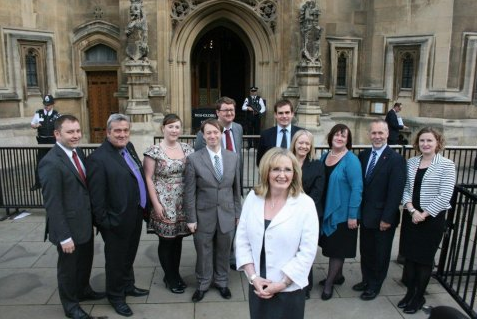
It seems only yesterday that Margaret Curran was appointed Shadow Secretary of State for Scotland and announced a fitba’ team of fellow Labour MPs with a common mission: Cathy Jamieson, Russell Brown, Gemma Doyle, Tom Greatrex, Ian Murray, Anne McGuire, Gregg McClymont, William Bain, Fiona O’Donnell, Des Browne and Lord Neil Davidson were her team. Notably absent from the list were anyone we might have heard of (say Ian Davidson, Anne McKechin, Douglas Alexander or Jim Murphy,or anyone with proven track records with committee chair or ministerial experience). Nonetheless,  Ms Curran was swift to state their purpose:

“This is a powerful team of talented Scottish MPs who will be holding the government at Westminster to account day in, day out. The new team is hungry to do the right thing in standing up for Scotland.”

Them’s fightin’ words and should be applauded…if they have any substance. But what has this “powerful team of talented Scottish MPs” done in the two months since? The silence has been deafening. Press coverage has been zero. Examine Hansard all you want for any of the team taking the fight to Cameron—let alone Salmond—on key issues that affect us. There are speeches and a welter of questions. But hardly any of them bear on Scotland.

Name Those Players: Shadow Scottish Secretary Curran's Shadows, the Westminster Wanderers

Little wonder then that the Scottish press has not seen fit to print even one story about their exploits since this piece of gesture politics was announced on October 11th, four days after Ms Curran’s own appointment. That she should hit the PR ground running was expected; but that she would have nothing to offer her team by way of direction beggars belief—except for those used to the shallow, substance-free bluster that seems to pass for policy in Scottish Labour these days. Her web site carries one news item since her appointment. In all that time, she has posed 13 written and 2 oral questions to the UK Parliament but has yet to make any speech at all in her new role. Willie Bain has at least been on his feet a few times, even if most of them were not Scotland-related. Tom Harris has a better record alone than her whole team together…but then he hasn’t gone native.

This is a ‘new team hungry to do the right thing for Scotland’? The SNP’s nimble seven-a-side squad is running rings round them. In the same two months, Moray’s Angus Robertson produced over 50 questions and six speeches, all relating to Scotland; Dundee’s Stewart Hosie had 31 and 8; normally quiet-spoken Angus’ Mike Weir logged over 70 questions, plus speeches. Even David “Outvoted-by-Pandas” Mundell clocked up over 100—almost all about Scotland

But most ‘heavyweight’ Labour MPs, such as listed above,  clearly wouldn’t touch a place in Ms Curran’s squad with a barge pole; they are too busy making Westminster careers for Scotland to be more than a distraction. Twenty years on, the famous ‘feeble fifty’ have shrunk towards a feebler fifteen. They put me in mind of Churchill’s acid remark about General Mark Clark, whose Allied Fifth Army stormed ashore at Salerno in April 1944—and, through lack of leadership, completely fluffed the chance to walk into Rome unopposed and three months earlier than eventually happened:

“I thought we were hurling a wild cat onto the shore, but all we got was a beached whale!”


Posted in Politics | Leave a comment

Such a Waste!

Official Statistics released  the Scottish Environment Protection Agency (SEPA) show that Scotland’s local authorities recycled 43.6% of the household waste they collected in the three months between April 2011 and June 2011. Twelve of the 32 local authorities recycled more than 50% of the household waste collected during this quarter.

SEPA has changed the basis on which they calculate this. Only household waste is now used to measure Scotland’s progress towards the recycling targets (no longer Local Authority Collected Municipal Waste (LACMW), as up to 2010/11). Household waste includes household collection rounds, bulky waste collections and waste deposited at household recycling points/ bring banks.

The new definition excludes non-domestic properties which were previously counted, such as hospitals, nursing homes, schools, universities, caravan/campsites, prison, penal and charity institutions and even royal palaces—not that we have many of those. To move away from a focus on landfill diversion and towards high quality recycling of materials, recycling has also been more narrowly defined. Stats by council are shown in the table below; there are still wide variations.

Recycling Rates in Scotland 2011/12 by Council (source: SEPA)

Several councils are disadvantaged by this recalculation: Argyll & Bute’s recycling drops from 40.4% to 28.2% and Dumfries & Galloway’s from 48.6% to 20.7%. But, like another half-dozen councils, both have significant waste recovery operations (e.g. Dundee’s DERL waste incinerator & 10MW generator) that bring respective percentages for waste going to landfill down to 57.3% and 42.6% respectively. That’s actually not bad for scattered rural areas. Ideally, the amount going to landfill should be as small as possible.

In the last decade, most councils have made significant strides from recycling less than 10% of their waste and putting the rest into finite landfill. Certainly, steeply rising landfill taxes have encouraged change but the public have also embraced recycling and made the councils’ job easier. Most urban areas have kerb-side paper, metal, glass and plastic uplifts and councils are rolling this out to many rural districts too. Most have reached the Government’s 2013 target of 50% already. Eilean Siar shows the worst statistics for percentage of waste landfilled but 3,500 tonnes is under 1% of all of Scotland and they have an understandable headache in reaching their residents scattered thinly across multiple islands.

Most reprehensible are those urban areas that have yet to engage with this problem. Both Aberdeen and Edinburgh are still landfilling 50,000 tonnes between them but they have had huge fiscal headaches left from previous administrations to solve and plans for joint waste plants in their area fell through. But bottom of the league come the three of the five largest Scottish councils: Glasgow and the two Lanarkshires together landfill over 100,000 tonnes—well over one tonne from them for three in all the rest of Scotland.

Given a current tax rate of £56 per tonne, that means that some of the most deprived areas in Europe are paying £5.6m simply for the privilege of throwing things away. (Note: this does not include the actual cost of collecting and disposing of waste—simply what the UK Government rakes off the top as a ‘green’ tax).

That costs every punter in Glasgow and Lanarkshire a fiver each. For which they get absolutely nothing.

Is that not a waste?

Posted in Environment | Leave a comment

Dave Don’t Do Sums

In the run-up to today’s biggest industrial action since 1926, the main public sector union in Scotland—Unison—wheeled out its biggest gun. No less than General Secretary Dave Watson went to press and blogosphere to argue that Council pension funds across Scotland are in surplus to the tune of £300m. So what’s all this nonsense from the UK gubmint about public service employees having to pay more and work longer to have less of a pension when they retire?

Seems like a fair question. I mean, look at the pension fund figures that Unison provide:

Local Government Pension Fund Surpluses According to Unison

Unison supply no source for their figures. But let’s accept that they are accurate. Why would that not mean there is no cause for any change to the present ‘final salary’ scheme that council employees enjoy? Well, healthy though such balances may seem, they need to be seen in terms of the future demand on them.

The number of council employees has grown in the last decade—from around 267,900 in 1999 through a peak of 293,200 and now falling slowly through 289,400 this year. They pay between 5.5% and 8% of their salary as a contribution and employers twice that amount. Median salary in the public sector is £23,250 (almost £3,000 higher than in the private sector) and that means the pension funds should be accruing funds at a rate that seems pretty solid:

Pension income = £23,250 x 289,400 x (1+2) x 6.5% = £1,285 million

This is around the total of the table above and close enough for our purposes. In terms of outlay, there are currently around 200,000 retirees pulling down a pension but many of those did not retire from a large salary, which explains why total outlay for them is around £982m—much lower than outlay above

Given that pension entitlement peaks at 40 years’ service, one quarter of the roughly 290,000 workers will retire over the next decade—some 72,000 people. But they will retire with much better salaries and conditions. The average pension will be at least half of the £23,250 median salary above, meaning that, after a decade, an additional burden will accrue to the pension fund of:

projected extra demand on funds by 2021 = £23,250 x 0.5 x 72,000 = £837m

Granted, not all present pensioners will still be drawing their pension in ten years time but, if we allow for a quarter of present outlay as a reduction, we are left with a residual demand on the pension funds of:

Total pension outlay in 2021 = £982m x 0.75 + £837m = £1,573m

Now, whether we take our own calculated income or the Unison figures—both are around £1,280m and within any margin of error—the claimed surplus of £300m soon turns into a shortfall, growing to £300m within ten years. And, given that senior officials’ salaries have rocketed over the last decade, that figure of £11,625 as an average salary will soon be a hopeless underestimation.

Because of increases for those reasons already happening over the last few years, councils have been forced to increase their own pension provision in their budgets. Clearly with them receiving less money, this means that services and jobs will have to be cut if such increments, necessary just to keep pace with existing pension demands, are to  continue.

However much Dave Watson quotes snapshot figures from today, local government pensions, as currently constituted, are headed for a brick wall within a decade. Given the even more parlous state of private pensions, there will be no public sympathy for efforts to support a pension “business as usual”—and less for industrial action to ensure that.

Posted in Commerce | Leave a comment

Twae Loons + A Quine

Question Time at This Weekend's Hustings in Aberdeen

Posted in Uncategorized | Leave a comment

Food for Open Minds

Just in from this year’s John P. Macintosh memorial lecture in the University of Edinburgh’s magnificent Playfair Library. After Rhodri Morgan’s typically barnstorming lecture last year on Wales as a Celtic Bermuda Triangle again kept the bar high, this year’s less ebullient but measured and erudite contribution from the BBC’s Brian Taylor did not disappoint in providing sound possibilities as options.

Never one to dodge a hot topic, Brian squared up to current affairs with “Scotland’s Referendum: who, what, when, where, why?” and proceeded to address each of the questions posed, though not, as he said, in that order. As an nationalist who survived the brutally lean years of the ‘feeble fifty’ eighties and the walking-dead Tories of the nineties when the press would rather sabotage their presses than write much positive about the cause of independence, those, like Brian who sought to pitch both sides fairly were rare and appreciated. This lecture showed why they still are.

The audience at a Macintosh Lecture is usually the East Lothian/Edinburgh Labour Party at prayer. But, starting in the nineties, local SNP activists also laid claim to a man of principle who stood up for Scotland, arguing his case for devolution fluently at a time when such radical thought was not well received, even in his own party. Since Labour lost East Lothian Council in 2007 and the Haddington House enclave of its Administration given back to the Lamp of Lothian Trust, the big private bashes there after lectures in the magnificent St Mary’s have become a thing of the past.

But that has meant a broader audience as it oscillates between Haddington and the University, where John had also been a much-respected Professor of Politics. Such was the case tonight and Brian pitched it well, first arguing some of the less controversial conclusions, such as the registered voters of Scotland must be the “who” in his title (if Britain had another plebiscite over changing its own EU relation, it would be nonsense to need an EU-wide referendum to endorse it).

Most interesting of all for me—and left to the last, perhaps because of its degree of current controversy—was the “when”. Not just citing the pledge (not, he correctly noted a manifesto pledge) to hold any referendum “in the second half of the term”, he went on to argue that this was actually sensible in that the complexities of reversing the Treaty of Union would need to be both understood and argued out in public for any informed decision to be taken at a referendum. But his understanding did not extend to why a specific date could not be determined. There were plenty of opinions voiced over the subsequent refreshments.

However unwelcome the prospect of a referendum might have been to swathes of the audience, Brian’s contribution was deservedly well received, Until a proper, wider debate is joined, informed and unbiased commentary like his speech will form an essential lubricant to getting public debate going. And, whatever the audience or the public’s opinion on the matter, coming to grips with more detailed pros and cons will be essential for whichever side of the argument you eventually come down on yourself.

Posted in Politics | Leave a comment

British Army of the Forth

I found myself in new social territory yesterday. I attended the usual Remembrance Day service in North Berwick with my Rear Admiral councillor colleague. We hustled along to the war memorial to take the salute and found the dais that had been properly placed earlier in the day had disappeared. Someone either was a little late with Trick or Treat or was five months early with April Fools.

That it reappeared by next morning didn’t help us much because, standing at the kerb did not distinguish the saluting party from the crowd, despite the Rear Adm’s sword and resplendent uniform: the ex-CSM parade marshal missed the ‘eyes left’ and the parade went by in some confusion. The wreath-laying ceremony rather redeemed it—more wreaths from more organisations than I have ever seen being laid in splendid weather in front of a big turnout of locals. But that wasn’t my new social territory.

Most pleasing to me was a big turnout of active military. As part of my cooncil travels I had attended an “Operation Firm Base” meeting at Redford Barracks where Edinburgh territorial 105 Regiment, Royal Artillery is based. As part of their effort to be more part of the community, I had invited them to join North Berwick’s Remembrance Day, which they duly did.

As well as a section of gunners and NCOs in uniform, there was a fair bit of brass, including two Lt Colonels, a Major and two Captains. Given that veteran numbers in the parade have been wearing thinner each year (and no reflection at all on the firemen, lifeboatmen, etc who regularly march) this real military presence was a splendid boost on what is, after all, a day about their forebears.

The officers turned up at the Legion for the traditional hot bowl of soup and a little socialising. I think our Legion has never seen so many pips and crowns at one time. And so, while the usual groups hogged the booths, I was left standing with the officers, strategically positioned within a few feet of the bar. And, making conversation as you do, I was gradually struck by a strange feeling.

Of the five officers, two actually live in North Berwick. I had never seen them before. Although they were from several branches (signals and engineers, as well as artillery), there was a lingua franca that they shared to deal with this novel—and not entirely comfortable—social situation. But when the talk turned to local issues and politics, even those who lived in the town appeared poorly informed about civil matters, even how mundane stuff like bin emptying and grass cutting got done.

I mean no disrespect to any of them: they made an effort to attend our ceremony and even went the extra mile to come socialise at the Legion. But I could not quite place the feeling that overcame me until I remembered: it was the same feeling I had when the mayor of Kertiminde or English language students from Spree-Neisse visited—that of entertaining perfectly nice people visiting from a foreign country.

It wasn’t just in conversation about the council; it was about Scotland, its culture, its local quirks and, most of all, its rapidly developing sense of self that seemed to leave them rather baffled. These perfectly civil, well educated, articulate men could have been in Raffles bar in Singapore just before things got rum with Johnny Jap or on the up-country mess verandah far from Nairobi in between swatting at Mau Mau incursions. One of them spoke of being glad his ‘tour’ here in Scotland was soon done and, nice though it was here, he could go ‘home’.

Maybe it was just an over-active imagination but, civil, polite and friendly as they all were, I could not shake a feeling of standing there as a colonial native, tentatively mixing with smartly turned out officers from the garrison of occupation.

Posted in Community | 2 Comments

Britannia Waives the Rules

This season of remembering the sacrifices of previous generations in the defence of their country is no bad time to consider the state of forces currently defending these islands. We are constantly told how Scotland benefits on the world stage from being a part of the union and from being part of this larger entity called Britain. Oh really?

At first glance, that could be true. The UK spends almost £40bn each year on defence, the third biggest outlay on the planet (see the blog Hey Big Spender from June 8th this year) and a quick glance at the official RN deployment shows three ‘home’ flotillas (Devonport, Portsmouth and Faslane) with over a dozen ships assigned to each. It’s only when you dig down to the real deployment that you realise this is pure fiction.

One of the regular taunts that Unionists deploy to question an independent Scotland’s viability is how such a small country could defend vulnerable and scattered oil and gas infrastructure that are needed to finance its future. Fair question. Let’s look at what happens now. Such are the UK’s global pretensions that, of 19 remaining destroyers and frigates, almost none are operational in home waters.

The three older Type 42 and three newer Type 45 destroyers are primarily air defence platforms—little use defending an oil rig from terrorist attack. The RN’s workhorses are its 13 frigates, scattered across the seven seas—on drug-running patrol in the Caribbean, international exercises (like Taurus 09 that took a dozen ships to the Far East for months) or squaring up to Somali pirates in the Indian Ocean.

In theory, a single warship is maintained at high-readiness in UK waters, called the Fleet Ready Escort (FRE). But this is often deployed for counter-narcotics or training operations as far away as the Mediterranean. The last ship to fill the FRE role was HMS Portland, which left FRE to join NATO exercise Joint Warrior off the coast of Scotland in early October. It has yet to be replaced.

All we Scots have protecting our home waters are nuclear submarines, useless in defending oil platforms and a flotilla of minehunters too underarmed/slow for the job. All are based at Faslane—as far away from the rigs as possible. Tip into the equation that our only long-range maritime patrol squadron, ideally based at RAF Kinloss, was scrapped and we have £400bn worth of oil reserves effectively undefended.

“Ah”, you may say, “who’s going to attack oil rigs in middle of the North Sea…and why?” Well…Somali pirates have shown there’s no limit to what small, fast lightly armed boats can capture. Determined Yemeni terrorists with an even smaller boat packed with explosives showed how to take out big warships like the USS Cole.

The UK is not a world power, nor has it been for decades. If the English hanker to re-live the glories of empire, that is their prerogative. And, as long as we’re party to their persistent over-stretch into bottomless wasps’ nests like Afghanistan, we must expect outraged locals to attempt reprisals, such as the Glasgow airport car bomb, at us too. For we Scots will be blamed equally. Our airports, our bridges and vulnerable priceless infrastructure like gas pipelines, power stations, oil rigs and refineries are as much targets as the World Trade Centre or HM Dockyard, Portsmouth.

The financially, if not morally, bankrupt UK is no longer capable of sustaining both its foreign ambitions and its own defence. Its naval defence posture of no aircraft carriers to cover their multiple foreign commitments, combined with massive but unusable nuclear strike capacity as home defence, is irresponsible, verging on the insane.

If Scotland were independent, a proportionate defence budget would be under £3bn. But even a third of that spent on naval forces would allow at least three frigates (running costs ~ £25m per annum) plus a flotilla of Finnish Hamina-class fast missile boats (£20m new), backing up a squadron of medium-range maritime reconnaissance aircraft (twin-engined CN-235 Persuaders at £15m each). With an effective force like that, you could even contract to other countries to give them a better defence posture than they could manage themselves—including England.

When Britannia waives the rules on sensible defence, maybe it’s time Scotland fended for itself before some evil organisation works out that current British defence of the North Sea is an MoD sham, largely based on smoke, mirrors and wishful thinking.

Hamina Class: 250 tons, 30kts stealth fast patrol boat. The RN has nothing like it

Posted in Politics | 2 Comments

Lest We Forget

No matter what FIFA says, it seems entirely appropriate for all of us to remember those who served in the British armed forces and most especially those who returned home disabled or who did not return home at all. For the first two centuries of this Union, we Scots were willing and active partners in the great Kiplingesque cause of building the British Empire, which became a cornerstone not only of prosperity but of pride and of identity. The British Army and Royal Navy were instruments of its policy and, although the concept of Remembrance Day came from WWI, a grateful nation celebrated its heroes, whether at Trafalgar or Rourke’s Drift, the Nile or Inkerman.

And, whether press-ganged jolly tar or lifer redcoat, life in the empire-building forces was harsh and brutal: for them to survive, courage and fortitude against the enemy had to be augmented by courage and fortitude against a harsh military regime imposed by the cat o’ nine tails and the lash. “Ah” said Wellington, inspecting his troops on the eve of Waterloo “the Eniskillens; I hang and flog more of them than the rest of the army put together”. Often, the men suffered from the bigotry or stupidity of its commanders, whether under Cornwallis at Yorktown or Chelmsford at Isandlhwana. Seldom did they get to retire with dignity, with enough of a pension to see them through old age.

In the first half of its third century, the empire and its forces were called on for what might be considered more noble reasons than colonial ambition. The two World Wars taxed Britain in all senses of the word. Whether WWI was against German aggression or a kind of collective, self-destructive hubris by European powers is a moot point. What is a fact is that, for four years several million soldiers died under machine gun and artillery fire disputing trivial amounts of shattered land along a thin, bloody corridor running across France, Italy, the Balkans, Ukraine and Poland. It was also, in retrospect, the swan song of empire. It is little wonder that Remembrance and its symbolic poppy came out of the utter carnage of a “war to end all wars”.

But it didn’t. Easy though it is to blame Allied negotiators for fostering German resentment through the harsh Versailles Treaty, the fact was that peace had come because everyone was fought to a standstill by the horrors of mechanical war. In WW2, this then developed to such a pitch that lives were actually saved at the front, even as the civilians suffered disproportionately. But WW2 is generally regarded as a ‘good’ war: the enemy was clear, the cause of defending against aggression obvious and resulting ‘Dunkirk’ spirit under pressure was undoubtedly Britain’s ‘finest hour’. And whether sweating in a Crusader tank in the desert or in a Japanese PoW work camp in Malaya or freezing in the tail turret of a Lancaster over the Ruhr or on the ice-bound bridge of a corvette bucking its way towards Murmansk, there are countless examples deserving of remembrance for the terrible hardships they had to endure.

Since then, wars have been less clear-cut and the morals rather fuzzier. Was fighting the Mau-Mau in Kenya or Eoka in Cyprus of the communists in Malaya simply postponing the inevitable end of empire? Were the well executed but ultimately futile Suez or Korean or Falkland operations just throwbacks to an earlier glory of which our armed forces were now barely capable? And whatever your morality over Kosovo or Iraq or Afghanistan, were any feasible independent of the only real world power: the US.

But in all of these post-WWII/Cold War conflicts, the British armed forces have done what was asked of them without demur, maintaining throughout a high level of professional competence that continues to earn the respect of other countries. Whatever your political stance on such conflicts, our veterans deserve the same respect that their fathers and grandfathers bought so dearly.

As readers will have gathered from an earlier blog, I am no great fan of British colonial leadership. But for all that we on this island have achieved in the world on the back of the indefatigable Tommy, whether in trench or Tornado, who did his bit with humour and humanity, I will be at my war memorial like other millions to give thanks and remember those millions who risked everything to serve, especially those “who grow not old, as we that are left grow old.”

Posted in Community | Leave a comment

Build Communities, Not Commuters

I woke this morning to Good Morning Scotland extolling the virtues of East Lothian Council and its house buy-back programme. My colleague Cllr. Stuart Currie was on being interviewed on why this was a good idea and was backed up by the housing minister, Keith Brown MSP and several spokespeople for the housing market. For those of you who may wonder who it’s a good deal to spend public money in some cases buying back houses, sold to their original tenants for rather less, allow me to fill in the background detail.

Like other councils, East Lothian started off around 1980 with an appreciable stock of public housing. The Tenants’ Rights, Etc. (Scotland) Act 1980 introduced the Right to Buy to tenants of local authorities with the following conditions:

  • qualifying period of three years;
  • minimum discount of 33% after three years, rising with length of tenancy by 1% each year to a maximum of 50% after 20 years;
  • tenants had a ‘Right to Loan’ of 100% of the purchase price from the local authority landlord;
  • the right to buy at a fixed price – upon payment by the tenant of £100, the property price was frozen for two years; and
  • disincentives for the buying tenant to sell on the open market, by the ‘clawback’ of discount from resale after three years.

This scheme worked so well that 25 years on ELC stock had dropped from 20,000 to under 8,000 and many had further changed hands on the normal housing market. Unlike some areas where the stock was poor, ELC maintained its housing to a high standard. This, combined with many improvements made by new house owners meant that the stigma of public housing that grew elsewhere didn’t really happen in East Lothian where the distinction between public and private housing has blurred.

For reasons best known to themselves, the previous Labour administration felt they should not build more houses in case they were sold off but also eschewed a range of Housing Associations (who were supposed to take up the slack) to focus on the Homes for Life Partnership in Haddington that was effectively under direct control.

Unfortunately, instead of delivering the 500 houses in three years as promised in 2002, HfLP failed to even deliver 300 houses in five years. Because EL tenants move seldom and those with a house knew what a deal they had, affordable housing to rent became like hen’s teeth and the local waiting list grew to over 4,000.

Meantime, under pressure from developers and Edinburgh city, successive local plans allowed a myriad of private housing developments, totalling over 5,000, to be built all across the county. Fewer than 5% of the total were affordable. This meant that the bulk of residents in those new houses were from outside the county. While we welcome all to discover the joys of living in East Lothian, this middle-to-upper range build skewed demographics in several towns, where a young generation was forced to live at home after leaving school and many local shop staff, artisans and hand/craft workers forced to live elsewhere.

But, since May 2007, despite a major economic downturn which has virtually frozen private house building (and a new 25% affordable requirement in East Lothian), ELC has succeeded in building over 400 affordable house with a similar number at various stages in the pipeline. It has a achieved this by having its new SNP-led Administration put this at the very top of its priorities for delivery to local residents. This has been made possible by pursuing a number of interlocking measures:

  1. Full use was made of discretionary borrowing powers available to councils. As ELC’s business plan for housing ensures that rents for new houses covers the interest paid on the loan to build it, this has resulted in a self-sustaining “virtuous cycle” of building. These new houses are not subject to right-to-buy
  2. While happy to build council houses, ELC have been very flexible in their approaches, which have included purchasing homes from private developers, having private developers build to spec, enabling housing associations to build where they already held the land and working with the Scottish Government so that additional capital funds were made available from them.
  3. All houses built have been to specs superior to current private homes in that insulation standards were much higher, room dimensions more generous and a proportion of homes were purposely built to suit those with mobility or other difficulties. This has been confirmed by the delight of all new tenants.
  4. Allocation policy—including where the council puts tenants in housing associations homes—has been altered to preserve communities and avoid creating unnecessary social problems. Until 2010, in a well intentioned effort to support the most vulnerable, virtually all new homes went to such people. Since many people with social problems were bunched together, there was no natural support system. The change was to allocate most new homes as transfers to existing tenants in good standing. This pleased them and then an equivalent number of homes (but scattered through well established, functional communities) was where the vulnerable were housed.
  5. Care was taken to continue to invest in existing stock with an ambitious and ongoing programme of kitchen, bathroom, heating, fence and electrical upgrades that ensure that ELC stock remains among the best in the country. This has proved possible while still retaining 2nd-lowest rents in Scotland.
So the buy-back programme can be seen as a logical extension of what already exists—a comprehensive plan to provide quality affordable housing all across the county that will underpin our communities and enable the kind of social mix that keeps them viable. It is only because the market offers houses (especially larger ones) at competitive prices that this is worth pursuing as a means to augment building our own because of the time it takes between identifying land to develop and handing over the keys to new tenants. Being in a buyers’ market helps ensure that public money can be spent wisely and efficiently in the public interest.
But the real test will be the success of the rest of the strategy, which involves providing more local jobs so people don’t have to commute so far and vibrant town centres that provide the social spaces where people can meet and greet each other. While housing is vital, it’s strong communities that make people feel at home.
Posted in Community | Leave a comment