Of Born-Again Countries & Unionist Bathwater

On many occasions, I have found myself enlightened and stimulated by Burdzeyeview and would recommend the blog to all on both sides of the debate regarding where Scotland is going and why. I had intended giving the soapbox a rest over the holidays as I imagined even hardened independistas would rather be sharing cracker jokes than locking horns over festive fare.

But as I read the Burd’s blog, I realised that, for the first time in some while, I was not of her opinion and the matter was serious enough to not wait for twelfth night to rejoin the fray. Basically, the Burd takes exception to His Eckness being awarded ‘Briton of the Year’ by the Times newspaper. Now, if I understand the Burd aright, her objection centres around this being an award to a ‘regional’ politician and therefore conceals a mighty slight on Scotland’s conceit of nationhood.

“Such sentiments and statements are patronising and perpetuate a stereotypical little UKlander view of the world and importantly, of Scotland.”

Although the Kiplingesque stalwarts at the Times would surely dispute this, the Burd does have a point. But then later she continues:

“What the British establishment thinks of we Scots should matter none.  We should neither want nor seek baubles of Britishness nor Briton-ness.  Why should our yardstick be what our neighbours deem to bestow upon us and our First Minister?  Measuring ourselves against the accepted order of things on these islands is to accept their limitations for our ambitions and our aspirations.”

And here is where the Burd and I part company, for three reasons:

  1. Such a stance reeks, for me, of the ‘Little Scotlander”, similar to my accusation of Jim Sillars in the previous blog. Simply because the accolade derives furth of Scotland it should therefore be discarded. I find this narrow. If Salmond were to be accorded ‘European of the Year’ for his work in securing a voice for smaller countries, thereby binding the EU in harmony by making small countries less fearful of being steamrollered by the Merkozy faction, would she take the same view? Despite glaring Unionist credentials, the Times is a reputable paper of standing: their accolade has objective validity.
  2. Such objective validity is, in itself, a commodity in which the SNP has long been short-changed. They have won elections despite swimming against a tide of hostile media on both sides of the border. Surely ‘Briton of the Year’ award to a man accused of separatism took some deep swallowing among those selecting the winner. Had they condemned him as a ‘narrow nationalist’ (which he patently is not but some politicians who should know better can’t seem to see past that stance), it would be business as usual. But they didn’t.
  3. Most importantly, we have been round the houses many times since May in the formulation of a referendum and the significance of various percentages pro/con and shades between. What is startlingly clear is that, with all unionist parties in serious straits (no leader over 6 months’ experience and barrel-scraping shares of vote) the argument for the floating ~30% is there to be won. These are voters alienated by the cringing inefficacy of unionists and increasingly aware that only the SNP seems to have both ideas and a boatload of people capable of putting them into effect. Forget independence, half these people just want a decent government. Every other party has serious egg-on-face from messes they made. If you want to give the Libourvatives a comprehensive kicking, what better way than to take your country right out of their self-serving grasp? But such people first want reassurance that there’s more to the  SNP than passion and ideas. The Times’ endorsement is the very dab.

So, apologies to the Burd if this ruffles her feathers. I give way to no-one in my passion to see Scotland take its place in the world’s community of countries, but she and I will not determine our future—our votes are already good as cast.

It will be the million or so Scots who love their country, like their life here, want the best for it and are so scunnered at the third-rate offering from Scotland’s so-called national parties that the Times ‘objective’/’British’/’patronising’/’unionist’ accolade may break the camel’s back of any vestigial loyalty. Epiphany for such people WILL BE our battleground.

To mix metaphors shamelessly: let’s not throw their vital support out with the unionist bathwater by looking the Times’ gift horse in the mouth.
Posted in Politics | 2 Comments

Jim Sillars: Little Scotlander

In its time, Scotland has produced its share of groundbreaking politicians and, given the imprecision of and the human flaws intrinsic in politics (unlike with physicists or surgeons) there is less unanimity about who belongs at the top. Jim Sillars may be in the running but, for my money, is overrated—and the more so with time.

Always a thinker and never afraid to make his case, Jim is a man to be admired and, often, listened to. Well ahead of Scottish Labour’s recent Damascene conversion that they need to change, he and the equally redoubtable Alex Neil tried to modernise that party in the seventies, founded and failed to plough a separate furrow with the ILP and more recently have followed very different paths within and without the SNP fold.

Impatience with the SNP has been Jim’s leitmotif for two decades now. Had the SNP’s fundamentalist/gradualist debate of a decade ago gone deeper than it did, the SNP could have split, with Jim returning to lead the former faction. As it was, after Swinney’s low-key tenure and the Alex-Salmond-led mid-noughties resurgence, things have never looked so good. So, when Jim weighs in with opinions apparently contrary to the SNP’s thoughts, who’s right? Jim himself is clear as ever:

“If Scotland is to seize the opportunity that will come with independence to repair its economy, and overcome the deficit of inherited debt from the UK, then it must be able to exercise the maximum sovereign powers. There will be no such maximum available in the new eurozone treaty.”

As clarion a call to dump Europe and follow the Norwegian road, if ever there was one. But is he right? Sterling though many of Jim’s qualities might be, patience seems alien to him. You need only recall his almighty harrumph about “90-minute patriots” when his “Free by ’93” slogan cratered big-style. It appears that independence continues to drive him. But any impediment to that becomes the object of his wrath; Cameron’s wielding of the veto on Europe last month exemplifies today’s need for the drastic.

Several political observers whom I respect have waxed lyrical about Jim’s article in Tuesday’s Hootsmon. But I beg to differ. Seen through the lens of a typical Tory backwoods/bencher, Europe is indeed a bureaucratic bog, designed by Belgian Sir Humphrey’s to sap the precious bodily fluids from Brits—the last virile tribe of free-marketeers to roam the once-open fiscal plains of Western Europe. Though they may see themselves manning the beetling chalk cliffs of Albion against incursions by Johnny Foreigner, the Tunbridge Wells birthplace of such a political attitude is a far cry from the Clyde (let alone Loch Awe), from whence Weir pumps & their ilk export a wheen of Scots-built world-beaters into Köln and Stuttgart, as well a Canton and Shanghai.

Talk to leading Scots businesses, whether in oil service or whisky, tiny chips or ships’ hulls; we are out there in the world and making our mark. Irn Bru is outselling coke in Russia and we are lumbered with a PM who thinks more about the 1922 committee than about Scotland. When Jim argues we should make some Pavlovian Thatcher-gesture two decades after the original handbagging, I argue that he seems to understand less about Europe than even Cameron does.

And Cameron has an excuse. To keep his ConDem show on the road, he has to find raw meat the throw to the anti-EU hyenas roaming his back benches. Jim has no such need and Scots are generally more curious than hostile towards ‘foreigners’. Has Jim gone to Dublin and ask how the Irish fare in Europe? He would be told that their MEPs saunter down the corridor with a couple of bottles of Baileys to cut deals with the Danes or the Dutch, quietly line up ‘little’ countries so that, when the Merkozy faction is preoccupied, they stitch them up. How do you think the Spanish got such a sweet deal on pillaging our fish with trawlers built on EU subsidies?

Because you have to be on the field to play—let alone win—the game, Jim. And this angels-on-pinheads debate about whether Scotland would be in or out is for academics. We share a huge amount of culture with Europe. Go to Ulan Bator or Moghadishu if you want to see what foreign really means. Those people in Berlin or Barcelona or Brussels watch the same TV and—these days—even speak the same language as we do. Spend a couple of weeks with them and your biggest cultural problem will be they serve mustard with chips.

The idea that 260m educated, business-oriented and (at least in the German case) hard-working neighbours would not want a country like ours, with most of Europe’s oil, half of its fish, almost all of its marine renewables, a world reputation for pluck, grit and dry humour and (& here’s the clincher) an enviable record of taking on the truculent English and winning, as a necessary part of any European Union seems myopic to the point of being thrawn about it. Even the Spanish will want us. Within 20 years, they’ll be importing our water by the tanker-load—as well as our fish.

Everyone on this island needs to understand that Scotland is actually one of the most desirable friends that Europe could have. Most of Europe already knows this (talk to them). But, though the SNP are doing their best to explain this to our benighted neighbours dahn saaff, fixated as they are on circling their rickety wagons and trapping us with them, we also have well intentioned little-Scotlanders like Jim reciting his own version of “we’re too poor…too wee…etc”. Enough, already!

The Scots may not have built half the known world but our diaspora dwarfs any other in its achievements. It wasn’t fearties who built the Hudson’s Bay Company or Jardine Matheson any more than it was ninety-minute patriots who stood their ground with the Bruce. I want Jim Sillars and any who still think like him to have their say—and the time to reflect how Europe was once part of every step Scotland made forward, whether as Flemish merchants, Russian admirals, French exiles or Swedish generals.

Time we remembered our long heritage and who our real friends have always been.

Posted in Politics | 1 Comment

A Corner of a Foreign Country

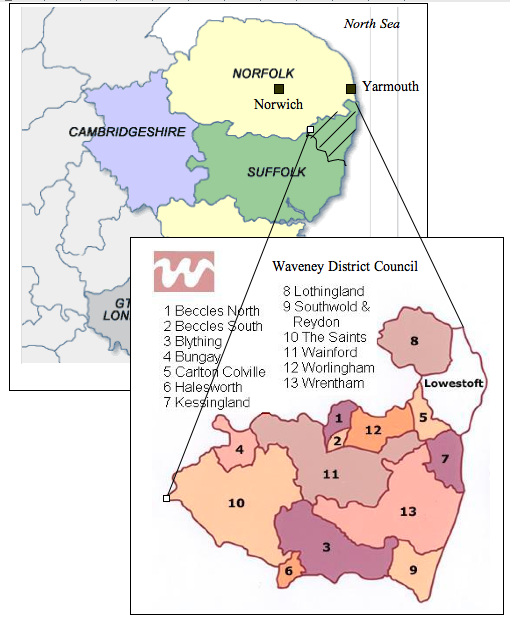
I am grateful to Alan Summerfield (see comment above) for correcting my erroneous understanding of the geography of local government along the Norfolk/Suffolk border. Passing from Lowestoft to Norwich along the A146 via Beccles had given me the impression that Waveney District lay between Norwich and the coast. The name of the district is taken from the river that divides the two counties.

The map below may help clear up any further confusion; it can be seen that the ward in question (Ward 12 Worlingham) lies across this river from Norfolk. I apologise for any confusion—and more especially any insult for the people of Norfolk and Suffolk are both proud and distinct and don’t take kindly to being confused.

Especially by a foreigner.

Makeup and Location of Waveney District Council, Suffolk

Posted in Uncategorized | Leave a comment

My Favourite Foreign Country

It would make for sensational reading should it occur anywhere in Scotland but the results of the Worlingham by-election merited just a corner of a page deep inside Norwich’s Eastern Daily Press:

“NORMAN Brooks is the new ward councillor for Worlingham, having won the by-election for the Conservative Party last night (Monday, December 19). He polled 706 votes, beating Sylvia Robbins of Labour (586) and Sue Bergin of the Green Party (137). Stuart Foulger of the UK Independence Party won 64 votes and Liberal Democrat Doug Farmer polled 46 votes.”

It seems to have made little difference that the vacancy had been caused by a Tory councillor resigning in disgrace: nailed for drunk driving and assaulting a police officer he harassed the police with offensive e-mails too. This result means Waveney District Council (the Norfolk flatlands between Norwich and Great Yarmouth) continues in Tory control, as do most local councils, including Norfolk CC.

In fact, the Tory phalanx of 60 that has ruled this rural and scenic county—the fifth largest in England—for some time has recently been augmented by two Lib-Dems and, just this week, the leader of the seven-strong Green group on NCC. Even though I visit regularly, it is difficult to adjust to the vastly different political atmosphere of somewhere like this. Though its extensive farming interests (e.g. Bernard Matthews, Colman’s et al) might point to Tory leanings, many small companies in oil & gas, printing, insurance and broadcast media business also exist. Although Labour does have pockets of support in Yarmouth, King’s Lynn and Norwich itself, they hold only 3 seats on NCC and none of the county’s nine constituencies (7 Tory; 2 Lib-Dem). The net result is an environment where political discussion is typically business-friendly and socially liberal but inward-looking and EU-hostile. The burden of glorious empire and of having seen off foreign oppression still drives contemporary political thought.

So, despite the fact that I have visited and spent time in Norfolk for years and that (unlike when I fly) no-one on East Coast trains asks for my passport, for me this place registers as a different country from Scotland, just as when I visit Dublin. You would think, given their similar demographics and relative position vis-a-vis the capital, that East Lothian and Norfolk would have much in common. Their scenic coast, bucolic country lanes and photogenic villages do give that impression. Neither have real slums nor register in any urban blight Plook-on-a-Plinth contest. Both register 98-99% white in racial mix and high on the list of desirable places to retire to.

But, if the pubs of Wymondham (pron. “Windum”) are cosier, the villages quainter and the medieval extent of Norwich speaks of a far richer Middle Ages than Scots dreamed of, the modern middle class here dominates; they are wholeheartedly Tory. People are oriented to private schools and health care and, while living in the quaint villages, seem to have made much less of a fist of involving themselves in their communities, be it Colts soccer or amateur dramatics. There are clubs but these—especially the golf clubs—appear more choosy whom they admit, to the point of appearing class-based.

Certainly, there is no longer any sense of the Scots being the poor relations. This is borne out by statistics: whereas Norfolk’s GDP per capita easily exceeds East Lothian’s, it is still less than Scotland’s as a whole. As with other regions of England, Norfolk takes pride in its own cultural distinctiveness, including a recognisable dialect, distinctive flint architecture, and local ales/dishes worth sampling. But the differences between Norfolk and Cumbria or the Peaks are so much less than between it and East Lothian, let alone Perthshire—despite the huge difference in the landscape. The pubs alone make it distinct before you even consider how Fife partans are served different to Cromer crab.

None of this is meant to sound critical of my Norfolk hosts, who graciously make me very welcome each year. But, having spent years outside the UK in countries that the English most certainly regard as ‘foreign’, I mean them no offence that politics has now been added to culture and history already on my list, as major factors why I have come to regard the English as foreigners—albeit my favourite ones.

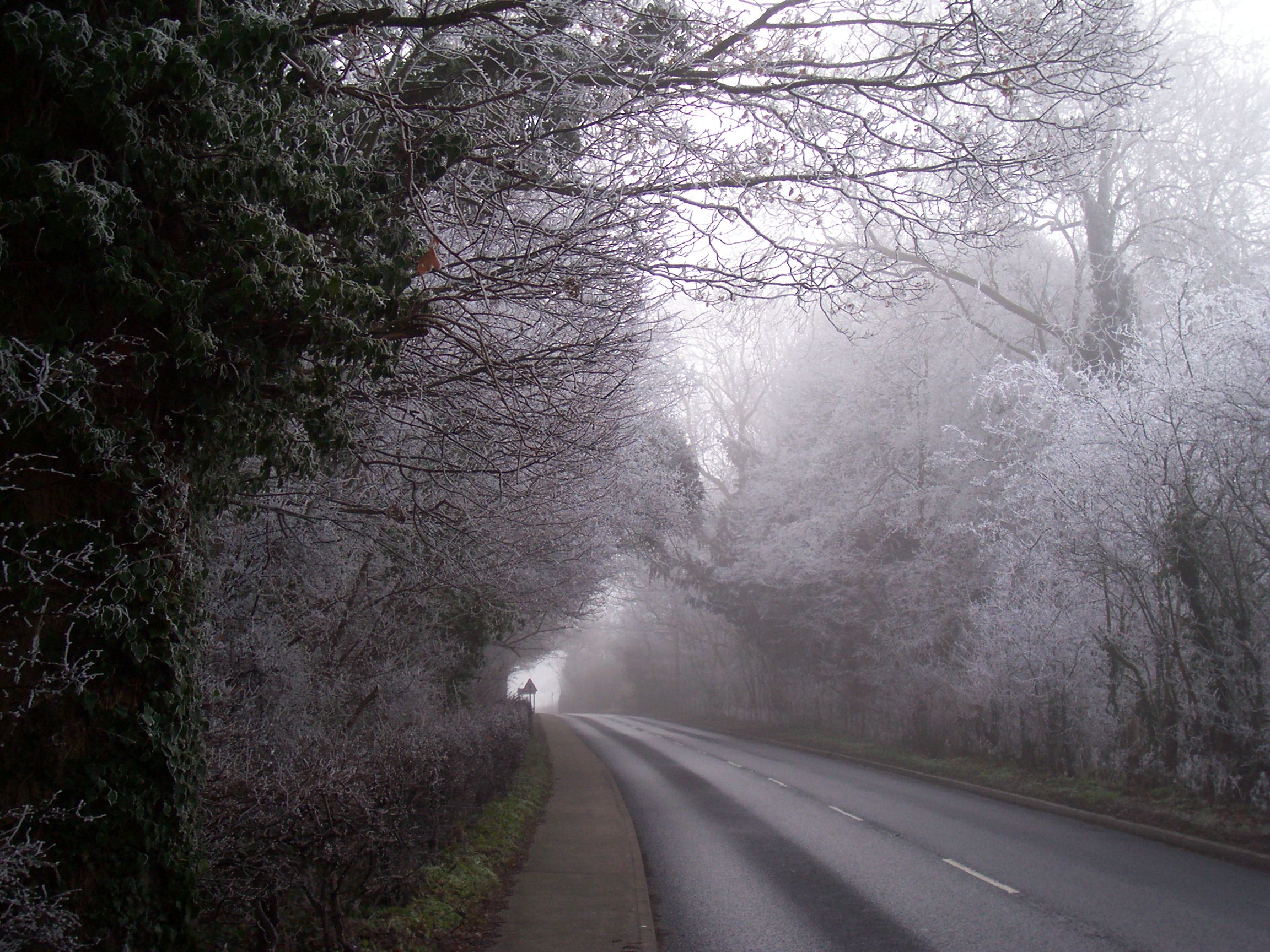
Bungay Road, Norfolk in Winter

Posted in Uncategorized | 1 Comment

Fudge Over Troubled Waters?

Had to laugh last night when unsuccessful Labour Leader candidate’s Twitter alter ego Tam Horris commented that he was off to drown his sorrows but wasn’t the demented engineering officer down in the bowels of Das Boot also called Johann? It was classic Harris and one of the reasons that I, for one, am disappointed that what Tom had to offer was given such short percentage shrift by all three elements of the party. Because, however much they may not want to hear it, Tom was the iconoclast, the voice of reason, the shrewd observer with an acid tongue who has had the courage not just to question the emperor’s clothing, but to do it in an engaging and insightful way.

Since results were announced 24 hours ago, many messages of praise—from all political quarters—have rolled in for Johann Lamont’s success and I quibble with none of them. She has a dozen years’ experience, a reputation as a doughty fighter and would not have reached Deputy (let alone Leader) in any modern political party without ability. But, if I were to associate myself with any of the commentary published so far, it would be with Gerry Hassan’s blog on a Seven-Step Recovery Plan for Labour. She ignores it not at her but at Labour’s peril.

Because Labour have shown questionable political judgement for years now. It started with Jack McConnell but found its nadir just two days before their May catastrophe when Iain Gray delivered his most personal attack on Alex Salmond by arguing his handling of the banking crisis and release of the Lockerbie bomber exposed “fundamental flaws” in the SNP leader’s character and judgement. Within 36 hours, when interviewed by STV, he was admitting that Labour itself had to “address some fundamental questions about the structures and organisation of Labour in Scotland.”

Unfortunately, in a further six months of his tenure, it didn’t. As his opponent in the May election, I can attest to Iain being a decent guy who, when not posturing in parliament, can listen when required and make sense when speaking. He’ll make a decent back-bench MSP (and I certainly hope so because he’ll be mine). He had a hard time keeping up appearances at the count when it looked like he might lose. And you only have to look at his record as a minister—it was on his watch at Transport that the whole trams fiasco was born—let alone his years as Leader to see a man out of his depth. Margaret Curran’s ringing endorsement sounds all the more hollow the more you know of Iain’s career.

"It takes a worried man to sing a worried song" Iain Gray Bricking It at the East Lothian Count, May 2011

The key question for Ms Lamont is, therefore: how can SHE make the real difference Labour so urgently needs? The runes are not good. While I do endorse Gerry Hassan’s hopeful suggestions, I also look to Lalland Peatworrier’s analysis of the vote share (but not actual votes) as signifying the fractiousness within her party. Given her reliance on the party establishment, where will she find the courage and resolution necessary?

One week before the votes were counted, Tom Harris, effectively ruling himself out as a possible winner, said the party was “in deep trouble” but was not prepared to make the radical changes required to turn around its fortunes in Scotland. “We need to think outside the box. There is no indication that the party is prepared to do that yet and I don’t know why.” Tom’s a loyal party man with much hard work, including pioneering social media, to his credit. That his candidacy received thin support speaks volumes.

And what of Johann herself? “I am honoured to have been elected the first Leader of the Scottish Labour Party. Thank you to everyone for their support and kind messages” and congratulations to her new deputy are her only tweets. Her blogspot has nothing since a speech dated October 27th. Scottish Labour’s website carries her statement:

“While I am delighted and honoured to be elected leader of Scottish Labour Party, I believe the real work starts now. In May, we fell short of people’s expectations and they turned away from us, unable to find a reason to give us their support. If we are to earn the right to serve the country, our challenge is to listen, to learn lessons and to demonstrate that we can change. I am confident that once again people will recognise that Scottish Labour is the party which understands their lives, can deliver their hopes and will stand up for Scotland.”

This could have been written after any Scottish election over the last decade. It remains to be seen whether she will be just another name in Labour’s decline in Scotland or whether she can develop ideas and finally make a difference. For the sake of Scotland, I hope she does. But, just as the road to Hell is paved with good intentions, the road to political oblivion is paved with pious but substance-free statements like her one above.

Posted in Politics | Leave a comment

Dreich is Good

The redoubtable Margo MacDonald MSP this week called on the Scottish government to describe more closely how life would be for the Scots if they were independent.

“It will take at least a year to embed any new concepts we would inevitably see if, for example, pensions were to be run from Edinburgh not London,” she said. “People need to know not just about defence, but about the euro. They need to know who’s going to be paying their pensions and how they’re going to be paid.”

Fair comment. But wouldn’t it also be good to have an idea of some of the more beneficial things that might happen if all things were not all run from a Westminster perspective. This blog is being written ‘abroad’ (actually in Norfolk). The local Eastern Daily Press is full of how serious the drought is in East Anglia and indeed the pond in the local village dried up this year and farmers are anguishing about the effect on their crops of another year when 30% of the rain simply did not show. The EDP wants to scrap the HS2 rail project to fix this urgent problem.

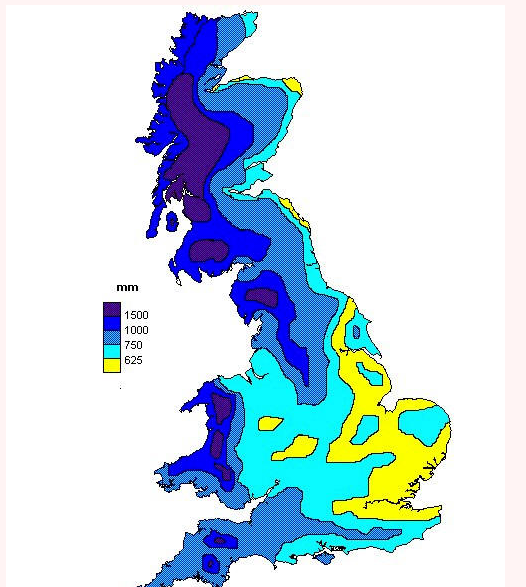
I need not tell my fellow Scots that rain is one of Scotland’s bounties. But East Anglia is blessed with under 650mm rain on average and this year has seen nothing like. If, as is likely, that this is also caught up in the huge drift of climate we are experiencing, does it take a rocket scientist to see that a wetter Scotland needs to do business with a drier England?

It may, at some point, make sense to build a pipeline. But that scale of infrastructure needs heavy belief (as well as investment) that it is for the long term and, if at all possible, profitable into the bargain. That will not happen soon and, even if England were to build their own from the wet Lake District, the distances and altitudes involved make for formidable engineering headaches. But, how could we get the water shifted some other way? It’s not as if there is a shortage of tankers in Scottish waters nor of crew who know how to handle them. Is there perhaps a business here and one that an independent Scotland could profit from?

Annual Precipitation in Britain, given in mm

An American company S2C Global Systems Inc is already investigating using tankers to transport fresh water from Alaska to India and the Arabian Gulf. The Grauniad reported on this a year ago but since then the news has been scant. Because the distance involved requires serious economies of scale, tankers of 50m gallons (around 200,000 tons deadweight). But that’s to shift water a quarter way round the globe from Juneau to Mumbai or Dubai.

What we are discussing is under 300 nautical miles between Perth or Aberdeen (both well developed ports, capable of taking ships up to 5,000 tons deadweight, sitting at the mouths of two of Scotland’s biggest rivers) and East Anglia. Port facilities would consist of more than simply hanging a hose over the side but should not need major investment in infrastructure. Small tankers, such as could operate out of Perth, could also operate into King’s Lynn or Yarmouth as delivery ports. They cost around £4,000 a day to operate and could make a round trip from Scotland to East Anglia in around 4 days, delivering 2,000 tonnes of fresh water at a cost around £20,000 or about £8 per tonne.

East Anglia covers around 10,000 sq km. With 30% of its 650mm of rain missing, that’s a shortfall of some 2m cu. m. (= tonnes) of water—or roughly 1,000 tanker trips over a year.  Working flat out, 12 small tankers would be able to sustain that.

But would all be worth it? Could it make economic sense?

Norfolk boasts some of the most productive agricultural land in Europe, with sugar beet yielding 140 tonnes per acre and that crop fetching £26 per tonne. Water shortage can drastically reduce that lucrative £3,640 per acre gross income, so £10 or £12 per tonne of water does not seem a high price to pay for sustaining such riches. So as you stand at your window drawing the blinds at 3:30 pm and the stair rods are fair stottin’ off the pavement, just see them as £20m in glittering coins of the realm we could be lifting from English pockets—soon.

And them even being grateful to us for it.

Posted in Environment | Leave a comment

We’ve Got the Power to Win

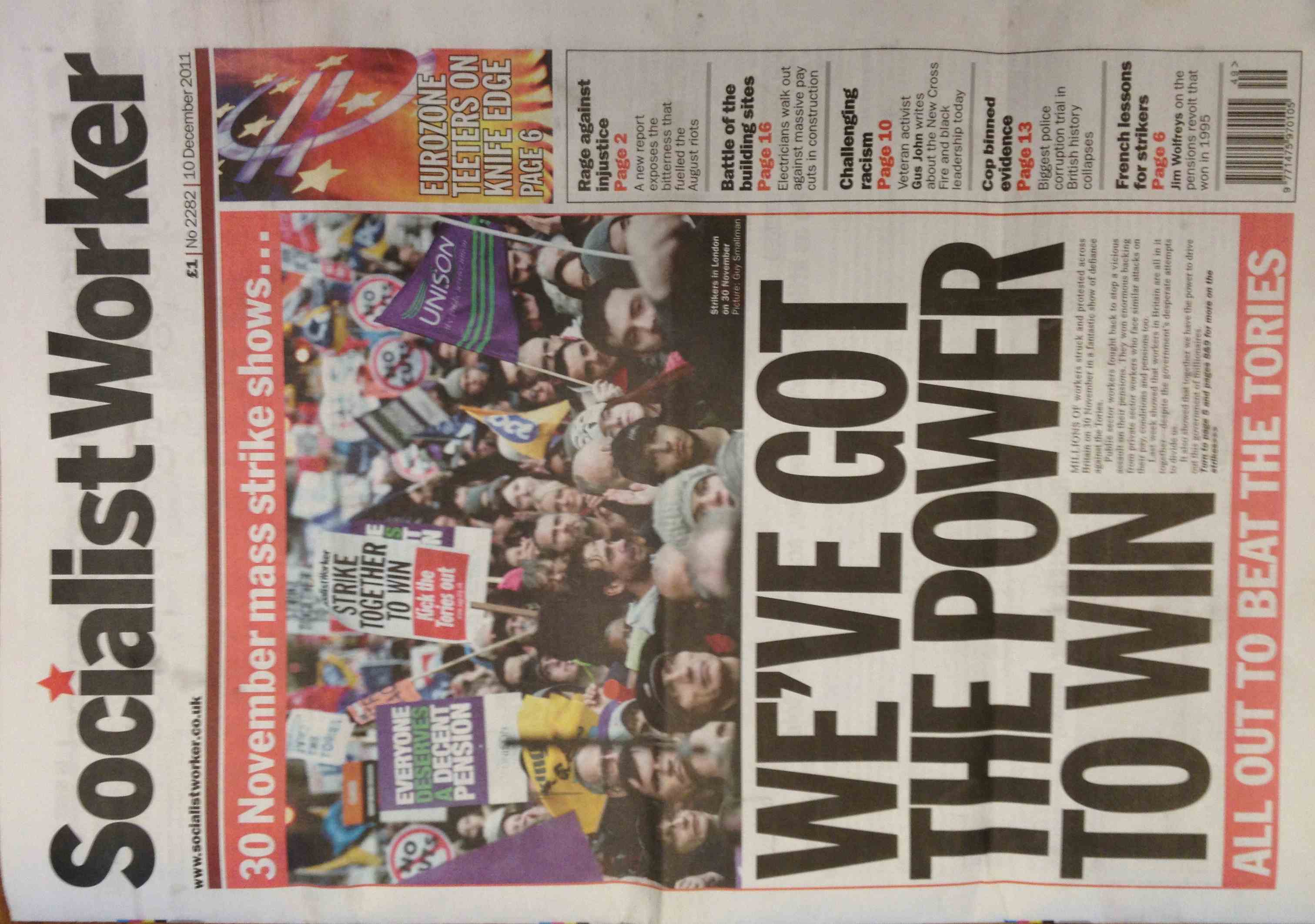
As regular readers should know, while this blog maintains a pro-community, pro-independence and internationalist outlook, we hold no monopoly on the truth and are happy to give credit elsewhere for ideas that would advance Scotland and its myriad of communities. For that reason, we have quoted many sources, including the staunchly unionist Hootsmon and Torygraph. But looking back over the year, it is obvious that, while the occasional mention has been made of the Record, one glaring omission has been of the far left and its mouthpieces like the Socialist Worker. But no more.

The title of this piece is the headline from the December 10th edition that celebrates the November 30th strike during which “public sector workers fought back to stop a vicious assault on their pensions”. Fair enough. Seen from a worker’s perspective, working longer and paying more to receive less in pension is hardly a sweet deal. The enforced austerity that the UK government claim makes it necessary is hardly eased by Chancellor Osborne realising he needs to borrow an extra £60bn, nor by Cameron “going nuclear” in Europe and wielding his veto in an “us-against-the-world” showdown.

Socialism is a great idea. If it didn’t have to rely on human beings to operate it, it might be seen as the highest of civilising ideals. Having seen its actual operation in Russia, Cuba, Italy, Greece, (I discount the Stalinist betrayal throughout Comecon countries) Mozambique, Vietnam and now China, its qualifications as an ideal look decidedly tarnished. So, how does the Socialist Worker see it working in Scotland/UK? How will the lot of the downtrodden masses be bettered? I have no quibble with there being downtrodden masses when social disparities are as wide as they are and Fred the Shred and his ilk stuff their pockets before being chauffeured away unbowed and unpunished.

Front Page of the Socialist Worker, December 10th 2011

Examining the SW’s 16 pages you are struck by a tone of belligerence as an answer to each and every problem. If the paper were renamed the Striker’s Weekly, it would be a more accurate description of its content. There is nothing wrong with ‘streetfighting’ journalism and this blog has long been a fan of Hunter S. Thompson’s ‘gonzo’ variant. But when every page is stuffed with inflammatory prose (“riots”, “scam”, “bias” “chaos” and “sleaze” are in the article heads on a single page) and the solution for every industrial wrong is a strike—”Shut the Sites to Beat the Bosses” takes up one whole page and threatens many of the remaining construction jobs that have not already been lost to the recession—then you wonder where we would all be if everyone followed their lead.

Words like “lackey” and “scab” are emotive and should be used with care so that their (important) meanings are not diluted. A few decades ago “Capitalist lackeys and all their running dogs” was used by China so frequently that it became joke shorthand for blinkered communism. Unions have a proud history; they brought humane conditions and fair rewards to the great majority of workers that once had no-one speaking for them. But, with the laudable exception of page 10’s article Challenging Racism, the rest of the rag would lead us all back into the blind alley of class war and decline that was the 1970’s. Can’t speak for others, but I’m not up for another Thatcher Mark II cold bath to wake us from the economic dwam we got ourselves into then.

It would be simplistic to blame SW and its attitudes for three decades of decline in union membership. And the ‘fat cat’ scandals may, through the ‘Occupy’ movements and unions’ participation in them, motivate a revival in memberships. But the relative prosperity of the nineties and noughties was driven by workers, bosses and even the public sector acting as if they were on the same team, finding ways to get things done, rather than ways to stop things.

Everyone benefitted, even those with no job because there was more money available to provide them with support. It may not be possible everywhere but in East Lothian, the council has borrowed heavily, kept up major infrastructure investment in badly needed affordable housing and achieved staff reductions entirely by natural wastage. This was achieved by unions working in harmony with officials and administration. While not perfect, relations with unions are better than when Labour ran the council in much easier times.

If this issue of the SW’s date was changed to Dec 10th 1977 (i.e. the Winter of Discontent) its stories and attitudes would fit right in. It’s a free country and they can bang the ghost of the class war drum if they like. But, in Scotland, the comprehensive collapse of once-ebullient socialism in the shape of a fractious and unsuccessful SSP vs a one-man-(in-jail)-band and equally unsuccessful Solidarity (Truth in Advertising—where are you when we need you?) should be warning enough to them. However tough the going now, no-one in their right mind who lived through the seventies wants to re-live them.

Reading this issue, I can’t get out of my mind the image of Stan (John Cleese), convening a meeting of the PFJ (People’s Front of Judea) in The Life of Brian: “Bruvvers, let us not be down-‘earted. One total disaster is just the beginning!”


Posted in Politics | Leave a comment

High Noon for High Streets

Quality Street, North Berwick, 4pm Dec. 12th 2011

Just got back in from a bout of Christmas shopping along North Berwick High Street where, despite a biting and doggedly cold West wind, the shops are ablaze, the Xmas lights colourful, with bobble hats and buggies jostling along the narrow pavements in a sure sign of a healthy season for the shopkeepers.

But, according to a recent retail report by Mary Portas (the “Queen of Shops” in a recent TV series), all is not well and her report is not shy about saying it:

“I believe that our high streets have reached a crisis point. Unless urgent action is taken, much of Britain will lose, irretrievably, something that is fundamental to our society, and which has real social and economic worth to our communities. With town-centre vacancy rates doubling over the past two years and total consumer spend away from our high streets now over 50 per cent, the need to take action has never been clearer”

She predicts that high streets could disappear forever; pretty much everyone agrees with her. From the Mirror to the Torygraph, the story has been picked up as this tale of woe goes the media rounds accompanied by much hand-wringing. Mary is not all gloom; she has pointed out what she regards as examples of good practice like Barnsley market and laying out her own vision for high streets.

It is fair to say that the signs are not good for the classic high street as the principal shopping destination for everything from detergent to deep freezes. The rise of car ownership, of out-of-town malls, of hypermarkets and now of internet retail has reshaped the way goods are bought and sold and the return of the greengrocer and gents clothier should not be expected soon. The statistics in Mary’s report underscore this:

  • Highest vacancy rates: Dudley (29%), West Bromwich (28%), Hartlepool (27%) and Dewsbury (27%). These are mid-scale towns but even their size hasn’t helped
  • The lowest: Falmouth, Walthamstow, Clapham Junction and Cirencester (all 6.6%).
  • Foot-fall down 4.1% first week of December, compared to 2010.
  • High street like-for-like sales fell 1.6% in November compared to 2010.
  • Food sales up 1.5% but non-food items fell 2.1%.
  • Online, phone and mail-order sales up 8.6% in the same period.
  • Online sales now account for nearly 10% of total retail sales.

A survey conducted among Torygraph readers—not the most communitarian selection of people to ask—still came away with a resounding seven in ten using their high streets and keen on having them survive:

Importance of High Streets (source: Daily Telegraph, Dec 12th 2011)

So, the message is that, even though many people vote with their feet when it comes to shopping, the high street is still valued—as much for its pleasant, friendly surroundings as for its more subtle role of providing a community focus and social cohesion. So, other than today’s communal media wail in response to Mary’s report, what can be done?

Clearly, there is a critical mass of large ‘anchor’ shops when it comes to competing with the malls and hypermarkets. Stirling, Falkirk and Perth all provide good examples of how judicious redevelopment on an ambitious scale, with large shops, ample parking and  pleasant surroundings can keep the customers coming back. Examples of similar-sized towns that have failed to do so are legion, including Motherwell and Dunfermline.

But even smaller towns can compete, especially if they have some major factor going for them. St Andrews does well because of students and tourists; Cupar survives by being just far enough away from anywhere else—as do Biggar and Berwick, Alness and Kirkwall, Kelso and Kirkcudbright. Peebles makes a real effort to draw tourists and offer them unusual shops not found elsewhere, whereas Pitlochry gives itself over the the more blatant tourist draw that characterises the Royal Mile.

What we need to learn from smaller towns with robust high streets is how their offering has changed. People will go to Iceland for the month’s shop and the Gyle for new shoes and get their iPhone off the internet. But apart from the echoing soullessness of that, there are niches in which small high street retail can not only survive, but flourish. East Lothian Council is in the middle of its own analysis of what makes North Berwick shops flourish while Tranent and Dunbar—of comparable size and increasingly similar demographics—has shops that are struggling, despite investment.

The key factor is unusual offerings; look at Peebles or St Andrews or North Berwick and you find specialist shops with things hard to find in any chain. Then you need to have additional attractions that bring day trippers (not just tourists) for a browse or a wander. Add in several comfortable cafes and restaurants; a little historic architecture and/or places to picnic; perhaps a charity shop or three to hunt for bargains and you find that even some traditional-type shops—women’s shoes, delicatessens, quality butchers—can make a good fist of it too. It’s a convenient and quirky mixture that seems to work.

There is probably no formula and any high street within a few miles of a major retail park will have its work cut out to survive. But, the alternative of trying to form a sense of community without the everyday catalyst of a vibrant high street must make it in everyone’s interest to try The pride people of St Andrews show in their town is not matched by those in Dalgety Bay, even though there’s little to choose in demographics and affluence.

For me, we’re still learning how to build communities, not just houses; without a high street, that is so much more difficult.

Posted in Community | Leave a comment

How to Get Here from There

Hovercraft sets off from Portobello on its 12-minute trip to Fife during the 2007 trial

When Stagecoach ran a successful pilot fast hovercraft ferry service between Kirkcaldy and Portobello for two weeks in the summer of 2007, it was expected that a commercial version of the route would soon be open. Not only did such a ferry avoid the bottleneck of the Forth Bridge crossing but it also brought travelers close to Leith where many commuters now work and which is poorly served by public transport other than buses from the city centre.

An application by Stagecoach to run that route has been making slow progress through Edinburgh City Council planning for the last two years. An application by Stagecoach for a pedestrian ramp and waiting room in Portobello made in December 2009. received a recommendation for approval by officials but last week, after months of prevarication, the application was refused by councilors, citing “the visual impact of the ramp and associated traffic problems”.

And that’s the end of that? Well, not necessarily. The popularity of the two-week test was largely because of the relative ease with which people from Fife could reach some of the less accessible parts of Edinburgh. Besides a ramp and a waiting room, the southern terminal needs to offer good transport links to where people want to go. That applies to several points in East Lothian as well. These include:

  1. Fisherrow. Closest to Edinburgh, it has excellent bus links from the Edinburgh side of Musselburgh, as well as lying within 1km of the Newcraighall and Musselburgh ScotRail stations, the QMU campus and the start of the A1 dual carriageway to the South.
  2. Morrison’s Haven. Although less convenient to Edinburgh, the bus links from here are longer into town but this lies within 1km of the Wallyford station Park & Ride. More importantly, it has very little habitation to disturb and plenty of space to develop into a more extensive ferry port with improved road links direct to the A1 so that car traffic heading from Fife to England could be accommodated.
  3. Cockenzie. This would be dependent on removal of the existing power station. While least convenient for commuters to Edinburgh (bus ride longer than Morrison’s Haven & 1 km to Prestonpans station) but, if a Ro-Ro ferry port were part of redevelopment of the former power station site, this could provide a superior base for a Zeebrugge and other cross-North-Sea services, avoiding the congested Queensferry Narrows and shaving at least 1/2hr off any crossing. The Fife ferry would act as a feeder and this point is the most convenient for vehicles heading South (1/2km to the Bankton junction on the A1

Whichever of the three points turns out to be the most appropriate for the long term, it seems very short-sighted of Edinburgh, which imports a good tenth of its workers from Fife every day, to condemn them to another decade of gridlock before another Forth crossing is functional.

Why Edinburgh should choose to be so cavalier about access by their work force is for them to ponder. But if they don’t want the advantage of developing cross-Forth ferry traffic, perhaps East Lothian, which supplies another tenth of its work force, could provide the service. At the same time, that would shorten the distance between the tourist areas of both East Lothian and Fife by half and might catalyse business.

After all, the people who visit St Andrews and Muirfield have much in common, as do those who visit the Isle of May or Bass Rock. Getting tourists easily between those two places could be just as important as getting the Fife commuters to their work and—in the long term—even more lucrative.

Posted in Uncategorized | Leave a comment

Before There WAS a Border

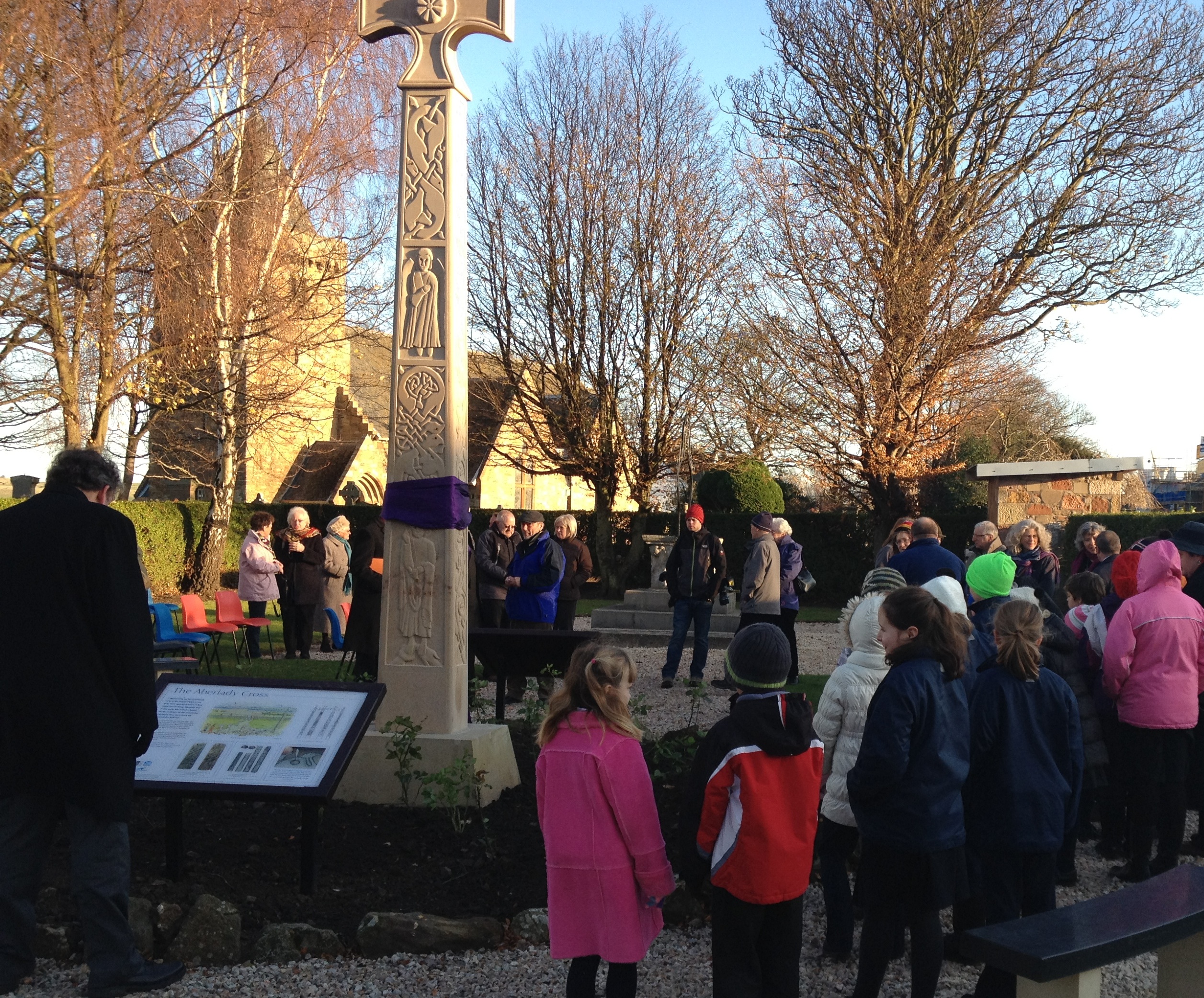
Yesterday, I had the privilege of being invited along to Aberlady Conservation Society’s unveiling of a beautifully sculpted  reproduction Northumbrian cross. A good turnout, despite a bitingly cold December wind saw Historic Scotland, a partner in the careful recreation of this beautiful piece of history, unveil it to assembled locals, schoolchildren and sundry dignitaries.

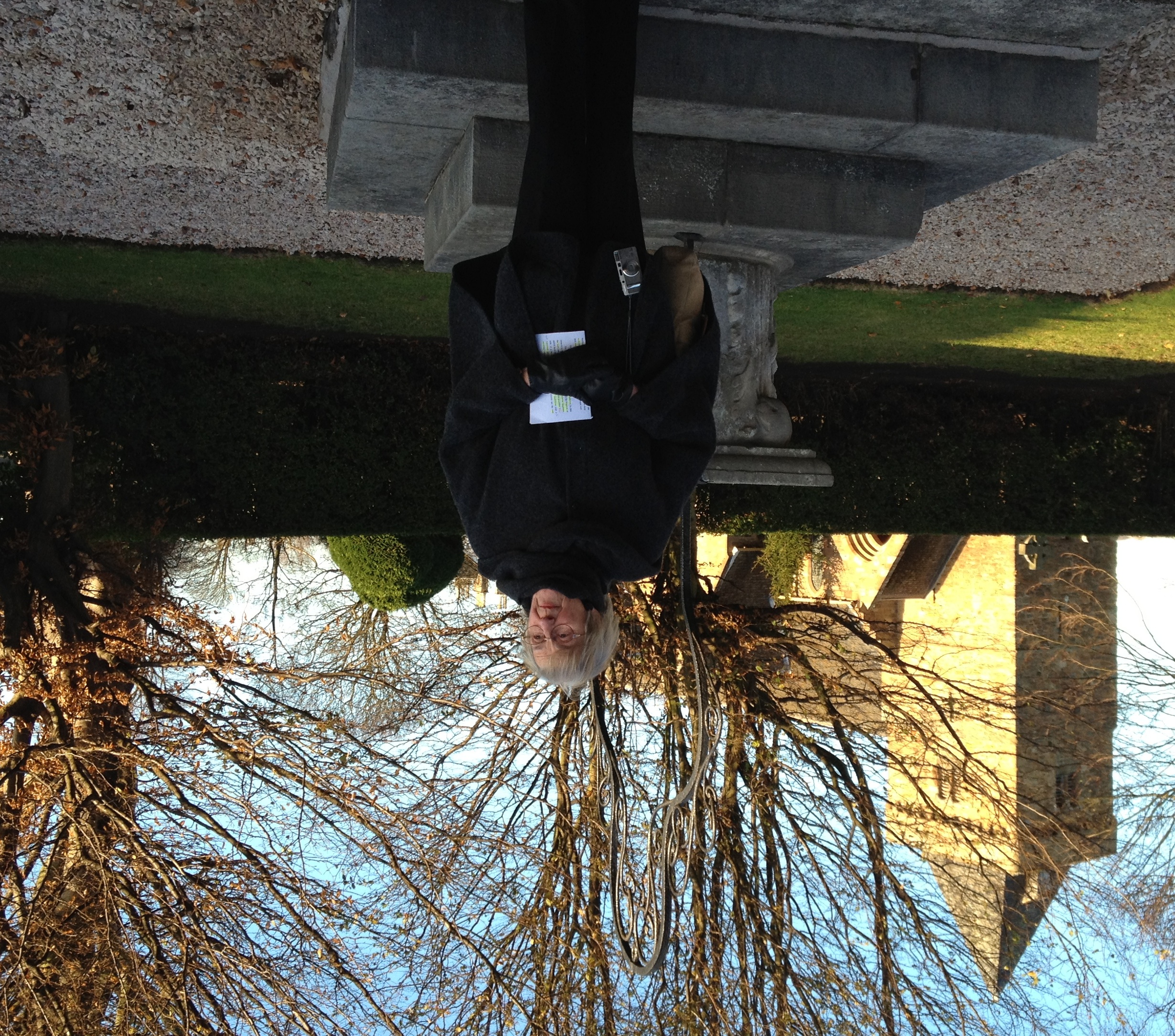
Dr Barbara Crawford MBE, M.A., Ph.d., F.R.S.E., F.S.A. Scot., Member of the Norwegian Academy, Honorary Reader in History at the University of St. Andrews and specialist in Scandinavian settlements in Scotland

As a community event, it was both touching and inspirational to see what enthusiasm from locals teamed with support from specialists and the local council can lead to. But it seemed especially poignant because the fragment of original cross, discovered in 1875, represents the twisted petal designs that characterised the gospels written and illustrated by the monks of Lindisfarne in the 8th century. At that time, Christianity had barely taken hold and was dependent on the dedicated work, hardy travels and bravery of the early monks.

At the time, East Lothian was sliding from Brythonic control and beginning several centuries of being the melting pot of North Britain as Celts, Picts, Norse and Anglian cultures intersected along the south shore of the Forth. In the seventh century a struggle between the Anglian kingdoms of Deira and Bernicia had forced a Prince Oswald to seek refuge among the Scots in far Dalriada. There, he was converted to Christianity by St Aidan on Iona. Soon, Northumberland was united under Oswald who invited monks to found Lindisfarne and his subjects to embrace Christ as he extended his control over Lothian’s original Welsh-speaking Goddodin inhabitants. Aberlady became a key transit point for monks coming ashore in their small coracles to make the overland trek via Yester and Abbey St Bathan’s to their new ecclesiastic centre.

Crowd gathered around the Northumbrian Cross in the Memorial Garden, Aberlady

Partly to support this traffic, a key settlement grew up on what is now Kilspindie golf course. The original fragment of the cross was found below the manse garden. Many other fragments, brooches and remains have been discovered. But the cross was both distinctive in its design and dominant in its size. It would have been the pivot of the settlement, the equivalent of the national flag flying over the fort in hostile territory.

To be there was to imagine Aberlady (or Pefferham, as the Northumbrians probably knew it) as a beacon in the Dark Ages, a key point on the necklace of points of culture and civilisation that stitched the kingdoms and peoples of North Britain together. It was a time barely recognisable from today’s perspective—a time long before national identities like “Scottish” or “English” had been even imagined, let alone achieved.

The Cross Unveiled. Ian Malcolm, Chair of Aberlady Conservation Society on the Left

Posted in Uncategorized | 1 Comment