Scotland by Hugh MacDiarmid

As an enjoyable weekend break, I’m at the StAnza festival’s 15th outing and was enjoying St Andrews’ lively atmosphere in term time, delving into various entertainments and thinking I was well clear of politics and motivations to blog. Then I came across (and I say—to my shame—for the first time) Hugh MacDiarmid’s concise, graceful and (for him at least) understated poem, Scotland:

It requires great love of it deeply to read
The configuration of a land,
Gradually grow conscious of fine shadings,
Of great meanings in slight symbols,
Hear at last the great voice that speaks softly,
See the swell and fall upon the flank
Of a statue carved out in a whole country’s marble,
Be like Spring, like a hand in a window
Moving New and Old things carefully to and fro,
Moving a fraction of flower here,
Placing an inch of air there,
And without breaking anything.
So I have gathered unto myself
All the loose ends of Scotland,
And by naming them and accepting them,
Loving them and identifying myself with them,
Attempt to express the whole.

For those interested, this is available on an A3 poster from the Scottish Poetry Library which makes a fine decoration for any underpopulated pinboard or wall. I am moved by the above because—unlike some other works and even some contemporary nationalists—it does not beat me over the head with its message.

Born in Langholm as Christopher Grieve in 1892, he was a postman’s son. He trained to be a teacher in Edinburgh, then worked on local newspapers before enlisting in the Royal Army Medical Corps in 1915. War service took him to the Balkans and France and during this period he formulated his ambitious literary and cultural plans (as well as his pen name).

These centred on an attempt to revive the Scottish language in poetry as a means of asserting Scotland’s artistic independence from England and re-invigorating a literature suffering from sentimentality. His radical advocacy of Scots won support for and provided a major impetus to what became known as ‘The Scottish Renaissance’ which involved fellow poets like Robert Garioch and Norman MacCaig and included designers like Charles Rennie Macintosh and the Scottish Colourist painters.

In his early collections this championing of Scots took the form of short lyrics which synthesised diction from the dialects of different areas of Lowland Scotland to create his own version of the Scots literary language otherwise known as Lallans. Though this has been hailed as a modernist technique, the effect on the page is less academic than this sounds—there is a fresh energy to these poems.

MacDiarmid described Scots as “an inexhaustible quarry of subtle and significant sound” and believed only Scots was capable of capturing a distinctive Scottish sensibility. This had political as well as linguistic implications and MacDiarmid engaged passionately with the politics of the time—he was a member of both the SNP and the Communist Party, a divided loyalty that got him into trouble with both.

For all his faults, it was he who proved great literature could still be crafted from the Scots dialect; he catalysed pride in a distinctively Scots culture that was in danger of being swamped. Poets like Morgan, Lochhead and Burnside owe him a debt and, without him,  it is debatable whether plays like The Cheviot & the Stag or Black Watch, or even films like Local Hero and Trainspotting would even exist.

Posted in Education | 1 Comment

You Choose—

Two very different quotes regarding Scottish independence from viewpoints furth of Scotland came to light this week.

One, from a Tory grandee—whose party prides itself as emblematic of tea with crumpets, cricket on village greens and jolly good shows; that has consistently expressed views we have interwoven history and culture; that Scotland benefits greatly from being part of the UK; that we’re “stronger together” and “punch above our weight” so we can jointly “be a force in the world” as “the most successful partnership the world has seen”.

The other, a representative of the Russian bear—whose country brought the world autocratic Csars, communist revolution, gulags. Josef Dughailovitch Stalin, the Katyn massacre, human wave attacks, the Cold War/Iron Curtain, institutionalised nomenklatura cronyism, mutually assured destruction, Afghan invasions, Ilyushin “Bear” bomber intrusions into our airspace and broke Italy’s monopoly on mafioso behaviour.

Which do you think would be the more understanding and naturally make the better friend to Scotland? You may choose, based on quotes this week from two senior representatives of their respective organisations:

“If Scotland were left undefended as a result of acquiring independence, the enemies of England could use it as a base from which to launch air raids over the border. If that were to happen, England would have no choice but to bomb Scottish Glasgow and Edinburgh airports in order to defend itself.”

–former Solicitor-General for Scotland Lord Fraser of Carmyle

“Russia has a consulate-general in Edinburgh which organises a large number of cultural events. Russian ships call at Scottish ports and Moscow will maintain ties with Edinburgh in the future. As regards the referendum, it’s a domestic affair. In accordance with the Helsinki Agreement, European frontiers are inviolable unless the parties concerned rule otherwise. The British government has given its consent to hold a referendum on the independence of Scotland.”

–Foreign Minister Sergei Lavrov, speaking to the lower house of the Russian parliament.

Time, perhaps, to reconsider who we Scots regard as friends more in the light of how much they are behaving as such.

Posted in Politics | Leave a comment

You Can’t Get There from Here

A recent tweet complained that a passenger boarding a Lothian bus did not have his (valid) Ridacard accepted, was thrown off and had to taxi in to work. I’m sure this was a rare exception but it highlights a certain autocratic confusion at Lothian Buses as to why they are there. They trumpet their citations—Bus Company of the Year in 2002; Top City Bus Operator in 2011 and their website duly pays requisite homage to the customer:

“At Lothian Buses, our customers are at the heart of everything we do. From continual investment in our modern, comfortable fleet to using the latest technology to deliver up-to-date and accurate information about our services, we are committed to providing our customers with the very best in comfortable, easily accessible and affordable public transport.”

Shimply shplendid shtuff; but what is the reality? To be fair, for the last five years, they have not had their operational troubles to seek, with sundry primary arteries repeatedly torn up for the infamous tram works. And, having spoken with senior officials at Lothian, none are too chuffed with having tram operations hung round their neck. That said, how good are they at running public transport?

As a company running buses, they are indeed very good. First provides a splendid foil for them. After years in the nineties when the two companies fought bus wars all across Edinburgh, it has died down to the ongoing skirmish that is the 44 Wallyford/Balerno route, with Lothian the unquestioned victor. First is a much more low-budget operation that now confines itself to predatory pricing, mostly with clapped-out buses largely outside Edinburgh.

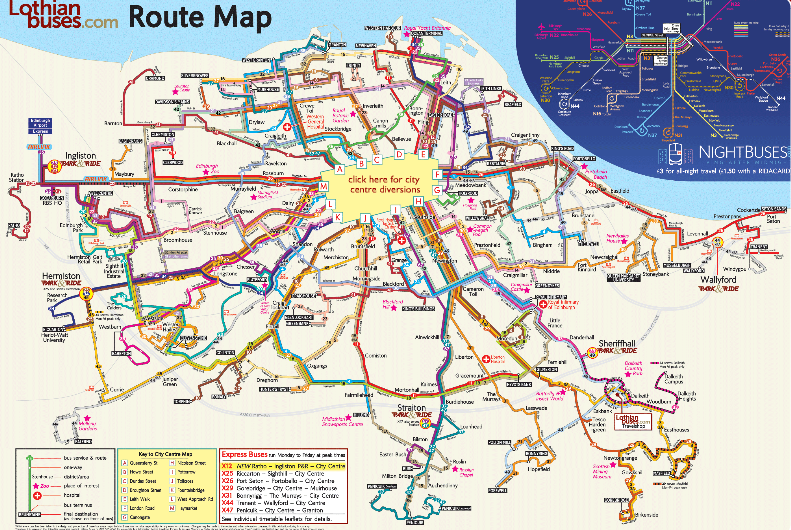
Within the city, Lothian runs the show, with over 90% of intra-city passengers and First slavishly copying its pricing just to stay in business. Looking at their route map, Lothian do provide a pretty comprehensive service that encompasses most urban outliers like Penicuik or Tranent, as well as all areas of the city.

So that’s it then, Edinburgh’s award-winning bus company takes you anywhere you’d want making the city a paragon of public transport? Bzzzzt: wrong! It’s a actually a dinosaur.

Born out of Edinburgh Corporation Transport’s monopoly pre-bus deregulation, Lothian remains publicly owned, shared by the former authorities that comprised Lothian Region (Edinburgh has 91% and the three Lothians 3% each). Which means it’s a quango, so loved by Labour and therefore stuffed with its acolytes from inception. No other European city of Edinburgh’s size and economic vibrancy is either so poorly served by bus alternatives or so car-hostile (let alone both), which gives Lothian’s virtual monopoly a thick edge over comparable bus operators elsewhere.

Let’s leave aside the money that the Blue Meanies make for themselves and for ECC and focus on three classes of non-car = bus customers: 1) the Edinburgh local; 2) the visiting Scot and; 3) the visiting ‘foreigner’ (in which group I include the English, not through any value judgement but for the sake of simplicity).

  1. Edinburgh locals. Most of those who ride regularly buy a Ridacard (weekly @ £17, monthly @ £51 or annual @ £612). Slapping that on the reader beside the driver gets them on quickly. Their main gripe is that buses don’t take them in one trip and they must wait in the rain and cold for transfers. A secondary gripe is that these are not much of a deal—ten single trips to/from work (if that’s all you do) is only £14 p.w.
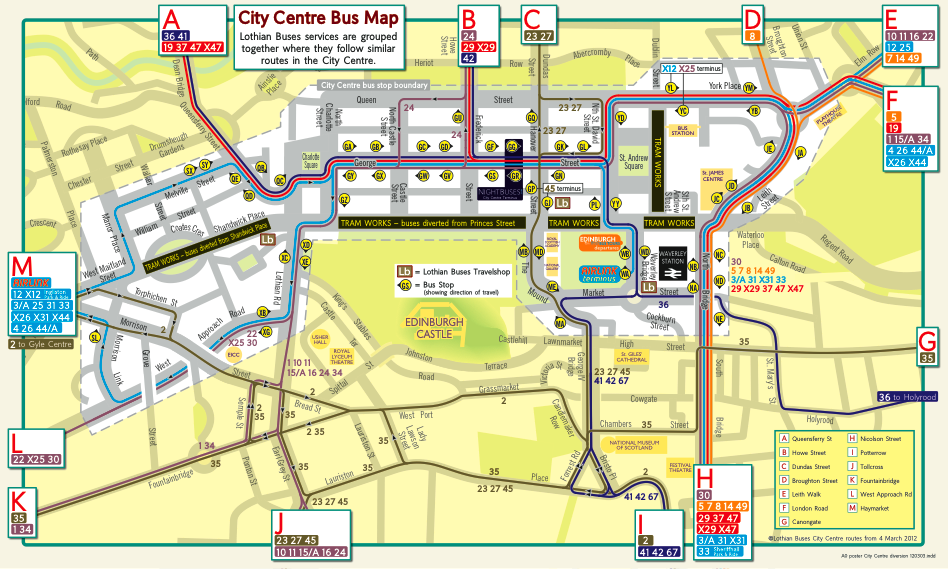
  2. Visiting Scots. If you’re a pensioner with a Scottish Concession Card, it’s as easy as the native, with the same transfer drawbacks. However, the system presumes you already know how to use it. Route maps are rare even in bus shelters so you need to know which bus goes where. Then the centre of Edinburgh is a maze of bus stops (even before any tram works—see below). Finding the right stop is hard because (unlike London) there are no helpful maps of surrounding bus stop locations. This is made worse by a propensity to scatter them. Getting off a train in Waverley, it’s half a kilometre walk to catch a 10/11/16 past Tollcross because the stop is at the Mound. Those with no card have to fork out £1.40 to go any distance and do that again if they transfer. A Day Ticket is available, but at £3.50, it’s no bargain until you make a total of four journeys or more that day.
  3. Visiting foreigners should simply not bother. Over 90% of them arrive at Waverley where you’d be forgiven for thinking that both Visitor Information Centre and local transport were state secrets for all the information available. Network Rail spent millions refurbishing the station but shitepence on telling passengers how to continue their journey or where to visit/stay. Cabbies love it because most give up baffled or balk at the uphill slog to find an exit. (the helpful new Waverley Steps escalators are long overdue but good luck finding them) Even if visitors do make it out into daylight, the maze of bus stops and queues of buses dissuade most. And when the most determined/resourceful do find the right stop and bus, they must find exactly £1.40 in coins or get “ah’m sorry, pal, we dinnae tak’ ony notes” from the driver.

Seen as a self-serving monopoly where locals have no choice, Lothian is brilliant. And, to be fair to them, they do invest in their buses, which are consistently new, clean, well maintained and punctual (tram works permitting). Seen from a bus anorak’s perspective, it’s a faultless operation with well equipped depots at Seafield, Shrub Hill, Longstone, etc.

But, because they refuse to use conductors, they are often held up at stops while someone struggles for change; because they favour double-deckers, they refuse to run lighter load routes, which means almost all lines converge on the city centre to sit in endless queues; because rail provision in the city is so poor, the idea of joined-up transport with rail is entirely alien to them.

Apparently, they’ve never been to the Continent to see how public transport should work. Given the lack of competition, you could say that the world is their oyster but apparently they’ve never been to London to see how that works there either.

Lothian's Idea of a "Customer-Friendly' Inner City Map for their Blizzard of Bus Stops

Posted in Transport | 5 Comments

Not the Best of Health

Today’s Hootsmon prints an op ed piece by local MSP Iain Gray entitled “Smiling and Nodding Will not Create Change”. In it, Iain, a former  Minister for Social Justice, fulminates about the lack of progress in harmonising (if not actually integrating) the NHS with social work across the country. Now, I believe Iain may be sincere in his wish to see this but his track record while he was capable of influencing this gives these recent comments more than a whiff of sanctimony.

He is correct in his assertion that the two services ought to work together far more closely and he is also correct that officials on both sides of the divide have not fallen over themselves to make that happen. But if he indeed started this process in 2001, how come, when I became East Lothian Council leader in 2007 and started down the road he advocates, was it as if this idea of joint working had never occurred to anyone before?

There are definitely culpable officials on both sides of the divide. But in East Lothian Council, we rid ourselves of both the relevant director and head of service and set to making joint working the order of the day for the best reason in the world—because it made sense. What we had not bargained for was the degree of entrenched self-interest of senior staff within NHS Lothian.

That first summer, we came up with three major projects that we thought exemplified the  joined-up thinking required that would provide better service at less cost to the public purse. The first was a joint surgery and day centre for Gullane. The current NHS Cusworth surgery there is bursting at the seams and the present ELC-run Day Centre requires a substantial re-build.

Looking around for alternatives, we hit on the local tennis courts. They were bang in the centre of the village and in desperate need of a refurb themselves (the chain-link fence round the courts fell over in high winds). By shifting the three courts bodily westward and buying an adjacent house that was on the market, we could plunk a joint building with more than enough car parking on Hamilton Road. Meetings with the surgery doctors, the tennis club, day centre attendees and the public secured local agreement.

NHS Officials attended the same meetings and pledged to co-operate. Four and a half years later, the council has bought the relevant house and shifted/refurbed the tennis courts. But we waited so long for the NHS to commit any capital that it’s been turned over to the Scottish Government to finish. So much for what had been agreed to be a pilot of co-operation. Similar intransigence put two other crucial projects on ice.

They were for a revolutionary concept in local hospital and elderly care. Instead of the NHS ‘rationalising’ its hospitals further away from the patients and the council providing ‘pure’ care homes, why not combine the two? Building 60-bed joint units could allow elderly in care who needed medical assistance to stay in the same room but switch to medical staff—and then back to the care staff when treatment succeeded. There would be no barriers between the two levels of care, the patient would suffer no disruption and the economies of scale would benefit all.

Tranent and Musselburgh were earmarked as likely projects. For four years, ELC tried to get NHS Lothian to commit to this even bigger ‘everyone wins’ concept. We have now given up and gone back to planning for separate care homes while the NHS touts a ‘community’ hospital in Haddington for all East Lothian—as if the other five towns think of Haddington as any part of their community when it’s a 45-minute bus ride away.

Is there a villain to this piece? Why, yes—and it’s not Iain Gray, who may well have tried to shift the NHS off its complacent arse. But he is complicit, because it was on his watch that Professor James Barbour OBE was appointed chair of the board of NHS Lothian in 2001 . Having seen how senior officials operate around Prof. Barbour and having had the depressing experience of sitting across the table from him in negotiations, I would say, simplistic as it is to blame any individual, that here lay the root of willful, pathological obfuscation from the NHS.

What his real motivations for this were remains unclear. Perhaps he, like many other senior Humphreys of officialdom, was angling for a knighthood. But it was clear that nobody in NHS Lothian went to the toilet without his permission, far less work on a project costing millions where anyone else had a say. The only time I recall ELC getting any concession out of him during negotiations, I watched him, as he was leaving, kick a stone clear across the Deaconess House car park in frustration.

But he is not alone. Where Iain and his colleagues must bear much blame was the series of apparatchik appointments they made to the many quangos under their control over their eight years of tenure. While the NHS Boards may not provide the worst examples of cronyism indulged in, it would be hard to find a more egregious example of my-trainset-and-I’ll-play-with-it-as-I-like than Lothian NHS under Professor Barbour.

Iain may be sincere in wishing it were not so but he’s also being very disingenuous.

Posted in Uncategorized | Leave a comment

Wish I’d Found This for IWD

Posted in Uncategorized | Leave a comment

My Kind of Scotland

Now that we’re past the preliminaries in the independence debate and most parties have accepted that Scotland has both the right to call a referendum and to decide when it should take place, we move on to the more substantive stuff. This weekend of the SNP Spring Conference, the Herald is printing a whole series of articles on the issue, one of which asks what kind of Scotland we want.

This is a very fair question.

Why should anyone want to change the status quo unless they had some clear advantage from taking a risk on something new and unknown. While the SNP may believe that independence is a priori desirable, apolitical people (i.e. the bulk of the population) need something more than party members’ boundless enthusiasm. As a starting point, it’s hard to beat Norman Macaig, wrestling with his beloved Assynt:

Who possesses this landscape?
The man who bought it or I who am possessed by it?
False questions. For this landscape is masterless
and intractable in any terms that are human.

Those who love Scotland are driven by their own version of this mystique—the almost primitive sense of belonging without entirely understanding why and the bafflement with those who see land only in measures of possession. My own version is steeped in the Lothian coast’s sandy inlets and rugged islands, so I hope city types will forgive me if I identify more with Macaig than with Morgan as my Makar.

My kind of Scotland celebrates its past, but with a realism that includes Clearances, Gallows Herd brutality and stupidities like Flodden, as well as Prince Charlie or Wallace or the romance of Somerled. It is proud of shipyards and smelters, proud of helping build a globe-spanning empire, proud of standing alone with our English cousins against the dark tide of Nazism.

But it also looks to its future, seeing how Ireland has bloomed since finding its own feet almost a century ago, how Norway or Denmark have earned their affluence and respect as forces for stability and peace by working together as partners in the Nordic Council and beyond. It looks to multicultural Singapore for cross-racial co-operation that drives their affluence, to Costa Rica and Finland for classless societies, to Canada for its open doors and a multilingual society.

2014: After the referendum decides we will go our own way, there will be a year or two while negotiations are conducted between Edinburgh and London. With the exception of some sourpusses who have a vested interest in keeping the two countries together there is little expectation that the English will wish to be anything other than fair in negotiation if the Scots accept their 8.4% share of liabilities as well as assets. As well as retaining the £sterling and the monarchy, there may well be other things (foreign embassies, BBC, etc) that will not change status immediately.

There is an appreciable lobby in England who already understand just how important Scots contributions to the Union have been. Whether it is a stay of execution on Coulport and their nuclear subs or provision of 20% of our electricity or export of water to a drought-stricken East Anglia secure supply of local oil or lease of the exercise range at Cape Wrath, the Scots have anything but a weak hand at the bargaining table.

2015: Until negotiations are completed, the Scottish Government will continue with its plans to secure the NHS, education and local government funding in Scotland and avoid the pseudo-privatisation being pursued in England. The time will be used to secure Scotland’s place as a successor state within the EU and open negotiations to become a member of the Nordic Union, as well as find an amicable arrangement whereby we can work with NATO without being a nuclear power.

Internally, there will not be much to notice in those first years. Life in Scotland will continue pretty much as before—trains will run to London or Penzance, business will be conducted as before in £sterling and the only difference at the border is likely to be the addition of “Independent” to the “Welcome to Scotland” signs. The biggest changes will be a flurry of activity in Edinburgh as embassies are established or upgraded from Consulates and an increase in reciprocal trade missions, especially with the BRICs, with our focus being on oil technology, high-grade engineering, renewables equipment, whisky and quality produce, especially seafood.

2016: The first years of actual independence are likely to be dominated by legislation to undo much of the current welfare ‘reform’ and a series of acts that would lower corporation tax to boost business and develop renewables further into tidal and wave, as well as offshore wind. The burden of our share of debt still being accumulated will take a number of years to pay off . This will burden such innovation and the creation of an oil fund like Norway’s until it is paid off.

As an independent country, Scotland will be able to promote itself on the world stage and enhance its already high profile as the home of golf to boost international tourism and cater better to the English ‘staycation’ market. Having our own armed forces will allow us to use them on ceremonial duties at Edinburgh, Stirling and other castles to become tourist attractions in their own right, much as the Brigade of Guards does in London already. The Scottish Defence Force marine arm will need fast patrol boats which will boost shipbuilding (or secure it in the unlikely event of England changing its mind in mid-project and having its carriers built elsewhere).

2020: Just as Edinburgh saw an economic boost post 1999 with the establishment of the Parliament, the greater activity around independence and the new focus on business export described above will lift Scotland’s economy and engage places like Dundee and Glasgow that only partly felt that 1999 boost. Putting people back to work in the new businesses will revive both cities and give them back the pride they once had in all they produced. This, in turn becomes a virtuous cycle that makes less demands on social welfare and benefits, not to mention health. The comparison with Dublin in the nineties and noughties when it boomed will be strong.

So the morale lift accompanying independence can be made to go much further with an economic lift that will pay off the UK debt and allow us to start our oil fund. This will allow us to forego the lease charge for Coulport from England as we persuade them of the folly of nuclear weapons they can no longer afford. Once the oil fund is established, it can act as a fiscal flywheel to cushion changes in the global price of oil and allow us to run the business-driven, community-oriented, centre-left society that most Scots have hankered after all along.

2025: With the Clyde ringing again to engineering as it builds tidal turbines for export to the Straits of Gibraltar and beyond, with Edinburgh property booming as firms in the renewables business set up their headquarters near key embassies, with the Highlands overrun by tourists as record summers roll by, we will earn our place in the Nordic Council (who will have guided us in these ventures) by finally achieving their level of GDP per head and thereby leaving our now-envious English cousins behind.

Richard III turns in his grave as Berwick, realising where its future lies, secedes and comes home as county town of Berwickshire after half a milennium of English rule.

Posted in Politics | Leave a comment

Ma Faither’s Howff Has Many Mansions

This week part of my duties involved attending the CoSLA Resources & Capacity Executive which busies itself with such things as how councils make ends meet. Those there shared concerns how various developments, such as welfare reform and utility tariffs, would hit councils’ shrinking budgets and their ability to look after their residents, especially the more vulnerable.

This came on top of all councils, including mine, digging deep into reserves to try to cushion the effect of such dire developments on staff and residents alike. But, following John 14:2, there is an option to supplement local funding, though it does require legislation. Council tax has been frozen, in part because it is regressive—it hits the poorest hardest. What is needed is something that burdens those with money rather than those without. At this time, a ‘mansion tax’ is being considered in England although, because of devolution, it would not apply here.

But what if we rolled our own?

Over at the LabourHame web site (yes, they do have ideas—some good & worth stealing), John Ruddy has cooked up a more progressive system with the dual virtues of raising tax receipts without touching council tax rates that have been frozen over five years.

Taking my own East Lothian Council as an example, some 55% of its 35,500 taxable properties are rated as Council Tax Bands A-C. Another 24% are in the ‘yardstick’ Band D, while 19% are in bands E-H. These last properties can reasonably be considered the more affluent, while bands A-C are typically occupied by those with modest incomes. Yardstick Band D properties pay 9/9ths of the tax rate set, with lower bands paying proportionately less and those above more. The current situation in East Lothian is shown in Table 1

Table I—Council Tax Bands in East Lothian with Approximate Revenues

This raises around £39m in Council Tax. John’s ploy to increase this is to split each upper band (E-H) in two so as to give bands E-L but to continue the proportionate ratcheting up of the ratio (3rd column) so that band L would be paying 36/9ths or 4 times as much as Band D. This does accrue appreciably more tax, with all of the increase coming from above Band D. But this hits the middle class (houses in the £58,000 to £212,000 valuation range) hard, compared to now. But it still doesn’t nail the many houses valued well over £212k.

A better compromise would be to adapt John’s scheme so that we have the additional bands and increments he suggests, but that we assign houses into upper bands with less steep gradations than his proposals and then add a proper ‘Mansion Tax’ on houses valued over £1/2m. This would give a scheme more like that in Table 2.

Table 2—Tax Bands Proposals with Mansion Tax Band

In the case of Table 2, no-one in Bands A-F pay any more. Those in old Band G would find themselves paying between £0 and £800 more each year, depending on which new band they fell into. Those in the old ‘over £212k’ Band H would pay at least £745 more. The middle upper reaches of house prices would therefore be more fairly segmented; those approaching £1/2m in value would see their tax exactly double from £2,235 to £4,470. There would be no theoretical upper limit if the property was valued over £500,000.

Bottom line of this scheme is that it would boost Council Tax income in the East Lothian example from £39m to almost £45m without any increment for people living in modest houses valued up to £100,000. The Mansion Tax sting would be concentrated on less than 10% of all houses but those are best placed to stomach such increments. Given increases in East Lothian house prices for decades now (average 5% per annum) that alone pays for any council tax five times over in the long term.

Would there be people unfairly hit (e.g. widows with little income still in a large family home)? Yes, it might and some thought needs given to such cases. But ELC encourages such tenants in their houses to downsize; why not in the private sector too?

And, lest you think that this would fall unfairly on certain parts of East Lothian, even the Fa’side ward has 16% of its houses in current Bands F-H. While this would be unpopular with those affected, consider that government money that supports 80% of services in East Lothian will diminish for at least the next two and possibly as many as seven years. This is an affluent area and the envy of many others. How else are we to keep essential services running across the county if we don’t look to doing it ourselves?

Posted in Commerce, Politics | 4 Comments

Rosco Used in Train Robbery

The future, we are told, must be green. To be green, the future must be sustainable and the only way civilisation can be sustainable is through public transport, the backbone of which is our railways. Are you with me so far? Good.

But thanks to some lame duck privatisation that sang descant to the swan song of the last Tory government in the mid- 1990’s and some egregious bottling of principle by the Labour interregnum of the noughties, we have one of the most commercially efficient rail services on the planet.

Efficient!*!#?? you splutter as you try not to spill lukewarm coffee standing in the vestibule of an overcrowded Glasgow shuttle as it waits outside Polmont. THIS is efficient? Well, yes—very efficient. Not for the customers, of course; they’re just fare fodder. No, for the investors, for whom the whole shambolic structure was dreamed up. There have been few more lucrative—not to say copper-bottomed—ventures in which the shrewd investor could have placed his money than into the corpse of British Rail.

Unlike the BT or National Grid or English water company sell-offs, which may have been repugnant to socialists and those who felt this was a privatisation too far, by the time we got to the railways, Major’s dying days were scenes of desperation. Other sell-offs were going concerns that were given proper shares and a viable future; British Rail was a last desperate punt to get another out the door before a 1997 general election comeuppance.

The Railways Act 1993 created a fragmented industry in which the train operators leased rolling stock from the ROSCOs and paid track access charges to use to the infrastructure from Railtrack, while all these businesses were still state-owned. This merry-go-round was overseen by the UK Department of Transport & Regions, the Rail Passenger Council, the UK Railways Inspectorate, the Strategic Rail Authority, the Office of the Rail Regulator and various Passenger Transport Executives. With me so far? Didn’t think so. It’s a pig’s breakfast, made all the more so by the haste with which it was shoved out the door. Railtrack folded, taking many people’s savings with them, to be replaced by Network Rail, a lunatic concept of a private (and therefore independent) company, wholly owned by the public purse.

The Train Operating Companies (TOCs—who actually run the trains) are just the surface of a complex web of financial arrangements at the heart of which are three little-known cash cows labelled ROlling Stock leasing COmpanies—Roscos for short. Seldom has an acronym—that here corresponds to the slang name for what a mobster uses to shoot his way out of a sticky heist—been so appropriate. For while Railtrack went bust and TOCs struggle to please passengers using rolling stock they don’t own running over track they don’t control, Roscos have been mugging the public purse, big style.

UK railways turn over around £13bn each year, roughly half of which comes from fares and half from public subsidy. If you thought (as was sold at the time) that privatisation would reduce the public subsidy element, you thought wrong: it has increased every year since privatisation in 1996. Fair dos; the number of trains services has increased in that time but the number of passengers has increased by even more so shouldn’t any subsidy be coming down? Not when you see how the Roscos operate.

These rolling stock companies are a major component of the industry: their overall turnover of over £1bn last year was equivalent to over 20% of the passenger revenue of all train operators.

“The ROSCOs have attracted relatively little attention in the literature and have been little discussed in the context of the privatised British railway system.  Yet nowhere have the flaws in the privatisation process become more apparent” 

Taken for a Ride S. McCartney and J. Stittle

Here’s a potted history of the three of them:

  • Eversholt was sold for £518.3 m on 2nd February 1996 to Eversholt Holdings Ltd, a management buyout backed by The Candover Group and Electra Fleming.  On 19th  February 1997, Eversholt was sold to Forward Trust Group (part of HSBC Holdings plc) for £726 m—40% more than the initial sale, and changed its name to Forward Trust Rail Limited on 1 December 1997.  The name of the company for the next decade, HSBC Rail (UK) Limited, was adopted on 27th September 1999.  Ten managers were reported as having personally made total profits of £103m as a result of the sale to HSBC. Eversholt was renamed back to its original in anticipation of being sold to a consortium for £2.1bn in 2010.
  • Alpha Trains International was originally Angel Train Contracts Ltd. ATC was sold on 16th January 1996 to GRS Holding Company Limited (a consortium of Nomura, Babcock and others) for £696.3m.  Shortly after privatisation, GRS sold their right to Angel’s capital rental income for some £690m.  In December 1997, the remainder of the business was sold for £395m to Royal Bank of Scotland (RBS), of which GRS became a wholly-owned subsidiary.  The total realised from the sale of GRS (£1,085m) was some 56% more than the government had received.  RBS then sold for £3.6bn in 2008 to a consortium led by the European arm of Babcock & Brown, now called Arcus Infrastructure and the company renamed Alpha. Alpha Trains has about 40% of the UK train leasing market, owning 280 freight locomotives and 4,100 passenger carriages, including the 52 nine-carriage tilting Pendolino trains on the West Coast Main Line. They have been expanding into €1.8bn in freight wagon leasing in 12 countries across the Continent (using Slovakian wagon builder Tatravagonka).
  • Porterbrook Originally costing £528m in a management buyout in 1996, this was sold by that same management six months later to Stagecoach for £836m without investing a penny. Directors and staff, who had invested only £300,000 of their own money, made nearly £83.7m. Porterbrook’s managing director, who had invested £120,000, scooped £34m. Venture-capital firms, which had put £2.2m into Porterbrook, picked up £315m. Abbey National then bought it in 2000. When taken over by Santander in 2008, Abbey National sold on to a consortium of Deutsche Bank, Lloyds and Antin Infrastructure Partners, price unknown. In 2012, Porterbrook claim to have invested £2bn in rolling stock and be the only Rosco to grow market share from its original 30%.

From the profits made in all three cases, it is clear that they were sold underpriced. The consequences of under-pricing could have been mitigated by the inclusion of clawback provisions in the sale agreements, to ensure that the government could recover some profits made if ROSCOs were sold on within a specified period. Clawback provisions were specified elsewhere in the railway privatisation.  For example, in the case of Railtrack, 25% of any profits generated from future sales of property assets were to be reclaimed by the government for the benefit of the TOCs.

The National Audit Office concludes that the sale was premature, and had ‘an adverse impact’ on the level of proceeds because the ROSCOs had no relevant track record.  The House of Commons Public Accounts Committee agreed with this view and further argued that privatising the ROSCOs first, before awarding franchises and selling Railtrack, was a key factor why only £1.8bn was obtained for public funds in sale proceeds from RailTrack, the Roscos and the TOCs.

Finally waking up to the scale of rip-off in 1996 the DfT said: “On the information and analysis available, the department is not satisfied the prices charged for the rolling stock are fair and competitive. It is the department’s contention that there is a lack of effective competition. This decision has been taken to secure good value for both tax- and fare-payers.”

After the resulting investigation, the Competition Commission published its report in July 2009, making three recommendations:

  1. “Introducing longer franchise terms of 12 to 15 years or longer”
  2. “Assessing the benefits of alternative new or used rolling stock proposals beyond the franchise term and across other franchises when evaluating franchise bids”
  3. “Ensuring that franchise ITTs are specified in such a way that franchise bidders are allowed a choice of rolling stock”

Wow! Hardly revolutionary stuff. Certainly not incisive enough to have the boardrooms at Porterbrook et al quaking in their handmade shoes. Nonetheless, after 3 years of delving what action did the Brown government of the time take? None. Needless to say, once the 2010 election was safely behinfd them, the Tories let no more be heard of this.

So the Roscos continue to be held to the head of the travelling public. It is estimated that the UK rail system is 40% more expensive than it needs to be. This is, in part, because of its fractured nature. But it is primarily because, sitting in the middle of this web of profit are the Roscos who, on a turnover around £1bn between them, make ongoing profits (i.e. not counting the windfalls already in sundry pockets listed above) up from around £165m in 1996 to over £250m now.

Worst of all, the whole system detracts from TOCs or anyone else investing in the long term. Angel cheerfully charges £1,800 a month for a clapped out 20-year-old 2-car diesel Pacer and have the gall to slap on £3,600 a month for ‘maintenance’. The idea of Scotland getting its own internal express trains dies on the twin horns of the ScotRail franchise locked into the Roscos and the fact it only runs seven years at a time.

Until this nonsense is overturned—and it is only the UK government that currently has the power to cut this Gordian knot—we will continue to rattle around in a second-rate public rail system while the Continent shows how a sustainable society works.

Posted in Uncategorized | 2 Comments

A Tale of Two Cities

It was a fluke that two party conferences took place this weekend. But it was also enlightening to compare and contrast what was being said in Dundee and Inverness. What was particularly amusing was the sheer interchangeability among the speeches. There was no major speech that did not touch on the independence debate and some of them, especially in Dundee, tried to take on the SNP head-on.

Whereas Vince Cable’s speech only hinted, Nick Clegg’s dodged around it and Danny Alexander managed to avoid mentioning the SNP or independence at all, Jim Murphy made his stay-with-big-brother pitch, lifted straight from his Grauniad article (and addressed in detail in the blog prior to this one), Jackie Baillie flailed about and charged the NHS (wrongly, it turned out) with sharing blankets between patients and the other Alexander brother (Douglas) made a fair fist of admitting Labour had been trounced in May for reasons that stretched back years and should spread its appeal wider than it had.

Neither conference was spoiled by a bad speech and, to be fair, they were both lively in a way that such gatherings of the faithful normally don’t manage. Perhaps the sheer political rollercoaster ride of the last year, together with scary media over-coverage of the independence debate had the adrenalin flowing. Certainly those who spoke did so with a passion and conviction that did credit to their speechwriters. Had any of them been gifted orators, the footage might have been historic—the weekend when Scottish politicians came of age.

Unfortunately, gifted orators were scarce at either conference and, sadly for both parties, that also applied to their leaders’ speeches. Willie Rennie has a certain cheeky humanity about him—you can imagine him as deputy balancing the earnest gravitas of someone like Ming Campbell. But his presentation remains too lightweight to carry the serious tones of his Damascene conversion to Liberalism through Thatcher any more than his abrasive invective when he tries to disparage Salmond: he just comes over as petty.

Johann Lamont is in a different class. Her speech was one of the best-written I have heard at a Labout conference in some time—brave enough to include mea culpas for what the party had suffered, clever enough for some of the jibes at Salmond to prick because they were barbed with some humour and larded with the obligatory Labour homage to their equivalent of the American huddled masses yearning to be free.

And yet…

If there was one thing they all had in common, it was a palpable flailing around to address what is becoming very much the question of the moment: what is the union for? Now, it’s early days for three very different parties to bury their differences and realise how best to hang together before all three are hung separately. Nobody made much of a fist of this. Murphy’s speech presupposed that we are all hungry to sustain the illusion of empire and mimic the US’s self-appointed role as the world’s policeman. But even Jeremy Paxman’s Britain’s Empire episode this very weekend ended by saying “Empire may be over but the habit lingers on”. Someone needs to tell Jim.

At least Jim tried to make a case. The rest seemed convinced that the union was good ipse facto because it had lasted 300 years. “The most successful union that the world has ever seen” echoed repeatedly from the podium in both Inverness and Dundee, as if the SNP ever denied that fact. Vince Cable banged on about RBS’s balance sheet being 15 times bigger than the Scottish economy, as if that were argument enough and there were equivalently pious “stronger together” statements from just about everyone. But examples of where we go post-empire were absent. If application of the Dunkirk spirit were required because another Napoleon or Hitler was glaring across the Channel with evil intent, perhaps there’d be sense in their dire warnings. But it’s the English who glare across the Channel to the detriment of us outward-looking Scots. Why we should want to be led further into purdah by our more paranoid southern cousins is still unclear.

But the weakest element of both leaders’ speeches—especially Johann’s—was the way they spoke to the faithful, the way it was pitched to those in the hall and not to the disengaged and/or undecideds watching and whose vote they need. It’s a major mistake that that has been keeping Scottish Tories in the wilderness for years. When you are on the stump to become leader, such playing to the gallery is not just forgiveable but probably necessary. But when you have the team jacket already made and are wearing it should surely be the time to kick ass and take names—the time for leadership.

Johann did show some leadership in calling for an (early?) end to soul-searching anguish over electoral defeat and for a commission on devolution to sort out where Labour should stand on the matter. But, seen outside the warm glow of the Caird Hall where she was amang freends, there was little to distinguish all this from Iain Gray’s (remember him?) decent speech in Oban the previous year. There was Salmond-bashing; there was a call for Labour values; there was a claim for Scottishness. This year’s punt, though better, shows no signs of being a game-changer.

Because of a vision for Scotland—let alone a joint unionist one with other parties—one that might inspire the young and revitalise the old with purpose, there was none. This was another Labour leader getting into buggins turn. Expecting more of the ‘decry-all-infidels-and-we’ll-come-back-into-our-own’ to be good enough seems all Johann’s plodding sincerity, despite her years of experience and proximity as deputy, is capable of.

Unionist or independent, Scotland will, sadly, not be much the richer for it.

Posted in Politics | Leave a comment

Hey, Jim! Eat My Shorts

Today (Friday 2nd March) The Grauniad printed an op ed piece from Jim Murphy MP entitled “Scotland Cannot Afford to Leave NATO” in which Jim, in his usual declarative style, seeks to disparage the SNP’s position, this time on defence and foreign alliances. As the Grauniad already had 78 comments after only 2 hours and refused to let me register to add to them, I am forced to respond here. If Jim or anyone of his acquaintance reads this, I would be happy receive responses to the points made:

  1. Both (UK & Scottish governments) have defence plans that will limit our ability to achieve our ambitions on the world stage. On the contrary, the SNP would place Scotland in a far less aggressive and overstretched position that would allow it to be more of a force for peace and less of a failing post-empire power like the UK that has yet to find a purpose for itself or for its nuclear arsenal.
  2. There is only one mainstream party wanting to leave NATO: the SNP. And, as long as membership requires deployment of nuclear weapons on our soil, that will remain so. But we are fully commited to working with NATO in non-nuclear actions which has included EVERY NATO ACTION TO DATE.
  3. How will Scotland get its way in the world if we leave the UK? Same way the Irish and every other small country does—by finding common cause with friends and ganging up on the big boys. As it is, the UK habitually sells Scotland short (nukes on the Clyde; decimation of our fishing; highest petrol price when we make the stuff, etc etc)
  4. How does it help the world’s poorest people? By spending £2bn on conventional defence instead of our £3.5bn as part of the UK’s idiotic ‘global’ posturing, we could double our share of the present £11.5bn UK foreign aid budget at a stroke.
  5. How do we strengthen Scotland’s businesses by separating from the third largest economy in Europe? We already out-manufactiure and out-export our sluggish English friends per head. By NOT dealing through (selfish) London, we gain direct access. By joining the Nordic Union we’d be in close contact with six of the world’s richest economies.
  6. How can we be a force for good by getting out of the UK, the fourth biggest military budget on the planet? Because the UK has a daft, unbalanced military budget 2/3rds of which is unusable. Eschewing carriers, global deployment ordnance, heavy tanks and (especially) nuclear subs (none of which have been used in the conflicts cited) we get a flexible armed forces, geared for Scottish defence and usable as part of an Allied force for 1/3rd the per capita price.
  7. We are currently one of only five countries out of 198 in the world with a permanent seat on the UN security council. Good luck: you can keep it. We may support the UN but it’s one of the world’s least effective and influential organisations when it comes to doing real good.
  8. Separation is a powerful idea, but a 19th-century idea, entirely unsuited to the complexities of influence in the 21st century. Oh, really? So the 150-or-so countries gaining their independence in the last century are thrawn and/or willfully misguided?
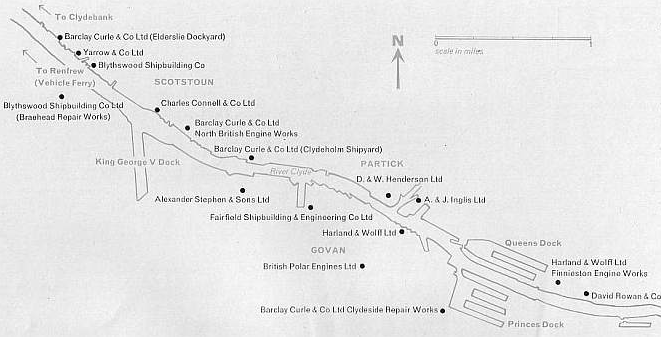
  9. If Scotland leaves Britain the Clyde and Rosyth would be in a foreign country to the Royal Navy, which has never built a warship in a foreign yard. So, er, what’s this MoD contract for ships that’s just gone to South Korea? When asked about that very decision, the MoD stated they place orders on quality, delivery & price.
  10. In today’s complex world we need strong defences at home and overseas. Time to wake up and smell the coffee. Your big £40 bn budget was no protection against 7/7. America’s $700 bn (!) budget and 15 carrier task forces were no protection against 9/11. Get your head out of the gunboat era.
  11. Additional thought: If the UK is such a good deal and Eire is now such a basket case, why are they not clamouring to come back into the fold?
  12. Final thought: If being in the UK’s so great for our defence business, how come Belfast’s Short Brothers got so little before being bought up in 1989 by the Canadian multinational Bombardier? Eat my shorts, indeed.

Shipyards on the Clyde BEFORE Labour Got Their Hands on Them

Posted in Uncategorized | 1 Comment