It’s the Economy, Stupid!

Some eight month ago, a blog called “Like Wolves at Lambing” cited a number of diverse sources all, at the time, agreeing that it wasn’t just an economic but a moral malaise that had gripped the country. While yesterday’s budget might have shown leadership in fixing both, the only comment that signposts the dark road that now lies ahead is the one used by Clinton when locked in a ritual spat with a hostile Congress. Any hope for insightful alternatives to Osbo’s ‘Osterity’ evaporated yesterday in a tired and spitefully personal riposte from Ed MIlliband, who offered little beyond recycled jibes from last year.

This is serious stuff: recessions come and recessions go but the last one this deep and long gave us the Winter of Discontent, the lowest fiscal ebb since WW2. Dig into that era of ridicule for the UK on a global scale and you almost immediately find an economy that had lost its way. Still full of bomb sites and out-produced by the US, the UK rediscovered a non-superpower role in the fifties and sixties that boomed, filling latent domestic demand, the echoes of global dominance in the colonies and old Allies like Portugal. But while buses in 1970 Lisbon may still have been from Leyland, all the taxis were Mercedes.

This and similar points like the obsolescence of Clydeside riveting technology in a world of welding was lost on the TUC. The growth of union power—an absolute godsend against appalling conditions in Victorian times—was boosted by humming factories, railways, mines, etc in the ‘You’ve-Never-Had-It-So-Good” sixties. But while Wedgewood-Benn waxed eloquent on the “white-hot heat of technology”, it was all delusion. Outmoded working practices, insisted on by unions, meant most UK industry could offer nothing of the sort. The US developed airliners and computers, Japan mass-produced chips and consumer electronics, Germany made cars and precision machinery, Korea made steel and built ships. The emblems of the era were the Rolls washing machine and the Austin Allegro: both British-made; both crap; both firms went to the wall.

By 1978, although there were good British designs and conscientious workers, strikes were endemic, inflation out of control and faith in the ‘establishment’ of most generations—including the elderly—thoroughly undermined. It took the brutality of Thatcherism to slap Britain out of its self-inflicted stupidity of class warfare and see that profits could make prosperity for all. But, just as untrammeled sixties wage demands scuppered the seventies, so untrammeled nineties financial greed did for the noughties: Blair was a willing bearer of the new on-yer-bike standards and Irn Broon’s much-cited Prudence was a whore to any industrialist with a bulge in his trousers.

It is a fault of most people that they will forgive and forget much as long as the dosh rolls in. Mobster molls worry more about splitting their prestige nails than who hubby iced to buy them. Every wheeze Canary Wharf dreamed up or pinched from the Caymans was good to go. It’s surprising that more blatant rip-offs like unnecessary loan insurance didn’t occur. Whatever the FSA was doing, it wasn’t its job. Junk mortgages may not have been invented in London but they wrapped ’em in ‘securities’ and traded the sanitised result with gusto anyway—with the ludicrously styled ‘investment banks’ to the fore.

In 2007 when the whole Potemkin village of global equities that were actually worthless came unglued, the hale clamjamfrey should have gone down the toilet because anything else offends logic, morals and common sense. Dragging bankers through the streets to be pelted with ordure might be extreme but NONE  were summarily fired and ridiculed for gross misconduct; most are still in the jobs and pulling down bonuses.

There is a kind of silent conspriracy among the press, politicians and the public just now to roll about in anguish at the present pain of austerity. But the previous quarter-century of increasing prosperity has made us forget what austerity really is. It is not holidaying in Mallorca instead of the Seychelles; it is not postponing replacing the Chelsea tractor for another year; it is not settling for a cheaper 42″ telly. We are not in austerity if we spend  £40bn on war we don’t need to wage or £169bn on pensions and benefits (£3,000 for every person) when much of that goes to people who don’t really need it. The UK now has 306,655 millionaire households—more than 1 in 100—but, worse than that, most of the other 99 envy that one above all else.

It’s typical of an old fart to bemoan sliding standards and muse wistfully how it once was so much better. But that’s not the point I’m making. The fifties were a time of scrabble and hardships that makes today’s circumstances of care for the vulnerable and elderly seem luxury by comparison. But the mentality has changed. Whereas then, people would look after those in their family in need, it’s now seen as the state’s problem. As few now know their neighbours as they once did, they’re quick to sue them or plant leylandias. If the size and opulence of your house is not now the main measure of your worth then your car or job is. This rather poisonous inheritance from Thatcher grew rather than diminished under Blair.

So, whereas in the fifties, remnants of the ‘Dunkirk spirit’ got people to work together to generate a mini-boom and in the eighties, the constricting dead hand of the work-to-rule was swept away by right-wing radicalism to give the most prosperity any of us have seen, we now have neither to fall back on. The cohesion of society through contentment with their lot has long since given way to ambition clueless about how that could be achieved, other than through the lottery and similar opportunism. If bankers get £1m+ bonuses for demonstrably being incompetent clots, why shouldn’t I?

And so the hope of diminishing the benefits bill is illusory if everyone has now lost their fifties ethics and will claim every bean they can—whether entitled to or not. The only hope is a real stimulus to the economy by the incredibly simple concept of making stuff that people want to buy, of adding value. Danny Alexander just boasted of over 1m new jobs in the private sector, as if that were the philosopher’s stone. But how many of those are stacking shelfs at Poundland or sweeping up at a hairdresser’s?

It may be we need even more years of this stagnation before enough of us admit that we have grown fat and greedy, that we wouldn’t last five minutes doing the jobs our grandfathers did, still less survive on their wages—even their inflation-adjusted wages. What we need, since the public now owns them, is for the government to have the guts to take out the senior bankers of RBS and Lloyds/BoS and shoot them—even if only figuratively. They might consider shooting the business and investment elements too.

They will then take over the banks and start providing serious loans to small businesses at ludicrously small rates (because that’s where the much-tarnished LIBOR has been for years) and they will keep doing that even after the economy picks up. It will send a shock through the financial establishment that, for once, the country means business and that no cow is sacred. There are a few ideas in this budget that complement that, such as the 20% help with deposit for first-time buyers and there will be need for many building services companies to reverse the stagnation in construction in order to build those houses. But farting around with 1p off beer is Nero fiddling while Rome burns.

For Cameron, Osborne and either side in Westminster are all clearly in thrall to the City. So the bad boys will continue to pull down fat seven-figure pay cheques, innovation will stall on the bureaucratic incompetent caution of their so-called ‘business’ managers and we will see real austerity when yuppies find themselves rummaging in the out-of-date bin at Tesco. Or you can take a look at a man like John Swinney, the banker-that-never-was, and ask yourself if you would not prefer a man like that—clear competence and bankerly judgement—to be in charge of the much easier financial recovery of an oil-rich state whose people are famed for their canniness wi’ the bawbees.

Posted in Commerce | Tagged | Leave a comment

Pushing the Patch

Though we’ve reached the Equinox, it surely feels like a long road to the end of winter. Normally dry East Lothian is underwater with its roads and fields flooded after a week of intermittent rain, capped by two days of Easterlies constantly lashing the place with sleety snow. This has driven anyone with sense indoors and farmers scrambling into difficult corners to help their sheltering ewes with lambing.

But I’m already thinking of summer.

With barely a week to Easter and the dawn breaking ever earlier, optimistic hearts are convinced this can’t last—the signs are all there: snowdrops in Binning Wood are almost past; crocus are nodding to each other in colourful crowds; winter wheat greening the otherwise mud-and-puddle fields; the first scouts of Spring’s great battalions of daffodils is already nodding to you. I gave a lift in from Tantallon Castle to a Malaysian and a Turkish German, so the visitors are already among us.

So, I’ve been thinking of the coming season and hoping against hope this summer is more than the miserable effort of the last couple of years. Because the North Berwick area really is getting its tourist act together. Quite apart from its year-round appeal to golfers and casual shoppers to its diverse and flourishing High Street, we’re getting to a nice critical mass of different reasons that bring people here. So it’s time to do a sales job on why the North Berwick area is a great place to visit—and not just because I’m setting up a business that hopes to capitalise on that.

Top attraction is the hugely successful Scottish Seabird Centre. Its remote cameras, displays/events and its boat trips out to the islands have brought over a million visitors and spread their visits through the year. Less popular but only because it is less easily accessible is the Museum of Flight, with its Concorde and the best aircraft collection North of Doncaster. Moving up in the popularity stakes are our two magnificent but very different medieval castles: beetling cliff-top Tantallon and stately, civilised Dirleton, both less than 5 km away. And if you like your vintage cars and thirties roadside memorabilia, it’s hard to whack the Myreton Motor Museum (if you can find it!). Not far away is the backdrop for your upstairs/downstairs fantasy to showcase them is Gosford House, the magnificent Palladian pile of the Earl of March & Wemyss.

All those are good value for the entry charge but a slew of other attractions in the area are free, like the garden centres at Merryhatton (bright & new, with a very popular cafe) or Smeaton (in old-fashioned greenhouses and walled garden, with a vegetarian cafe that is a delight for twitchers). Another Walled Garden is opening at Archerfield on Friday 22nd touting excellent food and a microbrewery to go with views of deer grazing by the lake. Archerfield itself, along with the Renaissance have been doing a splendid job of puncturing the fuddy-duddy image of golf, so loved at Muirfield, and bringing top-notch golf into the county year-round. But we’re all looking forward to both the US Kids Golf coming again in May and the Open itself in July. And if you don’t aspire to such championship courses, there are 16 others in the area to choose from.

But also hidden away around the area are a number of other destinations that, just because they don’t charge admission, don’t get the same degree of promotion or, as a result, the same number of visitors. The Flag Heritage Centre is tastefully housed in a classic old doocot behind Athelstaneford church. Tantallon Studios at Halflandbarns is always alive with classes, the stunningly creative pottery of David Cohen or the brilliantly atmospheric oils of his daughter, Kirsty. You can see some of their work in the local galleries, such as Westgate or Greens and Blues in North Berwick as well as lively ones in the neighbouring Gullane and Dirleton villages.

John Muir Country Park offers a variety of draws from family-oriented East Links Family Park,  through a fun-to-get-wet time at Fox Lake Wakeboarding on the south side of the Tyne estuary to the peace of Fir Links Woods and the endless beach at Ravensheugh. There is similar scope for exploration at Yellowcraig on the Nature Trail there and if you don’t want to laze on the beach gazing at Fidra, try Broadsands to the East or Stevenson’s ‘Hidden Coast’ to the West. In the middle of nowhere the former RAF buildings of Drem airfield are home to a wonderful collection of unique outlets, including solid furniture, an archery range, a model shop, carpet outlet and so on at Fenton Barns.

Want something more adventurous? Go watch for deer in Binning Wood or spot waders like grey heron in Balgone Loch or take a good pair of binoculars to Gin Head to watch 150,000 gannets have a good time careening around Bass Rock (best seen from one of the boats out of NB Harbour). In between there are plenty of spectacular houses to goggle at, including Tyninghame, with its immaculate and quaint planned village, restored Fenton Tower or Ballencrieff and the eerier ruins of Hailes or Redhouse.

In between, you’re bound to get peckish or need a cuppa. While North Berwick itself has a real range of cafes and restaurants, you won’t go hungry out in the country. The larger attractions have their own cafes (although castles don’t). That leaves you stuck at Tantallon or Hailes but Dirleton’s cafe is in its gallery (see above) and is popular with locals. There’s great food for such a small village at both the Castle Inn and the Open Arms literally a stone’s throw distant and both also do comfortable accommodation.

Aberlady boasts a good restaurant in Ducks at the Kilspindie but, apart from a couple of pubs, there is no cafe in the village. In Gullane, on the other hand, the choice is broad and evenly good. From the cosy Village Tearoom through the cheery good food of the Old Clubhouse, through the Golf Inn‘s fine hospitality offerings and Falko’s magnificently authentic German Konditorei to Greywalls with its superb Chez Roux dining. Its main culinary rival is the tiny La Potiniere, opposite the Golf Inn.

And, if you’re caught short out amidst the rolling greenery of our countryside, don’t panic: we have outposts of good food in the most unlikely places at least providing afternoon tea and hot soup. Whitekirk Golf Club does such a good lunch that the non-golfers outnumber the original purpose. Or try the Tyninghame Smithy (especially on a sunny day when you can sit outside) or the Fenton Barns Farm Shop (potato skins with salad is superb) and try not to buy too much of the wonderful fare in the shop itself. And for an especially healthy repast, try the cafe in the new Core Health facility just east of Drem. Once you get as far as East Linton or Haddington you are again spoiled for choice.

Because of the high desirability of living in the ‘North Neuk’, house prices haven’t suffered from the recession as much as elsewhere and this has meant we’ve lost a number of hotels and B&Bs because it’s hard to make a business case if you can sell for the thick end of £1m. North Berwick itself has lost the Blenheim House, Beach Lodge, Point Garry, Belhaven and Golf Hotels in the last decade. Other than what’s mentioned above in the villages, what’s still on offer (in rough order of price) are:

For a website that focuses on North Berwick, rather than the general surrounding area of the North Neuk, try the town website. And anyone reading this far who wants to get to know the area better might try the new area specialist tours being offered by my new business venture GoForth Tours.

Posted in Commerce, Environment | Tagged | Leave a comment

Not always easy to distill such heady and touchy concepts into digestible phrases but the Burd shows how it’s done.

burdzeyeview's avatarA Burdz Eye View

I read Alistair Darling’s essay for Scotland on Sunday on the benefits of the Union early yesterday morning and key passages gnawed away at me all day.

The final part of a very good series of essays, three for independence and three against, it gave a wearily familiar view of why Scotland should stay in the UK, one we’ve heard quite a lot of from Labour protagonists.  And no matter how well they turn a phrase, their argument amounts to little more than Scotland being too wee and too poor to go it alone.

But worst of all, it is an argument predicated on the past which offers nothing but warm words and vacuous reassurances for the future.

Darling argues that the financial crisis that faced the UK in 2008 was only resolved because we were all in the UK.  And he claims that this crisis – or at least…

View original post 1,276 more words

Posted in Uncategorized | Leave a comment

King Coal Grinds to a Halt?

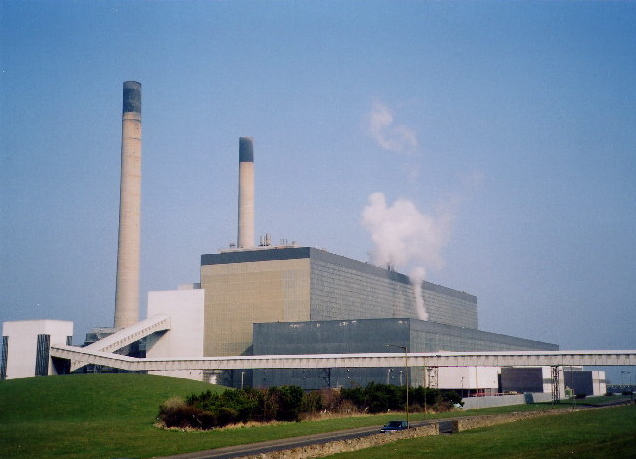
Friday wasn’t just the Ides of March; it was also the last day of operation for Scottish Power’s Cockenzie power station, seen variously as the last holdout of Scotland’s age of mighty manufacturing, or as a horribly visible eyesore, or as the single most polluting chunk of industrial gear in Western Europe, depending on your view.

What is clear is that it belonged to another age, when the Clyde still rang with rivets, virtually all power stations—not to mention railways, ships and half the economy—ran on coal and still days in cities produced pea-souper fog that made your eyes smart and you couldn’t see five yards—caused by soot particles from a million coal fires belching smoke from a million chimneys.

Despite this seeming ancient history, ‘Cockenny’ wasn’t that old. In 1961 when Preston Links (one of Prestonpans two big deep mines) closed in response to a steady drop in demand for coal, the site was earmarked for a new power station. It replaced several smaller, ageing coal stations, such as the one on the shore at Portobello (where the five-a-side pitches now are).

Deigned by the architect Sir Robert Matthew, the 24-acre site is dominated by its 50m-high rectangular main building, housing four identical 300 MW generating units, giving a peak supply capacity of 1200 MW. Each unit consists of a steam boiler driving a large generating turbine and the boiler exhausts paired into two 100m-tall chimneys. The key heavy electrical equipment for the station was manufactured by Bruce Peebles & Co. in Granton (put out of business by a major fire in 1999). Ash left after burning was piped along the shore as slurry to reclaim land in four lagoons on the east side of the Esk estuary. As a result of this, large numbers of waders, gulls and duck now use these lagoons as a high tide roost site, particularly the lagoon nearest to the river mouth.

It was located there originally to be supplied to the station directly from the deep mines of the nearby coalfields, especially the Monktonhall and Bilston ‘superpits’. Both were closed by the mid-’90s and subsequent coal supplies came mostly from open cast mines, including the local Blindwells and as far away as Australia. The power station was the first to use the “merry-go-round” system of coal deliveries by trains of hopper wagons carrying 914 tonnes of coal each train.

Cockenzie Power Station with its Coal Feed Conveyer and twin 100m-tall Chimneys

A Youthful Cockenzie Power Station with its Coal Feed Conveyer and twin 100m-tall Chimneys

Initially operated by the nationalised South of Scotland Electricity Board, it was taken over by Scottish Power in the 1991 privatisation of the industry, then bought for £12 bn by Spain’s 2nd-largest power company Iberdrola in 2006. In 2005 a WWF report had named Cockenzie as the UK’s least carbon-efficient power station, in terms of carbon dioxide released per unit of energy generated.

For almost half a century, it was a pivotal part of Scotland’s energy but, with Torness coming on-stream in 1987, the two nuclear plants generating a steady 2.6GW between them provided the 24/7 base load needed. This meant Cockenzie became more of an auxiliary generator, to be switched on and off as demand required. In its peak year it burnt 1.5m tons of coal but, after the damning 2006 WWF report, its life was proscribed at a certain number of operating hours, to be completed before 2014.

On Friday, the clock ran out.

Many people in the West of East Lothian, will mourn its passing. To them it was a symbol of mighty engineering and ‘man’s work’—a last link to the mining tradition of the area. But, like Ravenscraig, Linwood or Kinlochleven, the era of heavy engineering as a major component of the Scottish economy are long past. And though Iberdrola has plans to put a gas-fired station on the same site, that looks doubtful: the financial situation in Spain is worse than here and people question why a rich chemical feedstock like natural gas should be simply burned.

More important is the opportunity cost of allowing it to continue as a power station. When built, it was surrounded by the industrial landscape of the oldest worked coalfield in Scotland. Now it is surrounded by houses and is a huge blot on the otherwise scenic and tourist-attracting Lothian coastline of the Forth. An idea being punted for a cruise ship and ferry port to replace it could be a far bigger—not to say more attractive—money-spinner.

If that were augmented by a yachting marina and redevelopment of the neglected Presonpans shoreline, a linear park linking Musselburgh lagoons with Longniddry Bents could become a recreational attraction. Visitors and Edinburgh residents would put Prestonpans back on the map and put North Berwick current modest success of  into the shade.

The Last Coal Trains at Cockenzie Coal-Handling Plant (© Phil Rider)

The Last Coal Trains at Cockenzie Coal-Handling Plant (© Phil Rider)

Posted in Commerce, Environment | Tagged | 1 Comment

An Eventful Day

It is a delight that East Lothian now has its own university and a shame that I take so little advantage of that fact. But on Tuesday, I took an opportunity to sit in on Prof. Joe Goldblatt’s class on Event Management at Queen Margaret University. The occasion was a guest lecture I had heard about by Prof. Richard Aaron of Georgetown University (Washington DC),

What impresses me about QMU is their pragmatic choice of subjects, among which is Event Management—one of those areas of endeavour like Apps writing that nobody even knew about a decade ago and thousands of people now make successful careers from.


In the hands-on manner of this kind of academia, Prof. Aaron is also President of Bizbash, a New-York-based business that tracks and publishes the methodology and key players behind successful events, such as the Superbowl, Oscars, etc. His lecture was entitled “Breakthrough Ideas for Your Career”.

Home Page for Professor Aaron's Bizbash Business

Home Page for Professor Aaron’s Bizbash Business

In such a dynamic field, the whole area could be dismissed as a ‘fad’, much as Political Marketing was in the noughties, proving to lack sufficient ‘weight’ to be taken seriously by mainstream academia. It would not be the first time that American academics have invented whole new careers for themselves on the periphery, but that it has never been taken up by heavyweight/mainstream academia, such as the Ivy League colleges.

More likely, given the proliferation of professional organisation of events round the world and the corresponding escalation of complexity, cost and specialist experience, it could be that Event Management will establish itself like Hospitality as a professional discipline that now requires professional qualifications to enter the business at its higher levels.

Richard Aaron presents himself as something of a guru in the field and the lecture was peppered with a series of thought-provoking statements, such as:

  • great events come with a background of theatre
  • great events clearly have a purpose—they are not just parties
  • there are now over 120,000 events professionals, world-wide
  • event design and production is more complex than theatre staging—but uses many of its techniques

He regards a good event organiser as a “Memorologist”—someone who creates an experience so memorable that it stays with people long after the original experience is  past. In Aaron’s view, every great event starts out with a clear vision of what is required: how the event needs to ‘look’; what long-term outcome is the principal goal; a plan to engage the audience in a striking way; ideas how to create a lasting impression, a ‘wow’ factor.

He cited a number of examples, such as a Motor Show where guests could actually get into 4WD vehicles in a large sandbox and drive around, with a similar toy tay arena for kids, or Target’s launch of a new clothing range actually consisted of the models abseiling down the building onto the outdoor catwalk, or the press conference for the film “Day After Tomorrow” where the media were each given cushions to sit on the blocks of ice being used for seating.

Perhaps the most important lesson I took from the lecture is that you don’t have to be doing the Grammies and working with a budget of millions to make an event memorable. It would seem techniques from advertising are equally applicable (c.f. Apple’s famous 1984 ad during that year’s Superbowl half-time). Successful events can have considerable knock-on: New York’s Fashion Week is so successful that the clothing stores of the city now hold their own series of specials in the week prior.

Joe Goldblatt (l) Makes a Presentation to Richard Aaron (r)

Joe Goldblatt (l) Makes a Presentation to Richard Aaron (r)

What set me thinking was the extent of local applicability. Prof. Aaron used an idea I had originally heard from Joe Goldblatt—that a huge opportunity for an event exists in Edinburgh. Since Disneyland’s most popular ‘land’ is currently Harry Potter and Hogwarts exists more in Heriot’s School and J.K. Rowling’s local perambulations than anywhere else, why should Harry Potter not become Edinburgh’s fifteenth festival?

As for East Lothian currently, the presence of the Open this year would appear to have missed a trick to make it more than a functional—if professionally run—golf contest. It is an ‘event’ by default, but not by intent. The R&A may know about the mechanics but the relatively remote rural locations in which it is staged is a blank canvas upon which a vision and identity could be stamped. Thousands are brought to one place for one reason, without considering how to create memorable components for those thousands from the long summer evenings once the golf is done for the day seems an opportunity lost.

A theme throughout the lecture was one of sustainability, by which he seems to mean that it’s easy to throw money at events but that booking the priciest caterer and venue is not necessarily the hallmark of a brilliant wedding planner. More than anything, this served to convince me that Aaron and his colleagues are not just peddling more American razzmatazz but may actually have conceived a field of study with substance. As with plays or films or advertising, the world has become so sophisticated that a professional discipline for events is required too.

In East Lothian’s we already have a number of occasions like the Open and just need to work out the basis of growing them into class events that enhance the experience and benefit the local economy and quality of life.


Posted in Commerce, Education | Tagged | Leave a comment

Mining the Chalk Face

Monday saw the publication of a report much anticipated in parts of the education fraternity but which largely went unnoticed by anyone else. This is a pity. The independent think tanks CSPP and Reform Scotland had joined forces to create a Commission of School Reform. Chaired by the former Director of Education in Clacks, Keir Bloomer By Diverse Means: Improving Scottish Education is the most pivotal contribution to the debate since the McCrone Agreement over a decade ago—probably more so, as it debates educational theory rather than terms and conditions for teachers.

Set up in November 2011 and consisting of 14 others with varied backgrounds in and around education Scottish, the Commission has produced 125 pages detailing how they find its health and, finding a mixed picture, make 37 recommendations how that state of affairs could be improved. Since their intermediate draft report came out last year, there has been some discussion of their proposals and the main parties at Holyrood have made positive noises about it but it looks as if this is going to be kicked into the long grass.

Which is a shame. First of all, Scottish education is not in the glowing state that those with a vested interest in it still maintain. While exam results continue to improve, no-one has yet proved that this is not ‘exam creep’ where it is in everyone’s interest—pupils, schools and examiners (who are almost all teachers) to look good. This is countered by significant numbers of primary pupils entering high schools effectively illiterate, innumerate or (worst of all) both, which nocks on into universities and employers complaining that new recruits need remedial courses before they can do their jobs.

That it is not entirely to do with the deprivation cycle that most apologists bang on about is emphasised with data on destinations for school leavers in East Lothian also published this week. The two schools covering such areas of deprivation as East Lothian has (Preston Lodge and Ross High) are improving in both pupils sent to university and those achieving ‘positive destinations’, totaling around 92%. Yet Musselburgh Grammar, the biggest school in the district, languishes at 83%. That translates into fifty Musselburgh ex-pupils in who are NEET (not in education, employment or training) and therefore kicking their heels and getting the worst start in life we could give them.

This is compounded by industry’s inflation of qualification requirements for new hires. SInce there are many unemployed graduates, they ask for degrees. Shelf-stacking and other such tasks does not need a graduate, but it avoids the need to train. At the same time, it removes once-plentiful relatively menial jobs from the less qualified who would use them to brush up their training, work their way up the ladder and generally keep themselves out of the clutches of the burroo.

The report sticks to things educational and academic and avoids commenting on the difficult socioeconomic background in which it operates these days. So, while it makes positive noises about the Curriculum for Excellence and encourages teachers to be more independent in their manner of teaching, it makes little reference to the role of society, most especially parents, in the equation. Whereas a good number of middle class parents are deeply (some would say obsessively) conscious of the key role a good education plays in many prosperous careers, this is not generally shared by those not in professional jobs.

The report makes little mention of the cultural context but even a cursory study of Asian, especially Chinese and Korean families shows a very high level of encouragement and support—in vocational as well as academic disciplines—that push their children to achievement in a manner that makes best use of their skills, rather than conforming to some fixed academic standard (c.f. school ‘league tables’ that feature so much in parental evaluation of schools here).

What the report does articulate is the pivotal role of early years. It is centuries since the Jesuits first coined the phrase “give me a boy until he is seven and I will show you the man”, so ably demonstrated more recently by Michael Apted’s brilliant series of documentaries “Seven Up”; “Fourteen Up”; etc. Western society, especially since the industrial revolution has largely attempted to fix education shortcomings later on and Scots have been particularly thrawn in avoiding languages until pupils are in secondary ad wondering why we are so poor at communicating with Johnny Foreigner unless he/she speaks English.

However, as both nursery and primary school teachers are overwhelmingly women and the vast bulk of officials and union  representatives aren’t, little debate is heard from this vital sector of education while much focus descends on the relative importance of subjects taught at secondary level, where men predominate. This may explain why the main teaching unions have such an antediluvian attitude to what matters in education—endless fixation on hours worked and prep time and perceived status and/or privilege appears to be of far higher priority in any negotiations than useful and uniform universal education and how it might be achieved.

Indeed, the worst criticism I could make of the report is the total absence of any obvious participation by any of the teaching unions—the ATL being an honorable exception but not representative of teachers in Scotland. In this, it is difficult to blame the Committee because the main teaching unions are habitual in their affection for the militant attitudes that blighted seventies Britain and in their apparent disinterest in contributing to real advancement in education. If the EIS or SSTA or any other major union has ever made thought-provoking proposals how to put our youth at the pinnacle of world education, then I must have missed it in the flurry of wage demands, conditions complaints and the ever-burgeoning pensions burden on which they fixate.

Which truly is a shame. The report makes a big play of redoubling efforts to support education in areas of deprivation. But that is really code for engaging parents in those areas where children face their education with little or no support from their parents. Throwing money at they problem through welfare and benefits appears to have not only failed in that laudable aim but has created a permanent underclass and damaged Glasgow’s well earned reputation as a place where world-beating things happen. Whether more welfare will help kids seems dubious, although early years work may prove the exception.

But what point is there to engage parents when teachers are encouraged by their unions to be clock-watchers? What message does it send to young minds when after-school activities are curtailed because it’s lousing time? An, with many of our schools now in PPP hands, even parents organised enough to take up the slack face ludicrous charges to use these public facilities that lie empty between 4pm and 9am and deserted for 200 days in the year?

I have yet to hear a coherent explanation why Health & Safety paranoia bundles our kids into superheated rooms at the first snowflake while Swedish 4-year-olds are running about in the snow and bouncing off trees in outdoor kindergartens. Worse yet, I have yet to hear a teaching union official aspire to propel their pupils to the top PISA ratings—as Finland does. Maybe it’s because a Finnish teacher is on 80% of the wage of a Scottish one. What compounds that obduracy is Finnish teachers have neither curriculum nor HM Inspectorate to contend with; they teach as they think best—and best is what their pupils come out as. Is that not something for our ‘professionals’ should aspire to?

The report does refer to such radical examples as given above, even though no real reference is made to teaching staff who would be pivotal (less not assume obstructive) in such changes. And, as such, it provides a good basis to advance the debate. But unless teachers stop believing they are as hard done by as their unions claim and start to assert the level of professionalism they claim they deserve, Scotland will slide because standards will slide because those with an interest (teachers, pupils, government & unions) all want a good news story. Exam results up? Everybody’s happy.

Except the employers appalled at standards of numeracy and literacy and the one-in-five youngsters who find themselves unemployable and are thereby condemned to provide the next generation of unemployable. It’s in all our interests for those in education to crack this cycle of denial that sometimes verges on self-interest. This report represents a well intentioned start.

But all the story we get from teaching unions is a hackneyed version of the emperor’s clothes.

Posted in Education | Tagged | 2 Comments

Mea Culpa

Thursday was a busy day. I was up early and on the train to Aberdeen en route to Banff to pick up a vehicle. As ScotRail has yet to enter the 21st century and provide power sockets or WiFi on their dinky 3-car ‘express’ trains between Scotland’s two economy-driving cities, I was, as I often am, using my iPhone to catch up with the world via Twitter.

After having a couple of go’s at RBS for hosing unjustifiable bonuses around (£607m) while making the fifth—and biggest—loss of the last five years (£5.17bn) with 80% public money, I was becoming angry at such ineptitude. My mood wasn’t softened by four oil workers having a noisy bevy around the table across the way and a particularly whiny kid squalling its way through any bribes tried off the tea cart. I then saw a Tweet from the Better Together lot which said:

We will also have a stock of our new leaflet which has Scots saying why they think we are stronger in the UK. #G2013pic.twitter.com/JlCi77pzHS

Those who know me will recall it takes little to rouse me. They will also recall that my mode of communication when roused tends towards the provocative. This is not a trait of which I am particularly proud and I do try to rein it in on those occasions that demand it. This was one such occasions but checks-and-balances failed me and did not kick in. As a result, at 9:48 am, I tweeted in response:

@UK_Together Do you have equivalent quotes from abused women saying why they don’t need a divorce or slaves happy on the plantation, Massah?

It was only when the responses came pouring in that I realised the extent to which I had aroused indignation and had wholly misjudged how such statements would be taken. Some of the responses were reasonable and measured, such as:

@DavidSBerry do you think such racially charged language reflects well on supposedly positive anti-uk campaign? #indyref#bettertogether

which gave me an uneasy feeling and set me to thinking, albeit too late. Some of the responses were personally abusive and I normally discard such opinions of people who don’t know me well enough to insult me. But, most importantly, a number of responses were both angry and articulate about me exceeding the bounds of taste to an extent that oversight could hardly excuse. These I took so seriously that at 11:04 am I tweeted in general:

In view of strong response, my original comments seem excessive. I withdraw them and apologise if I caused offence.

and to the more moderate and reasoned responses, such as the one cited above, before noon I replied along the lines of:

@AnthoCu86 Was not intended to be racially charged; several people took it as such, so I have withdrawn the original comment and apologised.

To anyone reading this offended by my original remarks—or any unaware then but outraged now, I offer my apologies and recognise that my statement went beyond the bounds of impish provocation and could be interpreted as insulting to abused women and/or slaves, especially in terms of the intensity of their personal suffering.

Despite over 5,000 tweets over more than two years, my propensity to push the envelope of debate, conspiring with an unreasonable temper if my sense of right is roused, had not generated anything more than some lively debates to date. Indeed, few of them had become acrimonious and almost all  ended in chivalrous acknowledgement of the other side and a tacit agreement to disagree. Despite my (continued) unquenchable belief in Scottish independence, I am happy to acknowledge that many were with equally diehard No/Better-Together/Unionist campaigners who have thereby earned my respect: we are all Jock Tamson’s bairns and we have an honest debate ahead of us.

But I see, in retrospect, that this went far beyond such debate. Despite my relative experience on Twitter, this was a major faux pas, for which I take full responsibility. The only good to come out of it in my view has been twofold: a roll-call of correspondents I imagine I must now list as diehard enemies, so immoderate and condemnatory were their missives and; a sharp lesson on social media etiquette that I should tape to my computer monitor and recite daily before I switch the thing on.

And it leaves some serious questions for me to answer to myself and for which purpose I am taking this weekend to sift potential answers through my mind. I am, socially, not a chatty type but I am, in politics, an outspoken person. My rather stern mother taught me that honesty trumps diplomacy, which has set me at a lifetime of odds with the traditional English stiff-upper-lip and with Kelvinside rictus of politeness-at-all-costs. That is one reason why I like American/Australian straightforwardness and tend to laugh at the language codes in everyday use in business and politics today.

In that spirit I considered, and then rejected, the idea of deleting the offending tweet. It was a balance between giving further offence and the honesty that, however misguided, I had indeed posted it and the matter would best come to its conclusion without any attempt to sweep it under the carpet. That wasn’t an easy choice. Being in hot water is not  a new experience for me but offending a number of people—especially when there was no intent to offend—certainly is.

So far, so noble; but what then when such lofty principles overstep the bounds of decency and get me rightly pilloried? It seems that I may have brought the party of which I have been a loyal member for 36 years into disrepute—still worse, damaged the cause of independence to which I have dedicated these last 20 years. The party was swift to (rightly) distance themselves from my original statement and I have had no pressure from them since to take any particular action. Nonetheless, I will be considering what, if any, action on my part now would constitute the most appropriate way of making amends.

Posted in Uncategorized | Tagged | 5 Comments

theSPACE: to Infinity & Beyond

As an elected representative of the community dealing with the inevitable large bureaucracy of large organisations like councils, the Serenity Prayer is a good thing to keep by you for those times you get baffled by procedural requirements and want to pick people up by the lapels for all the right reasons.

SerenityBut then there are others who operate in that same environment and yet, when given nothing but lemons, manage to produce refreshing quantities of lemonade.

One such gravity-defying, pencilneck-evading operation in whom I am in awe is right in my own backyard—actually in a disused factory just up the road.

theSPACE is the brainchild of Adrian Girling, a quiet spoken, intense guy who has not yet quite escaped the grunge style of his teenage years and who, had fate been tweaked just a little, would probably have wound up an evangelist or a poet. But from a prototype first done in East Linton a few years ago, Adrian has conjured up, with the help of local youth, willing volunteers and his own persuasive tongue, possibly the best community facility oriented towards 3-to-30-year-olds you could imagine.

Starting off as a shell of a condemned industrial building that had once hand-crafted Ben Sayers golf clubs and that he persuaded local developers to lease him short-term, he begged borrowed and stole tons of timber and top-quality plywood that he then persuaded a large number of local teens to craft into East Lothian’s first indoor skate park by themselves. theSPACE was radical, innovative and (more importantly) cool, something the council—even with tons of money and the best of intentions—could not have managed in a month of Sundays.

This blog introduced this new facility over a year ago and it has fulfilled almost everyone’s hopes for its success. But, not content with that, in the interim, it has branched out into providing other facilities that are being embraced by the community. These include music rehearsal and recording rooms, a huge soft play area that has proved a big hit with mums with younger children and a cafe in a part of town that had none.

Because it was built by skate aficonados, it now attracts serious skate park users not just from the county, as was hoped, but from as far away as Berwick and Dundee. Solid social partnerships are now forged with the local High School, Drama Circle, Community Development and even the local Rowing Club by providing them the space to build their third dory. It seems very modern that some 30-year-old is skating radical in the same building that his wife has their happily bouncing around the soft play area.

Bottom line is all this usage by grateful people gives a buzz about the place. Even from a hard-nosed beancounter perspective, it’s a success: about a dozen full and part-time staff, similar number of school-age volunteers, all putting some £400,000 into the local economy in its two years of operation so far. And what’s more: it washes its face. While there have been grants secured and almost everyone involved round about has been helpful, its success has nonetheless been achieved by appealing to people so that they want to use its facilities; they take ownership and so add to its success.

The fly in all this cheery ointment is that the lease is up in less than two years; they need a permanent home. To find several hundred square metres of cheap industrial space is next-to-impossible as there is none in town and the operation now has such a positive and supportive clientele that moving elsewhere doesn’t bear thinking about. While there would be some options approaching the North Berwick Trust to see if any development along Grange Road might accommodate them, any such development and any related expansion of Law Primary across the Haddington Road would not be for years and so don’t offer a solution in either.

It would be criminal to let such an valuable, community-based and -supported innovation as theSPACE to run off a cliff for want of some land on which to make its popular presence permanent. It does seem that the Council is primarily on the hook here: most local authorities would give their eye teeth to create such a well targeted and run facility, let alone have one develop organically in their midst. The Community Wellbeing department has done what it can to help and the local Common Good fund has chipped in with 5-figure amounts of cash.

But what theSPACE needs—indeed has earned and deserves—now is some pro-active pro bonum work by the Estates and Planning, some seed capital and assistance in securing grants and the donation of a piece of local land to which they can transfer. At the local CAPP, the drop in nuisance statistics speak for themselves and this positive effect is being seen as far away as Musselburgh as youth from other areas travel here to benefit from facilities they also see as ‘theirs’—responding as the local kids with positive behaviour.

And once this major hurdle is overcome, the next step is to solve the transport problem that makes it hard for Dunbar, Haddington and East Linton youth to access theSPACE in the evenings because of the absence of buses—and not all mums have cars and are prepared to play chauffeur on a regular basis.

But if you haven’t visited yet, go. Watch the older teach the younger skate techniques and how solicitous everyone is when they slam into each other; listen to the happy mayhem of a dozen toddlers in the play area and the detectable boom of a bass as a group rehearses. Pay particular attention to the young volunteers learning to run things, handle cash, hold down a job, deal with people.

You want to see young people from 3 to 30 given a chance to shine? Get on up to theSPACE and watch it boldly go where no community facility has gone before.


Posted in Community | Tagged | Leave a comment

Cometh the Hour, Cometh the Wrang Yin

Most media are carrying fulsome obituaries of the former Scottish Secretary of State for Scotland Bruce Millan, who has just died at a ripe age of 85. Tribute to him was paid by Lord Foulkes of Cumnock, who said: “Bruce was someone of whom the Labour Party should be very proud. He was a great public servant and a very modest man.” Leader of the Labour Party Ed Miliband said: “Bruce Millan dedicated his life to service of our country and the Labour Party. I am very sad to hear news of his passing.

A man clearly popular and respected among his colleagues, he was also someone able to balance life and career and his family has articulated their gratitude for his ability to do that among so many careerists. But, while acknowledging this achievement, accepting the sincere praise of his colleagues and reluctant as anyone should be to speak ill of the dead, I assert that he was, nonetheless, a disaster for Scotland.

He served under the legendary Willie Ross as Undersecretary of State for Scotland in the Wilson governments 1964-70, a pivotal time when Scottish heavy industry was under growing international competition and the Labour government was convinced that the mines, shipyards, steel mills etc that provided the economic lifeblood of the Central Belt (and therefore of Scotland itself) would nonetheless provide in the future as they had in the past.

Fifteen years Ross’ junior, Millan did not make waves around so strong a personality. Ross, in his turn, was given pretty much a free hand by Wilson. It was on his watch that the many ambitious social projects, including rehousing thousands in tower blocks, the provision of estates like Castlemilk and the clearance of the Govan slums took place. Millan represented Craigton, which became Govan in 1983.

It was also a time of major public investments in the new deep mines (Monktonhall, Longannet) with revolutionary fluorescent lights, underground railways and multi-storey cages promised efficient extraction of vast quantities of quality coal. Ross and Millan were not responsible for the building of the Bathgate or Linwood car plants, nor even the Ravenscraig steel complex, but they did push the Hunterston ore terminal and state-directed infrastructure like the now-defunct Kinlochleven and Alness bauxite plants.

Journalist Andrew Marr called Ross “a stern-faced and authoritarian Presbyterian conservative who ran the country like a personal fiefdom for Harold Wilson“. He opposed the 1975 referendum on Europe and coined the phrase ‘Tartan Tories” to insult the SNP. An example of ‘Oor Wullie’s’ titan status and his dismissive handling of mere mortals who dared to challenge him comes in a exchange from March 9th 1966:

Mr Gordon Campbell (Moray and Nairnshire) asked the Secretary of State for Scotland what effects the re-programming of investment by departments will have on his estimates for public investment in Scotland in the current year contained in paragraph 372 of the White Paperon the Scottish Economy, Command Paper No. 2864.

Mr William Ross (Kilmarnock) None, Sir. The estimates in the White Paper took full account of the effects of the policy which was introduced on 27th July last year and is now being continued in a more flexible form.

Mr Gordon Campbell (Moray and Nairnshire) Does not that mean that either the Chancellor’s statement on 8th February was a sham, or the figures in the Scottish White Paper which was published earlier are entirely meaningless?

Mr William Ross (Kilmarnock) No, Sir. I think it means that the hon. Gentleman is not capable of comprehending what was said.

The state direction of the economy, of which the Wilson government was particularly fond, ignored the rising threat of Nissan/Honda/Toyota to the likes of Linwood and Bathgate, the cheapness of Australian open-cast coal and the Daewoo or Samsung shipyards in Korea that were building cheaper, welded-hull ships while the Clyde was banging in another billion rivets.

But when Wilson—ever the canny politician—realised the dubious direction in which his decade of pseudo-socialism had led things: three-day weeks; constant strikes; an IMF bale-out; a deteriorating balance of trade, he resigned, handing the whole mess over to ‘Sunny Jim’ Callaghan. As his acolyte, Ross went too, leaving the far more mortal and human Millan to fill his shoes.

It’s fair to say that it would have taken a Titan bigger than ‘Oor Wullie’ to have  fixed the Scottish economy in 1975. Not only were all the traditional heavy industries going to the wall (and few could have foreseen how completely they would disappear) but neither of the economic boosts from North Sea oil nor ‘Silicon Glen’ were yet making any significant difference. If once imperial Britain had lost her way, then Scotland was already in the woods and disoriented and without a compass too.

It was a time for bold leadership, for thinking the unthinkable, of thinking out of the box, or whatever glib management-speak you want to use. But Bruce Millan, for all his undoubted attributes, could not provide any. He was a good and loyal apparatchik. And, as long as Callaghan thought he could negotiate with the unions to stop spiraling wages and inflation that set off further rounds of strikes, Millan wasn’t the man to rock the boat. So in 1972 £1 could buy DM8. By 1977, it was DM4 and the German economy was roaring ahead, derisive of this ‘English disease’ of strikes.

Could Millan have done more to take a different direction within a Labour Scotland? He could have tried. But that he did nothing more than turn the handle 1975-1979 is reprehensible. His main achievements appear to be to approve Torness nuclear station and to open Glasgow Royal Infirmary. With no Scottish Parliament and the ‘football team’ of 11 SNP MPs snapping at his heels, his department was Labour’s main political weapon to fight them off. In one of his few weaker moments Ross had confessed to Winnie Ewing: “It’s not the eleven wins that frighten me, Winnie, it’s your thirty-five second places“.

But, when that threat resulted in Callaghan scheduling the 1978 Referendum, most of Scottish Labour, including Millan declined to join the ‘Yes’ side, despite Home Rule for Scotland being part of the Labour Manifesto since before WWI. During the passage of the Act, the MP for Islington (of all places) amended it by adding a further requirement that the approval at the referendum be by 40% of Scotland’s total registered electorate, rather than by a simple majority.

Leave aside that half the House of Commons would not have been elected if this had been applied to them, Millan the viceroy in charge of the country in question, made no protest, didn’t stmp his foot, charge into Callaghan’s office or show the least outrage—meaning the amendment stood. This resulted in the only election in British democratic history where a clear majority voted ‘Yes’ (51.8%) but the minority who voted ‘No’ (48.4%) won on a turnout of 64%. Note this is considerably more than ANY turnout since devolution.

Say what you like about independence, everyone but the Tories spent the next 20 years arguing for at least some form of Home Rule and that Labour is still outraged that the SNP got angry enough to bring down the staggering Callaghan government as a result. Millan continued on in a Shadow role but no-one was paying attention to Scotland any more. Despite promises from Sir Alec Douglas-Home to vote ‘no’ and get a better deal from the Tories, Thatcher’s arch-unionism made a cruel joke of that and the focus moved to the Falkalnds and the Miners’ Strike.

Perhaps it is symbolic that when the by-then-senior but still-invisible Bruce Millan took the Chiltern Hundreds in 1988 to become an EU commissioner that the resulting by-election in his Govan seat lost it to a barnstorming campaign from the SNP’s Jim Sillars, husband to Margo who had taken it fifteen years before. Though there is no doubt of Millan’s humanity, nor of loyalty and dedication to his party, it could be fairly claimed that the present demise of Labour in Scotland has its roots in the rudderless post-Ross years when his hand was on the tiller of Scotland at decisive times when courage and action were needed.

And he effectively did nothing.

Posted in Politics | Tagged | Leave a comment

Sometimes You Just Need Balls

I’m sure that it has never bothered Ed that the two of us disagree on so much. I didn’t like the cut of his jib when he was in the Westminster shadow of Irn Broon. That dislike went steeply downhill from there when he brought his fiscal sleights of hand, so assiduously learned from his master while at HM Treasury, into Labour’s front bench. I thought ‘achievements’ like the windfall tax were deceitful, especially given the plight of pensions since.

So, when the other shoe dropped on the UK’s rating in financial circles from the hallowed Aaa to Aa1 in Moody’s eyes, I had expected to be equally appalled by Balls’ response to this as I am by Osbo dropping the ball in first place, especially as the 2010 Conservative Party General Election Manifesto made safeguarding Britain’s credit rating “the number 1 Benchmark for Britain”.

But Ed’s press release is measured…and spot on.

“It would be a big mistake to get carried away with what Moody’s or any other credit rating agency says. Tonight’s verdict does not change the fact that the credit rating agencies have made major misjudgements over recent years, not least in giving top ratings to US sub-prime mortgages before the global financial crash.

“But what matters is the economic reality that the credit rating agencies are responding to. Moody’s themselves say the main driver of their decision is the weak growth in Britain’s economy. Their judgement is in response to nearly three years of stagnation, a double-dip recession, billions more borrowing as confirmed this week and broken fiscal rules.”

Again I’m sure Ed doesn’t give a rat’s toss what I think but I agree with him that, in the upcoming Budget, the UK government needs to face facts that their approach has failed to kick-start our flatlining economy. Without real growth or massive spending cuts, there will be no mechanism to get the deficit down. And I share Ed’s suspicions that David Cameron and George Osborne will fail to put their political pride aside in the economic interest. Otherwise, the UK faces more long-term damage and pain for businesses and families.

Such unpleasant reality is not easy to deal with. I agree entirely with Ed’s summation: “The issue is no longer whether this Chancellor can admit his mistakes but whether the Prime Minister can now see that, with UK economic policy so badly downgraded in every sense, things have got to change.” Except that there is one positive alternative beckoning for a coherent subset of the 60 million people in what was once the world’s dominant economy but has been brought to this sorry pass who need not thole much more of this economic tragedy, this century-long decline they continue to suffer.

That coherent subset are the Scots. In 20 months they, uniquely, have an opportunity to make a change of their own. And, while I wish our English cousins no harm, they have been in the process of dragging a buoyant and fiscally healthy Scotland with them on the long slide to third-class status in the world. They fail to see that it’s not membership of the Security Council or ability to nuke Teheran into dust that matters in the world.

As Singapore or Switzerland—never mind Scandinavians—will tell you: money makes the world do round and not only buys you friends in global terms but provides you with a decent class of enemy. All those ‘small’ places have clout in the world AND, what is more to the point AAA ratings from Moody’s. Ed omitted to mention that, or the alternative open to Scotland to bale out of this ongoing fiscal balls-up and join them.

What guarantee do Scots have that becoming a normal country will lead to sunlit uplands of prosperity for all? None, But consider five key points on Scotland post-independence:

  1. Scotland would start with a £60bn per annum oil business, plus a booming renewables sector, world-class reputation in marine engineering, £4bn in whisky exports and a food, drink and tourism business that puts Swiss chocolate to shame.
  2. Despite alarmist puffery from unionists, the EU would welcome Scotland as a member because we’d be net contributors and can supply the energy that now-anti-nuclear Germany will need as she runs down her nuclear generation. We’d also get to join the Nordic Union, the most affluent and understated force for good in the world.
  3. Not only would England be unable to stop us keeping the pound but, if sensible, they would co-operate. The present run on the pound (vs $ and €) is just the start. While Scotland, with its relatively larger exports, would benefit from a relative devaluation. England alone would head for a Weimar inflationary nightmare.
  4. Though Scotland would shoulder the result of UK fiscal mismanagement in the shape of a debt share currently passing £65bn, by using oil revenues and cutting defence from our current £3.4bn share to under £2bn, that could be not just handled but paid off within 30 years. This would transform our present debtor position to one like Norway where we could build a national fund as an insurance policy for the future.
  5. As a small, prosperous country on the edge of Europe, we would have the advantages currently enjoyed by the Scandinavians, Ireland, Iceland or the Baltics, ALL of whom are doing better financially than the UK. Plus, as a major energy producer and exporter we’d have an Aaa rating like all the Scandinavians. And if we got our banks back to their former canny rectitude, Edinburgh would recover as a financial centre.

But all of that is not given. As with any opportunity, real difference is only achieved by exploring the unknown. And—thanks to Ed for pointing this out—but sometimes you just need Balls to do it.

Posted in Commerce, Politics | Leave a comment