It’s the Unity, Stupid!

This blog was to be all about this weekend’s SNP Conference at the AECC. I had several key points (I thought) all lined up, ready to be expounded:

  • SNP Conferences have become bland as other major parties: little controversial is debated and many resolutions are symbolic grandstanding, passed by acclaim
  • Lively debates on major issues—such as the one on NATO membership three years ago that cost them three MSPs—are no longer allowed to sneak in (c.f. Labour & Trident)
  • As with other parties, the podium has become a choreographed showcase of prominent familiar figures, leavened with bright-eyed new recruits to encourage more.
  • The awkward squad (in which I would once have included myself) who act as collective conscience are reduced to the ever-vigilant but now ageing, Gerry Fisher.

The blog was to have highlighted the absence from the podium of many long-standing back-room/engine-room/backbone figures, most of whom carried the party through the wilderness of the 1980’s and 1990’s to build the grass-roots teams who delivered progress in the noughties. It would have bemoaned the absence of party support for the 425 SNP councillors (along with the related inertia at the head of ANC); the absence of a competent, arms-length national think tank; and the need for a social structure to retain the 85,000 new members who were hoping for more than leafleting in the rain and dire monthly meetings at which minutes are approved.

And then I read Andrew Wilson’s column in today’s Hootsmon. All of you reading this, whether fan, sworn enemy or observer of the SNP, should read it for its lucid clarity in laying bare this phenomenon that affects everyone living in Scotland today.

For Andrew sees this for what it truly is—a national phenomenon now hugely relevant outside the political village in an even larger way than FC Barcelona is Mas Que Un Club in the context of Catalan national identity. And he—rightly—lambasts the media for seeing what is going on in conventional political terms. In the simplistic world of the media (TV and tabloids especially), real-world news is fed through a dimension filter so that it all comes out as right/wrong or left/right or progress/relapse.

Add to that the fact that there has not been a radically new grass roots party since Labour came to prominence between the wars, and our fifth estate is no longer fit for purpose when it comes to encompassing, let alone analysing, what is going on. If more than one in ten of new SNP recruits watches Marr or Daily Politics I’d be surprised. The political village that MPs, journalists and their respective staffs inhabit in both Westminster and Holyrood (not to mention Brussels) has been so self-referential for so long that they can’t see their egregious limitations. As Andrew puts it:

“Commentators would love to find or invent splits or fights but there are none of material note. The new members are more representative of mainstream Scotland than the core of us who have been banging this drum for decades. They have joined an organisation that has a clear and consistent culture of behaviour that is grounded in positivism, self-belief and teamwork, hard work at that.”

And, what the overwhelmingly establishment-supporting media fail to realise is that, however more focused the current spurious and aimless complaints from Scottish Labour may become or however much the Scottish Tories break out of their current Milngavie-to-Morningside ghetto, they must broaden their debate to involve the real people who constitute 90% of the voters they claim to want.

Because the SNP has recruited a good chunk of them and are giving them the kind of bread-and-circuses that has usurped the stale TV-and-Daily-Mail fare. That has become ineffectual—and toxic for those mainstream parties still blindly peddling it.

Posted in Politics | Tagged | Leave a comment

Rewilding Highland Ecology

As a Scot descended in part from Appin Stuarts, I get emotional crossing the Highland Line, feeling the huge flanks of the mountains close around me like a herd of giant cattle and suffusing me with subtle feelings between awe and connection. It doesn’t have to be Appin, beautiful and sea-girt though it is: Mull or the Mamores; Trossachs or Torridon—all bring the same lump to my throat, echoing history, space and wildness that  feels like coming home. It is not cosy; it is more a brisk cold shower to awake the soul.

And yet its barrenness jars. Not only do the rickles of stones marking old clachans remind you of a time when people far outnumbered sheep but barren slopes on most mountains and equally unbroken vistas down as many glens stand mute reminders of what has been lost: diversity; a vibrant ecology; several key species.

Here is not the place to rehearse the destruction of Celtic culture and the clan system; read your Prebble for a much more lucid and pithy account than I could manage, But while the current domination of vast Highland estates entirely focussed on shooting grouse/deer and fishing beats does bring investment and employment to remote areas, the quasi-monoculture they require exaggerates bleakness to a level that is not natural.

It was certainly man who decimated the original Caledonian forest that once dominated  glens and slopes, even if it never covered the tops. But deer overgrazing  keeps decimating any hope of regrowth. In itself, that is a loss. But the resulting knock-on absence of species thirls the land in a semi-desert of heather, rock and bracken.

In the US, Yellowstone National Park was starting to go that way half a century ago, with growing numbers of deer and elk overgrazing woods and habitats for other species shrinking so predators were declining from lack of prey and the ecology in general was deteriorating. Then the wolves showed up.

A couple of packs drifted in from nearby Montana. They ate a few elk but, more importantly, they changed deer & elk behaviour, making them leery of valleys and draws where they could be trapped. Trees, bushes and shrubs regenerated there, so species who could hide in them returned, bringing foxes and eagles to prey on them and so on. The denser vegetation held slopes and riverbanks together, cutting erosion and even altering the rivers themselves. George Monbiot narrates a revealing 5-minute video about all this.

The idea of re-introducing wolves to Scotland (the last was shot in Moray in 1762) is not new. The whole argument about rewilding has gone on for years. In 2002 Paul van Vlissingen funded a 3-year study on his Letterewe holdings. Scientists found that the population of 4,000 deer on the 80,000-acre estate was controlled by winter weather and competition for food, rather than the annual cull by stalkers and so was not well managed. He proposed the return of the wolf and lynx to control actual deer numbers and also help to Scotland’s tourist industry. As he said at the time:

“I think wolves and lynx would fit very well into areas of land managed for deer, In this century there are no known cases of anybody being eaten by wolves in Europe, and there are thousands of people living among wolves in Canada and US.”

Two years ago Paul Lister the MFI magnate took up the idea for his 23,000 acre Allandale estate west of Ardgay. After a study, he hopes to bring 10-12 wolves and a few bears back into a 50,000-acre enclosed wilderness reserve in 2016, Alladale being half the area he thinks the wolves require, which means he would need co-operation of neighbouring landowners. Nonetheless, he claims:

“A reserve could attract 20,000 visitors and include overnight accommodation for 80. Wolves and bears will introduce a huge attraction for Scotland’s tourism, especially in a region where livestock farming and deer stalking offer little in the way of employment,”

Not everyone is happy with the idea. Gamekeepers and hill walkers oppose it. Rob Gibson,  SNP MSP for Caithness, Sutherland and Ross, said: “He treats his land as a private kingdom and that goes against Scottish access laws“. Dave Morris, director of Ramblers Scotland, accused Lister of trying to create a massive zoo. “The restrictions on people’s right to roam and the damage to the landscape caused by fences and tracks would be too great“. Well known, self-confessed ‘mountain bum’ Cameron McNeish has tweeted his concerns that the area wolves require is so huge the reserve proposed is just a zoo.

Lister’s position is that he does not want to release the animals into the wild as humans have long forgotten how to live with them. Rather, he is trying to emulate South African game reserves to create “a thriving industry based on nature and wildlife”. Research has found 36% of Scots support the wolf being released in the wild, with 20% undecided. However, that means 44% oppose, with the percentage higher in the Highlands.

It is true that Yellowstone’s 2 million acres gives the wolves there unbridled freedom and dwarfs the 2.5% of that Lister is proposing. But wolves exist all across continental Europe; Sweden’s 175,000 sq miles hosts a population of around 300. In the US, Minnesota’s 87,000 sq miles house 3,000 wolves. Scotland’s smaller 30,000 sq miles is 2/3rds rough ground suitable for wolves, implying at least 30-35 wolves could be accommodated.

Not to ignore the concerns for hiker safety and animal welfare, it does seem radical action against the artificial bleakness that has long marred the Highlands is overdue. With diverse fauna—not just deer—to predate on, reintroduced wolves would pose the occasional threat to sheep farmers but none to humans. Their scary reputation from folk memory belies that they are shy and would naturally avoid both man and settlements.

But, as with Yellowstone, the ecological positives could be huge; deer are currently running riot and would be best managed naturally. The return of natural forest regrowth (not regiments of forestry commission conifers) would bring back a variety of mammals and rodents which, in turn, would boost predators like kites, eagles and foxes. And, rather than dun-coloured hills everywhere, such diversity could only add to the magical spells that the Highlands already weave over those who know and love them.

Wolves

Posted in Environment | Tagged | 3 Comments

Misogyny? It Costs Us All

Gender equality has been a hot topic for a long time, especially in business. And, despite laws designed to ensure equal pay for equal work between men and women, the pay gap persists and hiring practices continue to discriminate, especially among those high-flown posts that pay the most. According to the Office of National Statistics in the UK:

“Median gross annual earnings for full-time employees on adult rates who had been in the same job for at least 12 months were £26,500. For men, median gross annual earnings were £28,700 while the comparable figure for women was £23,100.”

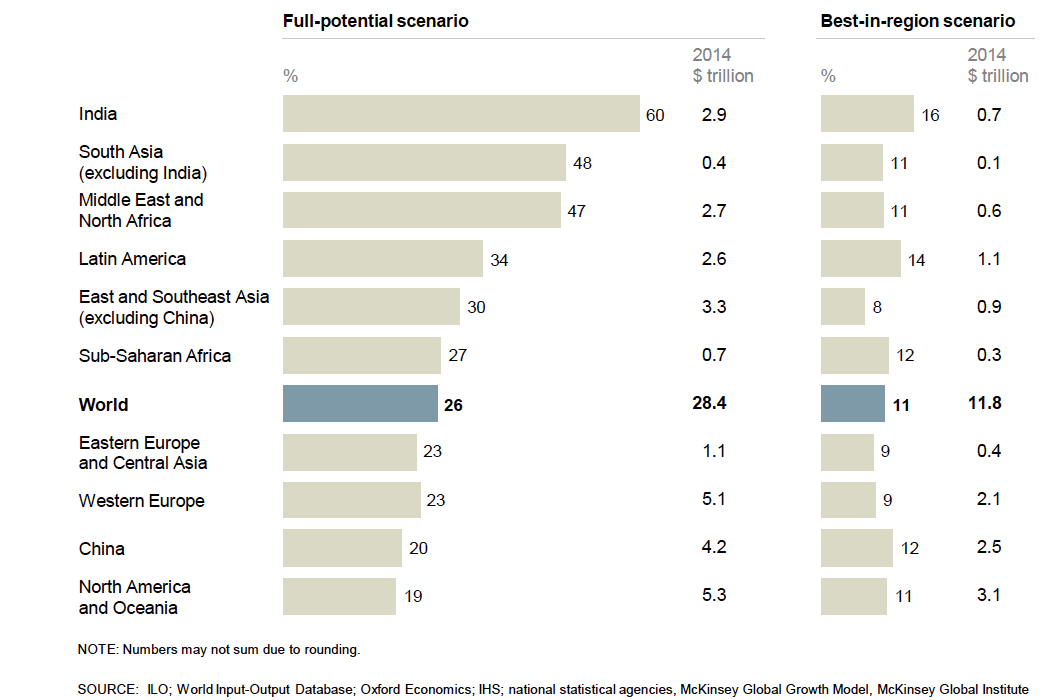
That’s a disparity of £5,600 or almost 20%. Seen another way, women have to work an extra day a week to earn the same as men. Now the McKinsey Global Institute (MGI) has brought out a seminal report How Advancing Women’s Equality Can Add $12 trillion to Global Growth that estimates the real cost to us all of such disparity. A breakdown of the shortfall by global region is shown below:

McKinseyGlobal

Clearly the more developed regions have made more progress to date and have less left to gain. But, to put it in context, even Western Europe could gain more than size of the entire UK economy, were true gender equality to be fulfilled there.

So there is a massive argument to be deployed against those Good Ol’ Boys who have held sway in boardrooms and as captains of industry to look long and hard at this in wholly pragmatic business terms: women are as bright and capable as men; not rewarding them is costing you money. As the reports says:

“The first dimension is gender equality in work, which includes the ability of women to engage in paid work and to share unpaid work more equitably with men, to have the skills and opportunity to perform higher-productivity jobs, and to occupy leading positions in the economy. This dimension is driven by the choices men and women make about the lives they lead and the work they do.

“The next three dimensions—essential services and enablers of economic opportunity, legal protection and political voice, and physical security and autonomy—relate to fundamentals of social equality. They are necessary to ensure that women (and men) have the opportunity to build human capital—and have the resources and ability to live a life of their own making.

“Despite progress in many parts of the world, gaps in both gender equality in society and gender equality in work remain significant and multidimensional. Our analysis finds that 40 of the 95 countries analyzed have high or extremely high levels of inequality on half or more of the 15 indicators for which data were available.”

Time us men got to worrying our pretty little heads about this.

Posted in Community | Tagged | Leave a comment

We Need To Talk About: Budget Underspends

About time ritual opposition hysteria over ‘underspends’ was exposed as such. The hypocrisy of Labour who ran such surpluses too—and even returned them to Westminster—is breathtaking.

Dr Craig Dalzell's avatarThe Common Green

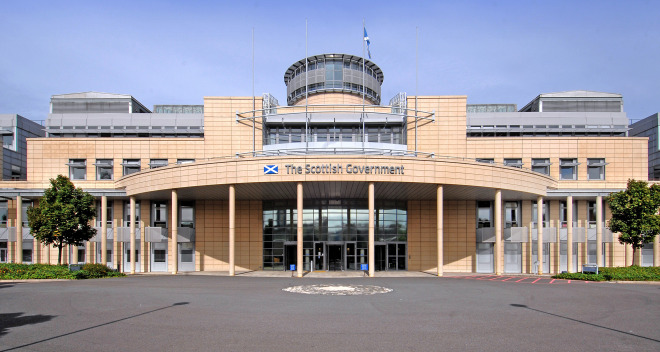
Victoria Quay

Q. When is a surplus not a surplus?
A. When someone is talking down the Scottish Government.

Today the Auditor General published its annual report detailing an independent opinion on how well the Scottish Government is managing its finances (or how badly it is failing to do so).

This year, as last, there have been howls of anguish from those opposed to the Scottish Government at the fact highlighted by the Auditor General that the Government spent £350 million less last year than it was given in the Block Grant.

As the opening question suggests in most normal countries when your government spends less than it has available to spend then it is running what is known as a budget surplus. This is, especially in today’s economic climate, generally considered to be a “good thing“. Not so in Scotland, apparently, where the phrase to be used instead is “budget…

View original post 980 more words

Posted in Uncategorized | Leave a comment

USA: The Finest Oligarchy Money Can Buy?

Of the human characteristics, hunger and ambition have a bad rap, considering that we might all still be living in caves without them. However much we aspire to reduce their importance, it is the civilised comfort created by them that gives us the option to be so judgemental about their effect on human behaviour. Yet most areas of human endeavour continue to be driven by such motivation, at least in part.

However noble the posture of those involved, politics is actually no exception. While few of those involved in a democracy may confess it, the power they seek is ultimately bound up with success—and success brings money. There are very many unsuccessful politicians  to whom this does not apply, plus a few successful ones, like Ghandi. But most of those with national profile are not poor and have no intention of moving that way.

It would be unreasonable, possibly even insane to disconnect reward from success in politics. After all, most other jobs imply promotions, raises and financial incentives. But at what point does the money become tainted with real selfishness and greed? Though it has died down over the past few years, MP salaries and expenses have caused debate more than once. And a range of posts from consultancy to directorships fall to those who move beyond simple elected positions.

But fiscal reward for European politicians pales when compared to the USA. Proud of a commitment to freedom, equality and the right for each to achieve all they can, this has become the leitmotif of politics as much as of business. There may be poor US politicians but they are hard to find. Indeed, it has become such that riches are an essential ingredient of becoming a politician in the first place.

This applies to their Presidential campaigns more than any other. Consider the top five candidates for the election due next year. Their current polling status bears a strong resemblance to the funds they have available:

  1. Donald Trump ($4.5 bn) Richest candidate by a long shot is the GOP front-runner.
  2. Carly Fiorina ($58 m) Former HP CEO who has over 1,000 investments.
  3. Hillary Clinton ($45 m) The Clinton power couple trousered $28 m last year.
  4. Lincoln Chafee ($32 m) Inherited a fortune from Rhode Island royalty.
  5. Ben Carson ($26 m) Retired neurosurgeon who sat on boards for Costco and Kellogg.
  6. Jeb Bush ($22 m) Fortune has grown sixteenfold since being Governor of Florida.

Were it simply a matter of a high financial threshold preventing a broad cross-section of Americans having a credible chance at election to Congress, let alone the Presidency, this would betray egalitarian principles on which the country was founded. But election and office is only the beginning. Forbes reports:

“Several candidates have leveraged their political capital–contacts while in office, influence, power–into successful careers in the private sector (particularly private equity and consulting), or turned to media, raking in big bucks from book deals, radio shows, TV appearances, and even films. At the end of the day, being a successful politician is a lucrative business, as either Clinton can attest.”

Those who have achieved high office have uniformly prospered from that achievement. It makes little difference whether they were Democrat or Republican. Even more modest and self-effacing rarities like Jimmy Carter did well. This is the ‘league table’ of ex-presidents’ accumulated wealth over the last half-century:

  • Lyndon Johnston ($96 m) President 1963–1969
  • Bill Clinton ($55 m) President 1993–2001
  • George H. Bush ($23 m) President 1989–1993
  • George ‘Dubya’ Bush ($20 m) President 2001–2009
  • Richard Nixon ($13 m) President 1969–1974
  • Ronald Reagan ($10 m) President 1981–1989
  • Gerald Ford ($7 m) President 1974–1977
  • Jimmy Carter ($7 m) President 1977-1981

There is nothing wrong with prospering from rewards earned by representing people well. But, is it egalitarian or democratic if the threshold for high office is insurmountable for all but the very rich. Just where is the distinction between such a self-selecting oligarchy and the medieval kings the US Constitution so proudly claims to have renounced?

Posted in Politics | Tagged | Leave a comment

Clearing Away the Past

A prominent feature of the East Lothian shoreline and visible all round the Forth, Cockenzie Power Station spanned half a century. Once an embodiment of the proud coal tradition in the West of the county, it followed on immediately from Preston Links mine (closed 1964) to use coal from new local super-mines like Monktonhall.

While still a pupil at NBHS, I felt involved. Our science teacher, Mr Monaghan, was tasked with air quality monitoring to determine how well the 152m chimneys dispersed flue gases. His stuck his inlet pipe out the wall. For two weeks, me and equally evil buddies slipped back at night to burn sulphur beside it, throwing his readings off and his environmental sensibilities into a panic before we broke down and confessed.

Monktonhall never made it past the mid-1980s. Towards the end, Australian coal, shipped round the world and railed over from Hunterston, supplied it. Environmental awareness highlighted its embarassingly clod-hopping carbon footprint. Condemned as our dirtiest power station, it was put on notice of closure.

At first, Iberdrola (masquerading as Scottish Power) wanted it re-engineered to burn natural gas, dispatching arm-twisting minions to achieve this. ELC’s administration of the time (2009) wanted no part of it but the Scottish Government over-ruled them. Were the site still surrounded by heavy industry, extending its life could be rationalised. But meantime ‘The Trees’ in Port Seton, the Appin Drive in the Pans and others had changed the landscape beyond recognition. Local residents, already incensed at the old coal station smudging their washing, did not want 30 more years of the same.

Withdrawal of such future plans has brought long-overdue closure. George Kerevan (East Lothian’s new MP writing in The National) bemoans “erasing yet another landmark of Scottish Industrial Heritage”. But I disagree: Robert Matthew may have been “one of our foremost Scottish architects” but his sixties brutalist creation here sat as badly in our rural idyll as the unlamented Royal Mile Midlothian County Council building once did in Edinburgh’s Georgian World Heritage Site.

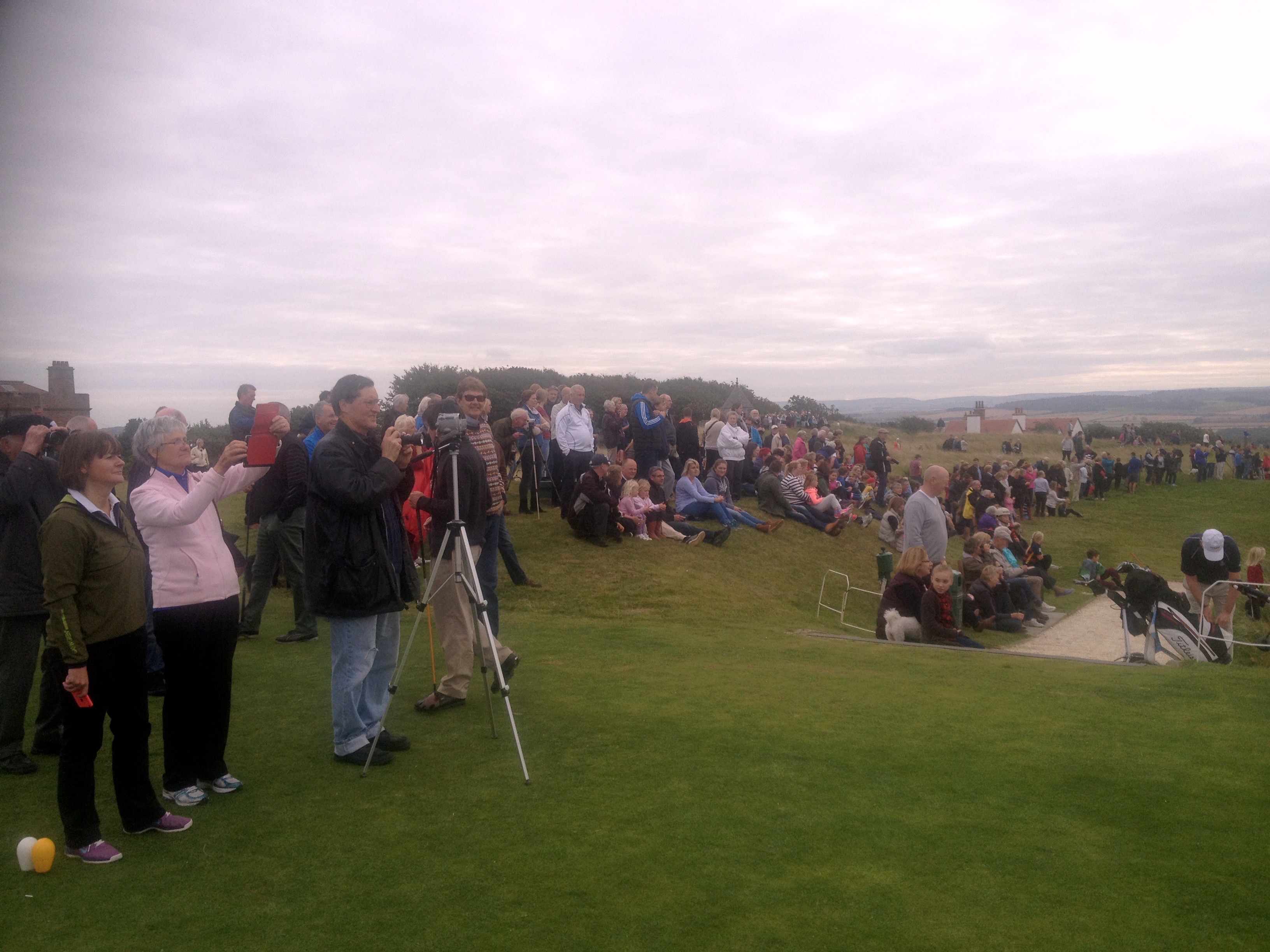
So, in a much-publicised operation, Cockenzie’s twin chimneys were demolished. With inch-perfect precision, they folded against each other, creating a plume of dust as high as they had once been that drifted over Cockenzie itself before dispersing within the hour. Several thousand people had gathered on various vantage points to witness the spectacle.

Over 100 people gather on Gullane Hill to witness the event

Over 100 people gather on Gullane Hill to witness the event

The twin chimneys fold together—taken from one of the dozens of boats offshore

The twin chimneys fold together—taken from one of the dozens of boats moored offshore

Now its site is available, Cockenzie gives East Lothian a unique strategic opportunity to grow our reputation for environment and tourism. It need not be the cruise/ferry port (see my earlier blog). But it must have vision, be environmentally friendly and bring much-needed quality jobs. And not create another eyesore like the one we just felled.

Posted in Commerce | Tagged | Leave a comment

Scottish Learning Festival 2015

Taking over most of Glasgow’s SECC, this two-day event ticks all the right boxes for who’s involved. Its programme ranges far across the issues associated with school education in Scotland, covering topics that tawse-wielding disciplinarians of the mid-20th century—let alone the dominie despots of earlier eras—would be amazed at, if not flummoxed by. Leadership in Gaelic Medium Education? That’s covered. Using games-based learning to support the development of the early year’s workforce? That too.

Over 100 seminars, with as many as eight on at one time means the 3,000+ ‘practitioners’ attending are spoilt for choice. From all that, you might assume that such a gathering represents the leading edge in education in Scotland, if not further afield. And yet, nobody in the whole two days appears to have addressed that PISA scores are static or declining, or that business leaders still complain that schools (let alone universities) are turning out uneven cohorts of school-leavers, some verging on the illiterate but a greater number verging on the innumerate. How far is #SLF2015 addressing that?

Out of two days of presentations and 100+ seminars, only one mentions maths: Magic of Music – Early Stages Literacy, Maths and Numeracy and Health and Wellbeing. One mentions ‘engineering’; two ‘technology’; three (including the one above) ‘numeracy’ and three ‘science’. By contrast, five mention ‘disadvantage’, six ‘whole school’; 20 ‘progress’ and 28 ‘partnership’. ‘Attainment’ rates in 30% of all events.

But words highly relevant to education like ‘performance’, ‘failing’, ‘underachieve’, ‘exam’, ‘PISA’, ‘difficult’, ‘exclusion’, ‘disruptive’, ‘test’, ‘league table’, ‘private school’, ‘early leaver’ or even ‘school leaver’ get no mention at all. It appears the last time anyone mentioned ‘private schools’ with a view to learning from them was Dr Avis Glaze’s talk two years ago—and she is Canadian.

It would appear that we have developed a phalanx of professional educationalists above and beyond the chalk face: the Fife Council Pedagogy Team are tasked with “developing Fife Education and Learning Directorate’s vision to break the cycle of disadvantage in Fife’s communities”. Which rather gives the game away. Valid though concern is for an obvious link between social disadvantage and poor education, the second-biggest education authority in the country sees children’s education as a branch of social work.

The context in Scotland has been a series of Education Ministers—both Labour and SNP—that have pushed through a number of reforms like the McCrone settlement and Curriculum for Excellence but have otherwise steered clear of upsetting powerful teaching unions like the EIS. Say what you like about slash-and-burn Tories, but England has had no such qualms.

It is unlikely that Gove’s belligerent position and Academies would gain much traction in Scotland. But a recent minister was Liz Truss who knew something about education and was also not one to be cowed. Truss announced proposals to reform A-Levels by concentrating examinations at the end of two-year courses. She sought to improve standards in maths for fear that children are falling behind those in Asian countries and led a fact-finding visit to visit schools and teacher-training centres in Shanghai to see how children there have become the best in the world at maths.

There is little evidence of any such pivotal initiatives here at #SLF2015, let alone in Scotland. Although obviously anathema to both teachers and the present government, private schools also have much to teach the rest of education, despite their odious social overtones. Forget the resentment; they are getting something right. The Spectator had a recent article, attempting analyse what that might be.

In 2014, 79% of A-level entries at English private schools were graded A*, compared with an average for all schools of 8%. Exam results are never the whole story, but measuring civic performance is never an exact science. But, as the article explains:

“Many private school teachers have degrees from top universities; a large number, postgraduate degrees. They are thereby able to stretch the best of their pupils and engender an intellectual curiosity in others.

They also work in larger teams and can bounce ideas off each other. Smaller state schools may have a physics teacher also taking other subjects and no ‘collegiate’ context. Because private schools can gather larger cohorts of able pupils, lessons crack on at a pace that leaves some behind. State schools go more slowly because of the much wider range in ability of the pupils. As a result, the better pupils go unchallenged and don’t provide the same examples to others.

But the Tory party’s policy on schools has a huge hole. It wants state schools to learn from the private sector, and yet it denies them the freedom to select their pupils on merit, which leading private schools do unapologetically. In Scotland, the result of state schools also sticking to that has been middle-class parents engaging with their children and thus giving them a de facto advantage over children whose parents are less engaged/ambitious for them.

The way out of such impasse is to allow streaming, if not selection, in state schools. This MUST involve a parallel path for crafts- or sports-oriented and artistic pupils who are no longer stigmatised by one-size-fits-all insistence that ritual exam-passing constitutes a proper education so we stop wasting a gamut of skills for which exams are no measure. It’s the only way to avoid losing leavers into a NEET wilderness after school.

Had #SLF2015 provided some elements that sought to explore, if not address such radical options, it might not pass unreported by the media—and grow beyond a familiar support social for educationalists—by thinking radical for once. Otherwise, the media will see SLF as a talking shop and mostly ignore education as not much more than a playscheme for rug rats and teenagers, enlivened occasionally by a spat over exam results.

And our PISA scores will continue to flatline against countries like Finland and Singapore. Such countries see educating their young well as an economic necessity and who are not averse to cracking a few eggs (not to mention heads) to make a decent omelette.

Posted in Education | Tagged | Leave a comment

Blame the Wrinklies

Before we wade into this blog, disclosure is required: 1) I am a wrinkly, being two years past retirement age and so admit a personal interest in their welfare and; 2) this blog is full of charts and figures. Numerically queasy readers may wish to skip elsewhere.

Since the whole wunch of bankers who should have known better got it horribly wrong on ‘financial derivatives’, it has been pretty much seven years of famine for rest of us, even as the wunch themselves retain eye-watering bonuses. But the real story is not just ‘us-and-them’, as the media and politicos would have us believe. The problem is actually your Nan. To explain, we examine historical UK government expenditure.

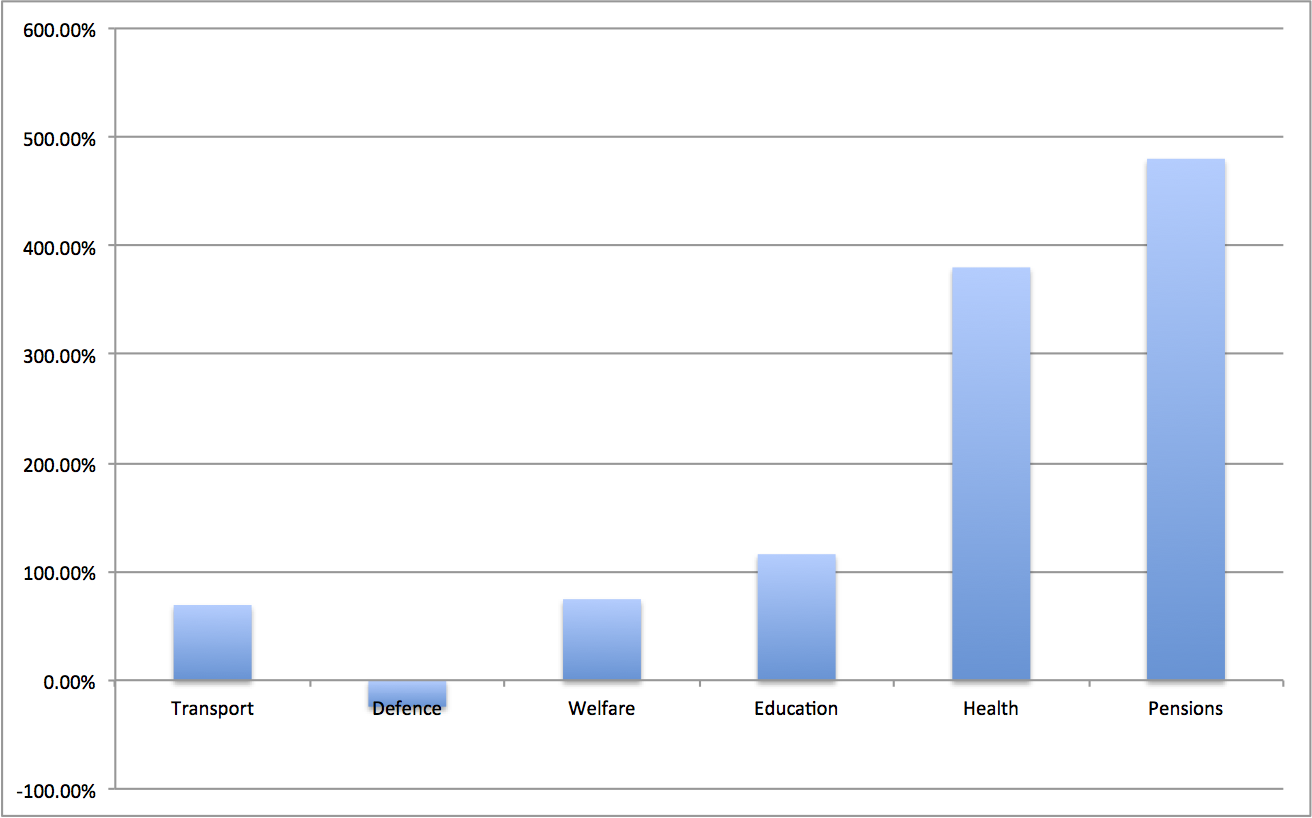
Once the declining 1960’s, disastrous 1970’s and strife-torn 1980’s were over, this last quarter century has seen increased affluence, even allowing for the fiscal crisis of 2007/8. Over that period, UK government expenditure grew by from £200bn to £760bn or some 280% at a time when inflation only totalled 120%. This means some £320bn more (in real terms) is now being spent each year, compared to 25 years ago.

So…err…what did we get for that extra money?

The answer is: not much. Let’s break the expenditure down and focus on six major categories to see where the increase(s) went to:

UKexpXport UKexpDefence

So, while there was a tripling of transport spend under Labour the 5-year decline under the Tories was halted this year with their commitment to spend £10bn on Roads England, broadband, HS2 and Crossrail 2. But, despite it quadrupling, it remains the smallest of the six major pots.

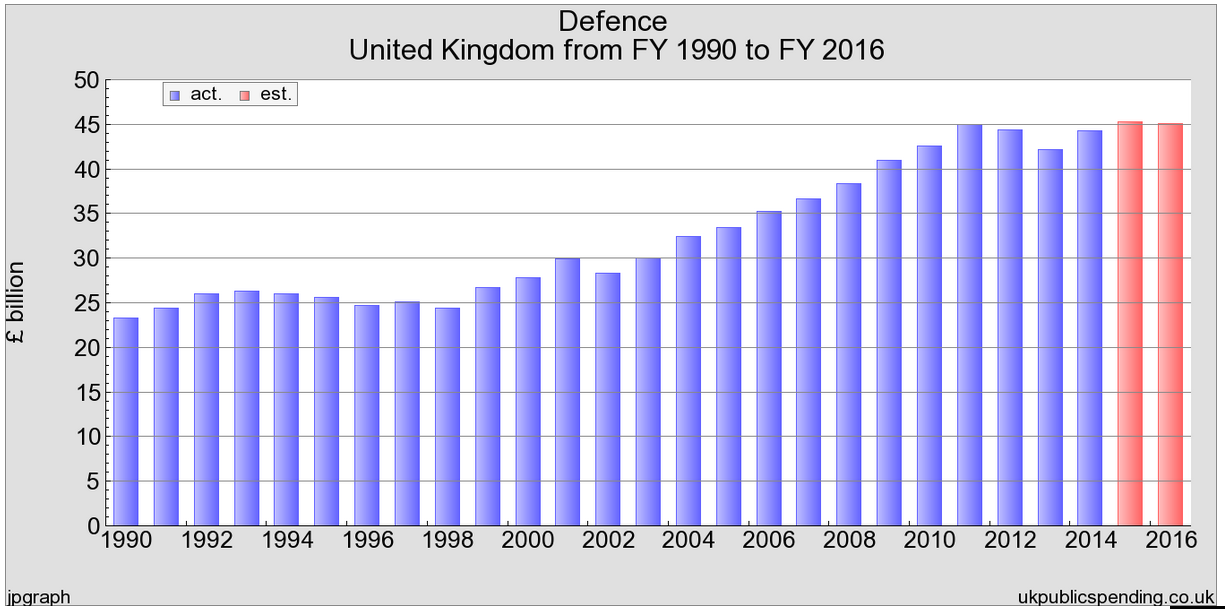
Despite what Tories might say about being strong on defence and security, the doubling in defence spending happened under Labour and has stalled since. Allowing for inflation, this means a decrease in real spend, mostly under the last government. But what about more human budget areas?

UKexpWelfare

UKexpEducn

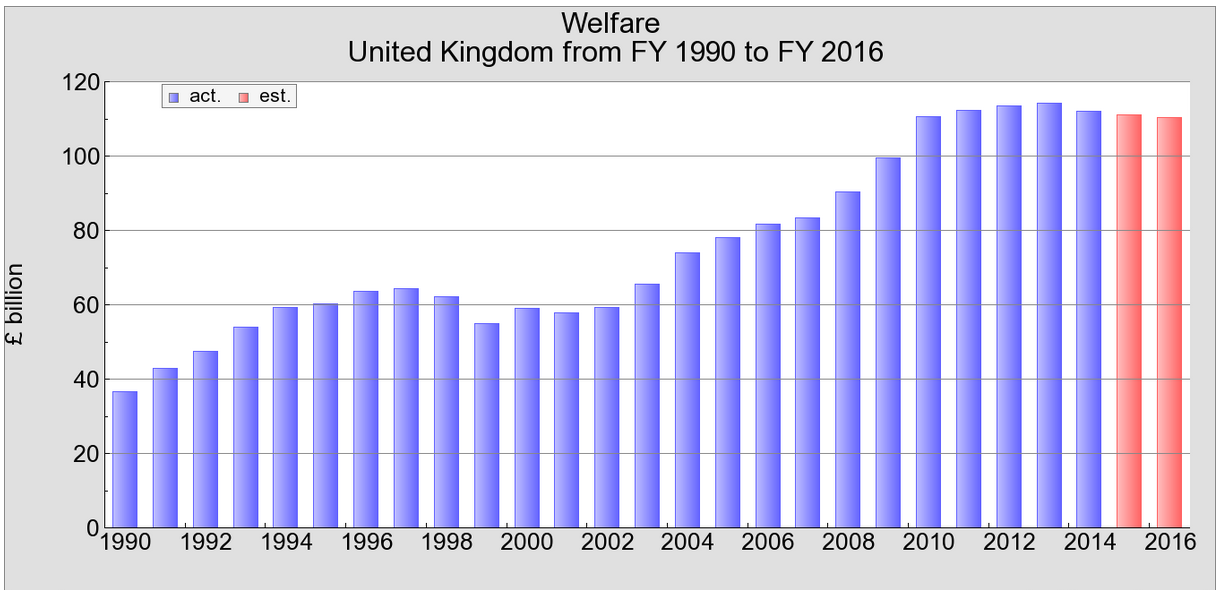
Surprisingly, welfare spend increased under the Tories, stalled in the first few years of Labour and then stalled again under the Tories after almost doubling in a decade. Taken over the piece, there has been a real increase—but all of it was in the 1990’s and since 2010 it has stalled, i.e. declined in real terms.

Education, about which everyone makes a song and dance, grew steadily under both parties, outstripping inflation by over 50%—until it hit a brick wall under the Tories since 2010 when it also declined in real terms.

So Welfare and Education also don’t explain why budget outlays are continuing to rise. Yet in the last five years, expenditure has risen by £90bn (~13%). One factor is that interest paid on ballooning debt has risen £20bn. But the real rises have been in two areas that now account for one in every three pounds spent.

UKexpHealth UKexpPensionAfter quintupling in the first two decades, the NHS now needs one in every six budget pounds. That funds more expensive equipment, higher paid doctors and flurries of prescriptions. But the biggest single element—some £24bn—comes from older people, who are living longer and making increased demands on medical services as a result.

Health’s £138bn is topped only by the £154bn in pensions. And this is increasing even faster than Health. As can be seen from the last two charts, both trends are linear and show no sign of wavering. This is because:

  1. Our population over 65 is growing living longer and claiming state pension for longer
  2. Public sector pensions now benefit from wages comparable to the private sector
  3. Pay-as-you-go public pension funding means that today’s taxpayers fund pensions directly; actuarial reviews are jacking up the liability and thus the payment required

So, with demands on both Health and Pensions driven by the elderly and nobody at Westminster minded to upset this electorate who vote habitually, it appears we are between a wrinkly rock and a fiscal hard place. Squeezing the ‘normal’ budget areas has not reined in expenditure and is now starving key areas like education so these two areas must be addressed. Soon.

Net Real Change in UK Government Expenditure 1990-2015

Percentage Change in UK Government Expenditure in Real Terms 1990-2015

Neither economist, nor rocket scientist is required to work out this is leading to disaster. That the UK has an ageing population is no surprise, nor is the corollary that they require more support as they age. While ministers may choose to build roads, schools or aircraft carriers, no progressive government can (or should) curtail basic rights of the elderly.

But both politicians and media are blanking this unavoidable truth. Unless something radical is done to encourage the elderly to keep their skills and experience engaged later in life, our ideal of a welfare state and health free at the point of need will collapse under the sheer weight of demand.

Posted in Community | Tagged | Leave a comment

Pole Danzig

Since joining the Union and building the British Empire, Scots have rather forgotten the close ties they once enjoyed with Europe. The ‘Auld Alliance’ with France (forgotten by most French) was the least of it. From the Middle Ages onward, Scots exploited trade, craft and other opportunities unavailable at home all around the North and Baltic Seas.

It took Scots most of the 14th century to recover from Edward I’s depredations and ridding the country of his baleful influence. In that time, pivotal castles like Dirleton were rebuilt and new ones like Tantallon added. The English being otherwise engaged extending their Angevin Empire (known to them as ‘The Hundred Years War’) the Scots were left to develop. The English became further occupied with a dynastic civil war they call ‘The War of the Roses’, leaving Scots to exploit what benefits relative peace could bring.

Initially, the main continental trading partners of Scottish burghs were German merchants in Flanders. Before 1321 Scottish merchants had established a staple in Bruges (through which all wools, hides, etc were channeled). Although Bruges remained the major trading partner, from the 1460s trade also developed with Middelburg, Veere and Antwerp. Trade with Danzig, Stralsund, and Hamburg also developed so that by the 1380s an annual average of 7,360 sacks of wool and 36,100 leather hides were exported, in exchange for grain and luxury goods like fine cloth, wine, pottery, armour and military equipment.

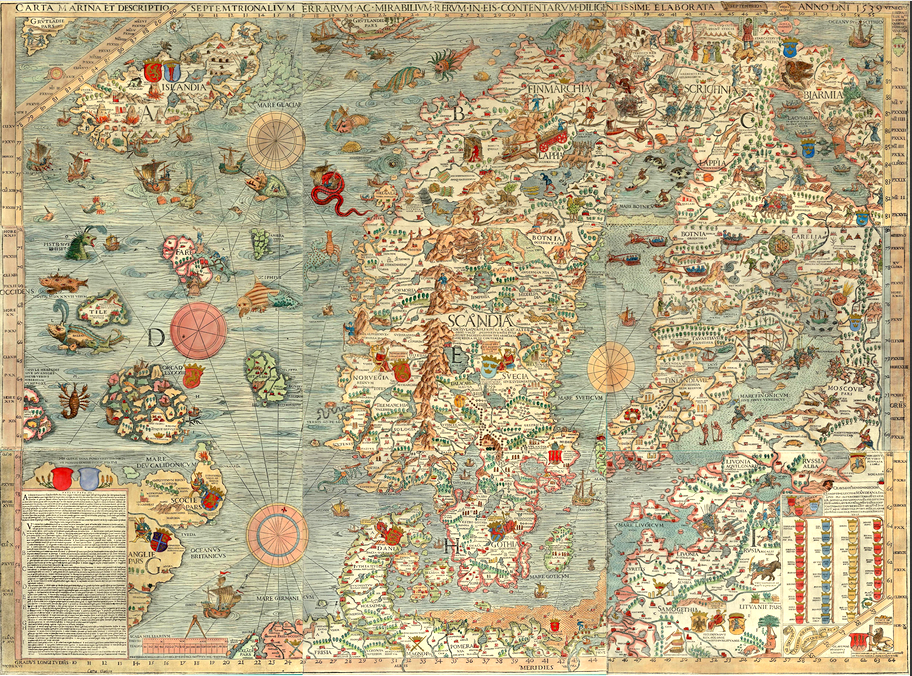
Medieval Carta Marina by Olaus Magnus, showing Scotland's major trading partners.

Medieval Carta Marina by Olaus Magnus, showing Scotland’s major trading partners.

The major beneficiaries were Berwick and Leith, with smaller East Coast ports from Dunbar to Aberdeen joining in. Because of Haddington’s prominence, Aberlady (now silted up) played a prominent role barely remembered today. To supervise the trade and exploit opportunities, many Scots moved abroad. In 1508 James IV moved the Staple to Veere where, even today, their museum is housed in De Schotse Huizen.

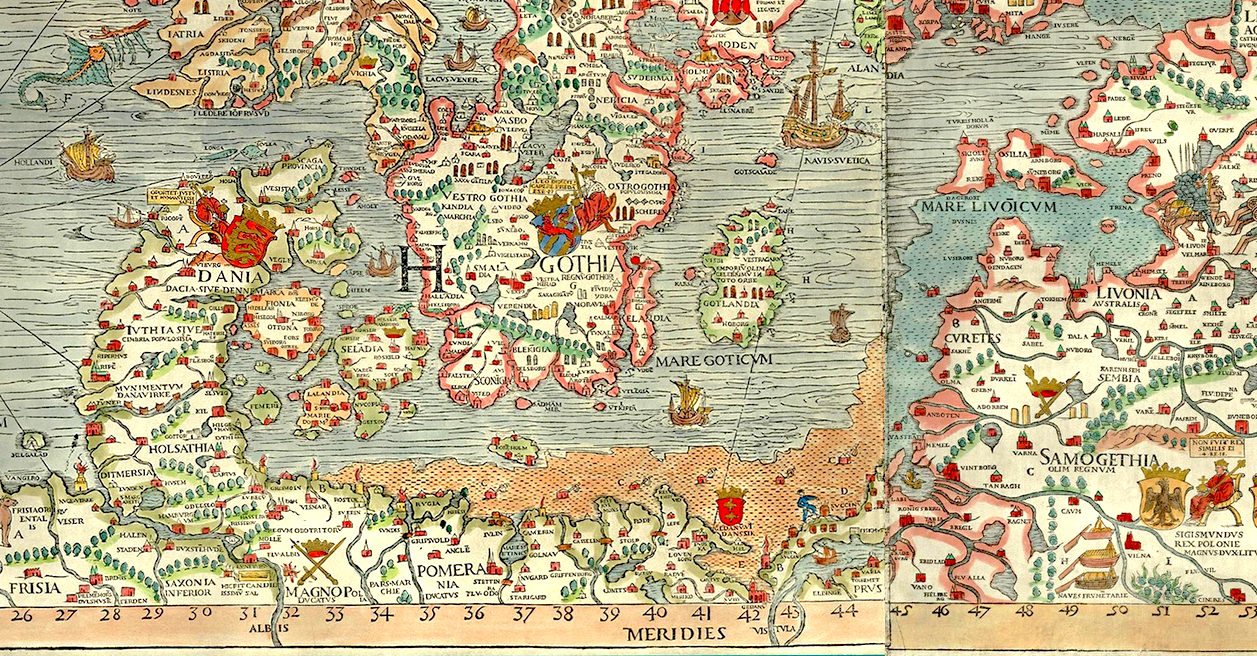
But the larger international exploits of Scots were in the Baltic. Bulk grain was available through Baltic ports and Scots became established on the Pomeranian coast, especially in Poland through its main connection with the west—Danzig (Gdansk). In 1474 twenty-four vessels are recorded as arriving there from Scotland.

Since the late 14th century, the Baltic region enjoyed strong trade links. Many of the timbers used in the building of Queen Mary’s House in St Andrews were shipped from Danzig 600 years ago. Religious tolerance, an escape from poverty and famine, and the promise of adventure and riches prompted many Scots to seek a future there—so many that it boasts two suburbs named Nowe and Stare Szkoty (New and Old Scots).

Detail of the Pomeranian Coast, showing dense scatter of trade links & prominence of Danzig

Detail of the Southern Baltic, showing peppering of Scots trade links & prominence of Danzig

Many arrived as traders, going on to contribute much to Scottish culture. Robert Gordon made a fortune through the Aberdeen-Danzig trade route, and donated some £10,000 to the foundation of a hospital in his hometown. Four hundred years later the building is better known as Robert Gordon University. William Forbes, known as ‘Danzig Willie‘, built the spectacular Craigievar Castle on the back of his trading profits. Sir Robert Skene’s investments helped Aberdeen develop the largest granite quarry on earth.

Poland boasts several villages named Nowa Szkocja (New Scotland), Dzkocja, Skotna Góra, Szotniki or Szoty. Scottish surnames are surprisingly common—MacLeod as Machlejd; Ramsay as Ramzy; Polish phone books are full of them. The religious tolerance of the Polish-Lithuanian Commonwealth made Poland an attractive place for Scots for persecuted Scots to establish themselves. There were also 50,000 Scots raised to fight in the Thirty Years War, largely under Gustavus Adolphus. Came the peace, many settled.

In the 17th century, Poland was described as ‘Scotland’s America’; there were at least 30,000 Scots living in Poland. Krakow was one of the main cities in which they settled, and in 1576, the Scottish community in Krakow was so large Poland’s King Stefan Batory assigned a district for them to settle in. Some managed to rise through the ranks to notable positions, such as suppliers to the royal court. Alexander Chalmers (Czamer) became Mayor of Warsaw four times between 1691 and 1702 and has a plaque at his former home in Warsaw’s Old Town.

So, our welcoming Polish Army units in WW2 and the recent EU influx of workers from Poland and Lithuania should be seen in context, as a re-establishment of international links with nearby old friends from which three centuries of empire-building in distant climes diverted us and almost made us forget.

Posted in Community | Tagged | Leave a comment

Borderline

It being a particularly bright and clear late summer day and it also being ten days into the media hype surrounding the launch of the Borders Railway (teething troubles ought to be ironed out?) the time seemed propitious to hop a train to Gala—my mother’s birthplace—for the first time since she paid children’s fare for me to visit my great aunt.

Unlike other lines that have been opened, this one has been presented with some fanfare—and rightly so. Heritor to the legendary Waverley Line that ran all the way to Carlisle, closed against fierce opposition in 1969, this is both the longest and the most significant new Scottish railway built in over a century. Plus it has tourism potential that Alloa, Bathgate, etc never had.

The 30-mile route had appreciable teething troubles. From a stillborn campaign 45 years ago to re-open the ‘Border Union Railway’ the fight had finally got traction in the early days of the Scottish Parliament. After a decade of faffing and cost inflation it got serious in 2011 and was delivered this month for £350m—five times the original estimate. So what did we get for our £7,000 per yard?

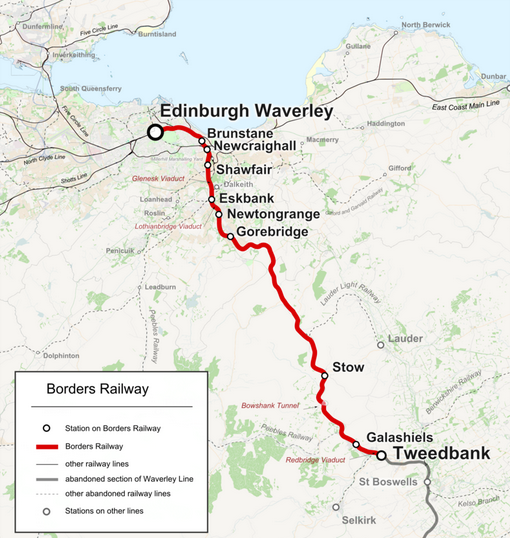
Borders Railway Route and Stations

Borders Railway Route and Stations

The train itself made a disappointing introduction: a frumpy two-car Class 158 Sprinter that was long in the tooth unrefurbished and inappropriate. Not just showing age.it was too small for the many passengers and poorly accessible for themany older passengers with mobility problems, making boarding at busy stations slow and therefore keeping time difficult. Some 80% of the trains are this size and type, with only rush-hour trains being doubled up to avoid serious overcrowding. The ScotRail Alliance managing the line said:

“Disruption had been caused by factors including a train breaking down, signal problems, high passenger numbers and disruptive travellers. It has been particularly busy on board some services. At times this has caused delays while these unusually large numbers of customers board and alight.”

It’s never a good sign when rentaquotes refer to bealing customers who rightly feel let down as “disruptive travellers” and the partial measures of stealing rolling stock from other lines and maintenance depots to lengthen a few trains speaks of a lack of foresight and planning. On the trip I took on Sep 16th (13:25 ex-Waverley; 15:28 ex-Tweedbank) seven of eight ScotRail trains seen on the line were such two-car Class 158s.

The trip itself takes about an hour and passes some very pleasant scenery, criss-crossing the Gala Water many times and overtaking cars  plodding down the ever-twisting A7. Each of the seven new stations look brisk and new and the practical-but-decorative ‘scree slopes’ of stones to inhibit landslips interweaves with trees, hills and bucolic water meadows.

Stow Station between Gorebridge and Galasheils

Stow Station between Gorebridge and Galasheils, Looking South

But it is arrival at the purpose of the whole venture that underwhelms. Galasheils—the only border town served—has a single-platform station squeezed onto its site with difficult access and no parking. The line falls three miles short of reaching a major tourist destination at Melrose, despite Network Rail saying there is no impediment to it doing so.

The biggest disappointment has to be the bleak and minimalist Tweedbank terminus. It’s only feature is a two-track island platform 300m-long to accommodate tourist charter trains of up to 12 carriages in length. As if to prove the point, a steam train excursion pulled by the A4 Gresley Union of South Africa was there and the platform thick with Scottish Railway Preservation Society anoraks.

Tweedbank Terminus; Class 58 on Left, Steam Excursion on Right

Tweedbank Terminus; Class 158 on Left, 60009 with Steam Excursion on Right

As can be seen from the picture, the place is bereft of facilities. Apart from a large (and already full) park-and-ride, the only structure is the Eildon View building (on the right above) a facility exclusively for ScotRail staff. Otherwise, it is a blastrd heath with:

  • A standard two-panel A1 notice board showing no local information
  • No toilets
  • No cafe, kiosk or even a drinks machine
  • No tourist information whatsoever, even in English
  • No indication of onward bus connections or where to catch them—First’s 9, X62, 65 and 68 services (all to Melrose) pass nearby
  • No signs visible for walking to nearby Melrose, Eildon Hills, Dryburgh, Scott’s View…

What car-less foreign visitors, lured by the hype to see the famous Borders would make of it can only be guessed at; even access to a nearby pleasant, beech-lined rural road was still blocked by Herris fencing. The good local bakery nearby is not even hinted at.

Within 100m of Tweedbank Station but Inaccessible

Within 100m of Tweedbank Station—but Made Inaccessible

It is abundantly clear that whichever set of jobsworth pencilnecks conceived this line were driven by politics to tick civic boxes yet cheesepare to meet budget. As a result, all stations are mobility-friendly and every farm track near the line has copious crash barriers to stop vehicles swerving on to it. But while there are no level-crossings anywhere, new bridges are built single-track only, whereas many road bridges over (e.g. A720 Edinburgh bypass) are wider than the present road to permit expansion, betraying road-over-rail priority.

And that highlights the line’s greatest flaw: total lack of future-proofing. There are only three stretches of double track, 80% of which is in countryside south of Gorebridge. From Portobello East junction to Gorebridge (the whole Midlothian stretch) is single track with single platforms (except Shawfair to A720). No new overbridges can take double track. Worse: even old bridges and tunnels wide enough for doubling (as the whole Waverley Line once was) have single track laid in the middle—as if to allow for electrification, though none is planned.

But the set of jobsworth pencilnecks who conceived this line are nothing against the set of jobsworth pencilnecks who are running it. Fine and widespread though the marketing may be, there is no management substance behind ScotRail’s ‘Borders Railway’ front. Because of overcrowding, trains are delayed; because of delays other trains are held up waiting to access single-track sections; because of compound delays trains fall out causing overcrowding…

The total lack of operational maneuver trying to run a half-hourly quart service down this pint-pot line is compounded by the absence of any siding into which broken down trains can be shunted. This is a scheduler’s nightmare—and we ‘re not in winter yet. Delay is compounded by steam trains running three days a week, forcing the equivalent ScotRail train to be cancelled. This is hinted at in ScotRail’s timetable—except the trains that fall out are not those shown in the timetable.

And when they do get cancelled, no passenger is any the wiser. Many announcements are made about keeping your luggage with you or sternly warning you that standard tickets are not valid on the steam train (that just replaced the ScotRail one you were trying to catch). But never an apology or explanation of an hour wait for the next two-car 158, inevitably overcrowded and crewed by people who neither know nor care about missing trains. Bad PR, but execrable management.

So, after 15 years and £350m of your dosh, Borders have a curate’s egg of a line. It is an undoubted asset and a long-overdue boon to the Borders. But forty years ago Newbridge roundabout at the M8/M9/A8 junction proved an expensive, underengineered failure that had to be rebuilt at great expense twenty years later to be fit for purpose. The  question begged is not how to extend this line to Carlisle but cost to rebuild what we have up to a standard that would make any such extension workable.

Posted in Transport | Tagged | Leave a comment