Gimme a Break

For those of you rushing here to catch the latest spiky iconoclasm, sorry to disappoint. It strikes me that this blog is taking itself entirely too seriously and that you, gentle reader, would be appreciative if I were to climb down off the soapbox for once. With a good summer crewing the boats out to the islands behind me and an even better final week of August in Portugal just beginning to lose its sun-bright immediacy, why not?

Despite intense traffic and soaring cranes, Portugal was as I remembered it. The bica coffee was just as pungent, the Porco Alentejo  (pork with clam sauce) just as tasty and the warren of alleys of Lisbon’s Alfama just as indecipherable. Where else can you get several dozen snappily dressed students surfing the web amidst ancient tomes stuffed into teetering 18th © shelves and wallfulls of classic azulejo tiles than in the Central Library?

Reception in Central Library, Campo Pequeno, Lisbon

The Portuguese are very proud of their long history (independent since 1160; the main square of Restauradores celebrates their liberation in June 1660 from domination by the then all-powerful Spanish crown). They had a magnificent renaissance city in Lisbon, built on the riches shipped from the Indies on trade routes they had pioneered before its almost total destruction in an earthquake and tsunami in 1755.

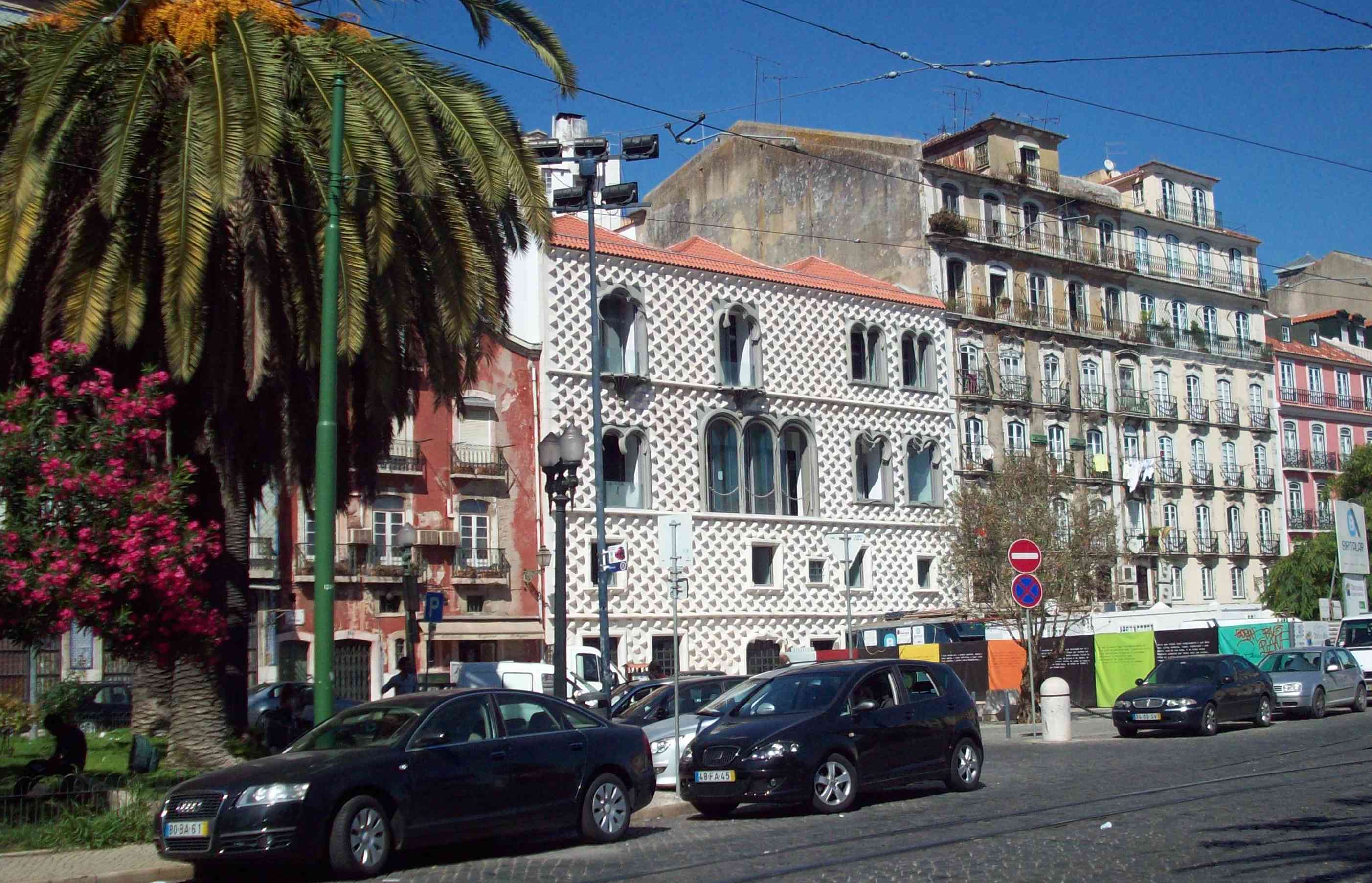
The Sole Residence to Survive the 1755 Earthquake (centre picture)

They rebuilt the centre of the city adjacent to the Tagus and called Baixo (“Low Part”) in an orderly grid that, gridlocked with traffic forty years ago, has served them well as a pedestrian shopping district more recently.

Looking Across the Baixo to the Century-old Lift that Serves the Barrio Alto

On either side of the Baixo are two rabbit warrens of streets that have never seen much redevelopment and are therefore a joy to explore; the Alfama encircles the Moorish Castelo Sāo Jorge that dominates the city; the Bairro Alto is home to that most deeply Portuguese of entertainments—two dark-clad, serious guitar players accompanying an even more serious woman singing fado.

Tagus River Seen over the Rooftops of the Alfama

Lisbon is one of my three top cities—livable, human-scale and crammed with characterful inhabitants. Plus, on 25 April 1974, they had a revolution to throw out a fascist dictator and no-one got killed. The proud symbol of the revolution was a FN rifle with a carnation in the barrel; my kind of revolution; my kind of people

Posted in Uncategorized | Tagged | Leave a comment

Let’s Kill All the Councils, Let’s Kill ‘Em Tonight!

The Welsh Government seems to have got itself in hot water for treading where no other devolved administration has dared to tread—into the morass of local government reform. Given that England has been in a constant low-level turmoil for decades (Berwick-on-Tweed’s District Council is still grumping about being folded into a unitary Northumberland three years ago), the peace and quiet on this front in Scotland since 1996 has suited most of us associated with local government.

But that was before the recent savage reductions in monies going to councils set sundry spokespersons dutifully nodding that something radical was going to be necessary to make shrinking funds stretch to cover all the services the public required. After one year of austerity, pips aren’t squeaking yet—but, as there are at least four more years to go, they will soon.

The problem seems to be that, for fear of taking the kind of radical plunge Wales is considering (six to replace the present 22) Scotland is, at best, dabbling. This whole furore about a single police force is deckchair-rearrangment thinking if we don’t have a local structure into which it would sensibly fit. The recent Christie Commission pretty much tip-toed around the elephant in the room too and Ministers of all stripes have steered well clear of even broaching the possibility of change.

This would be tolerable if the present efforts at shared services either between councils or with other public bodies were developing robust alternatives. But with West Dunbartonshire baling from the Clyde Valley pilot and only a couple of tentative education projects (Stirling/Clacks; East/Mid-lothian) still in play, no serious dent in the projected £3.7bn council shortfall has yet been identified. The multiplicity of little bureaucratic worlds that passes for public services in Scotland: 32 councils, 8 police or fire boards, over a dozen health boards, a jumble of city region planning areas, transport authorities of uneven powers, etc. constitute a dog’s breakfast—whether created by a Tory gerrymander or not. The point is this: it ain’t fit for 21st © purpose.

So, do we take out all the councils and shoot ‘em? Well, yeah. Because what we really need is four city regions, plus two rural areas (N and S) to handle all the ‘big stuff’. Take every public service in those six areas—including health, police, fire, strategic planning, water and transport—and put them under a single, major elected body. Sole exceptions should be very local services like planning, business and civic cleansing/maintenance. These would come under reconstituted burghs in those communities that wanted local accountability. But these would be tiny councils (5 people) steering a town manager and handful of employees—all else would be contracted out.

Half the unaccountable nomenklatura of boards across Scotland would get their jotters at that same time that efficiencies of scale would be available in each region. Squeals that this would be disaster will come from SOLACE, CoSLA, Unison, EIS and the usual ‘aye been’ suspects. They’ve had 15 years to improve what’s in place now—yet did little but grow work forces and salaries. It’s time to meet their complacency head-on if we want all the services we now enjoy to still be delivered with £3.7bn less finance.

Both the Eagles and Shakespeare’s Henry VI were right in their homicidal urges; they just got their target wrong.

Posted in Community, Politics | Tagged | 2 Comments

This Month’s Oxter Award

It’s the traditional political Silly Season when major politicians and those that hound them are generally off on some sun-baked beach, August is a month we have to cast about to find a decent candidate deserving opprobrium. Yet, there in Hootsmon on Sunday was Cllr. Andrew Burns doing a head-and-shoulders-above act, crowned by leading Labour’s Orwellian volte-face and gang-up-with-Tories opportunism at ECC’s most recent bout of self-immolation on the Trams.

To be fair to Andrew, he does call his blog “Andrew Burns Really Bad Blog” and tried to package his pitch by starting with unaccustomed apology:

“They (the public] are absolutely due an apology. I am personally extremely sorry for the way that it has unraveled in the last four or five years. Quite clearly it has had a very, very sorry history, particularly since the middle of 2007 when there has been no clear leadership or vision. It has completely unraveled in that time and people are absolutely right to be angry and annoyed about it. I am pretty dismayed myself.”

But soon his two real purposes became apparent: 1) to distance Labour (and himself) from the present good-option-free tram shambles and; 2) to blame the ‘unraveling’ on the 2007-2012 Lib-Dem/SNP administration of ECC. While such tactics verge on the astute, any long-term observer of the tram saga is immediately faced with a barrage of questions that leaves Emperor Burns with nary a stitch of credible clothing.

For it was he, as disciple paddling into the shoes of now-Professor David Begg who, together with Leader Donald Anderson and Transport Minister Iain Gray, cooked up the whole tram scheme in 2002-3. Questions that should have graced Cllr. Burns In-Tray as Executive Member for Transport and Public Realm and received considered answer at that time were:

  1. Could justification for Line 1 be sustained in the event of a property collapse in the ‘Edinburgh Waterfront’ (as actually happened in 2008)?
  2. Was any full business plan for Line 2 to the airport prepared that compared alternatives, like reopening Turnhouse station, ever produced?
  3. Could a £375m budget for Line 1 suddenly, and without fully revisiting the business plan, be deemed adequate to finance Line 2 as well?
  4. Were preparatory works and TIE/consultants properly supervised, especially regarding revenue loss to local business, including Lothian Buses?
  5. Could Line 1’s mostly on-street route be justified when a plethora of disused rail lines across North Edinburgh offered faster, cheaper options?
  6. Why build another system independent of both train or bus when all modern cities operate start-to-end tickets that encourage transfers and speed loading?

(Hint: the answer to each of the six questions posed is a variant of ‘No’.) Had most of those questions been addressed on Burns’ watch, the whole Line 2 to the airport might never have started and a Line 1 ‘North Loop’ might have been built within the $375m budget, giving Edinburgh an overdue start on a city-wide transport scheme.

It’s not easy to become a senior councillor like Andrew Burns without deploying guile. But his position on last week’s Haymarket choice went well beyond to bare-faced shameless. It must have been hard for him to keep a straight face. As someone responsible for:

  • the wrong original choice of tram scheme and implementation
  • spineless acquiescence to flawed major modifications
  • seven years of head-in-the-sand refusal to admit his own original mistakes
  • four years of thwarting an administration trying to rid the city of his mess

Cllr. Burns makes clear he is no ordinary politician; he is a careerist who will say anything to please his party and further his career (often hard to perceive the difference). To call him ‘sleekit’ is an insult to tim’rous beasties everywhere.

If the Scottish—and especially the Edinburgh—public are scunnered with two-faced politicos who would not know a principle—let alone a good idea—if they found one in their soup, then it’s thanks to the likes of Mrs Burns’ laddie. Unlike the faceless voting fodder who typically fill the elected ranks of his party, he was given talent that could have been applied to wider public benefit.

Instead, he chose rent-a-mob posturing that secures party advancement. And, since yesterday’s article made plain he won’t (can’t?) deviate from that (where else could he get a job on a par with Opposition Leader now that Labour’s patronage is oot the windae?) we have no hesitation in fingering him for the Oxter Award this month.

Posted in Politics, Transport | Tagged | Leave a comment

One He Made Earlier?

So Cllr Burns blames the Lib-Dems and SNP for the trams debacle. Inevitable as such self-serving guff may be, I still smacked my forehead in disgust—perhaps too hard…

…bzzztschhkkooee…

…With hindsight, it seems fortunate that Cllr Andrew Burns fell on his head that night in 2003, For, how else would he have had those inspired brainwaves that helped him persuade the then Scottish Transport Minister, Iain Gray, to divert £350m from an ill-conceived tram project into a transport suite of genius, a beacon for creative city transport around the world? Had the original airport tram gone ahead, it might have cost £1bn or might, despite all disruptions, have never been completed. How unthinkable!

But, luckily, Messrs Burns and Gray were clear-sighted men, seeing a tram to serve an airport that already had a major train line at the end of the runway for what it was: a white elephant ‘prestige’ project, short-sighted as London tying Heathrow to its sluggish Tube. As a result, the £17m spent on reopening Turnhouse station in 2009 and linking it to the air terminal with back-to-back shuttles gave a faster, more cost-effective solution than a tram via Sighthill. The passenger surge made Network Rail bump electrification of the Forth Bridge/Fife line above its EGIP priority agenda.

Another £110m was used to link the Brunstane spur round the South Suburban line, including reopened stations at Craigmillar, Cameron Toll, Newington, Morningside, Merchiston and Gorgie. As infrastructure and rolling stock were mostly in place, it was a big bang for our buck. But the stroke of genius was running trains into the under-used Platform 0 at Haymarket to provide easy interchange with the planned trams while avoiding adding to bottlenecks in the Princes Street tunnels.

Then, when an improved ‘circular’ tram plan was introduced in 2012, Haymarket flowered as the major interchange for suburban, tram and airport with western distance routes. And by using the still-extant track beds around northern Edinburgh, this whole area was linked up with no major road or business disruption.

Starting at Haymarket, Line 1 linked Haymarket with Murrayfield, Craigleith, Crewe Toll and Granton. The line then looped through Trinity to Broughton Road before using the old Scotland Street tunnel to give express access to Waverley station where the rebuilt platforms 20 and 1 stood. This fast, direct access to the city centre gave a shot in the arm to moribund Edinburgh waterfront developments.

By 2014, a new Line 4 ran on from here, using Carlton North and Abbeyhill loop to provide good access to Holyrood before using the old Leith Central line to reach Leith and Pacific Quay. Since the South Suburban now ran from bays on the East side of Waverley, this provided easy N/E/S link interchange, similar to Haymarket’s.

A Transport Map for Edinburgh. Since It Includes No Hoverferry to Fife, Can It Be a Wet Dream?

As the suburban rail improvements included running half East Lothian trains through the South Suburban and on to the airport, plans for Lines 2 & 3 were scrapped as unnecessary. Total tram costs were then held at £220m, much of which was heavy rail re-routing at Waverley/Carlton. This left £3m of the original £350m surplus to look at system improvement, with introducing a long overdue ‘Oyster’ card high on the list.

It was surprise enough that Labour held Edinburgh against the flow in 2007, but when Cllr Burns’ was carried shoulder-high to the City Chambers by businessmen delighted at the growth of trade across the newly-accessible city, accolades were widespread: Eight new stations; two new tram lines; a city-wide fast backbone for its excellent buses—all within original budget; all working like an integrated transport system. Asked if he planned to put his name forward to replace his old colleague Gray as Labour Leader, Burns said: “this all sounds like a dream…”

…bzzztschhkkooee…

…or did I just hit my head?

Posted in Transport | Tagged | Leave a comment

All Roads Lead to Lisbon

Since spending probably my best summer ever as a 23-year-old waiter in the Algarve, I have had a soft spot for Portugal, its people and especially its fading-grande-dame-but-still-a-babe capital, Lisbon. Down for just a week for my first visit in years to catch an old friend in town from Macao, I see it for the first time from a political perspective—and it is an eye-opener.

Portuguese debt and imminent default not withstanding, the place is buzzing. New malls have appeared in the Bairro Alto and even under the bullring at Campo Pequeno; new Metro stops; new trams vie with ancient ones to snake round the Baixo; the airport has a new wing longer even than Schipol’s. Once the province of British exports, the double-decker buses are gone and an integrated system has arrival indicators at all but the smallest stops.

Old Tram in the Baixo—Unlike Edinburgh, Lisbon never Tore up its Tram System

If this is a place tightening its belt, there is little sign of it: building sites are many; cafes and shops are full; the raparigas in the Rossio are lithe and glamourously dressed. Only on the financial pages of Diario de Noticias (local ‘quality’ paper) is anything approaching an alarm bell ringing. They are on about the scale of debt building infrastructure. With generous EU support, over the last decade Portugal has embarked on a roads-building programme that makes ours look look like a Green wet dream.

Portugal is roughly the area of Scotland (31,000 sq. miles) but with twice the population (10.5m). What they have going for them is a latin culture of family and enterprise but without the frenetic edge their Iberian neighbours the Spanish seem to put on life.

The result is a wonderful combination of the laid-back with the opportunistic. They have sold the EU on the need for serious infrastructure development. Twenty-one separate road projects interlace the country for a dizzy total of €9.57bn in major road projects. How the PPP piper is to be paid for this veritable orchestral suite is for the next generation to worry about.

Best of all, much generous finance comes direct from the EU. As examples, the single-line railway that winds through the hilly countryside of Beja to the Algarve has been electrified, although carrying only five return trains daily between Lisbon and Faro. Despite fully functioning bridges across the Tagus to Santarem and Setubal, “The Lusaponte” has now been built in between across the widest extent of the bay at a cost of €898m.

If Scotland were Portugal, not only would the A9 be dualled and another Forth crossing completed but the A77, A1, A76 and A96 would all be dualled too and rail lines to Aberdeen, Inverness and Stranraer electrified—all at a cost of only 20% to the Scottish taxpayer.

And it’s not just in big stuff that Portugal seems to have an advantage: a large beer is €2 even in the tourist areas and an expresso anywhere costs half what it does in Scotland. Considering they have no oil, the fact that petrol’s cheaper than in Scotland verges on being an insult. If this is a country in fiscal trouble, maybe it’s time Scotland thought about courting bankruptcy itself.

Sign on the Lisbon-Algarve Railway

Posted in Commerce, Politics, Transport | Tagged | Leave a comment

Don’t Outlaw What Matters

A leader in Scotland on Sunday, remarkable both in its six-line brevity and in its esoteric subject, caught the eye yesterday. Glasdelphia was agog with Pittmania and Tripoli was slipping from Ghaddafi’s feverish grip. But this leader was about a topic so obscure that few Scots can know the story—whether an unassuming man from Port of Ness and nine chosen others can continue do what his Nessmen forebears have done since they were subjects of a Viking Earl of Orkney.

For the last two decades, Dods McFarlane has led the annual guga hunt to ‘The Rock’ in late August. Gugas are this year’s gannet chicks ready to fledge. Fed, to a bouncing 3kg or more, they make a meal rich in fat and protein. After the 1869 Preservation of Seabirds Act, 1930’s evacuation of St Kilda left Ness as the last place to harvest birds. Even the new 1954 Act preserved their right to take 2,000 guga.

As you can imagine, such practice sits ill with crusaders of RSPB and SNH. They see this as wanton destruction of the natural habitat by cruel methods. I may be wrong in this but I imagine that the 99% of Scots who have either never seen the business end of a gannet or who class any hunting with Scotland’s exclusive shooting estates would side with such well intentioned environmentalists. But they shouldn’t.

Before explaining why, let me say that gannets are magnificent—the largest seabird in the North Atlantic, a graceful, two-metre wingspan carrying a teardrop-streamlined body, tipped with penetrating golden eyes and a wicked 10cm beak. As embodiment of natural elegance or an exercise in distance flying aerodynamics, they are hard to beat. They are also fearless and devoted parents, migrating to Africa only after their one chick has fledged and left. No one who knows gannets would go near without expecting fierce attacks from those beaks. Other birds may fly off but gannets will fiercely defend nest and chick against all comers—including other gannets.

The combination of fierceness with protection means that gannets are not a threatened species. Bass Rock went from 10,000 to almost 140,000 in fifty years. What IS a threatened species is the group of men that Dods leads forty miles out from the Butt of Lewis to spend a week on Sulasgeir (‘Gannet Rock’ in Norse) collecting the haul. It is an epic of fortitude, skill, teamwork and understanding that is—quite rightly—seen as a rite of passage by the young men of Ness. Nothing expands understanding like exposure to nature in the raw; nothing binds people together like shared danger. Both are now rare in our over-cultured Western lifestyle.

The trip to Sulasgeir is full of both.

Leaving in the dark in a local trawler, they land at dawn on the bare rock and offload water, peat, supplies and precious few personal items in Geodha a Phuill Bhain, the most sheltered corner that passes for a harbour. Landed and alone with themselves, they drag everything 50m up to the waist of the bare island to where the shells of beehive bothies stand. Using tarpaulins, fishing net and stones to weigh the roofs down, they make them watertight. All this is done in the middle of 30,000 gannets pecking at them and 20,000 fulmars who spit a pungent, clinging oil at anyone who comes near them.

For the next week, teams of surefooted hunters scramble the cliffs of Sulasgeir—one roped for safety uses a fowling pole to snare a mature guga by the neck, lift and swing it to the other team member on steadier ground who kills and releases its limp body. These men are not free climbing in bare feet at 2,000ft above the sea, as St Kildans once did. But it takes guts and skill that few would find in themselves.

As the gugas are brought to the ‘village’ another team plucks the feathers and still another passes the plucked bird through the flames of a peat fire to singe off any remaining down. Then each guga is spilt open, gutted and placed neatly in a circular pile resembling a broch, a special pickling liquid poured in the middle to preserve them and left to percolate for the balance of the trip. After a week, everything is dismantled and lugged back down to the returned trawler.

One or other passage, whether to or from, is always rough, the seas being those of the wide Atlantic. Yet the ten return home, not as heroes but simply as men of integrity, contributors, proud of what they have done with little fuss, bonded together through their ordeal on unforgiving rock under fierce weathers and the interdependence they share. There are no fanfares; there are no media. On the pier at Ness the gugas are apportioned evenly and made ready for sale, along with crabs, lobsters and what long lines have caught.

It matters little whether you share their taste for this delicacy (“somewhere between chicken and kippers” is the description). Unless we all go vegan, factory farming will fill our supermarket shelves with meats and meat products. We define that as ‘humane’ because it conveniently supplies us with cheap food. Does that make us so civilised that there’s no place for modest ritual of man against nature, that allows successive generations to relive their common history. As well as gugas, each Nessman fills his store of tales to relate as a source of pride in who he is and where he is from. By what right should pencil-pushers in Inverness or Edinburgh be able to take all that away?

Posted in Community, Environment | Tagged | Leave a comment

Subtle as a Ram Raid

The Hootsmon has its faults but today’s piece from David Maddox on government debt could not be more timely, coming, as it does, on the back of the worst day for the FTSE for three years. To say that investors are serene at the prospect of a double-dip recession is to say the unions are relaxed about public sector budget reductions: it just ain’t so.

Nothing so characterised Labour dominated CoSLA and its Scottish council members through the late nineties & early noughties as their ‘dugs-at-broth’ enthusiasm for the most reprehensible wheeze that Chancellor Brown and his Treasury mandarins ever came up with: the Public-Private Partnership (PPP), more recently rebranded as the Private Finance Initiative (PFI).

That the enthusiasm with which the 1997-2010 Labour governments embraced this Tory concept was not drowned out by the noise of John Maclean, Bevan and Atlee spinning in their graves came as a shock to me. But when you look at the sheer advantage at local level—schools, libraries, hospitals being built and the real cost landing years down the road, what “see whit ah’ve done fur yez” councillor wouldn’t fall over one another to pass the necessary resolution through city hall to take credit for a split-new Auchenshoogle Community Centre.

As an idea to involve private finance in providing public buildings, it has some merit. But, as a vehicle to shift public borrowing off the books and claim that the debt does not show on national statistics, it is voodoo economics of the worst kind. It is the equivalent of the fifties’ ‘never-never’ when working people got their first telly or decent sofa or fridge on the agreement to pay for it over five years. After three it was worn out…but the payments were still due.

Bad enough that this subterfuge was foisted on a buoyant economy—such as Chancellor Brown seemed to have achieved when he ‘banished boom and bust’ through his ‘fiscal prudence’. Aye, right. But the unravelling of foundation-less fiscal cloud-cuckoo-lands like junk mortgage’ products that laid HBOS, RBS, Northern Rock, Bradford & Bingley—not to mention Lehman Bros—low in 2007-8 has piled public debt higher than in the worst days of wartime when the once-mighty UK almost went broke.

But this PFI gubbins is still lurking in the background. Nobody at Westminster has had the nerve to point to this particularly translucent suit that Emperors Brown & Darling passed on to Emperor Osborne. The ‘financial difficulties’ of 2007-8 with which we are wrestling revolve around the £160bn extra debt the UK swallowed to bale out the (still-shoogly) banks. Taking the PFI debt out of the closet puts that number closer to £200bn.

It’s never pleasant to shed imaginative, ethereal gossamer attire and pull on a hair shirt. But it’s time the UK government stopped ignoring this major component of our pain—and the Labour party showed some spine and admitted that its profligacy has made this whole mess that much worse than it needed to be.

Posted in Commerce, Politics | Tagged | Leave a comment

Nothing New Under the Sun

Young whippersnappers with no memories of the sixties may think that ‘new’ politics—in which politicians live from spin and from answering any question but the one asked—derive from the Blair government and from hidden spin doctors like Alastair Campbell, forever blackberrying spokespeople into being eternally ‘on-message’.

Such whippersnappers are also unlikely to have heard of Hunter S. Thompson, subject of Terry Gilliam’s misguided 1998 stab at capturing his eccentricities in Fear & Loathing in Las Vegas and of Alex Gibney’s penetrating 2008 documentary Gonzo: the Life & Times of Dr Hunter S. Thompson. He provided the model for the ever-outrageous “Duke” in Gary Trudeau’s internationally syndicated cartoon saga Doonesbury. But he knew a thing or two about politics and what drove the people who chose to be in it.

Eleven US Presidential campaigns before this one, Thompson wrote an excoriating, insightful piece on the then-Presidential-hopeful, Richard Nixon. This was pre-Vietnam and pre-Watergate. But Thompson’s style of ‘gonzo’ journalism got to the heart of Nixon and demonstrated that—in politics, as with so much else in human endeavour—there is nothing new under the sun. The excerpts below are from the July 1968 issue of Pageant (pp. 6 – 16). (Pageant was an up-market version of People that went out of business)

“No interview with Richard Nixon will end until he refers to himself, at least once, as a “political man.” His opponents, by implication, are mere “politicians.” Especially the man Nixon plans to defeat this November. . . for the Presidency of the United States.

“So it was with a sense of morbid curiosity that I went to New England not long ago to check on “the real Richard Nixon.” Not necessarily the “new Nixon,” or even the newest model of the old “new Nixon,” who is known to the press corps that follows him as “Nixon Mark IV.” My assignment was to find the man behind all these masks, or maybe to find that there was no mask at all — that Richard Milhous Nixon, at age 55, was neither more nor less than what he appeared to be — a plastic man in a plastic bag, surrounded by hired wizards so cautious as to seem almost plastic themselves. . . These political handlers were chosen this time for their coolness and skill for only one job: to see that Richard Nixon is the next President of the United States.

“The major polls and surveys in the country suggest that Nixon may be right, despite the outraged howls of all those voters who insist that a choice between Nixon and Johnson is no choice at all. Sen. Eugene McCarthy has called it “a choice between obscenity and vulgarity.” Yet McCarthy is the political heir of Adlai Stevenson, who said that “People get the kind of government they deserve.” If this is true, then 1968 is probably the year in which the great American chicken will come home to roost. . . either for good or for ill.

Richard Nixon has never been one of my favorite people, anyway. For years I’ve regarded his very existence as a monument to all the rancid genes and broken chromosomes that corrupt the possibilities of the American Dream; he was a foul caricature of himself, a man with no soul, no inner convictions, with the integrity of a hyena and the style of a poison toad. The Nixon I remembered was absolutely humorless; I couldn’t imagine him laughing at anything except maybe a paraplegic who wanted to vote Democratic but couldn’t quite reach the lever on the voting machine.

“After 1960, though, I no longer took him seriously. Two years later he blew his bid for the governorship of California and made it overwhelmingly clear that he no longer took himself seriously — at least not as a politician. He made a national ass of himself by blaming his defeats on the “biased press.” He called a press conference and snarled into the microphone: “You won’t have Dick Nixon to kick around anymore, because, gentlemen, this is my final press conference.”

There is no avoiding the fact that Richard Nixon would not be running for President in 1968 if John Kennedy hadn’t been assassinated five years earlier. . . and if the GOP hadn’t nominated Barry Goldwater in 1964. . . which guaranteed the election of Lyndon Johnson, who has since done nearly everything wrong and botched the job so that now even Nixon looks good beside him.

“The situation is so obvious that Nixon, “the political man,” can’t resist it. And who can blame him for taking his luck where he finds it? He’s back on the “fast track” that he likes to talk about, with the Presidency to gain and nothing at all to lose. He’s obviously enjoying this campaign. It’s a bonus, a free shot, his last chance to stand eyeball to eyeball again with the high rollers.

“Even before the votes were counted in New Hampshire, GOP strategists said Nixon had already gathered more than 600 of the 667 votes he would need to win the nomination. There is no denying his fine understanding of the American political process. I went to New Hampshire expecting to find a braying ass, and I came away convinced that Richard Nixon has one of the best minds in politics. He understands problems very quickly; you can almost hear his brain working when he’s faced with a difficult question. He concentrates so visibly that it looks like he’s posing, and his answer, when it flows, will nearly always be right, for the situation — because Nixon’s mind is programmed, from long experience, to cope with difficult situations. The fact that he often distorts the question — and then either answers it dishonestly or uses it to change the subject — is usually lost in the rhetoric.

“The “new Nixon” is a very careful man when it comes to publicity; he smiles constantly for the cameras, talks always in friendly platitudes, and turns the other cheek to any sign of hostility. His press relations are “just fine,” he says, and if anyone mentions that “final press conference” he held in 1962, Nixon just smiles and changes the subject. He is making a conscious effort to avoid antagonizing reporters this time, but he is still very leery of them. His staffers sometimes join reporters in the bar, but never Nixon. He neither drinks nor smokes, they say, and bars make him nervous. Humphrey Bogart would have taken a dim view of Nixon. It was Bogart who said, “You can’t trust a man who doesn’t drink.” And it was Raoul Duke who said, “I’d never buy a used car from Nixon unless he was drunk.””

Posted in Politics | Tagged | Leave a comment

Fringe Gets its Feet Wet

OK, this was the fourth Fringe by the Sea event but this was the first one to face obstacles beyond its control in the shape of some of the worst mid-summer weather in memory. The week prior, the UK Topper Championship had been completed, despite being becalmed in two days of stair-rod rain and the Saturday just prior, North Berwick Highland Games was lucky to get its programme mostly done before the heavens opened.

But the thrawn weather continued into FbtS and a couple of days of biblical rain stotting off the pavements kept some at home and outdoor benches deserted. But the show, as tradition has it, went on. Indeed, starting with Fat Sam’s band and continuing through Eddi Reader, Fish, Capercaille, Ali Bain et al, each event was stowed out and those in the (bigger) Spiegeltent especially exuding a rare buzz from great performances in a cosy howf with room to shoe-horn in 600 dead-keen fans.

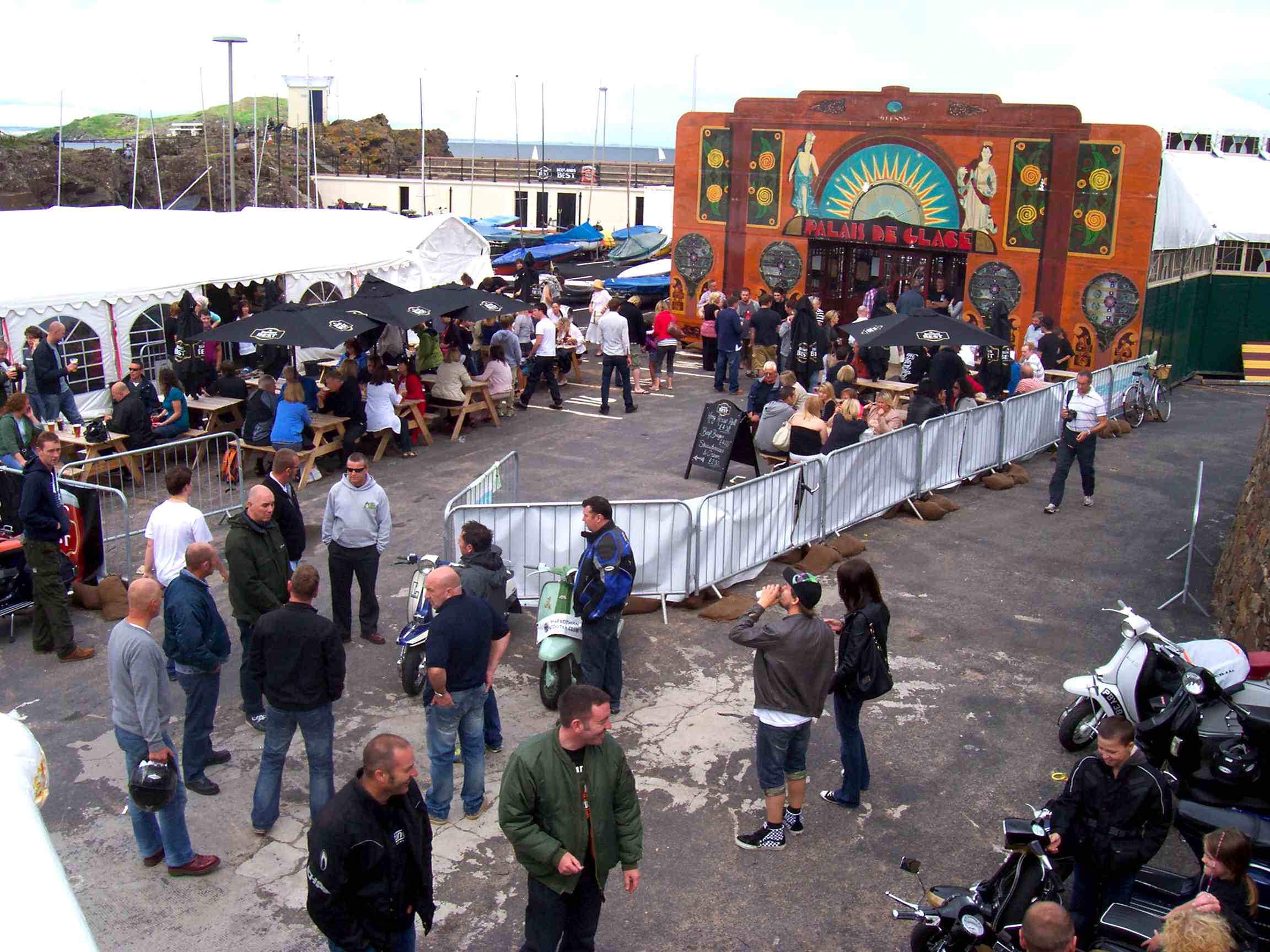
Fringe by the Sea HQ Spiegeltent, Food/Bar tent and Sitooterie

If there was an event that failed to pull a crowd—including the outdoor Walk the Toun—then I failed to spot it. And fine days like the Tuesday and the final weekend, the sun brought the crowds were in force. They spilled over into the town and parallel events, like the RNLI raft race around the West Bay.

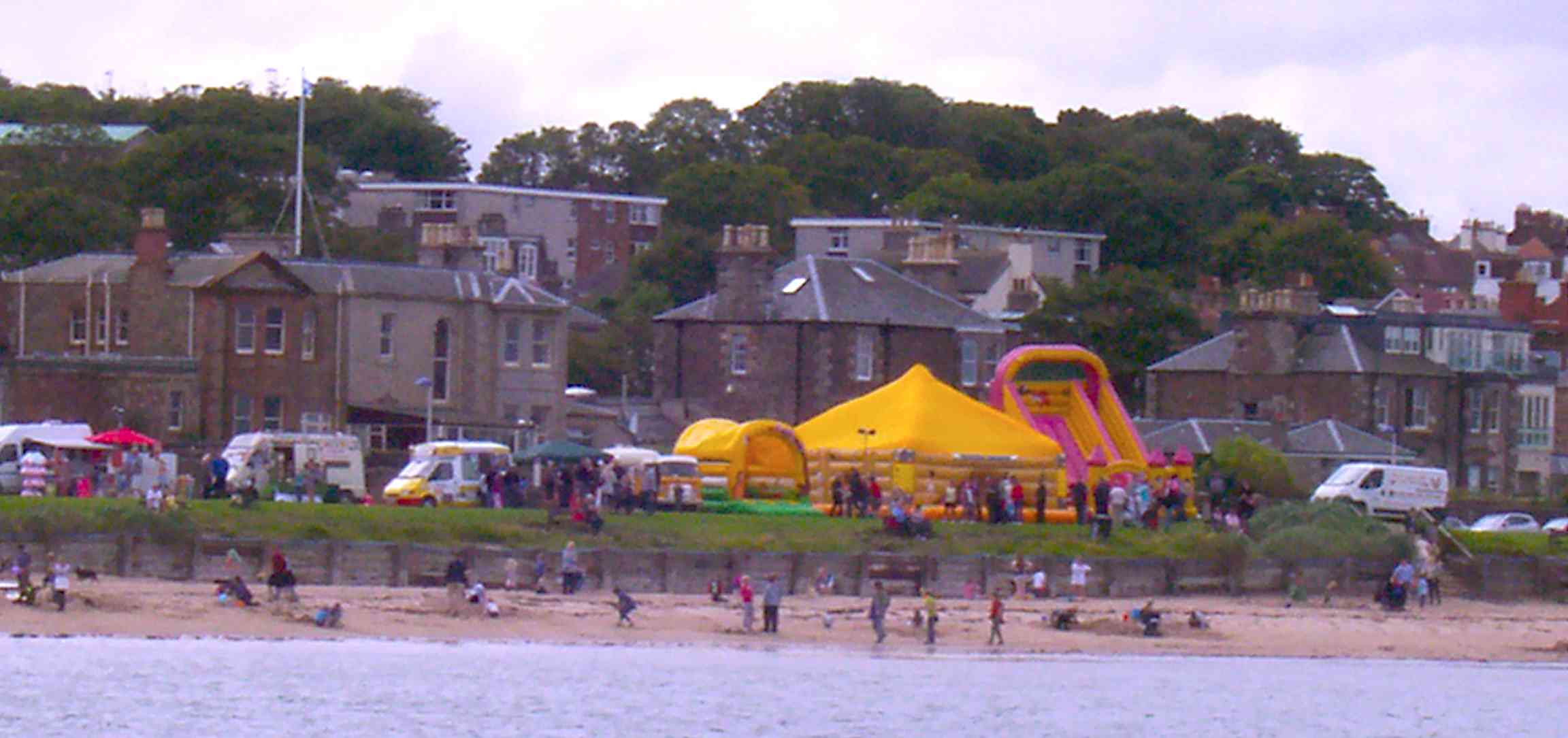
Saturday's Raft Race base on the West Links

The sellout performance of Phil Cunningham and Aly Bain was a fitting ending to what had been a vintage event, now grown from 14 to almost seventy events that covered authors, comedy, children, dance, choirs and open mike sessions as well as the main ‘name’ acts. Eric and John—the pair that started all this—looked absolutely shattered by Sunday’s close. But they and their core organising team, plus the army of local ‘crew’ volunteers who manned the events, deserve huge praise for pulling off yet another smash event—this time achieving it under truly testing circumstances.

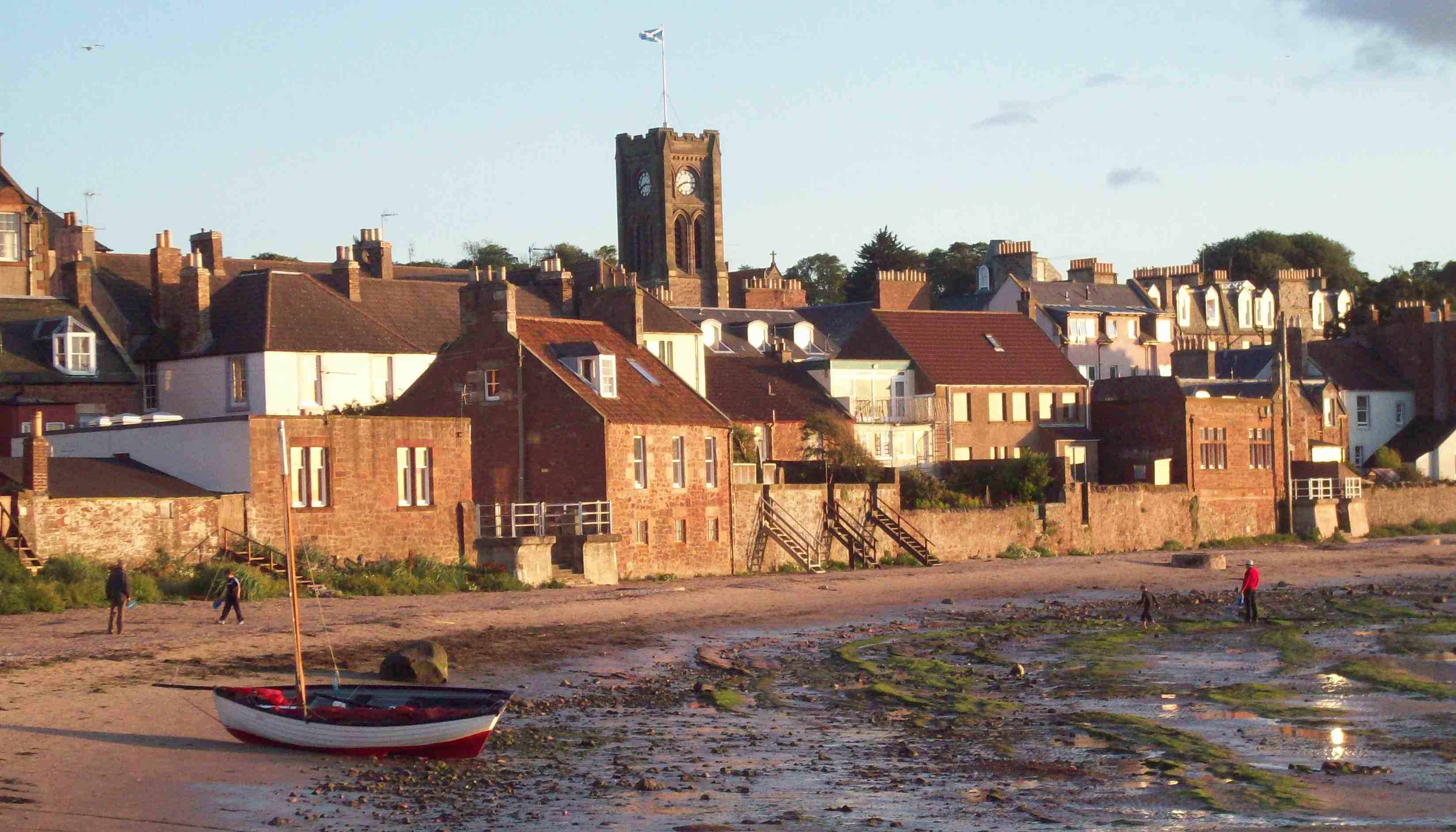
West Beach, North Berwick returns to its customary Sunday evening calm after Fringe by the Sea

Posted in Commerce, Community | Tagged | Leave a comment

Not Such a Zoo: Still a Jungle

In the August 2nd blog Are We Nuts Overpaying Monkeys?, some harsh views were expressed about senior council officials in general, although care was taken not to explicitly refer to any council and certainly not to impugn any individual.

Nonetheless, feedback has been received from individuals who felt that they were being referred to as monkeys and, given that we intended no personal slur, to those who felt thus maligned we extend an apology. We also did not wish to give any impression that the private sector garden was all roses either.

The point nonetheless remains that, from what was once a ‘calling’ of public service where council officials were originally poorly paid for their service and generally compensated in this by having a secure job for life and a comfortable pension at the end of it, the substantial hikes in public sector salaries—especially among senior management teams—has resulted in any clear distinction between top salaries in private and top salaries in public bodies of comparable size disappearing when all benefits are considered.

Seen from the lower paid echelons, top salaries in both private and public sectors are both seen as excessive in times of fiscal reductions, especially if they lead to involuntary job losses largely among the lower paid and reductions in public services. If there was a single point to be made by the previous blog, it was this:

Senior public officials in Scotland have enjoyed a decade or more in untrammelled salary growth in a relatively protected environment. Times have changed. The idea that they can continue at their salaries and benefits without demonstrating measurable and substantial efficiency improvements with the public monies in their care is an illusion.

Posted in Politics | Tagged | Leave a comment