Economic with the Argument

Some of my more volatile colleagues have come close to seizure with this weekend’s issue of The Economist, whose cover carries a waspish map of ‘Skintland’ and whose densely packed articles include a record three that discuss Scotland. Having been a long-time reader of the paper, I was not among those going ballistic—having used The Economist as a lodestar of news down the years, I regard it as an old friend.

Starting in Munich in the 1970s, I could no longer access any UK—let alone Scottish—media. Eloquent though it is on German issues, the Süddeutsche Zeitung covered neither exciting election in 1974 and drove me, faut de mieux, to try what I had always dismissed as a stuffy, humourless specialist weekly, although I had never read it. I was genuinely stunned to find how wrong I had been. I found it witty, insightful, numerate, well written, global in outlook and, best of all for me, disinterested in sport, celebrity or gossip.

With its weekly schedule, I found it just the tool to stay abreast of news that mattered so that, when I moved to California, it continued to provide my weekly dose of penetrating analysis—in sharp contrast to the lightweight and parochial West Coast press in the shape of the San Francisco ChronicleSacramento Bee, San Jose Mercury or the Oakland Tribune.

So, for the last 40 years, I have been a fan, almost an addict needing my weekly fix of concise, informed opinion—so much so that, with my return to Scotland coinciding with that sad decline of the once-noble Scotsman into Mail-in-a-Kilt, The Economist continued as my current affairs source-of-choice. When news of this week’s issue (and the outrage it was causing) reached me before the print edition did, I was simply curious.

Nonetheless, seeing the cover that triggered the stramash and reading the related lead article did give some sense of outrage; my first instinct was to draw an equivalent map of various English shortcomings. Then, I thought better of it. Are we Scots still so touchy that a well executed lampoon and demolition job need trigger apoplectic fits? Is the fact that The Economist is now trying to deconstruct Scottish Independence not a definitive sign that debate has arrived, that a hitherto fore oblivious nomenklatura is waking up? Independence has arrived at the gates of the establishment.

It is hard, as a paid-up independista, not to see some of the article’s language as, at least, provocative. For example:

“The Catalans, among other disaffected European groups, see Scottish independence as a harbinger of their own bid for nationhood. Other diverse nation-states watch, and worry.”

The language—implying unrest and coded revolution—is not the most measured phrasing I have seen on those pages. But it reflects how many unionists see it. The trouble is, it is also how Franco saw it and who, in his four decades of odious fascism, tried to repress both Catalan identity and their language. They have reason to be stroppy in a way Scots can’t quite justify.

For the repression that Scots may feel is more the result of a combination of genuine lack of appreciation for our differences in Britain, hand-in-glove with a congenital assumption on the part of most English that their culture represents the sine qua non of civilisation. The subsequent conflation of England with Britain and all that is good in either then becomes Pavlovian and, from there, axiomatic support for the unionist argument. What we Scots don’t quite ‘get’ is that all is often done more with affection than malice. This may be the first time that usually impeccable editorial standards of The Economist have run foul of this.

To find support for Scots viability you need delve no further than other pages of the very same issue. As well as the It’ll Cost You headline article, there are 1,300 words that are more measured (and typical of the paper) entitled The Scottish Play. In this comes the paragraph:

“Scotland’s accounts of revenue and expenditure, based on Treasury data, show that it is not a ward of the state, grossly subsidised from Westminster. In fact it performs better than all regions outside the south-east of England, and has done particularly well in the past decade. In 2010-11 Scotland’s GDP was £145 billion ($225 billion) including a geographical share of North Sea oil and gas, around 10% of Britain’s, with 8.4% of the population.”

Few nationalists would quibble with this positive slant—and yet it has received little covereage. This article includes a chart (see below) that highlights Scotland as the third best-performing ‘region’ (yes…I know…) in Britain, after London and the SouthEast.
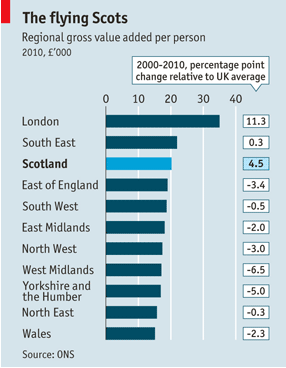
Gross Value Added by UK 'Region' (source: Economist)

Note that, not only does Scotland rate above anywhere outside the Southeast of England but that it beats all but London in terms of growth. And when some of the more negative caveats in both articles are examined closely, they smack more of an attempt to find counter-arguments than the balanced analysis I would normally expect.

As an example, statements made that Scotland would depend on oil for 18% of its GDP and that an oil price of $60 per barrel would seriously reduce production are both factually correct. But would either invalidate Scotland’s economy when Venezuela and Nigeria, let alone the Gulf states are far more dependent on oil and Brent crude, while dipping below $100 only once in the last year, is trading at over $120—twice the ‘worst case’ above?

And, curiously enough, there is a third article in this issue, entitled “Chocs Away”. In it is featured a small company in Grandtully whose hand-made chocolates business is going through the roof and exemplifies the opportunity to exploit Scotland’s reputation for high quality foodstuffs. Their marketing manager Ms Collier reckons that the ease with which her chocolates have found foreign buyers:

“…owes much to the reputation for quality that Scottish food and drink have gained thanks to malt whisky distillers. Small artisan producers like us are following in their footsteps”

The article further cites how salmon exports boomed on the back of Chile losing business and how said malt whisky distillers never faltered in the recession and broke through £4bn in exports this year.

It’s the same in The Economist as elsewhere. The British (= English) establishment, based in London and steeped in colonial history and a reticence that Johnny Foreigner has anything to teach them, is ill-disposed that any other (let alone an equally viable/successful) culture could exist within these islands. They—and their mouthpieces among which The Economist must count itself—can be expected to articulate a broadly unionist line more often than not.

It’s our rôle as Scots not to be so touchy or easily provoked when our cousins lose either their objectivity or their famous sang-froid as they appear to have here. Be gracious: they’re not used to contemplating serious competition from another ‘region’ in what they continue to see as their own back yard.

Posted in Commerce, Politics | 2 Comments

The First Shall Be Last

Last week, the Edinburgh Evening News broke the story that FirstBus (Scotland East) was going to withdraw roughly half the service it currently runs in East and Mid-lothian. Having worked with First through EL Council and seen the thick end of £1/2m disappear into its coffers for local supported bus services, not to mention compensation payments for carrying the elderly and running home-to-school transport, might you hope for a “heads-up” warning from one partner to another? Not a bit of it.

A letter to the council, dated April 2nd announcing the fait accompli, was not presaged by either negotiation or information and actually arrived the day after the EE News scoop. It made no mention of the four years still to run on the deal struck between ELC and First for supported bus services. Although unsaid, this was a unilateral reneging on a contract.  First’s MD Paul Thomas explained the situation thus:

“Despite the implementation of a number of marketing and pricing initiatives, this decision has been reached because a number of years’ poor trading performance, economic climate, fuel costs and cuts in external funding…it is no longer possible to fund these services from other parts of the business.”

Oh, really? Twenty years as a customer of their services taught me there are few more organisations single-mindedly dedicated to short-term profit than First’s Edinburgh operation. They charge eye-watering prices where they have no competition; they are especially fly at screwing extra money out of supported services. And they do this with a fleet of cast-off, antiquated gas-guzzling buses that make mockery of public transport as any green alternative to chelsea tractors.

In all, they provide an unenviable example of how bus deregulation does real damage to public transport and public attitude towards it. The profit motive is all very well but for First Group’s latest 6-month report to boast profits of £3.2 bn (= 10% of the Scottish Government’s entire budget), it’s a bit rich to plead poverty. Now that they’ve failed to squeeze enough out of this one sector by losing a bus war with Lothian, despite elbowing most smaller operators off their patch, they throw in the towel with scant 60 days notice.

But, easy though it is to catalogue First’s copious shortcomings, it is actually a chance to light a candle rather than curse their darkness. It will be a scramble to re-provide their existing services by June. But meetings with other bus companies, the Scottish Government, SESTRANS and Midlothian (who are also affected) are underway and sounding positive.

But this is also an opportunity to re-think how ELC provides transport across the county. This can be broken into four:

  1. Commuter traffic, mainly radial into central Edinburgh
  2. Local traffic, providing access to town centres from suburbs and villages
  3. School traffic, feeding pupils from across a catchment area, plus outings
  4. Social support traffic, such as Day Centres/Lunch Clubs and outings

Category 1 includes train services into town from Dunbar and North Berwick; buses here are best run as express services. Category 2 should (but does not) provide ‘feeder’ services to stations and avoid running buses that duplicate rail services. By making a few, reasonable assumptions, it should be possible to prototype a far better and easier to use system in East Lothian that could be a model for the rest of Scotland. The assumptions are:

  • Lothian provides the ‘local’ services to/from Tranent/Port Seton & Edinburgh
  • Some agreement on use of their Ridacard elsewhere in EL needs to be reached.
  • All buses accept an ‘Oyster-type’ swipe card to ease transfer and speed boarding
  • Buses in the (non-Lothian) Eastern area are mutually timed to meet at Interchanges

Given, this, a more frequent and streamlined service could integrate with both Lothian and ScotRail services so that people would find real encouragement to use public transport—as across Europe. The difference? To look like Europe, it should be integrated, fast and competitive in price. Why? Because as ridership rises, public subsidies fall, service improves and everyone’s happy. A post-First network might consist of:

    1. X24 N. Berwick to City Centre (via Gullane, Longniddry, A1/ASDA)
    2. X45/253 Dunbar to City Centre (via E. Linton, Haddington, A1/ASDA)
    3. E20 (ex-120) E. Linton to Gifford (via Tantallon, N. Berwick, Dirleton, Drem, MoF, Flag Heritage Centre, Athelstaneford, Haddington)
    4. E23 (ex-123/44C) Haddington to QMU (via Pencaitland, Ormiston, Tranent, Wallyford, Musselburgh; return via A1/A68, Whitecraig, Wallyford)
    5. E28 (ex-128) Haddington to QMU (via Ballencreiff, Longniddry, Port Seton, Prestonpans, Wallyford, Whitecraig, A68/A1; return via Musselburgh, Wallyford)
    6. E44 (ex-44D Haddington to ERI (via Gladsmuir, Macmerry, Tranent, Wallyford, A1/A720/A7)
    7. E10 (ex-110) Elphinstone to Port Seton (via Tranent, ScotRail & Alder Road)

Timing services C through F above to have Interchanges with each other and with B at Haddington and ScotRail at Wallyford, you could get to/from central Edinburgh, ERI and QMU far faster than now to/from any village or town in the county. Evening, weekend and seasonal tourist services would be modifications of this basic service.

Services A and B may remain commercial, as will western local services run by Lothian (15, 26, 30, 44). To add services C through G as hourly would only take nine buses; ELC already support six (110; 120; 121; 123; 128; 141/142). If these were scheduled to run as:

  • First trip circa 7am as commuter trip
  • Second trip circa 8am as school trip
  • Core trips (9am – 3pm) as standard trips
  • Tenth trip circa 4pm as school trip
  • 11th trip circa 5am as commuter trip
  • Final trip circa 6pm as standard trip

…then they would save at least three other buses currently used exclusively for school trips and the net cost for a far better service should be no more than it is now.

As for fares, currently, First’s prices outside the area served by Lothian average three times what they charge in Edinburgh and attract much negative comment and reluctance by the public to use the services. It would remain cheaper to buy day tickets than a normal return—or invest in a Ridacard.

Assuming that all services outside of Lothian’s area were run by an ‘arm’s length’ East Lothian Transport company with Oyster-style swipe payment of at least £1 per journey, it should be possible to increase ridership to the point that financial subsidy of bus services could actually be decreased. Even charging £2 per trip is appreciably cheaper than now.

Suggested East Lothian Transport Network (maroon colour = Lothian)

Red dots on the map indicate main Interchanges. Buses would arrive/depart from Haddington grouped around 10 minutes past each hour and from Wallyford around 50 minutes past each hour. While most journeys would involve a transfer, this would be compensated for by easy swipe-card boarding, minimum wait time and hourly service on all routes. Full co-ordination of interchange and ticketing with rail would take extensive negotiation and require a longer time scale.

Whether First wishes to be a part of this is unknown. Certainly other bus companies have expressed an interest in expanding/improving services and both the Scottish Government and SESTRANS have expressed support for such a scheme. Final details will only be know once ongoing negotiations have been completed. But First’s failure could actually be the best thing that’s happened to public transport in East Lothian (and maybe even Scotland).

Posted in Commerce, Community | Leave a comment

NATO no Tenet on OTAN

I’m a follower of Burdzeyeview because said Burd has a deft habit of spearing keys issues of the day with insightful comment—thereby roping in a fair number of informed people to comment on them and generally advance the issue, even where it is not resolved. Despite it being Easter, this week was no exception. While I was merrily bouncing round the Bass showing visitors our spectacular wildlife, the Burd asked why Professor Malcolm Chalmers piece in SoS had flushed so little comment out of the usually vocal ‘cybernats’.

The question is a fair one: I’m game. For years, SNP party policy has been against any NATO membership for Scotland. The basis has always been a fundamental refusal to accept nuclear weapons on Scottish soil. I can well believe (as the article claims) that a majority of SNP members would consider NATO membership of some sort as a necessary component of a Scottish defence posture—not least because I am one of them. But I am no happier with Trident than anyone else in the SNP.

What the good professor seems to overlook is that, of the 28 existing members of the NATO alliance, only three are nuclear (USA, Britain, France). The rest have kaleidescopic involvement in the alliance that is tailored to their capacities and political realities: nobody expects landlocked Hungary to field much of a navy nor tiny Luxembourg to field much of anything. Yet they are members. The habitually stroppy French won’t even agree on its name and insist on “Organisation de Traité d’Atlantique du Nord” (=OTAN).

Despite an independent Scotland not offering serious global military clout, along with Iceland, it is superbly positioned to watch NATO’s northern flank. It offers facilities for commando training in the Angus glens, infantry and low-level flying ranges in D&G, plus the most accessible and ideal joint-services exercise area around Cape Wrath. To think that NATO top brass in Brussels would not prefer to have Scotland as a member—even IF it joined with some caveats—is to underestimate their pragmatism.

The caveat of not stationing nuclear weapons on our soil may not be seen as ideal. But it is neither unique, nor is it a dealbreaker. Especially as any Scottish armed forces would be ex-UK armed forces and already fully trained in NATO practice.

The second key point Professor Chalmers appears to make is that Scotland could not afford a decent defence posture—citing £2bn as our budget and £100m as the cost of a single strike fighter. Both are indeed reasonable figures and it would indeed cost us a year’s budget to equip a squadron with state-of-the-art fighters. But any independent Scotland will have paid for 9% of the present UK forces and would be entitled to that share upon independence.

That share may not sound like much, but a balanced defence force for Scotland would not include the most expensive equipment currently deployed by the UK, most especially the 4-strong Trident fleet, either of the aircraft carriers now building, any of the 400 Challenger MBTs (cost £4m each) or overseas deployment & bases & support required for them.

As a result, a couple of frigates, some light craft, a hundred or so IFVs and light recon vehicles, a share of REME gear, two squadrons of helicopters (recon & attack) and the same of fighters (plus some Hawk and Tutor trainers) would do us nicely and not break the 9% bank. Some heavy lift like Hercules would be necessary until we replace long-range maritime recon aircraft that the MoD scrapped.

Two months ago, an article here described what a Scottish Army might look like. Its exact nature would be up to those better qualified than I and the agreement of those involved that they wished to serve in it. But the key point is that—like ALL smaller NATO nations—we would not be going to war by ourselves and—unlike the UK—would have no ambition to throw our weight around in any repetition of Falklands/Iraq/Afghanistan.

Where Prof Chalmers is probably correct is that Scotland may not wish to deploy any of the Astute class nuclear-powered (but NOT nuclear-armed) attack submarines, nor any of the Type 26 frigates due in service after 2020. That is because 2-3 older frigates from the existing RN fleet would suffice for ocean patrolling; attack subs are intended to take on a major blue-water navy. Scotland would be crazy to do that by itself and, with only a small surface fleet, would have no need to defend major targets like aircraft carriers from such a threat.

It is clear to most in the SNP that, if Scotland were to scale its forces to the country’s needs, the £2bn defence budget would be adequate to provide adequate forces. It would also be barely HALF of what we currently spend to support the £40bn UK defence budget. But Prof. Chalmers final assumption—that none of the ships the RN would continue to need would be built in Scotland—seems flawed.

Scotland would have no interest in anything but good, close relations with its southern neighbour. That would be exhibited in a willingness to extend the life of Faslane while the RN found a new home for their nukes (including the five hulks mouldering at Rosyth) and also continue building carriers and frigates for their more global military ambitions at competitive pricing the MoD would find hard to refuse.

The SNP defence spokesman Angus Robertson has recently said the party is “looking at the policy options” on the Nato treaty. Since NATO has diplomatically accommodated its smaller, non-nuclear members to date, it seems time for us to consider such options.

Posted in Politics | 3 Comments

It Was 20 Years Ago Today

No, not the Beatles track (that one was actually 45 years ago now) but, in displaying my anorak tendencies in spades, I fess up  to having just spent a housework day half-watching BBC Parliament’s 12-hour-long  marathon rebroadcast of the 1992 General Election. Despite it being history, its relevance as a reference point to politics today was striking.

The initial problem was to get past the ‘time warp’ aspect of big hair and big glasses, women’s blouses and colourful floral ties that date it so much. That and John Snow’s semi-mechanical ‘swingometer’ still in early stages of development. People you thought were always part of the establishment popped up as new boys—like David (‘two brains’) Willets, Mandy (complete with dodgy ‘tache) and Eric Pickles, who already looks like he couldn’t possibly get much fatter. Emma Nicholson, re-elected in Devon gushed about Major and convincing him to get more women elected (just 3 years before she defected to the Lib-Dems, citing Westminster Tory ‘old boy’ networks). Though it seems piffling now, much was made of an increase to 59 women MPs, 20 of them Tories. Out of 650!

The raft of familiar faces shown were startling in their youthfulness, including Ashdown and Kennedy, Redwood and Portillo, Gordon Brown & Brian Wilson. All were quizzed by compere David Dimbleby at the helm, but with a deference that today would seem Victorian in its politeness.

Fresh-faced Iain MacWhirter, anchoring in Scotland spoke of “everyone eating large amounts of humble pie” after Tories—against all expectations—held their 9 Scottish seats and added two. He interviewed an equally youthful Galloway who (alone) predicted Kinnock would stand down and argued Labour must extend a hand of friendship to SNP to use the Constitutional Convention as Tories were laughing at the disunity among their opponents over any constitutional change.

Canon Kenyon Wright claimed “the will of the Scottish people contined to be massively thwarted” while David Steel, interviewed in his Ettrickbridge fastness, felt Jim Sillars, having persuaded the SNP to stay away from the Constitutional Convention, might have less influence now his “Free by ’93” had proved such a damp squib and himself had lost the hard-won Govan seat. Sillars’ interview showed him more moderate and measured than either his reputation or his more recent utterances.

Alex did a statesmanlike job in his acceptance speech. 20 years younger, he delivered with the same impressive balance he exhibits today a claim that the people of Scotland would not long stand being ruled by those for whom they did not vote. But most convincing of all in Scotland was a nebbish but poised Donald Dewar who, while dismissing civic disobedience as a tactic flatly stated that the Tories had no mandate to rule in Scotland and that they would come to regret it if they ignored that fact.

Long ago as it was, the sheer surprise to all (including Tories, though the senior ones denied it) that Labour didn’t win and that Major was back in with a working majority of 21. But, seen from today’s perspective, he did less well and Kinnock did much better than the story of the day. Both polls and papers had been predicting a Labour win and the anti-Thatcher, anti-poll tax sentiments were still running high.

But this was also the era of the ‘loony left’ and Labour were still on the long journey back from 1983’s electoral oblivion when they punted what Gerald Kaufman waspishly observed to be “The Longest Suicide Note in History” as their manifesto. Kinnock, although he had brought them back from the brink, had indulged in some odious triumphalism in Sheffield (“Well, all right!” repeated from the podium to rapturous applause— to no discernable purpose). Within 24 hours of the result Kinnock stood down.

As this was the era when Middle Britain emerged from the class war, many started to expect more from politicians than left/right doggerel and cant. Blair and Brown were MPs but it would take the interregnum of the decent John Smith to lay foundations for what became the immensely electable New Labour who cottoned on to such things and effectively stole the Tories traditional clothes.

So while Labour did make serious progress—actually their 2nd-best improvement up to then, they won only 44 of the 94 seats required to form a government and which all agreed they were on-track to achieve. Polls and newspapers had much to answer for. In the event, not only did the Tories scrape home in many target seats but they sustained their 43% share of vote and, watching the Lib-Dems slide from 23% to 18% and slip back by 2 seats, could argue they won even bigger against them than against Labour.

Paddy Ashdown made a brave face of it but was miles off in predictions, seeing his own policies as realities and claiming “There is now a real question whether Labour can ever challenge for government”. Dennis “The Beast of Bolsover” Skinner would have no truck with this and was quite clear that, with no concession to Lib-Dems or their PR but with a strong dash of old-time class warfare, “Labour could win the next election hands down”.

The Lib-Dems would actually make good use of time but not at Westminster. Sally Magnusson down at the Yeovil Liberal Club found them somewhere between miffed and defiant. But through the nineties and noughties, they made a strong play in the North and West of England from grass roots, electing hundreds of councillors to city halls from Liverpool to Doncaster. This platform became one from which they could make their strongest showing to date in 2010.

But if the English and Welsh were baffled how Major pulled this out of his hat, there was a right scunner among the Scots. Although 49 Labour MPs were elected (along with 11 Tories and 9 Lib-Dems) no-one had a sense of progress, nor of being protected from either Thatcherism or nukes on the Clyde. The ‘standing-still’ of the SNP at 3 seats concealed a huge rise in their vote, doubling to over 690,000 and putting them in striking distance of the three further seats In five years, losing them began a long dark Tory night.

In 1992 Scotland still registered as just a region of Britain—albeit a quirky one. Dimbleby referred to Berwick as “the northernmost constituency in Britain” and proceeded to show a picture of Alnwick Castle. What was equally amusing was the obvious spin and blind party loyalty indulged in by everyone when discussing results: spin was not a Blairite invention—he & Mandy simply perfected it.

But it is only with 20/20 hindsight that the events of the last few years—let alone the Scottish Parliament itself—could have been predicted from the events of that night in 1992. Nobody (with honourable exceptions from Dewar and Galloway) seemed to have a clue what even the next five years might bring. Altogether, it was a lesson in how little even the best informed and those paid to anticipate can predict our future.

Posted in Politics | Leave a comment

“I Can See How One Might Be Stirred Up”

How unfortunate that such empathetic insight as displayed by the Rev Beeb in Forster’s “A Room with a View” is not echoed by the mighty Auntie Beeb when it comes to allowing democratic voice to its Scottish license-payers. As outlined in the excellent “A Sair Fecht” blog (and shamefully stolen for this one), censorship of debate has been exercised here which is not the case anywhere else within the Britain that unionists never tire of telling us is so good for us Scots.

But consider the following:

BBC Scotland: Political Editor – Brian Taylor: Comments NOT allowed.
BBC Scotland: Business Editor – Douglas Fraser: Comments NOT allowed.
BBC Wales: Political Editor – Betsan Powys: Comments allowed.
BBC Wales: Parliamentary Correspondent – David Cornock: Comments allowed.
BBC Northern Ireland: Political Editor – Mark Devenport: Comments allowed.

In England:
BBC North East & Cumbria: Political Editor – Richard Moss: Comments allowed.
BBC Yorkshire & Lincolnshire: Political Editor – Tim Iredale: Comments allowed.
BBC Midlands: Political Editor – Patrick Burns: Comments allowed.
BBC East Midlands: Political Editor – John Hess: Comments allowed.
BBC West of England: Political Editor – Paul Barltrop: Comments allowed.
BBC East of England: Political Editor – Deborah McGurran: Comments allowed.
BBC South East: Political Editor – Louise Stewart: Comments allowed.
BBC South of England: Political Editor – Peter Henley: Comments allowed.

And the reasons given? Daniel Maxwell, BBC Scotland’s news online editor, when given the task of defending the indefensible, said.

“We believe that by determining which particular issues might best be explored by the inclusion of public comment online, we will allow a more flexible and adaptable approach to be taken to how we cover the main issues in Scotland.”

Aye, right: I’m with the Rev—not Auntie—Beeb.

Posted in Politics | Leave a comment

Why Far Away is Close to Home

Oakland, California is 8 time zones or 5,000 miles from Scotland and, as it seldom registers on our screens unless the Raiders make it to the Superbowl, is seen to have little relevance. Oakland does not have the profile of San Francisco across the Bay, a ‘city’ of some 300,000, it is actually an integral part of the SF Bay conurbation, which has a population larger than all of Scotland. So why is this week’s shooting of seven at Oikos University any more relevant in America’s 5th most dangerous city (110 murders in 2011)? It is also a dizzy mix of black, Chinese, Chicano, Nicaraguan, Korean and Vietnamese, as well as the (marginal) white majority.

While details are still being uncovered, the New York Times reported that L.Goh, a 43-year-old Korean former student lined up a class of which he had been a member months before and started shooting, causing five deaths and wounding five more, two of whom have since died in hospital. He gave himself up in a nearby Safeway. This kind of thing is becoming less rare, especially in the US, and still strikes most Scots as incomprehensible. Perhaps we should pay more attention as it does have relevance.

Looking at the context, there are many parameters that are unfamiliar to Scots. Oakland, though the size of Aberdeen, boasts 13 institutions calling themselves ‘universities’. Some—University of California and California State University we would recognise as such. Others—like Laney of Merritt Colleges—are ‘junior’ colleges, where students can do the first two years of undergraduate work cheaply, then transfer into a ‘full’ university like UC or CSU.

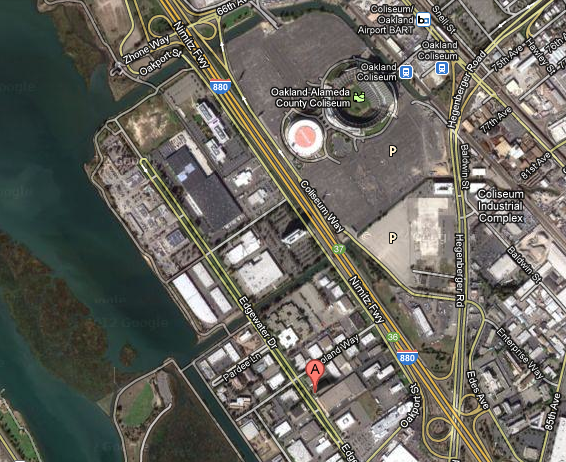
But in a large grey area are a number of private universities recognised by the US Dept of Education as able to confer degrees in certain subjects. As with all other third-level educational institutes in the US, these are fee-paying and profit-oriented. The top-notch universities like Ivy League, Purdue and Stanford are richly endowed, have a formidable academic reputation and cherry-pick the best students to sustain that reputation. The less well known like Oikos cannot and live far more hand-to-mouth, competing with a half-dozen similar ‘universities’ just within Oakland itself. For cost reasons, it is located in an industrial area across the Nimitz Feeway (Interstate 880) from the Oakland Coliseum (where the Raiders play) in a standard industrial building. Forget tree-shaded lawns around dreaming spires; there is no campus recognisable as such—this is business.

And, while it may not charge the $20,000+ that Stanford would across the Bay, you ‘must’ carry at least 12 units per Semester (cost = $4,400 per year), plus:

  • Application Fee: $300.00 (Non-refundable)
  • Admission Fee: $100.00 (Non-refundable)
  • Registration fee: $100.00 / Semester
  • Student Fee: $100.00 / Semester
  • Graduation: $600.00

—which adds up to a hefty $5,200 minimum each year, plus all books, materials, equipment and living expenses, plus $600 at the end if you want a nice certificate to say what you did. And, because the US constitution bans religion from state education, these private universities are also the refuge for those who see religion as part of any proper education. Oikos is one such. In its Vision Statement, Youngkyo Choi, Chairman, Board of Directors declares:

“The vision of Oikos University is to educate emerging Christian leaders to transform and bless the world at every level – from the church and local community levels to the realm of world entire.”

There is no concrete evidence connecting this with Sun Yung Moon‘s Unification Church that became notorious in the seventies for brainwashing disciples. But Koreans do seem partial to a particularly muscular version of Christianity and Oikos offers a BA in Biblical Studies, as well as Nursing, Music and Asian Medicine ‘Schools’. Curiously enough, while the fees and course outlines are available on their website, the faculty members are not. Degrees from any school requires a minimum of 15 (out of 120) units must be ‘Bible and Theology requirements‘.

Whatever did motivate a student to attempt a massacre on his former classmates may eventually become clearer but any vision of an immature student in an Oxford-like environment should be suppressed and replaced by something as close to an industrial apprenticeship suffering severe financial (if not religious and psychological pressures) in a factory environment with the express and single-minded goal of attaining a certificate that will enable higher earnings. The idea of a broad education and convivial collegiate socialising that is the norm in Scottish universities is entirely alien in this case.

The lessons for us? Reasonable though the demands are from business to receive graduates who are literate, numerate and able to contribute from the off, we are in danger of sliding towards the Oikos ‘factory’ model if that is taken too far. In addition, the idea that religion has a role to play in education clearly had relevance in the Middle Ages when virtually every seat of learning had religious overtones. But, in the 21st century, such segregation—especially in the crime-rich pressure-cooker of a multi-ethnic, multi-faith community like Oakland— appears to have explosive overtones, especially when combined with such a soulless ‘factory’ approach to education.

We compromise the broad, secular, other-worldly nature of our universities at our peril.

Googlemaps Satellite View of Oikos (A) with SF Bay on left & Oakland Coliseum at Top

Posted in Commerce, Education | Leave a comment

The Empire Strikes Out

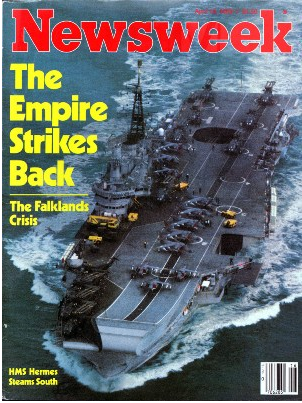
Hard of the heels of our discussions on both advisability of the UK attempting to build new aircraft carriers for a global role it can’t afford (see Macho White Heffalumps from March 26th) and the hubris of empire over islands at the far end of the world that we British thought we could hold easily (see Those Who Don’t Learn from History in November 2011), we find ourselves at the 30th anniversary of the short, sharp Falklands War (Guerra de las Malvinas to those on the other side). From media coverage, the lessons hard learned then do not yet appear to have been learned.

In 1982, despite the Empire being just a memory to people over 40, Britian still aspired to a global rôle. So when, on April 2nd, Lieutenant Commander Guillermo Sanchez-Sabarots’ Amphibious Commandos Group, landed and rolled up Major Norman’s handful of Royal Marines, it was all over in a day. This should not have come as a total surprise to the MoD. Two weeks earlier, a non-military Argentinian occupation of the abandoned whaling station on South Georgia had resulted in them dispatching two nuclear submarines (HMS Splendid & HMS Spartan) along with RFA Fort Austin to support the only RN ship in the area, the survey ship HMS Endurance.

Carrington’s resignation and Thatcher’s doughty dispatch of a task force to re-take the islands is well documented. The resolute, brave and professional exploits of all three services will, deservedly, receive much media coverage over the next two months, up to June 14th, the 30th anniversary of the Argentine surrender in Port Stanley. Epic though those exploits were, it was, as Wellington phrased it at Waterloo; “a damn close-run thing”. Not only could it have been a disaster but any modern equivalent would almost certainly be. This is because a series of major pieces of luck all fell our way:

  1. The ‘Argies’ didn’t expect a response. Even the US thought the UK crazy to try to take islands 7,000 miles from home and over 2,000 from their nearest base on Ascension. As a result, the garrison of partly conscripts weren’t expected to have to fight.
  2. Casper Weinburger was an anglophile. In deference to his latino population and diplomacy in Latin America, President Reagan resolutely declared the US to be neutral but his Secretary of Defense persuaded him to supply badly needed satellite intelligence and sidewinder missiles, without which the British would have lost.
  3. The Argentinians had few Exocets. French-built and carried by a Dassault Super-Etendard strike fighters, these were weapons for which the Task Force had no real answer (Phalanx gatling guns came later). Launched from below the horizon, two of these destroyed HMS Sheffield and the Atlantic Conveyor (with 6 Chinook heavy-lift helicopters). The lucky part is that the second target was meant to be HMS Invincible, the loss of which would have ended the operation.
  4. Although operating outside the British-declared exclusion zone around the Falklands, the WWII-vintage cruiser Belgrano was sunk by a single torpedo from HMS Conqueror, triggering a dispute as to the legitimacy of the action. However, this did remove any surface threat to the Task Force and allowed it to concentrate on the occupying land forces and incoming air attacks.
  5. Despite their phenomenal bravery flying at extreme range with ‘iron’ bombs, Argentinian Air Force pilots destroyed few of the sitting-duck-target ships in San Carlos Water after the landing. They hit plenty but at least three out of four bombs did not explode because they were released so low, the fuses had no time to arm.
  6. Operation ‘Black Buck‘ was a success. Due for scrapping that year, the RAF still had a number of Vulcan delta-wing bombers on strength. By scraping together a dozen air tankers and refueling single Vulcans, one reached the Falklands from Ascension to strew 21 1,000lb bombs across the runway at Port Stanley, rendering the airfield unusable to all but light aircraft. This denied the Argentinians air superiority.
  7. Goose Green was held mainly by conscripts. After the landing, 2 Para was sent to clear this flank of the advance on Port Stanley. Across bare ground, with little artillery and no armour support, this was an almost suicidal mission,. But, carried out with such bravery and determination, it psyched out the defenders who surrendered, but not before Col. H. Jones lost his life leading the attack. News of this undermined the remaining Argentine defenders’ morale.

Had any one of the seven items not happened, the outcome would have been in serious doubt; had several of them happened, the operation certainly would have been a disaster and the Falklands probably have become the Malvinas and part of Argentina. But the present exploration for oil in the waters around keeps the question of sovereignty alive.

Nowadays, with no aircraft carriers, no long-range bombers, no STOL Harriers, fewer ships, fewer aircraft and ‘operational stretch’ of forces being fully committed (overcommitted?) in Afghanistan and elsewhere, a similar occupation—in the Falklands or even anywhere else up to and including North Sea oil rigs and Channel Islands—could not be repulsed, let alone ejected, by the UK’s present forces, even if an equivalent seven lucky breaks to the above could be guaranteed.

For a country with the third highest defence budget in the world (£40bn), we have an execrable deal. It’s one about which serious questions need to be asked—as well as what the UK thinks it is doing in the 21st century, not just in Afghanistan, but in the fourteen ‘pink bits’ on which the sun still never sets, any of which have the ability to entangle us in a Falklands-type war. The difference being that, now, there’d be little chance of winning.

Posted in Politics | Leave a comment

You’re Georgeous!

Seldom have I seen so many politicos in a tizz, so many journos wrong-footed or so many people who should know better vacillating between doing the headless chicken and venting their spleen over the thumping victory “Gorgeous” George Galloway achieved in Bradford West. Unlike his rabbit-out-of-a-hat job at Bethnal Green in 2005 where he squeezed past a bemused (and rather undeservedly) dejected-looking Oona King by 500 votes, this was the real deal; here, he cleaned the floor with his opposition.

His opposition—quite apart from the usual 3-digit fringe parties—was actually the three major UK parties. George likened them to three buttocks on the same arse and certainly had skelped them all by the time the night was over. Their usual henchpersons were out explaining away why they had neither seen it coming nor had convincing explanations for what happened. What happened is as close to a landslide as elections ever get, viz:

  1. George Galloway (Respect) 18,341 (55.89%, +52.83%)
  2. Imran Hussain (Lab) 8,201 (24.99%, -20.36%)
  3. Jackie Whiteley (Con) 2,746 (8.37%, -22.78%)
  4. Jeanette Sunderland (Lib-Dem) 1,505 (4.59%, -7.08%)
  5. Sonja McNally (UKIP) 1,085 (3.31%, +1.31%)
  6. Dawud Islam (Green) 481 (1.47%, -0.85%)
  7. Neil Craig (D Nats) 344 (1.05%)
  8. Howling Laud Hope (Monster Raving Loony) 111 (0.34%)

While a cuffing for parties of Government and the low vote for minority/unheard-of parties were both on the cards, this was a Labour seat with a 5,000+ majority in the Labour heartlands of the ex-industrial North of England caused by nothing more sinister than the retirement of a sitting MP for reasons of ill-health. With the Coalition having their worst week so far and Labour’s new leader of six months itching to make his mark, this result ought to have been a foregone conclusion.

As close as the day before, Labour thought it was, reporting that Galloway was making a strong challenge but that Imran Hussein, a Muslim from the area, would be the winner. Indeed, it is almost unprecedented for the opposition party of the day to lose a by-election—as rare as three times in the last 40 years, including this one. And it wasn’t just Labour: the ConDem parties and just about everyone else but George and his troops had written this off as a Labour romp.

Since the result was announced, party spin machines have been in a lather of damage limitation with Harriet Harman most to the fore, declaring “we need to learn the lessons” on five occasions in 24 hours and “we need to deepen connection with voters” on three. If this smacks of Johann Lamont’s recent sackcloth and ashes script, it’s probably no coincidence; Labour—especially New Labour—is not geared to doing ‘humble and repentant’; it’s not in their DNA. Labour leadership is now suffering criticism that they were too focussed on maligning the Tories nationally even while campaigning in Bradford West—and there is much truth in this.

Two Eds are Better than One When the Pasty Tax Bites at Greggs

But Labour was still out there working the streets; they had a plausible candidate and a long history of steady support. What went wrong?

First of all, Bradford West is an unusual constituency. It is unusual in the same way that Bethnal Green is: the two have the largest percentages of Muslim voters in Britain. This played to George’s Respect Party’s strengths, which are anti-war and pro-Muslim. Many people may have forgotten the Iraq war, even if they have not forgotten Afghanistan. But, as Diane Abbott MP has pointed out, those who have not lie outside the political classes and provided an unrecognised undertow of opinion.

Secondly, there is George himself. It’s hard to name a British politician as flamboyant, as self-believing, as shamelessly self-promoting or—among politicos at least—less popular. No-one who is anyone likes him and many claim his 2010 squirmingly unpalatable Big Brother appearance contributed much to his win. This is simplistic. George is actually not only politically astute but clearly understood the people of Bradford West far better than any other candidate/party.

More than simply campaigning on an anti-war footing, he threw out conventional campaigning and addressed an unprecedentedly sectarian letter appealling to Muslims to search their hearts for they know ‘instinctively’ who is a Muslim and who is not. It is bracketed with the customary Muslim greeting as no previous party election literature.

A Catholic himself, he flatters them divine discernment—what they know ‘instinctively’ is what Allah knows perfectly. He declares: “God KNOWS who is a Muslim and he KNOWS who is not” and he goes on to list his Islamic virtues: “I, George Galloway, do not drink alcohol and never have… I, George Galloway have fought for Muslims at home and abroad, all of my life… I, George Galloway, tell the truth…I, George Galloway, hold Pakistan’s highest civil awards…I, George Galloway, came to the side of the people of Palestine in their agony…’. He also says he will give his remaining days in service of all the people of Bradford West “if God wills it”.

It is as brazen and clever an appeal as anyone could come up with—and that is the third vital element in this. More than anything, it underscores just how vital speaking directly to local voters is. That involves not just bombarding them with literature and messages but working out what kind of community you are dealing with, what their concerns are and speaking to them in a language that resonates. That used to be the case for all parties. But in this day of central offices, large staffs and bright young things fresh from university, that seems to have been lost. With a weak local presence and scant hope of winning, such a mistake being made by the Tories or Lib-Dems is understandable. But that Labour should make it on a home patch is reprehensible.

The bottom line is that this massive victory was no fluke. It was caused by one—certainly flamboyant—candidate knowing how to speak to people while the ‘professionals’ gagged it, big-style. Wounded by his 2010 loss of Bethnal Green, written off after his risible showing on the Glasgow MSP list last year, Georgeous Gorge is back with a vengeance, stunning his old party and ca’ing the legs out from under Milliband’s leadership, just when he thought (rightly) he had the Tories on the run.

As even those marginally interested will know, watching the House of Commons is hardly comparable to watching the Bourne trilogy for entertaining action. Love him or hate him, now that GG’s back, that will change.

Posted in Politics | Leave a comment

Not Just Pasty-Faced: Unionist Economics Are Peely-Wally Too

This blog having trodden light on politics for a week, its time to wheech the shoes off and climb back into the vat to tread the grapes of math. Those readers squeamish about numeracy may wish to skip this one altogether.

When the latest UK GDP figures were released by the Office of National Statistics (on Wednesday March 28th), they did not make for encouraging reading. The ONS said that the UK  economy contracted by a quarterly rate of 0.3% between October and December, up from the previous estimate of a 0.2% decline. This disappointed market analysts, who had expected no changes.

But it also fuels the debate over Scotland’s viability as a separate economy. Leaving aside nostalgia, the UK government’s main forward-looking argument for the union seems to be the we are “stronger together”. The more we see such figures, the less tenable this statement appears. Newsnet Scotland published a cutting piece on what it called the “failure of UK government’s economic plan”. In it, SNP spokesman Stewart Hosie MP commented:

“The UK Government remains wedded to their austerity cuts and now want them to last longer and cut deeper than originally planned.”

But what are the relevant numbers? The current and former chairs of the David Hume Institute (not known cheerleaders of the independence movement) also published some figures that can be considered objective, even if—as they themselves admit—they are rather provisional. Peat & Sutton started by considering national debt to national output as a measure how well a country can withstand its debt burden.

Although some nations are over 120%, an acceptable figure of debt/GDP appears to be around 60%, with Gordon Brown having once set 40% as a goal in the days before Prudence was rudely handled round the back of the bike shed. The Office for Budget Responsibility calculates that the UK’s debt/GDP ratio will peak in 2014/15 at 76.3%, with the current Public Sector Net Debt (PSND) of almost £1tn, putting UK at 63%.

Taking Scotland as 8.4% of the UK population, that puts our share of PSND around £83bn. UK figures ignore offshore oil & gas but, by including them, we arrive at a GDP for Scotland of about £159bn. This would imply our debt/GDP is 52.2%—considerably better than the UK’s.

However, Peat & Sutton further argue that PSND is a fairly narrow measure of liability and that we must consider Whole Government Accounts (WGA) which takes into consideration debt burdens such as pensions (UK about to grow this by adding in Royal Mail pensions), PFI/PPP (which Irn Broon resolutely kept off the books). WGA is calculated as £2tn, which reduces to £1.2tn when assets are offset. The equivalents for Scotland are £152bn and £85bn—slightly better as we have slightly more assets per head.

Also coming into the equation are the £65bn in liabilities by which banks were bailed out in 2008/09. In theory, all this could be recouped if bank share prices recover. But, until they do and assuming they won’t pre-independence, we would need to assume our share of both the debt and the shares owned—meaning there could be a nice windfall post independence. Taking the debt in full adds £5.6bn—but could give us far more back if (when?) RBS/Lloyds share prices climb.

It is a fact (from GERS figures published this month) that Scotland’s own fiscal position has deteriorated with the current recession. From a net £554m surplus in 2007-08 (+0.4% of GDP), the balance has dropped to -£6.4bn (-4.4%) in 2010-11. These figures include North Sea revenues that would accrue geographically to Scotland, based in internationally recognised equidistant borders. (they would change a bit if Berwick were ever to return to Scotland but that is a whole different discussion). So, the ‘positive’ case seems not to look as positive as it did.

But, the picture for the UK as a whole is even less rosy. From a -£5bn (-0.4%) deficit in 2007-08, it has plunged drastically to -£98.4bn (-6.6%) in 2010-11. In other words, the UK is 50% worse off than Scotland would be if it stood on its own. As with the debt, there may be debates to be had about the exactness of the figures. But the incontrovertible fact is that Scotland would pay more by staying in the Union—by these figures to the tune of £2bn (or about 6% of current Scottish Government revenue) each year.

The above cases for independence based on debt or GERS are too simplistic to be conclusive. A large number of other factors need to be taken into account before any final figures could be calculated. These include major components such as:

  • Who would pay to decommission Chapelcross/Dounreay/Torness/Hunterston?
  • What would England pay to lease the Clyde Naval Base & for how long?
  • What English services would Scotland wish to keep using (e.g. embassies)?
  • Would defence savings (£1.8bn cost instead of current £3.4bn) be feasible?
  • Compensation for major infrastructure investments (e.g. Olympics)?

Without full-scale examination based on negotiated settlements, it will not be possible to be fully accurate. When Eire became independent in 1922, they simply walked away from Britain with anything inside their borders and no compensation was made either way (although two naval bases were retained). So simple a solution is unlikely.

But the key issue is this: the present UK government fiscal policy has produced no recovery (the economy is flatlining) and our continued presence in the UK is accruing us debt at a rate 50% faster than if we were independent. While it is right that we need an extended period for information gathering and discussion—especially in light of the large number of ‘don’t knows’ in the population—a major decision on dissolving the British Union must be on the table.

Because the case for Scotland grows stronger daily, not least because the revenues from Scottish exports (not just oil: whisky recently reached a £4.4bn export record; we just reached 33% renewables generation while England’s next nuclear power stations have been ditched by E-on) will allow us to pay down any debt faster than the UK ever could. With Brent Crude over $110 a barrel and £1tn in known reserves remaining, a surplus going into an oil fund, such as Norway has, is no pipedream.

Read the articles—and any others that seem knowledgeable and attempt objectivity. The two years of discussion will slip by quickly. And the decision, when it comes, must be made looking forward to make the best of Scotland’s—and possibly even England’s—future. And those who believe in the Union need to abandon their peevish naysaying and marshal their economic arguments if they hope to win. Their pale arguments, vacillating between scare stories and nostalgia are helping us win the case for independence—by a mile.

Posted in Commerce, Politics | Leave a comment

Campbeltown Lock, I Wish You Were History

While this blog tries to be broad in its subjects, once in a while it drifts into indulgence. The pacifists among readers need read no further because this blog will be dedicated to a little-known piece of classic British derring-do, during which more Victoria Crosses (the highest award for valour) were won than in any other action of World War II. Today, the 28th of March, is the 70th anniversary of Operation Chariot, referred to by many as ‘The St Nazaire Raid‘ and to military historians who know about such things, as simply ‘The Greatest Raid Ever’.

Winter of 1941-1942 was a black time for Britain. Staving off invasion in the Battle of Britain had been followed by smashing German victories in Russia and the entry of the USA after Pearl Harbor. This brought no positives as the Far East fell to the Japanese and USN inexperience contributed to what Vizeadmiral Karl Dönitz called ‘The Happy Time’. Wolf packs were sinking ships faster then we could build them, Britain was sliding close to starvation and even Churchill later admitted “nothing so frightened me as the U-boat menace”.

As well a U-boats, convoys had to deal with surface raiders. The German fleet was small but modern and powerful. The biggest of all were sisters Bismarck and Tirpitz (50,000 tons, eight 15-inch guns, capable of 30 knots). Although Bismarck had been sunk the previous May, it took the entire Home Fleet, two weeks and luck to hunt it down and it dispatched HMS Hood, the largest warship in the world after a 10-minute gun battle before finally succumbing.

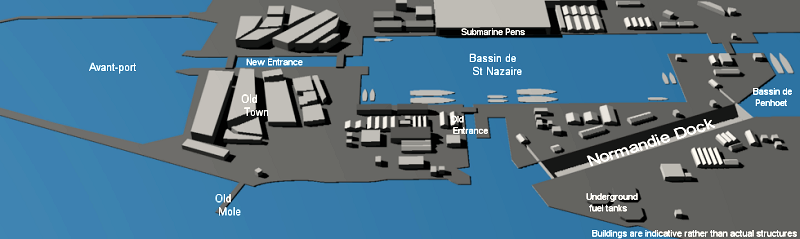
If Tirpitz, based in Norwegian fiords could break out into the Atlantic, no convoy would be safe. And, since she could outfight anything she couldn’t outrun, the Admiralty was reduced to hoping for the same luck they’d had the previous May. The good news was that only one place on the occupied Atlantic coast had a facility capable of servicing and repairing a ship as mighty: the Normandie dock in St Nazaire at the mouth of the Loire.

The audacity of the plan Combined Operations cooked up to reach the lock gates 8km up the river over myriad sandbanks is the stuff of legend. 265 men of No 2 Commando under Lt. Col. Newman were to embark on motor launches (fast but flimsy craft of around 50 tons of 20th and 28th ML Flotillas) and raid the place. Centrepiece of it all was a surplus ex-USN four-stacker destroyer HMS Campbeltown under Lt. Commander Halden-Beattie. Shorn of a couple of funnels and rigged to have the silhouette of a German torpedo boat, her bow was packed with 5 tons explosives. The plan was to go upriver on the highest tide of the year and ram the lock gates.

On the German side, the area was defended by the 333rd Infantry Division. Although it had few troops in the town, the port had the 28 heavy guns of the 280th Naval Artillery, plus over 40 AA guns of the 20th Naval Flak. When Dönitz, inspecting the day before the 6th and 7th U-Boote Flotillen based there queried the base commander about a possible raid, Korvettenkapitän Herbert Sohler replied: “an attack on this base would be hazardous and highly improbable“.

Accompanied by two escorting destroyers and with a submarine position off the estuary to guide them in, the rag-tag fleet left Falmouth on the afternoon of March 26th and had a brush with U-593 and two French fishing boats before gathering off the Loire late on the 27th. Campbeltown hoisted the German naval ensign and the 3 MLs formed into three lines on either side and astern. A diversionary raid by five RAF squadrons bombed nothing of consequence and served only to alert the garrison that something was up.

They had only just entered the estuary around 01:20 when German searchlights homed in and demanded recognition signals. A German-speaking signaler stalled them. This got them to within a mile of the target before shore batteries opened up, the White Ensign replaced the German one and, as they say in the movies “all hell broke loose”. Engaging concrete bunker-emplaced guns with 20mm Oerlikons and no protection was heroic but close to futile. All but two of the dozen MLs were sunk or damaged and only fragments of the assault parties landed. Campbeltown, increasing speed to 19 knots, rammed the lock gates, driving her bow 30ft beyond it with the force of impact.

The Commandos aboard scrambled off to demolish pump houses and dock equipment and 30 of the crew, including Halden-Beattie were taken off the stern by ML-177. Only ML-160, -307 and -443 made it back to Falmouth. Newman had landed and organised a defence perimeter while demolition charges were being laid. But so many of the small boats were lost that the planned evacuation by sea was impossible. Apart from 169 dead or missing, 215 commandos and sailors were then captured in the fierce fighting that raged on until dawn. Only five men made it to Spain to return home.

Dawn brought the scene of shambles into the light—smoking, rubble-strewn demolition sites, bodies everywhere, abandoned MLs drifting on fire and the spectacular sight of the Campbeltown reared up over the dock gates.

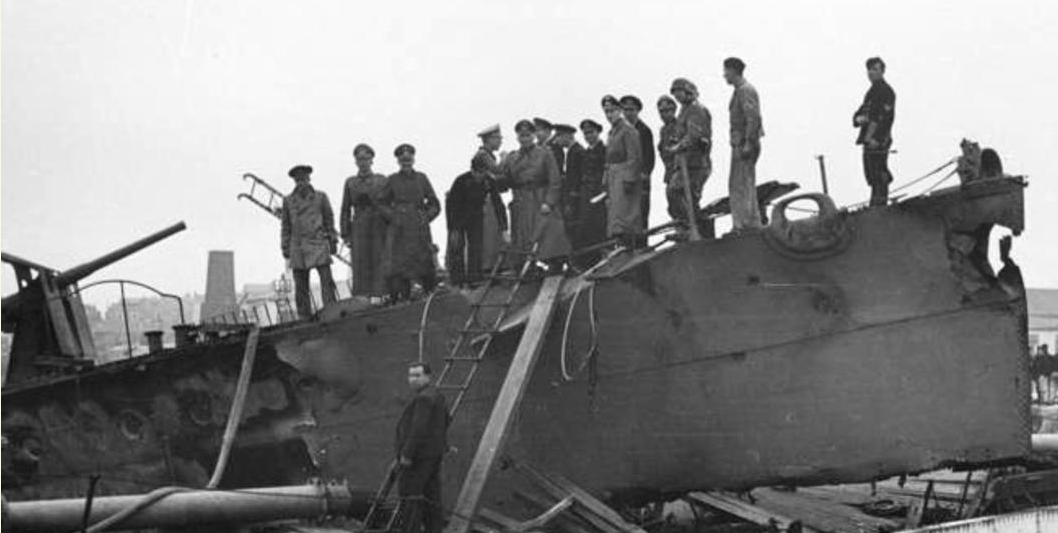
Clean-up was underway just before noon and a party of 40 senior German officers were inspecting the ship when her delayed action charges went off. The massive explosion killed them all, along with almost 300 others in the vicinity. And, as planned, it wrecked the dock gates, sweeping Campbeltown into the empty dock and sinking two tankers that were already there under repair.

The dock itself was not again operational until after the war and the Tirpitz spent the war hiding in Norwegian fiords until capsized by a massive 22,000lb ‘Tallboy’ bomb delivered by an RAF Lancaster of the 617 ‘Dam Buster’ squadron. Five Victoria Crosses (two of them posthumous) and eighty-four other decorations were awarded, including four Croix de Guerre by the French. Hitler was so furious he dismissed the Chief of Staff to the Commander-in-Chief West. A memorial to the those involved in the ‘greatest’ raid was erected in Falmouth. It is a shame such selfless heroism gets so little coverage nowadays.

Germans Inspect the Wreck of HMS Campbeltown shortly before She Blows up

As a postscript, Campeltown’s ship’s bell was rescued that night and eventually presented to the people of Campbeltown, Pennnsylvania. When a new RN ship of that name was commissioned in 1987, the townspeople loaned the bell back in service. When she was decommissioned, the bell was returned to the people of the town on June 21st last year.

Posted in Uncategorized | Leave a comment