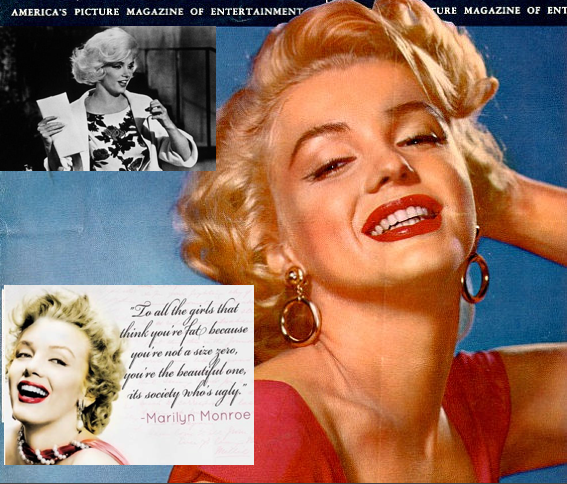
Some Candle!—Still Burning

She only acted according to the script we gave her
” —Ernesto Cardenal

Exactly fifty years ago, when Marilyn Monroe died aged 36 of a sleeping pill overdose in 1962, I was—like Elton John at the time—just a kid. From age seven, I would wander the hundred yards from my gran’s house (no TV and radio powered by a car battery as there was no electricity) along to the local cinema. It showed three films each week and I’d splash out 6d admission on those that looked adventurous.

That 6d got me a seat in the front row where, craning my neck, the picture filled my entire vision, compensating for my short-sightedness nicely. It taught me to immerse myself within the film, to forsake the grey sleet, coal smoke and dun-coloured macs of fifties Britain and, for an hour or two, live in the glorious world of the film.

Tiring of wooden Cecil B. de Mille epics or Brief-Encounter-ish British fare, I would sometimes take a leap of faith and be rewarded with a Hound of the Baskervilles edge-of-seat job as often as a slushier Kiss Me Kate. Part of Perth-based Caledonian Cinemas, films shown at North Berwick’s Playhouse were always months after their first run. But, since I had no way of knowing this, that made little difference to me.

Marilyn Monroe’s earlier work was long passed before I was a regular. I do vaguely remember Some Like It Hot, but that was because my budding twelve-year-old manliness was discomfited by men dressing up like women and almost nothing to do with her. Her jiggle from the steam jet was a joy that I would discover only later.

So it was that The Misfits came to the Playhouse in the spring of 1962—the same year that I first traveled far (to exotic St Andrews), that I first embraced scout camp as a winner with a sun tan, that a new NI card got me my first summer job…and I first kissed a girl. The characters and life-style in that film seemed exotic, rather than gritty. At the time, I had no appreciation of either Miller’s script or Huston’s directing—I was passive, wanting film to entertain me, not thinking about how and why, much less appreciating the craft behind it all.

It was my first awakening. Schooled in the simplistic boy-meets-girl-marries-gets-mortgage-retires-into-sunset consensus of the fifties, the film’s emotional messiness was far more discomfiting than Some like It Hot. And, though repelled by differently flawed characters portrayed by Gable, Clift and Wallach, despite myself I saw, for the first time, just how people negotiate their own path towards happiness as best as circumstance will allow. Later on Sillitoe’s Loneliness of a Long-Distance Runner would move me much further down my road to self-realisation. But The Misfits set me out on it.

It was only later that I appreciated Monroe’s real contribution. At the time, I thought her far too beautiful to ever find herself in such circumstances. Like most tumescent teenagers, I saw her characters almost entirely through the prism of what the media made of her: the jiggle-action, poo-poopee-doo, platinum-blonde arm candy. When I first heard ‘Candle in the Wind’ on a friend’s state-of-art stereo in Lausanne in the mid-seventies, I still subscribed to that vulnerability and loved the sexy references to it, such as Kelly le Brock’s skirt-wafting grating homage in Woman in Red.

But, thanks to technology, a miracle for us fifties filmgoers has now happened: for a few quid and fewer hours of your time, any film is yours to dissect. And it can be freeze-framed, rewound, slo-mo’ed—you name it. Looking back over Monroe’s films, you can see the fertile female-as-icon soil from which the legend grew.

Starting from the pouting WW2 pinups of  Grable, Haworth and Gardner, things grew more complex, developing several sub-genres from the hard-ass Crawford/Stanwyk school, through the more readily voluptuous Jane Russell (“hard to describe her without moving your hands” in Bob Hope’s phrase) to the class of ditzy blonde deriving from Betty Boop. With little thought, the media machine swept Marilyn into this last category.

It may be hard for women in the 21st century to recall when emancipation was limited to the vote and equality was regarded as an aberration against scripture. Watch an episode of Mad Men to get a sense of how different things were then: men were the boss; women turned passive aggression into an art form as they had few alternatives to get their way.

Seen in that context, it’s amazing what Monroe achieved. After an unsuccessful early marriage and difficulties with trusting men from having been abandoned by her own father, she took control of her life using what tools she had. Famously unpunctual, she got her own back through milking the rights of stardom and playing to the gallery. No doubt impressed by second husband Miller, she nonetheless declined to be simply the blonde ego-boost he (and his society) had written as a role for her.

Her classic pose is the tossed back head and narrowed eyes. But watch the cool intelligence in those eyes when they are open (if you boys can pull your gaze away from the rest of her). If she’s ditzy, then so is Carol Vorderman doing a maths quiz. See how she plays the torn neediness, the necessary compromise, the inner gustiness of Roslyn in The Misfits and you realise that this was no candle in the wind.

She tried to be her own woman, making the best she could of what breaks life gave her. The tragedy is that proper companionship—something she perhaps needed most of all but was least likely to get with that public image—does not seem ever to have been among them. The memory that remains is of that image she played to and not of the woman she always knew was in there.

Posted in Community, Education | Tagged | Leave a comment

What Next for (Scottish) Labour?

A book is published this year, entitled What Next for Labour. The blurb for it states “Now is the time for a real debate about the future of the Labour party and its decisive role in British politics. Labour needs to restore trust and build confidence between politicians and the people, and reconnect with voters. The way to achieve this is to provide an objective critique of Labour’s record and discuss what the future is for the Labour Party, which will lay the path for a new type of politics.

The book is not unique. Last year John Denham published Labour’s New Thinking, in which he could claim: “Since becoming Labour leader Ed Miliband has successfully opened several new national political debates, from the ‘squeezed middle’ to ‘responsible capitalism’ and concern about diminishing opportunities for the rising generation.”

Brave words all. And, although the second half of the former is largely about internal organisation and action, its first half also attempts to break fresh ground in policy, an area in which Labour has been sadly passive for some time. But what of Scotland? What of the ‘Labour Heartland’ that once guaranteed five in seven MPs sent to Westminster sporting a red rosette?

Superficially, the signs are good. Soon after becoming Labour leader in Scotland (but before May’s council elections) Johann Lamont was asserting “We knew when we lost the Scottish Parliament elections in 2011 that people wanted us to change. That’s why in the past year, we’ve seen real change in our party that’s helped us get closer to people and communities across the country.”

In parallel with that, the Scottish Fabians were relaunched in February as an integral part of the Fabian Society (which operates as a Labour think-tank). At their inaugural conference on May 12th, attended by over 100 people, Ms Lamont gave the keynote speech, declaring “I welcome the contribution of the Scottish Fabians to our political discourse. The wider the debate, the wider the engagement, the more chance we have of arriving on solutions we so dearly need to our politics.”

So, no hint of London’s policy tanks being parked on SLab’s crabgrass-infested manifesto lawn then? Certainly there has been no blowback. That was reinforced by Shadow Scottish Minister Margaret Curran MP hosting the first Scottish Fabian ideas workshop in Edinburgh’s City Art Gallery on July 18th, posing fundamental questions like:

  • How do we bring Government closer to people across the country?
  • How do we engage the people of Scotland in the debate on our future?
  • What can we learn from other countries about decentralisation and empowerment?

Laudable objectives that auger well, especially as the select few who showed included activists like Duncan Hothersall & Steven Johnson, policy wonks like Kenneth Fleming, EUSA President Matt McPherson and non-numpty MSPs like Sarah Boyack and Kezia Dugdale. But what did this actually produce? Apparently recycled flat assertions from Ms Curran, such as:

“Devolution and separation are two very different paths with two very different destinations” or;

“We must not let the referendum overshadow the real issues facing the people of Scotland”

Oh, aye—heard this lot before. But perhaps Ms Curran had yet to enter into the spirit of new thinking abroad in Scottish Labour? What cue did the new leadership give to this and other such groundbreaking events? Ms Lamont’s address to the Scottish Fabians in the aftermath of May’s elections included:

“The commentators predicted another Labour meltdown…Instead, we achieved fantastic results all over the country. Overall majorities in Glasgow, North Lanarkshire, West Dunbartonshire and Renfrewshire. Labour control across the country, here in Edinburgh, in Aberdeen, Fife, Stirling, West and East Lothian, Dumfries and Galloway, and many others. And gains in places we didn’t expect, in the Western Isles, in Aberdeenshire and in Moray.”

Not only has the humble pie diet been set aside, but we are drifting back into reeking of triumphalism, such as lulled Ms Lamont and her boss-at-the-time Lord McConnell of Glenscorrodale into comfortable delusion after the 2005 UK General Election made them look pretty secure in their day jobs. Successive voting landslides in 2007 and 2011 taught ’em different.

Is Scottish Labour really that thrawn? Can they really believe that a straw or two in the wind is all it takes to restore doughty intransigence and justify shelving pious statements about ‘need to reform’? Because today’s Hootsmon ought to give Mmes Curran and Lamont pause for thought before they hunker back down in ideological fortifications.

The Bad News—percentage of people who think Labour is:

  • Trustworthy = 8%
  • Forward-looking = 9%
  • Have plenty of ideas = 8%
  • Competent = 10%

The Worse News—percentage of people who think Labour is:

  • Untrustworthy = 25%
  • Boring = 26%
  • Incompetent = 29%
  • Out of touch = 35%

The Worst News of All—the poll was conducted by YouGov on behalf of the Fabian Society, so this is far more likely to be the unvarnished truth than had it been come from one of Labour’s opponents. Most revealing are the top two reasons given why many respondents voted Labour at UK level but SNP at Scottish level:

  • SNP has performed well in government in Scotland = 43%
  • SNP has better policies for Scotland than Labour = 40%

This last especially ought to give SLab—and Ms Lamont in particular—food for thought. Her speeches have been peppered with ritual Labour boilerplate (“by having faith in our traditional values”…”common values we share of fairness, equality and social justice”…”we debate about how we can improve people’s lives, not where to build borders”…”yahdah-yahdah-yahdah“) but not once—in the half-year hiatus of the leadership contest or the half-year hiatus since—has anything that ordinary mortals could confuse with a groundbreaking new idea passed her lips.

It is, of course, not all her fault. There are 37 MSPs, 40 MPs, 394 councillors all their staffs and many thousand members, not counting unions. What are they doing to help? It’s not that hard. If they spent less time trying to diss their enemies and more puzzling what Labour if FOR (besides looking after their own), they might come up with some. From a genuine desire for Labour to quit whining and become a proper opposition so that they have some chance of ever seeing power again, allow me to set the ball rolling:

  1. For eight years Labour sat on their hands and completed squat in transport systems. The SNP took over railways from the UK, opened Airdrie/Bathgate and Alloa lines, opened Lawrencekirk station, finished the M74 and rescued Edinburgh’s tram mess. What if SLab went further than re-regulating buses and introduced real city transport authorities that integrated all modes so that they worked seamlessly, as in Europe?
  2. RBS is being targeted by the Treasury for a complete takeover so the Government can finally pry open their over-tight fists in business lending. But that’s only one bank. What if SLab argued for the Bank of England to charge all banks for cash deposits so that it became worth every bank’s while to lend their cash and not just sit on it?
  3. If they are as keen on job provision, (especially for youngsters, as they keep saying they are), where are their ideas for providing real jobs and not just recycling bodies off the buroo so that it LOOKS like they have gainful employment. What if SLab realised that the biggest undeveloped business opportunity in Scotland is inshore fishing? What if they dynamited Crown Estates and Scottish Enterprise out of their criminal torpor so Scotland becomes a world-famous tourist destination for seafood (and not just an exporter to Spain/France/Italy where our seafood is consumed at ten times wholesale prices paid to our fishermen)?

That’s a start. With 500 elected representatives, at least as many salaried staff, ten times that in members and the supportive presence of English colleagues and the whole Fabian Society, surely SLab can come up with something else worthy of the name “new policy”. Or is “Out of touch, incompetent and boring” to become their recurring headline?

Posted in Politics | Tagged | Leave a comment

Why SNP Will Not Say ‘No’ to NATO

The Scottish press are rather relishing the rammy that they expect to break out within the ranks of the SNP in the run-up to their main annual conference in Perth in October.

On some levels, they are right to do so: by the standards of any other major party, there will be a rammy. There will be letters in the press; there will be furious debates at branches; there will be apoplectic press releases; longtime friends will slam down fists on bars; furious e-mails will fly. To the SNP leadership, it will not be a pretty sight.

And, by the standards of most party conference, Perth Concert Hall will ring with far more rowdy passion than Labour, Tory, Lib-Dem or even the SNP itself have let loose in public  for years. For they have become stage-managed events, designed much more for free publicity and fund-raising than to bring the faithful under one roof for the unseemly verbal bar brawl of debate.

Some would argue that in the dozen years of the Scottish Parliament—but most agree in the five years since the first SNP Government—the party has matured, has come of age. Not only have their many MSPs had to mind their p’s and q’s in a way that radicals with no hope of power never need bother with but the army of councillors, assistants, researchers, etc—mostly culled from the long-serving ranks of party members—have stepped up to those many jobs and displayed professionalism and restraint.

But this should not lead anyone to fall into the “thae politicians are a’ the same” trap. The  Tory party backbone was built on tea dances at Conservative clubs in the fifties: it had its last boost under “I’m all right Jack” Thatcherites in the eighties. Labour was at its laudable best in the forties under Atlee and last dug in to defend its socialist principles in the fractious seventies. The Lib-Dem/Alliance bubble was more recent but based mostly on dislike for what the other two parties had on offer.

Seen over such a long perspective, every party has compromised on what was once seen as a fundamental policy that lay near its heart. But, just as the Tories came to embrace the NHS, so Labour embraced Trident; both would be called ‘U-turns” but both have become fundamental to the posture of each party. The most recent major shift was Blair’s shrewdly engineered dumping of Clause 4 in the mid-nineties.

The lack of much shift since in the UK parties has been due to tighter party management, combined with a new speed and breadth of reporting. If a candidate kicks a dog attacking him on an isolated farm in Galloway, it’s tweeted within the hour, gone virally global by nightfall and all over national front-pages with psychological/psephological analyses and an in-depth commentary on brutality from the RSPCA by next morning. The candidate’s career thereby comes at an untimely end. So everyone stays stiff and polite.

Not so the SNP. While the party has demonstrated considerable ability to run things well and a degree of tight-lipped discipline that has surprised even old hands like me, we have not yet had a ‘Clause 4 moment’ where a stark choice between continuing idealism in the wilderness or electability and prospect of subsequent power was presented to the faithful. Could the NATO question be that moment for the SNP?

Certainly some members see it as such. The SNP has a long, honourable—and among the four main parties unique—record on opposing nuclear weapons. Starting with Billy Wolfe’s leadership in the fifties. it attracted many CND adherents and adopted a posture hostile to nuclear in any form, including power. This led to a degree of idealism by the nineties where party policy was to shut down both Torness and Hunterston immediately on coming to power. As they had no alternative, this would have resulted in great swathes of Scotland without power.

Having had a half-century in the political wilderness, it is understandable that parties like the SNP allowed themselves radical ideals: the trickier part of implementing them—let alone explaining and justifying them to a majority of the public—need not be faced. This was ground onto which the principled and informed Foote led the UK Labour party under the banner of “The Longest Suicide Note in History” in 1983.

After a brief dawn in the seventies, the SNP experienced dark days equivalent to Labour’s in the eighties, right up to its climb since the late nineties. Those members from that era provide both the core of party activists and the source of most present elected members. They still harbour their ideals—as do I. For many of them, nuclear is still not acceptable in any form . NATO is a nuclear alliance. Therefore NATO is unacceptable.

However, at the Inverness conference in 1997, I seconded the East Lothian CA motion that we should continue to use nuclear power stations “to the end of their useful life”, thus eliminating the risk of immediate blackouts if the SNP came to power and did what they said on the tin. It passed. Add to this the fact that Scotland IS a member of NATO right now and DOES have “the obscenity of nuclear weapons” on its soil already (and has had for decades), idealists are already compromising on principles, just by living here.

More importantly, we are a decade and a half on from then and, even more importantly, a party of four times as many members. Those new members, while mostly not pro-nuclear, are also less scarred by the idealistic battles of the seventies and eighties, less weighed by the baggage of Cold War history and more concerned with national security in the 21st century then any throwback to evil empires and World War Three.

Modern defence involves alliances, especially for small countries, as Scotland will become. The stronger rule of international law and local alliances have been instrumental in turning the gunboat-wielding empire-building swashbuckling approach to other regimes (in which the UK led the way right up until the last century) into a fraternity of over 200 countries that—by and large—behave themselves.

We can’t change our geography. Like it or not, we are a country at the Northwest periphery of Europe with a maritime frontier that is a bit of a headache and plenty of resources that it would be worthwhile plundering (or at least disabling) if we were still back in the gunboat era. Despite little by way of land threat, Scotland would have more sea acreage than England to secure and have more in those acres in need of defence.

One option would be a standalone approach where we built many long-range-maritime-reconnaissance aircraft (like the UK scrapped), several frigates, many air-sea-rescue helicopters, many fast assault boats, developed our own Special Boat Squadron, built up a supporting air force of strike aircraft like the Typhoon or F-35, etc, etc and cocked a snook at everyone else.

Or…we could recognise that even the ‘No’ campaign had a point in arguing a ‘better together’ case and joined some umbrella organisation that found strength in numbers. There is only one that qualifies: NATO. And, though three members do deploy nuclear weapons, none are on soil of members who do not wish them. And, of the 25 non-nuclear members, several—Eire, Norway and Denmark—are exactly those with whom we have much in common and would wish to be working alongside anyway.

An independent Scotland has much to offer NATO. And, by joining, the removal of Trident from the Clyde is much more likely if we are in the club, arguing the case with friends and neighbours of the same mindset, than if we were struggling to negotiate with England, who, having nowhere convenient to base their Trident ego-trip, would drag their feet to have their deterrent stay as far from London as it already is.

It is this latter thinking, embraced by the great majority of newer party members, that will prevail in Perth. The ‘old guard’ will have their say—as they should—and may still genuinely feel that having the current occupants of Faslane indefinitely is the lesser evil to being a non-nuclear member of an organisation dedicated to not using its nuclear weapons.

If the SNP were to retreat to its idealism of the eighties as our Trade Union Group and a couple of MSPs argue, how representative would it be of current thinking among the Scottish people? And if, as I suspect, it is not representative, then what chance a ‘Yes’ result in the 2014 referendum, idealism or no? After all what is the SNP for?

Either way, it’s worth a rammy at Perth over something as important as this, not least to show that, unlike your typical stage-managed conference, democracy is alive and well in Scotland’s main party.

Posted in Politics | Tagged | 4 Comments

Made Fae Gurdurs? Shairly No’!

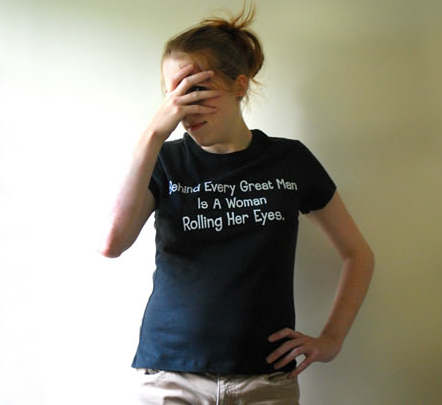
…or, for outraged feminist readers who believe men really ought to have evolved beyond this sort of thing by now:

…and for those really hard-core feminist readers who didn’t get a giggle out of that either, the truth is out there somewhere:

Posted in Uncategorized | Tagged | Leave a comment

Labour for Independence

The title of this blog is not nearly as bizarre as the present leadership of Scotland would have you (and many of its membership) believe. But while official party policy appears stuck in a miasma of denial that anything beyond the present devolved arrangements will lead to rickets and the loss of your first-born child, the word on the street is rather different.

I must confess sympathy with many loyal members of the Labour party who, in a decade since Donald Dewar worked himself to death, have tholed leadership by time-serving placeholders—none in the mould of John Maclean, Willie Ross, John P. Macintosh, Tam Dalyell or Big Donnie himself—all bonny fechters who said their piece and stood their ground. (Gratuitous plug: Tam will be at North Berwick’s Fringe By The Sea on Aug 7th).

What strikes me as strange is Labour’s total lack of enthusiasm in coming to grips with what everyone agrees is the biggest question Scotland has faced in centuries: When a referendum on Independence is posed in 2014, how do I vote? We’ll discount Tories and Lib-Dems. Not only have they been doggedly stuck on their opposition but they can’t even gather 1 in 5 Scottish votes between them (or 1 in 10 if you count those who didn’t vote).

So a Labour-led ‘No’ campaign faces an SNP-led ‘Yes’ campaign for the soul of the third or more of people who show no party affiliation or are genuinely undecided? Not really: it’s more subtle than that.

First of all, the silence from Labour’s ‘leadership’ has been deafening since the ‘No’ campaign launch by an even-less-inspiring-than-usual Mr Dour himself, Alastair Darling over a month ago. Johann Lamont (remember her) has been nowhere near the parapet, let alone above it on this one: her last Twitter presence is three months ago and the last real public event was Glasgow Says ‘No’ three weeks ago. Heather is not being set alight.

Meantime, a curious but nonetheless symbolic website has recently appeared called Labour for Independence, with the tagline “working together for a free and prosperous Scotland“. Now, I do not wish to make trouble for the Labour members behind this by doing any extrapolation about what this means for party politics. But that someone was going to break ranks was only a matter of time, given the beliefs in a significant number of Labour supporters with whom I have spoken.

Campaigning across East Lothian in 2010/11 as candidate for the Scottish Parliament, the biggest response I received was people voting SNP who would vote ‘Yes’ in a referendum. Second biggest was people voting Labour, who would vote ‘No’—neither too unexpected. But the THIRD biggest were Labour voters who would vote ‘Yes’; they beat Tory, Lib-Dem, Green, UKIP and even those SNP voters who would vote ‘No’. We were talking one in three of Labour voters here, and it didn’t matter if we were in Labour ex-heartlands like “The Bot’om ‘Pans” or douce commuter estates of Pencaitland.

Now, it’s not as if Ms Lamont has not admitted the scale of problem she faces: “We looked tired and complacent and we got the kind of beating we deserved. But now we need to start building the kind of Scottish Labour Party which Scotland deserves.” Stern stuff, verging on the courageous. But her party of devolution has not led the debate since and, in ruling out changes in corporation tax she has not only discounted a major source of tax income but has also put into question whether Labour will indeed fight for Scotland if it disadvantages their colleagues in the rest of the UK.

So far, it has all been thin gruel to fuel any tooth-and-claw campaigning. No wonder Labour members who are also patriotic Scots are rather champing at the bit and feeling frustration that a party policy clamp-down gives them very little room to go out and discuss pivotal issues with the great undecided.

Which currency we use; who should be our best friends; what military is desirable or even feasible; how do we deal with our share of debt; how could we prosper better—all these questions and more deserve an airing. Each has been posited in earlier blogs here but this needs to happen in pubs and over dinner tables across the country so that 2014 can be an informed decision and not just driven by fear or nostalgia.

Because the future for Labour (as well as the rest of us) could be so much better in an independent Scotland. They have a powerful and demanding role as the other large party in Scotland. They need not lose the future Darlings and Cookes, Dalyells and Browns to a culture at Westminster that has little time for us—and thereby regain the class and capability of politician that all of us—not just Labour—need here, working for Scotland.

It was Labour arrogance, verging on stupidity that let it think that ‘B’ team placeholders should be shunted into the Scottish Parliament in 1999. They even managed to shunt out ‘A’ team players like Wendy Alexander because she didn’t fit the role. Ms Lamont has admitted that they need to up their game. Letting their considerable phalanx of members who see independence in a positive light have their say would demonstrate such maturity.

But, can they?

Posted in Politics | Tagged | 4 Comments

Out of Our Shell

This week has seen a resolution to the ‘prawn wars’ brewing off the West Coast as larger boats from the East Coast, having meagre pickings in home waters, muscled in on their brethren. Another example of the idiocies perpetrated by the Common Fisheries Policy, (the sooner we get Scotland’s own negotiating team at the table the better), this will ban the bigger interlopers from August 1st.

At the same time, the Herald announces a seven-figure takeover of the Loch Fyne Oyster Bar in Argyll with Roy Brett, Scotland’s top seafood chef as its culinary director. Other than being on the West Coast, why are these related? Actually, it has little to do with geography. A third related story is the booming business of two new eateries at North Berwick harbour: the Lobster Shack and the Rocketeer. Both are open-air and informal but, despite the worst summer on record, both are going like a fair. Why?

Because, for the first time, the many visitors who come to North Berwick’s quaint town and pristine beaches can get their hands on some of the superb seafood that passes through here, en route to wholesalers in Eyemouth who ship most of it to Spain for the enjoyment of British tourists. Fishermen are happy because they get twice the price; everyone seems to gain.

These prawn wars, Loch Fyne and NB harbourside restaurants all serve to illustrate that we Scots have our heads in the sand when it comes to one of this country’s glories—seafood. Why on earth we export most of it at wholesale prices is a mystery when its superb quality makes it an obvious attraction for tourism. Whether Maine or the Maldives, other countries ‘get it’; why don’t we?

At present, there is no coherent plan to exploit our world leadership in pelagic fish, shellfish and farmed salmon; each business is left to bumble along as best they can. Dont even mention Scottish Enterprise because a more myopic set of jobsworth timeservers would be hard to find when it comes to any enterprise at all. Nonetheless, every time the seafood business makes progress in the right direction, the public follow.

The other main clueless provider of unnecessary log-jams is Crown Estates who sit in their London offices and charge anyone for attaching anything to ‘their’ seabed. They don’t actually do much else, just charge for anchorages, harbour improvements, fish farms, pretty much anything to do with improving our seafood industries.

But this latter is improving—from full to partial pain in the arse. Under considerable pressure to get off said nethers, they plan to pass control of oysters and mussels (which attach themselves to ‘their’ seabed) up here into Scottish control. This means that the prospect of making a business out of reseeding and/or farming these becomes realistic.

Even without such improvements, examples exist elsewhere about how much a boost to tourism top quality fish restaurants supplied by top quality produce can be. We needn’t look abroad either: Rick Stein has made Padstow, Cornwall a mecca for fish-lovers. Down there, because of constricted harbours, fishing boats are small and trips are daytime only. That means the fish landed were in the water that day. If you’ve ever tasted fresh-landed mackerel, you’ll know it’s like another fish—full of chicken-like texture, as well as flavour.

There are no Rick-Stein-like restaurants in Scotland. Yet. But if the Loch Fyne Oyster Bar taps the business passing it on the A83 tourist highway, that should just be the beginning. North Berwick needs a quality version of the informal pair it now has; Dunbar, Eyemouth, Anstruther, Arbroath, Stonehaven, Fraserburgh, Portsoy, etc, etc should all have similar business. It provides jobs, economic growth and puts places on the map.

We have tourists traipsing all over Scotland to appreciate our scenery, history, golf, distilleries and so on. Why do we not come out of our shell and overjoy them with some of the finest seafood to be had in the world, instead of making them fly to Spain to enjoy it?

Posted in Commerce | Tagged | 1 Comment

More Important Than Knowledge

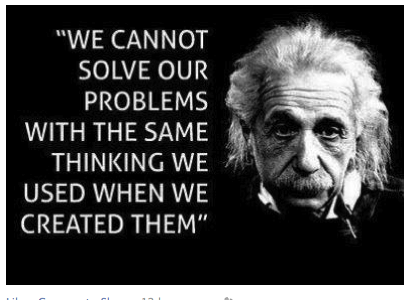
Albert Einstein was no dummy. He believed imagination to be more important than knowledge. And that mantra that would serve Scots well as they gather information to help them decide their future in about two years. None of us should see knowledge as unimportant. But when it comes to momentous events, what we know and what we are comfortable with are seldom the best—and never the only—guides to the future.

From your first dive in a swimming pool to your first job to your life companion, the right choice comes from a gathering of all of yourself, an in-depth analysis that mixes courage with conviction, ambition with emotion and a connection with the inner peace we all have when we know we’re doing what is right. None of that is either easy or instant and, however much we may seek advice and counsel, must come from deep within.

Much of life programmes us to follow known patterns. Whether a commute or a communion,  familiarity reassures and calms, encourages confidence in known outcomes and allows is to enjoy time in surroundings that comfort us. Britain, rightly, is proud of many long traditions and—whether it is as maritime nations or having a global outlook—the Scots and the English share many of them equally. Honorable unionists (yes, there are many) apparently believe that our history to this point must determine our future. They recite the glory of Britain, as if that familiar story were enough.

“The Union has provided over 300 years of stability, and has become a political and economic powerhouse with a seat at the top table internationally.”

“So, if the vote should take place in 2014 then, yes, let us all recognise the 700th anniversary of Bannockburn when our ancestors proudly fought against the English.
 But let the celebrations be for the 70th anniversary of the D Day landings, when our parents and grandparents fought and spilt their lifeblood not against the English, but side by side with the English.”

Both quotes are from Jackson Carlaw’s 350-word argument on why we Scots should be “better together” with the English. I find little in it with which to quibble—beyond his Pavlovian slurs on the SNP. But nowhere does he illustrate any future vision and why it will indeed conform to that. This is wholly representative of the Unionist debate to date.

Passionate or even principled as such unionists may be, it is retrograde thinking, a kind of anti-advancement some people suffer, like P7 kids in trepidation about what the High School might bring or stay-at-home youth who decline to move out because who would feed them and do their laundry?

Such personal dilemmas can be resolved by appeals to practicality (you’ll earn more money) or to emotion (we all need to grow up). But what when it applies to a country? Surely similar thinking applies. Moving out from your family is a natural thing and, however fraught with unknowns, is also full of opportunities, of new experiences, of growth and development available no other way. The feelings and affections remain.

The people I know supporting independence have more ambition than to be satisfied by reminiscences. They see Scotland full of potential, but strapped to another country that lives more in its past. England is still trying to hold onto glories of Empire, to the prestige of “being at the top table” as a nuclear power on the UN Security Council, a country that “punches above its weight” that can still exert gunboat diplomacy in others’ affairs, like in Iraq or Afghanistan. But for what? And why must we be part of it?

Scotland is an energy dynamo of a country, waiting to be unleashed. It could expand its present leading-edge presence in oil, renewables and engineering. It could export growing amounts of whisky, fish and even fresh water. It could welcome ever more tourists to appreciate its world-class wildlife, culture and history. Any people that for centuries has dispatched sons and daughters around the globe to bring innovation, hard work and success wherever they landed deserves the reputation we have, small though we are.

And we Scots didn’t earn that by being followers. From the Hudson Bay to Jardine Mathieson, Scots have shown how to think different, how to synergise, how to look past others’ mundane pursuit of the known and visualise another future. Watt saw past Newcomen and triggered the Industrial Revolution; Adam Smith blazed out of the Enlightenment and saw what that revolution could bring through far-seeing use of capital and markets; John Maclean fought and won the battle to give workers a fair share and a fair voice in the midst of capitalist exploitation and human misery.

And who says we Scots are yet done?

We belong back where we’re at our best—not as an appendage to someone else’s memories, glorious and proud though they may be—but at the cutting edge of civilisation and development. We need another Declaration of Arbroath to fire imaginations so far that it rings as powerfully down the centuries; we need the self-belief that kept clansmen fierce and proud of the life they wrung from unforgiving country; we need the inventive competence that made the Scots engineer a byword in coaxing magic from machinery.

We need to look to the visionaries of today, to the people whose unshakeable belief in what was possible confounded the suits, exasperated the beancounters and shattered the comfort zones of pedestrian conformity. Embrace Robin Williams’ inspiring teacher in Dead Poets Society. Absorb the business lateral thinking of Richard Branson. Live the inspirational motto of Apple Computer, once its founder returned in 1997 to revive its lost soul: Think Different.

For, as a country, we have never been conventional. We have always been a little wild, on the periphery, out there. Britain became great because we gave the English something that they, bless ’em, lack: fire and soul. It’s now time to rediscover them for ourselves. While it’s too long to be our motto, Scots should consider how Apple launched its rediscovery of what had made that company great—and took it, via iTunes, iPod, iPad, IPhone, etc from a doing-OK $2.4bn plateau to a 63,000-person global revolution valued at half the entire British economy ($0.5 trillion).

“Here’s to the crazy ones: the misfits; the rebels; the troublemakers; the round pegs in square holes; the ones who see things differently. They’re not fond of rules. And they have no respect for the status quo. You can quote them, disagree with them, glorify or vilify them. About the only thing you can’t do is ignore them. Because they change things. They push the human race forward. And while some may see them as the crazy ones, we see genius. Because the people who are crazy enough to think they can change the world are the ones who do.”

Posted in Politics | Tagged | 2 Comments

Eff Ofgem

The legacy of Thatcher is a long one. Despite folk tradition (especially in Scotland), all that she did was not evil. But her successors’ efforts to create a real market in industries like railways and energy have proved illusiory.  See Rosco Used in Train Robbery for a blog on the former. But a spate of profit reports have highlighted severe shortcomings in supposed ‘markets’ in the latter.

Between 1996 and 1999, domestic energy consumers gradually got the freedom to choose their supplier, and finally in May 1998, the domestic gas market was fully opened to competition, closely followed by the domestic electricity market in May 1999. Before there was competition on domestic markets, Ofgem (Office of Gas & Electricity Markets) set price controls, which remained in place until removed between 2000 and 2002. By then, Ofgem had decided that competition was developing well the Competition Act would protect consumers from supplier price fixing and the like.

The same Act provided Ofgem with powers to tackle any abuse. Since consumer surveys indicated they knew how to switch, and were doing so away from the former monopoly supplies, big suppliers were seeing falls in their market shares. Ofgem is expected to look after the comsumers’ interests and herd in any excesses by suppliers.

Shame it doesn’t work that way.

First of all, GEMA/Ofgem are based across the road from the House of Lords and crawling with nomenklatura whose mission in life appears to centre around brown-nosing their way to a knighthood or looking after the civil service noenklature who populate its offices.

Lord John Francis Mogg was appointed for a second five year term as the non-executive Chairman of Ofgem in October 2008. Lord John became a Life Peer on 18th April 2008. On 28th May 2008, he was created Baron Mogg of Queens Park in The County Of Sussex.  In his three-days-a-week job as chairman, he receives £214,999 a year salary. For his long years in the Civil Service, in 2003, was appointed a Knight Commander of the Order of St Michael and St George (KCMG). He is serving a second term as Chairman of the European Regulators Group for Electricity and Gas (ERGEG), is President of the Council of European Energy Regulators (CEER) and chairs the Board of Governors at the University of Brighton. Busy man, eh?

Chief Executive of Ofgem since 2003 is Alistair Buchanan a Director for state-owned Scottish Water and member of the Business Energy Forum and the UK Energy Research Partnership (UKERP). A ‘bean counter’ to trade, he spent his career as “an award-winning analyst and as Head of Research, in London and New York.” He claims to be particularly proud of such contributions as “creation of the “RIIO” model for regulatory price controls and “Project Discovery” which provided a root and branch review of GB’s medium term security of supply outlook.”

Sounds good. But these two have been running the place for the last decade; are the two of them any good? Well, February 2008, they did nail National Grid with a £41.8m fine, with Sir John thundering “National Grid has abused its dominance in the domestic gas metering market, restricting competition and harming consumers. The abuse has prevented suppliers from contracting with other companies for cheaper deals.” So, er, that fine would cover their salaries for 80 years. But what about the punters?

That pillar of the establishment, the Torygraph, is none too impressed with goings-on:

“Buchanan trousers a salary of £265,000 a year so you can see why he needs to hammer the old expense account – to the tune of £28,000 last year. That included a £50 round of drinks at a meeting to discuss fuel poverty (sic), as well as £5,700 for overnight stays in London if he had to work late or start early. So in which distant part of the country is the Buchanan residence? John O’Groats? Penzance? No, it’s Egham in Surrey.”

This week, the Institute for Public Policy Research think tank yesterday demanded far tougher rules to ensure the big six energy firms make savings and pass them to customers. While families struggle to keep their heads above water, officials have awarded themselves £1.12million of taxpayers’ cash. In 2010, Ofgem paid out £602,969 to 266 staff members—an average bonus of £2,267, while in 2011, some £515,047 was shared between 346 officials—an average of £1,489 each.

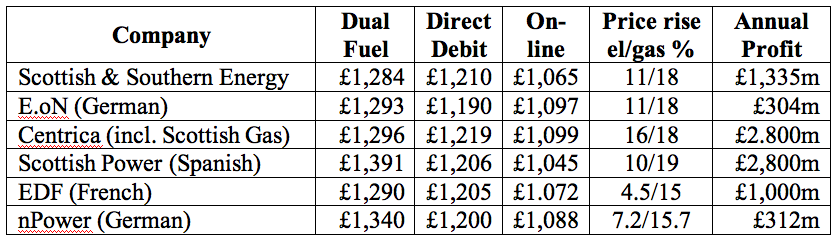
Ofgem is meant to keep a check on gas and electricity prices, but the average dual fuel bill is now a staggering £1,310 a year. In May, the same IPPR came out with a stinging report, with associate director Will Straw asserting: “We need more competition among energy companies. Poorer and older households are most at risk of being overcharged. Ofgem must act faster.

The report says five million people are already being overcharged to help fund low-cost deals for new customers. It calls for tougher rules to ensure the big six energy firms make efficiency savings and pass them to customers which could cut £70 off average bills. The system is so complicated that some families pay £330 a year more than neighbours to buy the same amount of energy from the same company. The report says consumers could save £1,900m a year by 2020 if the market is overhauled.

Comparisons Across the ‘Big Six’

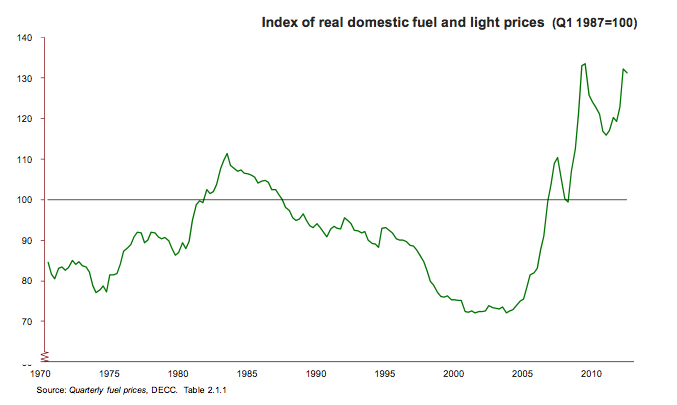
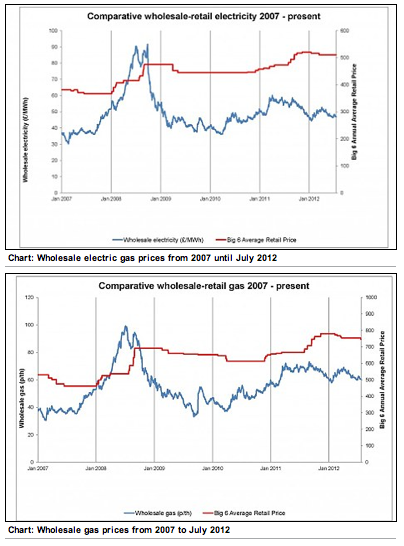
The ‘Big Six’ energy companies are fleecing loyal customers trying to expand their market share—but not at the expense of profits. Up until the mid-nineties, energy prices actually dropped in real terms. But once both the 2007 oil price rise and subsequent recession hit, energy prices have been rising steeply, as shown in the chart below.

Customers have seen costs more than double in the last eight years, with the average gas and electricity bill going up from £522 in January 2004 to its current level of £1,258.
The Money Advice Trust (MAT) received 27,000 calls in 2011 from people unable to cope with fuel debts, compared with just 1,212 in 2004. In January this year, the helpline received a call for help with gas and electricity debts every five minutes.

The percentage of family budget spent on heating for the poorest decile has jumped from 8% in 2006 to 12% last year, driving over 100,000 Scottish families into fuel poverty. Across the UK Some 7.8 million people could not afford their energy bills in 2009. This is due to rise to 8.5 million by 2016. But the wholesale prices for energy have, in fact, come down as well as gone up in recent years. None of the Big SIx have reflected that in their price structure, as can be seen from the two charts below.

Wholesale Price vs Retail Price ‘Lag’ from the Big Six (source: This Is Money)

“The ‘Big Six’ made £168 per second in profits from British customers last year.” (The Independent)

Ofgem is asleep at the wheel. What more evidence that Aladair and Sir John are thoroughly undeserving of the public purse sustaining their ‘fat cat’ salaries and bloated staffs at Ofgem do we need?

Posted in Commerce | Tagged | Leave a comment

Buildin’ a Brig Tae the Bass

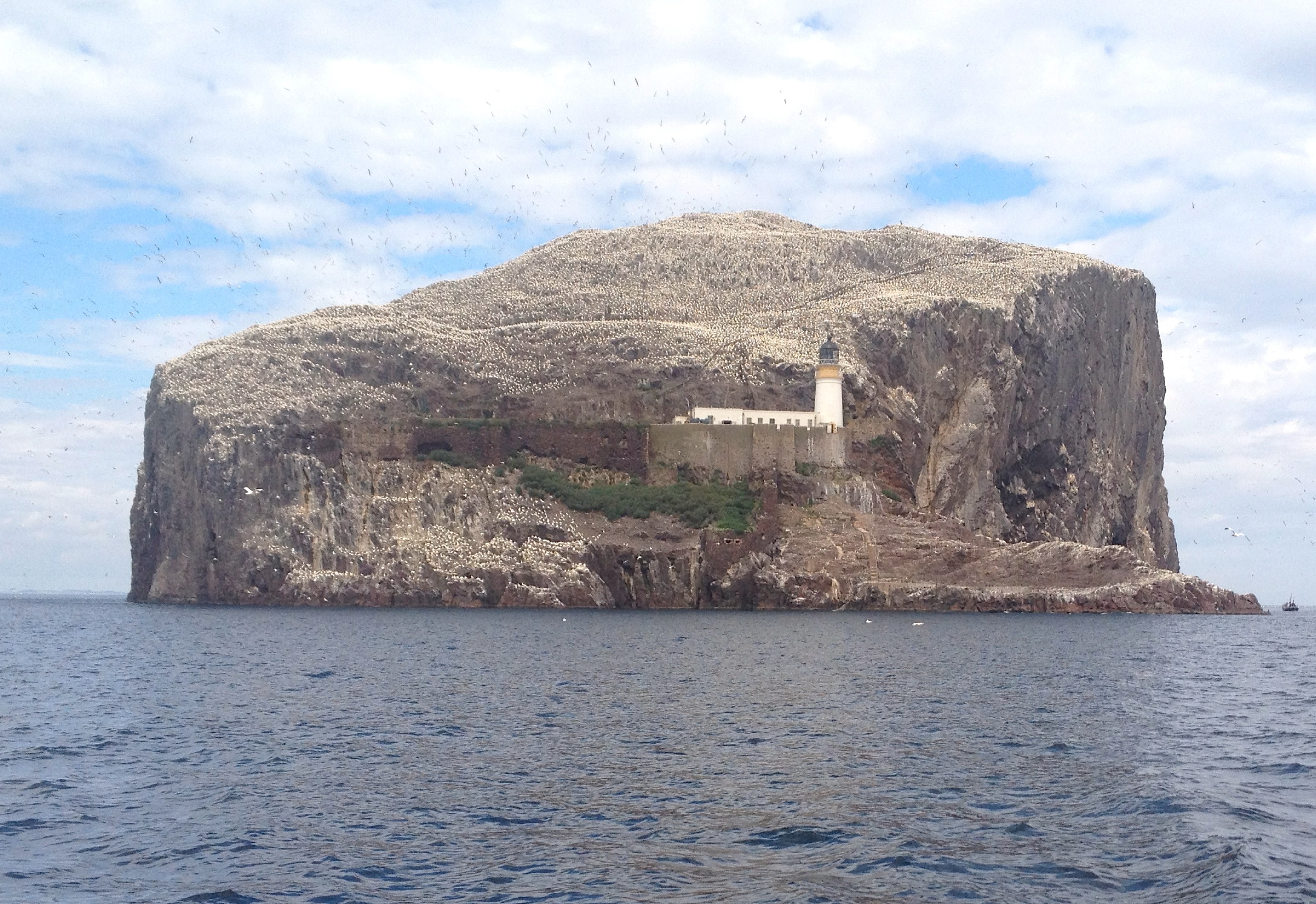
It’s a truism that natives of any given place seldom appreciate what they have all about them: sunshine in LA is a given, as is the waterborne romance of Venice or the cultural kaleidoscope of London. As a kid growing up in North Berwick, I thought little of Bass Rock, even though I went round or landed there many times. It was like Berwick Law or the wide Forth itself; just part of the scenery.

Bass Rock from the South, Showing Lighthouse amidst Castle Lauder and East Cliff on Right

Now, after two decades back home, my appreciation is growing sharper, even though I now regularly crew trip boats going out to visit it. It is a constant amazement to me—as well as visitors—that something this spectacular is not hidden away and inaccessible as other large gannetries like Shetland or St Kilda are: this one is 40 mins by train from Scotland’s capital, Edinburgh.

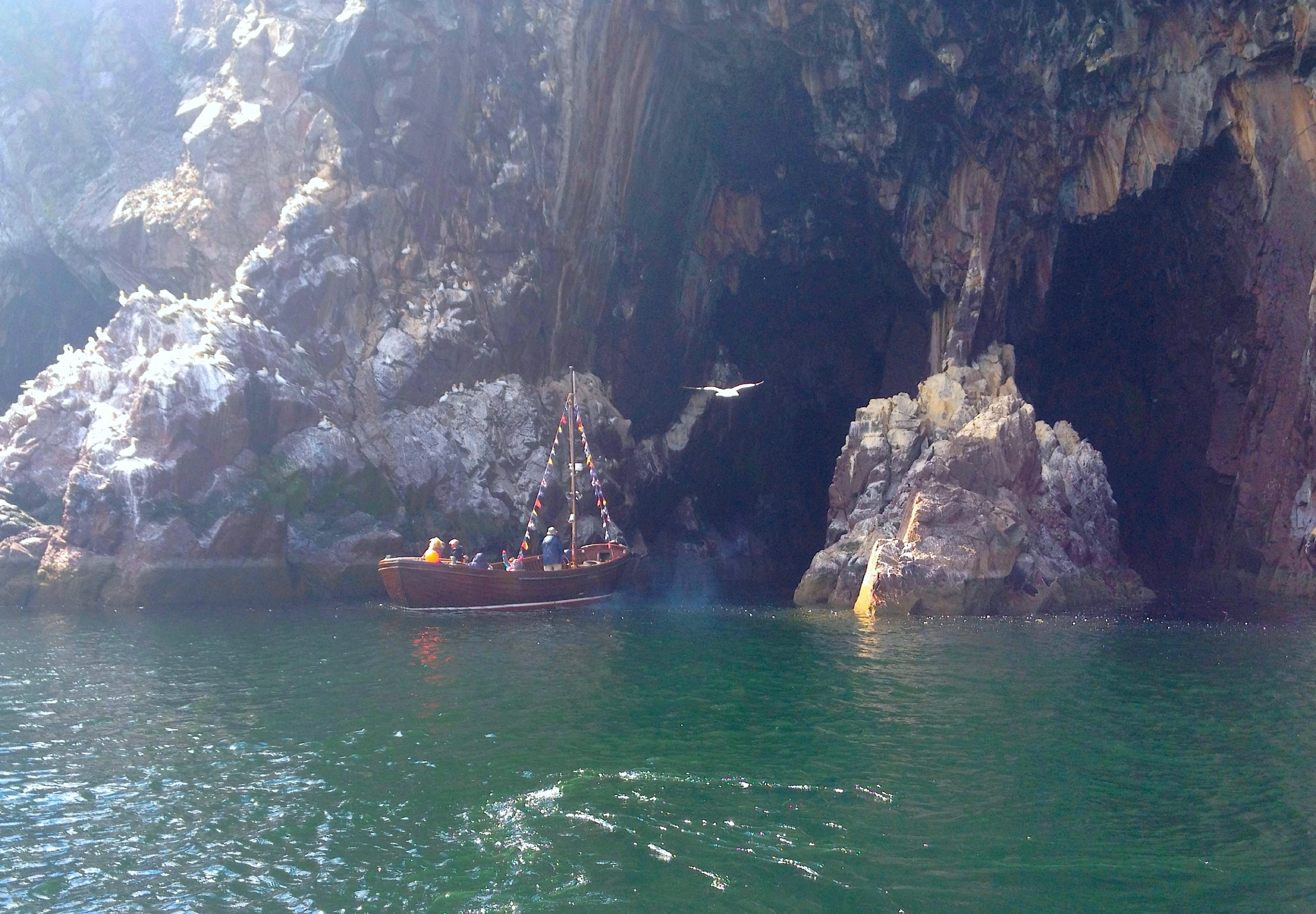
Impressive as it is from shore, every time you approach it by sea, it reveals something new. The gannets wheel over it like a cloud, their patterns and directions always changing with the wind. The gugas grow by leaps and bounds, the fluff balls now almost as big as their 3kg parents and yet still another kilo to put on before they leave. The ‘mini-penguin’ guillemots have already left the East Cave but Kittiwakes still chorus their own name from the West Cave cliffs where yesterday no fewer than seven seals gamboled about the boat.

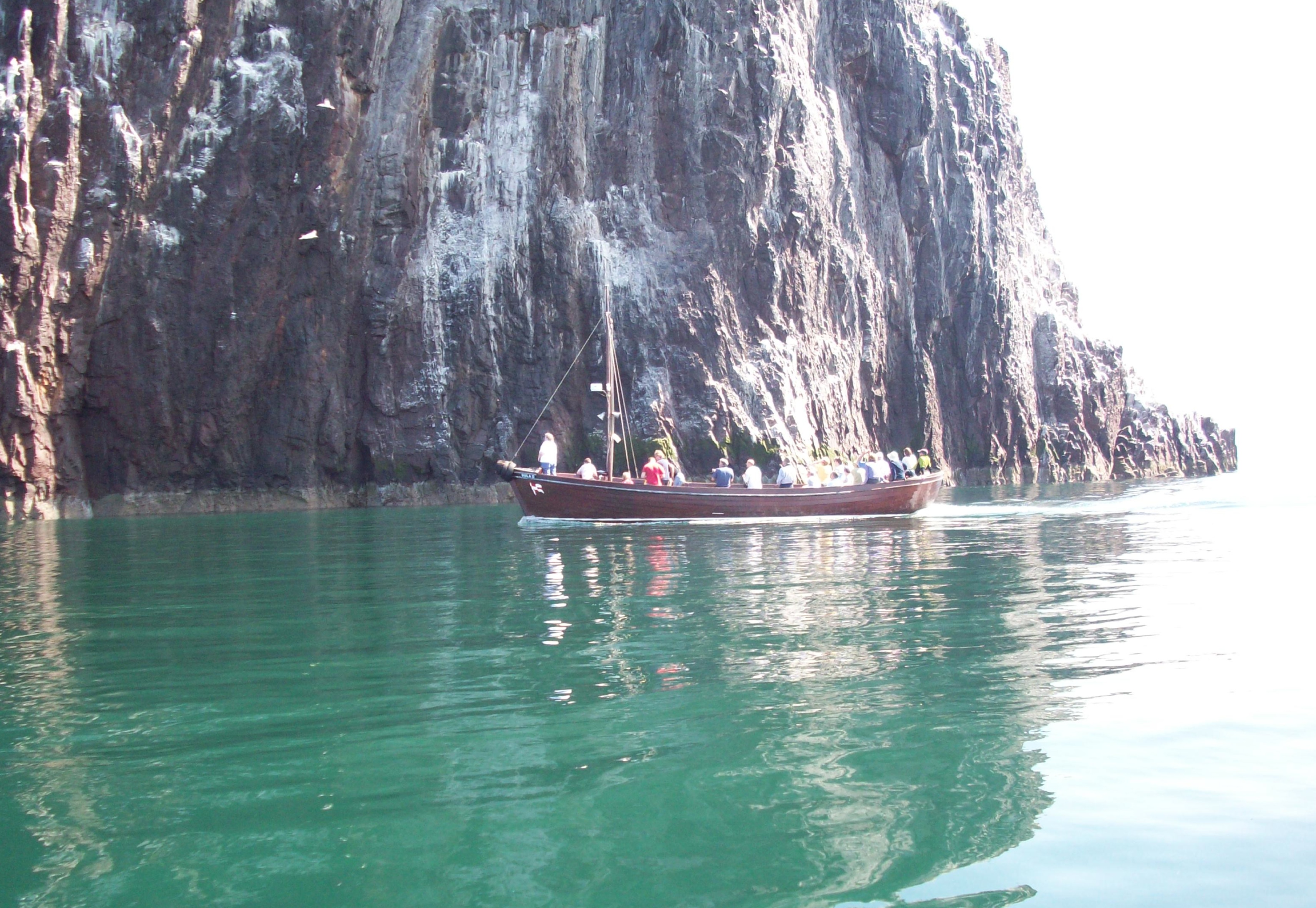
This close up, the Bass itself is nothing short of spectacular, even after the gannets depart for Africa in October. Sheer, unbroken 100m cliffs defend three sides and hint at the other 40m below the water. Scuba divers rate this among Britain’s best cliff dives. Boats can approach to within touching distance and, at one point, underneath the overhang.

Sula II Approaches the 120m-High East Cliff

Although the Scottish Seabird Centre, established 12 years ago, also now runs trips out to the Bass, a traditional boat called Sula II had the run to itself for decades and the Marr family (Chris, Pat & father Fred) became famous for shipping people and researchers out there before before they passed it on last season. It still makes a stately adventure out of seeing this unique island close up.

First recorded as a retreat for St Baldred, the 7th century monk who brought Christianity to the Welsh-speaking Goddodin on the back of Northumbria’s conquest of the area, it passed to the Bishops of St Andrews when Malcolm brought Lothian under the Scottish crown in the 11th century and then to the Lauder family who grew to such prominence that they were entrusted with being Keepers of both Berwick and Edinburgh castles.

Their keep here was one they retired to in summer or when things got a little hot on the mainland. Since there is only one place low enough to land and the castle dominates it, this was regarded as among Scotland’s safest castles—more impregnable even than Tantallon, just a mile away on the shore opposite. In their time, a flock of sheep produced Bass mutton—much prized for its rich taste from the well fertilised grass—and fat solan geese, as the gannets were once known—although their taste (“between chicken and kippers”) was one that needed to be acquired.

Sula II in the East Cave—the Right-Hand Shaft Continues through to the West Cave

Although it never fell, the castle passed out of Lauder hands to pay for gambling debts being bought by James V, whose ancestors had always coveted it. In the 1680’s its dungeon was used as a cruel prison for Covenanter ministers, caught preaching in the fields in defiance of James II/VII. John Blackadder (buried in North Berwick kirkyard) was the most famous who died here. Finally used as a prison for Jacobite officers captured at Cromdale in 1690, they broke out, forced the garrison onto a supply boat they had been unloading and held out for three years before gaining passage to France.

Sold for a pittance to the local laird in 1701, it was used for years as a hunting estate by gentlemen staying at nearby Canty Bay who would bag themselves a brace or two of solan geese, which were shipped as far as London. All this time, gannets had survived first the predations of the castle garrison, then such visitors and, finally, from lighthousekeepers, by nesting on inaccessible ledges on the cliffs, leaving the top clear for agriculture.

Increasingly secure under a whole series of Wild Bird Protection Acts starting in 1890, gannets ran out of cliff ledges fifty years ago and have since colonised virtually the whole 1-mile-circumference rock, with the exception of the castle and landing areas, plus low-lying spots like the Midden which is liable to being swept by waves during storms. Their numbers are now passing 150,000 but such is their loyalty to the Bass that no-one knows what will happen when there is no nesting space left.

In medieval Scotland, a synonym for the impossible was to “ding doon Tantaloon (knock down Tantallon castle) or build a brig tae the Bass (a bridge out to Bass Rock)”. The first was accomplished in 1650 when Monk’s artillery ruined the castle. But, though it still lies a daunting mile offshore, the increasing number of boats and visitors allows us to build a figurative bridge to this remarkable place so that all can enjoy its spectacle.

Posted in Environment | Leave a comment

North of East Coast Eden

On June 26th, the UK Department for Transport published its Consultation on the East Coast Rail Franchise, to which all assiduous anoraks will have replied by the closing date of September 18th. The summary of results are to be published, along with the Invitation to Tender it’s supposed to inform, in January 2013.

Even those who use the Edinburgh-King’s Cross trains on a regular basis may react with “who cares?”. After privatisation in 1994, Sea Containers ran it for a decade under its GNER subsidiary before National Express made an over-generous bit to take it over but was forced to hand it back into public hands after two years, since when “East Coast” has been a bit of a black sheep—a private company run by the public under a Tory government.

And, since it’s a Tory government, they want shot of it back into the private sector. At the launch, Rail Minister Theresa Villiers said:

“There are exciting changes on the horizon for the East Coast Main Line. It is set to receive a brand new fleet of InterCity Express trains. The next franchise will be up to 12 years in length, giving the operator greater opportunities to invest in improvements that will benefit passengers.

“The consultation outlines what we expect the next operator to deliver, including better service quality, improvements to stations, the roll out of smart-ticketing technology and good levels of punctuality. Bidders will need to share with us their plans to improve the passenger experience.

“The East Coast Main Line is a key part of our nation’s transport infrastructure, providing heavily used and economically significant services between north and south. Before we let this franchise, we want to hear from the people who use East Coast and listen to their ideas on better services.”

This service is actually the premier franchise in the Tories’ fractured rail system. Heavy investment in electrification and 225 trains in the 1980s made this line very profitable. GNER paid £1.3bn and innovated on livery, services and quality. But the 10% growth projected to fund the £1.4bn that National Express subsequently bid did not materialise and service quality suffered. By November 2009, re-negotiation talks had ground to a halt and John Prescott could soon happily boast of “enjoying a nationalised bacon roll with his nationalised cup of tea” when he used the service next.

But such a state of affairs is anathema to the present government so they are moving to complete the transfer back into a private franchise by Christmas 2013. The consultation can be seen as a sop or a serious attempt. But what is clear is that the DfT has a pretty sturdy pair of blinkers on when they look at options. The route map were discussing is:

East Coast Route Map with Connecting Services

As a business, it has proved robust and justifies BR’s early investment. But now that £2bn has been spent improving the West Coast line (WCML) and more is to be spent on the Midlands to Sheffield, the ECML is in for a period of competition. East Coast have already shown themselves to be too narrow in their thinking.

Whereas their main innovation in 15 years was to run (unprofitable) trains through Edinburgh to Glasgow, both Virgin and Cross-Country introduced Edinburgh-York-Leeds-(Midlands/Birmingham/West Country) services with smaller trains that proved both popular and profitable. Nonetheless, East Coast has grown to carry record numbers of passsengers.

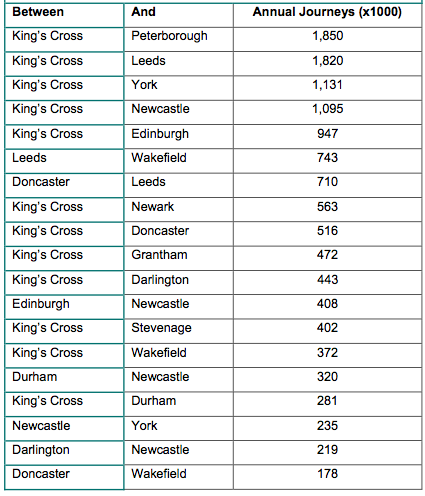
Main East Coast Passenger Journeys, 2011

This shows by far the bulk of journeys to be in England. No service North of Edinburgh registers and Edinburgh makes it on the list only through its traffic to London and Newcastle. Oddball situations like Dunbar do not register at all.

So, when the DfT consultation showed up in Edinburgh on July 17th, it was understandable (if rather inexcusable) that the top section of their map beyond Edinburgh was missing entirely and they were unprepared to discuss much about services in the missing areas, other than they would be continued.

It was not a large audience (perhaps two dozen) but it consisted mainly of local lobbyists with a fixation on their own little patch, leavened by Sarah Boyack and Mark Lazarowicz who chipped in some astute observations as regular users of the service to date. So, in terms of service improvements for the 1m+ passengers from Edinburgh, little was said. But there was, for example, little mention of:

  • distinct ‘real’ express services stopping at Newcastle, York and nowhere else
  • providing room for a spacious experience—in contrast with airplanes
  • connecting directly beyond London to Chunnel and/or South Coast
  • broadening the catering selection, especially on longer journeys
  • providing adequate luggage storage, perhaps in a luggage car
  • better co-ordination with Network Rail to provide same-platform interchanges

While those who showed from DfT and East Coast were well intentioned and genuinely appeared to want to stimulate a consultation, it was obvious that they would have felt more comfortably at home at their next two gigs in Newcastle and Leeds. They were unprepared for discussion about:

  • Provision of express services within Scotland as ScotRail does such a poor job of it
  • Co-ordinating with ScotRail/Virgin/X-Country of regular service to Dunbar/Berwick
  • Provision of more comfortable sleeper seats (c.f. airlines) to Inverness/Aberdeen
  • Rethinking services beyond Edinburgh in light of the EGIP electrification project

These latter seem particularly relevant as the new ICE trains will not only be fast but capable of switching power between electric and diesel as the line allows. Clearly, setting the franchise at 12 years means we will have a long time to live with it if Scotland does not get its premier rail service with the rest of the world right. Given, on the basis of this meeting, that the present senior staff ill understand Scottish requirements, it behooves anyone out there with proposals for improvement to get them in well before September 18th.

And spell them out in plain English, preferably in one-syllable words, so there can be no doubt.

Posted in Transport | Tagged | Leave a comment