An Eventful Day

It is a delight that East Lothian now has its own university and a shame that I take so little advantage of that fact. But on Tuesday, I took an opportunity to sit in on Prof. Joe Goldblatt’s class on Event Management at Queen Margaret University. The occasion was a guest lecture I had heard about by Prof. Richard Aaron of Georgetown University (Washington DC),

What impresses me about QMU is their pragmatic choice of subjects, among which is Event Management—one of those areas of endeavour like Apps writing that nobody even knew about a decade ago and thousands of people now make successful careers from.


In the hands-on manner of this kind of academia, Prof. Aaron is also President of Bizbash, a New-York-based business that tracks and publishes the methodology and key players behind successful events, such as the Superbowl, Oscars, etc. His lecture was entitled “Breakthrough Ideas for Your Career”.

Home Page for Professor Aaron's Bizbash Business

Home Page for Professor Aaron’s Bizbash Business

In such a dynamic field, the whole area could be dismissed as a ‘fad’, much as Political Marketing was in the noughties, proving to lack sufficient ‘weight’ to be taken seriously by mainstream academia. It would not be the first time that American academics have invented whole new careers for themselves on the periphery, but that it has never been taken up by heavyweight/mainstream academia, such as the Ivy League colleges.

More likely, given the proliferation of professional organisation of events round the world and the corresponding escalation of complexity, cost and specialist experience, it could be that Event Management will establish itself like Hospitality as a professional discipline that now requires professional qualifications to enter the business at its higher levels.

Richard Aaron presents himself as something of a guru in the field and the lecture was peppered with a series of thought-provoking statements, such as:

  • great events come with a background of theatre
  • great events clearly have a purpose—they are not just parties
  • there are now over 120,000 events professionals, world-wide
  • event design and production is more complex than theatre staging—but uses many of its techniques

He regards a good event organiser as a “Memorologist”—someone who creates an experience so memorable that it stays with people long after the original experience is  past. In Aaron’s view, every great event starts out with a clear vision of what is required: how the event needs to ‘look’; what long-term outcome is the principal goal; a plan to engage the audience in a striking way; ideas how to create a lasting impression, a ‘wow’ factor.

He cited a number of examples, such as a Motor Show where guests could actually get into 4WD vehicles in a large sandbox and drive around, with a similar toy tay arena for kids, or Target’s launch of a new clothing range actually consisted of the models abseiling down the building onto the outdoor catwalk, or the press conference for the film “Day After Tomorrow” where the media were each given cushions to sit on the blocks of ice being used for seating.

Perhaps the most important lesson I took from the lecture is that you don’t have to be doing the Grammies and working with a budget of millions to make an event memorable. It would seem techniques from advertising are equally applicable (c.f. Apple’s famous 1984 ad during that year’s Superbowl half-time). Successful events can have considerable knock-on: New York’s Fashion Week is so successful that the clothing stores of the city now hold their own series of specials in the week prior.

Joe Goldblatt (l) Makes a Presentation to Richard Aaron (r)

Joe Goldblatt (l) Makes a Presentation to Richard Aaron (r)

What set me thinking was the extent of local applicability. Prof. Aaron used an idea I had originally heard from Joe Goldblatt—that a huge opportunity for an event exists in Edinburgh. Since Disneyland’s most popular ‘land’ is currently Harry Potter and Hogwarts exists more in Heriot’s School and J.K. Rowling’s local perambulations than anywhere else, why should Harry Potter not become Edinburgh’s fifteenth festival?

As for East Lothian currently, the presence of the Open this year would appear to have missed a trick to make it more than a functional—if professionally run—golf contest. It is an ‘event’ by default, but not by intent. The R&A may know about the mechanics but the relatively remote rural locations in which it is staged is a blank canvas upon which a vision and identity could be stamped. Thousands are brought to one place for one reason, without considering how to create memorable components for those thousands from the long summer evenings once the golf is done for the day seems an opportunity lost.

A theme throughout the lecture was one of sustainability, by which he seems to mean that it’s easy to throw money at events but that booking the priciest caterer and venue is not necessarily the hallmark of a brilliant wedding planner. More than anything, this served to convince me that Aaron and his colleagues are not just peddling more American razzmatazz but may actually have conceived a field of study with substance. As with plays or films or advertising, the world has become so sophisticated that a professional discipline for events is required too.

In East Lothian’s we already have a number of occasions like the Open and just need to work out the basis of growing them into class events that enhance the experience and benefit the local economy and quality of life.
 

Posted in Commerce, Education | Tagged | Leave a comment

Mining the Chalk Face

Monday saw the publication of a report much anticipated in parts of the education fraternity but which largely went unnoticed by anyone else. This is a pity. The independent think tanks CSPP and Reform Scotland had joined forces to create a Commission of School Reform. Chaired by the former Director of Education in Clacks, Keir Bloomer By Diverse Means: Improving Scottish Education is the most pivotal contribution to the debate since the McCrone Agreement over a decade ago—probably more so, as it debates educational theory rather than terms and conditions for teachers.

Set up in November 2011 and consisting of 14 others with varied backgrounds in and around education Scottish, the Commission has produced 125 pages detailing how they find its health and, finding a mixed picture, make 37 recommendations how that state of affairs could be improved. Since their intermediate draft report came out last year, there has been some discussion of their proposals and the main parties at Holyrood have made positive noises about it but it looks as if this is going to be kicked into the long grass.

Which is a shame. First of all, Scottish education is not in the glowing state that those with a vested interest in it still maintain. While exam results continue to improve, no-one has yet proved that this is not ‘exam creep’ where it is in everyone’s interest—pupils, schools and examiners (who are almost all teachers) to look good. This is countered by significant numbers of primary pupils entering high schools effectively illiterate, innumerate or (worst of all) both, which nocks on into universities and employers complaining that new recruits need remedial courses before they can do their jobs.

That it is not entirely to do with the deprivation cycle that most apologists bang on about is emphasised with data on destinations for school leavers in East Lothian also published this week. The two schools covering such areas of deprivation as East Lothian has (Preston Lodge and Ross High) are improving in both pupils sent to university and those achieving ‘positive destinations’, totaling around 92%. Yet Musselburgh Grammar, the biggest school in the district, languishes at 83%. That translates into fifty Musselburgh ex-pupils in who are NEET (not in education, employment or training) and therefore kicking their heels and getting the worst start in life we could give them.

This is compounded by industry’s inflation of qualification requirements for new hires. SInce there are many unemployed graduates, they ask for degrees. Shelf-stacking and other such tasks does not need a graduate, but it avoids the need to train. At the same time, it removes once-plentiful relatively menial jobs from the less qualified who would use them to brush up their training, work their way up the ladder and generally keep themselves out of the clutches of the burroo.

The report sticks to things educational and academic and avoids commenting on the difficult socioeconomic background in which it operates these days. So, while it makes positive noises about the Curriculum for Excellence and encourages teachers to be more independent in their manner of teaching, it makes little reference to the role of society, most especially parents, in the equation. Whereas a good number of middle class parents are deeply (some would say obsessively) conscious of the key role a good education plays in many prosperous careers, this is not generally shared by those not in professional jobs.

The report makes little mention of the cultural context but even a cursory study of Asian, especially Chinese and Korean families shows a very high level of encouragement and support—in vocational as well as academic disciplines—that push their children to achievement in a manner that makes best use of their skills, rather than conforming to some fixed academic standard (c.f. school ‘league tables’ that feature so much in parental evaluation of schools here).

What the report does articulate is the pivotal role of early years. It is centuries since the Jesuits first coined the phrase “give me a boy until he is seven and I will show you the man”, so ably demonstrated more recently by Michael Apted’s brilliant series of documentaries “Seven Up”; “Fourteen Up”; etc. Western society, especially since the industrial revolution has largely attempted to fix education shortcomings later on and Scots have been particularly thrawn in avoiding languages until pupils are in secondary ad wondering why we are so poor at communicating with Johnny Foreigner unless he/she speaks English.

However, as both nursery and primary school teachers are overwhelmingly women and the vast bulk of officials and union  representatives aren’t, little debate is heard from this vital sector of education while much focus descends on the relative importance of subjects taught at secondary level, where men predominate. This may explain why the main teaching unions have such an antediluvian attitude to what matters in education—endless fixation on hours worked and prep time and perceived status and/or privilege appears to be of far higher priority in any negotiations than useful and uniform universal education and how it might be achieved.

Indeed, the worst criticism I could make of the report is the total absence of any obvious participation by any of the teaching unions—the ATL being an honorable exception but not representative of teachers in Scotland. In this, it is difficult to blame the Committee because the main teaching unions are habitual in their affection for the militant attitudes that blighted seventies Britain and in their apparent disinterest in contributing to real advancement in education. If the EIS or SSTA or any other major union has ever made thought-provoking proposals how to put our youth at the pinnacle of world education, then I must have missed it in the flurry of wage demands, conditions complaints and the ever-burgeoning pensions burden on which they fixate.

Which truly is a shame. The report makes a big play of redoubling efforts to support education in areas of deprivation. But that is really code for engaging parents in those areas where children face their education with little or no support from their parents. Throwing money at they problem through welfare and benefits appears to have not only failed in that laudable aim but has created a permanent underclass and damaged Glasgow’s well earned reputation as a place where world-beating things happen. Whether more welfare will help kids seems dubious, although early years work may prove the exception.

But what point is there to engage parents when teachers are encouraged by their unions to be clock-watchers? What message does it send to young minds when after-school activities are curtailed because it’s lousing time? An, with many of our schools now in PPP hands, even parents organised enough to take up the slack face ludicrous charges to use these public facilities that lie empty between 4pm and 9am and deserted for 200 days in the year?

I have yet to hear a coherent explanation why Health & Safety paranoia bundles our kids into superheated rooms at the first snowflake while Swedish 4-year-olds are running about in the snow and bouncing off trees in outdoor kindergartens. Worse yet, I have yet to hear a teaching union official aspire to propel their pupils to the top PISA ratings—as Finland does. Maybe it’s because a Finnish teacher is on 80% of the wage of a Scottish one. What compounds that obduracy is Finnish teachers have neither curriculum nor HM Inspectorate to contend with; they teach as they think best—and best is what their pupils come out as. Is that not something for our ‘professionals’ should aspire to?

The report does refer to such radical examples as given above, even though no real reference is made to teaching staff who would be pivotal (less not assume obstructive) in such changes. And, as such, it provides a good basis to advance the debate. But unless teachers stop believing they are as hard done by as their unions claim and start to assert the level of professionalism they claim they deserve, Scotland will slide because standards will slide because those with an interest (teachers, pupils, government & unions) all want a good news story. Exam results up? Everybody’s happy.

Except the employers appalled at standards of numeracy and literacy and the one-in-five youngsters who find themselves unemployable and are thereby condemned to provide the next generation of unemployable. It’s in all our interests for those in education to crack this cycle of denial that sometimes verges on self-interest. This report represents a well intentioned start.

But all the story we get from teaching unions is a hackneyed version of the emperor’s clothes.

Posted in Education | Tagged | 2 Comments

Mea Culpa

Thursday was a busy day. I was up early and on the train to Aberdeen en route to Banff to pick up a vehicle. As ScotRail has yet to enter the 21st century and provide power sockets or WiFi on their dinky 3-car ‘express’ trains between Scotland’s two economy-driving cities, I was, as I often am, using my iPhone to catch up with the world via Twitter.

After having a couple of go’s at RBS for hosing unjustifiable bonuses around (£607m) while making the fifth—and biggest—loss of the last five years (£5.17bn) with 80% public money, I was becoming angry at such ineptitude. My mood wasn’t softened by four oil workers having a noisy bevy around the table across the way and a particularly whiny kid squalling its way through any bribes tried off the tea cart. I then saw a Tweet from the Better Together lot which said:

We will also have a stock of our new leaflet which has Scots saying why they think we are stronger in the UK. #G2013pic.twitter.com/JlCi77pzHS

Those who know me will recall it takes little to rouse me. They will also recall that my mode of communication when roused tends towards the provocative. This is not a trait of which I am particularly proud and I do try to rein it in on those occasions that demand it. This was one such occasions but checks-and-balances failed me and did not kick in. As a result, at 9:48 am, I tweeted in response:

@UK_Together Do you have equivalent quotes from abused women saying why they don’t need a divorce or slaves happy on the plantation, Massah?

It was only when the responses came pouring in that I realised the extent to which I had aroused indignation and had wholly misjudged how such statements would be taken. Some of the responses were reasonable and measured, such as:

@DavidSBerry do you think such racially charged language reflects well on supposedly positive anti-uk campaign? #indyref#bettertogether

which gave me an uneasy feeling and set me to thinking, albeit too late. Some of the responses were personally abusive and I normally discard such opinions of people who don’t know me well enough to insult me. But, most importantly, a number of responses were both angry and articulate about me exceeding the bounds of taste to an extent that oversight could hardly excuse. These I took so seriously that at 11:04 am I tweeted in general:

In view of strong response, my original comments seem excessive. I withdraw them and apologise if I caused offence.

and to the more moderate and reasoned responses, such as the one cited above, before noon I replied along the lines of:

@AnthoCu86 Was not intended to be racially charged; several people took it as such, so I have withdrawn the original comment and apologised.

To anyone reading this offended by my original remarks—or any unaware then but outraged now, I offer my apologies and recognise that my statement went beyond the bounds of impish provocation and could be interpreted as insulting to abused women and/or slaves, especially in terms of the intensity of their personal suffering.

Despite over 5,000 tweets over more than two years, my propensity to push the envelope of debate, conspiring with an unreasonable temper if my sense of right is roused, had not generated anything more than some lively debates to date. Indeed, few of them had become acrimonious and almost all  ended in chivalrous acknowledgement of the other side and a tacit agreement to disagree. Despite my (continued) unquenchable belief in Scottish independence, I am happy to acknowledge that many were with equally diehard No/Better-Together/Unionist campaigners who have thereby earned my respect: we are all Jock Tamson’s bairns and we have an honest debate ahead of us.

But I see, in retrospect, that this went far beyond such debate. Despite my relative experience on Twitter, this was a major faux pas, for which I take full responsibility. The only good to come out of it in my view has been twofold: a roll-call of correspondents I imagine I must now list as diehard enemies, so immoderate and condemnatory were their missives and; a sharp lesson on social media etiquette that I should tape to my computer monitor and recite daily before I switch the thing on.

And it leaves some serious questions for me to answer to myself and for which purpose I am taking this weekend to sift potential answers through my mind. I am, socially, not a chatty type but I am, in politics, an outspoken person. My rather stern mother taught me that honesty trumps diplomacy, which has set me at a lifetime of odds with the traditional English stiff-upper-lip and with Kelvinside rictus of politeness-at-all-costs. That is one reason why I like American/Australian straightforwardness and tend to laugh at the language codes in everyday use in business and politics today.

In that spirit I considered, and then rejected, the idea of deleting the offending tweet. It was a balance between giving further offence and the honesty that, however misguided, I had indeed posted it and the matter would best come to its conclusion without any attempt to sweep it under the carpet. That wasn’t an easy choice. Being in hot water is not  a new experience for me but offending a number of people—especially when there was no intent to offend—certainly is.

So far, so noble; but what then when such lofty principles overstep the bounds of decency and get me rightly pilloried? It seems that I may have brought the party of which I have been a loyal member for 36 years into disrepute—still worse, damaged the cause of independence to which I have dedicated these last 20 years. The party was swift to (rightly) distance themselves from my original statement and I have had no pressure from them since to take any particular action. Nonetheless, I will be considering what, if any, action on my part now would constitute the most appropriate way of making amends.

Posted in Uncategorized | Tagged | 5 Comments

theSPACE: to Infinity & Beyond

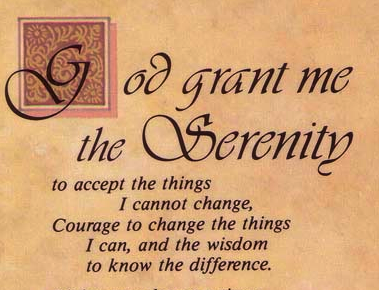
As an elected representative of the community dealing with the inevitable large bureaucracy of large organisations like councils, the Serenity Prayer is a good thing to keep by you for those times you get baffled by procedural requirements and want to pick people up by the lapels for all the right reasons.

SerenityBut then there are others who operate in that same environment and yet, when given nothing but lemons, manage to produce refreshing quantities of lemonade.

One such gravity-defying, pencilneck-evading operation in whom I am in awe is right in my own backyard—actually in a disused factory just up the road.

theSPACE is the brainchild of Adrian Girling, a quiet spoken, intense guy who has not yet quite escaped the grunge style of his teenage years and who, had fate been tweaked just a little, would probably have wound up an evangelist or a poet. But from a prototype first done in East Linton a few years ago, Adrian has conjured up, with the help of local youth, willing volunteers and his own persuasive tongue, possibly the best community facility oriented towards 3-to-30-year-olds you could imagine.

Starting off as a shell of a condemned industrial building that had once hand-crafted Ben Sayers golf clubs and that he persuaded local developers to lease him short-term, he begged borrowed and stole tons of timber and top-quality plywood that he then persuaded a large number of local teens to craft into East Lothian’s first indoor skate park by themselves. theSPACE was radical, innovative and (more importantly) cool, something the council—even with tons of money and the best of intentions—could not have managed in a month of Sundays.

This blog introduced this new facility over a year ago and it has fulfilled almost everyone’s hopes for its success. But, not content with that, in the interim, it has branched out into providing other facilities that are being embraced by the community. These include music rehearsal and recording rooms, a huge soft play area that has proved a big hit with mums with younger children and a cafe in a part of town that had none.

Because it was built by skate aficonados, it now attracts serious skate park users not just from the county, as was hoped, but from as far away as Berwick and Dundee. Solid social partnerships are now forged with the local High School, Drama Circle, Community Development and even the local Rowing Club by providing them the space to build their third dory. It seems very modern that some 30-year-old is skating radical in the same building that his wife has their happily bouncing around the soft play area.

Bottom line is all this usage by grateful people gives a buzz about the place. Even from a hard-nosed beancounter perspective, it’s a success: about a dozen full and part-time staff, similar number of school-age volunteers, all putting some £400,000 into the local economy in its two years of operation so far. And what’s more: it washes its face. While there have been grants secured and almost everyone involved round about has been helpful, its success has nonetheless been achieved by appealing to people so that they want to use its facilities; they take ownership and so add to its success.

The fly in all this cheery ointment is that the lease is up in less than two years; they need a permanent home. To find several hundred square metres of cheap industrial space is next-to-impossible as there is none in town and the operation now has such a positive and supportive clientele that moving elsewhere doesn’t bear thinking about. While there would be some options approaching the North Berwick Trust to see if any development along Grange Road might accommodate them, any such development and any related expansion of Law Primary across the Haddington Road would not be for years and so don’t offer a solution in either.

It would be criminal to let such an valuable, community-based and -supported innovation as theSPACE to run off a cliff for want of some land on which to make its popular presence permanent. It does seem that the Council is primarily on the hook here: most local authorities would give their eye teeth to create such a well targeted and run facility, let alone have one develop organically in their midst. The Community Wellbeing department has done what it can to help and the local Common Good fund has chipped in with 5-figure amounts of cash.

But what theSPACE needs—indeed has earned and deserves—now is some pro-active pro bonum work by the Estates and Planning, some seed capital and assistance in securing grants and the donation of a piece of local land to which they can transfer. At the local CAPP, the drop in nuisance statistics speak for themselves and this positive effect is being seen as far away as Musselburgh as youth from other areas travel here to benefit from facilities they also see as ‘theirs’—responding as the local kids with positive behaviour.

And once this major hurdle is overcome, the next step is to solve the transport problem that makes it hard for Dunbar, Haddington and East Linton youth to access theSPACE in the evenings because of the absence of buses—and not all mums have cars and are prepared to play chauffeur on a regular basis.

But if you haven’t visited yet, go. Watch the older teach the younger skate techniques and how solicitous everyone is when they slam into each other; listen to the happy mayhem of a dozen toddlers in the play area and the detectable boom of a bass as a group rehearses. Pay particular attention to the young volunteers learning to run things, handle cash, hold down a job, deal with people.

You want to see young people from 3 to 30 given a chance to shine? Get on up to theSPACE and watch it boldly go where no community facility has gone before.


Posted in Community | Tagged | Leave a comment

Cometh the Hour, Cometh the Wrang Yin

Most media are carrying fulsome obituaries of the former Scottish Secretary of State for Scotland Bruce Millan, who has just died at a ripe age of 85. Tribute to him was paid by Lord Foulkes of Cumnock, who said: “Bruce was someone of whom the Labour Party should be very proud. He was a great public servant and a very modest man.” Leader of the Labour Party Ed Miliband said: “Bruce Millan dedicated his life to service of our country and the Labour Party. I am very sad to hear news of his passing.

A man clearly popular and respected among his colleagues, he was also someone able to balance life and career and his family has articulated their gratitude for his ability to do that among so many careerists. But, while acknowledging this achievement, accepting the sincere praise of his colleagues and reluctant as anyone should be to speak ill of the dead, I assert that he was, nonetheless, a disaster for Scotland.

He served under the legendary Willie Ross as Undersecretary of State for Scotland in the Wilson governments 1964-70, a pivotal time when Scottish heavy industry was under growing international competition and the Labour government was convinced that the mines, shipyards, steel mills etc that provided the economic lifeblood of the Central Belt (and therefore of Scotland itself) would nonetheless provide in the future as they had in the past.

Fifteen years Ross’ junior, Millan did not make waves around so strong a personality. Ross, in his turn, was given pretty much a free hand by Wilson. It was on his watch that the many ambitious social projects, including rehousing thousands in tower blocks, the provision of estates like Castlemilk and the clearance of the Govan slums took place. Millan represented Craigton, which became Govan in 1983.

It was also a time of major public investments in the new deep mines (Monktonhall, Longannet) with revolutionary fluorescent lights, underground railways and multi-storey cages promised efficient extraction of vast quantities of quality coal. Ross and Millan were not responsible for the building of the Bathgate or Linwood car plants, nor even the Ravenscraig steel complex, but they did push the Hunterston ore terminal and state-directed infrastructure like the now-defunct Kinlochleven and Alness bauxite plants.

Journalist Andrew Marr called Ross “a stern-faced and authoritarian Presbyterian conservative who ran the country like a personal fiefdom for Harold Wilson“. He opposed the 1975 referendum on Europe and coined the phrase ‘Tartan Tories” to insult the SNP. An example of ‘Oor Wullie’s’ titan status and his dismissive handling of mere mortals who dared to challenge him comes in a exchange from March 9th 1966:

Mr Gordon Campbell (Moray and Nairnshire) asked the Secretary of State for Scotland what effects the re-programming of investment by departments will have on his estimates for public investment in Scotland in the current year contained in paragraph 372 of the White Paperon the Scottish Economy, Command Paper No. 2864.

Mr William Ross (Kilmarnock) None, Sir. The estimates in the White Paper took full account of the effects of the policy which was introduced on 27th July last year and is now being continued in a more flexible form.

Mr Gordon Campbell (Moray and Nairnshire) Does not that mean that either the Chancellor’s statement on 8th February was a sham, or the figures in the Scottish White Paper which was published earlier are entirely meaningless?

Mr William Ross (Kilmarnock) No, Sir. I think it means that the hon. Gentleman is not capable of comprehending what was said.

The state direction of the economy, of which the Wilson government was particularly fond, ignored the rising threat of Nissan/Honda/Toyota to the likes of Linwood and Bathgate, the cheapness of Australian open-cast coal and the Daewoo or Samsung shipyards in Korea that were building cheaper, welded-hull ships while the Clyde was banging in another billion rivets.

But when Wilson—ever the canny politician—realised the dubious direction in which his decade of pseudo-socialism had led things: three-day weeks; constant strikes; an IMF bale-out; a deteriorating balance of trade, he resigned, handing the whole mess over to ‘Sunny Jim’ Callaghan. As his acolyte, Ross went too, leaving the far more mortal and human Millan to fill his shoes.

It’s fair to say that it would have taken a Titan bigger than ‘Oor Wullie’ to have  fixed the Scottish economy in 1975. Not only were all the traditional heavy industries going to the wall (and few could have foreseen how completely they would disappear) but neither of the economic boosts from North Sea oil nor ‘Silicon Glen’ were yet making any significant difference. If once imperial Britain had lost her way, then Scotland was already in the woods and disoriented and without a compass too.

It was a time for bold leadership, for thinking the unthinkable, of thinking out of the box, or whatever glib management-speak you want to use. But Bruce Millan, for all his undoubted attributes, could not provide any. He was a good and loyal apparatchik. And, as long as Callaghan thought he could negotiate with the unions to stop spiraling wages and inflation that set off further rounds of strikes, Millan wasn’t the man to rock the boat. So in 1972 £1 could buy DM8. By 1977, it was DM4 and the German economy was roaring ahead, derisive of this ‘English disease’ of strikes.

Could Millan have done more to take a different direction within a Labour Scotland? He could have tried. But that he did nothing more than turn the handle 1975-1979 is reprehensible. His main achievements appear to be to approve Torness nuclear station and to open Glasgow Royal Infirmary. With no Scottish Parliament and the ‘football team’ of 11 SNP MPs snapping at his heels, his department was Labour’s main political weapon to fight them off. In one of his few weaker moments Ross had confessed to Winnie Ewing: “It’s not the eleven wins that frighten me, Winnie, it’s your thirty-five second places“.

But, when that threat resulted in Callaghan scheduling the 1978 Referendum, most of Scottish Labour, including Millan declined to join the ‘Yes’ side, despite Home Rule for Scotland being part of the Labour Manifesto since before WWI. During the passage of the Act, the MP for Islington (of all places) amended it by adding a further requirement that the approval at the referendum be by 40% of Scotland’s total registered electorate, rather than by a simple majority.

Leave aside that half the House of Commons would not have been elected if this had been applied to them, Millan the viceroy in charge of the country in question, made no protest, didn’t stmp his foot, charge into Callaghan’s office or show the least outrage—meaning the amendment stood. This resulted in the only election in British democratic history where a clear majority voted ‘Yes’ (51.8%) but the minority who voted ‘No’ (48.4%) won on a turnout of 64%. Note this is considerably more than ANY turnout since devolution.

Say what you like about independence, everyone but the Tories spent the next 20 years arguing for at least some form of Home Rule and that Labour is still outraged that the SNP got angry enough to bring down the staggering Callaghan government as a result. Millan continued on in a Shadow role but no-one was paying attention to Scotland any more. Despite promises from Sir Alec Douglas-Home to vote ‘no’ and get a better deal from the Tories, Thatcher’s arch-unionism made a cruel joke of that and the focus moved to the Falkalnds and the Miners’ Strike.

Perhaps it is symbolic that when the by-then-senior but still-invisible Bruce Millan took the Chiltern Hundreds in 1988 to become an EU commissioner that the resulting by-election in his Govan seat lost it to a barnstorming campaign from the SNP’s Jim Sillars, husband to Margo who had taken it fifteen years before. Though there is no doubt of Millan’s humanity, nor of loyalty and dedication to his party, it could be fairly claimed that the present demise of Labour in Scotland has its roots in the rudderless post-Ross years when his hand was on the tiller of Scotland at decisive times when courage and action were needed.

And he effectively did nothing.

Posted in Politics | Tagged | Leave a comment

Sometimes You Just Need Balls

I’m sure that it has never bothered Ed that the two of us disagree on so much. I didn’t like the cut of his jib when he was in the Westminster shadow of Irn Broon. That dislike went steeply downhill from there when he brought his fiscal sleights of hand, so assiduously learned from his master while at HM Treasury, into Labour’s front bench. I thought ‘achievements’ like the windfall tax were deceitful, especially given the plight of pensions since.

So, when the other shoe dropped on the UK’s rating in financial circles from the hallowed Aaa to Aa1 in Moody’s eyes, I had expected to be equally appalled by Balls’ response to this as I am by Osbo dropping the ball in first place, especially as the 2010 Conservative Party General Election Manifesto made safeguarding Britain’s credit rating “the number 1 Benchmark for Britain”.

But Ed’s press release is measured…and spot on.

“It would be a big mistake to get carried away with what Moody’s or any other credit rating agency says. Tonight’s verdict does not change the fact that the credit rating agencies have made major misjudgements over recent years, not least in giving top ratings to US sub-prime mortgages before the global financial crash.

“But what matters is the economic reality that the credit rating agencies are responding to. Moody’s themselves say the main driver of their decision is the weak growth in Britain’s economy. Their judgement is in response to nearly three years of stagnation, a double-dip recession, billions more borrowing as confirmed this week and broken fiscal rules.”

Again I’m sure Ed doesn’t give a rat’s toss what I think but I agree with him that, in the upcoming Budget, the UK government needs to face facts that their approach has failed to kick-start our flatlining economy. Without real growth or massive spending cuts, there will be no mechanism to get the deficit down. And I share Ed’s suspicions that David Cameron and George Osborne will fail to put their political pride aside in the economic interest. Otherwise, the UK faces more long-term damage and pain for businesses and families.

Such unpleasant reality is not easy to deal with. I agree entirely with Ed’s summation: “The issue is no longer whether this Chancellor can admit his mistakes but whether the Prime Minister can now see that, with UK economic policy so badly downgraded in every sense, things have got to change.” Except that there is one positive alternative beckoning for a coherent subset of the 60 million people in what was once the world’s dominant economy but has been brought to this sorry pass who need not thole much more of this economic tragedy, this century-long decline they continue to suffer.

That coherent subset are the Scots. In 20 months they, uniquely, have an opportunity to make a change of their own. And, while I wish our English cousins no harm, they have been in the process of dragging a buoyant and fiscally healthy Scotland with them on the long slide to third-class status in the world. They fail to see that it’s not membership of the Security Council or ability to nuke Teheran into dust that matters in the world.

As Singapore or Switzerland—never mind Scandinavians—will tell you: money makes the world do round and not only buys you friends in global terms but provides you with a decent class of enemy. All those ‘small’ places have clout in the world AND, what is more to the point AAA ratings from Moody’s. Ed omitted to mention that, or the alternative open to Scotland to bale out of this ongoing fiscal balls-up and join them.

What guarantee do Scots have that becoming a normal country will lead to sunlit uplands of prosperity for all? None, But consider five key points on Scotland post-independence:

  1. Scotland would start with a £60bn per annum oil business, plus a booming renewables sector, world-class reputation in marine engineering, £4bn in whisky exports and a food, drink and tourism business that puts Swiss chocolate to shame.
  2. Despite alarmist puffery from unionists, the EU would welcome Scotland as a member because we’d be net contributors and can supply the energy that now-anti-nuclear Germany will need as she runs down her nuclear generation. We’d also get to join the Nordic Union, the most affluent and understated force for good in the world.
  3. Not only would England be unable to stop us keeping the pound but, if sensible, they would co-operate. The present run on the pound (vs $ and €) is just the start. While Scotland, with its relatively larger exports, would benefit from a relative devaluation. England alone would head for a Weimar inflationary nightmare.
  4. Though Scotland would shoulder the result of UK fiscal mismanagement in the shape of a debt share currently passing £65bn, by using oil revenues and cutting defence from our current £3.4bn share to under £2bn, that could be not just handled but paid off within 30 years. This would transform our present debtor position to one like Norway where we could build a national fund as an insurance policy for the future.
  5. As a small, prosperous country on the edge of Europe, we would have the advantages currently enjoyed by the Scandinavians, Ireland, Iceland or the Baltics, ALL of whom are doing better financially than the UK. Plus, as a major energy producer and exporter we’d have an Aaa rating like all the Scandinavians. And if we got our banks back to their former canny rectitude, Edinburgh would recover as a financial centre.

But all of that is not given. As with any opportunity, real difference is only achieved by exploring the unknown. And—thanks to Ed for pointing this out—but sometimes you just need Balls to do it.

Posted in Commerce, Politics | Leave a comment

That’s More Like It

I was struck by a post elsewhere this week. Though I disagreed with its conclusions, I was impressed a young and principled unionist could make their case without implying that everyone in Scotland would go bald and slobber uncontrollably post-independence. In the interests of balanced debate, I reprint the article verbatim from the Glasgow Guardian in acknowledgement of its good sense to print opposing views in this vital debate.

“Too often in the debate surrounding independence is the term nationalism used, and no-one seems particularly sure in what context they wish to use it. Many pro-Union supporters pigeonhole Scottish self-determinism as a concept used primarily to stir up emotions of patriotism to encourage a ‘Yes’ vote in 2014. Yet, some pro-Independence supporters would argue that it is sheer hypocrisy to condemn Scottish nationalism on one hand while beating the drum of ‘how great the UK is’ on the other.”

I’m with you so far: actually a pretty solidly objective basis from which to launch an argument.

“Here, I may be guilty of fitting into the Tory stereotype, and find myself drawn towards the question of Europe as an initial point of reference. Whilst I am not a fan of single currency, I do believe in the concept of Europe in the same way I believe in the United Kingdom; we have more that unite us than divides us. But Europe is not fixed – just look how much it has changed in our life time, with the recent decision by the Prime Minister for a referendum being testament to that. Whilst Yes Scotland states that ‘it will be the people who live in Scotland who will be in charge’, it also affirms that ‘an independent Scotland will remain part of the European Union’. Can this balance really be guaranteed? By the time Scotland has applied and been accepted as an EU Accession State, what will the EU look like? Will it really hold Scotland’s interests at heart? Our relationship with the rest of the UK is far more long-standing, with our Sterling Currency far more responsive to financial fluctuations than the Euro currency we would have to join. I believe that greater devolution will allow for Scotland to have the best of both worlds; self-governance with a historic safety net of support in London, rather than in Brussels.”

Here’s where we start to diverge. I do accept there seems a logical inconsistency in independence from the UK but not from Europe—but only if they are effectively equivalent: dominant superior powers that limit (cripple?) any benefits from that independence. Even assuming renegotiating Scotland’s place within Europe takes longer than the independence process itself, there would be so many factors over which Edinburgh would take sovereign control that present subservience to London is far more severe than any subservience to Brussels—present or contemplated. And, instead of the present 7-soon-to-be-6 MEPs, we’d have something like Denmark’s 13 and a seat at the top table to argue our case. And we’re not presently arguing to join the Euro but to stay aloof, as Sweden has done.

“There is also consensus among pro-Independence supporters that an independent Scotland will be a more fair, just, and equal nation. If this argument was correct, then who wouldn’t vote for Independence to rectify the social problems that we face in the United Kingdom? The main reason, I believe, why this argument is ineffective, is because these social problems are shared by citizens throughout our country. Are the social ills we face in Glasgow any different from those faced in Birmingham or Sheffield? Of course not; these are national problems that require a collective national response. Why would you want to push a more progressive policy in Scotland than throughout the rest of the United Kingdom? Do we not feel a moral obligation to help our wider family in the rest of the country? We can achieve so much more together than we can apart, and that to me, is the definition of the Big Society. We are a nation with so much in common, and Scotland is as fundamental to this sense of collective identity as any other part of the UK.”

This is where we really part company. The argument that our sharing similar social ills must mean we belong together is actually looking through the telescope from the wrong end. Equally plausible is it’s precisely because we have shared the same doctrinally capitalist/fiscally spendthrift Tory/Labour governments for centuries that their equally cack-handed social policies have homogenised British society geographically, yet fragmented it socially to the extent cited. That Scotland is more couthy, down-to-earth and egalitarian is underscored by the resurgence of its culture (Kelman or Connolly) and explains the demise of Scottish Tories. This latter because they became (unnecessarily in my view) just a branch of Lord-Snooty’s-chums Tories of Englandshire.

“I think that we are better together because Scotland has an integral role within the UK, contributing positively towards the country as a whole. I believe that Scottish identity is as independent from the UK as it is shared, and as progressive as it is responsive. We have a precious relationship which could achieve so much more through collaboration between devolved and central governments to benefit everyone.

We agree that UK-with-Scotland and England-with-appendages would be very different places. Likewise no-one gainsays all that the countries of the UK achieved together in the glory days now gone. But here is where the glib unionist assumption that what is good for Britain (by which they mean England) is ipse facto good for Scotland. Were Scotland’s identity respected, why would all the oil money go South or Scotland have to tolerate Faslane less than 20 miles from its biggest conurbation? The fiscal outlook for England is poor, with Osborne borrowing way beyond his worst expectations. Scotland shorn of that English millstone would be solvent within two decades through oil, renewables, marine engineering and whisky/tourism. If we have sense, we’d look to Scandinavia whose advances in education, co-operation, global business and social justice put all Brits to shame. And, by learning from them. we’d be better placed to teach our benighted English cousins for whom, despite all this rammy, we do have a fondness.

“Furthermore, when this is combined with our valuable position on the global stage as a United Kingdom, the potential for positive change is even greater, and I don’t think even the most reluctant nationalist could argue with that.”

Carys Hughes, Glasgow University Conservative Association

And here is the main delusion that we Scots do not share. Starting with its Norman origins, tackling Wales, failing in Scotland, the English have two traits that we Scots don’t share: 1) a hankering for empire; 2) a resulting mistrust of foreigners. This claptrap about being a global power is historic and ended with Suez, although the English have yet to accept it. I hate to deploy the “too poor, too wee” argument often leveled at us, but it’s true. Despite a £40bn defence budget, the UK would be unable to re-take the Falklands if the Argentinians were minded to throw the clock back 30 years.

To all those open-minded Conservatives like Carys Hughes, I suggest that a future with hidebound England who thinks foreign policy consists of invading those we don’t like only as an American poodle and waving Trident warheads at the rest is not an enlightened one. Staying in the UK sells an inferior future to Scotland, mainly as a prop for wonky English delusions. But, as a member of the Nordic Union—pretty much paragon of what civilisation can achieve—we might in the long run bring the English back from the brink of that penurious future they are pursuing that sits poorly with their gracious, if now faded, civilisation to see the better future we do.

Posted in Politics | Leave a comment

Fit Like, Eh?

Just back from a couple of days in various parts of Aberdeenshire and am happy to report that, not only is the Doric alive and well but that the area is surviving as robustly as you would expect. It’s not just that the P&J carries headlines as distinct from Scotland’s Central belt as any other ‘foreign national’ newspaper (they it was reputed to have brought the news of the Titanic’s sinking with “Local Man Lost at Sea”) but the whole place has its own feel from landscape to architecture.

I had forgotten what a big place it is—and not just because it takes you hours to get from Peterheid to Fochabers or Turra to Elgin. While there is flat land, its bulk is the rolling farmland that goes up and down a lot more than Ayrshire or the Mearns. They also seem to have gone in for fair sized wind turbines too because these are scattered all amidst the farms and villages and not just the more deserted moors beyond New Pitsligo. And when you come to the coast, even at a major river mouth like the Deveron, you are impressed with beetling headlands that seem to be a local specialty.

The thing that touched me the most was the blizzard of small towns you pass through that seem to be working as such. Much of it must have to do with the sheer distance to get into Inverness or Aberdeen and the antiquated paucity of what passes for a rail service or even a decent trunk road in the A96. But whether Huntly or Banff, there is a High Street with a selection of shops that aren’t just charity remnants and little of the run-down, seen-better-days that characterises much bigger places like Dunfermline or Motherwell.

Places like MacDuff may not be booming but the harbour’s full of working boats (unlike Banff where it’s mostly yachts) and there’s work to be had in the boatyards and chandleries. And, on the outside of town there’s a John Deere dealership with a yardful of green toys to tempt the farmer, whose big fields under broad skies must make for arable farming at least as rich as in my own East Lothian. To be sure there are derelict sites and grim estates, such as you find anywhere in Scotland. But here is wearing better than most.

Climb on any Stagecoach bus that trundle between towns on a spider’s web. Not only is the driver friendly to the point of striking up a conversation with you but buses seem to operate as a kind of mobile coffee morning where half the bus is bantering away with the other half and even the teenagers break their cool to talk with the elderly. And, as in the Borders, don’t dare clump towns together—people are highly aware of which town they are from. A Macduff man living in Banff (on the other bank of the Deveron) 20 years is still not regarded as local. Perhaps that’s what keeps Highland League football so lively.

On the two brilliant sunny days I was there, Aberdeenshire presented itself at its crisp wintry best. I can imagine what clouds of Nor’easter storms might do to damage that ambiance but maybe that also helps the sociability. Because, unlike the more money-grubbing suburbs to which I’m afraid places like North Berwick now belong, however reluctantly, the North East seems to have less of fixation on house prices and career and more of a grasp on what matters in life—family, friends and a bit of fun to break the monotony. The schools are good; there’s good work to be had still; the pubs are friendly.

I’m sure, while they’re growing up there, young people can’t wait to get out of such a quiet and unprepossessing part of the world. But once they’ve seen it and realised how cut-throat and impersonal it can be, especially in the big cities, I imagine there must be a fair number who show up back in Turriff or wherever to bring up their own kids, maybe run the John Deere dealership and remind themselves how to tell a quine from a bitcallant.

Harbour Entrance, Macduff

Harbour Entrance, Macduff

Posted in Community | Tagged | Leave a comment

Not Just the People Must Be Free

Both Anas Sarwar and Johann Lamont stepped off into this week with major speeches about what Scotland can afford. So far, so practical—and so new; it’s not often you catch Scottish Labour arguing for something more subtle than simply throwing money at our problems. Ms Lamont called for voters to engage in “an honest debate about affordability” and pledged Labour will no longer ask “what we can bribe them with by claiming it is free. Scots face a stark choice of increasing taxes, introducing charges or cutting public spending elsewhere if they want to keep the full range of ‘free’ benefits currently available”.

And she indicated support for scrapping some universal benefits, being particularly critical of college budgets being cut “when the children of judges and lawyers get taxpayer-funded degrees at university”. Meanwhile, her deputy was adding an appropriately discordant harmony to her dirge. Mr Sarwar claimed the SNP has abandoned social justice, attacking universal benefits such as free personal care for the elderly, free prescriptions and the removal of university tuition fees. He argued:

“How can you talk about social justice without talking about wealth redistribution? Not only is it that the SNP talk left and act right, although that’s certainly true, but that redistribution is one of the strongest arguments in favour of the United Kingdom.”

Let’s leave aside that Labour has run urban Scotland for the last century and the entire country for most of the last quarter-century and made a total pigs ear of providing either social justice or equality to either. But let’s consider what might be the most effective social engineering programme to achieve the kind of equality and prosperity that, to be fair, most parties and not just Labour aspire to.

Mr Sarwar claims that Scotland staying part of the United Kingdom means a kind of fairness through redistribution and this has always been Labour’s problem—an envy of those who have, a fixation with tapping that wealth but an insouciant cluelessness about how wealth is achieved so that there’s more to go around in the first place. He also does not explain how 13 years under Blair/Brown made Britain MORE unequal.

In their more lucid moments, most parties would also agree on enlightenment and good education for all are key ingredients for an ideal future. But, is the Union going to help or hinder? David Cameron is in India and sounded the internationalist tone that might point positively in that direction. In a round of TV interviews in Mumbai as part of his three-day trade visit, Mr Cameron welcomed Indian university students and said there was no limit on the number that could come to British universities.

Funny that, because just last week the Hootsmon was bemoaning a steep falling off of foreign students from that part of the world, due to new draconian measures being taken by the UK Border Agency towards foreign students. He appears to be welcoming Indian students to come to the UK —yet his government has implemented damaging immigration policy, which is putting Scotland at a disadvantage. International students are attracted to Scotland’s universities due to their world-class reputations and our culture and history.  Their presence on Scottish university campuses not only enriches the student experience for our home students but the wider local community.

They also add value to the Scottish economy – the University of Strathclyde in 2009 estimated that international students contribute £188 million to universities in Scotland directly, with a further £321 million to the wider Scottish economy.  International students were already going to tremendous lengths to comply with UKBA’s immigration rules, and the termination of the UKBA post-study work route – which was part of the visa package and enabled international students to help pay off their fees- has left Scotland disadvantaged with nations who still offer the feature.

So, Scotland finds itself in something of a vice created by the two main Unionist parties. On the one hand, although claiming to be open-door, The Tories’ paranoia on immigration (lest UKIP outflank them) results in severe cuts in income to Scots education. On the other hand, Ms Lamont’s new-found zeal for fiscal rectitude says we can’t afford free university tuition and Labour would start charging for it.

No doubt the two play together rather well but it is overly Machiavellian to accuse them of collusion in attacking our tertiary education system from both flanks. While it is undoubtedly true that there are things we must forego in the current recession, the Scots’ fundamental tradition of free education for all must surely rank highest in our priorities.

Up until now, Sweden has been one of the few countries in Europe that has not charged any types of fees. All students—regardless of nationality—have been funded by Swedish taxpayers. Global competition for talent is increasing sharply and the government wants Swedish universities to compete on equal terms with universities in other countries. In the last decade, the number of foreign students has more than tripled, totaling 36,000 in 2008/2009.

As in Scotland, the rules for Swedes also apply to citizens of other EU or EEA countries, and Switzerland. Exchange students are also exempt from fees, as their studies are regulated by agreements between Swedish and foreign universities. Thus, the new rules apply only to free movers from outside the EU/EEA studying at the bachelor’s or master’s level. PhD programs will continue to be tuition-free.

So the Swedes, with one of the most affluent and egalitarian societies on the planet, have managed fine until now without draconian immigration laws or charging tuition. In a puzzling rant, Mr Sarwar seems to attack our absence of fees as a reason for poverty “Children, through their circumstances at birth, already have their life mapped out – poorer health, poorer education outcomes, reduced social opportunities, higher rates of alcoholism, addiction and mental illness.”

Quite apart from displaying a kind of social hypochondria that pervades Labour, he just does not get it that fees are what distinguish private from state schools—and the kind of poisonous social snobbery that results. Exactly the same phenomenon with the Ivy League universities in the States has resulted in their degrees being more valued. Is that what Mr Sarwar wants? Inequality of value among degrees that can be bought by those very judges and lawyers’ children he disparages as advantaged?

Here in Scotland, we have a proud egalitarian tradition that started with Arbroath. We are all Jock Tamson’s bairns and the dominies of yore pulled many a ploughman’s son out from the mire of his background to be a John Maier or a John Knox or a Rabbie Burns. If the idea of free universal health care at the point of need seems sacrosanct, how much more so the idea of educating our children as far as they can go, with no reference to their parents’ ability to buy their way towards success.

If that’s Sarwar’s Union, I want no part of it.

Posted in Education | Leave a comment

A Right Wunch of Bankers

After enduring relative poverty of a teenager, funding any outlay from paper routes and summer jobs and the absolute poverty of being a student, some forty years ago I finally had a salary fit to open a current account with the RBS here in North Berwick. The bank manager’s name was Griffiths and he lived next door to the branch. When you had a chat with him, it was hard to pay attention because the gorgeous panorama from his office’s bay window, taking in lush putting greens, the blue sweep of the Firth, the sleeping-lion bulk of Craigleith and Fife dancing along the horizon beguiled you.

We never talked much business but he liked to know his customers and I reciprocated the compliment by keeping my balance so that he never needed to read me the riot act. When I went abroad I saw much less of him, but got to know my “customer adviser” at my bank in Munich equally well. Twenty years after I left Germany, I needed some help with fund transfers to a German friend. Not only did he recognise me but he facilitated the transfer, despite Teutonic formalities being bent a little.

In California, I found a small bank in Palo Alto that had similar wisdom about customer service, so they got all my business (by then over six figures annually) because the tellers knew my name and even the bank president and I swapped yarns about the open top sports cars we drove (his an Alfa Spider; mine an MGB).

Those of you who have much to do with your bank probably already know just where this blog is going. In the twenty years since my return in 1993, not only has the branch where my account is still lodged lost Mr Griffiths but his three successors (until there are now no successors) and five business managers (until there are now no business managers). Only two tellers even recognise me as a customer now.

When I was running a database consultancy in the nineties and noughties, this didn’t matter much. Such a business has low capital investment, steady if unspectacular turnover and business advice was ably handled by my accountant. The loss of personal service was regretful but had no ill effect on the business; it could be dismissed as simply a sign of the times and the changing nature of local High Streets.

Because of the time commitment required after I became ELC Leader six years ago, my database business suffered badly; clients were passed to other consultants or drifted away to the point that, when my party passed into opposition last year and I had time to attend to business again, there wasn’t much left to attend to. So I spent the summer bouncing around as a guide on the Seabird Centre boats thinking about what I could do as a new business challenge in my life, wrote up a plan and am now trying to start it up.

As this business needs more capital investment than consulting—the business plan calls for £20,000 to get going—going to the bank that ‘knew’ me for a new business account, a credit card, a card charging system and a business loan seemed logical. Approaching my branch on January 24th, they apologised; they had no business manager any more so suggested I talk to Haddington branch, which still did. Once I ran him to earth, he was most courteous explaining that he didn’t deal with startups—that was now done centrally at “RBS Business Connect” in Edinburgh.

After leaving my contact details there twice, I was phoned back by the manager who said, if I sent in my plan and some details, it would be allocated to one of his staff, who would contact me. An admin assistant contacted me, offering me a telephone appointment five days away. During that 45-minute conversation I explained about myself, my history and my plan in detail. She said she would send me the requisite forms to fill. When they arrived, there were two covering letters which contradicted one another (apparently one for a new account and the other for a credit card), twelve pages of forms, page 5 of which was duplicated and the business name misspelled throughout. There were no covering instructions, nor any mention of a loan.

Filled in as best I could, I sent them and got on with other startup business, including checking my credit rating. This, when I paid my money to receive it, showed that I had dropped from ‘good’ to ‘fair’ since last summer. When enquiring why, I was told that RBS had recently checked it and that action damages the rating. It should not damage the rating if it is done for business purposes but RBS had apparently insisted this was for a personal credit rating.

My female ‘account manager’ came back to me four days after I had sent the forms in. Apparently they went to the ‘wrong address’. The address I had sent them to was on both letters but I ‘should have used the address on the e-mail’. Anyway, because so many corrections of the business name were required, we had to process a new set and these would be put in the post to me ‘immediately’ (Thursday 14th). I was told no account number, credit card or anything like a loan application could be issued until duly completed forms were on file.

Today (Saturday) I received a fat A4 envelope from RBS. Tearing it open, I find three booklets on Business Banking (Charges, Terms & Rates), all of which I have since I have been a business customer since 1993, and a ‘Key Facts’ leaflet and an unsigned complement slip that said “required for new account” but no instructions about what, if any, action was required of me. And of corrected forms to sign, there was no clue.

Now I realise, as a card-carrying, paid up member of the Old Farts, I hanker for a lost era of humanity when bank branches knew their customers and did business with them accordingly. I accept that time has gone. But when their supposedly professional key central business team now handling that operation perform like semi-literates on the morning after a bender, I get angry at paying good money for crap service. And as one of 60m reluctant shareholders recovering from cowboy abuse of a once-great institution, not only do I see little humility after greedy speculation putting Las Vegas to shame but they expect me to thole millions in bonus going to high-heid-yins while their rank amateur minions hack off the very people from whom those millions were fleeced.

They want my business? They can earn it by acting like they live in the same country and play for the same team. And, as for demanding whatever rate-above-inflation they were wanting for their loan on their glib, eternal assumption that I have no choice, they can just feck off.

Posted in Commerce | Tagged | Leave a comment