2013 Festival of Politics II—Europe

For me, it had an inauspicious start. Booking places on-line went easily but the ‘ticketless’ tickets were anything but. Staff at the parly were their old surly selves and entirely not clued-in on where events were happening or when—to the point that one of the few notices helping you navigate the unnecessarily confusing building declared “Saturday 23rd: Tickets Sold Out“. The 23rd was Friday. All amateur stuff, typical of jobsworth ‘public servants’ who consider themselves anything but.
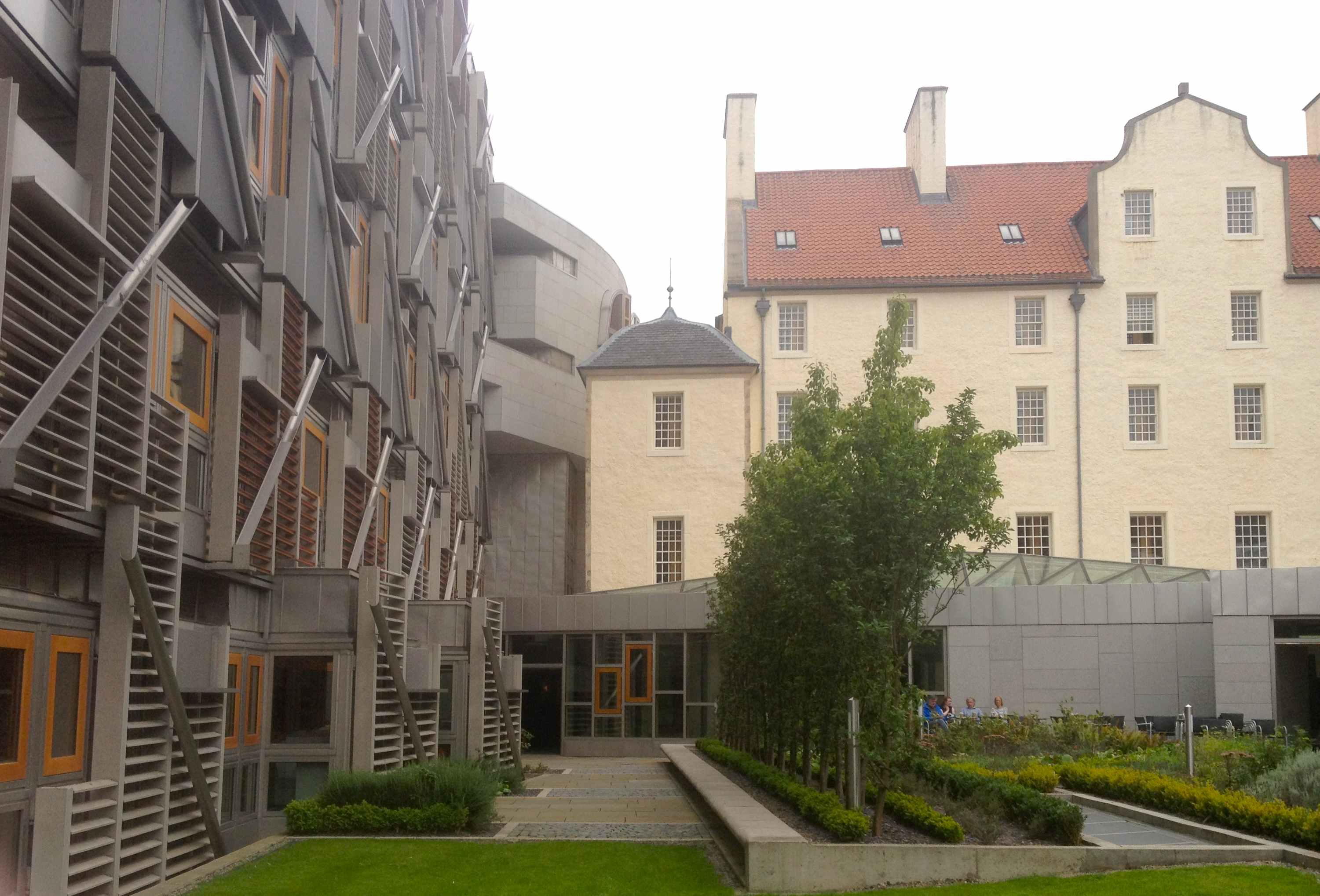
Holyrood1

But, once past such hurdles, the meat of the day may up for any peripheral shortcomings. Up first was a session billed as The Future of Europe & Small Nations ably chaired by Peter Jones, formerly of The Economist and longtime astute observer of the political and economic scene at this end of Britain. His panel was an eclectic but suitable mix:

While some stuck to the advertised broader topic in their 10-minute contributions, most focussed on Scotland as the small country in question and there was broad agreement on a number of factors that would apply in the case of a Yes vote in 13 months’ time:

  • Scotland remaining an EU member would be likely but not certain
  • Conditions for Scotland’s membership would be stricter—fewer opt-outs than in UK
  • That would include joining Euro—but mechanisms exist for delaying that indefinitely
  • Smaller countries can offset the dominance of larger ones by hard work and really determining how mechanisms work and learning to use them to their advantage
  • By deciding priorities and focussing only on the highest they can be effective
  • Only way to drive matters is by judicious diplomacy & quid-pro-quo with others
  • ‘Clarity’ of Berlin-Paris axis has been muddied by accession of Eastern Europe
  • Seek friends on matters in which they are largely disinterested and offer support in those they have a strong interest but you don’t (example: woo Austria, Hungary et al on fishing matters where they have little national interest)

I recall an example of this latter while on a fine evening out in Temple Bar in Dublin where our group included an ex-assistant to an Irish MEP. When challenged what good a small delegation like the Irish could achieve he grinned and said “it was amazing what wandering the corridors with blarney and a couple of bottles of Bailey’s could achieve“.

Charlie Jeffrey delved back to the 1979 vote and posited that had been ‘lost’ because people were worried about the context of an independent Scotland after the disastrous seventies and before oil wealth had become apparent. People are prone to seek comfort and shelter and the time was not ripe. By 1997, attitudes had changed greatly; there was a strong reaction against years of Thatcherism for which Scots had not voted and a new sense of purpose and identity.

Now the English element of the union has an increasingly wavering commitment to the EU and the Scots are diverging from that with a clear preference to remain (evidenced by UKIP’s paucity of traction in Scotland) a growing number of Scots prefer to stay connected with Europe. It has also become clearer that, as most of the connections with England (e.g. monarch or currency) remain, it is really only the political element that is to change—and that has been reduced largely to defence and foreign relations.

Perhaps the most thought-provoking contribution was made by Tim Phillips who claimed that “power is about what you attract and not what you project”, citing the example of Costa Rica—a small country of 4.5m, one of the two in the world with no army (the other is Iceland) but yet one of the most influential countries of Central America; it has 90% literacy rate, a solid democracy since post-WW2 reforms and the least inequality in the region. He followed by discussing Norway and Bahrain, both of whom wear their affluence lightly but responsibly.

It was, for me, an epiphany to start to visualise Scotland in this august group—countries that did not throw their weight around but whose standing was high because of their enlightened attitudes not just to their own people but to their obligations in the world. There was no consensus that Scotland would automatically remain in the EU or any other organisation of which the UK is currently a member. But it would be unlikely it would stay outside long, not least because of its valuable oil revenue and net contributor status.
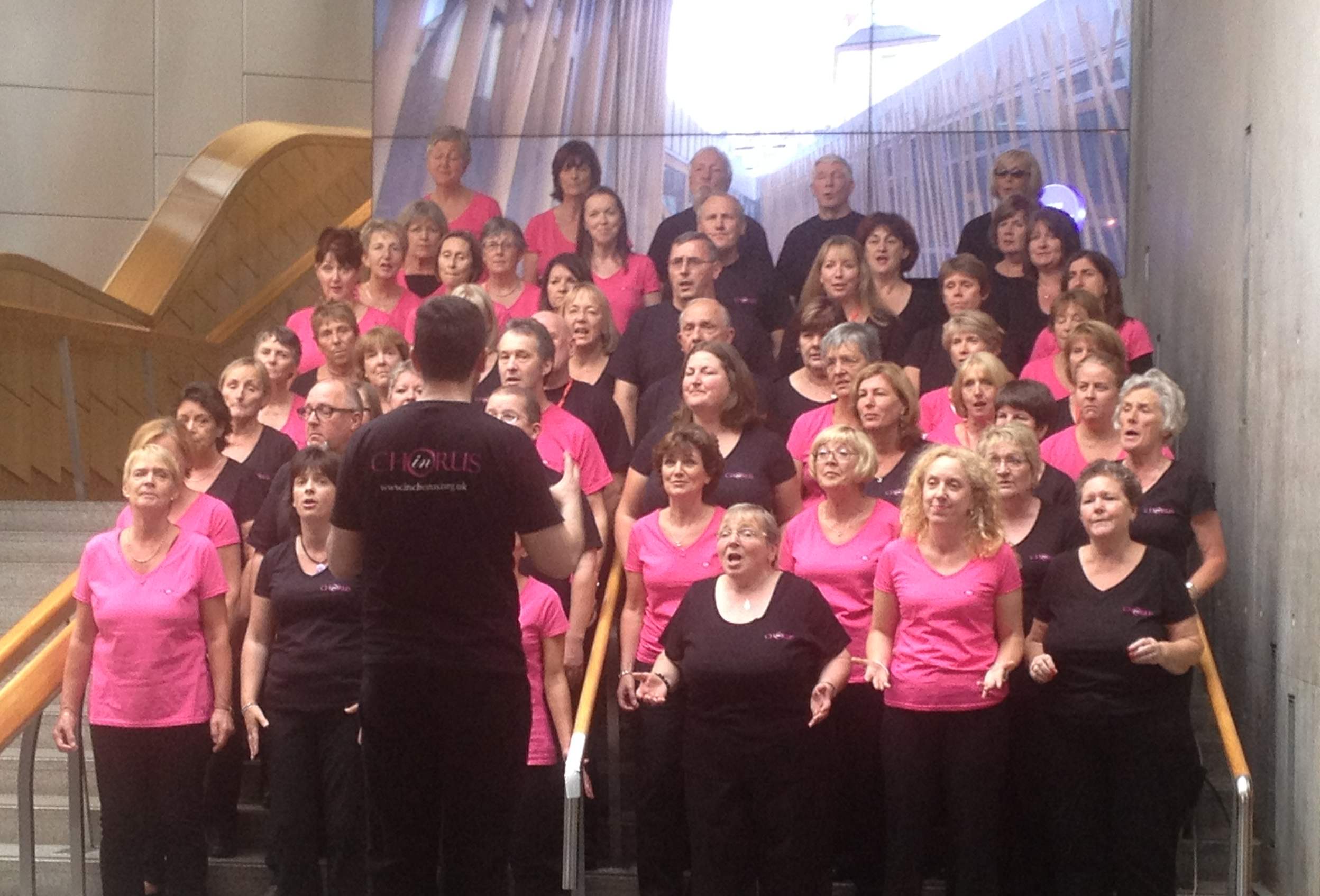
OnChoir Performing Carly Simon's "Let the River Run" on Holyrood's main stairs

OnChoir Performing Carly Simon’s “Let the River Run” on Holyrood’s main stairs
Posted in Politics | Tagged | Leave a comment

2013 Festival of Politics I

After a full day trying to scoot around Holyrood from one session to the next, a myriad of ideas, questions, opinions and opportunities compete for blog coverage. But before that, the overwhelming impression with which I was left after today was a comment that ran through the sessions like a thread. It recalled a seminal article in The New Statesman from six months ago by James Maxwell that seems even more fresh and urgent today as when first published. However illegally, I reproduce it here in full.

To Recover, the Scottish Yes Campaign Needs to Go on the Attack

by James Maxwell in the New Statesman, January 24th 2013

By the time Mitt Romney formally launched his bid for the US presidency in late summer 2012, the race for the White House was already more or less over. For the preceding 12 months, the former Massachusetts governor had poured all his energy into securing the Republican nomination from his conservative rivals, leaving the Democrats free to bury his reputation as a successful entrepreneur under a volley of personal attacks. These attacks cast Romney, not entirely inaccurately, as a predatory capitalist whose business practices at Bain Capital had put thousands of ordinary Americans out of work or into bankruptcy. The result was that in the weeks leading up to 6 November, Romney spent more time fending off accusations that he was ‘out of touch’ than he did explaining his policies or scrutinising Barack Obama’s record. Romney’s mistake was to allow his public image to be defined negatively by his opponents before he had a chance to define it himself. 

“A comparison can be drawn between Romney’s experience and the situation Scotland’s pro independence movement currently finds itself in. Since the launches of the official ‘Yes’ and ‘No’ campaigns last year, the unionists have been far more effective at setting the terms and conditions of debate than the nationalists have. On a series of issues, most notably the currency and (until yesterday) Scottish membership of the European Union, Better Together, the official vehicle of unionism, has forced the SNP onto the back-foot. Time and time again, Scottish government ministers have been rushed out to provide what seem like hurried or improvised responses to awkward questions. With his relentless emphasis of the apparent “risks” and “hazards” of separation, Better Together chairman Alistair Darling has become an almost ubiquitous presence on Scottish TV screens. Darling’s rhetoric reflects the No camp’s key theme: that the consequences of Scotland leaving the United Kingdom are uncertain and uncertainty is bad for the Scottish economy. 

“With at least two recent polls showing a decline in support for independence, there is good reason to believe this strategy is working. The unionists have an additional advantage in the fact Scottish political culture is dominated by an essentially conservative middle-class with little enthusiasm for far-reaching constitutional reform. Worse still for the Yes campaign, the Scottish government doesn’t intend to publish its White Paper on Independence, clarifying its proposals for an independent Scottish state, until the end of the year. This grants Better Together yet more time in which to compound voters’ anxieties, increasing the likelihood that, come the final stages of the referendum debate, it will be too late for the SNP and its allies to rescue independence as a credible constitutional option in the eyes of the Scottish electorate. 

“There is another reason the pro-independence movement has struggled in the referendum PR battle: a lack of structural discipline. Although the majority of Yes Scotland activists are members of the SNP, the organisation itself is made up of a broad coalition of groups, each with their own ideas about how independence should be achieved. To some extent, this laissez-faire style acts as a source of creativity, generating new initiatives, like the Radical Independence Conference, and genuine excitement at the grassroots level. (600 people attended the launch of Yes Glasgow earlier this month.) But it also makes the task of developing a coherent message about independence extremely difficult. By contrast, Better Together is a considerably smaller and less cumbersome outfit, with a much more tightly controlled and clearly defined narrative. Its role – to erode trust in Alex Salmond and reinforce widespread concerns about secession – is relatively uncomplicated. 

“So how might Yes Scotland regain the initiative? A more effective Yes campaign would balance its aspirational account of Scotland’s ‘journey’ from devolution to independence with a critique of the British state, highlighting the democratic and international costs Scotland pays for remaining part of the UK. In particular, it would make clear the link between Scotland’s abysmal social record (one of the worst in western Europe) and the concentration of political and economic power in London and the south east. It would also aim to systematically undermine the Scottish public’s confidence in the desire and capacity of Westminster to act in Scotland’s interests, even if this means abandoning its much vaunted commitment to positive campaigning. The one thing it can’t afford to do is spend the next 20 months responding to aggressive unionist and media questioning. 

“Of course, it was the use of exactly these sorts of ‘negative’ tactics that secured Obama’s second presidential term. Recognising that the circumstances of the 2012 election were going to be very different from those of the 2008 one, Obama and his team discarded the transformative rhetoric of “hope” and “change” for a harder, more cynical approach, turning what should have been Romney’s greatest asset – his commercial success – into his greatest weakness through a sustained media offensive. Likewise, the SNP needs to acknowledge that the 2014 referendum will not be a re-run of its 2011 electoral triumph, when it bulldozed its way to victory on the back of what one commentator called a nationalist “juggernaut of joy.” The independence vote will take place against a backdrop of high unemployment, recession and austerity imposed by a discredited and corrupt Westminster class increasingly at odds with Scottish political values and preferences. There is a deep well of political dissatisfaction in Scotland: advocates of independence need to learn how to exploit it.”

Posted in Politics | Tagged | Leave a comment

Two Genders, Separated by a Common Humanity

I paraphrase Mark Twain’s pithy observation about the Americans and the British because Bill Walker’s conviction this week for unsavoury behaviour towards a number of women in his life has brought the whole spousal abuse issue back into front-page debate. The inhibitions suffered by the abused party that prevents many occurrences from being reported, let alone resolved still haunts us all.

That said, having grown up on a working class council estate in the fifties, I am neither as outraged, nor as surprised as many observers seem at the Walker case. Abuse, while not rife there, was common enough, often associated with drink that anaesthetised barren outcomes to once-youthful ambition. And, though mostly dispensed by men, there was also a significant volume of psychological abuse by wives, poisoned by the same set of frustrations. Key, however, was both genders papered it over and denied its existence, to evade judgemental social morals of the tight-knit society of the times.

None of which is an excuse. But it is offered by way of explanation to those whose morals post-date such excruciating stiff-upper-lip times why it has taken so long to arrive even at this stage when there are few apologists for Walker or his behaviour. And yet I am thrown back a quarter century when, living in San Francisco and surrounded by some of the most socially progressive thinking on the planet, I was introduced early to the complexity of gender issues and the dangers of simplistic solutions.

I have been blessed with a number of good friends who happen to be female and the biggest group of those still lives in NoCal. They each remain very different people but all were bright, urbane and witty to the point of ego-demolition (mine, not theirs). As illustration: In an auto parts store, I separate from Lin and when we hook back up she has what looks like an oil filter, brake fluid and a wrench in her basket. “What d’you have there?” I ask in all innocence. Her best pursed smile flashes; she pats my arm and, in her  throaty Kathleen Turner voice purrs “Don’t you worry your pretty li’l head about it!

On the other hand, when a good buddy and I—both out of our depth in relationships and ‘wimmin’ at the time—went in search of insight to a feminist meeting featuring Andrea Dworkin, we both came out feeling alienated to the point of personal attack: men were the enemy, the antichrist, the sole purveyors of evil in the world. If only women ran the planet, personkind might have some future other than Armageddon.

This so infuriated me that I wrote two cathartic poems in quick succession—the first in reaction to (to me) an unreasoning partisan attitude from Dworkin et al, followed rapidly by another to balance its irony-verging-on-sarcasm. Though 25 years old and still intended more as a personal articulation of my position than anyone’s epiphany, I hope the pair below contribute to this debate on gender—which clearly still has some way to go before any definitive conclusions are drawn.

——————————————————————————

I’D LIKE

  • to take this opportunity to apologize
  • for all straight, white males.
  • …to apologize for dragging off to America
  • blacks sold by their own chieftains, Chinese refused
  • any other chance, Chicanos stifled by village dust.
  • Today they could have been
  • dying for freedom in Angola, greasing T-72 treads
  • in Tianamen, choking in that same dusty village.
  • …to apologize for being bigger, faster, meaner than you women;
  • for our magnificent, egotistical gall that bound you
  • by chocolate, by childbirth, by chapped hands to live
  • in our shadow; for even tricking your labor-saving liberation
  • into charge-card addictions and matching interiors;
  • for macho lack of any explanation—to you, or to friends
  • or even to our own sons before we die of stress,
  • silent, unrepentant.
  • .
  • …to apologize for lost lives, tribes, wars, wetlands, forests, species
  • that brought every one of you—
  • warm, fed and off the street—
  • to have education and time and choice
  • to be listening to this, to have
  • freedom to dispute
  • any part of it.
  • Nostra culpa—It’s all our fault.
  • We did it. Shouldn’t we then flood Venice,
  • torch the Louvre, rip up all of Shakespeare
  • and Mozart and the Constitution, cut off
  • each telephone, dynamite the Golden Gate
  • and every other bridge, turn back
  • the clock, pass out candles, start gathering
  • nuts? Would that make amends?
  • We’re sorry for civilization.
  • We didn’t mean it.
  • It won’t happen
  • again.

_____________________________________

I SAY

  • we shoot half the men—line ’em up,
  • perform last rites, then shoot ’em—
  • all polyester-brained lizards armed
  • with a condom, a smirk and glib ignorance
  • of language spoken by three-quarters of the human
  • race, all neanderthals who drag their trophies
  • home, nail them up any damn way
  • they please, all “I’ll-handle-it-babe” types
  • drunkenly insisting on driving even when
  • it’s her car.
  •  
  • I say
  • we men take care
  • of our own. I want no women
  • on the firing squad—no battered wives,
  • single mothers, raped teenagers, furious feminists,
  • particularly no dizzy blondes suffering
  • belated disillusion—only men who have embraced
  • their bleeding sister, tasted the salt of her
  • hidden wounds; who have seen a woman,
  • blessed with love’s garden of infinite
  • blooming, become desert; men
  • who have learned
  • that broad shoulders and a stiff cock
  • don’t make us god.
  •  
  • I say
  • we refuse them a bandana
  • so they can’t avoid looking straight 
  • down our brotherly fury sighted so deliberately
  • on them they squeeze their eyes
  • tight with expectation.
  • That’s when we lower our sights
  • to their genitals and let them
  • have it.
Posted in Community | Tagged | Leave a comment

Kailyaird Kulchur

Margaret Curran MP has come in for some stick in these columns for being venally closed-minded when it comes to her nationalist political opponents. Nonetheless her piece in today’s Hootsmon has much to commend it in its broad and staunch defence of the international aspect of Scottish culture. As she says, the mounting success of the Festival(s):

“is not just in the people they bring to Scotland …but in the ideas and vision that take root during plays in theatres around the city, late at night in the Fringe, or in the marquees of the Book Festival.”

On a more general approach to culture, she goes on:

“The referendum, on both sides of the debate, is about imagining a different future, and art helps us to do that. From Burns to Robert Louis Stevenson to Liz Lochead – they have all used their experiences in Scotland to say something bigger about the society we live in; things that help us to look up and out.”

Thus far, I am nodding in vigorous agreement—and imagine most of my nationalist colleagues are too. But it’s when she takes issue with Alasdair Gray’s deprecation of who dominates our arts establishment and links it with an assertion that Alex Salmond thinks that Scots “succeed if they outperform England” that we part company because both are glibly taken out of historical context. She may rightly cite that English culture is peppered with Danes, Spaniards and Welshmen—and is all the more robust for that.

But what is missing in this era of new Scottish enlightenment when the Cringe is largely a thing of the past (and the 1999 (re)opening of Parliament largely served as its unofficial funeral) is the deformation of the Scots’ national psyche by three centuries of cultural colonialism of North Britain by an English culture whose ego and self-belief knew no bounds until empire and economy collapsed during the 20th century. Only then did Scots stop beating their children for daring to speak Lallans and discover alternatives to being force-fed received BBC pronunciation in every radio and TV broadcast.

By dismissing Gray’s comments, Ms Curran rather throws the cultural baby out with her international bathwater. If the English cultural nomenklatura were dominated by Danes or Spaniards, as its Scottish equivalent has been for centuries by English, then someone in London would soon be raising the point, if only as a matter for debate. Having gone through a Scottish education system for 16 years and emerged pig ignorant about my own culture, I have spent the last four decades trying to rectify that. It’s a joy to celebrate its revival from John Burnside through 7:84 to Black Watch.

That early thin gruel left me allergic to anything to do with Scottish Country Dance music, Andy Stewart, Harry Lauder and unable to listen to Robbie Shepherd’s Take the Floor on BBC Scotland . Such limited fare was all I heard as ‘Scottish culture’ while I was growing up. It did not fill my soul. My nationalism is rooted in a violent reaction to such kailyard as all that we Scots were capable of. Epiphany for me didn’t need to be highbrow—McMillan’s music still leaves me cold—but Connolly, Taggart and Runrig did much to start filling my native cultural void.

In all of this, I imagine I was not alone.

So when Ms Curran has a go at His Eckness for measuring us against England, I fail to see her point; who else would we be likely to measure ourselves against; they are the dominant force on these islands and we have just tholed three centuries of their cultural colonialism. Because—let’s face it—the English are as culturally unaware of others as the Americans are of them, especially when it comes to distinguishing between their own interests and the welfare of mankind.

For whereas the Scots—with the exception of a tiny minority of blinkered jingoists that every country harbours—are constantly absorbing English culture, the braying backwoodsmen on Westminster benches represent a cultural myopia from which the cosier Home Counties still suffer. Ms Curran may not have discussed the Colourists or Charles Rennie while sipping a nice Amontillado apéritif in East Grinstead or Chipping Norton—but she’d mostly get blank stares and short shrift if she tried.

Posted in Community, Education | Tagged | Leave a comment

Whae’s Like Us (An’ They’re A’ Deid)?

Lesley Riddoch—never one to mince words—has a powerful piece in today’s Hootsmon in which she pithily observes ‘Public money is trapped in professional silos‘ and that ‘Good public health is a product of good social and democratic health‘. All very true and, coming on top of Eddie Barnes’ piece in the sister Scotland on Sunday the previous day deprecating that the ‘cost of sickness benefits in Scotland is one-third higher than in the rest of the UK‘, is as blunt an accusation that Scotland can’t look after its own as we have ever seen.

And while both articles are worth the read and pose serious questions, neither get far down the road of answers. “Glasgow Manchester and LIverpool share similar ‘deprivation profiles’, but premature deaths in Glasgow are 30 per cent higher”; “Scotland’s higher claimant rate for ESA, IB and SDA is due to the fact that its working-age population is older and less healthy than the GB population”; “Scotland spends £1.5 billion on emergency admissions of old people—the majority of whom have no serious clinical problem”.

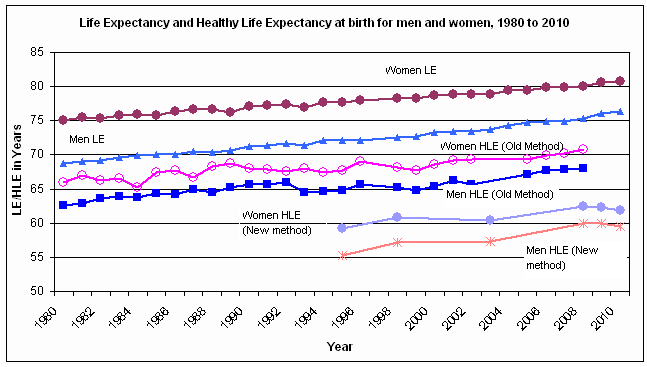
Compared to 100 years ago, we have health and social provision the Edwardians could only dream of. We have over 161,000 working for the NHS, 51,000 teachers and 5,200 social workers, as well as 46,400 civil servants and around 200,000 in the rest of local government. On top of that, 183,000 work in related charities (and this does not include volunteers). With all this well intentioned firepower we should all be rich and healthy. But, whereas our Edwardian great-grandparents enjoyed the richest per capita GDP in the world in 1910, we have slipped some. The statistics become especially stark when you compare our Life Expectancy with Healthy Life Expectancy.

HealthStatsWhereas people were actually having a decade shaved off their life if their health was taken in account, the newer method of measure shaves closer to 20 years off and recently started getting worse. Put crudely: what’s the point of longer life if you can’t enjoy it? It may be simpler for the law and statisticians to think of people as dead or alive. But the whole point of life is to enjoy it; nobody from the government, through the media, on down to your local GP seems to be thinking in such terms.

Now, before this lapses into the classic, self-deprecating “we wiz aye shite” dirge, there is also much to celebrate. The problem is that the  cause now for celebration is geographically uneven, existing in just those areas that were not to the fore in creating those riches a hundred years ago and leaving West Central Scotland and Dundee behind.

That is the pivotal clue to the answer: the areas of Scotland exhibiting the worst symptoms were once world-beaters. After WW1, Britain behaved as if nothing had happened commercially and the heavy industry on which Scotland’s riches relied kept building riveted ships, steam engines and road rollers that would have made the Victorians proud. The desperate years of WW2 allowed this delusion to last until the fifties when it all came crashing down.

By this time, the Labour party had transformed from a party of idealism to one rooted in class warfare and thirled to the unions. And while their Stalinesque state interventions that gave us Linwood, Ravenscraig, Kinlochleven, Cockenzie and the like may have been well intentioned, all were backward-looking; all are now dust. Though Labour did see the errors of its statist ways and by embracing Blairism, achieved somewhat more 1997-2007 than the present Condems give them credit for, nonetheless, Alastair Campbell’s defence of this period in his blog still has to admit:

“Where (Professor Bogdanor) is critical of Labour is in relation to skills, especially at the bottom end of the social and economic scale, and not doing enough to cut regional inequalities”

Whether you agree that social intervention on behalf of the ‘vulnerable’ is a priority or not, the bottom line of Scotland’s 1970 failed attempt at state-directed affluence-for -all under Wilson and the intervening 40 years of ever-increasing benefits, social intervention and initiatives in deprived areas under sundry Labour councils has resulted in all of them remaining deprived areas. After disbursing public billions into deprived areas from Ferguslie Park to Mastrick not one area has transformed itself from a Dumbiedykes to Davidson’s Mains. Easterhouse or Wester Hailes, they each remain hope-and-ambition-killing sink estates that shame our pretence at affluence.

Every professional involved in such places now bemoans government cuts and argues for more resources. But—jointly and severally—they have failed. Simply throwing more money at these problems after 40+ years of doing just that is insane—and the definition of insanity is repeating an action in the belief that the outcome will change. In the last five years, Scotland has received over £600m in European ERDF and ESF monies, all of which went into ‘priority’ projects in ‘priority’ areas. The closest anyone has come to success was when ECC bulldozed Craigmillar flat and started from scratch.

The thousands of well intentioned people involved in this ‘sector’ will disagree with this but this is not about their personal or professional integrity. Ever since we invented a social work ‘sector’ there have been ever-increasing numbers earning a living from it. But whatever success there has been with individual cases, it is swamped by the societal context and riddled with failure. But putting people on methadone to stop them taking heroin is not just a backward step; it is the system defining a more convenient ‘solution’ because it is so manifestly incapable of addressing the problem.

The social basket case areas that keep our quarter-million workers in jobs were largely created by similarly well-intentioned people building those estates in the first place. Though much is made of housing quality, it’s not housing people need; it’s homes. People on £1m statement home estates suffer from isolation and social dislocation just as much as those in leaky GHA slums. Suicides are not unknown in either. Feeling valued as a contributing part of society is vital for anyone’s good quality of life. This is why people on Barra or Westray are bemused why people would want to live as most of us do—on a spectrum between manic middle class trying to keep up the payments and the chancer who skims the Giro money at the bookies and the pub before he takes what’s left home.

Look at the people of Barra or Westray—or Peebles or Cupar or Girvan. They don’t have an obesity epidemic any more than they deprive themselves of healthy living two decades before they actually die. Even the bampots there are valued for their unpredictability and taken home if they get in trouble. None of those communities—or thousands like them across Scotland—were laid out by planners, studied by sociologists, strung out on drug programmes or blessed by gobs of Eurodosh distributed by strangers. From organising beach cleans to doing their own hanging baskets to taking old Mrs McGlumpher down for her hospital check-up, they own their community and do what they can to improve it.

As long as anyone believes that their future lies with some pen-pushing jobsworth in a cluttered office in some faceless multistorey, they will lose that which is vital: a sense that their fate lies in their own hands. Every time we build another 500-house estate where everyone is around the same income, where there is minimal social interaction,  the seeds have been sown for another Castlemilk of the 2050s.

But if planning were to mix in small social and retail centres with parks and varied recreation and ensure that the shop assistant and the shop owner and her investment banker all lived in the same area, you’re starting to build a Barra or Westray, even if it’s just outside Cumbernauld. This is already achieved in big cities like Munich or San Francisco whose ‘neighbourhoods’ each exhibit distinctive characteristics and engender ownership of that community by those who live there. Kew or Canterbury work on that principle in England. Social problems exist but people ‘own’ their future, failing which family and community intervention means that the NHS (let alone social work) seldom need get involved.

Just because planning a balanced society is difficult is no excuse for hosing public money into each departmental silo that then sits tight with what it thinks it knows. Scots have come a long way in the last 20 years but large parts of the country languish because of the dead hand of patriarchal seventies thinking that institutionalises dependency and treats  quirky differentials among communities as inconvenience. But several major obstacles must first be overcome:

  • Political leaders need to risk what Sir Humphrey would call ‘brave decisions’. This applies as much to parliament as councils. Real community planning would be a start. (people will know because they will notice change and lose some indifference)
  • Radical reduction in the feel-good fudge that spills out of both parliament and councils as papers geared to give the illusion that good stuff is happening (people will then understand what politicians do and suffer their self-serving nomenklatura less)
  • Planning will be community-based and reflect the priorities of the public. If this sounds like a return to burgh councils, well, if it walks like a duck…
  • Social workers will stop doing the headless chicken, accept that their main (only?) priority is to put themselves out of a job and receive rewards for doing so.
  • NHS workers will receive the ability to exert penalties from those who: waste NHS time, resources or expertise; expect medical damage from their own irresponsible behaviour to be patched up; fail to pass an ‘MoT’ health check for avoidable illness.
  • Charities officials will have their salaries pegged to those of NHS nurses (or firemen, or police—pick one). Charity shops with any paid officials or selling any new goods will pay full local retail rates.
  • Euro-funds will be distributed in proportion to the degree to which communities have been able to give their residents fulfilling lives and the best improvement in quality of life.

OK, so some of the above are neither practical nor is it clear how they could be made so. But, unless Scotland—independent or not—stops the present delusion that money is going to be anything but tight for the next decade and the only way we’re going to improve the lot of our citizens is to think radical and burn a few shibboleths, we will find ourselves engaged in unproductive squabbling over a diminishing pot while our people die from our own short-sighted stupidity.

Posted in Community | Tagged | Leave a comment

First is Anything But

For the avoidance of doubt—and to avoid them too much cost in their libel lawyers as they scratch around for actionable evidence, First is a crap company. It doesn’t matter which fragment of the empire you’re talking about—from FirstBus Edinburgh, through ScotRail to Great Western, every division is run on the same, rather transparent principle: we’re in this for short-term profit—all else can go hang. Forget any long-term, thoughtful investments in the future. They run any old rickety vehicle, charge top dollar for the privilege and get out of Dodge once they lose whatever franchise this approach has poisoned. The bus divisions are particularly bad at this but even ScotRail, run by decent people trying to do a decent job, have their hands tied so the difference is not obvious.

And its not just by First Group that Steve Montgomery and his team are straitjacketed. The Office of the Rail Regulator is run by a time-serving bunch of old-school incompetents. Richard Price, another Sir Humphrey product of DEFRA and HM Treasury, pulled in over £100k, as did four colleagues. Another half-dozen averaged £80k, with John Larkinson getting a £600k ‘bonus’ for less than a year’s stint as “Director, Railway Planning and Performance”. Oh, and did I mention the Board getting £300k for attending its monthly meeting?

But that’s small beer in the £30m ‘income’ largely from licence fees (£13m) paid by train companies to operate and a cool £17m in “Safety Levy”, paid by? You guessed it: the train companies. Or to be more precise: you. 2p of every one of the 1.23 bn rail journeys we made last year went to ORR. And for this, we got what, exactly? Not much. Train leasing had been identified by the ORR as an area of concern:

“Our review of (train leasing) markets has identified features that appear to us to prevent, restrict or distort competition.”

So, er, what happened? Well, they referred the ROSCOs cabal behaviour to the Competition Commission. That was in 2007. What has happened in the six years since to prevent “train operating companies paying higher prices and/or receiving a poorer quality of service than if competition was more effective” as ORR thundered at the time? Well, um, nothing. (See Rosco Used in Train Robbery for details of their greed)

And this is the steely-eyed regulator supposed to be forging ScotRail into a sleek, efficient public-serving company? So, on top of myopic High-Heid-Yins at Group and an ORR that is seems unconcerned at private snouts deep in the public trough, provided room remains for their own, ScotRail also has to contend with the all-party pork barrel lobby at the Scottish Parliament, because those are the ones dealing out its franchise.

It does not take a degree in Transport Strategy to wonder where priorities for rail development in Scotland come from. While capital investment in improving the network in almost any form can be seen as welcome, how do we justify that work to date were our highest priorities? Waverley looks good—but £58m for four ‘new’ platforms (still one less than the 21 it used to have) is a deal? Or £57.6m to have a 13m line from Stirling serve one station at Alloa (pop. 19,000)? Or ten years of fiddling about with the 30 mile Borders railway when its costs have quadrupled to £350m today?

Even the Airdrie/Bathgate line is hard to justify—£300m for 15 miles as a fourth link between Edinburgh and Glasgow 15 minutes slower than the existing diesel alternative. All of these projects smell of local politicians cutting deals to get their own local rail link built, with little concept of what Scotland needs as a whole. But what would that actually mean? Let’s leave aside the vital cross-border requirements and the involved arguments over HS2 and consider just internal Scottish requirements.

The most glaring omission is a complete absence of anything like a real express service within Scotland. This is most obvious on Edinburgh-Glasgow but continues as a need for such services from both to Aberdeen. The much-curtailed EGIP project may address the first and provide faster links on a busy route. But it does nothing to address the second, which offers huge potential by slicing an hour off the present 3-hour journey. This, in turn, makes Dundee and Inverness more accessible and would have knock-on positive effects on present services that are no more than glorified local sprinters. Alternatives like doubling parts of the Highland Line should be seen for the pork barrel by Northern MSPs that they are.

At present, ScotRail operates nothing that anyone would regard as an express train. Even new class 170s are hopeless when compared to East Coast or Cross Country stock, either of which would be an appropriate solution to carry such passengers. This is where First ScotRail fail their long-distance customers: they should be beating the Transport Minster’s door down to get a faster Perth-Lawrencekirk line built and Class 222s to take advantage of it (See Brechin’s Revenge on Beeching for details). A proper, frequent express service on this key Aberdeen triangle would revolutionise rail in Scotland in a way that no local Alloa/Airdrie/Gala/Cumbernauld pork barrel project ever could.

Since 96 trains—1/3rd of ScotRail’s fleet (unloved class 156/158 diesel past-their-sell-by-date clunkers)—are due for replacement in 2018-2020, is this not an opportunity for ScotRail, in cahoots with the Scottish Government, to declare rail independence? By cutting out the middle man and forming our own train leasing company (‘Caledonian Railway’ has a ring to it) Scotland could grab our slice of the big fat £1.2bn cake that Porterbrook, Angel and HSBC glibly divide among themselves annually, ScotRail would save a third of its £86m annual train leasing costs. Put another way, we could effectively add another £30m investment in Scotland’s rail future at a stroke.

If independence is won next September, this move should be a no-brainer. But should a desperate Union hoodwink Scots into keeping this bankrupt UK afloat, some gutsy moves by Ministers would still be able to turn our rail into more than the present collection of rickety branch services. This would allow First—through ScotRail—to earn its moniker for the first time.

Posted in Transport | Tagged | 1 Comment

Welcome to Britain: Now Go Home

It is perhaps to be expected that such social Luddites as join UKIP exhibit a knee-jerk to the ‘furriners’ who reputedly begin at Calais and the backwoodsman phalanx that dominates the Tory party regularly paint themselves into xenophobic corners over Johnny Foreigner. But when the Labour party—that supposed redoubt of international socialism—starts laying about foreign workers with comparable venom, it is time to wonder if the normally civilised and tolerant English have lost the plot altogether.

Leave aside the current Eurospat in which Cameron & Co. make us all look like a bunch of petulant schoolkids who want their bus money back because they didn’t play in Saturday’s away game. Shadow immigration minister Chris Bryant has teed up a speech (leaked to the press) in which he berates Tesco and Next for favouring Eastern European workers over British. He said:

“Look at Next Plc, who last year brought 500 Polish workers to work in their South Elmsall warehouse for their summer sale and another 300 this summer. They were recruited in Poland and charged £50 to find them accommodation.”

The spat with Tesco also has to do with distribution centres (this time in Kent) but the detail is not particularly relevant. At a time when jobs and efficiencies are pivotal in securing whatever recovery can be achieved, interfering with commerce at this level of detail not only limbs politicians as meddlers who rate profile above effectiveness and show little clue of the rather brutal dynamics that drive commerce, from which we all have benefitted over the last half-century of growth and personal affluence.

We should first be quite clear how abysmal the UK’s performance has been since the fiscal crisis hit six years ago. Whereas in Scandinavian countries (who had not let their banks play silly buggers with other people’s money) there was barely a dip and Germany was more profoundly affected but, as a major exporter of world-class engineering, they are back in serious growth, the Brits still languish amongst the PIGS—the fiscal basket cases whose riches had more in common with the emperor’s clothes than substantive investments. Their growth is either negative or marginal.

Like the USA, Britain fell into the trap of thinking that profits from financial instruments, such as were being traded by the trillion in 2007, were worth what was printed on the paper. But mortgages on houses in now-bankrupt Detroit, held by people without jobs or means to pay for them, was compounded folly on a global scale that came home to roost and has been eating our lunch ever since.

If the continued financial doldrums were not close enough to rigor mortis (growth under 1% is illusory growth, especially when the BRICs are still powering on with 6-8%) Britain seems to think it can indulge in all sorts of protectionist projects, as if the good times of the nineties and noughties were still with us. It is as if the beggar-my-neighbour lessons of the strike-prone, inflation-infested seventies had never been. Teachers insist on raises knowing that shrinking budgets will then mean fewer teachers and worse education. Everyone complains that benefits are being cut and—whether by bedroom tax or some equal horror—people will get poorer. But, though we may be unused to this, it’s reality. Get used to it because it has a ways to run yet.

For a major spokesperson like Labour’s Bryant to berate firms for following what firms were created to do—make a profit out of running a business—is the kind of luxury that both Wilson and Callaghan indulged in during those dark days. They were socialists; socialists taxed the rich and so the 90% tax rate was born. Never mind that most really rich people avoided it through shell or offshore companies and residences, they were standing up for the horny-handed workers that had elected them.

The problem these days is that the jobs over which we are now squabbling are no longer the Detroit- or Dagenham-style skilled factory jobs making cars and good wages but service jobs shifting boxes and broccoli in distribution centres for minimum wage. If the official position from major parties lies between fending off entrepreneurial individuals who have moved here to work for a better life from having the jobs they can find and trying to prevent them from arriving in the first place, then the UK is bankrupt in many ways besides the more obvious financial.

Forget the Irish and the Highlanders of the Victorian era who flooded to industrial Scotland—and everyone got richer. Think of the Italians of the twenties, the Asians of the sixties and seventies. Was our society and business not enriched by their contributions? When Jamaicans and other West Indians landed by the boatload in England in the fifties, did they not take jobs others disdained—and everyone got richer as a result?

What’s wrong with English politicians of all parties that they want to pull up drawbridges and keep out the world in case it is too competitive for us? Adam Smith would be appalled; the founders of the East India Company or the Hudson’s Bay company or Jardine Matheson or HSBC would be appalled. Even John Maclean, who believed in the dignity of hard work and concomitant decent wages, might be appalled.

Is this what the country that dares to still call itself “Great” Britain, that just one century ago bestrode the world like a colossus because of its dominant place in international trade, has come to? America became great through welcoming the world’s “huddled masses yearning to be free“. If the UK can’t tolerate a few Poles willing to work hard to achieve the good life, why would we Scots want to be any part of such a tawdry failure?

Posted in Commerce, Community | Tagged | Leave a comment

Replanting the Floo’ers

This week, on the 500th anniversary of Flodden—perhaps the most decisive and certainly the bloodiest defeat inflicted on us Scots by our southern cousins—the Coldstream Common Riding took a crowd of people and horses to the very field just over the Border where the event took place. Despite its antiquity, Flodden resurfaces in Scots culture much as the ‘we wiz aye rubbish’ recurs among the footsoldiers of the Tartan Army to explain away yet another glorious defeat.

The Hootsmon covered the event, relating that Dr Tony Pollard, of Glasgow University, had concluded the defeat was a result of the Scots infantry being incompetent with long 18ft pikes with which the King James IV had equipped them. While lack of training may have been a factor, it is crudely simplistic to explain it all away on that basis.

First of all, the Scots of the early 16th century were not particularly warlike. While England had engrossed itself in the its first Civil War (more colourfully described as the ‘War of the Roses’) for most of the previous century, the Scots had developed their economy and were busily trading their wool, hides, timber, etc with both the Low Countries and the Hanseatic Ports. Given that roads were non-existent and ships could carry over 100 tons of goods in relative safety, East Coast ports from Aberdeen to Berwick prospered and resultant riches flowed across much of the country.

Once the Tudors sat firmly on the English throne, their pre-occupation with glory through empire in France reasserted itself, bolstered by the energy and ambitions of one of their most dynamic kings, Henry VIII. In between discarding wives and reinventing religions, Henry ran afoul of the League of Cambrai. When war broke out between them, this put James IV of Scotland (called the Renaissance King for  developments made during his reign) in an invidious position as an ally by Treaty with both England and France.

Henry rather decided things for him by reasserting the claim—long dormant since the days of Bruce and Longshanks—of English feudal superiority over Scotland and James resolved to contest this militarily while Henry was away in France besieging Thérouanne. In the previous twenty years, James had not had his troubles to seek; this was a time when he contested the unbridled power of the Lord of the Isles and had managed to bring some form of credible rule to the unruly Celtic fringes of his kingdom.

But subduing the Lewis MacLeods, Mull Macleans and other proud clans, he relied on ships and artillery—which the Gaels could not counter—and the growing shrewd legal powers of the Campbells, who were learning to fight more effectively with quill and parchment than their clansmen ever did with broadsword. In fact, there was almost no ground combat and so the Scots came to 1513 with little or nothing by way of an army.

In theory, all the great houses kept armed retainers and could be called upon to raise regiments in times of war. But there had been no real war beyond clan skirmishes and border rieving for almost two centuries. Although peasants were liable for military training, little took place so the number of trained soldiers available to James was trivial, as long as his traditional source of hairy-arsed berserkers were largely sulking in the Highlands because of recent rough handling of their proud chiefs.

James mustered an army of over 40,000 but few of these were professionals (true of most armies of the time) but, more importantly, were given little training. Sensibly, James confined himself to capturing Border castles and providing a distraction from France. Henry had, however, anticipated even this; he drew his army in France exclusively from England’s southern counties. The Earl of Surrey had been left in the North: in response to the Scottish invasion, he mustered troops from across the northern and midland counties and by early September his army of 26,000 assembled at Alnwick.

When the two forces met at Flodden, James had chosen powerful positions on hilltops and Surrey was unable to persuade James to relinquish it at first. In a clever maneuver, he swung East, crossed the River Till and advanced on the Scottish rear. James reacted fast enough to this, pivoting from facing down Flodden Edge (South) to down Branxton Hill (North) in good order to again face Surrey.

Dr Pollard may be right in that few of the Scots soldiers had seen these 18ft pikes before but they should not have been ignorant of them. Since before Bannockburn, Scots lowlanders had fought in schiltrons. These were blocks of spearmen who operated much as the Greeks had fought—as a phalanx of spears. Not all Scots pikes were as long as 18ft but the principle of holding together and advancing as a hedgehog of points was fundamental. Each schiltron held thousands of men and was tactically a good defense against infantry or cavalry as several rows of spears protruded in front of the first rank. Only well directed fire from archers or artillery could reach in to decimate their ranks and break them up.

At Flodden, the Scots deployed two such schiltrons on the left under Lord Home (and led by the Lords Crawford and Errol) two more in the centre (Lowlanders under King James himself) plus a right wing of two Highland composite regiments under the Earls of Lennox and Argyll. Arrayed on a hilltop they outranged both English archers and artillery below: the position was effectively impregnable. The Scots had an array of artillery with them but were particularly ineffectual in their use.

Feeling that the English right under Howard looked vulnerable (they were Lancastrians not too happy to be there and Dacre’s English Borderers had yet to appear to reinforce them), Crawford’s schiltron marched down the hill “in good order”, was reinforced by Errol’s and appeared close to success when Dacre appeared and his tough men soon created stalemate. Unaware of the event turning against Home the King, impatient to be in on the victory, led the centre schiltrons down, again in good order. But they ran into a ridge and a boggy area and so lost momentum before encountering the Earl of Surrey’s English centre. The English were also equipped with pikes and outmatched the Scots use of them—which may be where Pollard’s take comes from.

Decisive was the action of the English left under Stanley which included a particularly well trained regiment of archers. The longbow was no longer the secret weapon of Agincourt or Crecy but it still packed a punch. It allowed Stanley’s men to climb the hill under its steady fire to meet Lennox and Crawford’s Highlanders on more than even terms. The Scots battle disintegrated from its right wing. Despite the Scots infantry having insufficient training in use of the long pike and spear, it was the schiltrons of their left wing that had the most success and, had James been less impatient the in the centre, would have repulsed Surrey’s men had they simply stood their ground.

By staying on top of the hill, they would have been in a position to support the right and avoid the disintegration that flowed from there. For the period, a 18-foot spear or pike was still a formidable weapon if in the right hands and used en masse. That the Scots infantry were poorly drilled in its secrets lay more with James and his commanders than the poor troops whose grandfathers had long forgotten the teamwork skills that normally made a Scots schiltron a formidable fighting machine.

Rather than blaming the weapon, a proper analysis of Flodden would blame impetuous decisions that James made before he became the last British king to die in battle—along with twelve earls, fifteen lords, many clan chiefs and an archbishop, plus 10,000 ordinary Scots. This is around 1/3rd of Scots engaged and several times more than the 4,000 English dead—more than enough to affect virtually every family in Scotland and send a panic through the nation that didn’t properly die until the crowns were united almost 200 years later.

It seems the real explanation for the defeat lies in the peaceful, invasion-free century that preceded Flodden and ‘warlike’ Scots lost the easy familiarity with daily warfare that had once been so much a part of life. It also lies in the indifferent leadership from the bulk of Scots nobility and equally poor professionalism of their gunners. It is quite likely that the traditional schiltrons lost some cohesion as they descended the hill and the 18ft poles of their weapons may have contributed to that. But a major element of leadership in any military consists of playing the strengths and avoiding the weaknesses of the forces under command.

For all he had achieved in peace, James IV was simply not up to the job in war. He and 10,000 of his subjects paid the ultimate price.

Posted in Community | Leave a comment

Fog in Education; Continent Cut Off

Tuesday was a big day for 151,000 expectant Scottish pupils who received their exam results—and very well they did too. Praise is due to their efforts, plus those of their teachers (and hopefully, most of their parents) to bring in a record set of results as these young people start gathering the qualifications that will launch them on their many, varied careers. Some of the achievements deserve noting:

  • The pass rate for Advanced Highers increased by two points to 82.1%.
  • For Highers, the rate increased by 0.5 points to 77.4%.
  • Intermediate levels one and two increased to 77.8% and 81.8% respectively.

All the way up too the Scottish Government, the praise for all this rolled in. Angela Constance, Minister for Youth Employment and the MSP for Almond Valley was obviously chuffed to bits:

“I am delighted that so many have come out with strong grades, leaving them well positioned for whatever they choose to do next. The exam pass rates are building on a solid record of achievement, meaning that today is a time for celebration.

“Record pass rates in a set of rigorously assessed exams confirm Scotland’s strong record in attainment and I wish the class of 2013 the very best of luck in their next steps, be it another year in school, or moving on to college, university, training or employment.”

But good news and fine achievement though all this is, some alarm bells ought to be ringing among the more thoughtful pedagogues in Scotland—if not Mike Russell’s—just how focussed these results are on “their next steps”, especially when compared with our continental neighbours, with whom we could be in even more bare-knuckled competition, should the 2014 referendum choose ‘Yes’.

Firstly, of the 64 subjects offered for examination, only nine were foreign languages. Take out the handful doing Greek (8) and Latin (238), you are left with the  bulk doing European languages —French (4,236), German (1,050), Spanish (1,645) and Italian (238)—and a risible number doing languages likely to dominate the non-English-speaking huge majority of the world this century:

  • Urdu (109) —or 0.072% of all pupils
  • Chinese (66) —or 0.043% of all pupils
  • Russian (36) —or 0.023% of all pupils
  • Portuguese (0) —(’nuff said)

In other words, Scotland has just graduated a generation of our brightest kids with barely  one in one thousand able to speak ANY language of the BRIC countries. Were we an inward-looking country, more concerned with our own culture, this dereliction might seem more understandable, even as it was inexcusable. But, for all the stushie about Gaelic learning, dual road signs, kilts, heritage and the entire BBC Alba channel dedicated to the language, a mere 236 passes in Gaelic—either native or learner—were achieved. That’s a risible 0.15% and means Gaelic continues in decline as far more speakers than that died last year.

But to more substantive subjects. While there is every reason to study and lead successful careers in vocational subjects, they tend not to be the subjects leading to business and technical innovation that, in turn, furnishes economic growth and wealth for all. The 20,633 in Mathematics, 14,088 in Biology, 10,001 in Chemistry and 8,788 in Physics look like solid numbers—until you realise that this represents only 13.66%, 9.32%, 6.62% and 5.81% respectively. The next Stephen Hawking may be in there but the probability is low, purely because of the low numbers. Even more alarming, the proportion taking these subjects continues to fall.

This is not to say those now qualified in History (10,337), Modern Studies (8,027), Physical Education (6,883), Art & Design (6,493), Religious Moral & Philosophical Studies (4,136) Psychology (3,370) or Drama (2,638) will not to go on to fulfilling lives in financial comfort. But—Richard Branson and Michelle Mone notwithstanding—they are unlikely to win contracts for the Wood Group or discover the next superconductor.

But, rather than those thousands listed in the last paragraph all wanting to be the next Tom Devine or Chris Hoy or Gerard Butler, there is a terrible suspicion that many take such subjects—rather than science-based—because they are easier (quite apart from being cool). And the great pressure on pupils, teachers, examiners and government alike is to get more passes. The subject and its relevance to the future have become secondary considerations.

And the sad thing is that the mutually supporting conspiracy listed can get away with ignoring what goes on elsewhere. Between a residual hubris that the Scots have the best education system in the world and our tendency to compare things with the English (who have, incidentally been waking up to smell the 21st century coffee), we verge on being pig ignorant of the educational strides being made elsewhere, still less appreciating what that means for our own approach.

This blog has already pointed out the educational achievements in Singapore and Scandinavia but it is manufacturing giants like Germany that we need to consider if we are to compete globally in quality manufacturing. Rather than allow pupils to specialise after a couple of years of high school (and thereby get the chance to pick some ‘soft options’), the Germans insist on a suite of subjects.

After primary education, three basic options are available to German pupils. They may, after counseling by the elementary school teacher and upon the request of the parents, be placed in a Realschule, a Gymnasium, or a Hauptschule, the last representing a continuation of elementary education.

Those pupils attending the Hauptschule proceed with their study of language, arithmetic, geography, history, science, music, art, and physical education. After completion of a four- or five-year program of studies at the Hauptschule, the pupil typically enters apprenticeship training. This is not considered undesirable as skilled workers earn high salaries.

In Germany the term “secondary school” refers to institutions offering courses leading to the “Certificate of Maturity” (Reifezeugnis), a qualification for entrance to an institution of higher education. Realschule offers pupils further general education, some pre-vocational courses, and English-language study. At the age of 16, students conclude their program of studies and transfer to a vocational school or enter apprenticeship training.

If academically qualified, a pupil may also transfer to the Gymnasium. The Gymnasium, the third alternative for German youth, offers rigorous academic preparation for higher education. Like the lycée in France, the Gymnasium is designed for those students who have shown the most academic promise; and its curriculum, emphasizing languages, mathematics, natural sciences, and social sciences, requires a high degree of diligence throughout all of the nine grades. Unsuccessful students in the Gymnasium may be transferred to the Hauptschule. At the age of 16, moreover, pupils may terminate their academic studies and enter a vocational school.

This is not to argue that Scotland should immediately adopt the German system. But their acknowledgement of the difference of vocational training and its importance, that university education is both different from it and inappropriate for more than a relatively small percentage of students and the carrying of a broad set of subjects to the end of secondary school actually echoes Scottish education in its earlier days.

When did we adopt the English principle of mass university attendance when it would appear to serve both our young and our prosperity less well than what the dominies once dinned into everyone not so long ago?

Posted in Education | Tagged | Leave a comment

Let Me Tell You How It Will Be

Those who’ve been around long enough might recognise the title as the first line of “Taxman” in which Lennon/McCartney dipped their pens in vitriol and had a right go at HM Revenue & Customs the thick end of fifty years ago. The more clear-sighted of those arguing for independence have no truck with the similarly girning approach favoured by unionists, who would have us believe that the UK offers s sensible approach to taxation and our best bet for a prosperous future for all Scots.

Let us, in the interests of objectivity and reasoned debate, assume that this is not absolute, 24-carat bullshit and that the intervening half-century of opportunities to improve the tax system has not been frittered away by said unionists and look at some of the options afforded an independent country like Scotland. Were we Scots to take control of our own resources we could then adjust our own tax system to suit ordinary Scots and not the braces-snapping masters-of-the-universe who inhabit London’s financial centres. Such brash loadsamoney gents brought you both eye-popping fiscal idiocy of 2007/8 and the eternal 7-figure bonus—yet prosper, no matter how execrable the job they do.

Some options open to the first Finance Minister of an independent Scotland (my thanks for most of these ideas to the thoughtful and measured James Aitken).

  1. Value Added Tax. Currently still at a pip-squeaking 20%, this was raised from 17.5% by Alastair Darling in one of his first panic moves. Although food and children’s clothes still evade VAT and energy is only taxed at 5%, it is still a huge fiscal burden—as is VAT itself on the SMB forced to play taxman for the Chancellor. But if this were dropped to a low or zero rate for key areas desperate for relief and that would improve both employment and the economy—prime example is on home repairs and renovations (around 20% of Scotland’s currently stalled £10bn construction industry) that would be a shot in the arm to the SMBs who provide it—the revenue loss could be offset by hugely increased turnover in a matter of months, if not weeks.
  2. Charities. While there is no doubt that charities do superb work across the country and the selfless involvement of many volunteers save the state from having to spend huge amounts of public money, there are a number of cases where we are all being taken a len’ o’. Prime among these are private schools which duplicate the public system and contribute more to ossifying social mobility and preserving inequality than all the 700+ Lords (both hereditary and fabricated) put together. Almost 5% of all pupils in Scotland contribute £300m to 100 schools who avoid all tax. Similar unfairness is on display on every High Street where charity shops compete with ‘real’ businesses at discounted rates, yet support a complex management structure (including purchasing of new materials to sell) that pulls down some very nice wages while other shops go under: more than 50 charity Chief Executives pull down over £100,000 a year each.
  3. Financial Markets. Although Edinburgh remains an important financial centre, it does not boast an important stock exchange. Nonetheless, there is an opportunity to build of financial skills by restructuring our separate Companies House, Stamp Office and Registers of Scotland and combining this with a financial transaction tax (currently under consideration within the EU) to both facilitate ordinary trades and to put a brake on profitable artificial shuffling of funds done by the few in the know.
  4. Petrol Tax. This has been used as an infinitely elastic source of funds by successive UK governments under the devious guise of a ‘green’ tax. The distances involved in much of Scotland has meant it has been proportionally unfair for those living in the more remote parts where competition among petrol suppliers is non-existent. Replacing it with a real ‘road tax’ that charged for congestion and busy times but was much lighter for off-peak or little-used road travel would decongest town centres, boost public transport and be entitled to real green credentials all in one fell swoop.
  5. Local Taxation. After the Poll Tax debacle we have struggled along with the pig’s breakfast of council tax that is badly regressive and not fit for purpose. Each government has shied away from making another ‘poll tax’ mistake. The idea of a Local Income Tax has merit but still doesn’t address the anomaly of large property and/or holdings so rampant in Scotland. A combination of a basic charge for services with graded taxes on income AND property held would be fairer, especially if second homes attracted additional taxes and surcharges for non-Scots residents were punitive. The resulting span would be far wider than the narrow ‘bands’ give just now. (A suggestion how this might have an intermediate stage of a fairer council tax was outlined here last September in Ma Faither’s Howff.) This has the secondary benefit of supplying closer to 40% of a council’s funding under its own control, allowing local decisions to be less affected by centrally held purse strings.
  6. Tax Avoidance/Evasion. Perhaps the gnarliest of the problems facing a Scots Treasury would be the extent to which it is bound to England (through using the £?) and its quaint tolerance of tax sleights-of-hand available to current UK companies via Jersey/Isle of Man/Cayman/etc-based subsidiaries. Maybe the best way to beat them is to join them. What if, in order to persuade them not to pursue their own independence, the new Scotland set up Orkney and Shetland as new energy-based financial centres with their own investment incentives and corporation taxes?
  7. Energy Advantage Subsidy. Just as the Chinese government has provided major incentives to a range of solar cell companies for a long-term solution to its horrific carbon footprint and endless demand for energy, what if the Scots government used a chunk of the oil tax revenue to incentivise European neighbours to buy Scots-generated green energy, to participate in a North Sea distribution grid to assist in its distribution and to install Scots-built wind, wave and tide farms in countries too far away from the North Sea to benefit from the first two. By becoming the powerhouse of Europe, we would secure a better future than rich countries of the Gulf—unlike oil or gas, wind/wave/tide never run out.

Let’s see what Taxman Mr Swin-ney can make of it—when he gets a chance

Posted in Commerce, Politics | Tagged | Leave a comment