Christie Eleison I

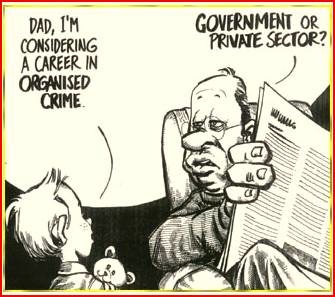
Like it or not, the debate on Public Services is being shaken up today by the publication of the Christie Commission on Future Delivery of Public Services. Having been wrestling with this particular Hydra for the last four years, I feel it’s not before time to take a serious look at what is the biggest single segment of the Scottish economy. The ‘steer‘ we already had was that public service is “in urgent need of sustained reform”, an assertion with which I would agree. However, significant numbers (a majority?) of public services workers and (most especially) their unions emphatically do not.

This, in itself, gets us off on the wrong foot. That is compounded by public service supporting  fundamental, sensitive areas of life, like health, social service, welfare and education, as well as ‘luxuries’  like hanging baskets and flower beds. Add in that those fundamentals serve as pitches upon which political football is played and the idea of a rational, objective debate on it all might appear to be wishful thinking.

One thing for which we can be grateful to the recession is in forcing radical rethinking across the whole segment in a way the smug, cash-rich noughties never contemplated. This is no longer just about efficiencies, it’s about dismantling Victorian machinery of government and making it fit for 21st century purpose. The fact that the Scottish Government promised to protect the health budget should not obscure that it is first in line. It is reprehensible that the NHS employs so many third-rate administrators while front-line nurse and midwife numbers are contracting as consultant numbers rise.

But the Commission’s plan to “break-up of the bureaucratic empires governing health and social care” begs a number of questions. Social Work is handled by individual councils and there is certainly an argument for merging such departments for economy of scale, as was once the case with Scotland’s regions. But the councils we have are notorious for being neither local, nor responsive and Health Boards are rightly cited as especially remote; they are large and have no accountability but to ministers. To take GCC Social Work and simply glue it onto Greater Glasgow Health Board would be a huge mistake, akin to cross-breeding a camel with a polar bear in the hope of producing a Snowcat.

There are really three issues that must be resolved. The first is that any public service must have real public accountability. The NHS, Enterprise and Water have none; Police and Fire might as well have none. Elected, city-scale bodies make the most sense in such cases, as they do for transport, strategic planning, social work and education. We have no such bodies. What we do have are are a rabble of little quango empires like SESTRANS that get little attention, not least because they achieve little.

But before we go resurrecting Strathclyde, the second vital element required is a huge cultural shift in the workforce. There are front-line workers across all public service who are unsung heroes. But too many, especially in distant offices, are petty despots of the “aye been” school of thinking. Even those with no malice show poor understanding of what the public needs—even less the relatively new (at least to Scotland) concept of customer service.

The third and final element is the elected representative. Councils and their equivalents have been riddled with patronage and dead wood that make bureaucrats seem dynamic by comparison. If we are to have publicly accountable, efficient public services, that must start with strategic direction, provided by elected members. So far, despite a positive shift since 2007, that is not yet uniformly the case.

Over the next week look here for further details on Christie and how things might evolve.
Posted in Education, Environment, Politics, Transport | 1 Comment

Some Canna Thole It

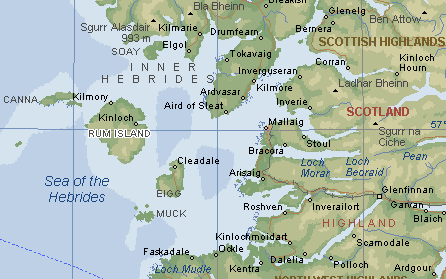
The 49 in 50 of Scots who don’t live on an island give the other 1 little thought, as they seldom visit, preferring Lanzarote sun or Ibiza fun, and finding the long journey and inevitable ferry crossing off-putting. Of the 100,000 or so islanders, 90% are on Orkney, Shetland, Bute, Skye or Lewis, leaving barely 10,000 to cover Scotland’s other 95 inhabited islands. Which means some of them are pretty small and even marginal when it comes to keeping a community together. One that has recently seemed marginal is Canna, the furthest out of the Small Isles and, until recently, populated by 30 people.

That is changing, as the school teacher is leaving, taking the only four pupils, as is the family that run the only B&B. The National Trust for Scotland (NTS) was given the island by the celebrated Gaelic folklorist John Lorne Campbell in 1981. They also own Rum, whose population is stuck around 20, despite a new pier and plenty of deer in its vast bracken wastes. In contrast, the third Small Isle, Eigg, was the subject of a community buy-out barely a decade ago and seems to be thriving.

Romantic though it may sound, island life is not for everyone, especially when November gales threaten to take the roof off and turning your hand to anything is not everyone’s gift. But, given a shop, a school and two-days-a-week sailings, most people seem to pitch in, reciprocate the warmth and generosity such fiercely self-sufficient places generate and make it a real home. At least, that’s Eigg—or the Uists or Gigha or Westray. Only far St Kilda in the thirties and Stroma in the fifties have been abandoned. So, what’s not working on Canna?

It would seem that the culprit is the landowner—NTS. To boost the population,  in 2005
they instigated a world-wide search to find two families to move there; both those families are among those leaving. In part, it appears to be about ownership—residents can only lease and so feel poorly rewarded for work and investment they put into houses or small-holdings. It is similar to Rum, where virtually everyone works for NTS. No vehicles can be brought ashore without NTS permission on either island and the local managers, while highly motivated and principled, dictate what is permissible in too many aspects of life. The net result is a reactive, NTS-dominated culture on each island, in stark contract to the much more shambolic but dynamically expanding culture on Eigg and Gigha.

Having been there myself (a week of John Muir Trust fence clearing, staying at Kinloch Castle), I was struck by the similarity with how SNH runs the (uninhabited) Isle of May along such lines: they appear affable and welcoming but you soon learn that they have a wheen of rules and tolerate your presence mainly because of the income you bring. They seem to secretly wish that you were not there fouling up their concept of paradise. I hope NTS sees the light on this before the last dozen inhabitants Canna thole it any more.

Posted in Community | Tagged | 2 Comments

Atkins Diet for Trams?

I was going to try to content myself with a quick tweet at the emperor’s-clothes insanity about to be laid before Edinburgh City Council next week, anent a writhing can of pythons (possibly Monty but this has gone far beyond mere worms) called Edinburgh Trams, but rage got the better of me. The heart of it is an appendix, the Edinburgh Trams Business Case Audit from consultants Atkins. My own take on the whole history to date can be found at  http://politics.caledonianmercury.com/2010/10/18/commen-a-slow-motion-tram-wreck/

For twelve years I’ve been proud to represent people as a councillor—but never have I
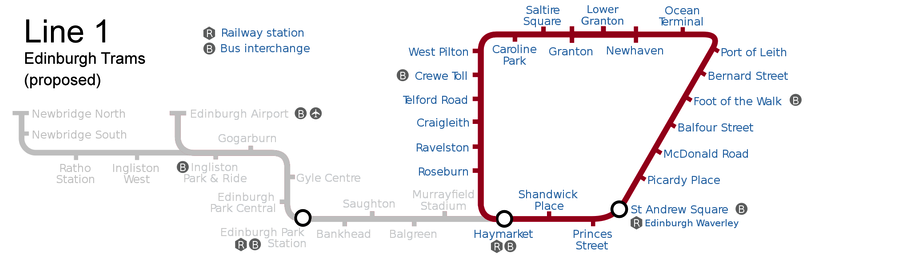
been so glad not to be one in Edinburgh because, in this Atkins diet, there are no palatable options. Besides scrapping the lot (cost £750m), Atkins considers stopping the line at St Andrew Square, Foot of the Walk and Newhaven (the revised Line 1a plan) and concludes that the first carries the best cost benefits from their analysis. This is heavily predicated on the fact that over £450m has already been spent. It is also points the way to the likely decision of the council next week.

Given the circumstances (i.e. between a superheated rock and a hard place with knobs on), any choice will attract criticism. But for Lesley Hinds and other Labour rentaquotes to get on their high horse about mismanagement by the present ECC administration stinks of hypocrisy. Ms Hinds and her Labour colleagues were running ECC when disastrous decisions were made, whether to hire a bunch of incompetents to run TIE in the first place, to shirk due diligence in ensuring TIE was kept on a tight rein in the second, or to allow their own egos to trump business acumen in the third.

The original “Trinity Loop” line (Princes St – Leith – Newhaven – Granton – Craigleith – Murrayfield – Princes St) was well conceived and the only element of the first plan. It fed fast public transport to an area that had none. The whole waterfront development evolving from Leith to Granton needed more than buses to serve it properly.

When Iain Gray awarded £375m to fund the project in March 2003, that was for the Trinity loop alone. Begg’s disciples Cllrs Hinds, Anderson, Aitken et al—with no extra funds and no business plan—decided they could risk adding a second line because so much ECC investment was riding on Edinburgh Park, they had a mile-long white elephant
guided busway there to justify and they wanted the ‘status’ of serving the airport.

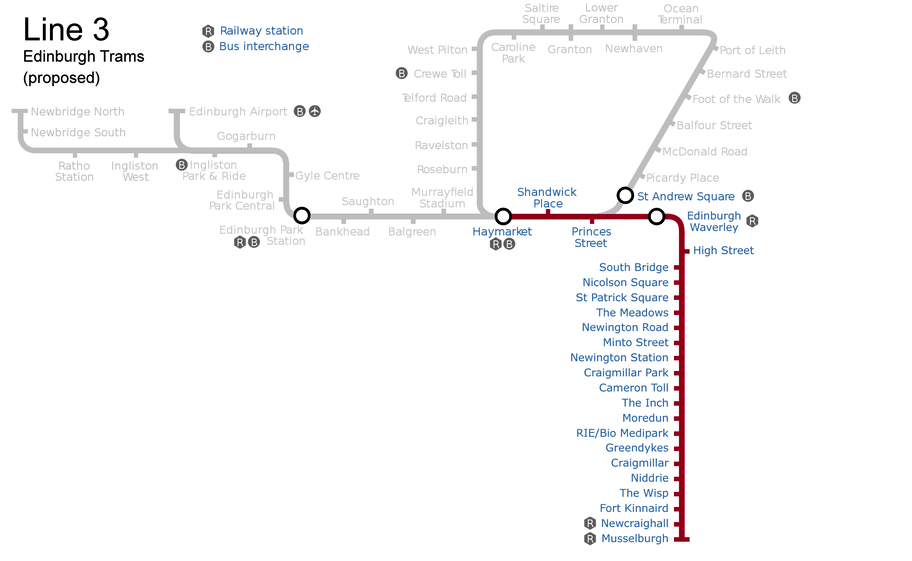
The penalty for their hubris did not hit until February 2005. Rejection of congestion charging blocked funds to pay for shortfalls. Not only did Line 3 (Newington – Cameron Toll -Craigmillar – Musselburgh) get the heave but, instead of the same being done to Line 2, the original Line 1 was pared back again and again, until all that was left of the ‘network’ planned was the added ‘ego’ line to the airport—stopping at Haymarket.

Forget that TIE was a poorly managed black hole for money; forget that city businesses lost untold millions from building disruption; forget that profitable Lothian Buses are in line to have this financial albatross strapped round their neck. Labour leadership of ECC created this mess circa 2003. The eight years since have been wasted blaming others.

Scrapping the lot today would cost £700m, with £460m already spent. Although a clean option, this can’t be sensible. But what, other than the writhing pythons on ECC’s desk?We need bold vision: the Scottish Government must take this (currently laughable) key project out of TIE’s grubbily incompetent hands and completes it—the whole thing, Line 1 (not 1a) Trinity Loop entire, as well as the Line 2 airport link—with or without private involvement. This might cost £200m more than scrapping the mess we have now, but it will give the capital city a full, viable tram network that could pay its way—and even justify extending it. That is, once the sharp stink of incompetence has faded from everyone’s nostrils.

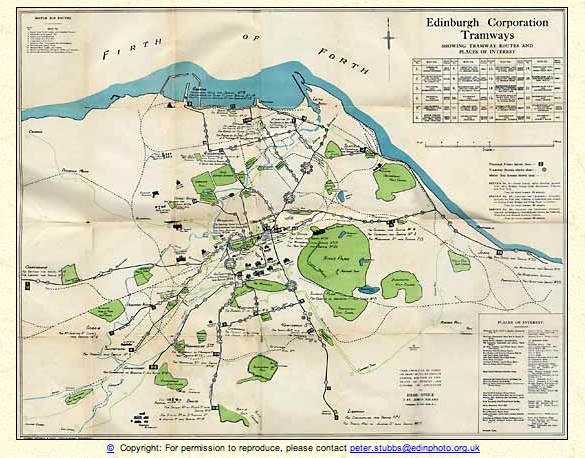
And, lest we forget, Edinburgh used to run an fine tram system (see below). It remained essentially intact until ‘modernisation’ replaced the entire system with buses in 1956.

Posted in Politics, Transport | Tagged | Leave a comment

Stock Car Racing with an Elise

“I want to send a clear message across Defence: reckless spending stops here.” Defence Secretary Dr Liam Fox MP, June 14th 2011. Shows you how little he knows of his brief.

The MoD announced today (June 22nd) that it has now spent £250m on the conflict in Libya. If this keeps up, by the end of the year, it will have cost the same as the total reduction in the Scottish Government’s budget—£1.3m. This set me to thinking about such costs.

I like Ming Campbell—not just because I can wave at his constituency out of my bedroom window but because he asks some pretty shrewd questions. In December last year and on the back of the decision to scrap both HMS Ark Royal and its Harrier jump-jets, he asked the Defence Minister for cost comparisons for running Tornado and Harrier RAF bases. The answer was around £250m each year for Lossiemouth and Marham (Tornado) and £175m for Cottesmore & Wittering (Harrier). By concentrating each wing at the latter base in each case and closing the other, these costs could have become £140m and £82m.

This is interesting. This net saving of £200m could have funded the annual cost of running Ark Royal (£25m) and still leave a £175m saving each year. More importantly, the severe loss of operational flexibility by having to fly Tornados (£55m each) or the new Typhoon (£120m each) instead of the Harrier (under £20m each when new and now amortised down to sweeties) results in combat inefficiency = waste. This is highlighted by the ongoing Libyan conflict, in which 20 RAF Tornados and Typhoons now operate out of the Italian Gioia del Colle airbase but need in-air refuelling (out of RAF Akrotiri) to carry significant munitions to Libyan targets. On top of a per-sortie cost of £22,000, the substantial base support costs operating from Italy make this no cheap operation.

Had the MoD kept the Harrier and Ark Royal (see above), they could be flying a flurry of missions (at under £3,000 per sortie) from the Ark Royal, which would need none of the additional basing and refuelling costs hampering present operations. If the UK is indeed strapped for cash, why is it using such a costly, fragile and inefficient delivery system as the latest Eurofighter? The single-seat, single-engine, sturdy subsonic Harrier is carrier-capable and just the job for loitering off the Libyan coast and smothering selected targets with squadron-scale strikes for less than the single aircraft pinpricks we do manage—if there were any left. But there aren’t.

Using the Eurofighter for ground attack against third-rate opponents is like taking a Lotus Elise to the stock car races—it’s so inappropriate that it is crass stupidity. A year ago we had both the Harriers and carriers to fly them off. If Liam Fox had a shred of humility and/or insight into his job, he would have overridden whichever Whitehall pencil-neck originally decided to scrap them and we would have dished out three times the damage to Ghaddafi’s military at a third of the £250m cost—to date.

Posted in Politics | Tagged | Leave a comment

Let Them Eat Baklava

While I make no pretence of being an international financier, much less someone able to predict the actions of foreign governments that operate in another alphabet, my gut now says George Papandreou’s jaikit is on a shoogly nail. Despite cramming bitter fiscal austerity down the throats of his country(wo)men so that the country can repay emergency transfusions of £45bn from France, £30bn from Germany & £9bn from us, the patient is now resisting treatment, especially by more bitter medicine now being mixed in the lab,

What’s the down side of their being bolshy? Why agree to the terms of any rescue package if terms can be improved by keeping the streets alive with protest? Greek default would destabilise EU economies and possibly the global ones too. The IMF is therefore likely to keep funding Greece’s ballooning public debt.

Opposition leader, Antonis Samaras, stands foursquare against the bailout. Crowds protesting in the center of Athens have followed suit, calling the EU/IMF plans acts of “evil foreigners” to “subjugate the proud Greek people.” Dissent carries little cost as foreign creditors have little choice but to fund the country.  Papandreou has hardly led by example, avoiding any clash with public unions, which are strongly opposed to any idea of privatisation or modernisation. As a result, the private sector has taken much of the austerity pain and not one Greek public servant has been laid off.

EU leaders could have put conditions on the first bailout or stated that this new one was the very last. But they didn’t. They evaded the tough questions and tried to cover for the French and German banks that took bad bets on Greece. And what have they wound up propping up? One of the world’s sickest economy, whose heart for the last 40 years has been dedicated to providing benefits to public-sector clientele.

As long as a second bailout is still a possibility, the Euro will stay propped up. But with a Greek default looking more likely (and from the perspective  of a Greek worker, even desirable) by the day, the Euro’s year long bull run could backpedal fast. And, if Greece does fail, all bets are off. It will have to invent a mechanism to leave the Euro, which will fall through the floor as a result. The Greeks will revive the drachma, promptly devalue it and thereby slash their debt at a stroke. Spending  the next decade in purdah will be eased by boosts in tourism as prices become competitive.

This will be somewhat offset by the fact that the Euro will have fallen too. But ince that will have made German exports even more competitive, their boom will accelerate, taking much of the eurozone with it. So, impoverished but recovering Greeks, damaged but booming EU and the remaining world economies suddenly finding themselves uncompetitive against both.

Why wouldn’t both Papandreou and Merkel want to take it over the brink? Dig out your old drachmas!

Posted in Uncategorized | 3 Comments

Youth Employment Advice

Posted in Uncategorized | Leave a comment

Logic, But Not As We Know It

Star Trek’s Spock was never shy in pointing out illogical decisions made by his erratically human Captain Kirk. But one of the disadvantages of union with England is that we Scots have to thole their batty quirkiness when it comes to inventing numeric systems.

Take telephone numbers. Pretty much every country started off with local numbers 2 or 3 digits long, connected manually by the eavesdropping Mrs Busybody who kept the village abreast of gossip. This didn’t work in cities, so they elongated things to five digits and added on a couple of letters for the local exchange (e.g. MAyfair 23456). Eventually electronics advanced enough to detect what number was being dialled and Subscriber Trunk Dialling allowed people to phone all over the country by starting the number with ‘0’. The GPO (as was) system gave the main cities codes (01 = London; 021 = Birmingham; 031 = Edinburgh; 041 = Glasgow, etc) but everywhere else simply had its name translated on the phone dial. As a result, ABerdeen (nowhere near Birmingham) became 022 and BOurnemouth (nowhere near either) became 020. Village numbers had ‘filler’ numbers added but not all to the full 10 digits—some were as short as 8.

But it worked, even if a phone number gave little clue to its location. Then BT (as it had become) ran out of numbers in London. Instead of inventing a better system, it patched the old, scrapping 01 and splitting London into inner (071) and outer (081). This patch held less than 20 years before they were back, making London 02 plus eight digits and everywhere else add a ‘1’ so that Edinburgh became 0131, etc. The disruption to business was huge and any logic to numbering made even more obscure.

Why am I being so critical? Well the North American system (not just US–it includes Canada) worked out early on (1930s) that a ten-digit system would be required and applied it to all phones. The first three digits were an area code, originally for a city or state: 603 is New Hampshire; 605 is South Dakota. As cities grew, new area codes were inserted–San Francisco’s 415 once covered the Bay Area but the Peninsula became 408 and the East Bay 510 (which has in turn split to form 925). It’s simple, it works and–most importantly–change disrupts business only in the new area code. US business would never have allowed AT&T to fob off anything as clumsy and inefficient as BT did here.

And, lest we think this an isolated case of UK ineptitude, consider our car licence plate ‘system’. It used to be 2 letters and 4 digits, with the letters indicating the county of registration. Quaint. Then they added a third letter for more numbers; then a final letter that indicated year (‘A’ = 1961); then they ran out of letters and reversed the order…and ran out again. Ten years ago they changed to 2 letters (see above), then two numbers that are either the year or the year + 5, then four more digits. If you wanted an illogical pig’s breakfast, this is hard to beat.

Contrast the Germans. They register by location too. But the big cities have a single letter (M = Muenchen; H = Hamburg, etc) and then up to seven digits. Smaller cities have two letters (PA = Passau; KO = Koblenz) and towns large enough for car registration have three (FFB = Furstenfeldbruck) but their number of digits reduced to six and five. The logic is inescapable—efficient use of eight digits = Vorsprung durch Logik.

Whereas the US will use the same dialling code and Germans the same car registration system indefinitely, can someone please find some positive argument why we should stay in this union and thole more half-baked havers from pencil-necks down South?

Posted in Environment, Politics | Tagged | Leave a comment

The Hammer Ding-Dong Is the Song

…of (Inver)clyde. Just back from a coast-to-coast day trip to chip in at the Inverclyde by-election. Caused by the untimely death in his forties of Labour MP and ex-priest David Cairns (who changed the rules so an ex-priest could even be an MP) this was no-one’s first choice as a turn of events. David’s death was a real loss to Labour, the SNP are staring at a 14.416 majority to overturn. Neither Lib-Dems nor Tories relish the prospect of another trouncing, such as they received here just one month ago.

Nothing fazed, a packed National Council filled Crawfordsburn Community Centre and was treated to roaring speeches both from Alex Salmond and the candidate Anne McLaughlin who hammered home that she was from there, having gone to Greenock High school. Then everyone decamped to the campaign HQ at Unit 4, 10 Carnock Street, Greenock, PA15 1HB. Veteran as I am of umpteen by-elections, I still wasn’t prepared for the scale and level of professionalism the SNP exhibit these days—reception, delivery dispatch, canvass dispatch, return processing and a catering section with piles of decent sarnies and enough room out of the rain to socialise with old friends.

My squad took three deliveries up Lyle Hill (note for those coming over: Greenock is all hills) to the ‘birds’ estate, with great views over Fort Matilda across the Tail o’ the Bank to Helensburgh and the jumble of bright green/soft grey (depending on the highly variable rain) hills of Argyll. We made base camp on Grieve Road but needed sherpas to prep a forward camp on the East col of Wren Road where we switched to oxygen…

Actually, it wasn’t that bad but I have never seen so many stairs outside of city tenements. After four hours, my rectus femoris and other thigh muscles felt pumped. Mostly friendly reception from the locals, the most awkward moment came when I tried to find fruit or fruit juice amidst two coolers of fizzy drinks and acres of snack foods in the corner shop at the summit of Wren Road. If there are any vegetarians living on Lyle Hill, they must grow their own or they’d have starved to death long ago.

Coming home, it was good to see cranes still operational along the Clyde and Ferguson’s shipyard at Port Glasgow doing a bit of business. But, despite new malls and superstores, the area had a feel of one that has slipped from grace—the fine stone but roofless Central Station, the elegant town hall steeple contrasting with nail salons and advocacy bases. Well past time for Inverclyde to rediscover itself again.

Posted in Politics | Tagged | 1 Comment

Even Closer Than I Thought

No sooner had I fired off the preceding EGIP post than I’m off to the station where I find one of two Class 380 trains already in service on the line since the 15th. Definitely a class act, these Siemens-built trains are not only faster, smoother and quieter but the interior is a huge improvement, with broader seats (4 across instead of 5), accessible loos, plenty of half-tables and (for the first time on ScotRail) power sockets for laptops and mobiles.

Some less obvious things improve the service—the guard now has control of the doors from any car, avoiding delays while (s)he rushed to one end of the train to open the doors at a stop. The seats now line up with windows so that views are better. Even the dynamic (and frequently wrong) in-car notices of the next stop have been made less obtrusive.

It arrived in Edinburgh after 31 minutes, 4 minutes ahead of schedule. Though still not enough to connect with the on-the-hour Glasgow service this is a side effect of our new timetable running six minutes later than the old. The train and journey were both faultless and harbinger higher quality experiences across the network when EGIP is complete after 2016.

Class 380 Train at North Berwick Station, June 17th 2011

Posted in Transport | Tagged | Leave a comment

EGIP: Closer Than You Think

No, this is not a message from the Cairo Tourist Board but shorthand for what must be the most no-brainer transport project in Scotland. Whereas five miles of M74 cost us £675m and 0 miles of Edinburgh tram cost us £600m (and counting) a plan is now out for public consultation to give Central Scotland 350km of modern, electrified railway. There was always something third world about cramped diesel trains providing the key backbone to green travel in Scotland. Every European capital but Dublin and ours (OK, plus Rekyavik—but they have no trains) has electrified its train network.

The Edinburgh-Glasgow Infrastructure Project (EGIP) will cost £900m—some £100m less than originally projected. For that money we get:

  • 35-minute journey times between Edinburgh and Glasgow
  • 13 trains per hour between Edinburgh and Glasgow (currently 5)
  • electrified (and 10 mins faster) Dunblane/Falkirk/Edinburgh service
  • electrified (and 10 mins faster) Alloa/Stirling/Glasgow service
  • electrified (and 5 mins faster) Cumbernauld/Glasgow service
  • 60,000 fewer tons of carbon in our atmosphere per annum
  • New, faster, smoother Class 380 electric trains
  • Even more competitive alternative to fighting appalling M8/M80 traffic

A good start to the work has already been done by opening the electrified Edinburgh/ Bathgate/Airdrie/Glasgow/Helensburgh service. That the only electrified line between our major cities previously was indirect and only served out-of-the-way places like Kirknewton and Carstairs was a nonsense. That line was only in place to allow electric train access to/from England but will nonetheless have an improved local service by 2013, with Cumbernauld getting electric service the following year. There will even be a tram/airport/rail interchange at Gogar, should TIE ever get their act together.

But 2016 will see the real advantage when electrification the main Glasgow/Dunblane/ Edinburgh triangle is completed. All stations in that area will see faster, more frequent services to/from city centres; trains that are more comfortable, less crowded. The ability to travel faster and easier will shift people from cars to rail. Unlike the M74 spend which largely benefitted car commuters in South Lanarkshire, EGIP will spread its benefits across three quarters of the Scottish population because even places like my own North Berwick will benefit on journeys beyond Waverley. We’ll join the 21st century at last.

Whether the bus companies will stop inhabiting other dimensions and behave like a partner, instead of an enemy, is not clear—but they need to.

Faster/Longer/Better: Class 380 Trains Up to 8 Cars Long (present Class 170 Turbostars only 6 max)

Posted in Transport | Tagged | 4 Comments