Logic, But Not As We Know It

Star Trek’s Spock was never shy in pointing out illogical decisions made by his erratically human Captain Kirk. But one of the disadvantages of union with England is that we Scots have to thole their batty quirkiness when it comes to inventing numeric systems.

Take telephone numbers. Pretty much every country started off with local numbers 2 or 3 digits long, connected manually by the eavesdropping Mrs Busybody who kept the village abreast of gossip. This didn’t work in cities, so they elongated things to five digits and added on a couple of letters for the local exchange (e.g. MAyfair 23456). Eventually electronics advanced enough to detect what number was being dialled and Subscriber Trunk Dialling allowed people to phone all over the country by starting the number with ‘0’. The GPO (as was) system gave the main cities codes (01 = London; 021 = Birmingham; 031 = Edinburgh; 041 = Glasgow, etc) but everywhere else simply had its name translated on the phone dial. As a result, ABerdeen (nowhere near Birmingham) became 022 and BOurnemouth (nowhere near either) became 020. Village numbers had ‘filler’ numbers added but not all to the full 10 digits—some were as short as 8.

But it worked, even if a phone number gave little clue to its location. Then BT (as it had become) ran out of numbers in London. Instead of inventing a better system, it patched the old, scrapping 01 and splitting London into inner (071) and outer (081). This patch held less than 20 years before they were back, making London 02 plus eight digits and everywhere else add a ‘1’ so that Edinburgh became 0131, etc. The disruption to business was huge and any logic to numbering made even more obscure.

Why am I being so critical? Well the North American system (not just US–it includes Canada) worked out early on (1930s) that a ten-digit system would be required and applied it to all phones. The first three digits were an area code, originally for a city or state: 603 is New Hampshire; 605 is South Dakota. As cities grew, new area codes were inserted–San Francisco’s 415 once covered the Bay Area but the Peninsula became 408 and the East Bay 510 (which has in turn split to form 925). It’s simple, it works and–most importantly–change disrupts business only in the new area code. US business would never have allowed AT&T to fob off anything as clumsy and inefficient as BT did here.

And, lest we think this an isolated case of UK ineptitude, consider our car licence plate ‘system’. It used to be 2 letters and 4 digits, with the letters indicating the county of registration. Quaint. Then they added a third letter for more numbers; then a final letter that indicated year (‘A’ = 1961); then they ran out of letters and reversed the order…and ran out again. Ten years ago they changed to 2 letters (see above), then two numbers that are either the year or the year + 5, then four more digits. If you wanted an illogical pig’s breakfast, this is hard to beat.

Contrast the Germans. They register by location too. But the big cities have a single letter (M = Muenchen; H = Hamburg, etc) and then up to seven digits. Smaller cities have two letters (PA = Passau; KO = Koblenz) and towns large enough for car registration have three (FFB = Furstenfeldbruck) but their number of digits reduced to six and five. The logic is inescapable—efficient use of eight digits = Vorsprung durch Logik.

Whereas the US will use the same dialling code and Germans the same car registration system indefinitely, can someone please find some positive argument why we should stay in this union and thole more half-baked havers from pencil-necks down South?

Posted in Environment, Politics | Tagged | Leave a comment

The Hammer Ding-Dong Is the Song

…of (Inver)clyde. Just back from a coast-to-coast day trip to chip in at the Inverclyde by-election. Caused by the untimely death in his forties of Labour MP and ex-priest David Cairns (who changed the rules so an ex-priest could even be an MP) this was no-one’s first choice as a turn of events. David’s death was a real loss to Labour, the SNP are staring at a 14.416 majority to overturn. Neither Lib-Dems nor Tories relish the prospect of another trouncing, such as they received here just one month ago.

Nothing fazed, a packed National Council filled Crawfordsburn Community Centre and was treated to roaring speeches both from Alex Salmond and the candidate Anne McLaughlin who hammered home that she was from there, having gone to Greenock High school. Then everyone decamped to the campaign HQ at Unit 4, 10 Carnock Street, Greenock, PA15 1HB. Veteran as I am of umpteen by-elections, I still wasn’t prepared for the scale and level of professionalism the SNP exhibit these days—reception, delivery dispatch, canvass dispatch, return processing and a catering section with piles of decent sarnies and enough room out of the rain to socialise with old friends.

My squad took three deliveries up Lyle Hill (note for those coming over: Greenock is all hills) to the ‘birds’ estate, with great views over Fort Matilda across the Tail o’ the Bank to Helensburgh and the jumble of bright green/soft grey (depending on the highly variable rain) hills of Argyll. We made base camp on Grieve Road but needed sherpas to prep a forward camp on the East col of Wren Road where we switched to oxygen…

Actually, it wasn’t that bad but I have never seen so many stairs outside of city tenements. After four hours, my rectus femoris and other thigh muscles felt pumped. Mostly friendly reception from the locals, the most awkward moment came when I tried to find fruit or fruit juice amidst two coolers of fizzy drinks and acres of snack foods in the corner shop at the summit of Wren Road. If there are any vegetarians living on Lyle Hill, they must grow their own or they’d have starved to death long ago.

Coming home, it was good to see cranes still operational along the Clyde and Ferguson’s shipyard at Port Glasgow doing a bit of business. But, despite new malls and superstores, the area had a feel of one that has slipped from grace—the fine stone but roofless Central Station, the elegant town hall steeple contrasting with nail salons and advocacy bases. Well past time for Inverclyde to rediscover itself again.

Posted in Politics | Tagged | 1 Comment

Even Closer Than I Thought

No sooner had I fired off the preceding EGIP post than I’m off to the station where I find one of two Class 380 trains already in service on the line since the 15th. Definitely a class act, these Siemens-built trains are not only faster, smoother and quieter but the interior is a huge improvement, with broader seats (4 across instead of 5), accessible loos, plenty of half-tables and (for the first time on ScotRail) power sockets for laptops and mobiles.

Some less obvious things improve the service—the guard now has control of the doors from any car, avoiding delays while (s)he rushed to one end of the train to open the doors at a stop. The seats now line up with windows so that views are better. Even the dynamic (and frequently wrong) in-car notices of the next stop have been made less obtrusive.

It arrived in Edinburgh after 31 minutes, 4 minutes ahead of schedule. Though still not enough to connect with the on-the-hour Glasgow service this is a side effect of our new timetable running six minutes later than the old. The train and journey were both faultless and harbinger higher quality experiences across the network when EGIP is complete after 2016.

Class 380 Train at North Berwick Station, June 17th 2011

Posted in Transport | Tagged | Leave a comment

EGIP: Closer Than You Think

No, this is not a message from the Cairo Tourist Board but shorthand for what must be the most no-brainer transport project in Scotland. Whereas five miles of M74 cost us £675m and 0 miles of Edinburgh tram cost us £600m (and counting) a plan is now out for public consultation to give Central Scotland 350km of modern, electrified railway. There was always something third world about cramped diesel trains providing the key backbone to green travel in Scotland. Every European capital but Dublin and ours (OK, plus Rekyavik—but they have no trains) has electrified its train network.

The Edinburgh-Glasgow Infrastructure Project (EGIP) will cost £900m—some £100m less than originally projected. For that money we get:

  • 35-minute journey times between Edinburgh and Glasgow
  • 13 trains per hour between Edinburgh and Glasgow (currently 5)
  • electrified (and 10 mins faster) Dunblane/Falkirk/Edinburgh service
  • electrified (and 10 mins faster) Alloa/Stirling/Glasgow service
  • electrified (and 5 mins faster) Cumbernauld/Glasgow service
  • 60,000 fewer tons of carbon in our atmosphere per annum
  • New, faster, smoother Class 380 electric trains
  • Even more competitive alternative to fighting appalling M8/M80 traffic

A good start to the work has already been done by opening the electrified Edinburgh/ Bathgate/Airdrie/Glasgow/Helensburgh service. That the only electrified line between our major cities previously was indirect and only served out-of-the-way places like Kirknewton and Carstairs was a nonsense. That line was only in place to allow electric train access to/from England but will nonetheless have an improved local service by 2013, with Cumbernauld getting electric service the following year. There will even be a tram/airport/rail interchange at Gogar, should TIE ever get their act together.

But 2016 will see the real advantage when electrification the main Glasgow/Dunblane/ Edinburgh triangle is completed. All stations in that area will see faster, more frequent services to/from city centres; trains that are more comfortable, less crowded. The ability to travel faster and easier will shift people from cars to rail. Unlike the M74 spend which largely benefitted car commuters in South Lanarkshire, EGIP will spread its benefits across three quarters of the Scottish population because even places like my own North Berwick will benefit on journeys beyond Waverley. We’ll join the 21st century at last.

Whether the bus companies will stop inhabiting other dimensions and behave like a partner, instead of an enemy, is not clear—but they need to.

Faster/Longer/Better: Class 380 Trains Up to 8 Cars Long (present Class 170 Turbostars only 6 max)

Posted in Transport | Tagged | 4 Comments

Isle of May: Paradise Found

The legend of King Arthur dates from the days before the Brythons of Lothian were subsumed into what became Scotland. Arthur’s Seat links him to the area and there is a legend that the fabled Avalon was the Isle of May. Just back from guiding a trip there for the first time this season I, for one, am signed up to any such legend.

Leaving North Berwick harbour with 12 guests on a fast RIB is hardly mythological but, as you approach the stern cliffs that the island presents to the Southwest, the May looks unassailable, defying you to land. But after cruising north round Rona and the Mars Rocks, through rafts of puffins and guillimots hanging out on the water in clumps, as if part of some giant informal kaffeeklatsch and flotillas of grey seal heads bobbing up in curiosity, Kirkhaven landing still comes as a surprise, hidden as it is on the far side.

Arctic terns are ferocious as well as elegant; here they attack guests returning to the landing

Running the gauntlet of the terns nesting near the landing, a slow stroll along the island’s many paths reveals a rich diversity of views, history and wildlife, crammed onto an island barely a mile long. The 12th © monastery was off-limits, having been taken over by terns but Holyman’s Road to the Low Light passed endless clumps of puffins socialising, abundant rabbits and the odd black back gull lurking ready to seize any unprotected chick. At Three Tarn overlook, the western cliffs were thick with birds—puffins, razorbills, guillemots and the cries of kittiwakes around the Bishop below. Those birds closest to the path barely noticed people; one razorbill landed 2m away and began preening.

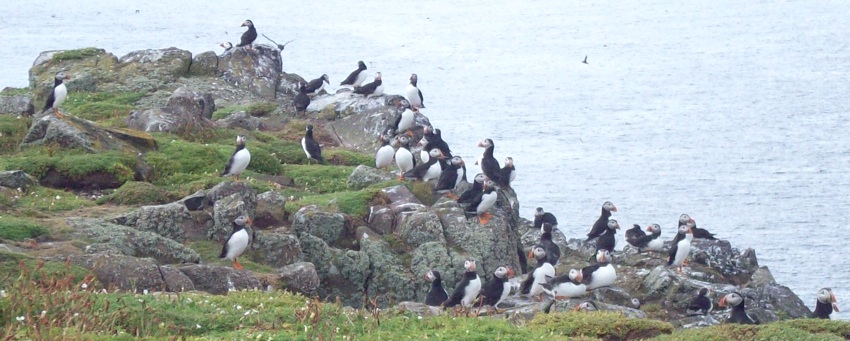
Gregarious puffins socialise along Holyman's Road, Isle of May

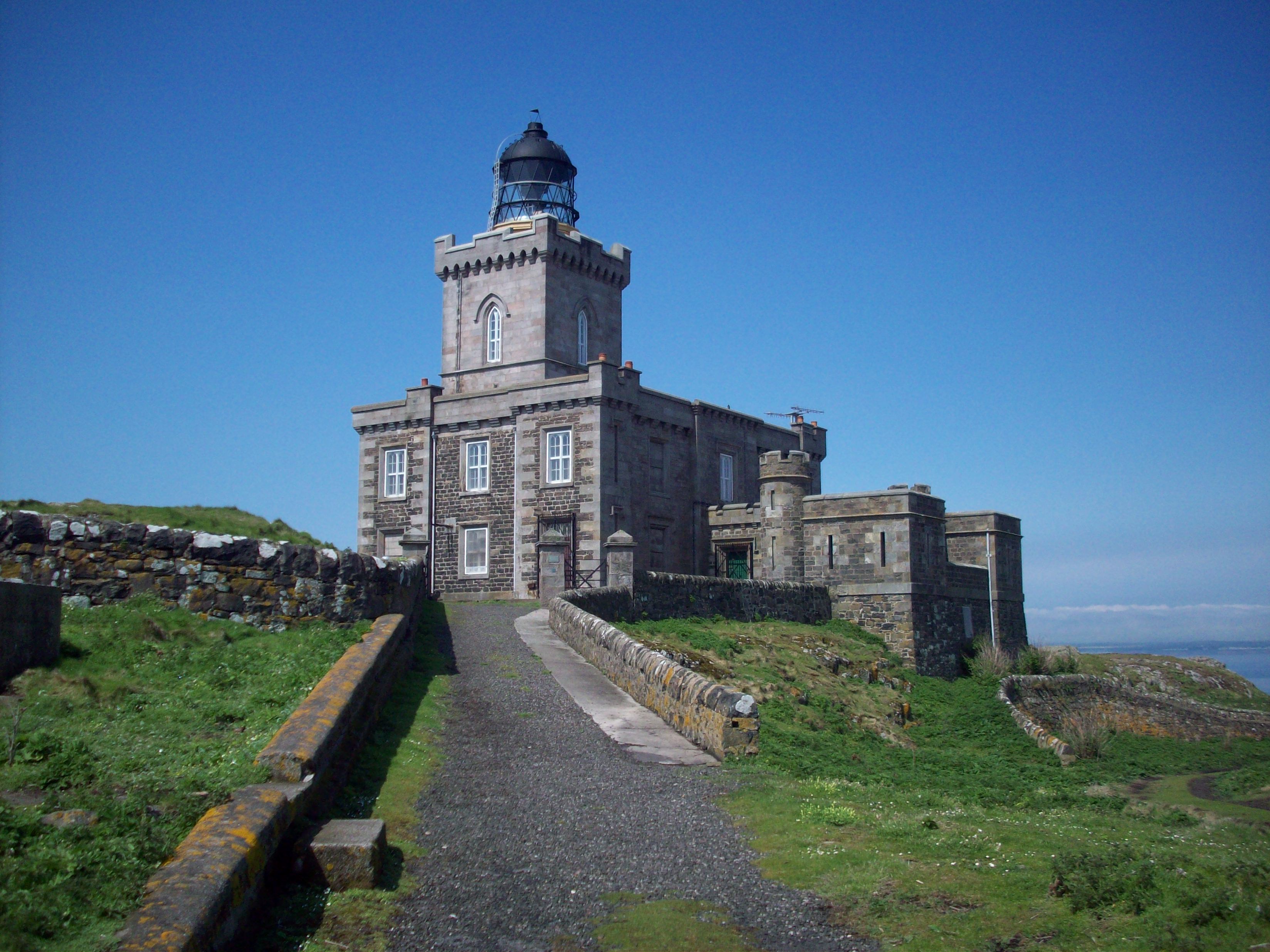
At the top of the island, history is all around, with the oldest lighthouse in Scotland (1636) capping one ridge and its resplendent castle-like Stevenson replacement of 1815
on the other. The views from here on a clear day like this encompass the entire Forth as far as the bridges and must have awed the generations of keepers who peched up Palpitation Brae to their shift from the less exposed living quarters down by Mill Door loch. Down there, eider ducklings were just peeking out from under their mothers and the whir of seabirds coming to drink was constant.

Isle of May Lighthouse, built by the Stevensons in the Napoleonic era when no magnificence was spared

Back at the small visitor centre, there was barely time to wolf down whatever packed lunches had been brought; two hours had disappeared like minutes. Because of its size and variety, I never tire of visiting the May but it is especially enjoyable with 12 people who have never been before and discovering it vicariously anew through the awe and delight, the amazed expressions of each new convert.
.

Posted in Education, Environment | Tagged | Leave a comment

Small = Beautiful or Uneconomic?

Everyone, with the possible exception of Cabinet Secretary Russell (who is a hard man to flummox) was surprised today when Argyll & Bute binned its plans to close 11 rural schools, with the exception of 2 that had no pupils. But Mike had made a plea for a moratorium for a year on rural school closures and may be demonstrating a better understanding for what constitutes an education than some of his predecessors.

While it is largely A&B, Highland and Comhairle nan Siar who have large rural tracts with many isolated small schools who are in the firing line of publicity, in fact most councils outside cities face the issue in some form. The issue has been with us for some time, driven by rural depopulation in some areas, but it is the financial crisis and successive real cuts to council budgets that have brought it to a head. Having been asked for savings, councils understandably look at their biggest outlay as part of the exercise: in general, schools account for half of the £11bn council budget in Scotland.

Much of the opposition appears, at first sight, to come from parents. But dig deeper and more subtle and cogent reasons than parental self-interest soon emerge. Since Gigha’s community buyout in 2002, the school roll has grown from 6 to 15. This can be seen as a reflection of a dynamic community. But the community itself credits their school for being the bond that held them together while they rebuilt. Eigg’s story is similar, where their 8-pupil school was a backbone on which the community rebuilt itself. While finance is important, so is community cohesion and viability. Schools are vital to both

This is true when Comhairle nan Siar considers closing South Uist’s Stoneybridge or Highland has an eye on the primaries scattered across Caithness. Schools are like marram holding the machair together. Without them, people blow away, And this is as true in Teviotdale and Hutton as on the machair or in the Flow Country. Even more than post offices, more than the village shop, schools pump lifeblood into remote areas, make it possible for all generations to live in sustainable communities and not just leave the elderly to their memories in silence.

Clearly there are economic penalties for this. The smallest school in my own East Lothian (Humbie, 18 pupils), costs three times as much per pupil as the average. Should we close it and transfer everyone to Saltoun (54 pupils) 5 miles away? Or should we get creative, acknowledge its vital rôle in the village and find ways to make it less expensive without compromising the education? What about sharing a Head Teacher with Saltoun? Would parents extend their support into extracurricular activity? Could costs, materials, IT, transport, not be somehow subsidised?

So many good schools are made better by parental involvement that there is surely scope, rather than accepting the beancounter (= close ’em) approach, to have the community augment core teaching work with support that not only justifies the school remaining open but makes it foolish to consider closing such a resource, such a bonding force for good in the community. Mike’s intervention was about more than schools; he is one step beyond the African proverb “it takes a village to raise a child” by seeing it takes a school to make a village in the first place.

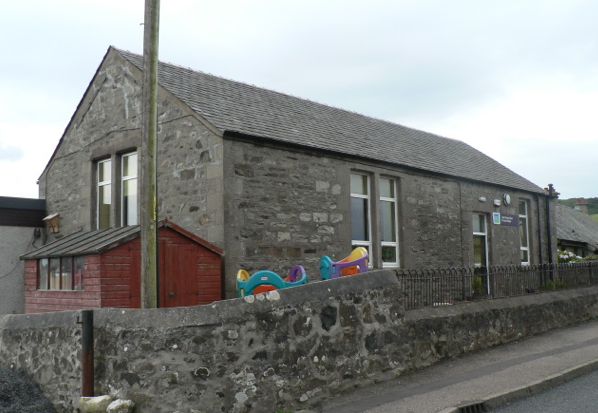
Isle of Gigha school, Argyll—Built in 1897, refurbished 5 years ago

Posted in Education | Tagged | Leave a comment

Can Passion & Politics Mix?

Sad anorak that I am, I spent much of Saturday catching up on my politics, including seeing the June 9th debate in the Scottish Parliament—a Labour motion on Caring for our Elderly. There was a variety of speeches from across the house, the tone of which was set by Nicola Sturgeon who spoke of a “broad consensus around the need to improve care for older people and to provide a system that works in all cases” that left me deeply bothered. I couldn’t work out why until I caught up with a couple of fellow regular bloggers, most especially Burdz Eye View, for whose pronouncements I have much time, even as I disagree with half of them.

Yesterday, she was claiming we need passion in our parliament and had good suggestions how to achieve that. What was, for me, missing in that June 9th debate was that passion, although, at first glance, you would not know it. Almost every speaker declared an interest in having worked as a carer or had an elderly relative in care. Jackie Baillie led off the debate, raising the recent Elsie Inglis care home scandal, shortcomings at Ninewells hospital and financial troubles as Southern Cross care homes—all valid issues.

But then the entire debate consisted of much wringing of hands in pious denunciation of such undesirable developments. With an estimated £4.5 bn p.a. spent on care for older people and projected increase of 84% in people aged over 75 in the next 20 years, we are approaching a financial brick wall, with the £1.3 bn annual cut in the budget simply acting as an accelerator. The debate expanded to denounce “tuck calls” or microwave meals or a number of expediencies used to service growing demand with dwindling resources. All speakers from all sides were quick to denounce short-cuts and shoddiness; but none had anything to say that could be confused with an option, let alone a solution.

Allowing for some maiden-speech stumbling, there was indeed passion on display. But it was the same passion shown in earlier parliaments, when gesture politics could be indulged in because money was available to be thrown at the problem. Between 1999 and 2011, council Adult Social Care budgets tripled, with NHS spending doubling from £5 bn to £11.4 bn. Those days are gone and won’t be back in time to rescue us.

Regular viewers of the Holyrood fish bowl would instantly recognise business as usual. Blaming Westminster scores political points but butters no parsnips; claiming carers’ work is worth £6 bn may be true but gets us no closer to funding it; being chary of profits being made from care is noble but somewhat after the event. There was no mention made of union activism or their likely hostility to any pay restraint, let alone cuts.

I did not watch for three hours but I did not need to. There may have been a political revolution at the ballot box this year but every contribution made here could have been lifted from any previous session of our Scottish Parliament: otherworldly, self-satisfied and devoid of even one pragmatic idea how our looming brick wall could be evaded.

Playing to the gallery is beguiling when convention has always done so; it carries no risk. But courage and a willingness to court unpopularity—neither much on display last week—is needed to stave off the otherwise inevitable: more abysmal shortcomings like Elsie Inglis, more fiscal wrecks like Southern Cross, more unions claiming pittance wages and, lest we lose sight of the point, deteriorating and unacceptable conditions for our elderly.

Posted in Community | Tagged | Leave a comment

Something Completely Different

It’s a quirk that, when an actor, comedian or whoever from TV, film, etc becomes one of your favourites, you feel as if you know them, as if you could sit down over a coffee and put the world to rights as you would with any friend. Natural as this may feel, it’s little wonder when the focus of your adulation is not on the same wavelength and this is probably a shock, should you ever actually sit down over that coffee.

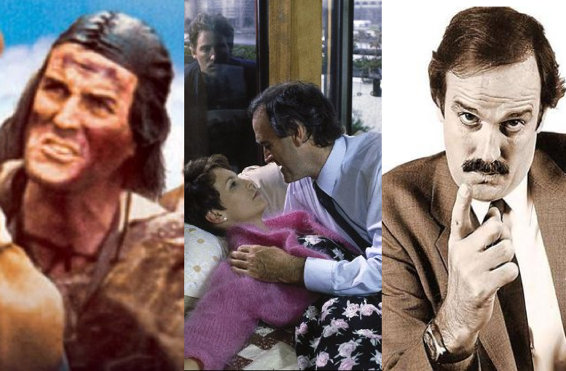
Such were my musings last night when I went to catch John Cleese’s one-man show’s brief stop in Scotland. I am a big fan of humour, especially the surreal sort. I recall losing milk teeth as I fell about the floor at the Goon Show, loved the dead-pan-but-hilarious-constant tragedy of Hancock, came of age huddled with flatmates around Monty Python and still rate the brief but brilliant Fawlty Towers as the best sitcom. Ever.

When I think about it, Cleese was my lodestar, the one who made me laugh, irrespective of initial emotional state. No matter that he worked with equally brilliant people like Feldman, the Two Ronnies or the other five Pythons, he was so lankily unmistakable that he didn’t even need to break into a silly walk to make me smile. Not having a family member to cheer me up when the world seemed bleak, he unknowingly filled that need.

So, I sat in J10 with some misgiving that he could not sustain that life-long level of entertainment. But he did not disappoint. With nothing more than an AV screen for support, he gave me 90+ minutes of laughs. Much was nostalgia with which I was familiar—the class sketch from the Frost Show or the fire drill from Fawlty Towers on the AV. But it was the mordantly funny way he told his early life story (“when the Germans bombed Weston, it showed they had a sense of humour: there was nothing in Weston worth as much as the bombs they dropped”) and his brilliant irreverence among friends, as when he he gave the eulogy at Graham Chapman’s funeral as a modification of the parrot sketch because he “knew that Graham would have wanted you to be outraged in his honour” that was new and fresh and different.

Beyond any nostalgia, that’s what made the evening for me: his anything-but-PC iconoclasm that probably reached its peak when he fluently lambasted his (current) ex-wife and her lawyer, with clear contempt for any slander laws applicable in either Scotland or California, over a $20m divorce settlement (“it cost me $350 every time she had to look for her memory pills”). As he has said himself “Comedy always works best when it is mean-spirited.”

In a world where an offhand remark can get anyone into media disfavour that deepens in proportion to their fame, where H&S rules and comedians are constrained to beyond the watershed because they can’t be funny without swearing, it was brilliant to witness someone still at the top of his comedic game not give a monkey’s for any of that and give 1,000+ people both barrels.

Posted in Community | Tagged | Leave a comment

Hey, Big Spender

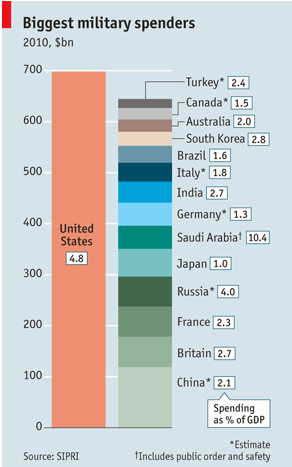
One of the ‘advantages’ of the union that is often touted by the likes of Eric “Rentaquote” Joyce and his ilk is that, as a part of Britain, Scotland “punches above its weight” in the world or that we derive superior defences against whatever terrorist nasties might be set on dropping the Squinty Bridge into the Clyde during rush-hour. This week’s Economist publishes a rather stark graphic that puts this nonsense into some kind of context.

2010 Military Spending in US$Bn (from The Economist)

The US’s $700bn dwarfs the next-biggest (China at $119bn) and makes Britain’s third place seem very much an also-ran at $65.6bn (rather less than this year’s government record interest payment of $76.27bn). That spend, however, does not even provide us with a carrier (we scrapped Ark Royal and Illustrious was seen sneaking down the Forth this month but in no state to help in Libya). The US Navy deploys 11 Carrier battle groups, plus a training group, around the globe, with a naval air wing of over 50 strike aircraft on each. In other words, the UK does not even register, let alone punch its weight.

British conventional ‘punch’ is weak. With no maritime air strength remaining, much of the UK defence spend (over $16bn) is absorbed by Trident. With most (10,000+) of our deployable troops committed in Afghanistan and an air force that struggles to contribute its share to NATO’s shellacking of Libya, there is little that any putative enemy has to fear from Britain. Looked at objectively, Britain’s defence strategy is fragmented and its current posture a deep embarrassment to service chiefs who know about these things.

Then consider Norway (defence budget of just $7bn—don’t even bother looking for it on the chart above). They just increased this budget by $63m to allow extra training and support for their F16 squadron enforcing the no-fly zone over Libya, plus their infantry battalion on peacekeeping duty in Palestine and the frigate on anti-pirate duty off Somalia. They have a modern, balanced defensive force. This is used generously as a component of international peacekeeping so that they are highly regarded throughout the Western, muslim or any other part of the world. No-one is threatening to bomb them.

So, you decide: who’s really punching above their weight?

By the way, Scotland’s contribution to Britain’s current defence budget, over which we have minimal control, is $5.4bn. Why not be another Norway for that kind of money?

Posted in Politics | Tagged | 1 Comment

Circling the Gunboats

One month on from the election in which the impossible happened—a party secured a majority at Holyrood—and the world has yet to come to an end, although it might have for some parties, if the way they are behaving is anything to go by. Whether on Scots Law/Supreme Court or ‘how-many-referenda?’ issues, fur is flying and much ill-temper is on display. Given that the SNP were given substantial mandate, is it any surprise that they hit the ground running? More surprising is how unprepared unionists seem to have been to deal with it.

While allowance must be made for them being gubbed or leaderless or both, none of the three unionist parties is doing itself much good. Labour continues its four-year hissy fit of denial (see earlier post) while ‘Politician of the Year’ Hugh Henry talks of ‘elected dictatorship’ in committee posts which his own party practiced when in power. Defeated as Labour now are in their very heartlands, they must also address Curtice’s ‘cracked and hollow shell’ that is their local orgaisation if they are to avoid another drubbing at local elections next May.

The arch-unionist Tories have had a better time of it, partly because their staunch hostility appears principled. What they appear not to have grasped is that pooh-poohing independence (as Annabelle did with her ‘little Scotlandism’ jibe this week) is the tactics of the nineties; they failed. Unless they seize initiative in the debate, positing cogent arguments how Scotland will benefit from union going forward, unionists will find themselves carping from the sidelines.

But the party in deepest yoghurt is the Lib-Dems. Newsnicht ran a very insightful piece last night about how they may have lost their Highland heartland through Tavish Scott steering them away from any truck with the SNP in 2007 and resolutely ignoring their own fairly radical federal principals. Even senior statesman David Steel seems non-plussed just how ramshackle his party’s statements have been; Michael Moore’s recent call for two referenda looks arrogant, deliberately provocative but as out of touch as discredited John Reid/Michael Forsyth bully-boy attempts to browbeat opponents.

What we need is a debate. Their is a virile, enthusiastic government now steering Scotland towards its future. There are informed and lucid commentators like Ian MacWhirter, Joan MacAlpine and Jim Mitchell articulating the Zeitgeist and throwing down the challenges to unionists to make their case. With few exceptions, such as the never-confused-with-a-sunny-day Alan Cochrane or the dry-but-cogent Peter Jones, these challenges are being ignored and a playground-like disjointed series of petulances and threats are the response. When Ian Davidson MP argues for carriers we don’t need and keeping the criminally useless Trident to ‘punch above our weight’ as shining factors to keep us in the union, he implies this offsets £1 trillion of debt, twice as many citizens who’ve never had a job than a decade ago and the bottomless lunacy of Afghanistan. This implies unionists can’t be bothered finding decent, let alone convincing, arguments.

But, then, how do you recover from unexpected defeat in colonial wars, even here in the last colony? You recover your pride by sending in gunboats to intimidate them.

Posted in Politics | Tagged | Leave a comment