More Than Just Hot Air?

The way that both big companies and the ConDem coalition think of Scotland has been revealed through a number of key issues over the summer. Far from being the sovereign state that only the SNP argues for and that could deal with the kind of paternalistic colonialism that has been Scotland’s lot, we remain, in Cameron’s or Murphy’s eyes, pair wee Scoatlun that cannae see tae itsel’—better that we look after their oil resources because they’d just blow them on economic prosperity, like Norway.

The result has been Huhne’s recent admission that Westminster has abandoned vital carbon capture technology for coal-fired Longannet power station, just like the gas-fired Peterhead power station four years ago. His excuse? The technology’s estimated at £1.5bn to develop; he would only provide £1bn max. And yet they’ll spend £7bn on aircraft carriers that we don’t need and with no planes on them (because they can’t afford them). They’ll keep Trident foisted on us.

Scotland is investing in being a lead in energy. Our supposed partner should be helping.

Likewise Iberdrola, using the front of its ‘Scottish’ Power subsidiary, wants to blight East Lothian’s densely populated coast for another 30 years with its second power station—and offer only 50 jobs while squeezing profit from it. And what will they use as fuel? Scarce gas—the same gas that is running out in the North Sea and dependent on Russia for future supplies. Are they going to invest in carbon capture? Are you kidding? They don’t even pretend to be interested in anything like that—it might interfere with their bottom line.

And so, as with so much that affects everyday life in Scotland, not to mention its future, our interests are subsumed into those of a country that is supposedly our closest friend and of companies that don’t even pretend to be a part of our communities.

It is under these conditions that the SNP gather in Inverness to discuss a full programme that today includes several positive motions about international relations and how Scotland should participate in them. Laudable though they are, most would be infinitely more effective if we were a normal country—already independent. SO, as we debate them, I hope speakers point out the gross anomalies under which our country still must labour if it is to find its rightful voice in the world.

There is little of this in the Conference Agenda.  I hope someone has the cojones to examine paras 2 or 4 above and put in a topical motion for conference to debate so that the UK government—never mind the pitiful Scottish opposition—gets a flea in its ear and knows full well the liberties they are taking.

We’d be doing them a favour: they’d be that much less surprised when they get thoroughly gubbed in a referendum in three years’ time.

Posted in Uncategorized | Leave a comment

I Hope Labour Doesn’t Read This

Despite what Tom Harris claims, we SNP foot-soldiers do sometimes fall out with Alex. It’s just we don’t make a fuss about it because he’s right most of the time and I defy you to show me another Scottish politician who manages that. However, the latest parting of our ways comes in his Welcome in this year’s Conference Handbook.

Well written and stirring though his words may be, he totally ignores local government. Not only the 360+ SNP councillors whose feet on the street are doing so much for the cause but the fact that they all face re-election next year. Given a victory by both cllrs and MSPs in 2007, is there hope for a landslide in 2012, comparable to last May’s?

The answer is: you betcha!

And just how, when (unlike any other party) there’s an SNP councillor in just about every mainland ward are we going to achieve that under STV? The glib answer is: by being good. The real answer is that, just as the Holyrood map turned yellow last May we will supplant Labour as the dominant party in the Central Belt and not just the rest of Scotland.

We achieve that by taking a leaf out of Labour’s book. Though it has been a mystery to many how benign but apparently incompetent Labour councillors have held seats for decades, the answer is twofold. Firstly, Labour came to dominate mostly industrial regions by genuinely being the voice of the people. Then, they held on to that power by a combination of docile voting-fodder candidates, “wu’ll get ye a hoose” patronage and a resilient perception of being “the party of the working man”.

Through their own inertia, lack of vision and overdiscipline, they’ve blown all three.

That—and the fact that the SNP has consistently stood good candidates and shown a flair for competence when they have controlled councils—has put the SNP in pole position to exploit the millions of now-drifting voters, especially in the new and council estates across the Central Belt. Whereas once a Labour councillor would be from your street and get collared in the local Miner’s Welfare to fix a drain, that accessibility has eroded, first by their greed for a paid outside directorship here and a jolly there, but mostly by their cosy expectation of always being re-elected and just not putting out.

People do notice that. Lib-Dems were once good at turning local campaigners into Lib-Dem councillors. But their lack of depth and consistency made them vulnerable and the whole ConDem coalition thing will be their death-knell. SNP candidates are more slow-burners. They’re in the community, coaching kids’ soccer or volunteering for the lifeboat and they get elected for the simple reason that people know them and come to trust them to speak out on behalf of those who aren’t so good at it.

More than that, in this age when people move around more, when jobs change and people’s time becomes precious as they try to juggle kids and jobs and relationships, it’s the SNP candidate who often comes from that area, knows it well, kent his faither and—because being a nationalist means you’ve had to hold up your end of the argument in the dark days when Unionism seemed dominant—are not afraid to speak out on those issues that they know matter.

It’s a knack, and while we’ve been learning it, Labour has forgotten it. And just in case they’ve ignored my headline and are reading this, here’s all Iain Gray’s ill-starred successor has to do to win big: find over a thousand dedicated, articulate people who live in, often work in, but certainly believe in their communities and let them bang on 2 1/2 million doors to talk to those they would convince. (Hint: your present lot are so not up to it), Best of luck—we’ll see you in May.

For obvious reasons, I hope Labour doesn’t read this; but I hope Alex does because if he’s looking for a springboard to referendum victory, next May will be it.

Posted in Politics | 1 Comment

Bullshit Makes for Bad Politics

Given that I have spent most of the last two decades getting my feet firmly under the table in my home town of North Berwick and three of those years absorbed by running the local council as Leader, it’s gratifying—and even flattering—to see how many nationalists (and more than a few unionists) across Scotland know who I am. I hope that’s because I have taken the several senior posts to which I have been elected in the party not just seriously but that I have discharged them to a high standard. Those who worked with and around me in the cause will know if that’s true.

For those who don’t know me, I had considered publishing a CV, listing mainly those political posts but the Participation tab above already does that and the Published tab lists my take on key issues above and beyond the 220 posts made here. I had thought of garnering a series of quotes from supporters but that would look too much like a sales job. I am that unfashionable type of politician who does not think the game is worth the candle if it involves bullshit. By ‘bullshit’ I mean taking a stance with which your heartfelt principles are incompatible.

So, why would any of the above make me—as opposed to anyone else—not just suitable, but ideal for this post of Local Government Convener?

First, though I am ambitious for my town and my country, I am pretty unambitious for myself. My dad was a time-served coachpainter who taught me to be happy with little and, if life gives you lemons, you make lemonade. The LGC is a key but back-room role for which there is no pay, no profile and no glory.

Second, working with nationalists, especially those with some prestige and power, can be a thrawn business. Councillors particularly are self-starters who achieved what they did with little help from elsewhere. But I do talk that talk, having spent my life starting with little, including putting the SNP firmly on the map in East Lothian. Many also still carry Labour-induced scars from years in the opposition wilderness; I’ve been there and know the drill how to ease their pain.

Third, none of us time-served activists are strangers to setbacks and, high in the polls though we may be, ahead there will be times that are tough when the tough need to get going. I have had my share of defeats crammed down my throat, which I spat out and kept going; this May was perhaps the most scunnering (but look at the BBC video at the count and see who looks more rattled: Gray or me). Anyone wanting this job cannot be have just seasonal enthusiasm.

Fourthly, the reason that I might NOT get the job is that I am seldom flavour-of-the-month with wur party leaders. Though I admire and respect them, I am no acolyte or disciple but my own man. I ask awkward questions, especially when things are going well, though I have discretion enough to do it in private. Senior figures are used to and deserve deference but that should not, in my opinion, be automatic. As a Silicon Valley manager, this approach was career-limiting. That it still is bothers me not one whit.

But the fifth and conclusive reason is my experience: apart from a decade as a manager and two decades running my own business, I have run a council, tholed being a sole opposition, resurrected ANC from oblivion to make it helpful and relevant again and been visible enough at events, by-elections, vetting, meetings, etc for the party to elect me onto their NEC for six straight years.

It’s a record I stand by firmly—as firmly as I will support whoever wins the post and any other move that brings us closer to making Scotland proud and free.

That’s no bullshit.

Posted in Politics, Uncategorized | Leave a comment

Why the LGC Matters to the SNP

In these heady days of new frontiers for their parliamentarians, SNP activists may be forgiven for sidelining the work of volunteers elected to the SNP’s National Executive Committee. As with other political parties, the NEC is theoretically the supreme body of the party. But, unlike Labour’s, the SNP is new to power: their NEC has not yet faded to an adjunct to parliament and the leadership there.

Labour claims its NEC “oversees the overall direction of the party and the policy-making process” but most insiders know better. A half-century of power and limelight puts control firmly with Labour’s parliamentarians and officials at Victoria Street. But another, more practical reason for the SNP’s NEC still having relevance and power is that the SNP has few big funders and, consequently, a very small staff. Whereas Labour (and even more so the Tories) rely on salaried officials to turn the party’s wheels. The SNP, by contrast, still has an active, engaged membership whose enthusiasm reaches all the way up to the NEC.

And on the SNP NEC, many posts carry significant national responsibilities without any remuneration. Aside from National Secretary and Treasurer, the Organisation Convener runs the support structure of campaigns and the Local Government Convener is tasked with the cohesion and training of SNP council groups across the country. Such responsibility comes with no staff, no funding, no facilities and no support organisation beyond the equally self-motivated and unsupported Association of Nationalist Councillors.

Eight years ago, the ANC was barely functional and the LGC post had been eliminated from NEC. The result was the 2003 local election in which the SNP made barely any progress. From 2005 on, both shortcomings were addressed, with the ANC reviving its role in communication and leadership: conferences, training seminars and newsletters reached out to the 180 SNP councillors and to as many more keen to stand. The LGC played a major role in explaining the importance of councillors to the rest of the party and overseeing the vetting and training of hundreds of would-be councillors.

The result was the 2007 local election victories. While most media focussed on the Parliament and the SNP minority government’s successes and travails, though doubling their numbers, SNP councillors joined the administration of twelve councils and formed the main opposition in most of the rest. They also revolutionised CoSLA from being a Labour mouthpiece into representing councils in general and worked with the Scottish Government to achieve more in two years than Labour could do in eight.

For four years now, half of Scotland has been impressed not just with their new SNP government’s innovation but also with what councils have done for them locally—frozen council tax, built large number of affordable homes, implemented single status, introduced efficiencies and dealt with the post 2008 financial squeeze. Some Labour councils have gone their own ways but they are the ones now paying millions in staff redundancies. While the press has followed Alex Salmond’s government in its march to even bigger victory in 2011, SNP councils have been quietly showing people at street level how dedication and professionalism can benefit even the smallest community.

These next seven months will see another local election, this time with no other distractions. It is the chance for the SNP to consolidate the huge gains of 2007, just as the parliamentarians consolidated in 2011. While the momentum is with the SNP (its membership is quickly rising past 20,000 and activists are well motivated) it will still fall to a small, dedicated volunteer team to organise and co-ordinate the 2012 election. With many new candidates to train and ambitious growth within groups to support, perhaps the most key position to boost SNP councillor numbers further and spread our vision for Scotland on a breadth our relatively few MSPs can’t match, is the Convener for Local Government.

Posted in Politics | Leave a comment

Do Not Adjust Your Browsers

Delighted as I am at the number of people choosing to read this blog, regular readers deserve a content warning covering the next week: this blog will turn heavily SNP-internal. Being nominated for the SNP’s Local Government Convener post on their National Executive, this blog will morph into a campaign tool until Sunday morning of the Conference in Inverness when the vote takes place (see pp. 40 & 147 of the handbook). I will temporarily use other social networking sites to the same end.

The vacancy is caused by Cllr. Grant Thoms stepping down after four effective years in the post. Card-carrying SNP members should use this blog as my manifesto for the post and use comments to ask questions, which are particularly welcome from supporters of my opponent. I will publish/answer everything that comes even close to the truth. Readers of other or no political persuasion are welcome to use it as insight into the SNP’s democratic internal workings or to return in a exactly a week’s time when the dust will have settled and ‘normal’ (which is to say far-reaching, esoteric and opinionated) service will have been resumed.

The reason that I have chosen to stand is threefold:

  1. The election of 363 SNP councillors to become the largest party group in the 2007 election changed the face of Scottish local government and the upcoming 2012 election offers similar opportunities.
  2. While the SNP enjoys a majority at Holyrood, 69 MSPs are outnumbered by councillors five to one as representatives in day-to-day contact with voters. A successful independence referendum will depend on them all to demonstrate the rightness of independence and the competence of the SNP to deliver it.
  3. The SNP is still very much a dynamic party of dedicated activists. Unlike others, HQ staff and official support remain tiny. Volunteer posts like LGC remain crucial in informing, co-ordinating and motivating that activism.

Over the next few days, I will be providing:

  • A biography/CV outlining strengths and experience for the job
  • A manifesto painting a vision for Scottish local government & the SNP’s role
  • Arguments detailing some of those ideas and perhaps triggering debate
  • More comment on current Scottish politics, community & life (like below)

Even if you’re not a party member with a direct interest in the fray, feel free to join in. We’re all Jock Tamson’s bairns and, as such, have an interest in our country’s future.

Posted in Politics | Leave a comment

Alexander the Greet

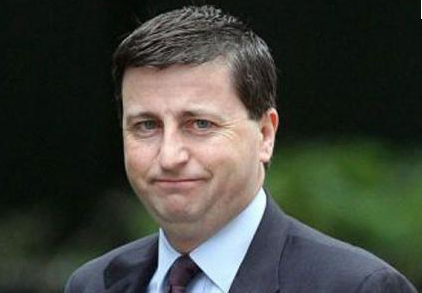
Douglas Alexander MP. Admits that "Labour Has Failed Scotland"

Finally, five months after May’s drubbing and several months into a leadership contest comparable to watching paint dry, there are some signs of life in Labour. Not Scottish Labour, mind you, but someone down in Victoria Street has read dispatches from the provinces and realised that such self-immolating nonsense can’t go on.

The result has been a new nippiness towards the SNP and the Scottish Government by Labour MPs in Scotland, initially led by the eternally dour Ian Davidson. The gulf of animosity that exists between their MPs, who had a good campaign in 2010, and the MSPs, who had a train wreck just twelve months later, hasn’t helped. But someone has twigged that internal sniping is bad politics, especially when your party’s competence is in question. Call it self-interest, but someone had to fire up a credible recovery plan and the leaderless rump of MSP seem incapable of doing so.

So, this week an ‘MSP-free’ ‘shadow cabinet’ of MPs has been announced and the first heavy hitter heads north to rake over the wreckage. Douglas Alexander must be seen as in Labour’s ‘A’ team and so personifies that UK Labour is taking Scotland seriously at long last. His language seems open and emollient: he wants to “listen, reflect and re-engage, to start a conversation”. He openly accepts that mistakes have been made: “Labour failed to draw a compelling vision in recent years. The error we made was in talking about the past, about Thatcher”. He is prepared to accept some poses struck by his Holyrood colleagues were ill-considered. “You can be right on principle but wrong on position; I was uncomfortable that we were at odds with the bulk of health professionals on minimum alcohol pricing and presented no alternate vision.”

Though this is the same Douglas Alexander who ran Labour’s 1999 campaign on the blunt principle of “engendering fear” about independence and touting the slogan “divorce is an expensive business”, that is no reason to ridicule his mission now. Not only was that 12 years ago but Scotland, Labour and the SNP are now all very different creatures. Of his visit, the BBC’s Brian Taylor shrewdly observes that this signals the end of Labour’s anachronistic (e.g. “now that the Tories are back”) style that defined their campaign from Clydebank. “They sounded like they were girning; they did not sound patriotic” Brian comments.

And that, according to Douglas, is one of the things that he wants to fix. He speaks of being a Scot, of being at home here, of seeing devolution as the best solution for Scotland and that what Labour needs to do is articulate a vision for people who feel like that. “Our challenge is to form a team worthy of the goverment of Scotland. Many people share Labour’s values but don’t go to branch meetings. We must encourage them to stand under our banner.”

A more damning indictment of how shallow Scottish Labour’s gene pool has grown could scarcely be made. Reasonable as Douglas sounds and sensible as his position is, that goes to the heart of his problem and of his colleagues on both sides of the border. Although simply another region of the UK Labour party, Scottish Labour was once such a mighty beast it ran its own affairs and campaigns. The membership was broad and underpinned by social clubs across the Central Belt.

But the events of the last 12 years have brought it to a sorry state. Those foot-soldiers left active in Scotland are older, thin on the ground and demotivated by an electoral cuffing. Those elected and their payroll are decimated and many of the more promising banished to jobs furth of politics. That London has to take the woeful remnants of the MSPs in hand speaks volumes for their lack of capacity, let alone ability, to change.

And, if Douglas had listened to any council chamber or Holyrood debate recently, he might realise how long a march his Scottish colleagues will need to undertake to ‘get’ the very sensible salvation that he has come north to preach.

Because, if he fails, then Labour ‘strategists’ who thought up their “Tories Are Back” campaign will find plenty time to discuss the errors of their political ways with the equally ‘steady-as-she-goes’ Scottish Tories on the same scrapheap of political history.

Posted in Politics | Leave a comment

Daft Question

Even the Guardian has recently highlighted the debate here in Scotland whether we should be teaching Scottish culture in schools. For me, this is the ultimate daft question. My reasons are not political, nor simply because it is hard to find a comparable country where the national culture is not part of the school curriculum. My reason (those still suffering from the Scottish cringe should stop reading now) is that we’re good, and not just historically good. But, as a nation, do we know that?

The Enlightenment put Scotland on the cultural map. And, whether in contemporary drama, art, literature, music, etc., Scotland can still hold its own. Indeed, since Kelman, the crime novelists, a clutch of poets, McMillan, etc. came on the scene in the nineties, any growing political awareness has been outmatched by a cultural one.

But, even all of that does not explain why I am such a passionate advocate of teaching Scottish culture; my reason is because of all that I missed out on in my life because my sixties schooling offered none. Now, I had a fine education in North Berwick and Edinburgh but my first inkling that it lacked, big-style, came when I signed up for a Philosophy class at the Hume Tower (I read Physics but there was this girl, see…) and was confronted by Hume himself. I had never heard of him.

Then I fell over Prebble’s Glencoe in Thin’s bookshop and was asked to leave or buy it. I still have that tattered copy forty years later. Stumbling across roofless Cracaig village on Mull was accompanied by reading his Clearances as I set about discovering my own country. I discovered Sibelius but could not explain why I liked him so until I came across MacDiarmid’s lines in Goodbye Twilight that, from our Highlands and Islands:

“what a symphony should come, more ghastly and appalling  than Sibelius’ gaunt, el-greco-emaciated, ecstatic Fourth!”

Celebrating my own culture spurred me to explore others’: the lyrical humanity of Under Milk Wood; Stoppard’s penetrating plays; the profundity of Rilke’s Duino Elegies; the disturbing images of Bosch. It also led me back to epiphany on the depth of my own culture—that Vettriano and Bellany were preceded by the Colourists, that Gray’s epic Lanark had roots in A Scots Quair, that Morgan’s insightful humour reached back as far as The Bruce.

I’m as dismayed as most Scots that we were sent home from New Zealand with not one try on our scorecard and that our Euro 2012 future now hangs by a thread with a dirty great Spanish machete swinging towards it. But why (with the exception of mould-breaking Andy Murray) do we invest so much wild enthusiasm in sports, only to be dashed again and again to wallow in “aw, we wiz shite” self-flagellation that seems to have become universal since 1979?

Though I have little time for the kailyard tat of the Royal Mile or the “90-minute patriots” that Sillars derided in 1993, why do we, as a country, fixate on sports when our culture is (at least at present) so much more world-class? All our high schools have sports pitches; every town has junior soccer. But how many high schools teach Scottish culture beyond Tam o’ Shanter? How many evening art classes preach Peploe’s passionate or Vettriano’s precise styles?

Forget politics and the sterile rammy about ‘seperatism’. I’ll take Burns’ best over his contemporary Wordsworth’s because he was more insightful, while remaining memorable to this day. Carol Ann Duffy is an entirely fitting successor to the towering Ted Hughes as poet laureate. But where is any of this in our education system? If Scots were to devote half the passion to their culture that they devote to their sports, then their self-esteem would be such that it would probably overflow into the sports arena as well. But the difference would be a quiet confidence, rather than the brittle hope that runs through much of our presence on the international stage.

Scots culture is alive, well and pure dead brilliant; time we all learned it.


Posted in Community, Education | Leave a comment

Getting Above the Law

Unluckily, the day scheduled by the local Friends of the Law & Glen (FLAG) for me to give an informal history walk up Berwick Law was so resolutely driech that the summit, though only at 200m, was firmly in the clouds. Undaunted, we set off and followed the usual ascent, curving round the back above the disused quarry and stopped there to discuss the iron age Gododdin settlement found but never fully excavated there.

Available history of the Law itself is thin but I had thought that its isolation makes it a unique vantage point to discuss the history of East Lothian, the Forth islands and the south Fife shore all laid out around you. What was fascinating to me was that, as each stop we made, someone had a piece of information to add to the jigsaw: a stone circle new to me; the link between the small water trap below the west shoulder and the WWI observation post near the summit; that local volcanoes were active 200m years before those on Mull and Skye.

Going no farther than the halfway point of the bench on the west shoulder, getting wetter by the minute and occasionally losing sight of Fife or even the town as clouds swept by, it was still enlightening to look at the landscape through the eyes of the past. This blog speculated earlier that this area might once have been an island and, as such, well placed to develop as a key crossroads for eastern Britain. That idea, its ample size and its key location all become clearer from the Law.

You can see both Gododdin capitals at Traprain and Castle Rock. You can witness how much shorter it is from Earlsferry to Yellowcraig and how a hillfort hidden in Eilbotle (OE = “old settlement”) Wood make plausible an early pilgrim ferry leaving from there. It’s obvious (pre-Forth Bridge) why a railway to Anstruther, a ferry to NB and a line on southwards looked like a winner in the 1840’s. I’m just relieved the final link of an embankment round the West Bay to NB harbour was never built; it would have ruined the prettiest town beach in Scotland.

The vantage point makes it clear why, for a thousand years, the invasion route led through here and therefore more battles fought than in any other county. You can’t quite see Ormiston where Cockburn revolutionised agriculture and gave us the open field patterns we see as natural today but you can see the great sweep of the Lothian and Fife coalfield that powered half of Scotland’s major contribution to the industrial revolution.

Even in the little town of North Berwick right at our feet, you can see the early harbour, the tight confines of the medieval town, the grandiose Victorian mansions stretching to the west, balanced by a later ‘cooncil scheme’ to the east and then more recent clumps of commuter homes tacked on around the edges. Coming up here above the normal perspective puts a distance between you and the everyday but, in compensation, gives an overview of not just the place but its history.

For putting things into perspective—even on a driech day—it’s hard to whack.

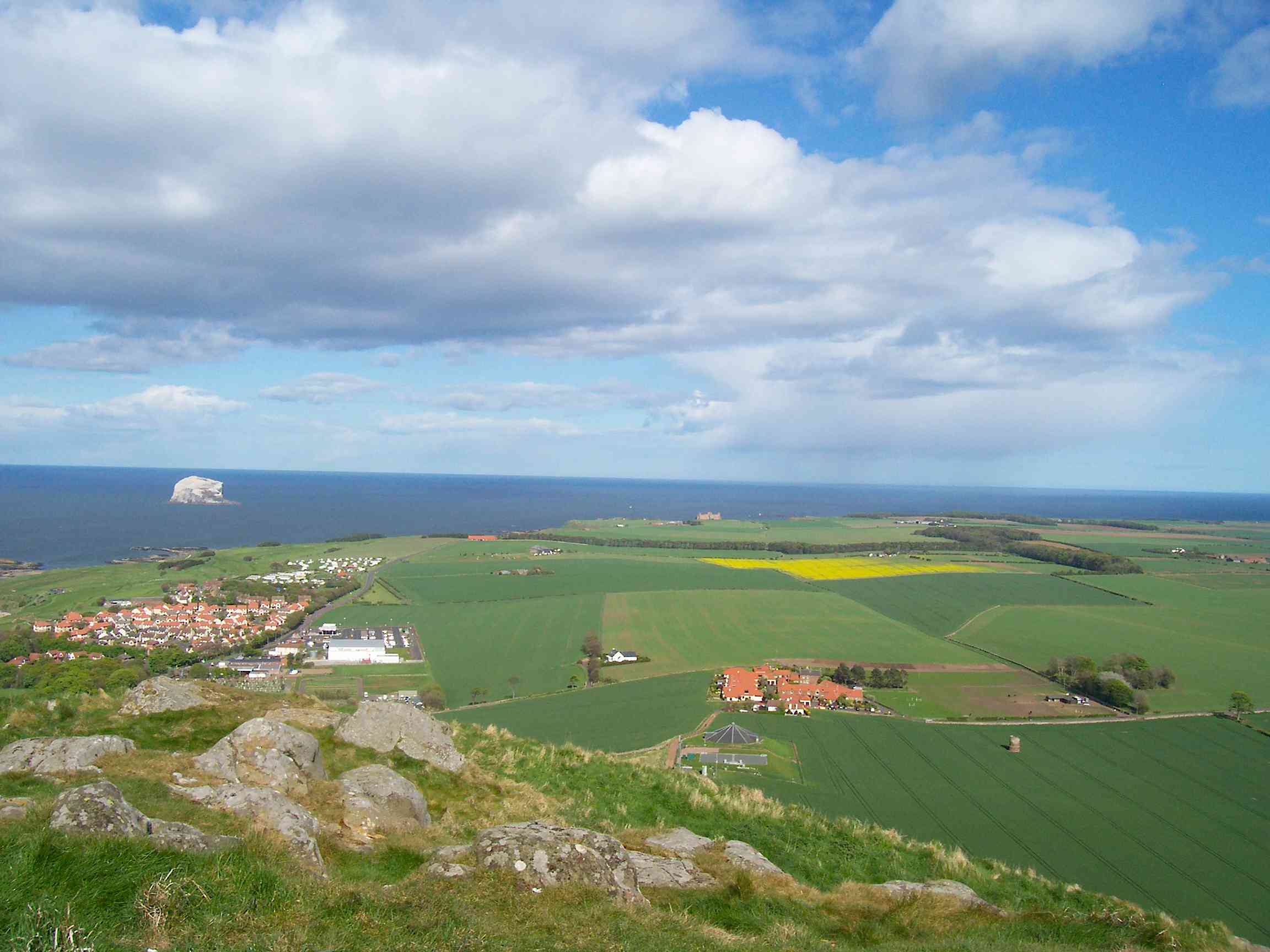
View eastward of Bass Rock & Tantallon Castle on a sunnier day

Posted in Community, Environment | Leave a comment

That’s All, Foulkes

A quirky characteristic of Labour in Scotland is that, while they field formidable and subtle politicians, such abilities traditionally, with rare exception, head South. Once there, such contributions as they do seek to make back here in Scotland are drowned out by a combination of sheer distance, local media gone native and the balance of their party still here, now in their fifth year of hissy-fit strop at not being in charge.

The result is stultifying: the more creative pro-actively disagree with all comers; the more pedestrian simply wait for the SNP to act, then complain about it. Edifying, it is not. What turns off those few Scots who do follow the Holyrood hothouse are their MSP’s predictable, one-dimensional postures: Michael McMahon finds SNP duplicity lurking in everything but (including?) the cafeteria menu; Jackie Baillie finds faults with the NHS, none of which she noticed pre-2007; Johann Lamont sticks to women’s issues to finagle the First Minister into agreeing; Iain Gray spends all his time jabbing at SNP policies in unconscious parody of Monty Python’s argument clinic.

The uncoordinated opportunism leads to some pretty bizarre contradictions so it’s as well the Scottish media still gives Labour an easy ride for old times’ sake. How can Labour credibly call for a VAT cut when they declined to vote against Osborne’s increase in the first place? Labour-run councils refused to join all other parties in CoSLA’s acceptance of Swinney’s financial settlement, yet offered no alternative. Their leadership contest is so irrelevant even Milliband forgot who’s running in it.

So opposition in Scotland falls to the exiles, especially the MPs. Ian Davidson gets called to speak most but he is so much a product of the Glasgow nomenklatura that his obvious venom and frustration get in the way of him saying anything memorable. Jim Murphy, after a period of studied reasonableness while he was Scottish Secretary of State, has reverted to type and the ‘big beasts’ Brown and Darling have gone to ground.

Which leaves—although this surely cannot be from any deliberate decision by Labour—Lord George Foulkes of Cumnock. It’s hard to believe that Labour chose him to lead their charge but, given what’s on offer elsewhere, it’s more likely that he chose himself. Anyone who has followed his career as MP, MSP, Hearts Director and now peer will not find this surprising. So venal is his hatred of the SNP and all it stands for that he swings and misses more often than he connects; this would be funny, were the matter not so serious.

The fact that he lives in a glass house himself has not prevented him from throwing stones at the SNP Government and the Head of the British Army on the topic of expenses claimed. (In 2008, Foulkes was criticised for his expenses claims, which included around £45,000 over a period of two years for overnight subsistence to stay in a flat he had inherited. Between April 2007 and March 2008, Foulkes claimed £54,527 in expenses from the House of Lords). It is likely his difficulties have been caused more by arrogance than dishonesty but public perception conflates the two.

His latest apoplexy is that a senior mandarin was supposedly caught promoting the SNP policy, viz “advising the SNP government on the tactics and policy in relation to the break-up of the United Kingdom. Surely it is the responsibility of Sir Gus O’Donnell (UK’s most senior civil servant) to say to Sir Peter Housden that he should be advising the SNP only on devolved areas and not on matters that are reserved to this parliament, particularly those that are politically sensitive.” In this, he received much supportive harrumphing from Lord Forsyth of Drumlean and his ilk.

That’s the same Forsyth who, as Major’s Secretary of State for Scotland did everything in his power to scupper the Convention for a Scottish Assembly and any semblance of the Scottish Parliament. And it was Foulkes’ party (although he was not himself elected an MP until 1979) under Wilson and Callaghan that instructed mandarins to repress the importance of North Sea oil and subvert all income to the UK so that any “It’s Our Oil” campaign would get short shrift. There is no doubt that George saw all those actions as legitimate.

So why should he be so distressed at Scottish mandarins going about our government’s business? All that the Scottish Government has done is ask its civil servants to implement their manifesto. There is nothing else—other than in George’s mind—that limits what they may or may not do. Nonetheless, he nagged all three oppositon leaders to write to complain. In fact, The head of the UK’s civil service, Sir Gus O’Donnell, wrote back to Scottish opposition party leaders saying “recent comments made by the Permanent Secretary, Sir Peter Housden, did not break the Civil Service code.” In a joint letter to the three MSPs, O’Donnell dismissed the accusation, saying that “the job of civil servants is to support the elected government of the day.”

Like his pedestrian Scottish colleagues, Lord Foulkes exhibits stress reactions when faced with new political initiatives, whether here in or furth of Scotland. The result is Foulkes’ attacks are barely distinguishable from local ill-conceived, amateurishly inept efforts. His compulsion to rubbish anything the SNP does comes across as a kind of political Tourette Syndrome, especially to the great uncommitted majority. It is ironic that he thereby does far more damage to Westminster than his phonetic namesake could ever have managed with all the gunpowder in the world.

Posted in Politics | Leave a comment

Stay Hungry; Stay Foolish

The motto was one by which Steve Jobs lived all his life. He may have been fortunate to grow up in Silicon Valley but he and his buddy Steve Wozniak (‘Woz’) were not only creative enough to be part of the California counter-culture of the mid-1970s but smart enough to be aware of the opportunities unfolding around them as technology went into overdrive.

It was Woz who was the ‘Phone Phreak’; he developed hand-held devices to control sound frequencies used by AT&T and Pac Bell to run the entire local phone system. They made international phone calls for fun. But it was Jobs who saw the potential in Woz’s prototype Apple I at the Homebrew Computer Club. He started in business as unconventionally as he continued, financing the first 50 by persuading Cramer Electronics to sell them all the components on 30-day terms and working 24/7 to deliver in time. Not one share was sold to raise capital. That happened when they went public in 1980 on the back of the much more successful Apple II—the most successful Initial Public Offering since Ford Motors.

The whole area was abuzz at the time: Intel in Santa Clara, AMD in Sunnyvale, HP in Palo Alto and many other spin-offs originated from Xerox Corp’s Palo Alto Research Centre (PARC), perhaps the most innovative and influential technology centre in the world. It invented what made Apple: the intuitive interface in the form of a high-resolution display screen and ‘mouse’, as well as a keyboard. When Jobs saw this, he formed an entirely new team to develop a commercialised version.

And so, the Macintosh was born: a compact, luggable single unit when the IBM PC that was leading the market was a drawer-sized clunker. Its launch by TV ad during the 1984 Superbowl interval is still stunningly innovative—highly effective in reaching non-techies and unheard-of for a technical company. Jobs insisted that Macs talked to each other and through this AppleTalk, a whole group could use a silent, amazingly flexible laser printer while the DOS world buzzed with character-only dot-matrix.

Because no-one was ever fired for buying ‘Big Blue’ and PC’s were unknown territory, IBM dominated the business market. When various clone manufacturers dropped the prices and Microsoft finally worked out how to mimic Apple’s graphic-based intuitive interface with Windows 3.0 in 1990, Apple’s market share became squeezed into the creative sector. Graphic designers and architects loved Macs but most computers were used by accountants and secretaries who needed a spreadsheet, a word processor and little else. Although Apple produced successively better computers, they were derivative. Jobs became frustrated and was squeezed out.

He went on to found NeXt, which reiterated his fixation with style and presentation but could not be made competitive enough, nor penetrate a market dominated by standards and the inertia associated with them. His stint at Pixar created opportunities in film animation that are still being explored today. But it was when NeXt sold its innovative, UNIX-based operating system to Apple in 1996 that the marriage made in heaven was consummated.

Because the now-widely experienced Jobs not only came with the package but, within a year was Apple CEO. Almost immediately, he had a deal to have Microsoft’s industry-standard Office released on the new OS. Innovative, attractive computers like the single-unit iMac and the slim, lightweight MacBook grew the market and a struggling Apple was back in the game. Under Jobs’ direction, there followed a flurry of prescient products, backed by a visionary commitment to what the web could do to promote and support products and starting with the iPod. Complaints flowed that Jobs’ insistence on following a vision was insufferable. But nothing succeeds like success.

But 2007’s introduction of the iPhone, followed closely by the iPad, presented coherent, attractive technical wizardry that appealed to the non-techie. This, as much as anything, has been a the root of Apple’s spectacular growth since 2005. Obviously, thousands of dedicated professionals have made this happen. But the vision of what was required and the drive to achieve it came from the brain of one man: Steve Jobs.

For over 35 years he kept faith with his beliefs, had the courage to follow them, the audacity to be visionary, the articulation to persuade others to follow him and the wit to see when opportunity to pursue realisation was at hand. Not a bad epitaph for a techie. Would that more politicians deserved something similar.

Posted in Commerce | Tagged | Leave a comment