Fudge Over Troubled Waters?

Had to laugh last night when unsuccessful Labour Leader candidate’s Twitter alter ego Tam Horris commented that he was off to drown his sorrows but wasn’t the demented engineering officer down in the bowels of Das Boot also called Johann? It was classic Harris and one of the reasons that I, for one, am disappointed that what Tom had to offer was given such short percentage shrift by all three elements of the party. Because, however much they may not want to hear it, Tom was the iconoclast, the voice of reason, the shrewd observer with an acid tongue who has had the courage not just to question the emperor’s clothing, but to do it in an engaging and insightful way.

Since results were announced 24 hours ago, many messages of praise—from all political quarters—have rolled in for Johann Lamont’s success and I quibble with none of them. She has a dozen years’ experience, a reputation as a doughty fighter and would not have reached Deputy (let alone Leader) in any modern political party without ability. But, if I were to associate myself with any of the commentary published so far, it would be with Gerry Hassan’s blog on a Seven-Step Recovery Plan for Labour. She ignores it not at her but at Labour’s peril.

Because Labour have shown questionable political judgement for years now. It started with Jack McConnell but found its nadir just two days before their May catastrophe when Iain Gray delivered his most personal attack on Alex Salmond by arguing his handling of the banking crisis and release of the Lockerbie bomber exposed “fundamental flaws” in the SNP leader’s character and judgement. Within 36 hours, when interviewed by STV, he was admitting that Labour itself had to “address some fundamental questions about the structures and organisation of Labour in Scotland.”

Unfortunately, in a further six months of his tenure, it didn’t. As his opponent in the May election, I can attest to Iain being a decent guy who, when not posturing in parliament, can listen when required and make sense when speaking. He’ll make a decent back-bench MSP (and I certainly hope so because he’ll be mine). He had a hard time keeping up appearances at the count when it looked like he might lose. And you only have to look at his record as a minister—it was on his watch at Transport that the whole trams fiasco was born—let alone his years as Leader to see a man out of his depth. Margaret Curran’s ringing endorsement sounds all the more hollow the more you know of Iain’s career.

"It takes a worried man to sing a worried song" Iain Gray Bricking It at the East Lothian Count, May 2011

The key question for Ms Lamont is, therefore: how can SHE make the real difference Labour so urgently needs? The runes are not good. While I do endorse Gerry Hassan’s hopeful suggestions, I also look to Lalland Peatworrier’s analysis of the vote share (but not actual votes) as signifying the fractiousness within her party. Given her reliance on the party establishment, where will she find the courage and resolution necessary?

One week before the votes were counted, Tom Harris, effectively ruling himself out as a possible winner, said the party was “in deep trouble” but was not prepared to make the radical changes required to turn around its fortunes in Scotland. “We need to think outside the box. There is no indication that the party is prepared to do that yet and I don’t know why.” Tom’s a loyal party man with much hard work, including pioneering social media, to his credit. That his candidacy received thin support speaks volumes.

And what of Johann herself? “I am honoured to have been elected the first Leader of the Scottish Labour Party. Thank you to everyone for their support and kind messages” and congratulations to her new deputy are her only tweets. Her blogspot has nothing since a speech dated October 27th. Scottish Labour’s website carries her statement:

“While I am delighted and honoured to be elected leader of Scottish Labour Party, I believe the real work starts now. In May, we fell short of people’s expectations and they turned away from us, unable to find a reason to give us their support. If we are to earn the right to serve the country, our challenge is to listen, to learn lessons and to demonstrate that we can change. I am confident that once again people will recognise that Scottish Labour is the party which understands their lives, can deliver their hopes and will stand up for Scotland.”

This could have been written after any Scottish election over the last decade. It remains to be seen whether she will be just another name in Labour’s decline in Scotland or whether she can develop ideas and finally make a difference. For the sake of Scotland, I hope she does. But, just as the road to Hell is paved with good intentions, the road to political oblivion is paved with pious but substance-free statements like her one above.
Posted in Politics | Leave a comment

Dreich is Good

The redoubtable Margo MacDonald MSP this week called on the Scottish government to describe more closely how life would be for the Scots if they were independent.

“It will take at least a year to embed any new concepts we would inevitably see if, for example, pensions were to be run from Edinburgh not London,” she said. “People need to know not just about defence, but about the euro. They need to know who’s going to be paying their pensions and how they’re going to be paid.”

Fair comment. But wouldn’t it also be good to have an idea of some of the more beneficial things that might happen if all things were not all run from a Westminster perspective. This blog is being written ‘abroad’ (actually in Norfolk). The local Eastern Daily Press is full of how serious the drought is in East Anglia and indeed the pond in the local village dried up this year and farmers are anguishing about the effect on their crops of another year when 30% of the rain simply did not show. The EDP wants to scrap the HS2 rail project to fix this urgent problem.

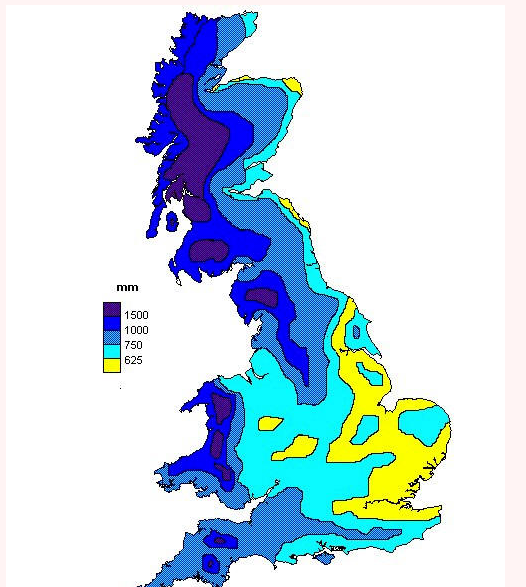
I need not tell my fellow Scots that rain is one of Scotland’s bounties. But East Anglia is blessed with under 650mm rain on average and this year has seen nothing like. If, as is likely, that this is also caught up in the huge drift of climate we are experiencing, does it take a rocket scientist to see that a wetter Scotland needs to do business with a drier England?

It may, at some point, make sense to build a pipeline. But that scale of infrastructure needs heavy belief (as well as investment) that it is for the long term and, if at all possible, profitable into the bargain. That will not happen soon and, even if England were to build their own from the wet Lake District, the distances and altitudes involved make for formidable engineering headaches. But, how could we get the water shifted some other way? It’s not as if there is a shortage of tankers in Scottish waters nor of crew who know how to handle them. Is there perhaps a business here and one that an independent Scotland could profit from?

Annual Precipitation in Britain, given in mm

An American company S2C Global Systems Inc is already investigating using tankers to transport fresh water from Alaska to India and the Arabian Gulf. The Grauniad reported on this a year ago but since then the news has been scant. Because the distance involved requires serious economies of scale, tankers of 50m gallons (around 200,000 tons deadweight). But that’s to shift water a quarter way round the globe from Juneau to Mumbai or Dubai.

What we are discussing is under 300 nautical miles between Perth or Aberdeen (both well developed ports, capable of taking ships up to 5,000 tons deadweight, sitting at the mouths of two of Scotland’s biggest rivers) and East Anglia. Port facilities would consist of more than simply hanging a hose over the side but should not need major investment in infrastructure. Small tankers, such as could operate out of Perth, could also operate into King’s Lynn or Yarmouth as delivery ports. They cost around £4,000 a day to operate and could make a round trip from Scotland to East Anglia in around 4 days, delivering 2,000 tonnes of fresh water at a cost around £20,000 or about £8 per tonne.

East Anglia covers around 10,000 sq km. With 30% of its 650mm of rain missing, that’s a shortfall of some 2m cu. m. (= tonnes) of water—or roughly 1,000 tanker trips over a year.  Working flat out, 12 small tankers would be able to sustain that.

But would all be worth it? Could it make economic sense?

Norfolk boasts some of the most productive agricultural land in Europe, with sugar beet yielding 140 tonnes per acre and that crop fetching £26 per tonne. Water shortage can drastically reduce that lucrative £3,640 per acre gross income, so £10 or £12 per tonne of water does not seem a high price to pay for sustaining such riches. So as you stand at your window drawing the blinds at 3:30 pm and the stair rods are fair stottin’ off the pavement, just see them as £20m in glittering coins of the realm we could be lifting from English pockets—soon.

And them even being grateful to us for it.

Posted in Environment | Leave a comment

We’ve Got the Power to Win

As regular readers should know, while this blog maintains a pro-community, pro-independence and internationalist outlook, we hold no monopoly on the truth and are happy to give credit elsewhere for ideas that would advance Scotland and its myriad of communities. For that reason, we have quoted many sources, including the staunchly unionist Hootsmon and Torygraph. But looking back over the year, it is obvious that, while the occasional mention has been made of the Record, one glaring omission has been of the far left and its mouthpieces like the Socialist Worker. But no more.

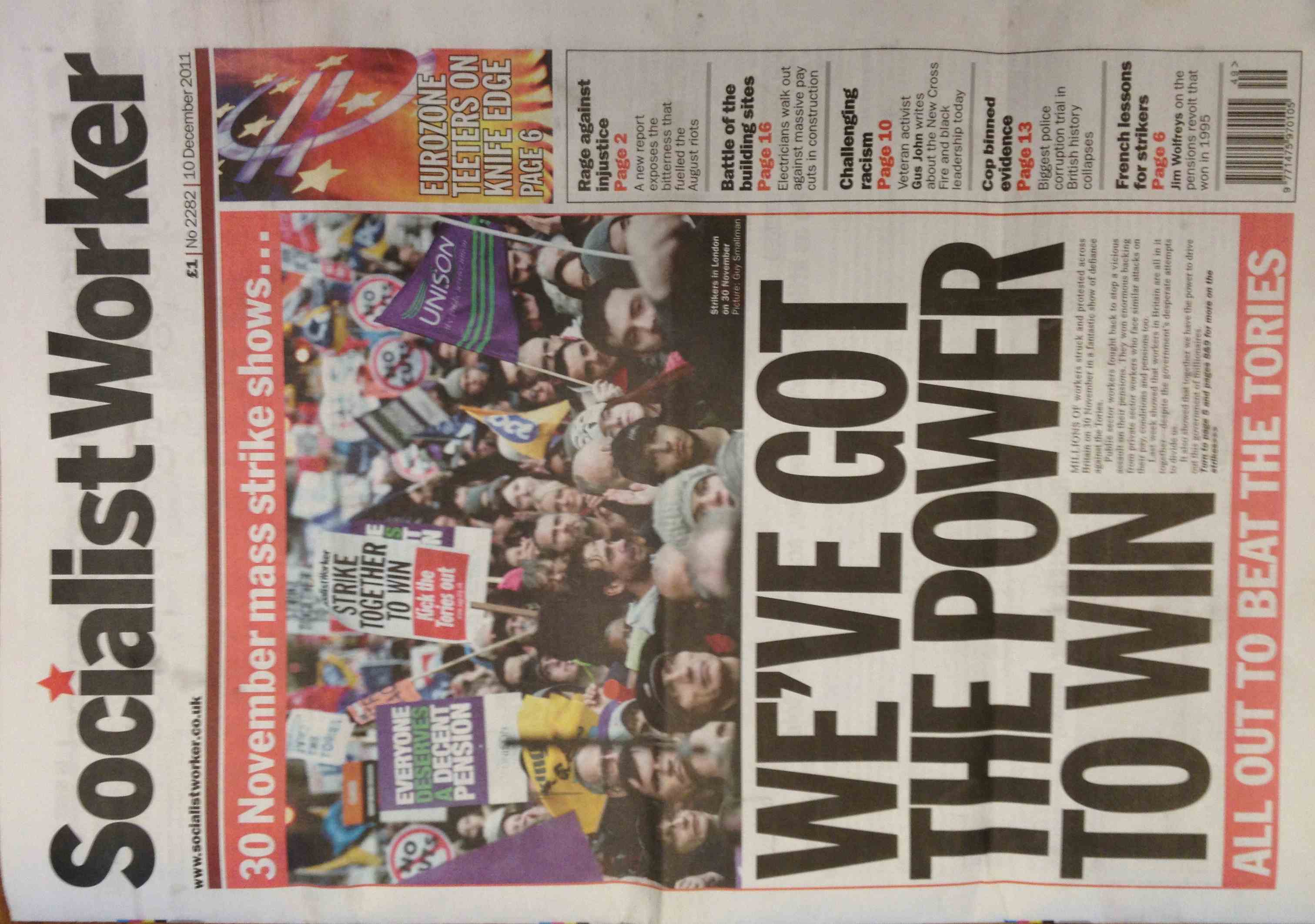
The title of this piece is the headline from the December 10th edition that celebrates the November 30th strike during which “public sector workers fought back to stop a vicious assault on their pensions”. Fair enough. Seen from a worker’s perspective, working longer and paying more to receive less in pension is hardly a sweet deal. The enforced austerity that the UK government claim makes it necessary is hardly eased by Chancellor Osborne realising he needs to borrow an extra £60bn, nor by Cameron “going nuclear” in Europe and wielding his veto in an “us-against-the-world” showdown.

Socialism is a great idea. If it didn’t have to rely on human beings to operate it, it might be seen as the highest of civilising ideals. Having seen its actual operation in Russia, Cuba, Italy, Greece, (I discount the Stalinist betrayal throughout Comecon countries) Mozambique, Vietnam and now China, its qualifications as an ideal look decidedly tarnished. So, how does the Socialist Worker see it working in Scotland/UK? How will the lot of the downtrodden masses be bettered? I have no quibble with there being downtrodden masses when social disparities are as wide as they are and Fred the Shred and his ilk stuff their pockets before being chauffeured away unbowed and unpunished.

Front Page of the Socialist Worker, December 10th 2011

Examining the SW’s 16 pages you are struck by a tone of belligerence as an answer to each and every problem. If the paper were renamed the Striker’s Weekly, it would be a more accurate description of its content. There is nothing wrong with ‘streetfighting’ journalism and this blog has long been a fan of Hunter S. Thompson’s ‘gonzo’ variant. But when every page is stuffed with inflammatory prose (“riots”, “scam”, “bias” “chaos” and “sleaze” are in the article heads on a single page) and the solution for every industrial wrong is a strike—”Shut the Sites to Beat the Bosses” takes up one whole page and threatens many of the remaining construction jobs that have not already been lost to the recession—then you wonder where we would all be if everyone followed their lead.

Words like “lackey” and “scab” are emotive and should be used with care so that their (important) meanings are not diluted. A few decades ago “Capitalist lackeys and all their running dogs” was used by China so frequently that it became joke shorthand for blinkered communism. Unions have a proud history; they brought humane conditions and fair rewards to the great majority of workers that once had no-one speaking for them. But, with the laudable exception of page 10’s article Challenging Racism, the rest of the rag would lead us all back into the blind alley of class war and decline that was the 1970’s. Can’t speak for others, but I’m not up for another Thatcher Mark II cold bath to wake us from the economic dwam we got ourselves into then.

It would be simplistic to blame SW and its attitudes for three decades of decline in union membership. And the ‘fat cat’ scandals may, through the ‘Occupy’ movements and unions’ participation in them, motivate a revival in memberships. But the relative prosperity of the nineties and noughties was driven by workers, bosses and even the public sector acting as if they were on the same team, finding ways to get things done, rather than ways to stop things.

Everyone benefitted, even those with no job because there was more money available to provide them with support. It may not be possible everywhere but in East Lothian, the council has borrowed heavily, kept up major infrastructure investment in badly needed affordable housing and achieved staff reductions entirely by natural wastage. This was achieved by unions working in harmony with officials and administration. While not perfect, relations with unions are better than when Labour ran the council in much easier times.

If this issue of the SW’s date was changed to Dec 10th 1977 (i.e. the Winter of Discontent) its stories and attitudes would fit right in. It’s a free country and they can bang the ghost of the class war drum if they like. But, in Scotland, the comprehensive collapse of once-ebullient socialism in the shape of a fractious and unsuccessful SSP vs a one-man-(in-jail)-band and equally unsuccessful Solidarity (Truth in Advertising—where are you when we need you?) should be warning enough to them. However tough the going now, no-one in their right mind who lived through the seventies wants to re-live them.

Reading this issue, I can’t get out of my mind the image of Stan (John Cleese), convening a meeting of the PFJ (People’s Front of Judea) in The Life of Brian: “Bruvvers, let us not be down-‘earted. One total disaster is just the beginning!”


Posted in Politics | Leave a comment

High Noon for High Streets

Quality Street, North Berwick, 4pm Dec. 12th 2011

Just got back in from a bout of Christmas shopping along North Berwick High Street where, despite a biting and doggedly cold West wind, the shops are ablaze, the Xmas lights colourful, with bobble hats and buggies jostling along the narrow pavements in a sure sign of a healthy season for the shopkeepers.

But, according to a recent retail report by Mary Portas (the “Queen of Shops” in a recent TV series), all is not well and her report is not shy about saying it:

“I believe that our high streets have reached a crisis point. Unless urgent action is taken, much of Britain will lose, irretrievably, something that is fundamental to our society, and which has real social and economic worth to our communities. With town-centre vacancy rates doubling over the past two years and total consumer spend away from our high streets now over 50 per cent, the need to take action has never been clearer”

She predicts that high streets could disappear forever; pretty much everyone agrees with her. From the Mirror to the Torygraph, the story has been picked up as this tale of woe goes the media rounds accompanied by much hand-wringing. Mary is not all gloom; she has pointed out what she regards as examples of good practice like Barnsley market and laying out her own vision for high streets.

It is fair to say that the signs are not good for the classic high street as the principal shopping destination for everything from detergent to deep freezes. The rise of car ownership, of out-of-town malls, of hypermarkets and now of internet retail has reshaped the way goods are bought and sold and the return of the greengrocer and gents clothier should not be expected soon. The statistics in Mary’s report underscore this:

  • Highest vacancy rates: Dudley (29%), West Bromwich (28%), Hartlepool (27%) and Dewsbury (27%). These are mid-scale towns but even their size hasn’t helped
  • The lowest: Falmouth, Walthamstow, Clapham Junction and Cirencester (all 6.6%).
  • Foot-fall down 4.1% first week of December, compared to 2010.
  • High street like-for-like sales fell 1.6% in November compared to 2010.
  • Food sales up 1.5% but non-food items fell 2.1%.
  • Online, phone and mail-order sales up 8.6% in the same period.
  • Online sales now account for nearly 10% of total retail sales.

A survey conducted among Torygraph readers—not the most communitarian selection of people to ask—still came away with a resounding seven in ten using their high streets and keen on having them survive:

Importance of High Streets (source: Daily Telegraph, Dec 12th 2011)

So, the message is that, even though many people vote with their feet when it comes to shopping, the high street is still valued—as much for its pleasant, friendly surroundings as for its more subtle role of providing a community focus and social cohesion. So, other than today’s communal media wail in response to Mary’s report, what can be done?

Clearly, there is a critical mass of large ‘anchor’ shops when it comes to competing with the malls and hypermarkets. Stirling, Falkirk and Perth all provide good examples of how judicious redevelopment on an ambitious scale, with large shops, ample parking and  pleasant surroundings can keep the customers coming back. Examples of similar-sized towns that have failed to do so are legion, including Motherwell and Dunfermline.

But even smaller towns can compete, especially if they have some major factor going for them. St Andrews does well because of students and tourists; Cupar survives by being just far enough away from anywhere else—as do Biggar and Berwick, Alness and Kirkwall, Kelso and Kirkcudbright. Peebles makes a real effort to draw tourists and offer them unusual shops not found elsewhere, whereas Pitlochry gives itself over the the more blatant tourist draw that characterises the Royal Mile.

What we need to learn from smaller towns with robust high streets is how their offering has changed. People will go to Iceland for the month’s shop and the Gyle for new shoes and get their iPhone off the internet. But apart from the echoing soullessness of that, there are niches in which small high street retail can not only survive, but flourish. East Lothian Council is in the middle of its own analysis of what makes North Berwick shops flourish while Tranent and Dunbar—of comparable size and increasingly similar demographics—has shops that are struggling, despite investment.

The key factor is unusual offerings; look at Peebles or St Andrews or North Berwick and you find specialist shops with things hard to find in any chain. Then you need to have additional attractions that bring day trippers (not just tourists) for a browse or a wander. Add in several comfortable cafes and restaurants; a little historic architecture and/or places to picnic; perhaps a charity shop or three to hunt for bargains and you find that even some traditional-type shops—women’s shoes, delicatessens, quality butchers—can make a good fist of it too. It’s a convenient and quirky mixture that seems to work.

There is probably no formula and any high street within a few miles of a major retail park will have its work cut out to survive. But, the alternative of trying to form a sense of community without the everyday catalyst of a vibrant high street must make it in everyone’s interest to try The pride people of St Andrews show in their town is not matched by those in Dalgety Bay, even though there’s little to choose in demographics and affluence.

For me, we’re still learning how to build communities, not just houses; without a high street, that is so much more difficult.

Posted in Community | Leave a comment

How to Get Here from There

Hovercraft sets off from Portobello on its 12-minute trip to Fife during the 2007 trial

When Stagecoach ran a successful pilot fast hovercraft ferry service between Kirkcaldy and Portobello for two weeks in the summer of 2007, it was expected that a commercial version of the route would soon be open. Not only did such a ferry avoid the bottleneck of the Forth Bridge crossing but it also brought travelers close to Leith where many commuters now work and which is poorly served by public transport other than buses from the city centre.

An application by Stagecoach to run that route has been making slow progress through Edinburgh City Council planning for the last two years. An application by Stagecoach for a pedestrian ramp and waiting room in Portobello made in December 2009. received a recommendation for approval by officials but last week, after months of prevarication, the application was refused by councilors, citing “the visual impact of the ramp and associated traffic problems”.

And that’s the end of that? Well, not necessarily. The popularity of the two-week test was largely because of the relative ease with which people from Fife could reach some of the less accessible parts of Edinburgh. Besides a ramp and a waiting room, the southern terminal needs to offer good transport links to where people want to go. That applies to several points in East Lothian as well. These include:

  1. Fisherrow. Closest to Edinburgh, it has excellent bus links from the Edinburgh side of Musselburgh, as well as lying within 1km of the Newcraighall and Musselburgh ScotRail stations, the QMU campus and the start of the A1 dual carriageway to the South.
  2. Morrison’s Haven. Although less convenient to Edinburgh, the bus links from here are longer into town but this lies within 1km of the Wallyford station Park & Ride. More importantly, it has very little habitation to disturb and plenty of space to develop into a more extensive ferry port with improved road links direct to the A1 so that car traffic heading from Fife to England could be accommodated.
  3. Cockenzie. This would be dependent on removal of the existing power station. While least convenient for commuters to Edinburgh (bus ride longer than Morrison’s Haven & 1 km to Prestonpans station) but, if a Ro-Ro ferry port were part of redevelopment of the former power station site, this could provide a superior base for a Zeebrugge and other cross-North-Sea services, avoiding the congested Queensferry Narrows and shaving at least 1/2hr off any crossing. The Fife ferry would act as a feeder and this point is the most convenient for vehicles heading South (1/2km to the Bankton junction on the A1

Whichever of the three points turns out to be the most appropriate for the long term, it seems very short-sighted of Edinburgh, which imports a good tenth of its workers from Fife every day, to condemn them to another decade of gridlock before another Forth crossing is functional.

Why Edinburgh should choose to be so cavalier about access by their work force is for them to ponder. But if they don’t want the advantage of developing cross-Forth ferry traffic, perhaps East Lothian, which supplies another tenth of its work force, could provide the service. At the same time, that would shorten the distance between the tourist areas of both East Lothian and Fife by half and might catalyse business.

After all, the people who visit St Andrews and Muirfield have much in common, as do those who visit the Isle of May or Bass Rock. Getting tourists easily between those two places could be just as important as getting the Fife commuters to their work and—in the long term—even more lucrative.

Posted in Uncategorized | Leave a comment

Before There WAS a Border

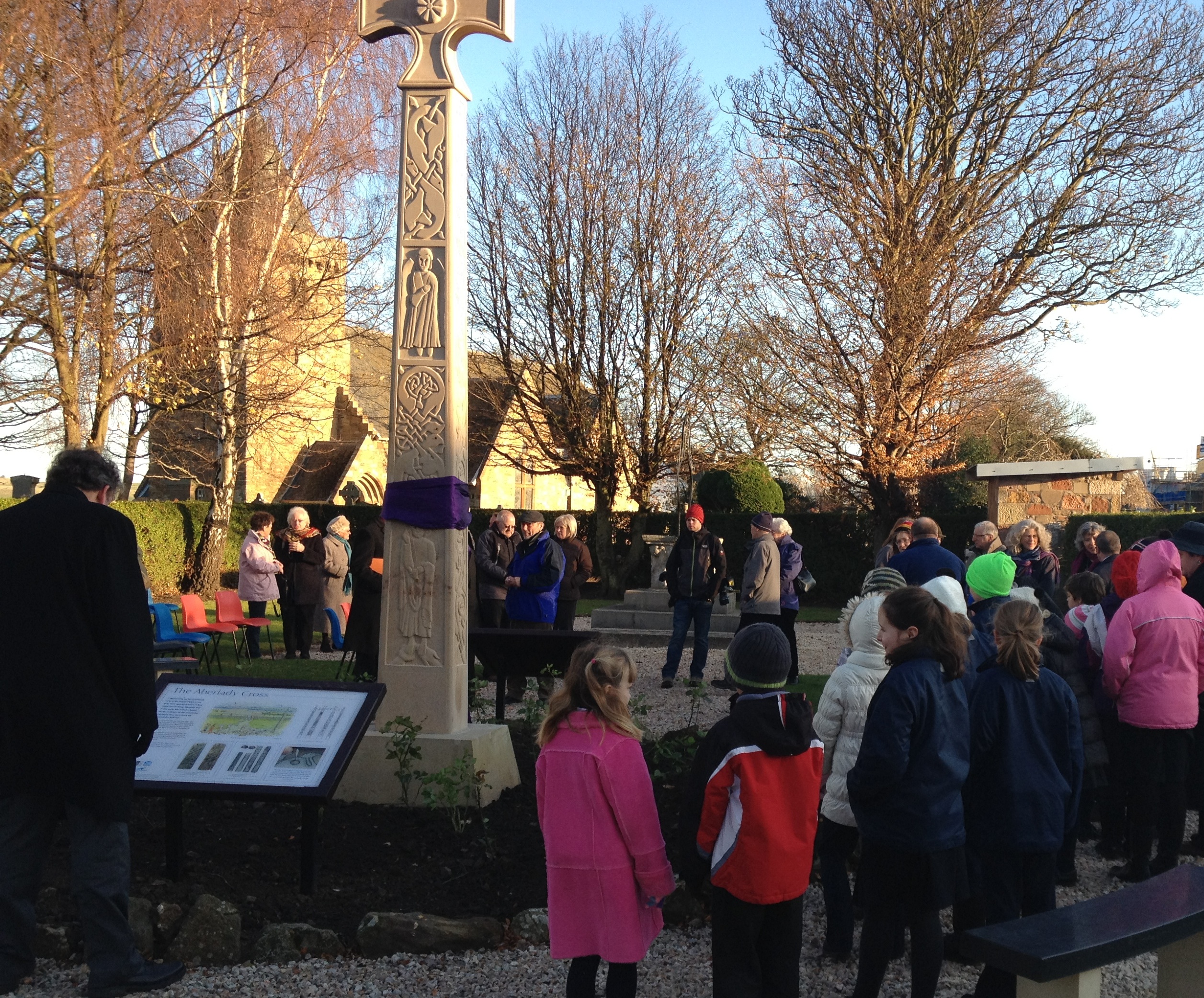
Yesterday, I had the privilege of being invited along to Aberlady Conservation Society’s unveiling of a beautifully sculpted  reproduction Northumbrian cross. A good turnout, despite a bitingly cold December wind saw Historic Scotland, a partner in the careful recreation of this beautiful piece of history, unveil it to assembled locals, schoolchildren and sundry dignitaries.

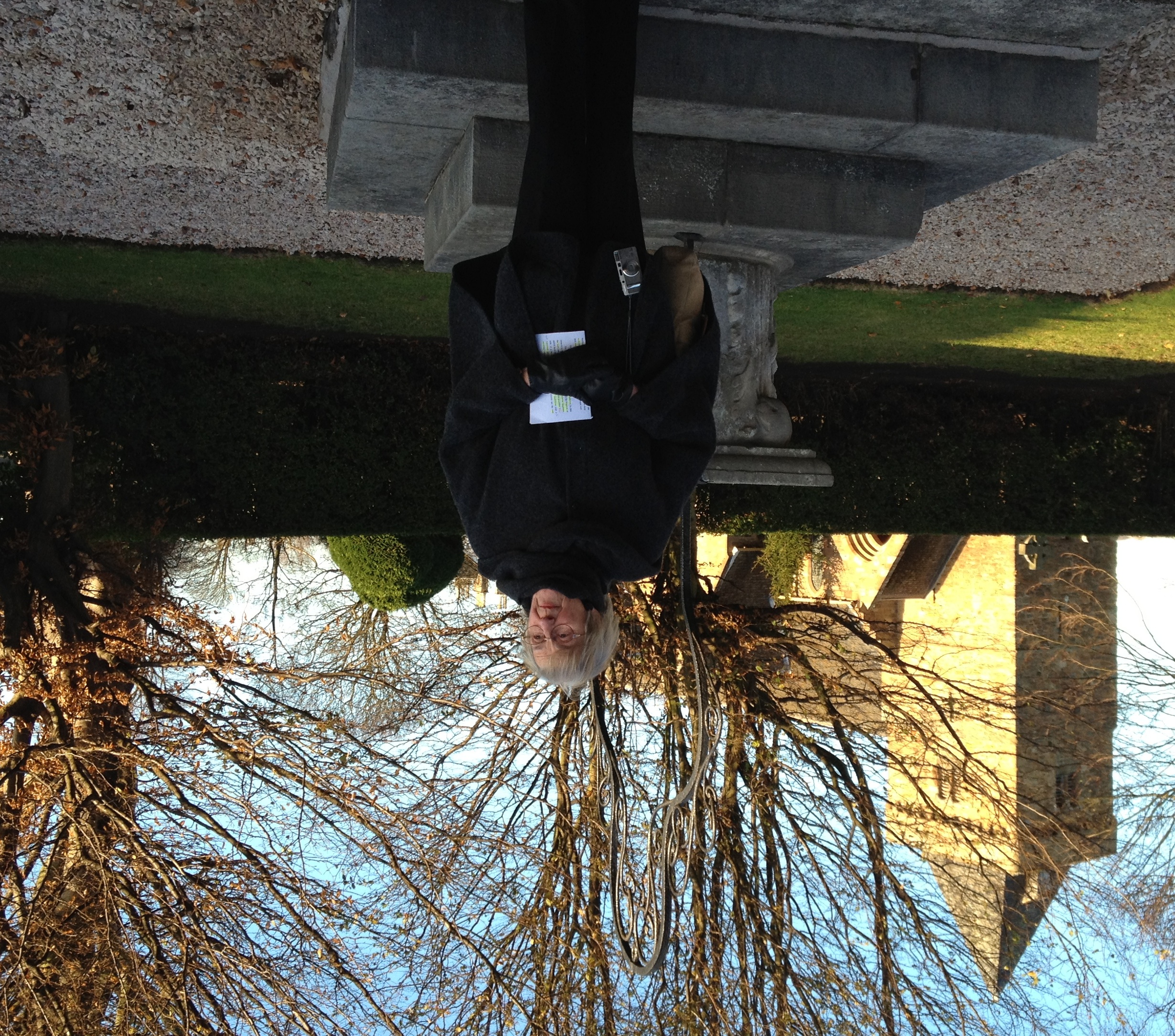
Dr Barbara Crawford MBE, M.A., Ph.d., F.R.S.E., F.S.A. Scot., Member of the Norwegian Academy, Honorary Reader in History at the University of St. Andrews and specialist in Scandinavian settlements in Scotland

As a community event, it was both touching and inspirational to see what enthusiasm from locals teamed with support from specialists and the local council can lead to. But it seemed especially poignant because the fragment of original cross, discovered in 1875, represents the twisted petal designs that characterised the gospels written and illustrated by the monks of Lindisfarne in the 8th century. At that time, Christianity had barely taken hold and was dependent on the dedicated work, hardy travels and bravery of the early monks.

At the time, East Lothian was sliding from Brythonic control and beginning several centuries of being the melting pot of North Britain as Celts, Picts, Norse and Anglian cultures intersected along the south shore of the Forth. In the seventh century a struggle between the Anglian kingdoms of Deira and Bernicia had forced a Prince Oswald to seek refuge among the Scots in far Dalriada. There, he was converted to Christianity by St Aidan on Iona. Soon, Northumberland was united under Oswald who invited monks to found Lindisfarne and his subjects to embrace Christ as he extended his control over Lothian’s original Welsh-speaking Goddodin inhabitants. Aberlady became a key transit point for monks coming ashore in their small coracles to make the overland trek via Yester and Abbey St Bathan’s to their new ecclesiastic centre.

Crowd gathered around the Northumbrian Cross in the Memorial Garden, Aberlady

Partly to support this traffic, a key settlement grew up on what is now Kilspindie golf course. The original fragment of the cross was found below the manse garden. Many other fragments, brooches and remains have been discovered. But the cross was both distinctive in its design and dominant in its size. It would have been the pivot of the settlement, the equivalent of the national flag flying over the fort in hostile territory.

To be there was to imagine Aberlady (or Pefferham, as the Northumbrians probably knew it) as a beacon in the Dark Ages, a key point on the necklace of points of culture and civilisation that stitched the kingdoms and peoples of North Britain together. It was a time barely recognisable from today’s perspective—a time long before national identities like “Scottish” or “English” had been even imagined, let alone achieved.

The Cross Unveiled. Ian Malcolm, Chair of Aberlady Conservation Society on the Left

Posted in Uncategorized | 1 Comment

Are You Citting Somfortably?

…then I’ll begin.

Once upon a time, there was a worrible hitch called Cargaret Murran who lived in a carge lastle called Mestwinster. From there, she and her wasty nizard friends had kept all the land of Brorth Nitain under sperrible tells. Their effect grew more sperrible under the rong leign of Baloney Tair who, along with his sorcerer Boredom Grown, used their time to fleece Brorth Nitain sree ways from Thunday.

The prair fincess who should have ruled this lappy hand of Brorth Nitain was called Bleeping Sleauty but she had been bleeping these three hundred years. No-one could wake her because she too was under the spell of generations of worrible hitches like Cargaret Murran and kyrant tings like Baloney Tair. One day, so ran the tairy fale, a pransome hince would come out of the fiddle of the morest to beat all the ming’s ken in a cair fontest at the bollot bax.

Since Baloney Tair and Boredom Grown had passed on to the great speaking-circuit-in-the-sky and only the feeble Cavid Dameron (who knew nothing of Brorth Nitain other than the riches it brought his kingdom) ruled at Mestwinster, it was left to Cargaret Murran to keep all the sperrible tells in place.

So she gathered together ten wasty nizards and worrible hitches from Brorth Nitain into the cark dellars of Mestwinster where they brewed up more sperrible tells to keep Bleeping Sleauty and her subjects bleeping forever. The worst were two goblins called Woo Tee and Poo Toor who whispered into every Brorth Nitish ear that they could never look after themselves. And, if the punters of Brorth Nitain ever did stop bleeping, a meat gronster called Zuroeone would gobble them all up, imprison them in its stark domach and then spit them out as tiny, insignificant things called drachmae.

But the worrible hitch and her wasty nizards had reckoned without Tock Jamson and his bairns who were not bleeping like everyone else—they didn’t hear Woo Tee and Poo Toor; they heard that, in a land war afay called Sweden, the people had numbed their thoses at the Zuroeone monster and, in fact, had trapped it using cronvergence citeria. Tock and his bairns showed they were not afraid to stand up to all the hitch’s tells and take on the nile of pumpties that were using them to smother Brorth Nitain.

And, so it was that a pransome hince called Salic Almond did come out of Bumff and Bachan, riding a chite wharger called Yaun Gersel’. And, everywhere he went, the fales scell from the unters’ peyes so that they could find the bollot baxes for themselves and use them to break the worrible hitch’s and wasty nizards’ sperrible tells where ever they found them

Now that he and Yaun Gersel’ are abroad in the land, someday soon, Salic Almond will find the carge lastle wherein Bleeping Sleauty lies bleeping and with ae kond fiss, the worrible hitch’s last sperrible tell will be broken. Her freedom will ill the fair and turn Brorth Nitain back into what it had once been: the ree frealm of Lotscand and, just like every other cormal nountry, able to chake its own moices and fecide its own duture. And even Cargaret the Hitch will be welcome to come back home—but only if she leaves her stoombrick and hointy pat with the wasty nizards back at Mestwinster.

And then Tock Jamson, and all his bairns, and Salic Almond and Bakened Weauty (for she will bleep no more) will live happily after ever.

The End

Posted in Uncategorized | 1 Comment

A Shade Too Shadowy

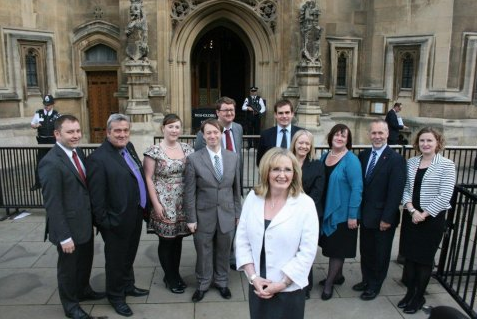
It seems only yesterday that Margaret Curran was appointed Shadow Secretary of State for Scotland and announced a fitba’ team of fellow Labour MPs with a common mission: Cathy Jamieson, Russell Brown, Gemma Doyle, Tom Greatrex, Ian Murray, Anne McGuire, Gregg McClymont, William Bain, Fiona O’Donnell, Des Browne and Lord Neil Davidson were her team. Notably absent from the list were anyone we might have heard of (say Ian Davidson, Anne McKechin, Douglas Alexander or Jim Murphy,or anyone with proven track records with committee chair or ministerial experience). Nonetheless,  Ms Curran was swift to state their purpose:

“This is a powerful team of talented Scottish MPs who will be holding the government at Westminster to account day in, day out. The new team is hungry to do the right thing in standing up for Scotland.”

Them’s fightin’ words and should be applauded…if they have any substance. But what has this “powerful team of talented Scottish MPs” done in the two months since? The silence has been deafening. Press coverage has been zero. Examine Hansard all you want for any of the team taking the fight to Cameron—let alone Salmond—on key issues that affect us. There are speeches and a welter of questions. But hardly any of them bear on Scotland.

Name Those Players: Shadow Scottish Secretary Curran's Shadows, the Westminster Wanderers

Little wonder then that the Scottish press has not seen fit to print even one story about their exploits since this piece of gesture politics was announced on October 11th, four days after Ms Curran’s own appointment. That she should hit the PR ground running was expected; but that she would have nothing to offer her team by way of direction beggars belief—except for those used to the shallow, substance-free bluster that seems to pass for policy in Scottish Labour these days. Her web site carries one news item since her appointment. In all that time, she has posed 13 written and 2 oral questions to the UK Parliament but has yet to make any speech at all in her new role. Willie Bain has at least been on his feet a few times, even if most of them were not Scotland-related. Tom Harris has a better record alone than her whole team together…but then he hasn’t gone native.

This is a ‘new team hungry to do the right thing for Scotland’? The SNP’s nimble seven-a-side squad is running rings round them. In the same two months, Moray’s Angus Robertson produced over 50 questions and six speeches, all relating to Scotland; Dundee’s Stewart Hosie had 31 and 8; normally quiet-spoken Angus’ Mike Weir logged over 70 questions, plus speeches. Even David “Outvoted-by-Pandas” Mundell clocked up over 100—almost all about Scotland

But most ‘heavyweight’ Labour MPs, such as listed above,  clearly wouldn’t touch a place in Ms Curran’s squad with a barge pole; they are too busy making Westminster careers for Scotland to be more than a distraction. Twenty years on, the famous ‘feeble fifty’ have shrunk towards a feebler fifteen. They put me in mind of Churchill’s acid remark about General Mark Clark, whose Allied Fifth Army stormed ashore at Salerno in April 1944—and, through lack of leadership, completely fluffed the chance to walk into Rome unopposed and three months earlier than eventually happened:

“I thought we were hurling a wild cat onto the shore, but all we got was a beached whale!”


Posted in Politics | Leave a comment

Such a Waste!

Official Statistics released  the Scottish Environment Protection Agency (SEPA) show that Scotland’s local authorities recycled 43.6% of the household waste they collected in the three months between April 2011 and June 2011. Twelve of the 32 local authorities recycled more than 50% of the household waste collected during this quarter.

SEPA has changed the basis on which they calculate this. Only household waste is now used to measure Scotland’s progress towards the recycling targets (no longer Local Authority Collected Municipal Waste (LACMW), as up to 2010/11). Household waste includes household collection rounds, bulky waste collections and waste deposited at household recycling points/ bring banks.

The new definition excludes non-domestic properties which were previously counted, such as hospitals, nursing homes, schools, universities, caravan/campsites, prison, penal and charity institutions and even royal palaces—not that we have many of those. To move away from a focus on landfill diversion and towards high quality recycling of materials, recycling has also been more narrowly defined. Stats by council are shown in the table below; there are still wide variations.

Recycling Rates in Scotland 2011/12 by Council (source: SEPA)

Several councils are disadvantaged by this recalculation: Argyll & Bute’s recycling drops from 40.4% to 28.2% and Dumfries & Galloway’s from 48.6% to 20.7%. But, like another half-dozen councils, both have significant waste recovery operations (e.g. Dundee’s DERL waste incinerator & 10MW generator) that bring respective percentages for waste going to landfill down to 57.3% and 42.6% respectively. That’s actually not bad for scattered rural areas. Ideally, the amount going to landfill should be as small as possible.

In the last decade, most councils have made significant strides from recycling less than 10% of their waste and putting the rest into finite landfill. Certainly, steeply rising landfill taxes have encouraged change but the public have also embraced recycling and made the councils’ job easier. Most urban areas have kerb-side paper, metal, glass and plastic uplifts and councils are rolling this out to many rural districts too. Most have reached the Government’s 2013 target of 50% already. Eilean Siar shows the worst statistics for percentage of waste landfilled but 3,500 tonnes is under 1% of all of Scotland and they have an understandable headache in reaching their residents scattered thinly across multiple islands.

Most reprehensible are those urban areas that have yet to engage with this problem. Both Aberdeen and Edinburgh are still landfilling 50,000 tonnes between them but they have had huge fiscal headaches left from previous administrations to solve and plans for joint waste plants in their area fell through. But bottom of the league come the three of the five largest Scottish councils: Glasgow and the two Lanarkshires together landfill over 100,000 tonnes—well over one tonne from them for three in all the rest of Scotland.

Given a current tax rate of £56 per tonne, that means that some of the most deprived areas in Europe are paying £5.6m simply for the privilege of throwing things away. (Note: this does not include the actual cost of collecting and disposing of waste—simply what the UK Government rakes off the top as a ‘green’ tax).

That costs every punter in Glasgow and Lanarkshire a fiver each. For which they get absolutely nothing.

Is that not a waste?

Posted in Environment | Leave a comment

Dave Don’t Do Sums

In the run-up to today’s biggest industrial action since 1926, the main public sector union in Scotland—Unison—wheeled out its biggest gun. No less than General Secretary Dave Watson went to press and blogosphere to argue that Council pension funds across Scotland are in surplus to the tune of £300m. So what’s all this nonsense from the UK gubmint about public service employees having to pay more and work longer to have less of a pension when they retire?

Seems like a fair question. I mean, look at the pension fund figures that Unison provide:

Local Government Pension Fund Surpluses According to Unison

Unison supply no source for their figures. But let’s accept that they are accurate. Why would that not mean there is no cause for any change to the present ‘final salary’ scheme that council employees enjoy? Well, healthy though such balances may seem, they need to be seen in terms of the future demand on them.

The number of council employees has grown in the last decade—from around 267,900 in 1999 through a peak of 293,200 and now falling slowly through 289,400 this year. They pay between 5.5% and 8% of their salary as a contribution and employers twice that amount. Median salary in the public sector is £23,250 (almost £3,000 higher than in the private sector) and that means the pension funds should be accruing funds at a rate that seems pretty solid:

Pension income = £23,250 x 289,400 x (1+2) x 6.5% = £1,285 million

This is around the total of the table above and close enough for our purposes. In terms of outlay, there are currently around 200,000 retirees pulling down a pension but many of those did not retire from a large salary, which explains why total outlay for them is around £982m—much lower than outlay above

Given that pension entitlement peaks at 40 years’ service, one quarter of the roughly 290,000 workers will retire over the next decade—some 72,000 people. But they will retire with much better salaries and conditions. The average pension will be at least half of the £23,250 median salary above, meaning that, after a decade, an additional burden will accrue to the pension fund of:

projected extra demand on funds by 2021 = £23,250 x 0.5 x 72,000 = £837m

Granted, not all present pensioners will still be drawing their pension in ten years time but, if we allow for a quarter of present outlay as a reduction, we are left with a residual demand on the pension funds of:

Total pension outlay in 2021 = £982m x 0.75 + £837m = £1,573m

Now, whether we take our own calculated income or the Unison figures—both are around £1,280m and within any margin of error—the claimed surplus of £300m soon turns into a shortfall, growing to £300m within ten years. And, given that senior officials’ salaries have rocketed over the last decade, that figure of £11,625 as an average salary will soon be a hopeless underestimation.

Because of increases for those reasons already happening over the last few years, councils have been forced to increase their own pension provision in their budgets. Clearly with them receiving less money, this means that services and jobs will have to be cut if such increments, necessary just to keep pace with existing pension demands, are to  continue.

However much Dave Watson quotes snapshot figures from today, local government pensions, as currently constituted, are headed for a brick wall within a decade. Given the even more parlous state of private pensions, there will be no public sympathy for efforts to support a pension “business as usual”—and less for industrial action to ensure that.

Posted in Commerce | Leave a comment