Wish I’d Found This for IWD

Posted in Uncategorized | Leave a comment

My Kind of Scotland

Now that we’re past the preliminaries in the independence debate and most parties have accepted that Scotland has both the right to call a referendum and to decide when it should take place, we move on to the more substantive stuff. This weekend of the SNP Spring Conference, the Herald is printing a whole series of articles on the issue, one of which asks what kind of Scotland we want.

This is a very fair question.

Why should anyone want to change the status quo unless they had some clear advantage from taking a risk on something new and unknown. While the SNP may believe that independence is a priori desirable, apolitical people (i.e. the bulk of the population) need something more than party members’ boundless enthusiasm. As a starting point, it’s hard to beat Norman Macaig, wrestling with his beloved Assynt:

Who possesses this landscape?
The man who bought it or I who am possessed by it?
False questions. For this landscape is masterless
and intractable in any terms that are human.

Those who love Scotland are driven by their own version of this mystique—the almost primitive sense of belonging without entirely understanding why and the bafflement with those who see land only in measures of possession. My own version is steeped in the Lothian coast’s sandy inlets and rugged islands, so I hope city types will forgive me if I identify more with Macaig than with Morgan as my Makar.

My kind of Scotland celebrates its past, but with a realism that includes Clearances, Gallows Herd brutality and stupidities like Flodden, as well as Prince Charlie or Wallace or the romance of Somerled. It is proud of shipyards and smelters, proud of helping build a globe-spanning empire, proud of standing alone with our English cousins against the dark tide of Nazism.

But it also looks to its future, seeing how Ireland has bloomed since finding its own feet almost a century ago, how Norway or Denmark have earned their affluence and respect as forces for stability and peace by working together as partners in the Nordic Council and beyond. It looks to multicultural Singapore for cross-racial co-operation that drives their affluence, to Costa Rica and Finland for classless societies, to Canada for its open doors and a multilingual society.

2014: After the referendum decides we will go our own way, there will be a year or two while negotiations are conducted between Edinburgh and London. With the exception of some sourpusses who have a vested interest in keeping the two countries together there is little expectation that the English will wish to be anything other than fair in negotiation if the Scots accept their 8.4% share of liabilities as well as assets. As well as retaining the £sterling and the monarchy, there may well be other things (foreign embassies, BBC, etc) that will not change status immediately.

There is an appreciable lobby in England who already understand just how important Scots contributions to the Union have been. Whether it is a stay of execution on Coulport and their nuclear subs or provision of 20% of our electricity or export of water to a drought-stricken East Anglia secure supply of local oil or lease of the exercise range at Cape Wrath, the Scots have anything but a weak hand at the bargaining table.

2015: Until negotiations are completed, the Scottish Government will continue with its plans to secure the NHS, education and local government funding in Scotland and avoid the pseudo-privatisation being pursued in England. The time will be used to secure Scotland’s place as a successor state within the EU and open negotiations to become a member of the Nordic Union, as well as find an amicable arrangement whereby we can work with NATO without being a nuclear power.

Internally, there will not be much to notice in those first years. Life in Scotland will continue pretty much as before—trains will run to London or Penzance, business will be conducted as before in £sterling and the only difference at the border is likely to be the addition of “Independent” to the “Welcome to Scotland” signs. The biggest changes will be a flurry of activity in Edinburgh as embassies are established or upgraded from Consulates and an increase in reciprocal trade missions, especially with the BRICs, with our focus being on oil technology, high-grade engineering, renewables equipment, whisky and quality produce, especially seafood.

2016: The first years of actual independence are likely to be dominated by legislation to undo much of the current welfare ‘reform’ and a series of acts that would lower corporation tax to boost business and develop renewables further into tidal and wave, as well as offshore wind. The burden of our share of debt still being accumulated will take a number of years to pay off . This will burden such innovation and the creation of an oil fund like Norway’s until it is paid off.

As an independent country, Scotland will be able to promote itself on the world stage and enhance its already high profile as the home of golf to boost international tourism and cater better to the English ‘staycation’ market. Having our own armed forces will allow us to use them on ceremonial duties at Edinburgh, Stirling and other castles to become tourist attractions in their own right, much as the Brigade of Guards does in London already. The Scottish Defence Force marine arm will need fast patrol boats which will boost shipbuilding (or secure it in the unlikely event of England changing its mind in mid-project and having its carriers built elsewhere).

2020: Just as Edinburgh saw an economic boost post 1999 with the establishment of the Parliament, the greater activity around independence and the new focus on business export described above will lift Scotland’s economy and engage places like Dundee and Glasgow that only partly felt that 1999 boost. Putting people back to work in the new businesses will revive both cities and give them back the pride they once had in all they produced. This, in turn becomes a virtuous cycle that makes less demands on social welfare and benefits, not to mention health. The comparison with Dublin in the nineties and noughties when it boomed will be strong.

So the morale lift accompanying independence can be made to go much further with an economic lift that will pay off the UK debt and allow us to start our oil fund. This will allow us to forego the lease charge for Coulport from England as we persuade them of the folly of nuclear weapons they can no longer afford. Once the oil fund is established, it can act as a fiscal flywheel to cushion changes in the global price of oil and allow us to run the business-driven, community-oriented, centre-left society that most Scots have hankered after all along.

2025: With the Clyde ringing again to engineering as it builds tidal turbines for export to the Straits of Gibraltar and beyond, with Edinburgh property booming as firms in the renewables business set up their headquarters near key embassies, with the Highlands overrun by tourists as record summers roll by, we will earn our place in the Nordic Council (who will have guided us in these ventures) by finally achieving their level of GDP per head and thereby leaving our now-envious English cousins behind.

Richard III turns in his grave as Berwick, realising where its future lies, secedes and comes home as county town of Berwickshire after half a milennium of English rule.

Posted in Politics | Leave a comment

Ma Faither’s Howff Has Many Mansions

This week part of my duties involved attending the CoSLA Resources & Capacity Executive which busies itself with such things as how councils make ends meet. Those there shared concerns how various developments, such as welfare reform and utility tariffs, would hit councils’ shrinking budgets and their ability to look after their residents, especially the more vulnerable.

This came on top of all councils, including mine, digging deep into reserves to try to cushion the effect of such dire developments on staff and residents alike. But, following John 14:2, there is an option to supplement local funding, though it does require legislation. Council tax has been frozen, in part because it is regressive—it hits the poorest hardest. What is needed is something that burdens those with money rather than those without. At this time, a ‘mansion tax’ is being considered in England although, because of devolution, it would not apply here.

But what if we rolled our own?

Over at the LabourHame web site (yes, they do have ideas—some good & worth stealing), John Ruddy has cooked up a more progressive system with the dual virtues of raising tax receipts without touching council tax rates that have been frozen over five years.

Taking my own East Lothian Council as an example, some 55% of its 35,500 taxable properties are rated as Council Tax Bands A-C. Another 24% are in the ‘yardstick’ Band D, while 19% are in bands E-H. These last properties can reasonably be considered the more affluent, while bands A-C are typically occupied by those with modest incomes. Yardstick Band D properties pay 9/9ths of the tax rate set, with lower bands paying proportionately less and those above more. The current situation in East Lothian is shown in Table 1

Table I—Council Tax Bands in East Lothian with Approximate Revenues

This raises around £39m in Council Tax. John’s ploy to increase this is to split each upper band (E-H) in two so as to give bands E-L but to continue the proportionate ratcheting up of the ratio (3rd column) so that band L would be paying 36/9ths or 4 times as much as Band D. This does accrue appreciably more tax, with all of the increase coming from above Band D. But this hits the middle class (houses in the £58,000 to £212,000 valuation range) hard, compared to now. But it still doesn’t nail the many houses valued well over £212k.

A better compromise would be to adapt John’s scheme so that we have the additional bands and increments he suggests, but that we assign houses into upper bands with less steep gradations than his proposals and then add a proper ‘Mansion Tax’ on houses valued over £1/2m. This would give a scheme more like that in Table 2.

Table 2—Tax Bands Proposals with Mansion Tax Band

In the case of Table 2, no-one in Bands A-F pay any more. Those in old Band G would find themselves paying between £0 and £800 more each year, depending on which new band they fell into. Those in the old ‘over £212k’ Band H would pay at least £745 more. The middle upper reaches of house prices would therefore be more fairly segmented; those approaching £1/2m in value would see their tax exactly double from £2,235 to £4,470. There would be no theoretical upper limit if the property was valued over £500,000.

Bottom line of this scheme is that it would boost Council Tax income in the East Lothian example from £39m to almost £45m without any increment for people living in modest houses valued up to £100,000. The Mansion Tax sting would be concentrated on less than 10% of all houses but those are best placed to stomach such increments. Given increases in East Lothian house prices for decades now (average 5% per annum) that alone pays for any council tax five times over in the long term.

Would there be people unfairly hit (e.g. widows with little income still in a large family home)? Yes, it might and some thought needs given to such cases. But ELC encourages such tenants in their houses to downsize; why not in the private sector too?

And, lest you think that this would fall unfairly on certain parts of East Lothian, even the Fa’side ward has 16% of its houses in current Bands F-H. While this would be unpopular with those affected, consider that government money that supports 80% of services in East Lothian will diminish for at least the next two and possibly as many as seven years. This is an affluent area and the envy of many others. How else are we to keep essential services running across the county if we don’t look to doing it ourselves?

Posted in Commerce, Politics | 4 Comments

Rosco Used in Train Robbery

The future, we are told, must be green. To be green, the future must be sustainable and the only way civilisation can be sustainable is through public transport, the backbone of which is our railways. Are you with me so far? Good.

But thanks to some lame duck privatisation that sang descant to the swan song of the last Tory government in the mid- 1990’s and some egregious bottling of principle by the Labour interregnum of the noughties, we have one of the most commercially efficient rail services on the planet.

Efficient!*!#?? you splutter as you try not to spill lukewarm coffee standing in the vestibule of an overcrowded Glasgow shuttle as it waits outside Polmont. THIS is efficient? Well, yes—very efficient. Not for the customers, of course; they’re just fare fodder. No, for the investors, for whom the whole shambolic structure was dreamed up. There have been few more lucrative—not to say copper-bottomed—ventures in which the shrewd investor could have placed his money than into the corpse of British Rail.

Unlike the BT or National Grid or English water company sell-offs, which may have been repugnant to socialists and those who felt this was a privatisation too far, by the time we got to the railways, Major’s dying days were scenes of desperation. Other sell-offs were going concerns that were given proper shares and a viable future; British Rail was a last desperate punt to get another out the door before a 1997 general election comeuppance.

The Railways Act 1993 created a fragmented industry in which the train operators leased rolling stock from the ROSCOs and paid track access charges to use to the infrastructure from Railtrack, while all these businesses were still state-owned. This merry-go-round was overseen by the UK Department of Transport & Regions, the Rail Passenger Council, the UK Railways Inspectorate, the Strategic Rail Authority, the Office of the Rail Regulator and various Passenger Transport Executives. With me so far? Didn’t think so. It’s a pig’s breakfast, made all the more so by the haste with which it was shoved out the door. Railtrack folded, taking many people’s savings with them, to be replaced by Network Rail, a lunatic concept of a private (and therefore independent) company, wholly owned by the public purse.

The Train Operating Companies (TOCs—who actually run the trains) are just the surface of a complex web of financial arrangements at the heart of which are three little-known cash cows labelled ROlling Stock leasing COmpanies—Roscos for short. Seldom has an acronym—that here corresponds to the slang name for what a mobster uses to shoot his way out of a sticky heist—been so appropriate. For while Railtrack went bust and TOCs struggle to please passengers using rolling stock they don’t own running over track they don’t control, Roscos have been mugging the public purse, big style.

UK railways turn over around £13bn each year, roughly half of which comes from fares and half from public subsidy. If you thought (as was sold at the time) that privatisation would reduce the public subsidy element, you thought wrong: it has increased every year since privatisation in 1996. Fair dos; the number of trains services has increased in that time but the number of passengers has increased by even more so shouldn’t any subsidy be coming down? Not when you see how the Roscos operate.

These rolling stock companies are a major component of the industry: their overall turnover of over £1bn last year was equivalent to over 20% of the passenger revenue of all train operators.

“The ROSCOs have attracted relatively little attention in the literature and have been little discussed in the context of the privatised British railway system.  Yet nowhere have the flaws in the privatisation process become more apparent” 

Taken for a Ride S. McCartney and J. Stittle

Here’s a potted history of the three of them:

  • Eversholt was sold for £518.3 m on 2nd February 1996 to Eversholt Holdings Ltd, a management buyout backed by The Candover Group and Electra Fleming.  On 19th  February 1997, Eversholt was sold to Forward Trust Group (part of HSBC Holdings plc) for £726 m—40% more than the initial sale, and changed its name to Forward Trust Rail Limited on 1 December 1997.  The name of the company for the next decade, HSBC Rail (UK) Limited, was adopted on 27th September 1999.  Ten managers were reported as having personally made total profits of £103m as a result of the sale to HSBC. Eversholt was renamed back to its original in anticipation of being sold to a consortium for £2.1bn in 2010.
  • Alpha Trains International was originally Angel Train Contracts Ltd. ATC was sold on 16th January 1996 to GRS Holding Company Limited (a consortium of Nomura, Babcock and others) for £696.3m.  Shortly after privatisation, GRS sold their right to Angel’s capital rental income for some £690m.  In December 1997, the remainder of the business was sold for £395m to Royal Bank of Scotland (RBS), of which GRS became a wholly-owned subsidiary.  The total realised from the sale of GRS (£1,085m) was some 56% more than the government had received.  RBS then sold for £3.6bn in 2008 to a consortium led by the European arm of Babcock & Brown, now called Arcus Infrastructure and the company renamed Alpha. Alpha Trains has about 40% of the UK train leasing market, owning 280 freight locomotives and 4,100 passenger carriages, including the 52 nine-carriage tilting Pendolino trains on the West Coast Main Line. They have been expanding into €1.8bn in freight wagon leasing in 12 countries across the Continent (using Slovakian wagon builder Tatravagonka).
  • Porterbrook Originally costing £528m in a management buyout in 1996, this was sold by that same management six months later to Stagecoach for £836m without investing a penny. Directors and staff, who had invested only £300,000 of their own money, made nearly £83.7m. Porterbrook’s managing director, who had invested £120,000, scooped £34m. Venture-capital firms, which had put £2.2m into Porterbrook, picked up £315m. Abbey National then bought it in 2000. When taken over by Santander in 2008, Abbey National sold on to a consortium of Deutsche Bank, Lloyds and Antin Infrastructure Partners, price unknown. In 2012, Porterbrook claim to have invested £2bn in rolling stock and be the only Rosco to grow market share from its original 30%.

From the profits made in all three cases, it is clear that they were sold underpriced. The consequences of under-pricing could have been mitigated by the inclusion of clawback provisions in the sale agreements, to ensure that the government could recover some profits made if ROSCOs were sold on within a specified period. Clawback provisions were specified elsewhere in the railway privatisation.  For example, in the case of Railtrack, 25% of any profits generated from future sales of property assets were to be reclaimed by the government for the benefit of the TOCs.

The National Audit Office concludes that the sale was premature, and had ‘an adverse impact’ on the level of proceeds because the ROSCOs had no relevant track record.  The House of Commons Public Accounts Committee agreed with this view and further argued that privatising the ROSCOs first, before awarding franchises and selling Railtrack, was a key factor why only £1.8bn was obtained for public funds in sale proceeds from RailTrack, the Roscos and the TOCs.

Finally waking up to the scale of rip-off in 1996 the DfT said: “On the information and analysis available, the department is not satisfied the prices charged for the rolling stock are fair and competitive. It is the department’s contention that there is a lack of effective competition. This decision has been taken to secure good value for both tax- and fare-payers.”

After the resulting investigation, the Competition Commission published its report in July 2009, making three recommendations:

  1. “Introducing longer franchise terms of 12 to 15 years or longer”
  2. “Assessing the benefits of alternative new or used rolling stock proposals beyond the franchise term and across other franchises when evaluating franchise bids”
  3. “Ensuring that franchise ITTs are specified in such a way that franchise bidders are allowed a choice of rolling stock”

Wow! Hardly revolutionary stuff. Certainly not incisive enough to have the boardrooms at Porterbrook et al quaking in their handmade shoes. Nonetheless, after 3 years of delving what action did the Brown government of the time take? None. Needless to say, once the 2010 election was safely behinfd them, the Tories let no more be heard of this.

So the Roscos continue to be held to the head of the travelling public. It is estimated that the UK rail system is 40% more expensive than it needs to be. This is, in part, because of its fractured nature. But it is primarily because, sitting in the middle of this web of profit are the Roscos who, on a turnover around £1bn between them, make ongoing profits (i.e. not counting the windfalls already in sundry pockets listed above) up from around £165m in 1996 to over £250m now.

Worst of all, the whole system detracts from TOCs or anyone else investing in the long term. Angel cheerfully charges £1,800 a month for a clapped out 20-year-old 2-car diesel Pacer and have the gall to slap on £3,600 a month for ‘maintenance’. The idea of Scotland getting its own internal express trains dies on the twin horns of the ScotRail franchise locked into the Roscos and the fact it only runs seven years at a time.

Until this nonsense is overturned—and it is only the UK government that currently has the power to cut this Gordian knot—we will continue to rattle around in a second-rate public rail system while the Continent shows how a sustainable society works.

Posted in Uncategorized | 2 Comments

A Tale of Two Cities

It was a fluke that two party conferences took place this weekend. But it was also enlightening to compare and contrast what was being said in Dundee and Inverness. What was particularly amusing was the sheer interchangeability among the speeches. There was no major speech that did not touch on the independence debate and some of them, especially in Dundee, tried to take on the SNP head-on.

Whereas Vince Cable’s speech only hinted, Nick Clegg’s dodged around it and Danny Alexander managed to avoid mentioning the SNP or independence at all, Jim Murphy made his stay-with-big-brother pitch, lifted straight from his Grauniad article (and addressed in detail in the blog prior to this one), Jackie Baillie flailed about and charged the NHS (wrongly, it turned out) with sharing blankets between patients and the other Alexander brother (Douglas) made a fair fist of admitting Labour had been trounced in May for reasons that stretched back years and should spread its appeal wider than it had.

Neither conference was spoiled by a bad speech and, to be fair, they were both lively in a way that such gatherings of the faithful normally don’t manage. Perhaps the sheer political rollercoaster ride of the last year, together with scary media over-coverage of the independence debate had the adrenalin flowing. Certainly those who spoke did so with a passion and conviction that did credit to their speechwriters. Had any of them been gifted orators, the footage might have been historic—the weekend when Scottish politicians came of age.

Unfortunately, gifted orators were scarce at either conference and, sadly for both parties, that also applied to their leaders’ speeches. Willie Rennie has a certain cheeky humanity about him—you can imagine him as deputy balancing the earnest gravitas of someone like Ming Campbell. But his presentation remains too lightweight to carry the serious tones of his Damascene conversion to Liberalism through Thatcher any more than his abrasive invective when he tries to disparage Salmond: he just comes over as petty.

Johann Lamont is in a different class. Her speech was one of the best-written I have heard at a Labout conference in some time—brave enough to include mea culpas for what the party had suffered, clever enough for some of the jibes at Salmond to prick because they were barbed with some humour and larded with the obligatory Labour homage to their equivalent of the American huddled masses yearning to be free.

And yet…

If there was one thing they all had in common, it was a palpable flailing around to address what is becoming very much the question of the moment: what is the union for? Now, it’s early days for three very different parties to bury their differences and realise how best to hang together before all three are hung separately. Nobody made much of a fist of this. Murphy’s speech presupposed that we are all hungry to sustain the illusion of empire and mimic the US’s self-appointed role as the world’s policeman. But even Jeremy Paxman’s Britain’s Empire episode this very weekend ended by saying “Empire may be over but the habit lingers on”. Someone needs to tell Jim.

At least Jim tried to make a case. The rest seemed convinced that the union was good ipse facto because it had lasted 300 years. “The most successful union that the world has ever seen” echoed repeatedly from the podium in both Inverness and Dundee, as if the SNP ever denied that fact. Vince Cable banged on about RBS’s balance sheet being 15 times bigger than the Scottish economy, as if that were argument enough and there were equivalently pious “stronger together” statements from just about everyone. But examples of where we go post-empire were absent. If application of the Dunkirk spirit were required because another Napoleon or Hitler was glaring across the Channel with evil intent, perhaps there’d be sense in their dire warnings. But it’s the English who glare across the Channel to the detriment of us outward-looking Scots. Why we should want to be led further into purdah by our more paranoid southern cousins is still unclear.

But the weakest element of both leaders’ speeches—especially Johann’s—was the way they spoke to the faithful, the way it was pitched to those in the hall and not to the disengaged and/or undecideds watching and whose vote they need. It’s a major mistake that that has been keeping Scottish Tories in the wilderness for years. When you are on the stump to become leader, such playing to the gallery is not just forgiveable but probably necessary. But when you have the team jacket already made and are wearing it should surely be the time to kick ass and take names—the time for leadership.

Johann did show some leadership in calling for an (early?) end to soul-searching anguish over electoral defeat and for a commission on devolution to sort out where Labour should stand on the matter. But, seen outside the warm glow of the Caird Hall where she was amang freends, there was little to distinguish all this from Iain Gray’s (remember him?) decent speech in Oban the previous year. There was Salmond-bashing; there was a call for Labour values; there was a claim for Scottishness. This year’s punt, though better, shows no signs of being a game-changer.

Because of a vision for Scotland—let alone a joint unionist one with other parties—one that might inspire the young and revitalise the old with purpose, there was none. This was another Labour leader getting into buggins turn. Expecting more of the ‘decry-all-infidels-and-we’ll-come-back-into-our-own’ to be good enough seems all Johann’s plodding sincerity, despite her years of experience and proximity as deputy, is capable of.

Unionist or independent, Scotland will, sadly, not be much the richer for it.

Posted in Politics | Leave a comment

Hey, Jim! Eat My Shorts

Today (Friday 2nd March) The Grauniad printed an op ed piece from Jim Murphy MP entitled “Scotland Cannot Afford to Leave NATO” in which Jim, in his usual declarative style, seeks to disparage the SNP’s position, this time on defence and foreign alliances. As the Grauniad already had 78 comments after only 2 hours and refused to let me register to add to them, I am forced to respond here. If Jim or anyone of his acquaintance reads this, I would be happy receive responses to the points made:

  1. Both (UK & Scottish governments) have defence plans that will limit our ability to achieve our ambitions on the world stage. On the contrary, the SNP would place Scotland in a far less aggressive and overstretched position that would allow it to be more of a force for peace and less of a failing post-empire power like the UK that has yet to find a purpose for itself or for its nuclear arsenal.
  2. There is only one mainstream party wanting to leave NATO: the SNP. And, as long as membership requires deployment of nuclear weapons on our soil, that will remain so. But we are fully commited to working with NATO in non-nuclear actions which has included EVERY NATO ACTION TO DATE.
  3. How will Scotland get its way in the world if we leave the UK? Same way the Irish and every other small country does—by finding common cause with friends and ganging up on the big boys. As it is, the UK habitually sells Scotland short (nukes on the Clyde; decimation of our fishing; highest petrol price when we make the stuff, etc etc)
  4. How does it help the world’s poorest people? By spending £2bn on conventional defence instead of our £3.5bn as part of the UK’s idiotic ‘global’ posturing, we could double our share of the present £11.5bn UK foreign aid budget at a stroke.
  5. How do we strengthen Scotland’s businesses by separating from the third largest economy in Europe? We already out-manufactiure and out-export our sluggish English friends per head. By NOT dealing through (selfish) London, we gain direct access. By joining the Nordic Union we’d be in close contact with six of the world’s richest economies.
  6. How can we be a force for good by getting out of the UK, the fourth biggest military budget on the planet? Because the UK has a daft, unbalanced military budget 2/3rds of which is unusable. Eschewing carriers, global deployment ordnance, heavy tanks and (especially) nuclear subs (none of which have been used in the conflicts cited) we get a flexible armed forces, geared for Scottish defence and usable as part of an Allied force for 1/3rd the per capita price.
  7. We are currently one of only five countries out of 198 in the world with a permanent seat on the UN security council. Good luck: you can keep it. We may support the UN but it’s one of the world’s least effective and influential organisations when it comes to doing real good.
  8. Separation is a powerful idea, but a 19th-century idea, entirely unsuited to the complexities of influence in the 21st century. Oh, really? So the 150-or-so countries gaining their independence in the last century are thrawn and/or willfully misguided?
  9. If Scotland leaves Britain the Clyde and Rosyth would be in a foreign country to the Royal Navy, which has never built a warship in a foreign yard. So, er, what’s this MoD contract for ships that’s just gone to South Korea? When asked about that very decision, the MoD stated they place orders on quality, delivery & price.
  10. In today’s complex world we need strong defences at home and overseas. Time to wake up and smell the coffee. Your big £40 bn budget was no protection against 7/7. America’s $700 bn (!) budget and 15 carrier task forces were no protection against 9/11. Get your head out of the gunboat era.
  11. Additional thought: If the UK is such a good deal and Eire is now such a basket case, why are they not clamouring to come back into the fold?
  12. Final thought: If being in the UK’s so great for our defence business, how come Belfast’s Short Brothers got so little before being bought up in 1989 by the Canadian multinational Bombardier? Eat my shorts, indeed.

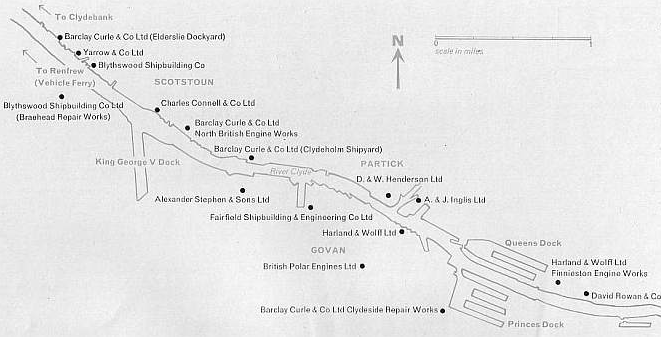
Shipyards on the Clyde BEFORE Labour Got Their Hands on Them

Posted in Uncategorized | 1 Comment

Many A True Word…


One day a florist went to a barber for a haircut. After the cut, he asked about his bill, and the barber replied, “I can’t accept money from you; I’m doing community service this week.” The florist was pleased and left the shop. When the barber went to open his shop the next morning, there was a ‘thank you’ card and a dozen roses waiting for him at his door.


Later, a cop comes in for a haircut, and when he tries to pay his bill, the barber again replied, “I can’t accept money from you; I’m doing community service this week.” The cop was happy and left the shop. The next morning when the barber went to open up, there was a ‘thank you’ card and a dozen donuts waiting for him at his door.


Then a politician came in for a haircut, and when he went to pay his bill, the barber again replied,  “I can’t accept money from you; I’m doing community service this week.” The  politician was very happy and left the shop. The next morning, when the barber went to open up, there were a dozen politicians lined up, waiting for their free haircut.


Posted in Uncategorized | Leave a comment

Small Is Beautiful

An early evening seminar at the Hume Institute led by the Chair of the First Minister’s Council of Economic Advisors is not everyone’s idea of entertainment but Paul Johnson, Director of the Institute of Fiscal Studies made it that for me. Much of his talk and most of the subsequent questions were about the British economy and its performance in relation to the rest of the planet. Given that the IFS out-gloomed the Treasury four years ago when the recession first hit, this was not stuff for the faint-hearted.

But what cheered me were a number of incidental observations. Paul was clear that cutting public spending was counterproductive. But he was also clear that what public spending there was needed to be well directed and that this was almost impossible to co-ordinate at a UK level. This can happen for well intentioned reasons: he cited excessive housing benefit but a paucity of spend on new affordable housing as unbalanced thinking.

Reading between his lines, what was obvious was that, whereas Scotland is forever being lectured on the advantages of being part of the bigger, beefier UK, its smaller scale and self-contained infrastructure make its future a much more manageable problem to solve.

Caught up in this recession, little has been said about how deep Western society was in trouble anyway prior to 2007. We had green targets and made laudable efforts in recycling, etc. But we are kidding ourselves that we were anywhere near a sustainable future and that a return to 2006 would solve everything.

For a start, we build towns and cities based on cars. Car use grows faster than public transport because it’s easier. But with oil back over $100 and petrol at $1.40, just how sustainable is that? The UK government (especially as it’s Tory) is all for development if it could just unleash the cash to do it. The result would be more urban sprawl, such as has covered the green fields of England over the past century. The proportion of spend on any infrastructure will be small and most of that confined to arterial roads.

Already, Scotland has gone down a different path; most of the houses built in the last five years have, thank to Scottish Government incentives, been affordable. These are seldom urban sprawls needing a car to reach but smaller estates near shops or even town centres as Scotland’s stock of brownfield sites is tapped into. Such closer, mixed communities are in themselves more self-sustaining, needing less transport in and out if there are jobs and shopping available within them; they also make less demand on services, whether it be police, health or social work.

Because the major mistake made by the Americans and aped most of all by the English is the omnipotence of the commercial imperative that has resulted in the urban wastelands that are Haarlem, Pittsburgh, South Chicago, Detroit, Watts, etc., etc. We in Britain are not far behind, as evidenced by the detonator of Stoke Newington that ignited a dozen other suburbs and inner cities across England last August. Why didn’t it happen in Glasgow, even though a couple of lads were trying to make it so? Because Scots society, flawed as it is, still has cohesion that has little to do with how much you earn.

So when Cameron announces further measures to curb immigration because 30,000 people were brought into Britain on inter-company transfers when the 20,000 cap on other skilled visas was not even being approached, we have to wonder whose priorities is it that the UK government is following. Scotland’s not full up and has always thrived on those who come here, whether Italians, Poles or English. One thing the Americans DO get right is welcoming those who will work hard, pay lots of taxes and benefit the country. But no-one seems to be asking why locals don’t have the skills these 30,000 people have.

Thankfully, some in Scotland are ‘getting it’. Scottish Power (a.k.a. El Poder Escocece?) is ahead of the game. Chairman Ignacio Galan has announced a £5bn refurbishment of the power grid across southern Scotland, which will required 300 new engineers and technicians. Despite last year’s slump in production in North Sea oil & gas (largely due to new draconian tax regimes from the UK Treasury) this month BP announced a £2bn investment programme mainly to exploit resources in the Celtic Sea west of Shetland.

Not being as sensitive to immigration as our Southern cousins, we Scots will again welcome whoever shows up to fill those jobs—and the pile of others still to be created as the renewables industry keeps growing to provide Scotland with a modern industrial base. And, as a small country, there is a fair chance that our universities will pick up on such potential and steer their courses towards turning out graduates in tune with the demands that will be made on them in the world of work.

Which, in turn, means that fewer of our skilled young people will feel the need to seek a more prosperous future elsewhere and again reinforce the social cohesion that helps and is helped by what is loosely described as ‘Scottish culture’. There are parallels here with Norway and Denmark. Yes, there are economic parallels and the numbers can be used to make all sorts of arguments. But what matters to people is their quality of life, their sense of being at home among friends and family, of belonging.

Small countries seem to be especially good at that, the more so when—like the Canadians with the Americans of the Danes with the Germans—they have some overbearing self-important bigger neighbour to the south of them. Ask a Canadian or a Dane what they think of their southern neighbour and you usually get the kind of answer that a parent gives about their unruly adolescent—wry with humour, obviously affectionate but glad now to be self-aware enough themselves to have found a more mature, civilised and sustainable form of living.

Posted in Commerce | Leave a comment

Capital Offence

© LochMoy Ltd 2012

Posted in Politics | 1 Comment

Flight to Blarney Cancelled

This week’s announcement by Ryanair of cuts at Edinburgh airport has been touted by the airline as a major blow to the growing airport and claims that passenger numbers are likely to decline from the present 1.8m to 1.5m passengers annually (out of a total for the airport of 8.6m in 2010). BAA, which still owns and operates Edinburgh replied that they “don’t know where Ryanair gets their figures from.”

In fact, looking closely, Ryanair’s plans consist of operating six, rather than seven planes from the hub. The net effect would be to end the service to Berlin and cancel plans for flights to Malmo, Murcia and Talinn. Sounds serious, until you realise that they will still fly to 35 destinations from Edinburgh, including four in Germany.

In fact, there are over 130 places you can fly to direct from Edinburgh, from Sumburgh to Newquay in the UK , from Alicante to Zurich or Tampere to Tenerife. While passenger figures for Edinburgh have dropped by around 5% from their 2007 peak of 9m, most of that drop has been in holiday flights to the sun as people have budgeted tighter for their holidays and some have opted for ‘staycations’ that don’t involve flying.

The drop has been steeper in aircraft movements down 15% from its peak (129,000 to 109,000). But this implies more efficient loading of aircraft (= full seats), which is obviously more profitable for airlines.

On the other hand, business traffic has been steady, helped by the constant addition of new destinations. Key among factors in Scotland competing in the world is the ease with which our business can access markets elsewhere and with which foreign business and tourists can access Scotland. Edinburgh has been the premier airport in Scotland when it comes to doing that so the variety of links is crucial. This is highlighted in ranking the passengers heading for various destinations.

Most Popular Destinations from Edinburgh Airport (source: Wikipedia)

Favourite recreation destinations like the classic Dublin stag/hen night trip are down appreciably but business destinations like London City or Newark NJ show growth. As evidenced here, flights outside the UK account for around 45% of all passengers. This means we are well linked to the rest of the world but the massive numbers for Heathrow almost certainly hide significant numbers in transit to elsewhere in the world.

Although BAA announced last October that they intended selling Edinburgh Airport, this was due to the Competition Commission requiring them to divest themselves of either Glasgow or Edinburgh. Projections for traffic are healthy, with an estimated 25m passengers expected to pass through Edinburgh in 2030.

So Ryanair’s outburst of temper and withdrawal of flights appears to be, at best, a ploy in negotiations for gate charges at the airport. At worst, it is another outburst from their colourful Chief Executive, who is always up for a little publicity, Michael O’Leary. Ever since he hit the headlines handling baggage at Dublin in 1995 he is rarely out of the news. I think his Ryanair service direct to Blarney is the one that should be cancelled.

Posted in Commerce | Leave a comment