The ‘Lords’ Prayer

—may those who take the Jubilee Line to St John’s Wood meet the Test.

OK, so it’s two months late for National Poetry Day (Oct 4th) whose theme for 2013 was supposed to be ‘water’. But the poem below popped up on Twitter soon after a trip to London, during which I traveled much of the Under- and Over-ground and a subsequent lively discussion with a friend of the relative merits of Boris reneging on a promise to keep Tube ticket offices staffed.

Compared to two Scots’ high-minded debate on efficiencies, workers’ rights and the best way to get about the place, this poem somehow better captured both the ubiquity of the Tube and knowledgeable and irreverent way the real locals ‘dahn saff’ treat any such unavoidable omnipotence that has come to dominate their daily existence.

Lord'sPrayer

Posted in Transport | Tagged | Leave a comment

On Top of the World

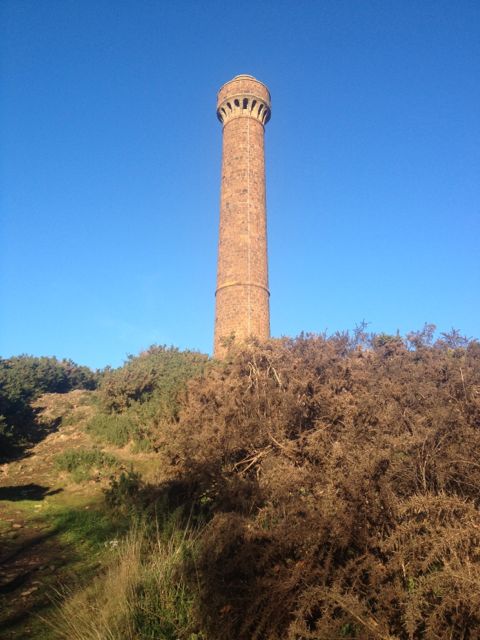
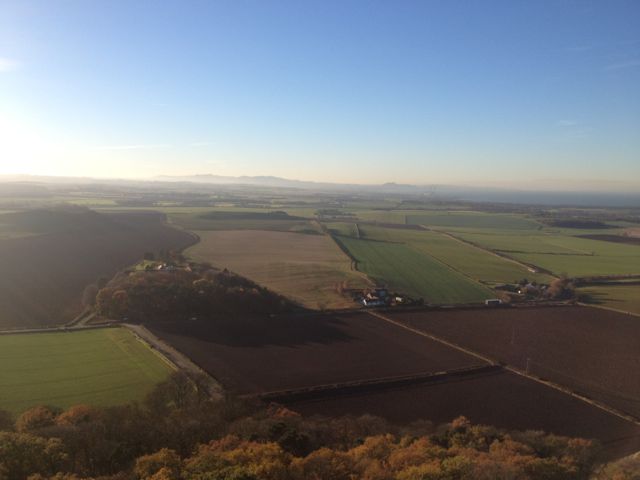
At lunchtime, on my way in to EL Council offices in Haddington the skive inspiration hit me and veered me off the A6137 at West Garleton to puff my way up Byers Hill and the 133 steps to the top of the Hopeton Monument. We don’t normally get such clear, still days here in the depths of normally dreich November; this was a special treat, well worth the skive.

The 20m Hopetoun Monument atop 186m Byers Hill

The 20m Hopetoun Monument atop 186m Byers Hill

The car park is at the base of the hill and a good 50m below the summit itself. Use the kissing gate on the entrance road leading direct to the slope—the easier looking access at the end of the car park does not lead to the summit. The views from the hilltop are good but not a patch from those at the top, so do make the effort to climb all the way.

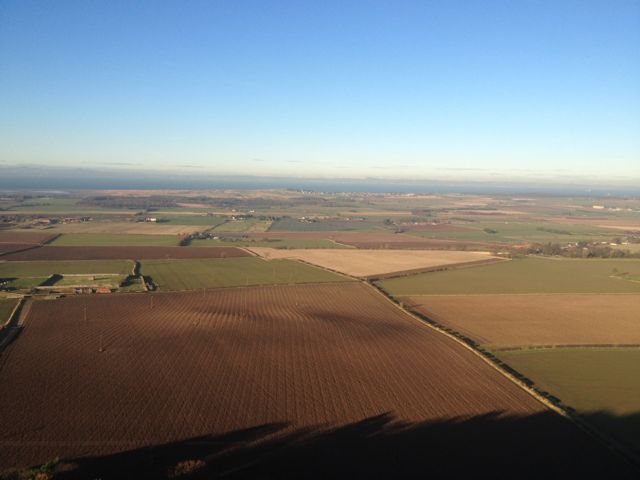
The entry is on the SE side with the size and pitch of the steps visible here so you can judge if you’re up for it. Be aware that the spiral stair is narrow and lit only by the odd slit in the stone walls so bring a torch. However, although the steps don’t get narrower as you go up, beware a crow’s nest in a slit just past halfway up (now apparently deserted). If cardiac arrest doesn’t get you first, the top offers the best 360 degree view in East Lothian (better than Berwick Law) because you can see virtually the whole county—as well as most of Edinburgh and much of Fife.

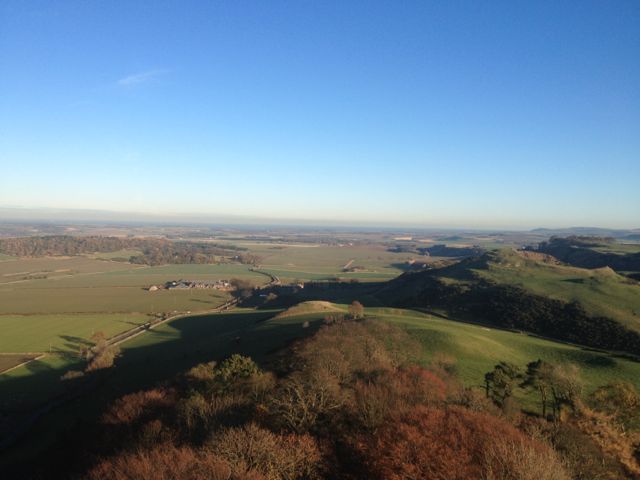
The the NE—Berwick Law and the Bass Rock

To the Northeast—Kilduff in the middle ground with Berwick Law and the Bass Rock in the distance.

To the East

To the East—Athelstaneford in the middle distance with East Fortune Museum of Flight beyond

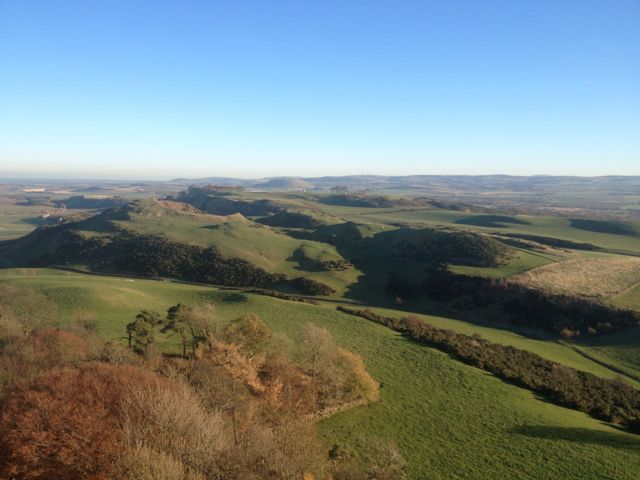
To the South-East

To the Southeast—Kae Heughs in the foreground; Traprain Law and Dunbar in the distance

To the South

To the South—Haddington in the middle distance and the Lammermuirs along the Horizon

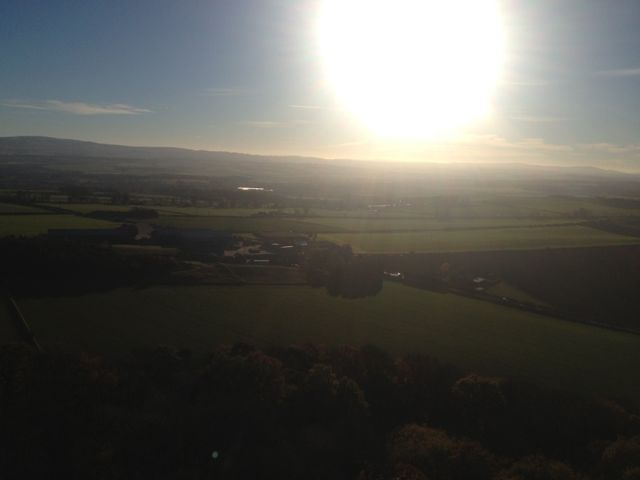
To the Southwest (and into the sun)

To the Southwest (and into the sun)—Billy Logan’s hugely successful East Lothian Produce and Moorfoots in the distance

To the West

To the West—West Garleton Farm in the foreground, Pentlands, Arthur’s Seat and Edfinburgh in the distance

To the Northwest

To the Northwest—Cockenzie Power Station to the left, Aberlady to the right and Kinghorn beyond Inchkeith & the Forth

To the North

To the North—over Ballencrieff and the railway towards Gullane with Fife’s Largo Law barely visible in the haze

Other than how clear and pretty it all is, what is perhaps reassuring after scanning all round is an unspoiled rural nature of the view: all towns lost in the distance; only fields and far hills dominate the landscape in every direction. Any developer hell-bent on breaking the so-far-intact DC1 policy of East Lothian Council’s Planning Department should perhaps be taken up the monument and shown this view. If they have any soul, they will relent. Otherwise it’s a really good place for justice by defenestration.

Dedication to

Monument Dedication to the 4th Earl of Hopetoun—with Bicentenary fast approaching

Posted in Environment | Tagged | 2 Comments

“Planning Scotland’s Seas” Consultation

(Submitted as a personal response to the consultation: would be interested to hear any other comments that were made in response to http://www.scotland.gov.uk/Topics/marine/marine-consultation)

Background

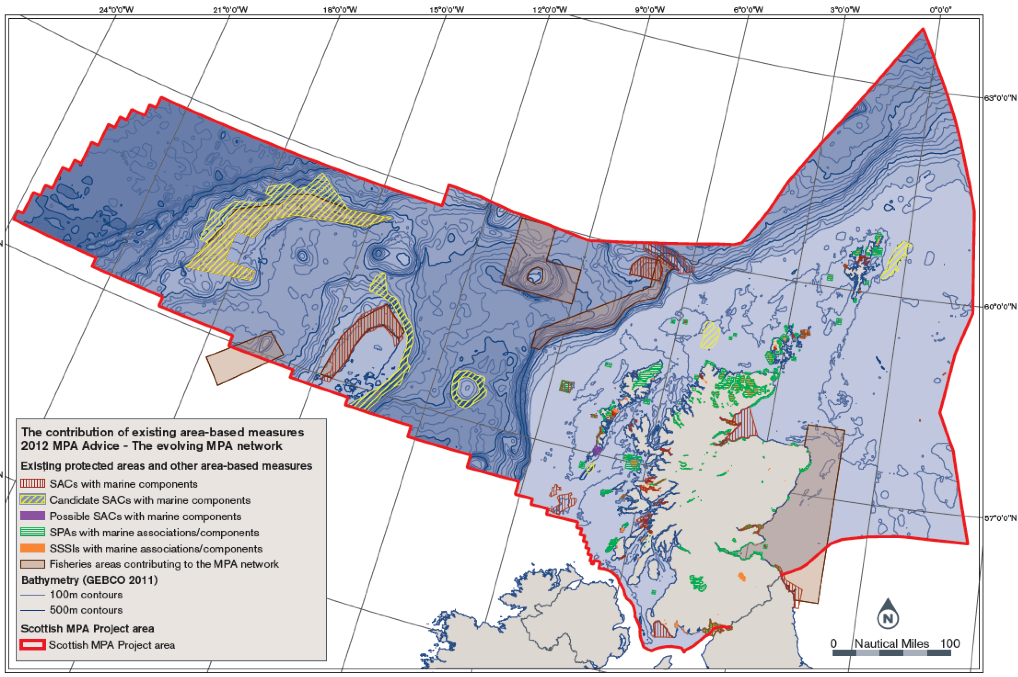
My comments are confined to the territorial waters element Southeast Marine Region (Between Montrose and Berwick and out to the 12-mile limit), as that is where the bulk of my interest and experience lies. Not only does this area see the densest marine traffic (including all Grangemouth refinery traffic) in and out of the Firth of Forth but it also is to be the focus of three major offshore wind farms. With an average depth around 50m, concern about sustainable stewardship of the seabed becomes a concern because of the demands made on it.

Map of Scotland's Seas: (Note how much larger they are than Scotland—or England

Map of Scotland’s Seas: (Note how much larger they are than Scotland—or England

Issues of Concern

Currently there is no proposal for an MPA in the Southeast Marine Region. Because of its proximity to dense population centres and various pressures on it, the provision of an MPA should be considered for five reasons:

  1. Inshore (generally above the 20m depth line), unregulated fishing of crustaceans and removal of shore-bound shellfish (razor clams, whelks, mussels, etc) is damaging stocks and undermining sustainability. This lack of reserved areas (c.f. Maine USA) means conservation is actively discouraged and the free-for-all that devastated fish stocks and led to EU quotas is underway. The concept of Several Orders founders on the lack of local inshore fishermen’s organisations to define, legislate, implement and enforce them.
  2. The shallowness of water in the area allows easy trawl and dredge access to the seabed of the whole area. While prawn/langoustine fishing is generally non-destructive, scallop dredging is damaging to seabed life in general. Both are currently carried out without regulation and the demand from this area, being so close to its markets, is far heavier than, say, in the Western Isles.
  3. Whereas most wildlife is found to the North and West of Scotland—especially seabirds, a huge exception to this are the Forth islands that are home not only to the largest gannetry in the world and major puffin colonies but also to the Scottish Seabird Centre which is an award winning world leader in making Scotland’s maritime wildlife accessible to a wide public in a sustainable way. These populations have been threatened in the past (e.g. overfishing of sand eels by Danish fertiliser processors and invasion of Bass Mallow that decimated puffin colonies by blocking their nest sites). To continue with an open season in their key fishing area (most can fly less than 20km from base to feed in the nesting season) risks decimating their food sources.
  4. Because of its very different geography to the heavily indented West Coast and the absence of any significant sheltered waters protected from Northeasterlies, there are no 24/7 quiet water sites where fish farms or shellfish farms would be viable as an alternative.
  5. From an economic development viewpoint, local fisheries in the Southeast Marine Region are barely exploited. Most of the catch is wholesaled at points like Eyemouth; most of the local catch is consumed by visitors in Spain. With no security of supply, the incentive to invest in keep tanks, hatcheries, shared marketing and distribution to a disorganised spectrum of retail outlets means this situation is likely to continue indefinitely, despite Scotland being a byword in fresh quality foods in which East Lothian is generally a leader.

Possible Actions

If the present situation continues, then all five of the concerns raised above are likely to continue and probably worsen. It appears to make little sense to provide MPAs in remote sites if those accessible by the bulk of the population (especially in the tourist season when they are joined by thousands of English and foreign tourists) are to lack any and suffer the consequences to wildlife and its sustainability. Actions to be considered before significant and irreversible damage occurs would include:

  1. Consider an MPA for the outer Forth and Tay that would permit continued fishing of all species but with effects on feed-stocks for wildlife monitored and capable of triggering restrictions.
  2. Facilitate the establishment of fishermen’s associations empowered to manage inshore stocks and receive financial support in providing infrastructure such as hatcheries and regulating access to areas for specific species to both enhance and protect stocks and businesses in a long-term sustainable manner.
  3. Lobby the appropriate government to avoid intrusion by others into the fisheries, including those that are known to be a key species in sustaining wildlife.
  4. Consider establishing a hands-on enabling agency that combines fisheries research (c.f. the former Seafish research unit at Ardtoe) with guidance in stock conservation and funding for infrastructure through the local fishermen’s associations so that they are seen to be both necessary and useful.

Conclusions

The consultation on Marine Protected Areas is timely but appears to have been poorly conceived when it comes to the special conditions in the Southeast. By being the most accessible and visible and having the most potential to provide economic benefits from marine resources, this should be considered as a prototype how an MPA could be seen as a force for progress and good, instead of the reactive and bureaucratic tangle of the (deep-sea only) CFP that causes such anger among our professional fishermen of the Northeast.

Posted in Environment | Tagged | Leave a comment

It’s Official: I’ve Become My Dad

It may have been a long time coming but what brought me epiphany was 4-5 days of solitude. While I really enjoyed this last summer, it is over and, despite pleasant weather, autumn is clearly hurtling winterwards.

Although it doesn’t qualify as hibernation, I have been ensconced at home with few interruptions and getting on with some of the writing with which I amuse myself on long winter nights. Sometimes when I am deep into it, all else is blanked out—no music or radio, nothing to distract—but more often, I run the television at low volume as a kind of background white noise that smooths out noise interruptions from the outside world.

As often as not, it will be a movie, even one that I know well. But over the last few months I’ve found my tolerance becoming frayed and channel-hopping becoming more frequent. When this transition to grumpy old man, dissatisfied with what the rest of the world seems to enjoy, occurred is not clear. But what is clear is that modern video culture and I have parted company.

For someone who has been a film buff for sixty years, cutting my teeth in the local Playhouse on its three-films-a-week magic, courtesy of a tolerant granny (with whom I was living) and 2/- pocket money that got a six-year-old into the cheap seats up front and change enough for an ice lolly at the interval, this latest development is worse than losing my youth; it’s losing touch with modern culture the way my dad got culturally alienated by the Beatles.

Because there are no heroes any more. Caught between Statham in The Mechanic and Washington in Book of Eli, I could find no alternative and switched off. I have never enjoyed endless soaps, ritual reality humiliation or strobe-lit game shows. But in between superb but sporadic documentaries and the Simpsons, films were why I paid the licence fee. Except, it seems I don’t like film any more.

Now, Denzel Washington is an excellent actor and the whole visual mood of the cinematography in Book of Eli is crisp and innovative. But if the script is monosyllabic, the story is non-existent. It carries the warning “some brutal violence and language” but I channel-hopped after the twentieth corpse and there was no relief in Statham’s permanent scowl and ever-re-occurring ketchup. Were this weekend just a spurious phase in film and Hollywood’s output had been on a higher general plane, I wouldn’t feel this bad.

But, starting in the eighties with Heartbreak Ridge on through to Black Hawk Down, there were a series of Star-Wars-level military hoohah that goes a long way in explaining why the US has such a bully-boy ‘big stick’ approach to foreign difficulties. Forget Ahhrnold’s or Sly’s outings—it spilled over into supposedly close-to-real filmings of Clancy’s incisively researched books…but turning them into Rambo XXIXVI. Once in a while something of the stunning authenticity of Saving Private Ryan comes along but it drowns in the tsunami of sludge.

I do not expect to be wowed by rom-coms—even if I am appalled when greats like de Niro freewheel through The Fokkers nor is Disney ever likely to snare me again the way they did with The Lady Is A Tramp (I was only ten) but I do long for another stunner to match Khouri’s Thelma & Louise when the most we get is made-for-TV bubblegum where some successful-but-single lawyer hits the Pinot Grigio over love/louse/child/career/illness.

But what gars me greet is the genre that once made my young urchin self bounce out of the cinema way past my bedtime, filled with aspiration to be some mighty character as I had just witnessed, is no more, cannot be found. The cinematic world has become populated with characters who are not just flawed—good heroes were always flawed and therefore human (think of Rick in Casablanca or Lean’s El Awrance)—but hard and unsympathetic. Though the Die Hard franchise starts with MacLean vulnerable as well as tough, by 4.0 he’s wooden as Statham…or Will Smith in I Am Legend, or Matt Damon in any of the (interchangeable) Bourne trilogy. Good though Daniel Craig is as Bond, he is too much  the automaton for me to feel for—let alone aspire to be—the character.

So, I have become my dad, a man at odds with the culture in which he finds himself living. There are some signs of progress from my pre-pubescent self. Fine films though they still are, black-and-white stalwarts like Above Us the Waves or In Which We Serve have aged culturally. But this week I came across a forgotten classic that threw all this into focus for me. The Professionals brings together a stellar cast: watching it gave the very rush of inspiration I felt half a century ago and thought I’d lost, especially in the spark between Marvin and Lancaster—both in cracking form at the top of their game.

The formula is one copied by Peckinpah in The Wild Bunch but not so sympathetically: take a bunch of worldly-wise misfits who’ve been through things together on a perilous gun-totin’ mission, throw in feisty eye-candy (Cardinale) and baddie you come to like (Palance) and a goodie you come to hate (Bellamy), lace it with glaringly bright desert backdrops and a pinch of humorous banter and you have a buddy movie to beat the band.

OK, so it is fiction as much as any of the others. Extras tumble off horses until you lose count. But do I care for these characters? Yes. Would I want to share their obvious mutual trust and camaraderie? Yes. Do I feel inspired that grit and fortitude are the only proper companion’s to a man’s beliefs? You betcha. Despite its rather brutal vehicle, The Professionals again made me believe that, not only could the world be a better place but that I still had my own contribution to make towards that. Not bad for a few miles of 50-year-old film stock.

It could be just old age, but I really don’t think they make ’em like that any more.

Posted in Community | Tagged | Leave a comment

Changing of the Parliamentary guard

In contrast to a friend, alienated by what he calls the ‘unedifying rammy’ of FMQs, this looks behind media’s fixation with sensation and points to those who have done real and undervalued work, despite party tribalism.

burdzeyeview's avatarA Burdz Eye View

2013 has, in many ways, been a transition year. It’s not over yet, of course, but November always seems like a good point at which to pause and reflect, before the hurly burly of the festive season takes over and we are then cajoled into looking forward to the year to come.

In many aspects of public life, this year has been a stepping stone, a bridge from the past towards the future. Moving forward requires leaving some stuff behind. Occasionally, we don’t get to do that voluntarily.

It’s been that kind of a year for Holyrood with the passing of three MSPs who were initiates of the Parliament when reconvened in 1999. The deaths of Brian Adam, David McLetchie and most recently, of Helen Eadie remind us that nothing stays the same.

There have been serious illnesses too for others in that original intake this year, with worried whispers…

View original post 549 more words

Posted in Uncategorized | Leave a comment

Big Brother in George Street

The Accounts Commission does a fine job. Given that local councils are run by (no offence intended as I’m one myself) a bunch of amateur councillors, as a result of the way they are selected, it is self-evident that some independent body to check how well they look after around £11bn in public money is needed. So their remit therefore makes perfect sense, viz:

“The Accounts Commission is the public spending watchdog for local government. We hold councils in Scotland to account and help them improve.”

Their publications mostly focus either on individual councils or on a service many councils provide in common. In both cases, they attempt to winkle out what is not being done well and make solid suggestions how improvements might be achieved. When they stick to their last, this is normally incisive stuff that goes unremarked by the press.

But last week, the Accounts Commission published Charging for services: are you getting it right? forty pages largely questioning why there was so much (and implying there should not be any) differences among charges to the public meted out by councils, such as library fines and sports facility access. Being something of a grey area, the status of the Accounts Commission and the criticism implied in its report was picked up by the media and was seen as criticism of council behaviour.

Now, this column is no apologist for Scottish Councils, who still have much to learn about flexibility and how to deal with uncertain income. But, clumsy in scale for giving effective democracy as they are, they are all we have to reflect ‘local’ decisions and the fact that Lerwick and Larbert have very different needs and therefore priorities in local services. The report seemed to take scant notice of this.

Coming on top of a disturbing series of one-sided decisions on councils taken by the Scottish Government—centralising fire and police; jamming huge extra housing demands onto hard-won local plans; strong-arming a council tax freeze long past its sell-by date; running a coach and horses through our justice system—there has been a growing democratic deficit that the toothless and passive CoSLA is unable to counter.

Whether that was the Accounts Commission’s intention of not, the media has taken their report as an indication that differing council charges are bad and that, somehow central regulation would be more ‘fair’. This is a nonsense and flies in the face of the very reasons why local government exists. This is compounded by the scale of local government in Scotland. Look at equivalents across western Europe and North America where councils have under 20,000 inhabitants, our average of 140,000 seems remote and clumsy by comparison—we are already on the way to the homogenisation the report seeks.

But, after decades of faceless bureaucrats in a distant town being resented for their unresponsive service, people even here are waking up to localism, whether it be manning museums with volunteers, dynamic sports clubs seeking partial support from their council or trade association cutting deals that they will water hanging baskets if the council would just provide them. A decade ago councils were awash with dosh. But now we need to find creative ways of engaging with the public to help or lose services is now being forced on us all by shrinking funding for everything, not just local government.

Why should councils not operate more like businesses, raising more revenue from services they deem to be less essential, providing better services to attract people to come to live in their area? People vote with their feet anyway—just ask Inverclyde, despite its stunning views of Cowal and look at house prices in Aberdeen where energy business is prospering. Why should a travel concession card allow travel on express buses to the other end of the country and be valid at rush hour when local bus services are being cut? Why should a sports centre not charge more and provide top-notch equipment to compete with a Bannatyne’s private club round the corner—offering equivalent quality but cheaper?

And if buses rate high in Kinlochbervie while sports centres do in Kinross, isn’t that why we have councils to provide—as far as is possible—what their residents want and not what some pencil-neck on Victoria Quay deems to be the universal goal from Rhinns of Galloway to Muckle Flugga? And, while we’re there, note that both lighthouses are not the same—the Northern Lighthouse Board seems smarter than the Accounts Commission in accepting that one size lighthouse does not fit all.

This logic applies in spades to Council Tax. While freezing it for a few years made eminent sense to help people through the recession, it is now hamstringing the very local democracy  we Scots are so bad at—and driving council charges upward because that is the only lever left to them to derive income. It is long past time to unfreeze it and, because all parties agree it is a regressive tax hitting the poor harder, get shifting on a fairer alternative that is not the now-discredited local income tax.

By allowing a bump in Council Tax, councils then would have the option of direct charging more for services or using the tax to levy funds across the broad population so that some disadvantaged group in real need of funding would not bear the whole financial burden. And if a council ratcheted its rate up by an excessive amount, governments have not been shy in capping in the past. Or they could take a more enlightened view and use Housing legislation to help people move where the rate was less usurious.

However, prior to that, the council tax structure needs adjustment to be less regressive. A local income tax is discredited because people in mansions with little income would pay little. The poll tax remains discredited for similar reasons—the value of the home is not taken into account. But there are other ways to skin this particular cat and one is to split higher bands and add a few more so that the top rate of council tax became a mansion tax. This was posited in an earlier column and bears repeating because it does problems with the above—reducing tax at the low end, boosting it in the middle and charging 1% of the value of mansions worth £1/2m or more, whose owners can afford it.

And if a council was minded to drop its council tax as an incentive to attract high-fliers by its more reasonable charges, this simply reflects the way most of the world—and certainly multinational business—has worked for some time. So, rather than berating councils for not being all the same, the Accounts Commission (and the Scottish Government) needs to wake up to the incentives and efficiencies available by engaging at those local levels, which would, in turn, lessen the current set of cuts and allow us to provide for those in greater need through the funds thus saved.

Posted in Community, Politics | Tagged | Leave a comment

Urban Sproil

The meeting of East Lothian Council ten days ago was so taken up with arguing over Fenton Barns plan-breaking housing and roasting the divisional Chief Super over the sheer incompetence of Police Scotland when it came to behaving like a partner that a real zinger of an item slipped through almost on the nod. Back at the end of September, SESPlan, a body responsible for strategic planning in the Edinburgh City region met to have its collected arm twisted by the Scottish Government to build more houses.

Given the shortage of affordable housing across East Lothian especially and the Edinburgh area in general, it would be no bad idea if that were met head-on. Unfortunately, while the Scottish Government is keen to gather sweeping decisions to itself, it often leaves the detail (and with it the multiple headaches of executions) to councils and call it devolution. In so doing it has a terrible record of one-size-fits-all thinking that assumes Maryhill and Macmerry’s problems are the same or close enough.

The result is as subtle as an air raid and, in planning terms, the equivalent of the “First Law of Engineering” which says: When in doubt, use a bigger hammer. Places like East Lothian recognised acute demand in their area (derived from decades of Labour administrations that built no council housing in a hissy fit over right to buy) and put themselves in debt working with the SG to build hundreds of new council housing.

But many others like Glasgow followed pre-2007 pressure and had hived off social housing into uncontrollable ALEO monsters like Glasgow Housing Association—and just sat on their hands about providing any more. Worse—although GLA started off debt-free (the whole point of the exercise), they have been slow in acquiring any more and so the rate of repair of substandard and the building of new houses in our biggest city remains disappointing to all.

All this comes at a time of normally land-hungry developers getting shorter shrift from big banks than the hapless mortgage applicants. Never was the accusation that banks would only lend to those who didn’t need it more true. Ever since the drunken-sailor, lend-to-anything-with-a-pulse, pre-2007 idiocy came crashing down around the greedy ears of their ‘investment’ colleagues, the retail side saw their lending dosh thrown into a big deep vault for security and their billion-bonus bosses effectively throw away the key.

The net effect is that even if private developers can cobble some investment cash together, it is mainly for infill or brownfield sites where major costs like utilities are already in place or (as in the Fenton Barns case cited above) it drives a coach and horses through a carefully laid out plan by building normally-forbidden houses to pay for such utilities.

Now acute as Glasgow or the Lanarkshires’ need is for quality affordable housing, the pips squeak much louder in the East. Not only does the Edinburgh region have much less in the way of brownfield sites but the doggedly resilient economy keeps sucking in new residents so the demand for all kinds of housing has hardly abated because so little has been built. Problem is that developers have little conscience and no sense of social balance. And, as commercial organisations, why would they?

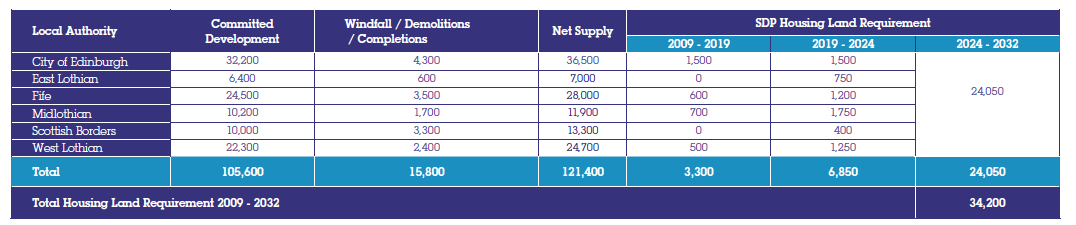
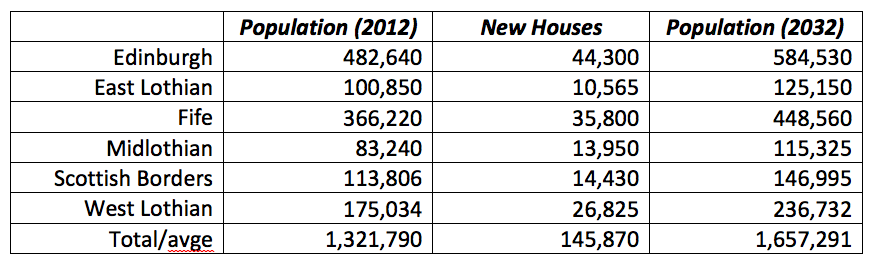
It’s not as if the existing commitments around Edinburgh were trivial. SESplan’s original 2011 document provided for the six authorities to provide 34,200 new homes in 20 years:

Housing Demand to 2025 by Edinburgh City Region Councils

SESplan Housing Demand to 2032 Apportioned among Edinburgh City Region Councils

The only reason Borders got off relatively lightly was a paucity of jobs and infrastructure and the consequent difficulty of heavy commuting into Edinburgh, completion of Borders railway not withstanding. Now, despite all six authorities spending much time planning where such commitments can best be placed these numbers have been blown out the water by an arbitrary requirement from the Scottish Government through SESplan in a 268-page chunk of bamboozling waffle that only a bureaucrat could love called Strategic Environmental Assessment.

Whatever the reason, East Lothian, which had got off relatively lightly during the first round by arguing that it was a largely rural area and served as the main recreational destination in the region, has now received a disproportionate ‘correction’ that added another 50% to its obligation. Since council Planning Conveners were privy to if not active in these conclusions and they led local discussions on each of their Local Plans, it’s puzzling why they did not go down fighting or at least alert their residents to the effects of  this huge step. Adding in these new requirements gives the following table.

Total New House Requirements by Council with Population Projection

Total New House Requirements by Council with Population Projection

These are serious. It takes the large growth proposals for the current local plans (2008-15) and extrapolates them for another 17 years to give population growths of 25% and more, as listed above. Had SESplan existed—let alone been far-sighted—the list of strategic infrastructure projects to facilitate another 1/4m people and their financing would have been in place. But only three have: the Queen Margaret bridge; Borders rail and Edinburgh’s trams.

The first will simply pour more cars onto the roads West of Edinburgh; the second will  help with the <10% provided in the Borders, plus Midlothian near Dalkeith; the third (unlike the original tram plan) will do nothing to access the major waterfront brown field sites Edinburgh will have to use to have any chance of delivering its 44,300 share. Writing in the Evening News on November 2nd, John McLellan was scathing of the prospects of success in the City itself.

“The increased number of 30 to 64-year-olds expected in Edinburgh dwarfs the projections for the rest of Scotland, and as they are the most economically active that’s good news for businesses.

“But where are all these people going to live? Three years ago a housing report for south-east Scotland talked about the need for more than 6000 new homes and in particular warned of the growing need to meet the demand for affordable homes here.

“A consultant’s report spoke of a need for 13,500 new homes in and around the city by 2024, and with the population projections it might not be wide of the mark. With people living longer and couples separating, demand for greater numbers of smaller units will only increase.”

What will make all that impossible to accommodate in the city proper is decades of total reliance on buses and brutal hostility to private vehicles. That means most developments will be near the bypass and dig heavily into greenbelt land and the likely incorporation of Midlothian into the city it will then be part of.

And, while West Lothian may have the space, links and commerce to grow on the scale proposed, that’s because it has two motorways and two rail lines. On the other hand, East Lothian is ill-prepared, having squeezed in almost 10,000 new homes over the past coiuple of decades by pushing the infrastructure of all six of its main towns to the limit. But, other than the A1 extension to Dunbar (which, ludicrously, cut off East Linton) not one infrastructure project of any significance has been planned, let alone invested in.

As a result, Tranent & Musselburgh have traffic thrombosis, undermining hopes for retail revival; you can’t drive from one side of Haddington or Musselburgh to the other without passing a single choke point; the sole access road between 1,000 new houses & the High Street in Dunbar floods with every rainstorm and the ‘main’ road to North Berwick involves passing through three extensive 30mph zones.

Ask a local in any of the six towns: parking is poor; NHS surgeries are overflowing, jobs are few and local office space non-existent; links to Edinburgh (other than ScotRail) are inadequate. Yet property prices are outrageous, inflated by high-paying city jobs that squeeze locals out of the market. All of this threatens the bucolic rolling country that makes East Lothian act as the lungs of the city, providing varied recreation that boosts everyone’s quality of life.

None of that appears to count with either Derek Mackay, the Scottish Government minister who seems keen to apply stiff housing medicine to an area that does not have the same sickness as high native Paisley. or with EL Planning Convener Norman Hampshire who not only agreed to the SESplan increments but came back to EL Council warmly recommending them as the best way forward.

At face value, providing people with good homes should be high priority. But in desirable areas like Lothian, this blunderbuss approach will not ensure they are affordable and nor will it safeguard its attractive green and pleasant outlook that makes it such a magnet in the first place. It is ‘ready-shoot-aim’ at its worst and, like the urgent clearance of Gorbals slums that led to even worse tower blocks, shows a myopia damaging to our future.

Posted in Commerce, Community | Tagged | Leave a comment

Man, You’re Welcome; Now Go Home

One of Scotland’s many blessings is its international reputation, built on many varied and dazzling things but not least on the warmth and welcome of its people. As Billy Wolfe, one-time SNP Leader and inveterate champion of Scotland and its people was once heard to observe: “why shouldn’t we welcome incomers—we’re not nearly full up”. And when you consider that under 10% of the population of Britain is stretched across a third of the island, that’s a hard statement to argue with.

Billy also saw us as a mongrel nation. One of the earliest septs of Clan Donald—and who may even have been part of the Dark Ages outpost of Ulster Scots who founded Dalriada—were the MacIsaacs. With a name probably derived from St Kissock, they were mainly bailiffs of Clanranald, coming to regard the beautiful, rugged corner of Moidart as ancestral ground. They were hard-hit by 19th © Clearances and, driven from their lands, congregated in the Nova Scotia counties of Inverness and Antigonish, from where they spread along the rugged Atlantic Provinces and New England coast.

So when in the 1960s, a David MacIsaac first made a living in the choppy seas off Massachusetts, it was amidst uncles and brothers who, between hauling fleets of lobster, told him tales of the Highlands and of the Hebrides, making them seem so real and so seminal. They would point ENE: “follow that direction straight and you will find Scotland”. He swore to himself, one day, he would do just that.

It took him 40 years and, by then a teacher, his first visit not only revealed his ancestral homeland but also that it was crying out for teachers in rural communities. It took him another two years to secure such a job, along with a permit to do it, tie up affairs in the States and move here to be sole teacher to 17 pupils at the primary school in Ae, a small village of unpretentious houses in the rolling hills North of Dumfries.

He soon met Susan, a local artist and when they married in 2006, it was a whole village affair with all of his pupils and their parents attending, as well as old friends from Massachusetts. Not long after that, Susan’s parents became infirm and moved in with the couple, with David becoming their official carer. Just last year, things became tougher when Susan was diagnosed with cancer, leading to a now completed but difficult course of radiotherapy and the prospect of surgery early in 2014. She is full of praise for David: “He has been my rock and I simply don’t know how I would cope if he were deported”.

Sorry—deported? This story was going so well—where did that come from?

Being a US citizen, when David’s first visa expired in 2009, he had to apply for (and got) a three-year skilled worker permit, which ran out last year. Upon his enquiry to achieve his long-term goal of permanent residence, the Home Office advised him to apply for just that and everything seemed to be moving, albeit sluggishly, towards that goal of ensuring happiness for all concerned. That happiness lasted until last month when a letter arrived from the UKBA part of the Home Office, refusing that permission.

It appears that some desk-driving pencil-neck suspects the marriage to be one of convenience: “It is not accepted that the evidence you have provided is sufficient to confirm that there is a genuine and subsisting relationship between you and your sponsor”. That last is his wife. The ba’heid then adds insult to injury by observing “English is the first language of both you and your wife; therefore language is not considered to be an insurmountable obstacle to your partner accompanying you to the United States”. Just how a hospital bed is fitted into a plane was not among the helpful hints.

As an example why bureaucrats should be the first up against the wall when the revolution comes, this can scarcely be bettered. But, rather than choose any such immoderate behaviour, David and Susan have been cheerily patient and slightly embarrassed by the entire community swinging behind them. A petition is being signed by everyone; support has been sought and received from D&G Education Authority and local politicians of every political stripe. No-one who knows the MacIsaacs can believe any of this need happen.

His councillor Andrew Woods, a stocky, jovial farmer from nearby Auldgirth, says “parents and children are devastated that he could be lost to us. He is an outstanding teacher, leader and a real asset. He has opened up our school to the community in so many ways.”

The local MP Russell Brown says “We have a shortage of head teachers in local primary schools. It would be a real blow if David were prevented from continuing. We need the Minister to use a bit of common sense.”

It would be a stretch to equate the bureaucratic insensitivity confronting David and Susan with the utter brutality that drove his MacIsaac ancestors to seek a better life elsewhere. But his many friends are outraged that a highly qualified and gifted leader who has more than paid his way since his arrival should so resoundingly represent the kind of immigrant the present government claims we need and yet be treated with—at the very least— misinformed callousness.

But it is no stretch to posit that the (currently non-existent) Scottish Home Office Minister who believes in what this mongrel nation could become would take one look at this case before having a couple of heavies named ‘Shuggie’ and ‘Gash’ wheechle the numpty who wrote the letter up a close to have a word wi’ himsel’.

(To publicise this outrage, the basic story was extracted from Kevin McKenna’s article on page 11 of The Observer of 27th October 2013)

Posted in Community, Education | Tagged | Leave a comment

If Britain is So ‘Great’…

…how come it rates only 30th in Education in the 2013 Legatum Profile of 140 countries? Top of the class is New Zealand that has 14.5 (vs UK’s 17.5) pupils per teacher, 3.1 (1.5) secondary and 1.5 (0.7) tertiary education index per worker. Scandinavia does particularly well with Norway 4th, Finland 6th, Sweden 14th, Denmark 18th and even Ireland a very respectable 11th.

…how come it rates 22nd in Safety & Security in the 2013 Legatum Profile of 140 countries? Hong Kong and Iceland vie for the top spot, with only 1.9% of their people having suffered assault in the last two years (vs 2.7% in UK). Indices for group grievance is 1.0 (4.7); for refugees & IDPs 1.5 (3.0); and for demographic instability 1.9 (2.8). 84.6% (vs UK’s 76.4%) feel safe walking home alone at night. Scandinavia’s placings? 3,4,6 & 8 with Ireland at 5.

…how come it rates 19th in Health in the 2013 Legatum Profile of 140 countries? For a country that invented and values the NHS, it must be embarrassing for the UK that tiny Luxembourg comes top. They have 5.4 hospital beds per person (UK is 3.0), 99% (88%) are immunised against infectious diseases and only 25% (31.1%) felt worried by something. Scandinavia came in at 5,12,14 & 16 with Ireland on 15 and much-derided Iceland at 13.

…how come such a bastion of freedom and home to the mother of Parliaments only rates 13th in Personal Freedoms? All Scandinavian countries (bar Finland at 17th) rate higher, as do Iceland (6th) and Ireland (8th). Hell, even Costa Rica beats the UK in 11th place.

…why would such a land of bucolic villages, ruddy-cheeked yeomen and the fly cuppa, of the BBC, deference to Her Maj and friendly bobbies only place 12th in Social Capital? Don’t tell me those horned-headed reformed pillagers are beating us at that too? ‘Fraid so: they place 1,3,7 & 10; Ireland and Iceland bracket us in 11th & 13th places.

…it must rank near the top by some global measure, surely? Well the closest it comes are in Governance and Entrepreneurship, where it rates 9th place in both cases.In the former it lags Denmark (3rd—maybe Borgen wasn’t just fiction) and Finland (5th) but does beat Norway (12), Ireland (14) and Iceland (18). But in the latter, Scandinavians take 1,2,3 & 6 with Iceland at 7 and only Ireland behind at 14.

…then this, the world’s 6th-biggest economy, must be to the fore when it come to leading Western civilization out of the worst recession since the Crash of ’29? Errr, nope. This is where it gets really embarrassing for Osbo—the UK languishes in 28th place, beaten not only by the six countries compared above but by a smorgasbord of comers many Brits might have trouble placing on a map (see education above). These include Malaysia, Kuwait, Thailand and Mexico.In this year of much-touted 0.8% growth in the UK economy, it actually dropped three places.

…then the overall picture must be the strength of a country with as venerated and versatile a history as the UK, surely? What Legatum calls their Prosperity rating seeks to combine all of the above so that ratings are not purely on economic measures. This does indeed knock off the rougher edges but still only places the UK at 16, a drop of three from last year. And our six small-but-perfectly-formed yardsticks? Read ’em and weep:

  • Norway—1
  • Sweden—4
  • Denmark—6
  • Finland—8
  • Ireland—12
  • Iceland—13
  • UK—16

Those in Scotland who genuinely believe that we would be better off linked to England need to knuckle down and explain their case in the face of such statistics. Five of those countries started off as colonies of another on the list and are doing very nicely, thenk you very much. Better Together has no credibility until it explains why Scotland should be so uniquely different that the story of their respective roads to superior prosperity—which includes superior quality of life—cannot apply to us.

Legatum's 'Shuffleboard" Showing Top Ten Countries for Prosperity

Legatum’s ‘Shuffleboard” Showing Top Ten Countries for Prosperity

Posted in Commerce, Politics | Tagged | Leave a comment

Black Market Cab

Those of us keen to see Scotland become a normal country are often fast off the mark when it comes to resenting advantages the South-East of England takes to itself (and hangs grimly on to). So it is with pleasant surprise that you come across a story where it is the Scots modernisers vs supposedly sophisticated Londoners who are being Luddites.

For decades, black cabs have been a British institution and their distinctive engine sound in the wee hours has brought hope to many a late reveler standing on a windswept street corner. Unlike most other countries (and most UK private hire firms) which use standard cars as taxis, cities the length of Britain have standardised on the classic design from the London Taxi Company (which is confusingly based in Coventry). Some 130,000 have been built since 1948, with production now running around 2,000 per year.

Despite having had several design revamps, the black cab is basically still a vintage vehicle but, as such, much loved by Boris Johnson, whose nostalgic streak has brought back the classic red Routemaster London bus and is such a fierce fan of the black cab that he forbids Transport for London to license any taxis that are not LTC design and provenance. Up until recently, many English cities quietly followed suit.

Boris in Black

Boris in Black

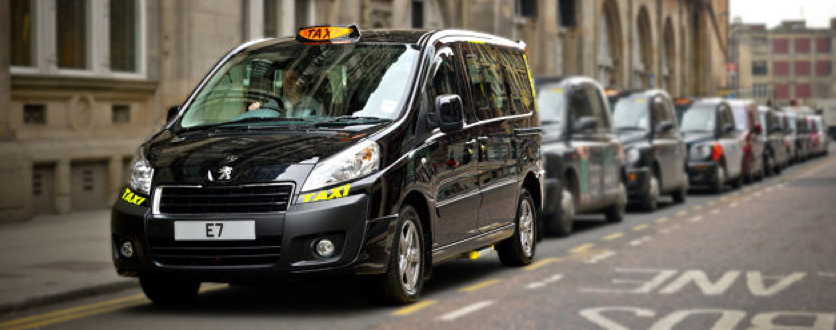
But not far from Possilpark on Glasgow’s Balmore Road is a Scots success story where two brothers have built a garage into Allied Vehicles, turning over £80m a year in building as many as 4,000 of their version of the black cab, the E7. This is based on the chassis of the Peugeot Partner, which is totally rebuilt to strict reliability, disability and environmental requirements. It is so popular that Allied have captured around 90% of the market outside of London but is being prevented from penetrating that market by Boris & TfL holding the line for the old design.

This may not last. Allied are no shrinking violets, taking the City of Liverpool to court for anti-competitive obstruction and winning. The excuse Boris/TfL are using to resist their better product is that the E7 cannot achieve the legendary 25ft turning circle of the LTC black cab. Allied’s response is that this requirement dates from when U-turns on busy streets were legal and less dangerous and far less important in the maze of one-way streets that now predominate in Central London. With Allied developing private hire and electric versions, can the black cab walls of London long remain unstormed?

The New Pretender—Allied's G7

The New Pretender—Allied’s E7

Perhaps the funniest part of the whole story is not just that LTC is no longer based in London but its former Coventry-based owners, Manganese Bronze (originally themselves Victorian makers of ships’ propellers) last year went into administration as a result of a gearbox fault in their latest TX4 model black cab that caused a costly recall.

As a result, the administrators sold the firm to an automaker called Geely, securing around 100 jobs and causing the ever-ebullient Boris to declare:

“I am delighted that Geely has successfully secured the future of the London Taxi Company, ensuring the continuing manufacture of (an) instantly recognisable vehicle synonymous with London”.

Well, yes—synonymous with London because LTC has lost all other cities to the Scots. And would Boris’s Londoners share his enthusiasm if they knew ‘their’ taxis are now being built in Coventry by the Chinese? One city analyst went so far as to say he is perplexed by the deal and fears production could be moved abroad:

“I am not sure why Geely would get itself into such a deal … the black cab is too British to win mass appeal anywhere, not even in China,” said John Zeng, Asia Pacific director for consultancy LMC Automotive. “The best hope for Geely is to move the production line to China, cut costs and sell it back to London.”

Business secretary, Vince Cable (left) cuts a ribbon with Geely Chairman Li Shufu as they officially restart production of TX4 model Read more: http://www.dailymail.co.uk/news/article-2417890/Black-cab-manufacturer-London-Taxi-Company-restarts-production

Vince Cable cuts a ribbon with Geely Chairman Li Shufu at restart of production 


Posted in Commerce, Transport | Tagged | Leave a comment