Trading Up

This week saw the first meeting for the upcoming season of NBBC . Who? Well,, it is hardly surprising our far-flung readership might not have heard en NBBC. But even most locals are equally in the dark. Now, before Auntie Beeb get all bent out of shape about a new broadcast rival setting up as the North British Broadcasting Corporation, let me assure them that North Berwick Business Collective is no such thing. It is the latest incarnation of the NB Business Association, which was in turn begat by NB Traders Association, which saw to the commercial success of businesses in the town for half a century.

Regular readers in search of this blog’s usual incisive analysis may feel the topic too parochial for their taste, but beer with us while we argue such an ad hoc collaboration may be the key to successful communities, as opposed to faceless suburbs and fragmenting society.

Back in the days of two-week bucket-and-spade holidays, the old town councils ran the show in North Berwick—and in small holiday towns like it. But the people most concerned with keeping holidaymakers happy where local retailers, who formed traders’ associations to persuade people to visit and entertain those who did. The result was a plethora of seasonal events: swimming galas; garden fetes; sandcastle contests; putting contests; etc. Visitors had a good time; traders made good money; everyone was happy.

The bloom in package jet holidays in the sun scuppered all this. Holiday town high-streets suffered the thing decay all other towns and malls and hypermarkets drained the retail business away. But in the last few years, people have more leisure time and more money to enjoy it. Two weeks in the sun I’m not enough—they want to go skiing, to explore their country, to visit friends/family, to have long weekends to do so. They are also tired of malls that all have the same Clinton Cards and Shoe Fair shops. Once they have done the monthly grocery shop at Tesco and dressed the kids for school at Asda, they hanker for some recreational shopping offering unusual items on a human scale where they don’t have to wander an airfield-sized car park in the rain.

Several Scottish towns have nailed this one: Pitlochry, Peebles, Kirkcudbright, St Andrews and Kelso—to name a few. North Berwick should be up there with the best of them (as could other pretty East Lothian towns like Dunbar and Haddington). But North Berwick already has two key advantages: 1) the Scottish seabird Centre is open all year and attracts thousands, including foreign visitors; 2) a regular ScotRail servers that puts it with them Half an hour obvious centre of Edinburgh. Unusual high-street shops, cafes and restaurants are already succeeding with their “recreational retail” offering. But, because both Scottish Enterprise VisitScotland and East Lothian Council are pretty clueless about this kind of business it succeeds more by luck than design. It could be a whole lot better.

Which is where North Berwick Business Collective comes in—and they don’t need millions to be a game-changer. A reason to visit?—Already have that = SSC. An easy way did get there?—Already have that = ScotRail service. Hard to believe but there is no alluring brochures for the town anywhere, let alone in VS TICs or bedroom packs. Hard to believe but there is no simple visitor guide with map of the town. Hard to believe but historic Scotland three Tantallon and Dirleton Castles as it they were on planets separate from each other and from the SSC and Museum of Flight, who reciprocate the ignorance.

Key to unlock this unnecessary one jam of mutual oblivion is NBBC. By distributing “Come to NB” leaflets across Scotland, they might increase visitor numbers. By running a pro-active social media campaign on top of the website, they will do the same. By welcoming visitors with a map and guide at entry points and in guest packs, they will ensure visitors enjoy all that is available to them and attractions enjoy maximum football. And, by banging a few heads, they might get attractions to benefit from visitors already on their doorstep with such radical notions as multi-access day tickets.

Fanciful? Ambitious? Perhaps. But it would take no more none of four-figure budget, fired up with chutzpah and imagination by a handful of believers to achieve. Some ground work has already been done by others. After the dreadful FirstBus stopped pretending to run bus services in East Lothian, the Edinburgh-North Berwick route has been provided by the clean and reliable East Coast Buses. And they have already cut a deal with the SSC—not for a joint ticket, but to advertise their Day Ticket on SSC member magazine and show the SSC is on their route. Not much…. but a start. It will be up to the NBBC to get better ideas—and run with them to show how the heart can be put  back into our high streets… and, as a result, into our communities.

EcoastEaster

Posted in Commerce, Community | Tagged | Leave a comment

Newspeak As Fudge

Connoisseur of Scottish politics will be familiar with the woolly Nrespeak that has become the day-to-day language of politicos, mandarins and wannabes who swim and survive in its murky waters. It creates a world where only opponents make mistakes, commitments are malleable, “progress” can be used as a slippery verb and answers to direct questions always answer a different question.

Providing your own career/hopes/job lie elsewhere, all this can be entertaining. But, for those whose idealism has not been drowned in Newspeak obfuscation gushing from Holyrood and town halls alike, two decades of devolution has not differentiated Scotland from the yah-boo-sucks bear-pit that is Westminster. This is now seems to apply within— As well as between—parties. Take this month’s exchange (reported in Holyrood Magazine) between Cabinet Secretary for Economy, Jobs and Fair Worth Keith Brown (ex-marine, former council leader and non-numpty decent guy) and Holyrood Local Government and Communities Committee chair Bob Doris (long-time Glasgow grassroots street activist, now MSP).

Just the complexity of their job titles hinte that what either of them say may not be as crisp and clear as mere mortals would prefer. It is probably unfair to pick on Keith and Bob (who usually do better) when so many others getting paid £50,000 for waffle exist.

The Gilded Balloon Award for “saying nothing with many ill-defined big words” does go to the two of them for the following guff on City Region Deals. They win jointly for the sheer scale of woolly Newspeak used. It is so woolly, it could as easily be about turnip production or the safe limit on the number of qualified angels permitted to dance on a union-approved pinhead:

The Scottish Government has responded to concerns Holyrood’s Local Government and Communities Committee highlighted about Scotland’s city region deals.In January, the committee said the deals have “significant issues” which must be addressed.

The deals, which have seen a £3.3bn investment in Scotland so far, were extended to Scotland as a partnership between the UK Government, the Scottish Government, local authorities and other partners to boost jobs and grow regional economies.

Cabinet Secretary for Economy, Jobs and Fair Work Keith Brown wrote to committee convener Bob Doris.

He said: “The way that growth deals are developed is an evolutionary process. In our on-going engagement with partnerships and the UK Government, we will be mindful of all of the recommendations made by the Committee.

“In particular, we will focus on issues linked to transparency of investment and partnership inclusivity. As we move forward, it will be increasingly important to see growth deal investments as part of a Regional Economic Partnership’s entire effort to achieve accelerated inclusive growth.”

Doris said: “We wanted greater clarity around the pursuit of economic growth by the UK Government and inclusive growth as pursued by the Scottish Government. This has been accepted by the Scottish Government and hopefully the UK Government will soon follow suit to deliver the partnership work we all want to see.

“These economic growth deals have the potential to raise communities out of poverty and transform people’s lives, but only if they are delivered properly. We recognise that city region deals are still in the very early days of their lifespan and our committee will be keeping a close eye on their progress in the future.”

…erm…whit? “…engagement with partnerships…”? “…accelerated partnership inclusivity…”? “…inclusive growth…”? Where, outside of a cosily pensioned bureaucracy, do people talk like that? We;re talking £3.3 billion of public money in City Deals—£638 for each of us in Scotland. If some kind reader could clarify from the above just where all that money will gor—even in general terms—everyone else would be most grateful.

But, as a matter of urgency, hey should also send it along to Keith and Bob, who have clearly spent so much time breathing Holyrood’s febrile atmosphere that they need an urgent refresher course in Plain English—especially the meaning of the word “transparent”.


Posted in Politics | Tagged | Leave a comment

Beast from the East

Readers me be forgiven for assuming that the title means I will be banging on about the Baltic weather we have been suffering most of the month. While it can indeed been difficult to find a brass monkey out and about, this blog concerns itself with brass necks more then monkeys. Brass necks and politicians are terms many consider interchangeable. But the leading exponents appear to come from dictatorships, most especially the former Soviet Union.

Before we go farther, let me state I yirld to no-one in admiration for the Russian people and their achievements from Akhmatova to Zhukhov But, be that as it may, their grasp on social politics has barely moved beyond the Middle Ages.

For the Beast from the East in question is Putin’s Russia, whose idiosyncratic politics have this week clashed with those of the West and are brewing into the worst face-off since the Cold War. For the last week, there has been media outrage over poisoning a former spy using nerve toxins developed by Russia. This compounds incidents like businessmen dying in suspicious circumstances and Litvebyenko dying horribly from radiation poisoning.

By 21st century Western standards, such incidents are barbaric and belong to another age. Without wishing to excuse any of this, an outraged eyeball–to–eyeball Mexican stand-off may not be the sensible way to come to a resolution that does not involve nuclear winter. My contention is that we are judging Putin and his Russians by our standards, not theirs.

The first and fundamental point is to realise that, at an international level, Russians are paranoid and also suffer national inferiority complex. Why the largest country in the world with 200 million people who were once the other Great Superpower should feel this way is not immediately obvious. But few in the West have been there, have come to know the people or their history. In this present flap, we are judging Putin and his Russians by our standards, not theirs.

All Europe has suffered invasions. But far fewer in the last millennium, with the exception of the great Mongol invasion of the 13th century when 500,000 people died, hit what was to become Russia harder than anywhere. Unlike Britain, Russia had few natural boundaries. On a regular basis, they would find themselves invaded by Poles, Lithuanians, Swedes, French, Turks so that the only way they saw they could stand up for themselves was as a monolithic state under an autocratic ruler. The Ivans and Peters who forged the harsh rule of the Czars also forged an inward looking Empire from empty Eastern wastes, driven by an oligarchy of   nobles. European countries spanned the world, with individuals contributing and benefiting as much as any landed elite.

It took some time for those European countries to realise that the tortures of the Inquisition, the flogging of sailors, the trading of slaves, the persecution of minorities had no place in modern civilisation. Russia may have absorbed some of this, but not at the same pace, nor with the same enthusiasm. In fact, it could be argued 100 years ago that, while the West had industrialised both manufacturing and the society that ran it, Russia—while achieving the former—it was run by a mediaeval society. There was little by way of a middle-class to link peasants with mobility or to provide a path for the ambitious.

Which goes a long way to explain the success of the October revolution. While several five year plans did drag Russia into the 20th century, a party-based elite replaced a mobility-beast elite but the lot all the average Russian improved more slowly them that of workers in nowhere. More tellingly, a centuries-old habit of obedience to authority played right into authoritarian Bolshevik hands. That Stalin seized power might have been expected. But that he held it with not a glimmer of counter revolution spoke volumes for the ingrained respect the Russian people gave for decisive leadershop.

It was that stoic endurance—rather then any leadership from party or Stalin—that brought them through the worst ordeal any country has have to suffer in modern times. The British are quick to cite the Dunkirk spirit, the exploits of The Few and Alamein. But it was the Soviet Army that beat Fascism—but at the cost of 3 million soldiers, 10 million civilians and devastation of all main cities.

On top of all that, Stalin’s megalomania swallowed up a number of countries behind the Iron Curtain, provoking America into McCarthyism and an arms race whose purpose—as far as most Russians could tell—was to put them in their place and undermined their morals with capitalist materialism, amoral rock music and belittle their earlier success is space would spy satellites and a series of moon launches with which they could not compete. Taking this together with earlier history cited above, national paranoia and inferiority complex is more than understandable.

So when not just the economy but the whole Communist System broke down trying to compete with a richer capitalist West, pride as well as pocketbook took a hit. Because they had no experience developing independent lives, let alone careers, he average Russian had a little clue how to exploit opportunities presented.

But many in the party hierarchy did—which spawned the class of oligarchs no spending their millions in London. They have replaced the party , who had replaced the mobility.

Meanwhile, the bulk of Russians are trying to get by as even professional salaries devaluing by the minute so that a kilo of bananas costs a week’s wages. They witness the superpower for which they made sacrifices disintegrate, lose face and become run by drunken ex–bureaucrats like Yeltsin.

So, when someone with strongman KGB credentials calls for and enfeebled Mother Russia to be made great again, who are you going to well for? Putin stomps on Chechnya for wanting to go it alone? Send ‘em right! He cuts off gas supplies as part of negotiations? That’ll teach ‘em! He stokes up civil war in the Ukraine? They should never have split off in the first place!

So, when the military win Assad’s civil war for him or track down and polish defectors in places like Salisbury Putin is showing that you mess with Russia at your peril and Russia than call again—not to mention Putin standing tall so he will win his up coming election.

His methods maybe nasty, even brutal. What they are popular with most Russians—even the ones with more International prospective. Because Russia shares more than a common Communist past with North Korea. It has also realised that, by painting an American-led West as bent on the country’s downfall, then portraying the present leadership as the only one strong enough to prevent this is as smart a ploy four permanent premiership as you are likely to find.

This Beast in the East has far more to do with securing Putin then any real danger to the West. As long as the oligarchs continue making obscene amounts of money on the LSE, the bear may growl but will forego any use of claws or teeth. Nobody in the West believes the polls that make Putin appear unbeatable; but he is.

However, until Russian society develops its own substantial middle-class, the social conscience, political correctness and squeamishness of media so prevalent in the West will be seen as foreign and hostile in Russia—and strongarm leaders will milk that. Equally, what is regarded as tough but necessary there, we’ll see as harsh and barbaric Not just Putin and the oligarchs, but the bulk of Russians who always have thought differently will wonder what these Western milksops are on about.


Posted in Politics | Tagged | Leave a comment

The Greater Dictator

All written as a vision of the future, 1994 was almost a quarter century ago. In this day and age, we may think that in The world is full of evil and uncertainty. But the truth is we are quite sheltered from the vagaries of dictatorship and the evils forecast in Orwell’s dystopian novel. Seventy years ago, Hitler and Mussolini may have been toppled but Franco was still Caudillo and Titp ruled Yugoslavia. We had further odious examples like Duvalier, Mugabe, Pinochet or what Amin yet to come.

But the grand-daddy of them all—Josef Stalin—bestrode an empire stretching from Brandenburg to the Bering Strait and was using newly developed atomic weapons and ICBMs to eyeball America for domination of the world. Three decades of dictatorship in what had become one of the world’s two superpowers made his whims more terrifying to more people then Hitler ever achieved.

And yet, the most effective documentary of this and Stalin’s demise is not a documentary but a black satire from in the venomous pen of Armando Iannucci. ‘The Death of Stalin’. The trailer does not do it justice. Sharper and more penetrating in its observations is the film review from Manihla Dargis in the New York Times on Match 8th. It is not a film for the politically queasy—it is by turns entertaining and unsettling, with laughs that morph into gasps and uneasy gasps that erupt into queasy, choking laughs. Cars rises to the occasion of the excellent writing, with Steve Buscemi (an artist at portraying scheming untrustworthiness—as he was in Fargo) particularly effective as Khrushchev.

Chaplin may have made a good first of sending up Hitler in his 1940 Great Dictator. But this is an is an even better vehicle for Armando Iannucci to exercise his unique grasp on how funny politics can be, especially when it drifts into being overly serious. The Soviet state under Stalin was the most efficiently draconian and merciless a monolith as the world has ever seen. He kept his teeth at the BBC by creating the Alan Partridge character but developed his political satire in The Thick of It, featuring the scathingly abrasion character that lampooned spin doctors in general and Alistair Campbell in particular. his shrewd mix of humour, current affairs and human frailty lead to more such success with the film In the Loop and the HBO series Veep. A 20 minute interview with Mark Kermode gives insight into his approach to this film.

So there is probably nobody better qualified to take on the demise of such a demagogue and portray the structure of fear on which despotism rests by illuminating its flaws and weaknesses by using the penetrating arc light of a scathingly targeted humour.

Guard 1: [hearing Stalin’s body hit the floor with a thud] “Should we investigate…?”

Guard 2: “Should you shut the fuck up before you get us both killed?”

Posted in Community, Politics | Tagged | Leave a comment

No Coward, But a Prophet

The last week or two have seen more than the usual chorus of voices demanding ministerial statements on everything from soup to nuts. There have been the usual gamut of talking heads, most appearing to be unknowns too young for that job, bur all briefed to the hilt how to answer any question but the one asked.

Many people regard mealy-mouthed evasion as being the product of 21st century spin doctors. But this is untrue. 77 years ago in Britain’s darkest hour of May 1941 when the British Army was being hustled out of Greece and Libya, when the Bismarck was creating nightmares at the Admiralty, when every ally was prostrate—against all of which today’s travails would seem like midge bites, that quintessential Englishman Noel Coward demonstrated the quintessential sang-froid for which the English are famous by taking time out from the end of the world to lampoon the government in verse that still seems compellingly relevant today.

“We must have a speech from a Minister.

It’s what we’ve been trained to expect.

We’re faced with defeat and despair and disaster;

We couldn’t be losing our colonies faster.

We know that we haven’t the guns to defend

The ‘Mermaid’ at Rye or the pier at Southend.

You have no idea how we grown to depend

In hours of crisis

On whacking great slices

Of verbal evasion and dissimulation.

A nice governmental appeal to the nation

We’d listen to gladly, with awe and respect.

We know that the moment is sinister

And what we’ve been earnestly trained to expect.

When such moments we reach,

It’s a lovely long speech

(never comment or chat

About this; about that)

But a really ling speech

An extremely long speech

An ambiguous speech from a minister.


We must have a speech from a Minister.

We don’t mind a bit who it is,

As long as we get that drab lack of conviction

That dismal, self-conscious, inadequate diction

We find Mr Churchill a trifle uncouth.

His ill-represented passion for telling the truth

Who ‘Eye for an Eye’ and his ‘Tooth for a Tooth’

Is violent, too snappy.

We’d be far more happy

With some old Appeaser’s inert peroration.

We’d give ourselves up to complete resignation,

Refusing to worry or get in a fuzz;

We know that the moment is sinister.

We already said we don’t mind who it is

We’ll fight on the beach

For a really long speech

(not a breezy address

Or a postscript on Hess)

But a lovely long speech,

A superbly long speech

An embarrassing speech from a Minister.

—fro, The Complete Poems of Noel Coward, published by Methuem Drama, London 2011   © NIC Avebtales as heritors to the estate of Noel Cowatd

https://www.youtube.com/watch?v=Xr6Js_0Rf38

Posted in Politics | Tagged | Leave a comment

Nobbut Muck—Wi’owt Brass

We Scots have got used to London regarding Peterborough as a northern town two stops short of the Arctic Circle. Regular readers may already be bracing themselves for more Union-bashing broadsides. But fear not; it is actually a plea for sympathetic action on behalf of our Northern English cousins, with whom we share much in common—not least exasperation with the Southern English.

Travel beyond commuting distance from the London terminus of your choice and the idea you are still in the same country is hard to sustain. The early church was way ahead of its time when it created two Archbishoprics: Canterbury and York. Leaving aside a couple of brutal civil wars, Plantagenets and Tudors welded together a fairly homogeneous country. But, no sooner were the Scots and Napoleon tamed then empire offered untold riches. Just collect the world’s bountiful raw materials, process them in bulk, then sell then back to said world at huge profit.

That required copious amounts of power. In England, only the northern half had hydri and coal to provide this, so hugely profitable satanic mills built the great industrial cities of the North. Because industry required food and finance, the fertile South did equally well. But this was where social stratification—once evenly spread from Kent to Cumbria–took on geographic dimensions. Manchester and Durham might develop universities second to none but anybody who wanted to become anybody went to Oxbridge, often to study ‘The Greats’ and not some lower-class craft like engineering thatgot your hands dirty.

Success across the Empire was achieved by men (and it was only men) from all corners of Britain. But, governors’ palaces, City boardrooms, Whitehall ministries and the stock exchange rang to me plummy tones of Oxbridge graduate. Northern accents were a rarity. While Britannia ruled the waves, everyone from mil owner to mill worker prospered, sharinga a common sense of purpose from Hampstead to Halifax (although the people of one seldom visited the other).

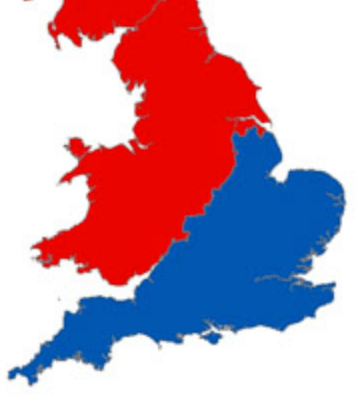
NSdivide

Boundary between North and South England

After World War 2, such cosy consensus started to unravel. Steam locomotives went out of style; Koreams built ships better and cheaper; Australians strip-mined coal cheaper; Germans built better cars with better steel; Americans innovated chips and computers. All England could come up with was Smash and Clive Sinclair. Things were equally dire across the country in the 70s. But Thatcher’s ‘Big Bang’ put the City on steroids. Which boosted salaries in property, big law firms, big accountancy firms, restaurants—provided that they were within the aforementioned commute distance of the Square Mile. But anywhere above the dividing liner between the Severn and the’t Humber is now lumped in with the Scots as closer to Lapland than to civilisation

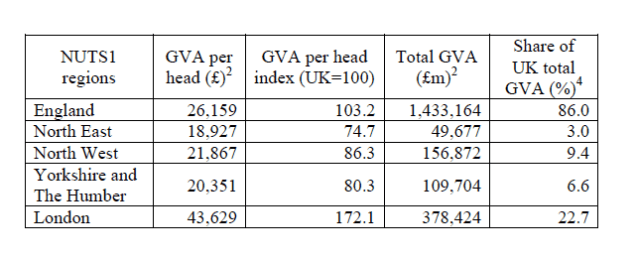
For all the hand-wringing about a ‘Northern Powerhouse’, the struggling urban centres ringing Manchester, Leeds where jobs are few, wages are low and prospects are dim. All that is compounded by worsening disparities in health (see last August BMJ). People living in the North aged 35 to 44 our 49% more likely to die suddenly then those in the South. Whether it rates of obesity, or GCSE results, or even the density of Gregg’s outlets, the North comes off worse. As The Telegraph puts it:

London and the surrounding area will keep on booming as Britain’s richest corners pull further ahead of the rest of the country with a GVA growing by 2.2% per year, ahead of the UK average of 1.8%.

North GVAsrars

Comparison of Gross Value Added between Northern regions and London

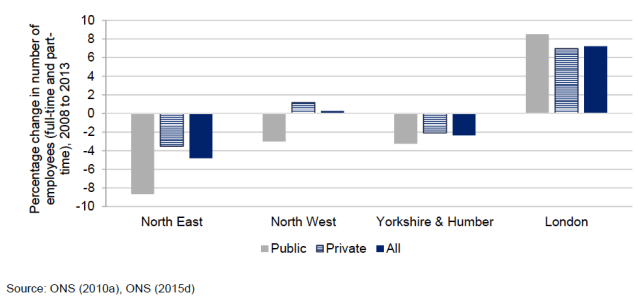
Successive governments have promised to read dress such imbalance. But investing he promised £500 million in northern transport projects is dwarfed by Crossrail’s £14.8bn or £9bn for the Olympics or £1.5bn for the “super port” in the Thames. As a result, the basic statistic of employment shows and ever widening North/South gap:

EmplueeSrars

Percentage change in employment 2008-2013 (source: NUTS1

The upcoming Brexit will affect manufacturing, on which the North still depends, far more than services, which is the South’s economic flywheel. Unless the North finds a USP such as Scotland’s oil, whisky and tourism to compete with the voracious black hole London has become, this divide will yawn wider. It is already worse than what  once split Germany. It is on track to spawn a fifth nations on these islands.—four to the north of the Severn/Humber divide with 45 million people sharing common GVA, common interest with each other and with their once and future EU partners.

For centuries, the 30 million in the Greater London City State that is the South has always regarded foreign languages spoken across the channel as untrustworthy, with the rest of the British Isles has a handy back yard to exploit. Bit in the self imposed isolation on which the South seems so keen, they may regret treating their northern cousins and go the way of narcissistically self-reliant City states like Constantinople or Venice.


Posted in Commerce, Politics | Tagged | Leave a comment

Brexit: Runners & Riders

Yes, this topic has reached tedium, and far as normal people (i.e. non-anoraks) are concerned. But the whole kerfuffle just reached its watershed, with a slippery slide to conclusion laid out before us like the proverbial patient etherised upon a table. The last week has seen a flurry from the main dramatis personae of this national drama of ours. Rehearsals are over; opening night’s behind us; and, though the ending remains murky, the whole thing is playing out as a tragedy.

Don’t just take my word for it—the most potent arguments pro and con have been deployed with 12 months to go. Compared to the draft legal document tabled by a united EU this week, the ones who started it are all over the place. With a 17 million vs 16 million outcome in the 2016 referendum, this is no surprise. Yet examining the various cases being made, what is striking is that Remain arguments our court hearing and consistent while Brexiteers deploy an emotional spectrum of chaos.

The latter do have form on this. Starting with wild pronouncements like £350 million per week extra for the NHS, they have indulged in implausible assertions: being able to stitch  a trade agreement together in an afternoon; that the Irish border could be dealt with like that between Westminster and Camden. Examine who is leading their charge, and you understand why this is. Theresa May is a steady (i.e. unimaginative) hand who makes heavy weather of leadership.

Squabbling behind her back is a reincarnation of Billy Bunter and his chums. Michael Gove and Jacob Rees-Mogg remain incarnations of the smug swot who wound up gettung scragged behind the bike shed—usually by people like Boris Johnson. Perhaps there determination not to get scragged in the Commons is why they exude political opportunism the way they used to swear. Eachexpounds Brexit like a mantra—but none seem to spend even five minutes in each other’s company to agree what it means. They each believe a 52-to-48 margin constitutes a landslide endorsement. But quite how rejection of European partnership can lead to better trade deals then we already have varies by whichever Brexiteer you listen to. Names, numbers, dates and other specifics are typically absent.

This is poor protection from the heavy guns recently pounding them, none of whom need fret about political ambition any more. Tony Blair, John Major and Michael Heseltine are heavyweights, none of whom have been slavish fans of the EU. Their recent interventions all cogently argued the same thing: that hard Brexit is unnecessary, damaging and rides roughshod over the wishes of half the country. They cite economic sources who all forecast declining affluence the further we push our European neighbours away. There are certainly flaws in how the EU operates. But to see the big picture, the table below pulls together six of the best arguments made recently on either side of the argument,

You don’t believe me? Compare and contrast for yourselves

LEAVERS   REMAINERS
Theresa Nay Speech at Mandion House Friday March 2nd   Tony Blair Speech at European Policy Centre on Thurs 1st March 2018
Boris Johnson Speech at Coffee House Weds February 14th   John Major Speech to Creative Industries Federation om Thur 1st March 2018
Michael Gove Essay in The Independent Tuesday 20th Feb   Michael Hesseltine “Voices” column in The Independent
Liam Fox “Road to Brexit” speech Tuesday 27th February   Jeremy Corbyn Spectaytor Coffee House, report Sunday Feb. 25th
Jacob Rees-Mogg Reburs John Major in The Expressm Thu March 1st   Phillip Hammond “UK Needs Trade Agreenebt: Tuesday 27th February
David Davis “Foundation of the Future” speech Tuesday 20th February   Carolyn Fairbairn (CBI) CBI Position Speech Sunday January 21st


Posted in Uncategorized | Leave a comment

Down to 25 in Old Money

It’s amazing what a little slow can do. Like paralyse civilisation. Here in Central Scotland we are on our second day of Red weather alerts after two prelude days of biting East winds and a whole prior week of dire warnings that’s Siberia was about to be visited upon us. Because they used it at every opportunity, the BBC was obviously chuffed with the epithet they had dreamed up for it: “The Beast from the East”. It’s certainly Baltic: last night down to 25°F (-4°C for any millennials may be reading this).

So you can’t say we didn’t get fear warning. And, as a write with the snow drifting to 30 cm in the street outside, the forecast is for worse to come. Granted, this combination of cold, wind and heavy snowfall has not been seen this decade anywhere south of the Highland Line. But I can’t resist the opportunity it gives a card-carrying bufti like me to Slide into grumpy old git mode.

Yesterday laid bare the fragility of our 21st century lifestyle. Despite ample warning and running empty trains overnight to keep track clear, all trains were halted by 6 PM on the first day. Bus services were also suspended and many people heeded the red warning and stayed at home. But articulated lorries, by which virtually all our goods and food move, thought they could tough it out. But they couldn’t make the hills, resulting in then swerving all over the road and turning the M80 into an overnight parking lot.

Because almost everyone drives in from afar, half the shops and businesses closed for lack of staff—and the other half closed for a lack of customers. Bufties like me Will recall 55 years ago when the storm of cold that hit at Christmas 1962 lasted until March 1963 and saw 6 foot snowdrifts, temperatures of-20 C (at Braemar) that froze streams, lakess and even small parts of the sea. But daily life did not freeze. Because most people Live close to their work, factories and shops carried on. Trains kept running because they were drawn by 100 tons en steam locomotive, which took a lot of stopping. The local postie and I both piled our bags on sledges, bundling his letters and my newspapers to minimise how much snow either had to slog through.

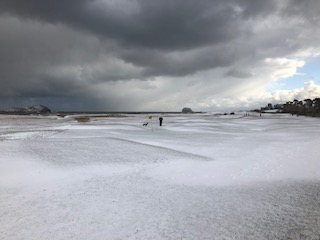
BassStorm

Winter Storm over Bass Rock from West Beach North Berwick  © Gordon Macdonald of Clanranald

This is not a plea for us to all return to 1963—nor even a claim that life was better then (though 1/6d = 7p for a Fruit & Nut bar would be a fine thing). But just 18 years after the huge trauma and many sacrifices of World War II, people were more social, more resilient and found happiness with much less. They had not yet discovered jet holidays, mobile phones, central heating, the property ladder or their legal rights. The respected neighbours, doctors, policemen and politicians alike. They typically stayed in the same house and job all of their adult life. Friends no longer live in the same neighbourhood, let alone Street; now hobbies are for the retired; we have remote services tend to garden, laundry, car, children, repairs, even nan.

This frigid blast may last hours, instead of months—and we may not get another one until 2073. In which case, grumpy old gits like me will be overplaying their hand like this as the watch the snow eddy down deserted streets. But if we did get a long, sustained, bitter winter like 1963, could we cope?

Or, by making 50-mile commutes common, by relying on distribution centres 200 miles from their outlets, by having all our food reach us by motorway in 22-wheelers, by relying on the Internet to carry essential but complex systems on which productivity (and therefore jobs) depend, are we not increasingly dependent on road, rail and power which—to judge from the last couple of days—are anything but fail-safe?

Or am I just being a grumpy old git?

Posted in Uncategorized | 1 Comment

Busted

Edinburgh takes pride in its buses. From its start as Edinburgh Corporation Transport, Lothian Buses has grown to transport over 100 million passengers each year, won accolades as the best bus company in Britain and seen off competition from FirstBus to provide 90% on journeys on public transport within the capital.

Last year, they invested £14.1m in 55 new Euro 6 (less polluting) vehicles while making £12 million profit on £146 million revenue. They have managed to make a decent fist of Edinburgh Trams, as well as growing the airport Express and sightseeing tour buses.

They have even shown First how to run rural services with their East Coast subsidiary that showed long– suffering East Lothian passengers that their buses could be clean, quiet, reliable, punctual AND profitable

All of which is highly laudable and speaks of an operation in the public sector from which others might draw lessons. Seen from the prospective of a bus anorak, Lothian would be hard to beat. Unfortunately, anoraks are not known for their strategic vision, nor for their close connection with the real world. If we were talking about Dundee for Aberdeen, this would not matter. But we are talking about Scotland’s capital—and a pretty sclerotic Capital when it comes to traffic. As they are the only option, all bus routes cross the city centre, where they become as much the traffic problem as the solution.

With its hills, it’s close-packed history and it’s Victorian street layout, Edinburgh was never an ideal design for 21st century traffic. A quarter century ago, David Begg convinced the City Council to invest in paint to prioritise buses over cars, leading to the latter being banned from Princes Street and forced into convoluted patterns as a result.

However appropriate that may have been as a solution in 1990, despite all their priority, buses mil about in Princes Street, taking 15 minutes to cover the mile between Waverly and Tollcross. Because of bus mayhem, there are commonly three separate shelters for our single stop which confuses locals and completely baffles the many tourists—who has to struggle with unfamiliar coins and holds the bus up even longer. This means that their fleet of 721 spend much time idling. (good job they bought those Euro 6 buses, eh?)

To a non-bus-anorak, the problem seems simple: too many buses. Because there is no alternative, passengers may not get upset taking an hour to rach the city centre from Penicuik (or Queensferry…Mayfield…Tranent…). No other European city of comparable size and standing would dream of trying to serve Half a million people with transport that averages under 10 m.p.h in urban areas—and half that in the city centre.

Edinburgh makes much of its expensive tram line.  But it duplicates the Fife rail linei and ts 30- minute Journey time is slower then the Airport Express—and glacial when compared to the 10 minutes ScotReal takes to reach Edinburgh Gateway. It has not made inroads on city centre congestion. In fact, it might have exacerbated the problem on crowded Princes Street

But, Lothian Buses ignores Edinburgh Gateway—and pretty much any other (faster) public transport. The idea of having buses from Ratho, Queensferry, etc feeding into there for our fast trip to town has not occurred to them. Even more reprehensible is there opposition to reopening the South Suburban rail line to passengers. Interchanges at Craigmillar, Cameron Toll, Newington, Morningside, Merchiston and Gorgie would remove the need for most buses to come any closer to the city centre. It would remove congestion(and the need for one third of their boss fleet) at a stroke.

So, why don’t they?

Well… remember that £12 million profit we discussed? Most of that goes to Edinburgh City Council (their owners), who are eternally strapped for cash. L heyack of vision over the last few decades (not to mention incompetence over trams, property, Princes Street retail, etc) is endemic. There has been no coherent transport plan for Lothian—let alone Edinburgh. It doesn’t want its political fingers burned on more trams, so it’s certainly not going too argue for what far-sighted cities from Munich to Manchester have done—build a fast, hi capacity Rail/Tram network backbone which buses feed locally and keep historic City centres both accessible and foot-friendly.

They would rather keep their £12 million bung and hope nobody notices that their city is choking on too many buses.

Posted in Uncategorized | Leave a comment

Enough Already

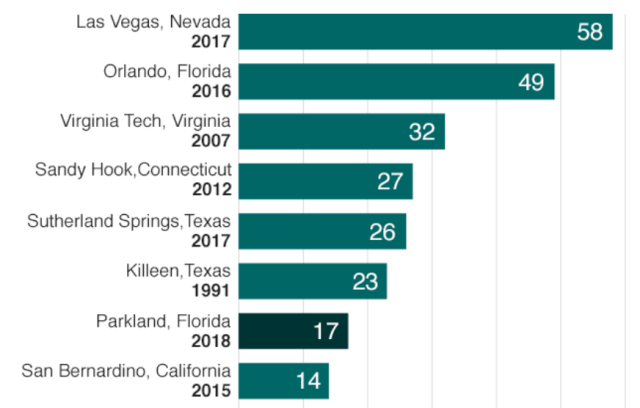
Within hours, the British media seem to have forgotten all about Parkland FL and the 17 staff and pupils shot and killed by a disturbed ex-pupil. As the 17th such shooting in this year alone, editors saw it as another unfortunate incident in the waves of such incidents that sweep America. Last year, 33,3,694 people (equivalent to the entire city all Stirling) were killed by firearms in the US, a ratio of 106 gun deaths per million population  Gun deaths stats per million in Britain? It’s 1.

President Trump, whose campaign received millions of dollars from the National Rifle Association and who address their confidence asserting “the NRA now has a friend in me White House, had overturned gun control legislation and reacted the Parkland shooting by praising First Responders and blaming it all on psychiatric shortcomings of the shooter. And that should be that. Nothing much happened after Columbine. Or Sandy Hook. Or Virginia Tech. Or the concept in Las Vegas. Why would Parkland not fade from Focus in a similar manner, despite gruesone statistics for mass shootings?

USmasShoot

Deaths from Recent Mass Shootings in the USA (Source BBC)

Annual gun deaths exceed even the carnage on America’s roads—death now touching 33,000 annually. Add the two statistics together and there are more Americans dying brutally in their own country each year them all American casualties in the Vietnam War. There may be out rage, what is there any action?

Well, it would seem that the other pupils in Parkland have not just been grieving about their loss but have  been getting pretty angry about there being more guns than people in America and the wonky laws that exist to control their use. So they went to Washington and held a demonstration so the President new how they fell. And they lobbied their senator Rubio (who, like many on Capitol Hill also received serious funding from the NRA). These young people are recruiting friends from across the country for an even bigger demonstration.

They have a huge task ahead to change anything. We Europeans may share Western civilisation with  Americans but any mutual empathy stops when it comes to guns. Wild West frontier necessity aside, guns were always integral to t American culture. Gun-lovers cite the Second Amendment to the US Constitution unendingly: ” …the right to bear arms shall not be infringed”. What those gun-lovers fail to cite is the bit peior, which says: “for the maintenance if a will trained militia,…”.

Given that the amendment was adopted in 1791, barely a decade after asserting their independence and before other fratricidal clashes with Imperial Britain like the War of 1812, the second amendment may well have been necessary. But in the i 227 years since, the world has moved on—and America more than most. Back in 1791, it was seen as necessary to extirpate Indians in the way of expansion of the new nation. Back in 1791, it was legal—even necessary—to own slaves to make cotton plantations viable. 227 years later,  an enlightened America now eschewa such one-time axioms as inappropriate for 21st-century civilisation.

Why are copious armories of guns any different?

Each nation holds conceits about itself: Brits are refined & reserved; Germans diligent & precise; Italians voluble & creative. The Americans see themselves as self-reliant entrepreneurial pioneers. They make heroes of the alpha male. And all pioneers carving a future from the wilderness must defend themselves. But crucially it is not just gun-lovers who oppose gun control. A wide swathe of suburban middle America keep guns at home against burglary or attack. Given  American crime statistics, this can be argued as reasonable behaviour.

The NRA play on this. Their mantra is “if you make guns illegal, only the criminals Will have guns”. Apologists appear even here on television with variants on this. Andrea Ockefeld (sp?), an articulate millennial, was on BBC News several times in the aftermath of Parkland making a case against any curb on guns because this would only make it harder for good citizens to acquire them. She cited the recent church massacre in Texas where the gunman was halted by someone with a rifle handy in the gun rack of his pickup truck.

But the times they are a’changin’. Despite the right wing and generally gun-supporting Republicans holding all the key posts in the White House, and Congress, the stubborn resistance to addressing this carnage may be starting to crack at last.  The young are marching. Prompted by a president they cannot abide, liberals are organising. And ordinarily, apolitical folk are asking why there should be twice as many guns her head in the USA as there are in war torn Yemen.

Major resistance Will come from a $13.5 billion gun Industry and the 4 million members of the NRA. But when 100 million suburban middle American parents start getting lobbied by the 16-year-old apple of their eye why they need something is dangerous as a loaded revolver in the bedside table, let alone an assault rifle locked in the garaged, then a majority for change will become overwhelming.

America is a great country, partly because it learned to respect its natives and  free its slaves. As it’s bountiful spaces become more crowded, its people will learn to be more neighbourly and less ruggedly independent—as Europeans once had to.  Those who dislike the prospect might consider Alaska.

Once significant portions of the 300+ million guns have been melted down into something more useful, this shameful homicide rate, this street warfare blighting Chicago, St Louis, Baltimore, etc., this unconscionable number of police officers killed on duty will drop to something other parts of the west have enjoyed for decades.

The resulting Bruce to the American economy will swamp any effect of job losses at Smith & Wesson more importantly, it will dwarf the bloated promises made by their current NRA-sponsored President. Perhaps it will even lead to something more enlightened.

Posted in Community, Politics | Tagged | Leave a comment