For Those in Peril

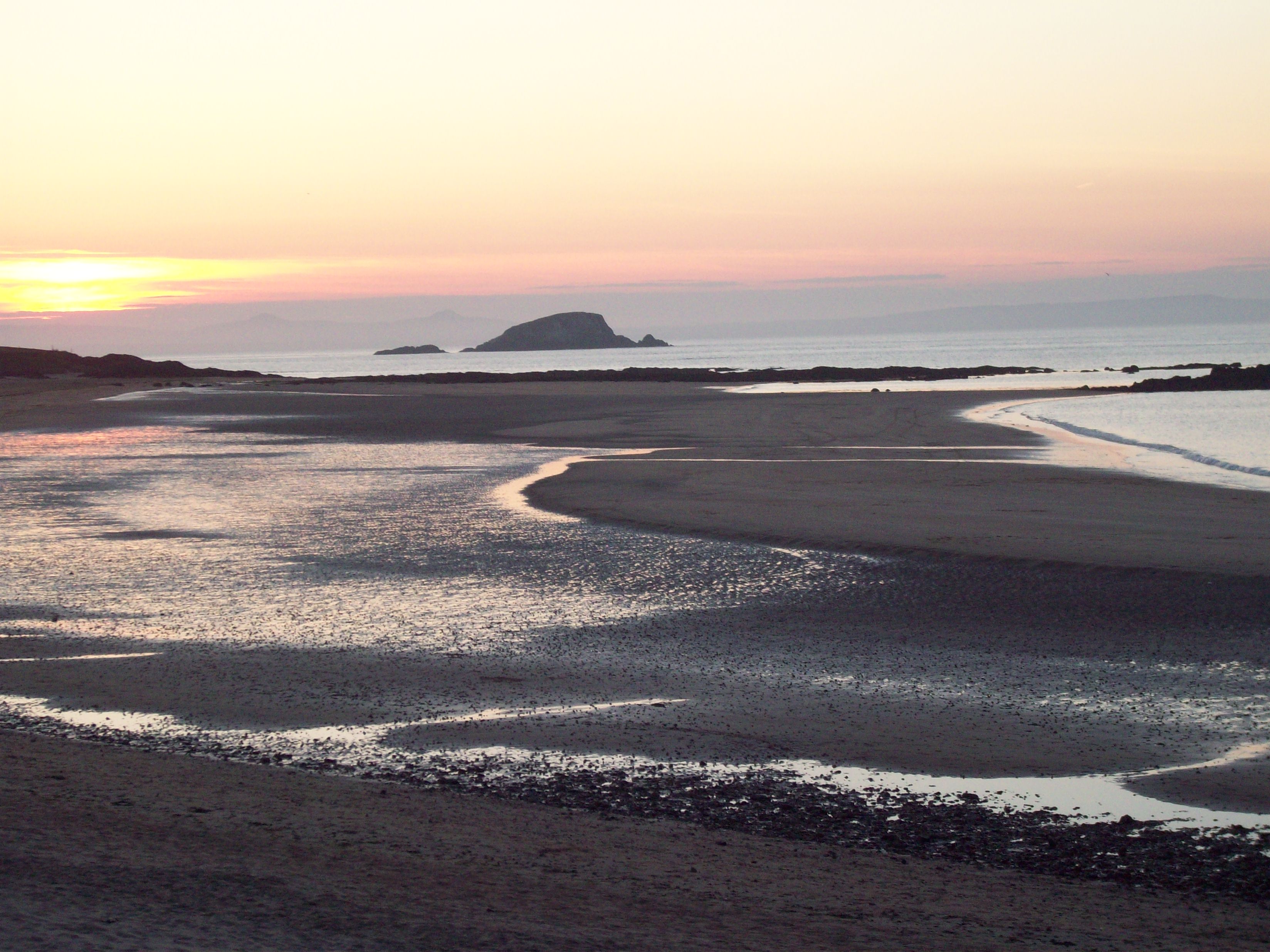
This holiday weekend I spent time at my favourite haunt—North Berwick harbour. The 2011 season is well underway with fishing boats out, crowds milling around the SSC, the hatchery reopened, the new lobster shack on the North pier shifting lobster and chips for under a tenner and trip boats shuttling rainsuited visitors out round Bass Rock.

But the weather in May has been, frankly, rubbish. The jet stream’s too far south, pulling lows in off the Atlantic. Even ignoring the awful days of force 9 gusts, the wind has set in the West and the jabble off the Old Pier has made low-water loading of boats a tricky business and trips to the May impossible. Luckily, few amateur sailors are out yet because any one in trouble would get blown out into the North Sea and the heroes (I do not use this word lightly) of the RNLI would swing into action to get them back.

The British may pride themselves in being a maritime people but the ignorance of our average visitor about the sea, its moods and its perils is staggering. Last year, over 300 people owed their lives to the guts and professionalism of 4,500 unpaid, volunteer crew at the 235 RNLI stations around the British Isles. (Note this includes Eire: this is the one British institution they chose not to break away from. Scotland take note.)

The two RNLI stations in East Lothian at Dunbar and N. Berwick are busier than most and getting more so, last year being the second busiest on record. When the furore broke over UK government plans (now hopefully shelved) to cut 18 coastguard stations to three full-time, no gratitude was shown for the unbelievably good deal the government already gets that most maritime rescues (no slight intended to HM Coastguard, RN and RAF rescue helicopter teams) are actually done for them by the RNLI. For free.

Is it conceivable that any government could organise, train and maintain this huge network of tough, indefatigable crews whose esprit de corps puts their lives on the line in the service of others as part of the job? An unpaid job? And, what’s more, do it all for under £250m a year—less than a single council or tank regiment? The RNLI raises ALL that each year through public donations, legacies and merchandising. Even more heartening is how our seaside communities embrace their local RNLI station—through volunteering, fundraising or just solid moral support, not least because just about everyone knows someone they’ve pulled out of danger.

If you haven’t visited your local station (and told them what a splendid job they all do) try it. They’ll have chilling tales of derring do in the teeth of all the legendary cussedness that the North Sea could throw at them. You’ll not only feel the pride they have in the tough job they do but you’ll feel it transfer to you as admiration along the lines of “Hell’s teeth, I couldn’t do what they do, even if they paid me a footballer’s fortune”. Believe me: they deserve it more than the footballers.

Taken in Belhavrn Bay in 'normal' conditions. Note Berwick Law doing a passable imitation of an Icelandic volcano

Posted in Community, Environment | Tagged | 2 Comments

I See No Shifts

Nelson’s famous use of his blind eye at Copenhagen is enjoying a re-run, courtesy of Scottish Labour. After four years in which the entire party seems to have believed that the 2007 election was some cruel quirk of fate that time would reverse to bring them into their own again, the poleaxe that hit them this month has yet to show any effect.

Far from accepting a renewed wake-up call, senior Labour MSPs (such as still exist) have been churning out a dismal business-as-usual. The only difference I see is the message is more muffled because heads are buried deeper in the sand. Jackie Baillie MSP straps on her indignant face and wants an emergency statement on Edinburgh’s Elsie Inglis Nursing Home where a resident died. Considering that, under Labour, the share of care homes run (like this one) by the private sector ballooned until now only 174 of them are run by local authorities while 637 are private (plus 132 are run by the voluntary sector), is it any wonder that ensuring quality of care in such homes is more difficult?

Then Malcolm Chisholm, one of their few constituency MSPs left standing, gets on his high horse about CoSLA’s proposals for review of teachers’ pay & conditions: “It is absolutely critical that any changes to teachers’ terms and conditions of employment are negotiated properly and through the agreed mechanisms”. Aye, right: the famously stroppy, Labour-dominated EIS/SSTA/etc are going to work with an SNP minister? The doubling of spend on education since Henry McLeish sold the pass in the McCrone agreement was in exchange for vague promises of improvements, none of which occurred. Actually, less contact time, 35-hour/4.5-day weeks and a quarter of the year on holiday has promoted clock-watching. How many teachers at your local school volunteer for after-hours clubs or drive a minibus to support ‘their’ kids?

Most gallus of all, Lewis MacDonald MSP has called for “a renewed focus on house building as official Scottish Government figures showed a fall in the number of new housing being built in Scotland”. Oh, really? That wouldn’t have anything to do with fiscal implosion during Labour’s watch in 2008 that scuppered banks’ ability to lend capital, would it? The only thing keeping any house building afloat is the thousands of council homes being built by SNP councils, using government support and in rather stark contrast to the 6 (six, yes, six) completed by Labour in 1999-2007.

This is all Labour rump MSP group of 37 have managed by way of statements since re-grouping. Self-serving and conveniently blind to recent history though all three are, what is especially ominous is they reek of the same old political opportunism of sniping from the sidelines; there are still not two decent ideas to rub together.

Scotland has a powerful new government with plenty of ideas and the bit between its teeth. In the maelstrom that shredded the opposition, only Labour is capable of holding them to account. Labour needs to kick the feeble moaning that cost them the election and shift towards strong, innovative, questioning political thinking.

But I see no shifts.

Posted in Community, Education, Politics | Tagged | 1 Comment

Simple Status

In a typical tabloid-esque frenzy, the Hootsmon today reveals the top (bottom?) ten councils in terms of pay-outs to their own employees for unequal pay. Midlothian tops the list at £496,746 over the last five years, with much larger Aberdeen City and South Lanarkshire (both above £400k) in 2nd and 3rd slots. This sad affair has dragged on for over 12 years, costing councils £3m in legal fees alone that could have been better spent.

There is no single villain in this mess. After Scottish councils were re-organised into 32 single-tier authorities in 1996, each had a rat’s nest of pay agreements, many grossly unfair, especially to women. The idea of a single pay structure with the same pay for each job and grade, irrespective of who filled it, seemed unarguable so unions and CoSLA set about implementing this in 1999. But, as soon as negotiations hit specifics, things bogged down with staff groups each arguing for their special perks. Unions then bottled seeking a national agreement and passed the hot potato on to individual councils.

Councils, at that time, were almost all Labour-controlled and, if there’s one thing that sends a shiver running through a Labour council, looking for a backbone to run up, it’s a showdown with the unions. By 2007, no council had yet resolved the matter. Most had developed a ‘single status framework’ of jobs but the unions baulked at anyone losing pay (so-called ‘red-circled’ jobs) and no-one wanted a showdown. Many staff, mostly low-paid women ‘green-circled’ for pay rises, became exasperated waiting and went to lawyers. Stephan Cross became lawyer of the week for bringing thousands of claims to court.

But in 2007 many councils came under control of parties less beholden to (and therefore less scared of) unions. In councils like East Lothian and Stirling, the nettle was grasped and unions presented with a final position. Upon threat of strike action, their bluff was called—the staff received a deadline to sign up to avoid compulsory ‘dismissal and re-engagement’. Out of over 3,000 staff in East Lothian all but 6 did and the general mood was relief that the saga was over, especially among the three in four who were ‘green circled’. There were poorly supported day stoppages but no strikes.

Four years down the road, many councils are still administering their rat’s nest—five of the top ten listed in the Hootsmon, plus Glasgow and Edinburgh qualify because earlier Labour administrations left such a fiscal hole that cash to pay the thousands of ‘green-circled’ staff just isn’t there. Now in recession, thousands of underpaid staff will long remain so. The only people smiling are law firm like MacRoberts or Brodies or MacLay, Murray & Spens on their way to the bank.

There should long have been one simple state of affairs: Single Status in all councils. That there isn’t is down to a lack of guts and fiscal reserves, with PR flannel covering up archaic pay structures that are squandering public money.

Posted in Politics | Tagged | Leave a comment

Tim’rous Beasties

Three weeks into the aftermath of the SNP’s thumping victory this month, a chorus of shrill voices are being raised as to what its supposedly-impossible absolute majority might portend. But, rather than being from unionists here in Scotland who see barbarians at the gates and are pondering the right moment to load up the kids and head for Carter Bar, most wails are coming from voices across the London media not properly briefed on their subject as they interview some of our top politicians (who are). A classic example was Monday’s mismatch on Daily Politics between Wur Eck and Anita Anand who seems to have showed up for a tennis match carrying golf clubs

Similarly, Jeremy Paxman’s normally powerful forensic questioning diffuses into something closer to willfully ignorant disdain when dealing with an unflappably poised Nicola on Newsnight on May 11th:

In contrast, on The Politics Show, Lorraine Davidson of the Times and Iain Martin of the Daily Mail—neither of them friends of the SNP—seem able to explain what’s going on quite eloquently in a matter of minutes:

If there is indeed such a thrawn mindset among leading political media figures in London, adding to English Jingoistic rants from the likes David Starkey or Kelvin MacKenzie, then Anglo-Scots relations are likely to enter some very choppy waters. The SNP, while clearly having the bit between its teeth, has no interest in anything but calm and reasonable dialogue with our southern neighbours. Given the huge leap recently made in Anglo-Irish relations this month after decades of dithering, such dialogue is clearly possible.

But will an apparently myopic and even willfully ignorant London media allow it to happen?

Posted in Politics | Tagged | Leave a comment

Durham Says Sorry

The English Civil War was a long time ago but did not only involve the English. Charles II, being a Stuart, was proclaimed King of Scots in February 1649 and, when he landed in Moray the next year, signed the Covenant, much to the exasperation of Cromwell, who then planned a retaliatory invasion. Despite their army under the incompetent Duke of Hamilton having been clubbed back across the border the previous year, the Scots gathered another under Leslie. But, while many of the former had been battle-hardened from mercenary service in the Thirty Years’ War, the 12,000 gathered at Edinburgh to block the invasion were mostly ploughmen and cottars drafted into service with little training.

Leslie was smart enough to know his troops’ limitations and used a scorched earth policy, avoiding direct confrontation of the well disciplined Roundheads. Cromwell’s advance left his 11,000 men hungry so he fell back on supplies brought into Dunbar by ship. Leslie reached Dunbar first and picked a dominant position on Doon Hill, blocking any retreat to England, but the impatient clergy—too often a baleful influence on Scots history—insisted a swift resolution was possible with help from the Lord.

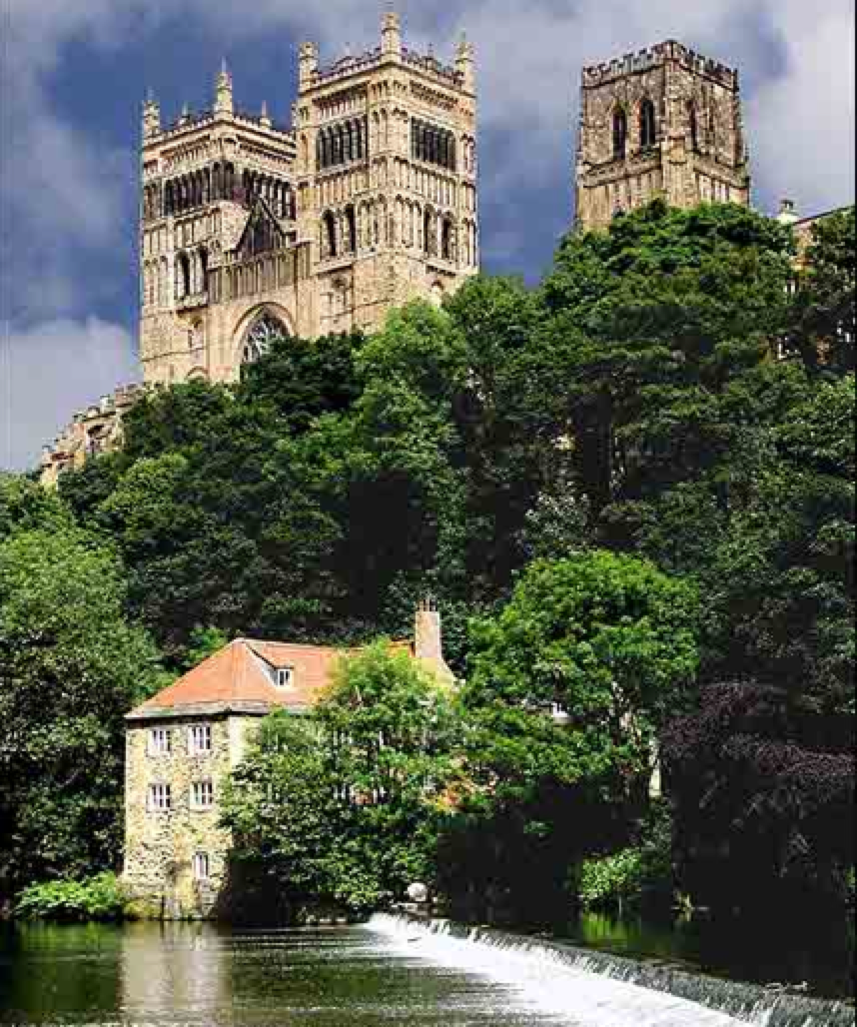
At the foot of the hill, the Scots were subjected to a surprise night attack and their battle cry “The Lord of Hosts” found favour with them and not the Scots clergy. They rolled up Leslie’s right flank and their cavalry drove a disintegrating rabble from the field, capturing around 5,000 of them. This being a logistical nightmare, they were taken to the only building big enough to contain them—Durham Cathedral, where they languished. 2,000 died on the march, another 1,500 of disease and malnutrition at Durham and the remaining 1,500 were sold as slaves to the English colonies. There is no memorial, only the record of a mass grave in the form of a trench running North from the cathedral.

360 years later, Dunbar’s George Wilson has been fundraising to build a memorial and to have this low point of Anglo-Scots relations be properly recorded and atoned for. He has managed to extract acknowledgement of the terrible events and an intention to assist in providing a memorial to the 1,500 Scots who perished there.

Posted in Community | Tagged | Leave a comment

Every Little ASDA Helps

Ideal Stage for Campaigning—Isobel Knox and Paul McLennan (Council Leader) in Dunbar

Posted in Politics | Tagged | Leave a comment

Breath of Fresh AIr

Yesterday was a day when a lot of cobwebs were blown away. As compared to Braco or Inverness, East Lothian was pretty fortunate with few trees or power lines down and no main roads blocked. Elsewhere, most ferries and trains were not running and Argyll was effectively cut off, even from the internet, and at a standstill. Add in the ash cloud from Iceland that closed airports and Scotland was struggling to keep business as usual.

But this is not that unusual. We get hammered by storms on a regular basis‚ it’s just not normal to happen in late May but with the jet stream running well south of its usual path, low pressure vortexes are being catapulted our way with a dusting of Gromsvotn ash to add insult to injury. Last year the wind was in the East when mountainous seas on top of a storm surge and spring tide wrecked dinghies at North Berwick, blew a hole in the road outside of the Goth and shredded east-facing beaches.

But a year on and there is little but memories of that storm-of-the-century. Yesterday’s “don’t remember it this bad” gusts that reached 100mph in Stirlingshire must have been hell to experience but, apart for the unlucky van driver in Balloch, it’s mostly slates and branches and the occasional dented vehicle. Compare us with Missouri where a tornado cut a path six miles long through the town of Joplin, killing almost 100 people, wrecking hundreds of homes and businesses and making the town centre “look like a war zone”.

Kick into the equation that most of the planet that doesn’t suffer tornados or typhoons or hurricanes gets earthquakes or avalanches or droughts and you start to appreciate that we get off fairly lightly here, the occasional horizontal rain at Force 10 notwithstanding. Look on yesterday as a breath of fresh air that turned our street litter problem into Denmark’s.

Posted in Environment | Tagged | Leave a comment

Whistlestop Tour

Proof that the man did not let me down—although even His Eckness was unable to persuade enough of those thrawn Panners to see the light!

Posted in Politics | Tagged | Leave a comment

Sneak into Summer

I know it’s not officially summer until June 21st but I’ve never been one to follow the book if it made little sense. The glorious weather—and especially the endless light—of late May and early June deserves to be considered summer in Scotland, not least because it lets us see our country literally in a new light.

Yesterday I caught a jaw-droppingly inane made-for-high-numbered-channels TV show called Real Wives of Orange County. In it, overly made-up women jostled for points in materialism and aspired to leave the endless sunshine of their home (just south of LA). Endless sunshine sounds great but, after six months of it and being unable to walk on the searing pavement in bare feet, it gets old fast. Also, its palm trees, shopping malls, tract homes always looks the same, no matter what time of year. We’re really different.

I won’t argue that our dark January is a joy but at least the sledges come out once in a while and there’s a real cosiness when you get back in to stoke the fire and wrap hands around a mug of tea. But this time of year, go for a walk at 4am. The sun’s up, shining at new angles that lights the place up making it seem different, birds are hammering away and it’s as if the whole world is up & running just for your entertainment.

Same thing around ten at night: the sun dips but seems reluctant to go to bed, swinging away round to the North to shine across the Forth from behind the Lomonds. Go to the tropics to watch a sunset and twilight lasts about 45 seconds. Here, the gloaming lasts best part of an hour and a month from now, the sky over Fife never gets properly dark. Especially on those still evenings, there’s a hush, glassy water laps at the shore and each lighthouse flash streaks a bright path across the water to you. It’s so quiet you can hear the gulls squabbling on the islands and the eerie throb of a passing freighter far out in the Forth. Forget the calendar: this is summer. Enjoy!

Posted in Environment | Tagged | Leave a comment

Busted!

Now that the election’s over, there’s little need to alert the Red-Tops but this evening one of my little secrets was blown wide open on BBC4. Alice Roberts (of Coast fame) had a new programme on Wild Swimming in which she explores rivers, tarns, rockpools and caves as more exciting places to go swimming. I have never explored the Wye or Dart or limestone caves as she has done. But where once I thought clandestine aquatic thrills were my own little secret, but even if BBC4 is barely mainstream, the word is out.

Before I had ever heard of Alice’s guiding guru Roger Deacon or his book Waterlog, I had been sneaking off to explore stretches of wild water. If I could snag a boat or canoe to do so, that usually only part satisfied my curiosity. I would want to return to explore in and under the water, as well as on. It started as a child off when I found kelp beds off Platcock and crannies in the Red Leck on North Berwick’s East Beach so much more fascinating than the pristine outdoor pool. It continued with the rocky coast, varied lagoons and lively rivers of northern California while I was there.

Wild swimming is neither sociable nor cosy, often involving cross-country scrambles, often at odd hours and needing a wet suit as protection against the cold. From North Berwick the river/lake options are limited; the lower Tyne has some fabulous unspoiled pools and wildlife but the Peffer’s too muddy and Pressmennan too small. But the coast has endless possibilities. East of the kite surfers at Gullane Bents, Eyebroughy, Fidra, Lamb and Craiganteuch are all reachable from shore (best at slack tide in neaps—never on a flood/ebb or in springs). With snorkel and mask the inshore either side of North Berwick is full of kelp forests to explore and a seaweed garden in the West Bay is as colourful as any on land. Just leave the creels and the ropes that link them alone, although a sneak peek at the catch is always worthwhile.

So Alice & BBC4 have blown my cover. My dark little secret is out, how I splash off for some aquatic relaxation, often when sensible people are in their beds. But watching the moonlight dance across the water from a darkened town while bobbing off the Maidens is one of my more unusual and vivid memories. Seems like, in future, I may just have to share such glories with other people.

Fidra from the North: notice kelp beds along the western shore & ridge leading SW off the South Dog

Posted in Environment | Tagged | Leave a comment