Triple Eh?

Just about inhaled my muesli this morning when I glanced at today’s Hootsmon front page to see that prophet-of-doom-who-should-know-better Bill Jamieson was querying whether Scotland could retain the present AAA credit rating the UK (and very few other countries) enjoy. Why do I say he should know better? Well, firstly, his speaker’s bio runs eloquently over his financial experience and astuteness:

“Bill Jamieson’s areas of expertise include corporate finance, mergers and acquisitions, capital markets, funds and structured finance. He has considerable experience in cross-border corporate and finance transactions, and has advised multi-national, public and private companies, financial institutions, governments and multi-lateral institutions during 8 years in the City of London and 14 years in Asia.”

Secondly, his track record of doom and gloom outbursts is both depressing and inaccurate. Over a year ago, he was prophesying that Ireland was in such dire straits they would run out of cash by last summer. As of writing, Eire’s still afloat. Its BBB rating isn’t the best but it’s a sight better than most countries, especially as they have little beyond a young, dynamic workforce as resources. His most recent analysis is based on a ‘bond vigilante’ at M&G Group observing that most small economies do not merit a AAA rating. But it stands up badly under deconstruction.

First of all, the ratings themselves are hardly standards of objective science. They are an amalgam of what pointy-heads at a handful of key rating agencies think. Standard & Poor, Fitch, Moody’s and Dagong set the standard between them, even if they don’t all agree on the scale to use, let alone the rating to assign. Secondly, the ratings given to Lehman Bros and similar financial Icaruses were sky-high when the junk bond/mortgage boom that brought the financial world low was at it height. Hardly a resounding endorsement of their objectivity, their analysis or their foresight.

Thirdly, the article presumes that the UK will continue to merit its rare AAA rating as it is. With two tranches of ‘quantitive easing’ (used to be calling printing money with nothing to back it—but that sounds bad) behind us and the Chancellor admitting in his autumn statement that he needs to borrow an extra £111bn over the next five years, the UK is courting the same situation as the once-mighty US, which has recently seen its rating fall to AA+ for the first time ever.

Fourthly, he cites Iceland and Ireland that Bill and Jim Murphy have both enjoyed kicking around since both fell from AAA fiscal grace to BBB- and BBB+ respectively. Yet those ratings still qualify as “investment grade” for bonds. Neither country is as large as Scotland, nor boasts a fraction of our resources. He cites that agencies “would look at Scotland’s poor relative growth”. But Scotland is the only area of the UK outside London to have growth between 2007 and 2010.

In fact, if we look at Scotland as if it were an independent, the countries closest to it in terms of size, economy and geography are our Scandinavian neighbours: Norway (AAA); Denmark (AAA); Sweden (AAA); Finland (AAA). Not bad company to keep, especially if Scotland were to join the Nordic Union and become an active member of their prosperous little club.

And, looking at Scotland—even taking our share of the unprecedented defecit that Brown and Osborne have run up for us—the defecit-to-GDP ratio of 9% for the UK almost halves to 5%—if Scotland were on its own. We are one of the few non-Third-World major oil producers. If the agencies can rate repressed Saudi Arabia at AA- and tinder-box Abu Dhabi or Kuwait at AA, then boringly stable, energy-rich Scotland ought to be rated along with resource-poor but also boringly stable Austria and Switzerland at AAA.

And, if small countries have little hope, how come Edinburgh-sized Singapore (of which Mr Jamieson knows much) and Argyll-sized Luxembourg both deserve AAA rating?

Only towards the end does the article admit that several factors favour independence, including budget defecit and the positive effects of controlling 90% of North Sea oil revenues. While I am delighted that the debate on the pros and cons of independence is growing, badly researched articles framed as scare stories to suit the policies that Mr Jamieson favours does little to advance the debate and, frankly, undermines the otherwise important contributions that someone of his stature ought to be articulating for the unionist side.

When his source says “if I’m rating Scotland as a standalone country, I worry what will happen going forwards”, it may sound reasonable. But it is partisan. In the last four years, Scots have become over 10% poorer by remaining part of Britain and there is every indication that the worst is not over. Why are such articles not asking the real question: whether things might not be even worse if Scotland stays part of basket-case Britain?

Posted in Commerce | Leave a comment

Lab Phlostigen Research

Of all the trends apparent in politics over the last couple of decades, the one that appears pivotal is not any revolution in political thought on policy or the invention of a whole new category like socialism but the rout of the amateur. Whereas even Westminster was once the province of the gifted amateur—Scotland contributed people like Nicky Fairbairn, Tam Dalyell or Hugh Gaitskell, all able to lead the troops, spice up debate or snipe thoughfully from the sidelines without having had a day’s training in their puff.

Though Thatcher’s discipline started the trend, it was Blair’s New Labour that brought in a professionalism never before seen. Armed with pagers and computers, databases and the internet, a swarm of bright young things, ably lampooned by In the Thick of It, took a political rabble and taught it to march in step.

From a Whip’s perspective, this was bliss indeed. From  new inductions of MPs who had scarcely held a job down, this was salvation: to know what to say by consulting an oracle, however prepubescent or halitosis-blessed, steered a safe course toward a career as Under-Secretary for Important Stuff if you just kept your nose clean.

If Labour was the first to embrace the new religion, the Tories and SNP were not long in following. Pagers may have gone but modern politics is held together by bright young things with perfect hair and suits standing in odd corners near centres of power talking urgently into mobiles. Lib-Dems and Greens both appear too quirky and/or shambolic for this approach to have entirely taken them over.

But that last explains why they are in the political doldrums. Because parties who have not used these ‘scientific’ methods over the last decade have been taking on the US Marines with bows and arrows. Politics has become as much about positioning, PR and surfing evanescent trends as any substantive policy. Voters have proved this time and again, with the apogee of this being Labour’s 1997 victory on a five-point pledge card. Manifestos have been obsolete as frock coats and top hats ever since.

But it was at that point that Labour especially got stated digging itself the hole it is now staring out of the bottom of in Scotland. Science is wonderful and professional has more chance than amateur but ‘ a little learning is a dangerous thing’ is a phrase that should have resonated but didn’t. For the Labour Party in Scotland never embraced New Labour and, as a result, never quite grasped (indeed wholly resented) the bright young things running amuck in Millbank Tower around the Millennium.

Science is littered with blind alleys, however hopeful they once seemed. There was no aether to transport light across space; Newton’s beautiful mechanics fails totally to explain how atoms work; phlostigen—once seen as the essence of fire—has been proved a fallacy. Like the Sorcerer’s Apprentice, Scottish Labour saw what Millbank was doing and wanted the same devastating effect on voting patterns in Scotland. But, though having access to the tools, they were untutored in how they should be applied.

Being Old Labour worked initially in their favour. Their long-term supporters and large cadre of councillors, MSPs, and staff payroll could pretend that little had changed, that they still were “the party of the working man”; dominoes and beer down the miners’ welfare was the glue that held it all together. But the MPs had seen Paree and were now convinced that the more ‘professional’ appeal to the new middle class that dominated most of what Blair did was the future.

And, since they had run Scotland before these upstart second-rate MSPs came along, they were keen for everyone else to get religion. The Essex focus groups had said that Mondeo Man was the typical floating voter, the lynch-pin of electoral victory, as demonstrated so ably in 1997, 2001, etc. So John Smith House signed up to this. Intense young men looking like David Torrance and armed with Blackberries became the shock troops, the elite Janissaries who would cluster around elections like flies.

Quite often, they looked successful, whether the 2000 Anniesland or the 2008 Glenrothes by-elections. They could even be credited with 2010’s 3% rise in Labour share of vote. But their science, though possibly valid in Essex, was flawed in Scotland. They were arguing that, just like the medieval concept of Phlostigen flowing out of a burning substance as flames, so political influence of voters flowed out of media events that they could manipulate.

Now, Phlostigen is a compelling theory. Look at any fire: the flames appear out of the material and dissolve in the cooler air; sparks fly up and away; the ashes remaining are always lighter than whatever burned. Similarly, the appearance of disciplined politics with everyone on-message and every interview question parried by answering a different question was resulting in hammering victories. The political science was equally obvious.

But if burning is subjected to exact measurement in enclosed apparatus, a very different picture appears—oxygen from the atmosphere combines with, say, carbon from wood to form carbon dioxide which, together with the residual ash, weighs more than the original. To exist, Phlostigen would have to exhibit negative weight.

Examining the classic Labour voter in Scotland would have dispelled the equivalent to the Phlostigen myth being peddled by the bright young things—even if their message was reaching some of the (smaller) middle class in Scotland. The footsoldiers standing on doorsteps and street stalls were almost all Old Labour, who didn’t like hoity-toity areas and only leafletted them. The bulk stayed close to Labour support in the estates—where people paid no attention to what suits with Blackberries said and, for years,  just kept voting as their faithers had done.

Given the success Labour had for a decade from 1997, it is fairly easy to see how the campaign bright young things could be deluded into thinking they were succeeding in Scotland, just as they had done in England. But, deluded they were. The huge cracks in their theories that showed up in 2007 were dismissed as experimental error; this seemed confirmed by the 2010 partial recovery.

But if political phlostigen existed, Labour should have been on fire by 2011—four years after an SNP minority government who had almost immediately been thrown into the worst recession in decades, a ConDem coalition in Westminster to blame it on and with a new leader blameless of any error by an earlier Administration. But it was a huge damp squib for them, the 2007 result with knobs on.

Phlostigen is dead: long live political reality.

Posted in Politics, Uncategorized | Leave a comment

Rip-off Railways

Something of a rammy has broken out over the scale of increases in rail fares. In fact, this year’s (average ~5.9%) are no worse than previous. But now that many are feeling the fiscal pinch, sensitivity on such inflation-busting rates has reached a fever pitch.

Tempers have been frayed by this UK ConDem government continuing Labour’s policy of shifting the cost of rail funding onto passengers. In 2006, Labour funded £6.5bn; this year Cameron will provide just £4bn. What customers pay rises from £4bn to £6bn in the same period—as much by growth in ridership as increase in fares. If increases were applied sensibly, people might accept them. But some fares—including season tickets costing several thousand pounds—will increase by 11%. And this when train travel in parts of Europe costs 10% of what it does in the UK. Too many private companies got their snouts into the trough under the Tories and their profits speak for themselves.

Examining my local (East Lothian) part of the network an opportunist and downright underhand fare structure has been perpetuated for another year. Our fares (calculated on off-peak day returns) have risen by 6.3% on average, with the worst being an 8% increase on the Dunbar-Edinburgh fare (where ScotRail doesn’t even run a regular service) to £10.80. What is especially galling for Dunbar travellers is that the NB-Edinburgh fare for a similar half-hour journey only went up by 6.56% to £6.50. What justifies the good people of Dunbar getting stonked for an extra £4.30 is a puzzle.

But the sneakiest part of all is for tickets beyond Edinburgh. This matter was raised with ScotRail over a year ago—and ignored. It is uniformly cheaper to buy tickets in two parts—to Edinburgh and then beyond Edinburgh than as one through ticket. But through tickets are all that the unstaffed station machines will sell you and on-board staff refuse to sell anything but a full single fare (if you haven’t got your ticket before boarding).

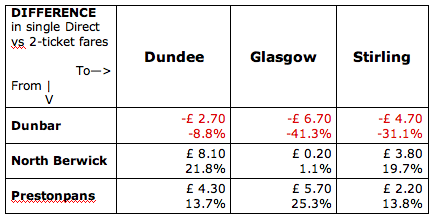
As shown in the table below, the penalty incurred by NOT buying two tickets averages 14.2% from North Berwick and a whopping 17.6% from Prestonpans. It is wholly bizarre that it is cheaper to travel from North Berwick than from Prestonpans, despite it being 16 miles closer to Edinburgh (2/3rds the distance). Both John Yellowlees (ScotRail Customer Service Manager) and Steve Montgomery (Managing Director) are aware of this issue but, to date, have simply waffled in answer to requests for corrective action.

East Lothian 2012 ScotRail Fares to Edinburgh & Selected Destinations (Source: TheTrainLine)

The calculate the two-ticket price, add the appropriate fare in the ‘Edinburgh’ column to the destination fare on the Edinburgh line. Tabulating the results gives as big a pig’s breakfast of irrational pricing as you could find in any railway buff’s nightmare.

Differences in Using Direct and 2-Ticket Fares

It is hard to believe that everyone at ScotRail is so innumerate as not to see the public relations disaster of such an illogical structure so the only logical conclusion is that it is a wheeze to milk extra money from their customers without their realising that they are paying up to 25% over the odds. And, before you celebrate that Dunbar’s getting a deal on direct tickets, see above where they are already getting fleeced 40% more than other ScotRail customers. Only their best deal (Dunbar-Glasgow) saves them that 40%.

Suffice to say, the table highlights a whole series of anomalies. If any other vital commodity were sold with such arbitrary price structure, there would be a riot. It’s only because rail fares—like the myriad energy tariffs—are so complex that people simply give up trying to unravel it all and pay up.

Which was probably the plan all along.

Posted in Commerce | Leave a comment

The Road Less Travelled

More than a little surprised at the intensity of debate on loyalty that erupted on Twitter as we approached the bells last night. It seems that I was being controversial when I argued that Unionists were more confused in their loyalties than people like me, for whom the welfare of the Scottish people is my top priority.

Before I am to post a blizzard of comments amplifying their position, let me try to paraphrase what was being said from contributing unionists across the party spectrum:

  1. You can be loyal to more than one cause
  2. Being loyal to Britain does not prevent loyalty to Scotland
  3. EU supporters were, by definition, loyal to the EU
  4. As London is the capital and seat of the monarchy, loyalty to it is normal
  5. Some Unionists do prefer Westminster to Edinburgh. Both camps have wide view

All but #3 are agreed. Naturally, we each hold a spectrum of loyalties over all our myriad endeavours (family; school; club; friends; business; etc) and this extends to the political sphere, where voters (rightly?) can hold multiple loyalties to parties, policies, individuals and even traditions. I have made no value judgement nor queried the validity of any of these, although some, like the BNP, are sailing close to the wind in my view.

However, when it comes to the matter of independence for Scotland, there are some tenets of my own that I don’t mind putting down in black and white. All are free to query them but the only thing likely to disqualify opinions you may hold yourself is if you question my right to hold my own. These truths, as our American cousins say, I hold to be self-evident:

  1. The people of Scotland are sovereign, as stated in the Declaration of Arbroath. I don’t care what English custom says: I’m a Scot.
  2. My definition of ‘Scot’ is all those who were born here or who chose to make their home here. Race, colour, religion, etc are irrelevant in defining the people of Scotland—we’ve always been a mongrel nation; long may it remain so.
  3. My loyalty is to the people of Scotland. Insofar as we bind with our friends, as we did with our English friends these 300 years, I have loyalty to that bond, appreciation for the friendship it brings, pride in what we have achieved and respect for their distinctiveness within it.
  4. I am also a committed European. Despite William/Philip/Napoleon/Hitler and whatever local miscreant the next centuries dredge up, I remember our Viking forebears who settled and enriched us, our merchants in Flanders and the Hanseatic Ports, Scots Russian admirals, regiments of Scots with Gustavus Adolphus and Louis and the whole history of international outlook. Scotland is, was and can be European in a way Apopleptic of Tunbridge Wells may never manage.
  5. Where loyalties come into direct conflict, as when wars break family loyalties or when London dumps unwanted nukes on the Clyde, everyone has a choice to make. What I am very clear about is that Scotland—or more exactly what I honestly believe to be in the best interests of the Scottish people—is my primary loyalty. All others I will seek to maintain but where a conflict arises, Scotland has clear priority.

I do not issue any challenge for anyone to make similar declarative statements. But I though it might clear the air and speed the debate along in 2012 if we got these ground rules straight. But, given the above, any unionist has to choose their own priority: is it to the Union in London or to their own version of what I write above? To date, most have managed to fudge and pretend both are valid. The road less travelled is to come clean and say which has priority.

For, when push comes to shove and a clear conflict between Scottish and British interests exists (e.g. feed-in tarriffs or North Sea oil revenues) it can’t, in my opinion, be both.

Posted in Uncategorized | 1 Comment

We Don’t Need No Altercation

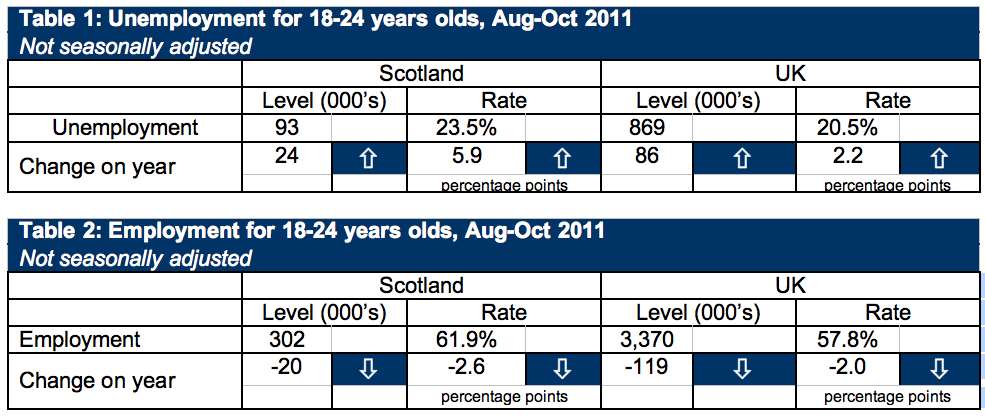
Since 2007, the total proportion of 18- to 24-year-olds claiming jobseekers’ allowance has almost doubled in Scotland – from 4.3 per cent to 8.3 per cent. While everyone has felt the chill wind of the ongoing fiscal crisis, at the bottom of the pecking order, young people seeking their first job have been hit hardest. The usual suspects snuffling about for bad news have hoovered this into their moan machines but, as usual, have been distinctly quiet as to an effective solution.

Source: Scottish Government, December 2011

Yesterday’s man Iain Gray has led this particular charge and, to be fair, did propose a solution: unlimited apprenticeships. While definitely part of a solution, as with so many Labour postures, it is partial and even damaging, as well as rather ignoring Swinney’s existing ambitious plan, with increases confirmed in September. The danger is that, after years of education fixating on access to university, to swing the opposite way and focus on vocational would be even less helpful.

The future of Scotland rests on three key commercial advantages, all with a worldwide reputation and potential market. One is our history and environment. on which tourism is being developed; one is our richness in resources so that our continuing oil will become outstripped by renewables; the third is our knack for quality specialist products, be it whisky or Irn Bru, Weir Pumps or Wolfson Semiconductors, salmon or chutney, market or mutual funds. And we’ll find new opportunities in an ever-changing world: when drought becomes endemic in England, who’ll have loch-fulls of water to sell them?

Pivotal in exploiting all of this will be our young people and how we prepare them. It’s not just about education. It’s about tapping into their ideas and firing their imagination; it’s about seeing youthful enthusiasm as a solution and not a problem. We restrict—or worse yet waste—it at our future’s peril. A current lager ad set a century ago touches on this, when a young Tennant’s magnate glows with his vision of brewing a reward for the people, only to find that someone’s stolen his cartwheels.

Scots need no lesson in drive, energy and enthusiasm. The trouble has been that it was always seen necessary to travel elsewhere to fulfill it. If our businesses were to focus along the lines above and education were to adjust so that, as well as brilliant academic research, we were to turn out scientists and engineers to staff such industries, craftsmen to build and maintain their infrastructure, administrators to both preserve and develop our peerless quality of life, then not only would jobs for non-specialists be more plentiful but better funds to help less fortunate participate, if not contribute, would be available.

Most of all, there would be a sense that there was some link between contribution and reward, that taxes paid were not being drained off to build tube lines in London, intrude in other countries’ affairs or fund a third generation of nuclear armageddon-makers to sit as a useless threat on our own doorstep. That would give a more engaged context.

But young people are idealistic, passionate, impatient. The blatant irrelevance to them of media fixated on Westminster or Afghanistan or the latest eurocrisis and especially of the endless, conclusionless altercations that pass for politics means any sane, effective approach to engage them would not just provide sensible (and equally valued) career paths for academics, engineers, artisans, artists, administrators, etc., but would support this through engaging teachers and parents in more than just extracurricular sports but in wider extracurricular activities that would hold their interest.

Youth cafes, Scouts, etc. are a start but the blight that nitpicking H&S has put on outdoor activities needs to be lifted, the mindless bureaucracy of Disclosure Scotland trimmed and the paranoia about child abuse mollified so that a broad spectrum of adults can interact with kids not their own without thinking the polis are watching every move. This is how kids used to get a real education—by hanging out at the farmyard or shop or smiddy, getting keen and starting on the skills that would make them a good apprentice journeyman. And they start this around age 6, not 16.

Will this require some undoing of well meaning legislation? Yes. Not everything made into law is, in retrospect, sensible. Just ask the Americans about Prohibibition. Even today, any Welshman caught within Chester city limits after sunset can still be legally shot with a longbow.

If we’re to make real inroads into the sad youth NEET stats, let’s give our young people (and stray Welshmen) a real chance by changing the rules; you can’t eat political postures.

Posted in Commerce | Leave a comment

Education is no Football

Today’s Hootsmon features Alan Massie gaunin’ his dinger that the “SNP’s failure on schools is a dereliction of duty”. The seems a pretty ringing condemnation, yet reading the article, it is hedged around with caveats and conditions—“the SNP inherited Curriculum for Excellence”; “there are many good schools and good teachers in Scotland, and some at least of our universities maintain very high standards” and the like.

However much I struggle with his patrician Tory views, Alan Massie is a respected, articulate member of the media in Scotland and roams far beyond politics in his many writings. As those views have been solid since Adam was a boy, his articulation of them demands respectful hearing, even when a whiff of fire and brimstone in any critique to do with the SNP are part of the package.

I would normally pick holes or attempt to outflank his thesis, but here I take exception to his whole premise—that Scottish education is in a parlous state and that the SNP has sat on its hands in the face of such catastrophe. Despite his long tenure as a pundit, his own education of Drumtochty, on to Glenalmond, then topped off by Oxbridge is hardly mainstream anywhere—most certainly not in Scotland. Nonetheless, I do grant that he pays close attention to educational matters and generally writes on them well, as in:

“Too many leave school barely literate, barely numerate, and ill-equipped for adult life. Too many are, as it were, programmed for failure, doomed to unemployment or, at best, to low-skill employment. Many are, in the view of employers, unemployable. They are the casualties of an education system mired in complacency.”

Up to that last sentence, I was with him. But such blanket declarations make education into an endless game of political football: they are not helpful. Domination of Scottish school philosophy for decades by Fabian principles of equality and inclusion blunted much of the edge our schools once had. By 2002, the McCrone agreement sought to restore prestige and initiative to a demotivated cadre of teachers.

But McConnell’s approach of throwing money at a problem did not succeed. Decades of defensive thinking by teachers’ unions has kept a ‘work-to-rule’ principle going. Many teachers declined to take an interest in their charges out-with the hours for which they were contracted. School trips, out-of-hours activities, even sports suffered as a result. Mr Massie says little about these circumstances and how we got where we are.

A secondary effect has been the gratuitous drive by successive governments to drive up the number of graduates, with scant thought for either the disciplines involved or what such highly educated people would actually do for a living. Like apprenticeships for all, a degree for all is simply bodyswerving the problem for a year or so. And, anyway, student life is hardly the best training for successful business.

The corollary was that vocation education was viewed as second-rate, a consolation prize for thickies. Maybe Mr Massie is handy with jig-saw or welding torch but I doubt it. And ask any householder and they will tell you that there is a dearth of good plumbers or mechanics or roofers, etc. The country has become fixated on the idea that people with five highers are better than those with one. A brief census of your friends tells you this is mince. But parents and teachers have been jointly driving this agenda since the sixties.

This unhappy joint conspiracy among governments, teachers and parents has done the country no good, with, as Mr Massie rightly points out, “Too many programmed for failure, doomed to unemployment or low-skill employment.” Right on, brother; it’s a shameful waste of young energy and talent. But the fix is not in the make-work post-school wheezes emanating from Tories and Labour alike. That’s like treating rickets with elastoplasts: not just wrong but counterproductive in raising false hope.

The SNP started off in 2007 saying that class sizes were important, especially in early years. They are. Unfortunately, Labour has griped monotonically about teacher numbers, promised apprenticeships to everyone and pretty much ignored everything else. They have also used control of the few (large) councils they have to fire many teachers and thereby save budgets, while supplying their MSP colleagues with more gripewater.

Look at what the SNP HAS done, Mr Massie. Take my own council of East Lothian. Teacher numbers are down slightly, but then so are pupil numbers, the recession having cut down numbers moving to the county. Bottom line is that most P1-P3 children are in smaller classes. In addition to that, schools in the low-performing areas have been given extra teachers to work with the infants in those classes. Also, Place2Be has been brought in to smooth social stresses and much effort is made to ensure joined-up thinking with the rest of the council, most especially children’s services. Results can only be evaluated in a decade when those children move from school into the world.

For there are two dicta that I and my colleagues believe apply here: 1) “Give me a child until he is seven and I will show you the man” and; 2) “A school may teach a child but it takes a village to raise one”. Just as the family is an essential background and vehicle for the successful education of most children, so surrounding neighbours, through their guidance, actions and culture complete the development. To approach the complex process of education as if it were Roads Services or Planning, where minimal context within the community is the norm, is to fall for a wrong assumption.

Mr Massie calls for a wholesale reform of the education system without so much as a hint at how this might be done, nor the extent to which this could be done without a parallel reform of society. Blair’s academies and Gove’s free schools are faction-based and only ever going to be partial solutions, even if successful. Let’s drop the party-partisan rah-rah, shall we? Rather than beat up his old enemy the SNP—apparently just for the sake of it—I hope serious contributors like Mr Massie would consider joining in the debate to achieve real long-term improvements.

He (and Labour and Uncle Tom Cobley) are right to highlight the problems. But in this era of declining incomes and budgets, what would he suggest beyond what is being done? A societal approach to education seems the only sensible one. This is not to shirk that more must be done by both councils and government to lower class sizes, engage teachers and apply strict standards. Those emerging from school must be smart, keen and useful and not just using pieces of SQA paper as camouflage for a lack of purpose.

SO, get off the sidelines and onto the field, Mr Massie. Our kids deserve better: you, of all people, know they do.

Posted in Education | Leave a comment

Of Born-Again Countries & Unionist Bathwater

On many occasions, I have found myself enlightened and stimulated by Burdzeyeview and would recommend the blog to all on both sides of the debate regarding where Scotland is going and why. I had intended giving the soapbox a rest over the holidays as I imagined even hardened independistas would rather be sharing cracker jokes than locking horns over festive fare.

But as I read the Burd’s blog, I realised that, for the first time in some while, I was not of her opinion and the matter was serious enough to not wait for twelfth night to rejoin the fray. Basically, the Burd takes exception to His Eckness being awarded ‘Briton of the Year’ by the Times newspaper. Now, if I understand the Burd aright, her objection centres around this being an award to a ‘regional’ politician and therefore conceals a mighty slight on Scotland’s conceit of nationhood.

“Such sentiments and statements are patronising and perpetuate a stereotypical little UKlander view of the world and importantly, of Scotland.”

Although the Kiplingesque stalwarts at the Times would surely dispute this, the Burd does have a point. But then later she continues:

“What the British establishment thinks of we Scots should matter none.  We should neither want nor seek baubles of Britishness nor Briton-ness.  Why should our yardstick be what our neighbours deem to bestow upon us and our First Minister?  Measuring ourselves against the accepted order of things on these islands is to accept their limitations for our ambitions and our aspirations.”

And here is where the Burd and I part company, for three reasons:

  1. Such a stance reeks, for me, of the ‘Little Scotlander”, similar to my accusation of Jim Sillars in the previous blog. Simply because the accolade derives furth of Scotland it should therefore be discarded. I find this narrow. If Salmond were to be accorded ‘European of the Year’ for his work in securing a voice for smaller countries, thereby binding the EU in harmony by making small countries less fearful of being steamrollered by the Merkozy faction, would she take the same view? Despite glaring Unionist credentials, the Times is a reputable paper of standing: their accolade has objective validity.
  2. Such objective validity is, in itself, a commodity in which the SNP has long been short-changed. They have won elections despite swimming against a tide of hostile media on both sides of the border. Surely ‘Briton of the Year’ award to a man accused of separatism took some deep swallowing among those selecting the winner. Had they condemned him as a ‘narrow nationalist’ (which he patently is not but some politicians who should know better can’t seem to see past that stance), it would be business as usual. But they didn’t.
  3. Most importantly, we have been round the houses many times since May in the formulation of a referendum and the significance of various percentages pro/con and shades between. What is startlingly clear is that, with all unionist parties in serious straits (no leader over 6 months’ experience and barrel-scraping shares of vote) the argument for the floating ~30% is there to be won. These are voters alienated by the cringing inefficacy of unionists and increasingly aware that only the SNP seems to have both ideas and a boatload of people capable of putting them into effect. Forget independence, half these people just want a decent government. Every other party has serious egg-on-face from messes they made. If you want to give the Libourvatives a comprehensive kicking, what better way than to take your country right out of their self-serving grasp? But such people first want reassurance that there’s more to the  SNP than passion and ideas. The Times’ endorsement is the very dab.

So, apologies to the Burd if this ruffles her feathers. I give way to no-one in my passion to see Scotland take its place in the world’s community of countries, but she and I will not determine our future—our votes are already good as cast.

It will be the million or so Scots who love their country, like their life here, want the best for it and are so scunnered at the third-rate offering from Scotland’s so-called national parties that the Times ‘objective’/’British’/’patronising’/’unionist’ accolade may break the camel’s back of any vestigial loyalty. Epiphany for such people WILL BE our battleground.

To mix metaphors shamelessly: let’s not throw their vital support out with the unionist bathwater by looking the Times’ gift horse in the mouth.

Posted in Politics | 2 Comments

Jim Sillars: Little Scotlander

In its time, Scotland has produced its share of groundbreaking politicians and, given the imprecision of and the human flaws intrinsic in politics (unlike with physicists or surgeons) there is less unanimity about who belongs at the top. Jim Sillars may be in the running but, for my money, is overrated—and the more so with time.

Always a thinker and never afraid to make his case, Jim is a man to be admired and, often, listened to. Well ahead of Scottish Labour’s recent Damascene conversion that they need to change, he and the equally redoubtable Alex Neil tried to modernise that party in the seventies, founded and failed to plough a separate furrow with the ILP and more recently have followed very different paths within and without the SNP fold.

Impatience with the SNP has been Jim’s leitmotif for two decades now. Had the SNP’s fundamentalist/gradualist debate of a decade ago gone deeper than it did, the SNP could have split, with Jim returning to lead the former faction. As it was, after Swinney’s low-key tenure and the Alex-Salmond-led mid-noughties resurgence, things have never looked so good. So, when Jim weighs in with opinions apparently contrary to the SNP’s thoughts, who’s right? Jim himself is clear as ever:

“If Scotland is to seize the opportunity that will come with independence to repair its economy, and overcome the deficit of inherited debt from the UK, then it must be able to exercise the maximum sovereign powers. There will be no such maximum available in the new eurozone treaty.”

As clarion a call to dump Europe and follow the Norwegian road, if ever there was one. But is he right? Sterling though many of Jim’s qualities might be, patience seems alien to him. You need only recall his almighty harrumph about “90-minute patriots” when his “Free by ’93” slogan cratered big-style. It appears that independence continues to drive him. But any impediment to that becomes the object of his wrath; Cameron’s wielding of the veto on Europe last month exemplifies today’s need for the drastic.

Several political observers whom I respect have waxed lyrical about Jim’s article in Tuesday’s Hootsmon. But I beg to differ. Seen through the lens of a typical Tory backwoods/bencher, Europe is indeed a bureaucratic bog, designed by Belgian Sir Humphrey’s to sap the precious bodily fluids from Brits—the last virile tribe of free-marketeers to roam the once-open fiscal plains of Western Europe. Though they may see themselves manning the beetling chalk cliffs of Albion against incursions by Johnny Foreigner, the Tunbridge Wells birthplace of such a political attitude is a far cry from the Clyde (let alone Loch Awe), from whence Weir pumps & their ilk export a wheen of Scots-built world-beaters into Köln and Stuttgart, as well a Canton and Shanghai.

Talk to leading Scots businesses, whether in oil service or whisky, tiny chips or ships’ hulls; we are out there in the world and making our mark. Irn Bru is outselling coke in Russia and we are lumbered with a PM who thinks more about the 1922 committee than about Scotland. When Jim argues we should make some Pavlovian Thatcher-gesture two decades after the original handbagging, I argue that he seems to understand less about Europe than even Cameron does.

And Cameron has an excuse. To keep his ConDem show on the road, he has to find raw meat the throw to the anti-EU hyenas roaming his back benches. Jim has no such need and Scots are generally more curious than hostile towards ‘foreigners’. Has Jim gone to Dublin and ask how the Irish fare in Europe? He would be told that their MEPs saunter down the corridor with a couple of bottles of Baileys to cut deals with the Danes or the Dutch, quietly line up ‘little’ countries so that, when the Merkozy faction is preoccupied, they stitch them up. How do you think the Spanish got such a sweet deal on pillaging our fish with trawlers built on EU subsidies?

Because you have to be on the field to play—let alone win—the game, Jim. And this angels-on-pinheads debate about whether Scotland would be in or out is for academics. We share a huge amount of culture with Europe. Go to Ulan Bator or Moghadishu if you want to see what foreign really means. Those people in Berlin or Barcelona or Brussels watch the same TV and—these days—even speak the same language as we do. Spend a couple of weeks with them and your biggest cultural problem will be they serve mustard with chips.

The idea that 260m educated, business-oriented and (at least in the German case) hard-working neighbours would not want a country like ours, with most of Europe’s oil, half of its fish, almost all of its marine renewables, a world reputation for pluck, grit and dry humour and (& here’s the clincher) an enviable record of taking on the truculent English and winning, as a necessary part of any European Union seems myopic to the point of being thrawn about it. Even the Spanish will want us. Within 20 years, they’ll be importing our water by the tanker-load—as well as our fish.

Everyone on this island needs to understand that Scotland is actually one of the most desirable friends that Europe could have. Most of Europe already knows this (talk to them). But, though the SNP are doing their best to explain this to our benighted neighbours dahn saaff, fixated as they are on circling their rickety wagons and trapping us with them, we also have well intentioned little-Scotlanders like Jim reciting his own version of “we’re too poor…too wee…etc”. Enough, already!

The Scots may not have built half the known world but our diaspora dwarfs any other in its achievements. It wasn’t fearties who built the Hudson’s Bay Company or Jardine Matheson any more than it was ninety-minute patriots who stood their ground with the Bruce. I want Jim Sillars and any who still think like him to have their say—and the time to reflect how Europe was once part of every step Scotland made forward, whether as Flemish merchants, Russian admirals, French exiles or Swedish generals.

Time we remembered our long heritage and who our real friends have always been.

Posted in Politics | 1 Comment

A Corner of a Foreign Country

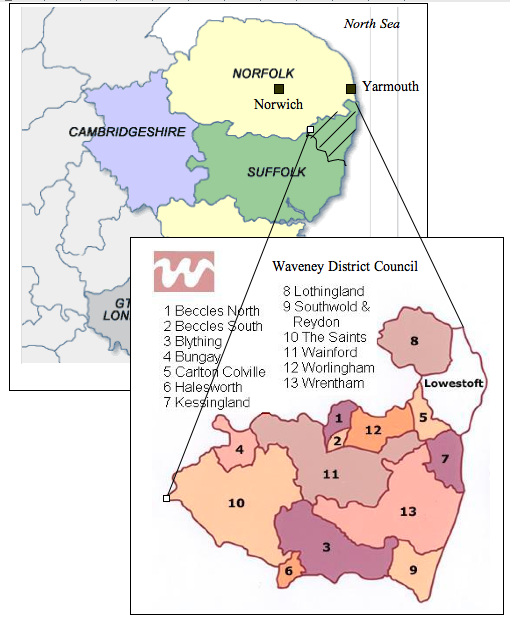
I am grateful to Alan Summerfield (see comment above) for correcting my erroneous understanding of the geography of local government along the Norfolk/Suffolk border. Passing from Lowestoft to Norwich along the A146 via Beccles had given me the impression that Waveney District lay between Norwich and the coast. The name of the district is taken from the river that divides the two counties.

The map below may help clear up any further confusion; it can be seen that the ward in question (Ward 12 Worlingham) lies across this river from Norfolk. I apologise for any confusion—and more especially any insult for the people of Norfolk and Suffolk are both proud and distinct and don’t take kindly to being confused.

Especially by a foreigner.

Makeup and Location of Waveney District Council, Suffolk

Posted in Uncategorized | Leave a comment

My Favourite Foreign Country

It would make for sensational reading should it occur anywhere in Scotland but the results of the Worlingham by-election merited just a corner of a page deep inside Norwich’s Eastern Daily Press:

“NORMAN Brooks is the new ward councillor for Worlingham, having won the by-election for the Conservative Party last night (Monday, December 19). He polled 706 votes, beating Sylvia Robbins of Labour (586) and Sue Bergin of the Green Party (137). Stuart Foulger of the UK Independence Party won 64 votes and Liberal Democrat Doug Farmer polled 46 votes.”

It seems to have made little difference that the vacancy had been caused by a Tory councillor resigning in disgrace: nailed for drunk driving and assaulting a police officer he harassed the police with offensive e-mails too. This result means Waveney District Council (the Norfolk flatlands between Norwich and Great Yarmouth) continues in Tory control, as do most local councils, including Norfolk CC.

In fact, the Tory phalanx of 60 that has ruled this rural and scenic county—the fifth largest in England—for some time has recently been augmented by two Lib-Dems and, just this week, the leader of the seven-strong Green group on NCC. Even though I visit regularly, it is difficult to adjust to the vastly different political atmosphere of somewhere like this. Though its extensive farming interests (e.g. Bernard Matthews, Colman’s et al) might point to Tory leanings, many small companies in oil & gas, printing, insurance and broadcast media business also exist. Although Labour does have pockets of support in Yarmouth, King’s Lynn and Norwich itself, they hold only 3 seats on NCC and none of the county’s nine constituencies (7 Tory; 2 Lib-Dem). The net result is an environment where political discussion is typically business-friendly and socially liberal but inward-looking and EU-hostile. The burden of glorious empire and of having seen off foreign oppression still drives contemporary political thought.

So, despite the fact that I have visited and spent time in Norfolk for years and that (unlike when I fly) no-one on East Coast trains asks for my passport, for me this place registers as a different country from Scotland, just as when I visit Dublin. You would think, given their similar demographics and relative position vis-a-vis the capital, that East Lothian and Norfolk would have much in common. Their scenic coast, bucolic country lanes and photogenic villages do give that impression. Neither have real slums nor register in any urban blight Plook-on-a-Plinth contest. Both register 98-99% white in racial mix and high on the list of desirable places to retire to.

But, if the pubs of Wymondham (pron. “Windum”) are cosier, the villages quainter and the medieval extent of Norwich speaks of a far richer Middle Ages than Scots dreamed of, the modern middle class here dominates; they are wholeheartedly Tory. People are oriented to private schools and health care and, while living in the quaint villages, seem to have made much less of a fist of involving themselves in their communities, be it Colts soccer or amateur dramatics. There are clubs but these—especially the golf clubs—appear more choosy whom they admit, to the point of appearing class-based.

Certainly, there is no longer any sense of the Scots being the poor relations. This is borne out by statistics: whereas Norfolk’s GDP per capita easily exceeds East Lothian’s, it is still less than Scotland’s as a whole. As with other regions of England, Norfolk takes pride in its own cultural distinctiveness, including a recognisable dialect, distinctive flint architecture, and local ales/dishes worth sampling. But the differences between Norfolk and Cumbria or the Peaks are so much less than between it and East Lothian, let alone Perthshire—despite the huge difference in the landscape. The pubs alone make it distinct before you even consider how Fife partans are served different to Cromer crab.

None of this is meant to sound critical of my Norfolk hosts, who graciously make me very welcome each year. But, having spent years outside the UK in countries that the English most certainly regard as ‘foreign’, I mean them no offence that politics has now been added to culture and history already on my list, as major factors why I have come to regard the English as foreigners—albeit my favourite ones.

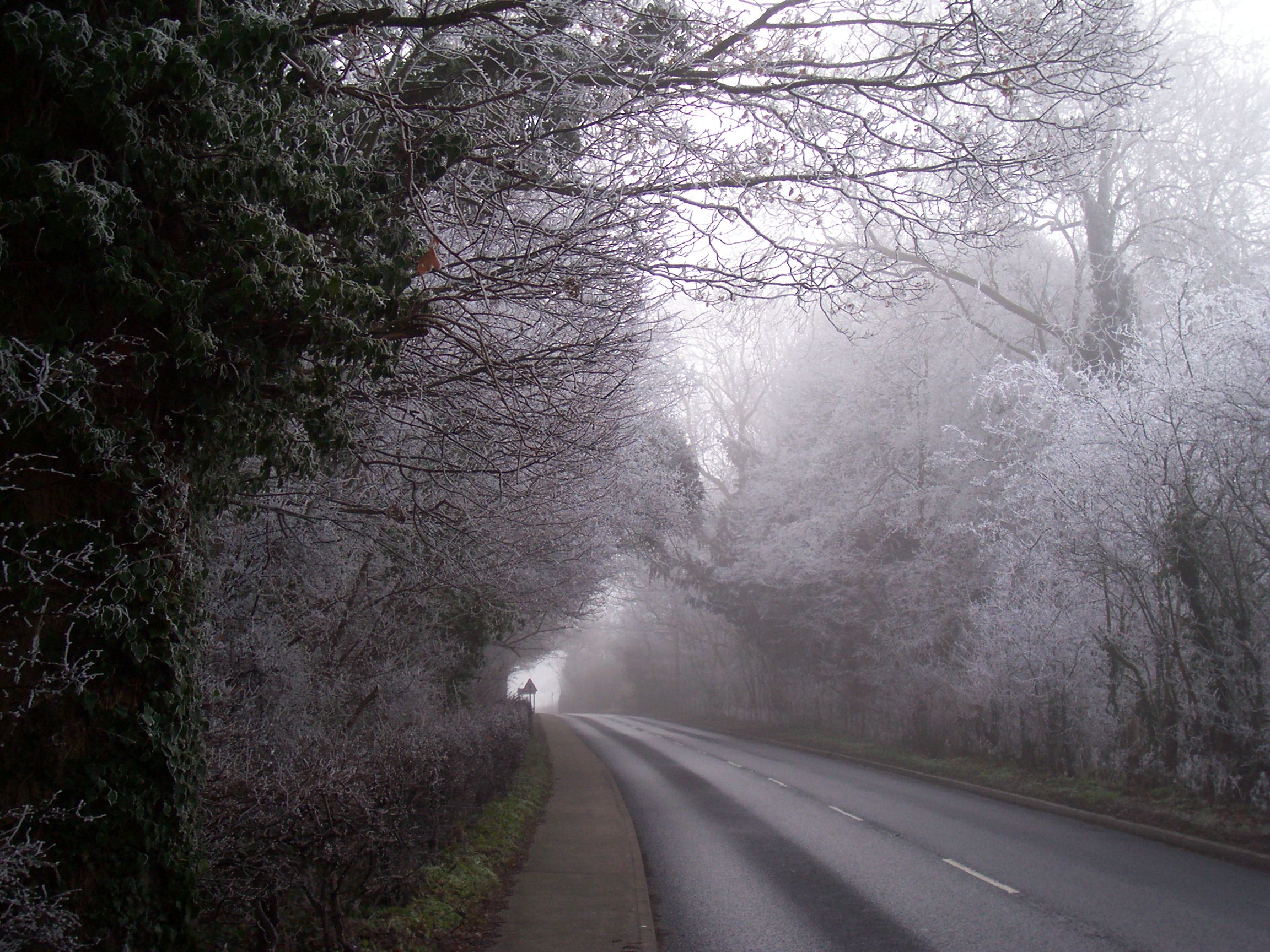
Bungay Road, Norfolk in Winter

Posted in Uncategorized | 1 Comment