For weeks now, Vladimir Putin and his spokespersons have been protesting that Russia has no intentions of invading Ukraine. Though it may just be grandstanding to get Western attention—and perhaps a few concession—by playing the only face card he has; a beefy military.
Reactions n the West have been generally nervous, but it is only in the last few days that the Americans have declared the window for a Russian invasion is now open.
Three weeks ago, our blog На Запад! (Westward Ho!) provided both a context for this and a prediction of likely action. A second blog a week later My Beautiful Landrette-ski suggested effective financial measures to restrain Putin and persuade him to back down. While most sensible people want de-escalation, there have been no signs of diplomacy making any headway in this.
UK leadership has lately supported NATO and the American line that invasion had become a real possibility. Foreign Secretary Liz Truss’s comments that “Russia will get bogged down, as it did in Chechnya and Afghanistan” betrays a poor grasp of the different military and geographical factors that apply to Ukraine.
Now, Ben Wallace has waded into the debate and is receiving some stick for making an analogy with the situation that obtained pre-WW2 when German threats against Czechoslovakia were thought to have been solved by diplomacy at a conference in Munich in September, 1938.
“It may be that Putin just switches off his tanks and we all go home, but there is a whiff of Munich in the air from some in the West.”
—UK Defence Secretary Ben Wallace, The Times, February 12th 2022
But might he be right? Apologists have already stepped in to say this was intended to highlight the possibility that Putin my be no more sincere in his diplomatic smoke-screen than Hitler was. Any reader of Mein Kampf should not have been surprised at this. Similarly, anyone following Putin’s writings on Russians and Ukrainians being “one people” should similarly not be surprised.
For the parallels in the two situations 84 years apart are more extensive than diplomatic bluff. Consider:
Egotistical dictator whips up popularity by declaring he will reassert lost glory of an empire of which they had once been proud
Dictator picks on adjacent, weaker country that is struggling to establish identity, having only existed as a sovereign state for a couple of decades
Dictator protests that “lost” territories in the weaker state include many native-speakers who are being “repressed” by indigenous nationalists hostile to them
Despite fielding a professional army that poses no threat to the dictator, the weaker state is militarily indefensible, being surrounded on three sides
Dictators increase status in the world by rattling sabres. This means massing on the border, while decrying others as aggressors force this defensive posture.
Slicing off a border area where most native-speakers live destabilises the weaker state and makes the rest even less defensible.
Once you roll in, distant allies of the weaker state may protest but it’s a fait accompli they have no choice but to accept.
For “Soviet Union”, substitute “German Empire”; for “Ukraine” substitute”Czechoslovakia”; for “Russian minority” substitute “German minority”; for “Donbas/Lubyansk/Crimea” substitute “Sudetenland”.
Only point 7 has yet to occur. Hitler waited six months before taking over the rump Czechoslovakia in March 1939. It’s doubtful Putin has that kind of patience.
“The Western democracies are worms; I saw them at Munich.”
—Adolf Hitler, 1938
Chamberlain, Daladier, Hitler, Mussolini & Ciano at Munich, September 1939
“Don’t waste your time looking back; you are not going that way”
—Ragar Lothbrok
Though the heat of debate about Scottish independence has cooled somewhat over the last two years because of an understandable priority in dealing with Covid, what debate there has been has centred entirely on if/whether/when a referendum can be held. This is rather like debating what shoes to wear to go out in, without first deciding you’re going gardening, shopping, running or to the opera.
The vision of a future Scotland rarely gets beyond “a normal small country that is a member of the European community.” Not only does this lack clarity but it is woefully short on inspiration. Why would swithering business and the middle class—let alone the great and the good—risk status and wealth for something as vague. Why let go of nurse when uncertainty breeds a fear of something worse?
Two hundred and fifty years ago, 1 million people in 13 colonies had carved a society out of wilderness (pace native Americans who had lived in harmony with it prior). They had a sense of fierce pride and egalitarianism in all they had achieved. This made them question why their future rewards should be in the hands of stuffy autocracy three thousand miles away. Their pride, self-belief and energy gave us what is (for all its flaws) the greatest democracy the world has seen.
An independent Scotland would not become another America in either revolution or scale. But what set Americans—or Australians or Singaporeans—on the road to success that colonists never had was a clear sense of common purpose in exploiting what their resources, skills and geographic position offered. They saw priorities from their perspective, were better positioned and motivated than any distant colonial bureaucracy to grasp there future. London has always struggled to understand this.
Here, after 23 years of devolution there has been debate and legislation on social matters. Free prescriptions, free personal care, free tuition, free bus passes are all good and popular. But no heather, let alone revolutionary fervour like the Americans, has be set alight by such legislation. Debates on smoking or transgender issues may correct shortcoming, but they neither electrify ambition, nor boost revenues to fund more social policies.
These 23 years of material improvements: hospitals have been built; rail lines opened; bridges completed; major road improved. But advancement has been modest, given £1 trillion has passed through government hands in that time. And in that time, major companies like RBS, BoS, Aggreko, SSE, Scottish Nuclear, Aberdeen Asset Management and a slew of companies in the oil & gas business have shifted headquarters elsewhere, with few companies of significance grown to take their place. The £600 million funding of Scottish Enterprise each year has not catalysed much enterprise od a scale to replace losses. They have yet to replace their “third-world manufacturing” strategy of two decades ago.
It is not that Scotland no longer makes things of which we can be proud—Weir Pumps; Edinburgh biotech; whisky—but a century ago, we were world leaders in heavy engineering, especially ships and locomotives. Without a captive empire as a market, achieving that level of dominance is history. But if the Swiss can corner the market in quality watches, if the Dutch can corner the ocean tug business, if the Danes can lead the world in wind turbine technology, finding a niche and making it ours should not be rocket science.
This will require focus on a plan that will take decades to achieve success. It will require a culture shift away from the current social-dependency culture to reignite the cocky pride that once made “Glasgow” and “gallus” interchangeable terms. Looking at what we have and where we are in this 21st century world suggests that laying down plans to become significant in three areas of international excellence are:
Tourism, which includes food and drink
Renewable energy, including wind, tidal, wave, heat sink and hydrogen
Trans-shipment entrepot for Europe <—> Asia trade
Projects and infrastructure that clearly supports these main threads should be laid out in the plans and scheduled/costed on a basis that presumes a timetable for independence and of re-joining the EU, with a view to maintaining optimal links with England/rUK, while establishing Scotland as a worthwhile international trading partner.
While much work would need to be done to produce a viable, long-term plan that should include social engineering to inspire people to believe it’s their plan before any referendum takes place. This will require some short-term “low-hanging fruit” to start with that makes the longer-term seem feasible. The current passivity in both government and people must be overcome. The dynamism that created America did not come from complaining about the British. Here are some ideas, to be used as a smorgasbord to compile the real, inspirational plan.
Short-Term Suggestions
(launch during this parliament, and before any referendum)
Develop the plan by setting up a “wartime cabinet” along the lines of Churchill’s in 1940, making it cross-party, with non-political figures who can contribute.
Develop public transport use by introducing a unified “Oyster”-style travel card for all modes of transport. Introduce it by city-region “travel webs” common in Europe.
Empower councils by reversing the current 20%/80% split of their income between council tax and Revenue Support Grant.
Fully integrate NHS and Adult Care properly and abandon the ineffectual Joint Boards that are no more than talking shops.
Accelerate research into tidal, wave and hydrogen energy generation. Establish links with leading wind generator manufacturers in Europe.
Medium-Term Suggestions
(during Independence preparations and the period after the event)
Revamp the Glasgow-Stirling-Perth-Aberdeen as a high-speed rail line to ECML standards and electrified, offering 30-minute frequency, taking no more than 2 hours for the journey end-to-end. This involves re-laying the Caledonian track bed between Kinclaven and Brechin, with stations and Coupar Angus, Forfar and Brechin. (for details, see blog at https://northneuk.com/2013/04/22/brechins-revenge-on-beeching/
Develop former Cockenzie power station site as a cruise liner and ferry port, using the existing branch off the ECML for passenger & freight access to a Europe ferry and cruise line passengers easy access to Edinburgh. (fpr details, see blog at: https://northneuk.com/2015/05/27/more-than-a-dormitory/
Re-lay ad re-open the Fraserburgh-Peterhead-Aberdeen rail line.
Reopen stations at Newburgh and Bridge of Earn on the Ladybanl-Perth line.
Complete two tidal energy projects: one generating 240NWH in the Kylesku narrows and another generating 500 MWH in the Pentland Firth.
Long-Term Suggestions
(once stability achieved post-indy, with currency issues ad EU membership resolved)
Expand the Cockenzie ferry/cruise port by adding a marina, coastal boardwalk including shops and restaurants linking Musselburgh lagoons with Seton Sands and revitalising Prestonpans with a waterfront.
Redraw local government boundaries into six regions (Highland; Grampian; Tayside; Lothian; Strathclyde and Borders) Each will be responsible for Education, Health & Social Work, Transport. Waste, Water, Police, Fire. Culture. Resurrect approx. 200 burghs, responsible for Planning, Commerce & contracting services required (~5 councillors; ~25 staff?)
Complete a tidal energy project generating at least 1GWH at the Firth of Forth entrance
Develop Scapa Flow as a transhipment and container port to take advantage of melting Arctic ice cap that would permit polar trade routes halving the time between Europe and the Far East. (for details, see blog https://northneuk.com/2016/04/02/trans-arctic-convoys/
Normally, aericles posted on this blog attempts to provide opinions that are, hopefully, informed, important and original. That last does not apply where others have already blazed a broad path, when the blog may include those thoughts. Only on rare occasions has it quoted wholesale, because there seemed scant chance of improvement on the original observations.
Such a rare occasion occurred today, when George Monbiot strung a series of tweets together that deserve as wide a coverage as possible in the public interest. What follows are his tweets, verbatim. They make compelling reading, especially for those evaluating the morals of the present UK government.
—————————————————
As the final stage of the Grenfell Tower inquiry has begun this week, I’d like to remind you of what was happening in another part of London on the day of the disaster, to show what the Conservatives mean by “freedom”. I hope you’re sitting down.
On 14 June 2017, as the Tower burned, the government’s Red Tape Initiative team met to discuss building regulations. It was due to consider whether rules governing the fire resistance of cladding materials should be scrapped, for the sake of construction industry profits.
The Red Tape Initiative was established “to grasp the opportunities” Brexit offers to cut “red tape” (i.e. public protections). It was chaired by Sir Oliver Letwin MP, who had claimed that “the call to minimise risk is a call for a cowardly society.”
Sitting on its advisory panel were: – Charles Moore: formerly editor of the Daily Telegraph and chair of the Dark Money-funded lobby group Policy Exchange. He was best man at Oliver Letwin’s wedding. – Archie Norman, former chief executive of ASDA and founder of Policy Exchange.
Until he became Environment Secretary, another member of the panel was Michael Gove, Conservative MP and former chair of Policy Exchange, appointed by …. Archie Norman.
The Red Tape Initiative’s management board consisted of Oliver Letwin, Baroness Rock and Lord Marland. Baroness Rock was a childhood friend of George Osborne’s, married to the wealthy financier Caspar Rock. Lord Marland was a co-owner of SCL and Cambridge Analytica.
In other words, it was an entirely representative cross-section of the British public. In no sense was it a clique of old chums, insulated from hazard by their extreme wealth, whose role was to decide whether other people should be exposed to risk.
Letwin’s Initiative appointed a team to investigate housing regulations. It included representatives of trade unions and NGOs, though they were outnumbered by executives and lobbyists from the industry. And, surprise, surprise, one Richard Blakeway, from … Policy Exchange.
Their task on June 14 was to consider a report the Red Tape Initiative had commissioned from the lobbying firm Hanbury Strategy, identifying building rules that could be cut. It listed as “burdensome” the EU Construction Products Regulation, that sets fire standards for cladding.
What was the source of the report’s assertion that this regulation was unnecessary? A column in the Sunday Telegraph by Christopher Booker, perhaps the most mendacious journalist in the UK, who had produced, across the years, an astonishing string of outright lies.
During the meeting, as the Tower burned, the full scale of the disaster became clear. The panel decided that, on this occasion, it would not recommend that the regulation be removed. Very gracious of them, I’m sure.
But the bonfire of regulation and the deliberate confusion between “red tape” and public protection continues as if Grenfell had never happened. Why? Because our lives are worth less to this government than the profits of the disaster capitalists it favours.
So when this government says “freedom”, ask “whose freedoms do you mean?” When it says “red tape”, ask, “do you mean pointless paperwork, or the rules that protect us from predatory capital?” When it says “the people”, ask “do you mean us, or just the people who fund you?”
Britain’s current lining up with NATO allies in indignant criticism of Putin’s claim of defensive posture for Russia seems at odds with the cosy financial relationship that has grown up since well before the collapse of the Soviet Union and a steady stream of Russian oligarchs and their money heading for London. They have been made welcome, with the introduction of the “Magnitsky” laws simply serving to slow the traffic down and drive much of it underground.
This accommodating approach goes back to the mid-20th century. After the second world war, Britain was all but bankrupt, the City of London was somnolent, and economic power had largely shifted to Wall Street. City bankers wanted to get back into business, but were frustrated by the weakness of the pound, and its unsuitability as a means to finance the world’s trade.
Their salvation came from an unlikely quarter: the Soviet Union, which didn’t want to keep its dollar reserves in US banks. Instead, it kept them in London, where British banks began lending them to each other in an entirely unregulated market – they became known as “Eurodollars” – thus giving birth to offshore finance, and providing the City with the start-up capital it needed to get back in business.
The practices of a bowler-hat-and-pin-stripe City created a demand for less stodgy financial handling, preferably with tax0free status. British Crown Dependencies, being outside HM Treasury control, had already developed a side-line in this trade, with the Chanel Islands and Isle of Man leading the way. However, other pink spots on the map —especially those with access to American markets—soon followed suit, including Bermuda, Bahamas and Cayman Islands.
The process was simplicity itself: transfer money to offshore financial institutions or businesses domiciled in such places and the money could enter the UK as domestic finance with few questions asked. It was not long before it struck wealthy individuals that funds processed this way were not only tax-free but “laundered” as to their origin. Examine documents exposed in the Panama Papers for an idea of the turnover that such “business” has achieved.
By the time Communism collapsed, Soviet institutions were routinely sending their money through Britain’s offshore territories, and the City was booming. The Central Bank in Moscow even had a shell company in Jersey, which it used to hide money from the government that it was supposedly a part of.
For decades, British politicians have welcomed Russian money to our shores. They have celebrated when oligarchs have bought our football clubs, cheered when they’ve listed their companies on our Stock Exchange. They have gladly accepted their political donations and patronised their charitable foundations.
According to Russia’s Federal State Statistics Service, Russian investors held financial assets in the UK worth a total of £2.6bn. That seems small indeed. The UK ONS (Office of National Statistics) provides a broader measure of Russian investment in the UK, and assessed it at £25.5bn. But that’s about what Finland has invested in the UK, so this figure still seems small.
These statistics are misleading. Russian money that moves through another jurisdiction before arriving in Britain is not counted as Russian. Since the overwhelming majority of money that enters and leaves Russia does so via tax havens such as Cyprus and the Bahamas, this means the official figures reflect only a small portion of Russian money reaching the UK.
At least £68 bn has flowed from Russia into Britain’s offshore satellites such as the British Virgin Islands, Cayman, Gibraltar, Jersey and Guernsey. And it’s not only the UK. At the same time, £94bn has poured out of Russia into Cyprus, £13bn into Switzerland, and £23bn into the Netherlands.
This wealth is not actually in these offshore centres— it is merely registered there, to obscure its origins. Russian officials, with wealth disproportionate to salary, use this anonymity to spend money in London without anyone catching on. More than half of Russians’ total wealth is held offshore—some £597bn.
This cash is diluted into the great tidal flows of liquid capital that pour in and out of the City of London every day, from every corner of the globe. The stashes created by Russian kleptocrats is, thanks to the skilled attentions of the tax havens’ best brains, indistinguishable from any ordinary investment.
Analysts at Deutsche Bank looked at discrepancies in the records of money that flows into and out of the UK, and concluded that since the early 1990s, £133bn had arrived without ever being publicly accounted for, with half likely to be Russian. And Deutsche Bank ought to know, as it was a significant culprit in spiriting money out of Russia without informing the authorities—£7.5bn in total.
Putin may be hiding money in the financial equivalent of sleeper cells, ready to buy influence. More importantly: no one steals money if they can’t keep it. By letting Putin’s allies launder their illicit fortunes and hide them in our country, we are drawing a line under their crimes, and rewarding them for actions a country with global financial standing should not condone.
Not all the money stays in the financial markets—oligarchs have taken over from Gulf sheiks in making outrageous purchases. They particularly like property, but at the top end of the market and preferably within 3 miles of Buckingham Palace. Since their arrival, property prices in Kensington have risen eight-fold, with Abramovitch’s fetching a cool £125m. Transparency International published a report which identified 160 properties in the UK, together worth £4.4bn, that had been bought by what it called “high-corruption-risk individuals”. Most of those properties were in London.
Oligarchs and their families come and enjoy such purchases courtesy of tier 1 investor visas, which provide successful applicants with residency in exchange for an investment of £several million in government bonds. In one year, Russian citizens made up 764 of the 3,396 people who paid for these so-called “golden visas. This arrangement brought in around £800m of Russian investment.
The “Magnitsky Law” is named for a lawyer who died investigating £230 million of dirty money stolen from Russian companies of an investor called Browder. In pursuit of those responsible, Browder traced the money to 11 different countries. All, except Britain, have brought charges against those responsible.
Many British institutions have indeed accepted donations from wealthy Russian businesspeople: Sadiq Khan’s City Hall from Elena Baturina, whose husband was mayor of Moscow; the Conservative party from Lubov Chernukhin, whose husband was one of Putin’s ministers, and who paid £160,000 to play tennis with Boris Johnson and David Cameron in 2014.
Britain dos not make prosecution easy. In order to prosecute a foreign crook, you need to prove their money originated in a crime of some kind, and that requires evidence from overseas. Essentially, if you want to prosecute a Kremlin insider, you need evidence from the Kremlin, which it will not provide, and that stops investigations from progressing. Also, all wealthy Russians have political connections. If the UK does gain cooperation from Russian investigators in a prosecution, the defendant will invariably claim, often with good reason, that he is being politically persecuted, which allows his lawyers to discount the evidence being used against him. Then there is the brutal option: killing the witness is probably why Alexander Litvinenko died of Polonium poisoning.
The oligarchs now have the big accountancy firms advising them where best to stash the money, to conceal it, to disguise it, all kind of things. The brains of this pinstriped mafia are available to everyone. They’re for hire The introduction of unexplained wealth orders, which came into effect in February this year. Once a UWO has been issued, property is frozen, and its owner has to respond and justify why they own it. But that will only confiscate property; it won’t put anyone in jail.
In 2018, a Foreign Affairs Committee report demanded a more coherent government approach to the “assets stored and laundered in London (which) both directly and indirectly support President Putin’s campaign to subvert the international rules-based system, undermine our allies, and erode the mutually reinforcing international networks that support UK foreign policy.”
The present abrasively belligerent stance taken by Putin over Ukraine has been met by threats of “strong sanctions” by Britain and it’s NATO allies. But the history of Putin’s cabal of oligarchs who launder billions through Britain vie tax havens demands action on the provocations already evident. In cases where evidence emerges that someone is corrupt, that person should be prosecuted and/or kicked out of Britain. But this alone is insufficient; we need to find the dodgy money that is already here. Confiscating it and finding a way to return it to the Russian people would diminish those who mean us harm, while simultaneously helping those we wish to befriend.
“The time when we might have done something about this was 20 years ago, when it wasn’t particularly sophisticated, and the large sums of money were just arriving in the country,. By ignoring the provenance of dirty cash, and allowing it to be spent on property, British authorities have cleansed it of its taint: it is legitimate investment now. Unpicking all that is a real challenge.”
Squeezed between Boris Johnson gaffes and cost-of-living crises, finally UK media led with dignitaries meeting in Geneva to talk turkey over growing tension between Russia and Ukraine. This shows this matter might now receive the level of attention it merits. Until now, it appeared Britain has not moved from Chamberlain’s 1938 view of Czechoslovakia as “afaraway country, of which we know little”. Such insouciance resulted in WW2, the Cold War and the brink of nuclear annihilation.
We are far from a repetition, let alone WW3. However, as most Westerners think such paranoia dissolved thirty years ago—along with the Berlin Wall and Soviet tank armies on the Elbe—we are already suffering flashbacks. Within a decade, Vladimir Putin, ex-KGB apparatchik had taken charge, was kicking ass and taking names. The Russian bear was back, showing none of Pooh or Paddington’s cuddliness.
This Bear Has Form
Exactly 80 years ago, three million seasoned soldiers in a dozen armies of the Wehrmacht that had stormed across the frontier six months earlier, were taught a sharp lesson by the sharp claws of that bear. In deep snows before Moscow, two years of rapier blitzkrieg shattered against brilliant counter-strokes from winter-wise Siberian troops under a wily General Zhukov. It would take three more years of horrors and hardships on the “Eastern Front” to dig the Wehrmacht’s, and thereby Hitler’s, grave.
Nor was this unique. Ever since Peter the Great dragged Russia out of the Middle Ages, nobody has tangled with Russia and come off best. Far more astute warlords than Hitler—Charles XII and Napoleon among them—were sent homeward to think again. The Russian character that achieves such deeds is not one easily understood by the West. It is one of gritty resolution, of deep-seated passion, if unyielding stoicism bred from dealing with endless landscapes, brutal climate and fighting off tough invaders, starting with Vikings and Mongols.
An unabashedly macho Putin plays to this with a gusto that may seem comic to us. His crude, authoritarian rule is more popular than we can explain. But that does not imply Russians are stupid or cowed. It means they like their leaders strong and regard the Merkels and Bidens of the world as “soft”. They have responded well to Putin’s slavic version of “Make America great again.”
Technically, the Soviet Union is history. But Putin is on a mission to piece it back together again. The latest jigsaw piece fell back into place earlier this month, when riots over fuel prices consumed oil-rich Kazakhstan so that President Tokayev called on Russian “peacekeepers” to restore order. This has been common in former Soviet republics, both in Central Asia and the Caucasus. Russian units of their Southern Military District are based in such non-Russian places as South Ossetia (693rd Motorised Brigade) or Dagestan (136th Motorised Brigade).
A Faraway Country
The largest piece still missing from Putin’s jigsaw empire is home to the 41 million people of Ukraine. After independence in 1991, when Ukraine started looking to the West, even toying with the idea of joining that kryptonite of Soviet ambition—NATO. That set alarm bells ringing in the Kremlin, much as they rang in the White House in 1960 when Castro planted communism 90 miles from Florida. Both alarms had less to do with doctrine and more to do with suddenly finding cosy spheres of influence pricked by hostiles in your back yard. Soon after becoming President in, Putin set himself to correct such outrages.
The independence of Ukraine is largely recent and somewhat artificial. Originating as the Viking settlement of Kiev Rus, it was soon referred to as “Little Russia” and bound to Muscovy by culture and language. Its wide open spaces made it subject to Polish, Swedish, Lithuanian and Turkish rule at various points but its longest stint was as provinces of Imperial Russia. It was Stalin’s attempt to secure multiple votes at the UN that it was resurrected as the second-largest republic in the USSR.
By 2014, with Ukraine asserting more and more autonomy counter to Russia’s interest, Putin had both the power and the motivation to act. He engineered, first the “independence”, then the prompt absorption of Crimea into Russia after a “plebiscite”. At the same time, a revolt broke out “spontaneously” among ethnic Russians in the rich industrial region of the Donbas.
However brutal all this may seem, there are sound reasons for Russia to take control of Crimea. Their Black Sea Fleet is based at Sebastopol, globally more important now Russia has a warm-water base at Tartus in Syria. Together with Taman, Crimea’s Kerch peninsula, means Russia controls access to the Sea of Azov. The mineral wealth of the Donets region and its factories are now denied to Ukraine.
Путин: Mоя Борьба
The present Mexican stand-off should therefore be seen as the opening gambit of the next phase of Ukraine’s re-absorption back into Russia. Just as Mein Kampf laid out Hitler’s ambition to secure lebensraum in the East, Putin has been quite open about his ambitions for Ukraine and his reasoning behind it. The Financial Times has quite helpfully translated a 5,000-word article from him: On the Historical Unity of Russians and Ukrainians.
“Ukraine’s ruling circles decided to justify their country’s independence through the denial of its past. They began to mythologize and rewrite history, edit out everything that united us.”
—Vladimir Putin
Despite several rounds of talks in Geneva between US Secretary of State Blinken and Russian Foreign Minister Levrov, there has been no progress towards de-escalation. The Russians are being their usual unreasonable selves, wanting NATO to withdraw from Eastern Europe and permanently refuse membership to Ukraine.
That said, nobody in the West seems to have a grip on either the situation or where the Russians are coming from. British Foreign Secretary Liz Truss recently warned Russia that “an invasion of Ukraine would be another Afghan quagmire“. Really? A Foreign Secretary worth their salt should appreciate the military difference between the Hindu Kush and the wide open plains of Ukraine.
For all the stern warnings form the West of serious sanctions, the West are collectively whistling in the wind. Ukraine would be problematic (to say the least) to defend. NATO has wisely said there would be no military intervention if Russia acted. A glance at a map of Ukraine tells you why: it is indefensible. It shares an ill-defined 1,500-mile border with Russia and the same length of coast, vulnerable to the Black Sea Fleet. Ukraine itself is a quarter-million square miles of prairie—ideal country for mechanised operations—a playground for Russia’s 15,000 tanks (that’s 100 times more tanks than the British Army can deploy).
Were Ukrainian forces superior, or even comparable, to those of the Russians, that might be deterrent enough. But they can deploy 13 mechanised, two armoured and two mountain warfare brigades, plus supporting units as a field army. This represents perhaps 185,000 combat troops.
The Russians, on the other hand have 60 active tank, mechanised and special forces brigades, with a similar number of artillery, missile, air defence, ELINT, etc. brigades in support, totaling almost 1 million troops. Though not all units will be full strength and some must guard other borders, a superiority of five to one over the Ukrainians must be anticipated, quite apart from superior weaponry and air superiority. Any conflict would be one-sided and likely to be concluded in days.
B•gger-Thy-Neighbour
We must move fast; Russia is not prepared to let talks drag on indefinitely.
—Russian Foreign Minister Sergei Levtov, January 21st 2022
What news we get speaks of 100,000 Russian troops massing “on the Ukrainian border”. The Russians protest that this posture is defensive; that there are no plans to invade; that it is NATO that is the aggressor. Whether this be true or no, it is academic. The West dare do nothing more than observe events. And if events include a Russian takeover of Ukraine, that will be a fait accompli. Ukraine once backed away from an approach to the West, following President Yanukovy’s attempt to be non-aligned, but now it seems too late for any such nuanced positioning to succeed.
Putin has little fear of sanctions. He and his oligarch friends live quite happily with those already in place because sanctions don’t interfere with money launderimg through the Caymans and Panama. And if Western Europe gets to shirty, supplying a third of their gas at already-outrageous prices allows a serious squeeze to be put on their economies—including Britain.
The die may not yet be cast; what Putin is doing may be pure sabre-rattling to eke a few concessions out of the West. It wouldn’t be the first time; the Russians have been hard negotiators since Bolshevik times.
But taking the above and Putin’s article together, the runes say wheels are turning for a takeover of the Ukraine by force is likely before the end of winter and a thaw that would prevent a sneak flanking attack from the Pripyat by Russian troops already “on exercise” with their Byelorussian lackeys.
When President Franklin Roosevelt died in the closing months of WW2, his Vice-President of only 82 days Harry Truman assumed the office and went on to win another term in 1948. A Democrat from Missouri, Truman’s Southern origins made him ostensibly racist. But, by late 1946 he had come to embrace civil rights. This was no small achievement. The American South—broadly those states that had formed the Confederacy in 1861—were the same states that resisted implementation of the 15th Amendment to the Constitution of 1870 that abolished slavery and the discrimination of anyone on the basis of race. Segregation remained standard and states were run by whites who voted solidly Democrat because they would not support Republicans, as thy were the party of Lincoln, who had defeated the Confederacy and freed the slaves. After Roosevelt’s progressive approach to racial issues, southern Democrats were pleased one of their own was now in charge.
In 1952, Truman made a speech in the predominately black borough of Harlem, New York, explaining what had changed his mind.
“Right after World War II, religious and racial intolerance began to show up just as it did in 1919, there were a good many incidents of violence and friction, but two of them in particular made a very deep impression on me. One was when a Negro veteran, still wearing this country’s uniform, was arrested, and beaten and blinded.”
“I hold it the duty of the State and local government to prevent such tragedies. The federal government must show the way. We need not only protection of the people against the Government, but protection of the people by the Government.”
As an example, he cited the case of Sergeant Isaac Woodard, who was heading home on a bus in 1946, when he told a bus driver he felt disrespecting him that “I’m a man, just like you.” The driver called the police, two of whom took Woodard off the bus and out of view up a back alley and beat him, before putting him in jail. There, the police chief himself continued the beating with a night stick (US truncheon), which permanently blinded Woodard. Thereupon, a local judge found Woodard guilty of disorderly conduct and fined him $50. The state declined to prosecute the police chief. When the federal government tried the police chief (who openly admitted he had blinded the sergeant), people attending the trial applauded when the jury acquitted him.
Truman also related how, in that same year, all-white primary elections were declared unconstitutional, and black people in Georgia prepared to vote in the primary there. Days before the election, a mob of white men halted a car in which two black couples were traveling on a back road, dragged them out, tied them to trees and shot all four.
Their murders were never solved because nobody was willing to talk to FBI agents that Truman sent to investigate . They reported: “the whites were extremely clannish, not well educated and highly sensitive to outside criticism, while the blacks were terrified that would be lynched if they talked.” They did, however, suspect a virulently racist candidate running in the primary had encouraged the murders, sure it would encourage voters to choose him. He even accused one of his opponents of being soft on racial issues and that, of white men took action against blacks, he would personally commit to getting them pardoned. He won.
When an old friend wrote to Truman to beg him to stop pushing a federal law to protect equal rights, Truman wrote back: “I know you haven’t thought this thing through and that you do not know the facts. I am happy, however, that you wrote me because it gives me a chance to tell you what the facts are.”
“When the mob gangs can take four people out and shoot them in the back, and everybody in the country is acquainted with who did the shooting and nothing is done about it, that country is in pretty bad fix from a law enforcement standpoint.”
Truman’s Damascene conversion to the cause of racial equality came early in the Civil Rights Movement. It had its roots in the Civil War, but its modern foundation came in the aftermath of WW2. Truman was part of that foundation. He recognised that a one-party, such as the white-only southern Democrats of his roots cannot reflect true democracy. It must not enable and legitimise abuse and force an entire segment of the population to live in fear. As he put it:
“The Constitutional guarantees of individual liberties and of equal protection under the laws clearly place on the Federal Government the duty to act when state or local authorities abridge or fail to protect these Constitutional rights.”
By the 1960’s, things were changing: Rosa Parks had refused to give up her seat to a white man; Martin Luther King had led the march on Selma; black, as well as white soldiers were coming home from Vietnam in body bags. It was a time of change that neither furtive remnants of the Ku Klux Klan, nor Governor Wallace of Alabama could halt. The 15th Amendment was being adhered to in both law and spirit. It seemed the struggle was over when Colin Powell became Secretary of State and Barack Obama President.
Unfortunately, the clouds of discrimination are gathering again. The first gloom happened in 2013, when a Supreme Court with a majority of Republican appointees gutted the 1965 Voting Rights Act, which had given federal oversight to ensure individual states could not pass election legislation that was discriminatory. This was a harbinger of what was to come. In 2016, Trump bought and bullied his way into the Republican nomination and used the resulting presidency to drive a coach and horses through convention, sided by a pliant and reactionary Republican majority in the Senate, led by Sen. Mitch McConnel.
Trump’s defeat in 2020 threw Republican-controlled states into a tizz, not least because Trump (and most of their colleagues) claimed the election had been stolen. The reaction in those states was a flurry of legislation—now permitted by the 2013 Supreme Court ruling that flouted the principle of the 1965 Act and made it hard for mostly Democratic voters to register and vote. This disproportionately affects non-whites. The devices include closing polling stations in poor districts, making voting registration difficult, restricting postal ballots and similar hurdles to overcome.
The irony, bordering on tragedy, is: the state governments undermining democracy are not Democratic heirs to their reactionary forebears of a century ago, but Republicans—from the same party that Abraham Lincoln led to victory after four years of bloody civil war to free black people from the dispossession of slavery in the first place.
As The Who sang in Won’t Get Fooled Again around the time Civil Rights were in full cry: “Meet the new boss: same as the old boss.”
#1000—1,153 words
Appendix
Those interested in background on the above are welcome to trawl a myriad of books on the subject of slavery and civil rights. But films, while neither scholarly nor analytical, do offer easier access and flavour for those unfamiliar with US southern states and their distinctive culture. Some suggestions, which also excellent films:
On slavery itself: Twelve Years a Slave (2013, Dir: Steve McQueen)
On FBI attempts to end racism: Mississippi Burning (1988, Dir: Alan Parker)
On small-town policing: In the Heat of the Night (1967, Dir: Norman Jewson)
On rural southern culture: Fried Green Tomatoes (1991, Dir: John Avnet)
This week may seem the worst of Boris Johnson’s premiership, but as long ago as last April the leaders of six opposition parties penned a joint letter, accusing him of breaching the high standard of honesty demanded by both the Nolan Principle and the Ministerial Code. His defence at this week’s PMQs that he had been advised there were no parties, that what he attended was work-related and that no conclusion could be drawn until an official report was concluded was, as we say in Scotland, gallus. But weaving flimsy denials into a defensive web is not new; when it comes to disinformation, the PM has form. For a list, see:
People may believe BoJo, Putin and Trump share the dubious honour of having reached the top by simultaneously inventing the Machiavellian art of disinformation. This is not so. The history of the targeted lie has a long and odious pedigree, often referred as being an essential tool in political leadership. The false testimony of Richard Rich that sent Sir Thomas Moore to an unwarranted death is but one Medieval example.
Though developed into a refined instrument of policy during the Cold War, its development in earnest as a tool of the state dates from the WW1 when a self-evident superiority of imperial Europe lost its dominance and ‘civilising’ mission in the aftermath. For a few months after the October revolution, Russia teetered on the edge of democracy, but Lenin seized the initiative and steered the Bolsheviks to power.
This was anathema to the exhausted and class-ridden European democracies and to the brashly ascendant capitalist USA alike. For the first time since the revolutions of 1776 and 1789, two massively incompatible dogmas faced one another, each claiming to represent mankind’s best future.
Early Enthusiasts
In 1924, Ramsay McDonald led a credible effort to form the UK’s first Labour government. They were far from being Communist. But this did not stop right-wing groups in Britain behaving as if the Cossacks were coming.
“The election of a Labour government is the worst disaster, short of war.”
—Winston Churchill, 1924
In an effort to discredit Labour as a credible government, 4 days before the election, the Daily Mail published a letter, ostensibly from a leading Bolshevik Grigory Zinoviev praising Labour as a possible government, with the Soviets offering a way British workers to join their revolution. It was an early example of calculated disinformation by people in high places; it was a complete fabrication by British intelligence.
To many, unnerved by widespread civil unrest across Europe, this proved Labour was in league with the devil. Such events made the letter credible and collusion between the establishment and the press to lie, justified. Despite this, Labour polled one million more votes and took power. They proved to be nothing like as radical as the Soviets.
The Tsarist secret police had been using such techniques for years. Their boundless suspicions drive them to become masters of deceit. They created the original lie to counter growing resistance to the Tsar’s rule, a forged text called “The Protocols of the Elders of Zion” to justify pogroms. Lenin, ruthless in his use of any method to advance the cause absorbed their techniques. Information was a weapon of the revolution so the Cheka were set up to manipulate it in defence of the state.
The Stalin show trials of the 1930’s verged on the surreal when, rather than seeking any objective goal of the truth, everything was true, except the facts. In order to destroy these perceived enemies of the state (including Zinoviev), confessions in great detail were extracted. By incriminating themselves, Stalin’s brutal trials were made to look heroic. This theatre framed the accused as someone about to stage a reign of terror. In fact the only one engaged in that was Stalin himself. The barrages of invective that concealed the flimsiness of some charges finds echoes today in mass trolling on social media.
When the Nazi’s came to power in 1933, they took up a similar theme as a warrant for genocide. Hitler was an early proponent of the “Big Lie”—an untruth so monstrous that it had to be true. Such exaggeration carried more impact than any small lie. When the Reichstag burned down and a hapless Dutch socialist was caught at the scene, the Nazis swiftly escalated the conspirators to include Communist leaders. The fact that their testimony made debunked the trumped-up charges did not save them, nor prevent Nazis popularity surging as the nation’s bulwark against Bolshevism.
Techniques of Disinformation
One key element of good misinformation is for the origin not to be apparent. The tool of planting a story in a relatively obscure publication and watching leading new agencies pick it up was developed early. This has its modern equivalent where an apparently genuine tweet waits to be re-tweeted.
Reversing the truth remains a potent trick and one that Trump in particular has developed to a disturbingly effective extent. Accusing hostile media of “fake news” and claiming he invented the phrase in self-defence deflects suspicion from his being the source of most fake news in the first place. It is a modern media variant on “the best means of defence is attack”.
“In an ever-changing, incomprehensible world, the masses have reached the point where they would think that everything was possible and nothing was true, both at the same time.”
—Hannah Arendt, The Origins of Totalitarianism, 1951
Lying in politics is nothing new, but organised lying by those at the pinnacle of power is less than a century old. Stalin and Hitler loosened our agreed, collective sense of the truth. The lie becomes the open secret that everyone knows is a lie bit will not admit to. If people important in your life accept the lie, then the emperor’s clothes can indeed look beautiful. Because it was so pervasive, whites in Southern states believed blacks were not capable of more than menial labour; citizens of the Third Reich accepted Jews had deserved their ostracism; Soviet citizens believed counter-revolutionaries had condemned themselves to the gulags; Serbian soldiers were protecting Christianity when they condemned the muslims of Srebrenica to death.
The demise of both Hitler and Stalin may have brought their brutal flavour of disinformation to an end, but the CIA was soon espousing a less blatant, less effective version. Their attempt to swing Italian elections against the Communists failed. Even more spectacular was an attempt to tarnish Indonesia’s President Sukarno with pornography. When a “blue” film made with a lookalike was released to the media, it only enhanced him as a “man of the world”.
Virtual Virtue
“Tangled in the fallen vines Pickin’ up the punch-lines I’ve just been fakin’ it Not really makin’ it.”
—Paul Simon, 1967
Since the end of the Cold War, far from fading away in a world of enligtenment, the practice of disinformation has grown: more subtle; more widespread; more acceptable. Effectiveness has actually increased by such techniques as “wrapping” the actual false information in a “package” of demonstrably true information. A Soviet echo of Zinoviev was found in a falsified letter from a Rockefeller heir seeking to ensure American dominance in the Gulf to guarantee oil supplies during the 1970s oil shocks. US sensitivity over its oil supply from the Gulf made it very plausible.
Another technique is the use of neutral “front” organisations: the World Federation of Trade Unions; the International Union of Students; the World Peace Council. Who could disbelieve releases from such prestigious-sounding organisations?
The West’s approach to disinformation has been hampered by a degree of public scrutiny. The Soviets had decades of experience on which to draw. In theory, this changed with the collapse of the Soviet Union and this tool of the Cold War became passé, if not obsolete after glasnost. The Letvinyenko poisoning soon changed minds. Each attempt to link this, or the subsequent novichuk poisoning in Salisbury, with Russia was met with flat denial and a flurry of semi-plausible stories to muddy the water so that media soon lost interest.
Alleged Russian interference in the 2016 presidential election, plus the release of Hilary Clinton’s e-mails confused campaign issues, leading to a plethora of big-lie disinformation from the Trump campaign, which caught the entire American political corps off-guard. The latest ploy of sabre-rattling on the Ukrainian frontier is straight out of Hitler’s playbook. He shamelessly accused the Poles of aggression against Germany while he mobilsed forces to wipe the country off the map.
Today’s Chunterers-in-Chief
“A man who tells lies merely hides the truth. But a man who tells half-lies has forgotten where he put it.”
—Mr. Dryden, Lawrence of Arabia
It is only in the last few years that disinformation has grown from being the lingua franca among practitioners of Orwell’s Ministry of Truth and sundry cloak-and-dagger operatives to become mainstream. Forty years ago, Lord Carrington resigned as UK Foreign Secretary simply because the Falklands were invaded on his watch. Such an act belongs to another era. Aided by the Wild West ubiquity of social media, Putin’s Cheka-style smokescreen has been joined by two weighty proponents equally adept at creating and sustaining realities from words alone.
Boris Johnson has used bluster and affable bloke-ishness to embellish bombast into a career. It is only his laziness and increasing public profile that has let his inconsistencies blow him off course and tarnish the image. The relatively trivial matter of “Partygate” may be the end of him.
But the master practitioner of disinformation must be The Donald. Even more self-absorbed in a world of his own creation, Trump was already practising voodoo truth in building a Ponzi scheme of property deals in New York. Spinning ever more phantasmagorical prestige fantasies, he nonetheless walked away blameless from the Taj Mahal casino white elephant, leaving contractors, employees and investors to carry the financial can.
All this turned out to be perfect training for a presidential bid. Trump had the funds and public profile to bypass the usual kingmakers. He did not flinch from preaching his big lie about representing ordinary Americans while living the high life in Mar Largo. Plus, his habit of blurting wild assertions on social media spread as entertaining gossip and completely beyond the control of party or minders.
Because blue-collar “Joe Sixpack” identified with a self-made man because he had aspirations himself and because of Pavlovian mistrust of government, embodied by insiders in Washington, he bought the Big Lie that Trump was his champion who could “make America great again”.
Even out of office, Trump dominates his party and is surfing a wave of disinformation gushing from Republicans with such breadth and conviction that they are likely to re-take the House and stymie Biden after November. The crystal is muddy as to what follows. Here in Britain, because he angered the faithful, BoJo is in no such commanding position, being at the mercy of outraged backbenchers and unlikely to survive the year as a result. His mistake? Too many lies—and not big enough.
Two years after Brexit was “done”, several major loose ends remain untied, resulting in repercussions for which adequate adjustments have yet to be made. Among these are the Northern Ireland protocol, a final trade agreement, additional documentation restricting trade (especially exports) and the labour shortages caused by removal of many EU workers.
Despite having voted convincingly by 63% to 37% to remain, Brexit has hit Scotland particularly hard. Strong support for the EU in Scotland persisted throughout the Brexit process and continues to this day, and a large majority of the Scottish Parliament opposed Brexit to the very end.
But new barriers to Europe erected by Brexit do not mean that Scotland must follow the seemingly antagonistic approach adopted by our English neighbours. Scots once enjoyed close links with Europe. Throughout the Middle Ages, trade with the Hanseatic Ports and the Low Countries far outweighed that with England. When focus switched to further afield after Union, the Scots seized those new opportunities offered by empire. From the Hudson’s Bay Company to HSBC and Jardine Matheson to Lachlan MacQuarrie turning a penal gulag into a prosperous colony, the Scots were innovative and imaginative partners.
However, the growth of superpowers and economic “tigers” means the world does not offer the same scope for global exploitation as when Britain’s technology “edge” was sharpened by gunboats and Gatling guns. English attitudes toward Europe narrowed Scotland’s economic view there. Brexit may allow England to seek restoration of lost global trade. But tariff barriers and diplomatic fences to mend with close neighbours should not blind Scotland to opportunities right on our doorstep.
To exploit these, Scotland must cope with today’s greater structural limitations on any interaction with the EU. Until Brexit, the Scottish Government interacted directly with EU institutions. For this to continue, flying the European flag is neither a robust policy on EU affairs, nor a strategy to exploit opportunities unique to Scotland.
Scottish media coverage of European politics beyond Brexit and independence is rare. Readers can have little idea that a new German coalition government had taken office, or that French president Emmanuel Macron has set out a vision for France’s EU Council presidency – let alone what those developments might mean for Scotland.
The Scottish Government has a clear pro-EU stance; its aspiration is to become an EU member. Procedural hurdles mitigate against this being achieved during the 2020’s. But there are short-term opportunities to forge relationships with the EU while still within the UK. Trade and co-operation initiatives would build on Scotland’s favourable image within the EU. Growing Scottish direct trade with the EU is one that unionist parties could hardly find objectionable and may be persuaded to support.
Currently Scotland exports £87.1 bn total in trade. Of this, £57.0 bn goes to rUK. Of the balance, £16.4 bn is with EU countries and the £18.7 bn remaining with the rest of the world. Since Northern Ireland is part of the EU for trade purposes and the Irish government treats it as non-foreign, the £2.1 bn that Scotland exports there should be added to the EU total, giving a balance of £18.5 bn (21%) to EU, £54.9 bn (63%) to England and Wales and £16.5 bn (16%) to RoW..
A pro-active strategy to minimise the effects of Brexit should be to forge a substantive profile for Scotland within the EU. This would build connections and influence in Brussels to smooth later passage to membership. At the same time, by raising Scotland’s international profile and increasing its prosperity would demonstrate competence that might sway the many doubters clinging to the Union in fear for their economic well-being, rather than residual loyalty.
As things stand, the Scottish Government will have its work cut out to sustain, let alone enhance, its EU connections and influence in Brussels. As part of a third country, Scotland has become a peripheral actor in Europe. Clear priorities are needed for Scotland’s relationship with the EU to flourish. This requires substantial investment in EU affairs, plus “Europeanised” politics. This would best be achieved through cross-party consensus and a more informed media.
Scotland’s USP’s
Scotland, as Europe’s leading renewable energy hub, is its key to a green future. We are home to the largest tidal power project in Europe and account for a massive 25% of all of Europe’s wind and tidal resource. The Orkney Islands are not just home to the European Marine Energy Centre but offer, in Scapa Flow, a major trans-shipment hub (outlined in Scotland 2070) to rival Singapore, once the melting of Arctic sea ice permits 5,000-mile shorter sea passage to East Asia for Cape-sized ships.
In more intangible terms, the offer of a skilled and educated English-speaking workforce, with world-class offerings in marine engineering, biotech and quality food and drink offer opportunities to build links by growing business ties.
While it is geographically at the periphery, this offers certain advantages, such as the Orkney entrepot mentioned above and strategic bases to complement NATO allies. But the key aspect to be exploited this decade are the historic but rather neglected links with our neighbours outside the UK. Two examples are cited below.
The overall strategy should be to forge links with Northern European neighbours, with whom we already have much in common. They are likely to look favourably towards us as a similar small, prosperous country to help counterbalance the culturally different Mediterranean members.
Denmark As Partner
About the same population as Scotland, Denmark is an open, wealthy, educated economy. Scottish Development International already has an office in Copenhagen. It is one of the Nordic and Baltic eight, rankung as 3rd-easiest country in which to do business (source: World Bank). The IMF ranks it as the 9th highest GDP per capita in the world (£43,690), this having grown at 3.1% annually between 2004 and 2017. Exports make up 55% of GDP and trade with other countries is worth £121.7 bn.
However, while Denmark may be Scotland’s eighth-largest export market, but that £875 million total represents just 2.7% of all Scotland’s international exports. In fact, Scottish exports to Denmark have decreased by 30.8% since 2013, implying much ground to be made up. Major opportunities exist in construction, engineering, ICT and transport, which includes one of the largest rail innovation projects in Europe running until 2025.
Suggestion Scotland’s dominance in natural energy and marine engineering, combined with Denmark’s Vestas (the global leader in building wind turbines, with 61 GW installed last year—a 22% p.a. growth), suggests co-operation to exploit the market for mutual benefit. Scotland still has much unexploited wind energy, not least offshore, while its lead in tidal would benefit the Danes in harnessing the tides passing through the Great Belt’s entrances to the Baltic.
Ireland As Partner
Again comparable in population, Ireland is Scotland’s closest International trading partner and 5th largest export market, with exports worth £1,470 million going to Ireland. As argued above, this should have NI export added to the total, to gives £2.6 bn total exports. It is now one of the most developed OECD economies, with a GDP per capita of £53,837, caused by an impressive annual growth rate of 13.1% 2005-17.
Ireland is an ideal first step market for Scottish companies. Top sectors in Ireland include food & drink, ICT & business services and renewable energy. There are export opportunities particularly in food & drink, construction, life sciences and energy.
Because Ireland has used low corporation tax to attract overseas investment that wants to locate in the EU to come there, there is little sense in Scotland competing with them in this regard.
Unlike the UK, which sold them off, the Irish government was shrewd enough to retain ownership of its main airports and invest in them to promote ease of access to and from the country. As a result Dublin airport is modern and expansive, putting all Scottish airports to shame. Compared to the handful available from Scottish airports, Dublin offers ten services to North America, as well as the facility to clear US customs before boarding. Being 400 miles closer than chaotic Heathrow, all flight times from Dublin are shorter by an hour.
Suggestion: By an arrangement with Ireland similar to the Scandinavia countries joint use of Copenhagen as their sole North America hub, Scotland could encourage North America-bound passengers to use Dublin superior facilities and connections for transatlantic flights, thereby offering a bargaining chip for trade negotiations.
If Scotland is to become a full member of the world’s nations, its government must behave as if this were already true to make it credib;le.
Unnoticed in December’s news flurry of pandemic panics and Boris blunders was an item of importance. On December 21st, all 32 council leaders signed a joint letter to the First Minister, highlighting their belief that local government had again been short-changed in Kate Forbes’ budget announced on December 9th. (letter is appended)
As they often differ in priorities, Holyrood and Scotland’s councils don’t always agree. But this one was both different and serious. Every leader of Scotland’s councils unanimous over anything is rare; normally loyal SNP-run councils lining up with the rest in criticism is unprecedented.
Such a rift between Holyrood and councils has been brewing for years. Scotland’s a groundswell for devolution in the 20th century led to the Scottish Parliament. Councils had been to the fore in this. They expected the autocracy and neglect suffered under Westminster’s Scottish Office would end. Unfortunately, little changed post-1999.
Eight years of restricting councils under Labour/Lib-Dem saw both Since 80% of council funding coming from Holyrood, they were compelled to comply. With 2007’s financial crash came an SNP government and much promise of a “Parity of Esteem” agreement to weather the fiscal storm of Osborne austerity.
“Under the concordat, we have invested record levels of funding, halted the downward trend in the proportion of the Scottish Government’s overall budget that goes to local government, removed unnecessary and restrictive ring fencing around funding streams, given councils greater freedom and flexibility to do their jobs, and stepped back from micromanaging local government..”
— Budget Statement by John Swinney, Cabinet Secretary for Finance, December 2008
More than a decade of financial squeeze later, councils believe little of this has come to pass. Indeed, most of them believe funding that should have come to them has been diverted to sustain populist social programmes like free tuition, prescriptions, personal care, bus travel, etc. And, by freezing council tax, the ratio of council funding coming from Grant-Aided Expenditure (GAE) has grown even larger—to 85%.
In effect, councils increasingly see themselves as local delivery conduits of government policy. The swathe of devolved powers that came to Holyrood has gone no further. Back in 2008, John Swinney proudly announced an increase in local government settlement to £11.7 bn. Roll forward to today and the equivalent statement is:
“Details of how £11.6 billion of funding from the Scottish Government will be distributed to individual local authorities in 2021-22 have been published. … In total, councils will receive additional revenue funding of almost £600 million to support vital local government services.”
— Budget Statement by Kate Forbes, Cabinet Secretary for Finance, December 2021
Contrast the figures cited as funding for councils some 13 years apart and you might appreciate why councils across Scotland feel short-changed. Even adding in the |extra” £600m (all of it ring-fenced), this amount to 0.5% increase each year over a period when inflation rose 36.4%—effectively a decrease of over 25% in real terms. The population increase of 2.6% alone justifies a larger budget.
But some real world council obligations dwarf that. For example, East Lothian Council Adult Social Care budget was £20m; in 2001; two decades later it had grown to £45m—a 125% increase.
Scottish Government attempts to deny this crippling decline in funding simply do not ring true, such as “
“It is misleading to claim there has been a £371 million real terms cut to the 2022-23 core local government budget. This figure is extremely selective as it ignores almost £1.4 billion of other funding for joint priorities within the overall local government finance settlement of over £12.5 billion.”
—Scottish Government spokesperson, Daily Record, Dec 24th 2021
The devil lies on the detail of “joint priorities:”, which is a euphemism for ring-fencing and compulsion for councils to spend the money where they are told on pain of fiscal penalties.
All this presages a showdown between local and national government. It also highlights a much deeper issue—effective emasculation of local democracy. Fiscal management and initiative skills within councils have been weakened by having little practice in either. Council leadership has been worn down to passivity. Meetings to which the public have access are Potemkin villages of democracy—all façade; no substance. As a result, the public don’t bother attending, which encourages councillors to be passive voting fodder.
Were council passivity counterbalanced by visionary initiative at government level, such centralisation might work. Sadly, this is not the case. Despite former council-leaders-now-MSPs serving as Local Government Ministers, all have acted as policy conduits. None have acted as champion for local government nor shown any encouragement of initiative within councils.
This is evidenced by studying GAE calculations in detail. These determine the bulk of council finance. They are Sir Humphrey McAppleby alive and well at Victoria Quay. (refer to official GAE for details; the relevant tables take up 90 pages of the document’s 106). Each table is a complex matrix of parameters applied to each council. They are shaped by objective factors like population, but also subjective ones like “remoteness” and “social deprivation”. They allocate funds in detail to everything from teachers to school transport.
GAE Summary Table for Council Services, 2020-21
In principle, if applied objectively and rigorously such a scheme has merits. However, it is wide open to “pork barrel” manipulation by people well hidden from public view. Its effectiveness and objectivity comes into question. Who decides how much should be spent on school transport in the first place is mot in council control.
Because of the foregoing, Scotland stands on the cusp of open hostility between local and national government. The antidote is an acceptance that devolution cannot stop at Holyrood.
Despite warm words, micromanagement is laid bare in the GAE tables. A simpler method of GAE distribution which trusts councils to deploy funds as their residents require must be found. Then councillors be forced to be real partners, to engage with how their allocation is spent, accountable as common democracy. Councillors unable to make the transition may—rightly—lose their jobs as the public becomes engaged.
Radical change required will take time. But a clear start to the process must be evident before the next council election, due in May. Were the present Scottish government were to ignore CoSLA’s letter, a major shift in Scottish politics as unprecedented hostility from councils grows. For the government to continue holding all the cards and claiming the resulting credit will condemn most of our 1,200+ councillors to vent their accumulated frustration through outright opposition.
A ground-breaking initiative is required…and soon. Hard though it may be to contemplate, a reversal of the 85%-to-15% imbalance of income sources is essential to restore fiscal flexibility nearer the people and thereby reviving skills within councils to manage their own affairs and operate as a true partner.
A sketch of how such an option might be initiated was made in an earlier blog.
#997 1.132 words
Appendix
Letter to the First Minister and Cabinet Secretary for Finance, December 21st 2021
“We have already written to the First Minister and Cabinet Secretary for Finance and the Economy in relation to the settlement, but last night there was a real strength of feeling that we need to press for a meeting at the highest possible level of Government in a bid to make Government understand what this budget will really mean in our communities, and the detrimental impact it will have on core services.”
COSLA President Councillor Alison Evison said: “Many in the meeting described this settlement for Local Government as the worst they had seen. Council Leaders were clear last night that we could not sit back and simply accept this and there was a real strength of feeling that enough is enough.
“Not only do Leaders consider that we have been given a real- terms cut of £371 million, the Local Government settlement makes no provision for pay, inflation or increased demand for services nor for the increased burden of National Insurance Contributions;
“Leaders instructed COSLA to seek an urgent meeting with the First Minister and the COSLA leadership team including political group leaders and that is what we will be pushing for as a matter of urgency.”
(signed)
Councillor Jenny Laing (Aberdeen City Council); Councillor Andy Kille (Aberdeenshire Council); Councillor David Fairweather (Angus Council); Councillor Robin Currie (Argyll and Bute Council); Councillor Adam McVey (City of Edinburgh Council); Councillor Ellen Forson (Clackmannanshire Council); Councillor Roddie Mackay (Comhairle nan Eilean Siar); Councillor Elaine Murray (Dumfries and Galloway Council); Councillor John Alexander (Dundee City Council); Councillor Douglas Reid (East Ayrshire Council); Councillor Andrew Polson and Councillor Vaughan Moody (East Dunbartonshire Council); Councillor Norman Hampshire (East Lothian Council); Councillor Tony Buchanan (East Renfrewshire Council); Councillor Cecil Meiklejohn (Falkirk Council); Councillor David Ross (Fife Council); Councillor Susan Aitken (Glasgow City Council); Councillor Margaret Davidson (Highland Council ); Councillor Stephen McCabe (Inverclyde Council); Councillor Derek Milligan (Midlothian Council); Councillor Joe Cullinane (North Ayrshire Council); Councillor Jim Logue (North Lanarkshire Council); Councillor Graham Leadbitter (Moray Council); Councillor James Stockan (Orkney Islands Council); Councillor Murray Lyle (Perth and Kinross Council); Councillor Iain Nicolson (Renfrewshire Council); Councillor Mark Rooney (Scottish Borders Council); Councillor Peter Henderson (South Ayrshire Council); Councillor John Ross (South Lanarkshire Council); Councillor Steven Coutts (Shetland Islands Council); Councillor Scott Farmer (Stirling Council); Councillor Jonathan McColl (West Dunbartonshire Council); Councillor Lawrence Fitzpatrick (West Lothian Council).
In America, the gun is big business. At $28bn, it i half th size of the UK Defence budget—which runs nuclear subs, aircraft carriers, an 80,000-man army and the RAF. Given there are more guns than people, the horrifying statistic, it might not be surprising that 39,773 people die from guns in the US each year. That’s 120 pe million. The equivalent figure for the UK (and most other developed counties) is 2.
Therefore, when Michael Moore (who made the chilling documentary Bowling for Columbine) goes off the deep end twenty years after the high school mass killing after which the film was made, you have to concede he has a point. Below is his most recent, typically passionate, argument why the gun-toting element of American culture has had its day and must stop. It is written for an American audience. But it should be of interest to anyone who believes in civilisation and the human spirit.
After each mass shooting, after each school and church and shopping mall slaughter, a choir of voices screams out, “Why have we not done something to end gun violence in this country?” We ask this question as if we don’t know the answer, when in fact deep down we know exactly what we need to do. We just don’t want to say it out loud. We don’t want to be attacked. We are afraid of the anger of the gun owners.
But we also know if we don’t stand up and say the four things I’m about to say, four things we know must be said and must become the law of the land, then we are doomed to suffer hundreds more of these mass murders. Who is willing to take the leap with me?
I understand most of you don’t believe this cancer on our American soul can be expunged. You feel like it’s too late. There are too many guns out there. How will we ever get millions of gun nuts to cooperate?
Well, maybe it’s not as hard as you think. The strange thing about humans is that they want to live. How did we get 55 million people to stop smoking? In bars! How did we get the nearly 300 million of us to wear a government-mandated seat belt every day of our lives? Although we’re nowhere near the herd immunity we need to stop the pandemic—and while we have untold millions calling the Coronavirus fake and the vaccine for it a plot to control us—how in the hell have we still succeeded in getting, to date, 201 million Americans fully vaccinated? So millions have agreed to get licenses ffor their bicycles, for cars, even to cut hair. But no one has to have a license to own and fire dozens of bullets out of a gun! Who are we?
I grew up believing the Berlin Wall would never come down, Nelson Mandela would never be released from prison, the Soviet Union would be with us forever and, most certainly, a Black man in this racist country would never be elected President of the United States. If all of this has happened — and if every other democracy has virtually eliminated private gun ownership—are we so pathetic that we can’t do the same and save our children’s lives? I think we can. Here’s how:
1. Admit Who We Really Are.
Guns don’t kill people. Americans kill people. We’re great killers. Whether we’re invading countries, selling trillions of dollars of weapons to dictatorships, using drones to bomb a wedding in Yemen—or the 40,000 times a year we kill our spouse, ex-girlfriend, estranged brother, the neighbor we’re fighting with, the boss who fired us, the student who bullied us, or we simply decide to end our own life with the handy gun that’s already in the house, making it the quickest and easiest way to end our misery. On an average of once a day, nearly 400 times a year, we in the U.S. experience a mass shooting (defined as 4 or more people shot). There have been 303 school shootings since Columbine. This simply does not happen on a daily or even a yearly basis in Ireland, Japan, Germany, Chile, Tunisia, Australia, Spain or nearly 200 other countries.
So why us? What is so special and unique about us that we seek to kill not just our foreign enemies but each other? No other world power has ever thought that the way to stay a world power is to start a mass slaughter of its own people. Those who’ve done that eventually were no longer world powers. You’re supposed to kill off people elsewhere — not your own offspring, not yourself.
We must acknowledge, study, and fix who we are. We must treat this as its own pandemic, as a mass-murder mental psychosis.Students protesting for their lives outside Congress in 2018. Getty Images/Tom Williams
2. Ban All Guns Whose Primary Purpose Is to Kill Humans
We’ve been trained to believe our Constitution is sacred, and what it says about guns is to be treated like the Word of God. If our Constitution said “The Earth Is Flat,” would we still believe it today? Of course not. God said it in the Bible that the sun revolves around the Earth, but we know better now and we no longer believe Him, so why do we treat the Constitution like a holy decree when it comes to guns? Start with this: the word “gun” appears nowhere in the Constitution. Why is that?
Because “the gun” was not invented until 1825 — 38 years after the Founders wrote the Constitution! So when they talked about “the right to bear arms,” they had never even seen a bullet yet because the bullet hadn’t been invented! They had no concept of holding something in their hand that could massacre hundreds of people at once. Do you honestly think when they created this Amendment that it was to protect personal weapons of mass slaughter? It is a Big Lie, a wackadoodle myth, to say our Constitution was written to protect your “right” to own an AR-15 with a magazine that holds 100 bullets.
We need to repeal the Second Amendment, by repealing it with a brand new amendment: The 28th Amendment. It will read like this:
“The People have an inalienable right to live their lives free of gun violence. All weapons intended primarily to kill human beings are prohibited. Those few guns allowed for legal hunting or public safety, or for sport on private ranges, must be strictly regulated by the government. States may form a National Guard or regulated Militia to protect the safety and well-being of the residents of a State. Citizens suspected of committing a felony crime are, as noted elsewhere, not only innocent until proven guilty by a jury of their peers, they have a right to live to see their day in court and not be executed by a law enforcement officer with a gun. This Amendment nullifies and voids Amendment II.”
—Proposed Amendment XXVIII
It is time to do what we all know we’ve needed to do for some time: remove nearly all guns, especially handguns and assault rifles, from private ownership.
This is what they have done in Great Britain, in Japan, in Australia, in Canada — the list goes on and on. In many of these countries, they enacted their gun bans immediately after a tragic mass shooting at a school. They didn’t want to wait to see more of their children killed, so they got rid of most of their guns. Just like that. After 45,000 gun deaths every year, we Americans are still waiting for the evidence to come in. You must realize the rest of the world just shakes their collective head at us. They think we’re nuts.
Many of these countries offered cash to all their gun owners who were required to turn in their weapons. We can do that.
These weapons were handed in for scrap following Australia’s ban on all automatic and semi-automatic rifles. William West/Getty Images/AFP
Hunters can still hunt. But, like in Canada, they may be required to store and lock their hunting rifles and shotguns at a local gun club. The sport of hunting is dying out in the U.S. Two generations of young adults now have little interest in spending dozens of cold, wet hours in a deer or duck blind. The percentage of American hunters has gone from more than 7% of the population in 1982 to 4% today.
Why not be a patriot, show how much you love your fellow Americans and give up your guns. Both sides in Northern Ireland did that—and if they could do it, why not us? What good have all these guns done for us? I first went pheasant hunting with a gun at 12 with other kids in the neighborhood. No adults with us. Crazy! I went on to win the NRA Marksman award as an Eagle Scout. What’s the point? If you have a gun in the house, the chances of it being used to shoot you in a moment of anger, or for someone in your home to use it in a moment of despair to kill themselves — it’s just not worth it. Oh, but you say you’re afraid — you need the gun for protection. What if you had something better to protect you? What if you became less afraid because we made the world safer?
Relax. Breathe. Step away… step away from the gun…
3. Tear Out Violence by Its Roots.
We can prevent violence by eliminating its root causes and creating a new peace and public safety center in our neighborhoods
What are you really afraid of? Why do you have that gun? Who is it that you think might hurt you? You’re white? You live in an area with little crime? A suburb. A rural area. That’s where most of the guns are in America. That’s where nearly all of the school shootings, mall shootings, and workplace shootings take place. Have you stopped to think about why that is?
Do you know that your kids know where you keep your gun, and they know how to get to it? Just like they know how to bypass your parental controls.
Most murders happen between people who know each other. You, the gun owner, are the problem. You alone — and those like you — can bring so much of this violence to an end.
Most police show up after the crime has taken place. They are so misused and they know it. What good are the police after you’re dead? Their job is to catch the bad guy. If you’re already dead, do you really care if they catch the bad guy? That’s not going to bring you back. Their other job is to secure the crime scene and do some crime scene cleanup. Usually, they just hand you a business card for a local company that can get the blood out of the carpet.
What if we had officers, social workers, mental health professionals —non-violent interveners, whose main job is to prevent crime and violence? Police showing up after the crime or murder has been committed. What good is that? What if they actually stopped the shooting in the first place—before anyone even thought of pulling out a gun?
Crime is caused in large part by the stresses of poverty, hunger, lack of health and mental health care, anger over the life one has, injustice, unfairness, shitty schools, bullies, intoxication, addiction, etc. Most of these social issues could be prevented if we lived in a more caring, more equitable society. What if we gave that a try?
We’ve tried everything else, including incarcerating millions. What if we restructured things and had a Department of Peace and Public Safety. It will take letting a lot of cops go, and hiring a whole bunch of smart, empathic, anti-racist women and men. And pay them really well, as they will now live in the towns they serve. Because, seriously, we really have to rethink this. Because I know a lot of you won’t want to give up your guns if the neighborhood isn’t safe. So let’s fix the root causes of what makes us feel so unsafe and afraid in the first place.
But we all know race is a big root cause. And the majority of the guns are out in Whitey-ville. You’re going to have to admit you’ve got that gun not because you’re afraid of freckle-faced Jimmy down the street. You’re scared of DeAngelo or Lamar or whatever Black or Hispanic name you’ve made up and placed in your head, where it grinds away, making you act stupid and scared. Stop it! They are not on their way to your doorstep. You have to knock this off. You need to examine and own the racism that fuels your fears and your need for “protection.”
Finally, the worst way to prevent a break-in is to have a gun under the pillow which can result in accidentally shooting someone you love. Get a dog. The last thing freckle-faced Jimmy wants to deal with is your dog putting her teeth into his leg.
4. Learn from Women and Canadians.
In addition to 78% of us not owning a gun, thus making us all safer than we think we are, there is another demographic element that makes us even more safe. 51% of the American population will likely never pull out a gun and shoot you!
They are called “women”.
For some reason I can’t explain, there must be something in women’s DNA (or in their souls) that does not make them want to grab a gun and start spraying bullets.
When CNN cuts in with “Breaking News” that there’s a gunman on top of a Las Vegas hotel firing a gazillion rounds into a concert crowd of 20,000 people, you don’t stop and question the anchor’s choice of gender in using the word “gunman.” The anchor has no idea yet who’s up there. He just knows it’s a man. And we all know there is absolutely no way he could be wrong in calling him “gunman.” There is no need to call in the fact checkers, even though it will be hours before they drag his dead carcass downstairs and verify his gender.
So let’s just say, with a few minor exceptions, no woman is going to jump out of the bushes and cap you, no woman is going to take you into a dark alley and plug you, and no woman is going to charge into your child’s classroom and execute a dozen fourth graders. Not happening. For now, just know you’re safe from half the population, and if you see three women at night walking toward you, there’s no reason to cross to the other side of the street.
And finally, as is often the case, the answer to our problems is right in front of us on the tip of our nose—that spot called Canada.
Even though Canadians share a similar culture to ours, and their teens watch the same violent movies and play the same violent video games, they rarely kill each oth er the way we do. Last year there were 277 gun fatalities in Canada, a nation of 38 million people. That’s a rate one twentieth of the USA.
Canadians have done two things to avoid being like us, and thereby reduce the potential for extreme violence:
They make it almost impossible to buy handguns and assault rifles. If you want to try and get a permit for a handgun, you must get the women in your life—your wife, ex-wife, girlfriend, ex-girlfriend, etc. — to agree that you are not a threat and do not have a history of violence against them. They have to sign a document stating it’s OK for you to have a gun. If any of them object, no license. Whoa! That is some evolved thinking. There is much we can learn from our neighbors when it comes to living in peace, without weapons that are only intended to kill human beings.
While Canada is not a perfect nation, Canadians do try to treat each other differently than we do. Their government doesn’t believe in controlling women’s bodies, either.They believe health care is a human right, and that you should not go bankrupt if you fall ill. They refused to join us in our invasion of Iraq. The list goes on.
I’ve written this piece on December 14, 2021, the ninth anniversary of the massacre of 20 little children and six staff at Sandy Hook Elementary in Newtown, Connecticut. The majority of these first graders had their heads blown off, or their faces blown off, or their internal organs spewed out of their bodies due the massive holes in their chests and torsos that the ammo blew wide open.
Just keep sending your thoughts and prayers and NOTHING will happen. Me? I, along with the Parkland kids and numerous new citizen groups that have arisen in the years after Columbine, we no longer have any interest in half-measures, inaction, compromise, or centrist Dems who can’t get shit done on this issue. We want the guns gone. GONE! And we want all of us to be kinder and more loving to each other.

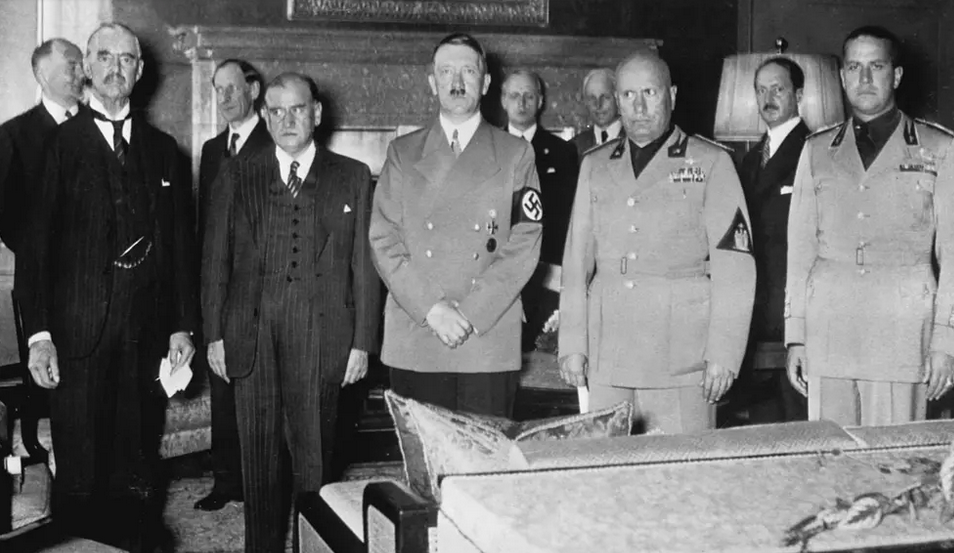


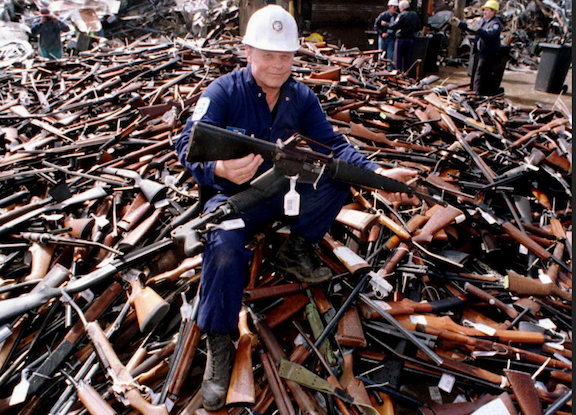
 davidsberry