53: Govan in Sight

Arriving at the SECC for conference, the Armadillo resembled a huge igloo under the snow but the buzz among delegates was warming. By mid-morning, the hall was already  receptive as I seconded Mike and Angela’s motion on Delivering for Scotland’s Schools, highlighting early years focus that will boost literacy and numeracy and, in turn, reduce unemployability that blights too many school leavers.

In the afternoon, my motion on SNP achievements in councils to complement those of government could have descended into trite self-congratulation. However I felt real pride in relating how green SNP administrations had led the way these past four years: solving major budget crises in cities; working with other parties; building affordable homes; refocussing schools; exhibiting new ideas.

Then to the BBC’s makeshift studio to be interviewed on justice with Stewart Maxwell MSP. Stewart and I had coincidentally talked at the CSPP dinner just the night before and so were soon both in full flow: he defended the Meghrahi decision and the advisability of avoiding knee-jerk automatic sentences; I waxed lyrical how extra police enable rural policing to lower crime levels even further and spread that sense of security people want—and associate with the small towns of East Lothian.

Swapping doorstep war stories at the Law Society of Scotland’s reception that evening, it was clear that this opportunity I feel in East Lothian is found from Orkney to Dumfries. While none exhibited ‘candidatitis’, and saw their contest as in the bag, the SNP’s record is standing us in great stead—demonstrated competence at local and national levels.

As we left, the snow had gone and the views across to the Science Centre in Govan were a much clearer good omen. That was where we met four years ago, prior to winning the Govan seat and power. Now it’s Kelvin’s turn.

Posted in Politics | Tagged | 1 Comment

54: Table Talk

Organised by Stop Climate Chaos and RSPB, together with local organisations like Sustaining Dunbar and the SSC, a ‘Climate Cafe’ in Haddington’s Town House brought the four EL candidates plus a Green list candidate together over tea and biscuits to field questions in a kind of musical tables format. This event was one of a half-dozen being held across Scotland.

Although Kelsie Pettit of SCC had clearly put in much work to make it succeed, it was not well attended. But the format worked better than I thought; each candidate hosting a table and being grilled by a group for 15 minutes before the group moved on to the next table. It allowed for different styles of interaction to happen simultaneously.

With the exception of one older gent who clearly had come to lecture, rather than ask, I found the challenge worthwhile. Questions ranged over environment, wildlife, transport, planning, sustainability, agriculture, global warming and power generation. It made me dredge deep for knowledge of party policy. I also felt encouraged by people who cared enough to think up and grill potential MSPs with such questions before casting their vote.

It was so consistently intense that biscuits, generously laid out on the tables, did not get touched. If only the other 99% of the electorate would go to such trouble informing themselves then I’d embrace any subsequent election result as a democratic triumph.

p.s. It was recorded, albeit poorly (wrong aspect ratio and poor sound quality)

Posted in Environment | Tagged | 1 Comment

55: Top of the Hill

No wonder East Lothian needs the affordable homes that the SNP are building—and fast. After 13 years of Labour’s “egalitarian” rule, the divide between ‘haves’ and ‘have nots’ is greater than ever and nowhere more so than here.

The Hootsmon has just published the top ten streets in the country where houses sell for ‘Monopoly money’ i.e. over £1m. Three Edinburgh postcodes lead the parade: Belmont Drive EH12, Ettrick Road EH10 & Dick Place. In fourth place—well ahead of anywhere in Glasgow or Aberdeen—was the only non-city address: Hill Road, Gullane EH31.

Where the butler lives is anyone’s guess but it’s unlikely to be in Hummel Road either.

Posted in Community | Tagged | Leave a comment

56: Parliamo Politico, Part V

Let’s Talk Pencil-Pusher: Lesson V—Education (Fifth of a series, translating bureaucrat-speak into what it means for folk in East Lothian)

Probably no one element of local (if not national) government gets as much emotive, hands-on attention as education. While tertiary (university and college) education is vital investment and students have a habit of drawing media attention when they are unhappy, the most widespread grass-roots ginger group in Scotland is the army of parents with their children at school.

The principal debate is between the Scottish Government, who are forever cooking up new policy like Curriculum for Excellence and the teaching unions like EIS who exhibit a very 19th century, demarcationist attitude towards change. Eight years on from the Kerley recommendations, teachers have 50% more salary but little else has changed. Many parents, especially those with non-academic children, feel that too much emphasis is placed on exam results and not enough on developing vocational skills and addressing learning difficulties. Those and the need to focus on the P1-P3 years to avoid weakness in literacy and numeracy in later years form the basis for local education debate at present.

In tight times, the worry is that funding will be cut. Indeed that has already happened in some councils like Glasgow. East Lothian’s £104m shows no cut and most of that is passed on to schools under Devolved School Management (DSM) that allows Head teachers the latitude to manage their own budgets. While they have severe limits on their latitude to spend this as they see fit, it is weaker management—regardless of academic status—that leads to pleas to parents to help out as paper supplies run out.

East Lothian has been in the lead in academic innovation from interactive whiteboards, school and student websites/e-mail, through investigating the power of community schools (where a school cluster would be managed from a joint panel that included locals) and looking into sharing central services (e.g. psychologists, administration, etc) with a neighbouring authority—in our case, Midlothian. The result of longer-term investment in targeting teachers towards P1-P3 to develop literacy and numeracy is some years away.

Most parents are very happy with the high quality of schools in the county and most moans have to do with the difficulties of child care or the lack of places in after-school clubs. If that’s what the top problems are, then we’re doing something right, especially as each pupil costs £5,600 a year to educate when Band D Council Tax is just £1,117.

Posted in Education | Tagged | Leave a comment

57: Load of Rubbish

Most of the time people speak of “the Council” in pretty adversarial tones, seeing it as a constipated local version of ‘Yes Minister’. At its bureaucratic worst, the jobsworth form-fillers can make mild-mannered ordinary folk dream of vile tortures for those who put them through the bureaucratic mill.

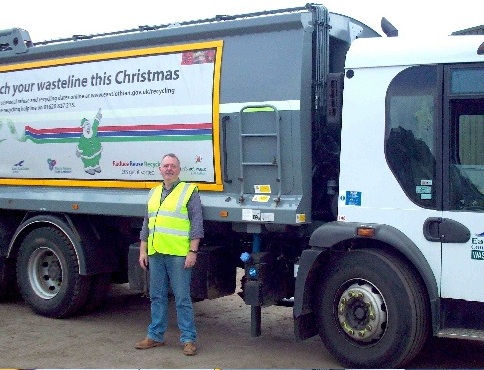
But, more often than not, the services are actually very good and none more so than Cleansing, who were the subject of a detailed report to a Review Committee this week. Not only do some 30,000 wheeliebins get emptied regular as clockwork but the amount of recycling going on here is just short of heroic. In fact, it’s as good a ‘win-win’ example of the Council and residents working together as you could wish for.

Ten years ago, East Lothian recycled barely 5% and 50,000 tonnes of annual rubbish went into landfill at Oxwellmains. By five years ago, when the blue/green boxes and brown bins went county-wide, we were up to 12% of the 52,000 tonnes. Thanks to Cleansing’s slick and reliable operation receiving whole-hearted support of residents across the county, those same figures last year were 42% and 38,000 tonnes. In other words, despite our growing population, we were throwing away 14,000 tonnes less each year.

That, in itself, is a green credential of which both council and customer should be proud. But, when you think that a landfill tax of £25 is levied on every tonne of waste buried (on top of actual cost of collection and dump fees), then—together—we’ve saving a whopping £350,000 each year. That’s like a 1% drop in your Council Tax or a dozen jobs. Doing the right thing is sometimes smart for any number of reasons; it’s not a load of rubbish.

Spending a Day Learning how Tough It Is Wheeling Brown Bins Around

Posted in Community, Environment | Tagged | 3 Comments

58: Round One (ding!)

East Lothian’s election was effectively launched yesterday with an hour-long candidate hustings in front of 100 S4-S6 seniors in Modern Studies at North Berwick High, although the Lib-Dem candidate neither responded to nor showed up for the event.

How did it go? You’d have to ask the audience that—although it was worlds away from my experience last week, with the audience attentive and as lively as anyone on stage. After a few minutes introduction from each of the three candidates, we launched into a dozen or so questions prepared by the audience.

The first question was about cuts in Scottish Education, over which Iain Gray and I fell out almost immediately. He argued teachers were being cut and education savaged; I argued that was alarmist—we have more teachers, supported by bigger budgets here in East Lothian and it was Labour-run councils like Glasgow who were shedding teachers.

But, after I suggested that the audience might want to hear something more than verbal head-butting, I thought both he and Derek did raise our dialogue to meet the standard of questions being asked. Jane Gurley wanted to know how we each would work to improve life for young people;  Fraser Duff whether the Edinburgh trams project was still a good idea. We got tore in but, almost despite ourselves, the three of us agreed on more than we disputed.

But, talking to organisers Kerrie and Gordon afterwards, they seemed disappointed that there had not been more controversy. Seems like discussion is one thing but there’s nothing more entertaining than a good rammy.

Posted in Education, Politics | Tagged | 3 Comments

59: Band Aid 2011

In very late and buzzing after a great evening at the Jam House where Edinburgh Bands Together did a benefit concert to help rebuild St Columba’s Hospice. On stage was a who’s who of the capital’s music scene past and present—from new names to various incarnations of the Bay City Rollers. Though packed to the gunnels, the atmosphere was great—people sharing the scarce chairs and tables, strangers chatting to strangers, dancing breaking out all over the place.

It shouldn’t have worked. The variety of music was just too great—from a solo lounge piano player raking from Jerry Lee Lewis to Billy Joel and back to the dozen-strong Gospel Truth Choir who managed to fit Amazing Grace and 500 miles into the same set without breaking stride or a sweat. But work it did. Soulussions rocked through a crisp medley starting with a pulsing-bass I Feel Good and septugenarian Shorty Rogers ripped through a Chuck Berry set like the rest of the world was in slo-mo.

I really liked Davey Sloan fronting Blind Lemon because they reminded me of the Mavericks on a good day. But my top prize went to the best pairing in town just now when Rab Howat and Kenny Herbert laid on a ninety-decibel seminar on how harmony and rock just belong together, whether on the Beatles Getting Better or the Who’s Won’t Get Fooled Again (which should be the official rock anthem of politics). Catch them when they next play Brannigans or the Caves—it’s worth it.

What (other than the Who) does all this have to do with politics? Damned if I know. Sometimes you just have to bodyswerve your obligations and have yourself a good time.

Posted in Uncategorized | Tagged | Leave a comment

60 Days to Go

We must be getting serious. With two months to go, the first hustings happen next week with a senior school event at North Berwick High in the afternoon of Monday 7th  and an RSPB-sponsored Climate Cafe hustings in Haddington’s Town House at 7pm on Thursday. As far as I am aware, my other three known opponents have also agreed to attend so there will be an opportunity to witness how the four of us compare under public pressure.

Although there was a time when hustings attendance had shrunk to mostly party faithful, a growing cynicism about politics seems to have, paradoxically, generated more interest in hustings. Why this should be isn’t clear: my theory is that identification with any one party has eroded over the last decade, which in turn has spurred voters to find out more about what the other parties offer.

While other dates are under discussion, the only one fixed has been arranged by the churches in North Berwick when, again, all four known candidates have committed to be at the Abbey Church on the evening of Monday April 11th. The format of each is likely to be the same—five or so minutes speech from each candidates and then a Q&A session from the audience. Since there is little chance for any candidate to anticipate all questions or to pack the hall with their own adherents, it should put us all on our mettle.

Scottish Election 2007 Result in East Lothian

Posted in Education, Politics | 5 Comments

61: Tomorrow-ness?

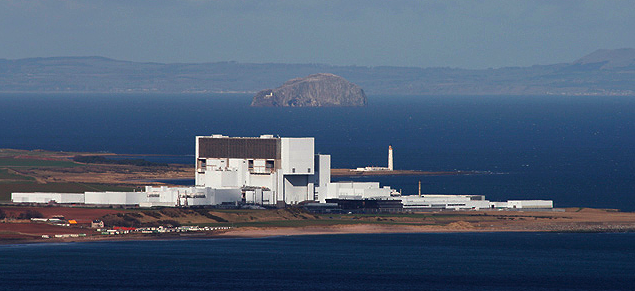
Having been on a doorstep or three as part of my campaign, I have to say that the good people of East Lothian are nothing if not polite. The only hostility in an identifiable group that I have met comes from the workers at Torness. Even that diminishes the further from Dunbar you get. What hostility there is stems from a widespread conviction that the SNP will close the place down the first chance it gets. That’s not true.

Now, I confess to being no fan of nuclear power. It appears cheap and clean but no-one has a safe place to put its deadly waste and decommissioning is so long and expensive that ‘cheap’ may be a delusion. This is no knee-jerk position: I have a degree in physics, I put together Scottish Nuclear’s first interactive visitor centre and I was even mover of the motion that changed SNP policy to run nuclear stations to the end of their useful lives. And though there have been incidents at Torness (May 2002, Dec. 2005, Aug. 2006), all were dealt with and I have confidence in the staff—even if they do all now work for EDF.

If Hunterston and Torness were run to the end, with no replacements, I am convinced that no lights would go out. Firstly, Torness’s two AGRs  produce 1.3GW and are good to 2023 at least and, barring more fatigue cracks in the gas circulators (May 2002 incident), for a 12-year extension beyond that. Secondly, we already export 10-20% of the power generated in Scotland to both England and N. Ireland. Thirdly, East Lothian already generates almost half as much as Torness from the wind farms already installed on the Lammermuirs and, having been royally stuffed by Scottish Power, must thole a renewed gas-fired Cockenzie with at least a 25-year life beyond its expected 2014 closure.

Meantime, the Pelamis prototype off Stromness demonstrates wave power potential and the tricky engineering of submerged tidal turbines is being refined in the Pentland Firth. The skilled engineers and technicians at Torness should have no trouble finding work on any of these, or on the massive offshore windfarm proposed for 20km East of the May by Scottish & Southern. And I reckon they have 25 years to make the transition.

If any of them are reading this, feel free to make your comments and point out where you think I’m wrong. Failing which, when I show up on your doorstep, at least invite me in for a cuppa while you harangue me. Just think of the energy you’ll save with the door closed!

Visitor Introduction to East Lothian—Torness (with Barnes Ness & Bass Rock) from the A1

Posted in Commerce, Politics | Tagged | Leave a comment

62: Genteel Revolutionaries

The rarified rooms of the Royal Society in George Street are a perfect setting for the David Hume lectures and a perfect antidote to the brawling good cheer of All Bar One across the road. This month, the lecture was on Scotland in Europe, featuring Sir John Grant (late of the diplomatic service and British Gas) as the main speaker.

His main thrust—probably to be expected in the context—was that only at the EU level would there be much world influence in the future. This was because the UK’s scale was too small to be decisive. Since Europe defined standards to which goods must be produced and these were stricter than elsewhere, they became de facto the world standards. The room being full of grey-haired establishment figures, I expected the sound of unionists turning in their graves to become deafening. But it was as cogent a dismantling of the Brian Wilson/Jim Murphy litany that Scotland must hold tight to nanny UK in order to survive as I have ever heard.

During the extensive Q&A session Dr Rory O’Donnell (Director of Eire’s National Economic & Social Council) fielded some sizzling questions on the Irish economy and its constraints on economic maneuver that using the Euro implied. While cheerfully blaming Ireland’s incestuous banks (“they were busy selling bits of Ireland to each other”) he was convinced that significant manufacturing and creative sectors would revitalise the badly hit finance and construction sectors and with the German powerhouse export economy (over EU220bn surplus last year) the Irish were in no danger of fiscal disaster.

The only constraint of caution was added by the German Consul, Wolfgang Moosberger, who felt that, after decades of carefully choosing what was best for Europe, Germany now had more than enough sense of itself to take off after its own interests, dragging the rest of Europe along with it.

Again, none of this was the orthodoxy of the Scottish press and I marveled that I could have discovered here revolutionary material to justify Scotland ploughing it own furrow, forging its own links within the EU and, as a small country, being more nimble and successful at it than our bigger, clumsier cousin south of the border. A radical thought.

Posted in Commerce, Education, Politics | Tagged | 3 Comments